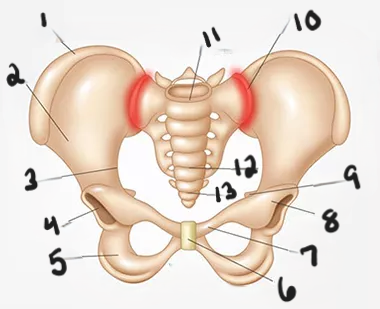
sacrum, coccyx & SI joints
 Call Kai
 Learn
Learn Practice Test
 Spaced Repetition
 Match
Match Flashcards
 Knowt Play
1/107

There's no tags or description
Looks like no tags are added yet.
Name | Mastery | Learn | Test | Matching | Spaced | Call with Kai | Chat |
|---|
No analytics yet
Send a link to your students to track their progress
108 Terms
sacrum
made of 5 vertebral segements
4 pairs of foramen nerves & blood vessel
size & curvature considerably from male to female
coccyx
3-5 segments
most of the time 4 segments
gives stabilization when sitting
sacroliliac joints (SI joints)
junction of iliac ala & sacral ala
“ear-like” shape w/ ridges & depressions
concave sacral surface joins w/ convex iliac surface
SI joint classification
synovial, amphiarthrodial joint
posteriorly & obliquely
how are SI joints angled?
ligaments
how are the superior portion of SI joints connected by?
synovial
what type of joint is the inferior portion of the SI joints?
dislocated coccyx
anterior or posterior
caused by high-energy trauma
pt w/ dislocated coccyx
what is this?
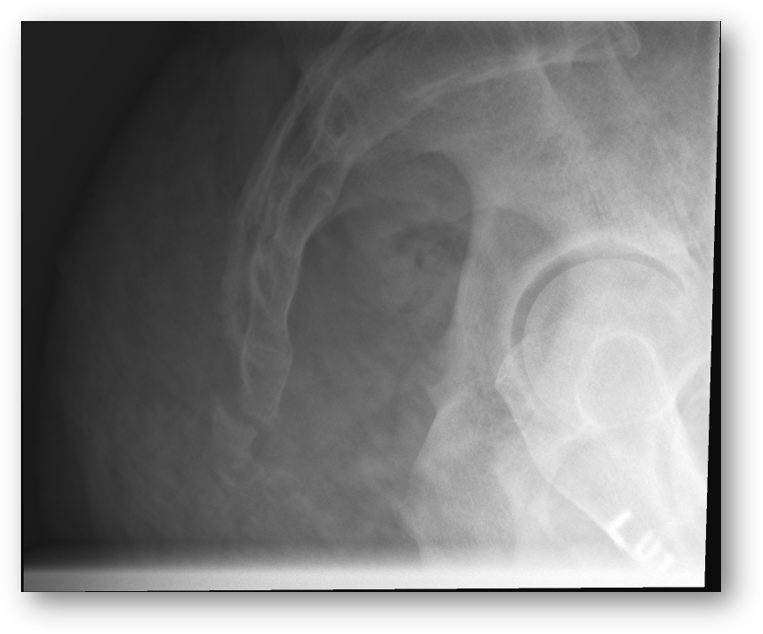
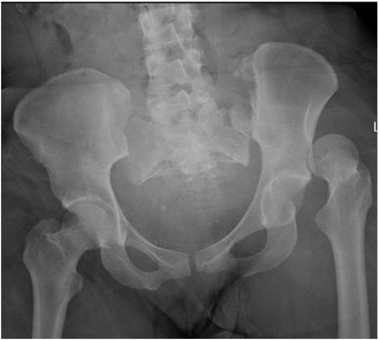
dislocated SI joint
high-injury polytrauma that often results in open book fx
pt w/ dislocated SI joint
what is this?
sacrum AP axial
Sacrum centered & seen entirety
Sacrum free of foreshortening, with the sacral curve straightened
Pubic bones not overlapping the sacrum
No rotation of the sacrum - symmetric alae
15 degree cephalad
what is the tube angle for a sacrum AP axial?
coccyx AP axial
Coccyx centered & seen entirety
Coccyx free of foreshortening, with the sacral curve straightened
no pubic bones overlapping
No rotation - by symmetric pelvis
no tube angle - forshortening
closed circles
repeat
critique this scarum AP axial
too much tube angle
too much overlapping of pubic bones
critique this scarum AP axial
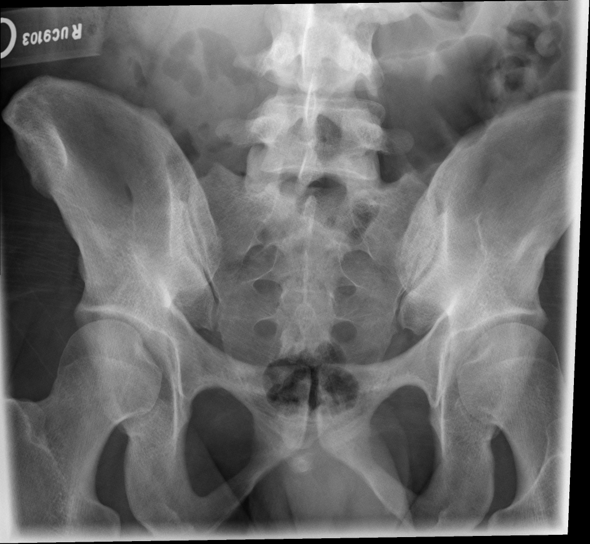
good image
free from forshortening
foramen are open
critique this scarum AP axial
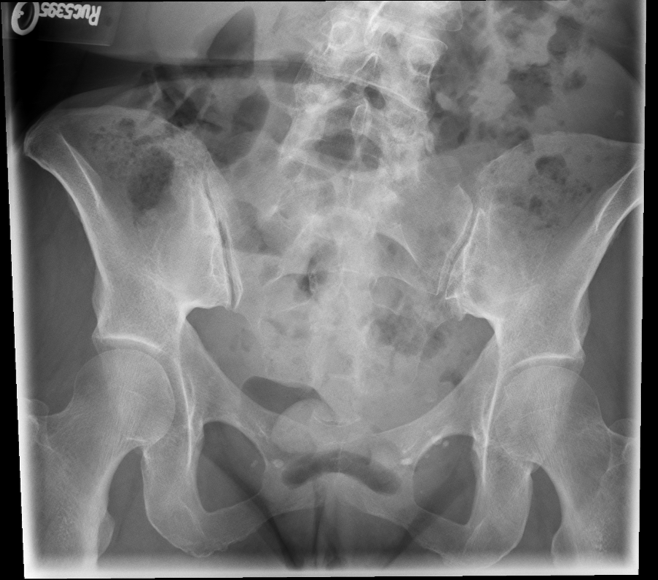
good image
critique this coccyx AP axial
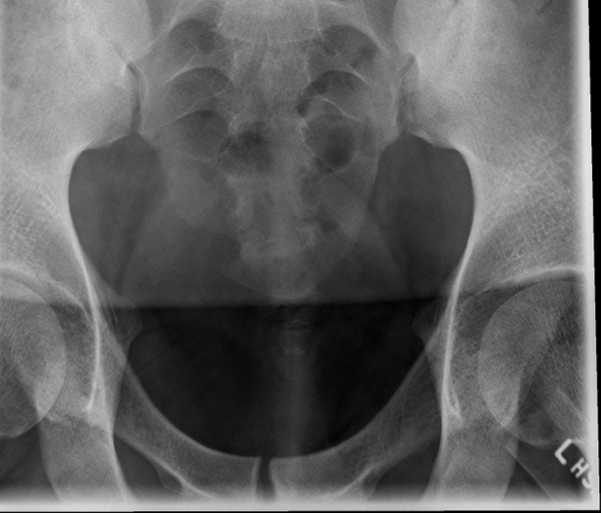
6 X 8
what is the coccyx AP axial collimation?
10 degrees caudad
what is the tube angle for a coccyx AP axial?
no tube angle
pubic bones are over coccyx
should be in middle of pubic inlet
critique this coccyx AP axial
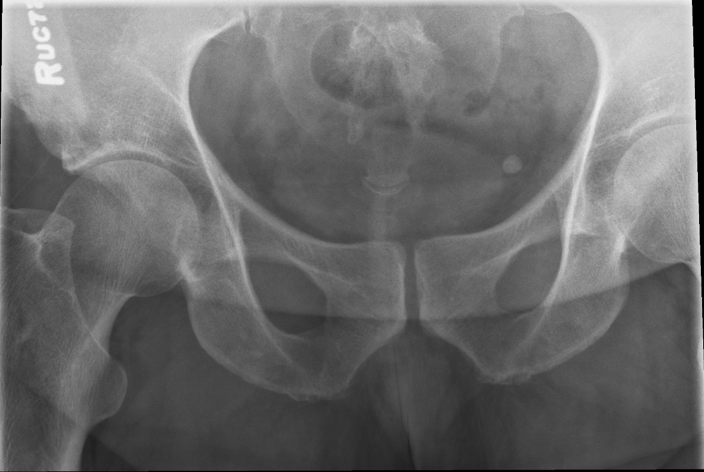
all anatomy on & can see the coccyx in the middle
rotation to the left = repeat
critique this coccyx AP axial
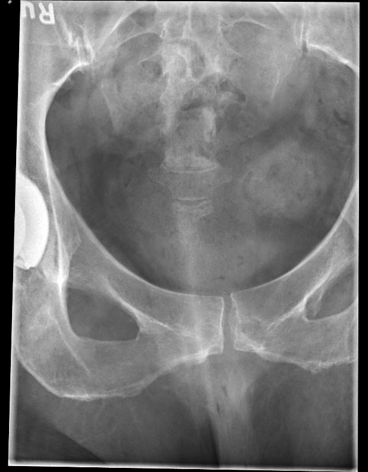
sacrum lateral
Closely superimposed posterior margins of the ischia & ilia, demonstrating no rotation
L5-S5
centering too superior
just got all anatomy on
nonrepeatable
critique this sacrum lateral
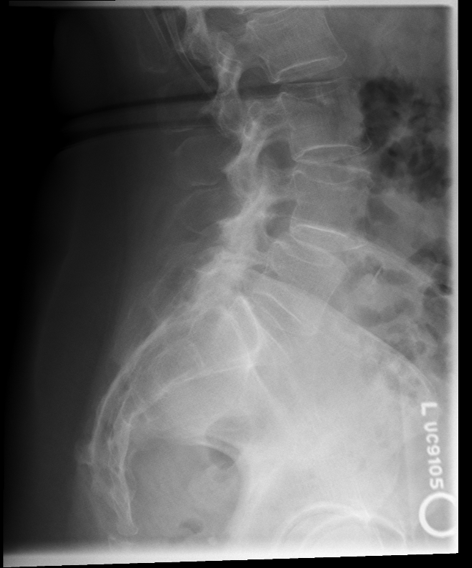
rotation - nothing lined up
all anatomy on
electronic marker
repeatable
critique this sacrum lateral
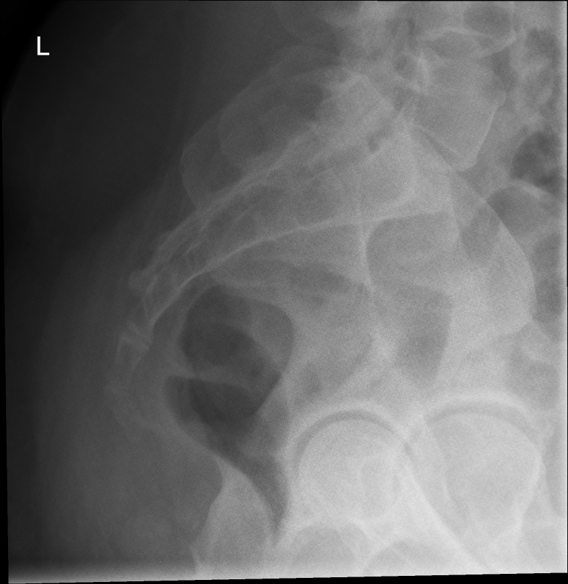
good image
no rotation
everything is on
critique this sacrum lateral
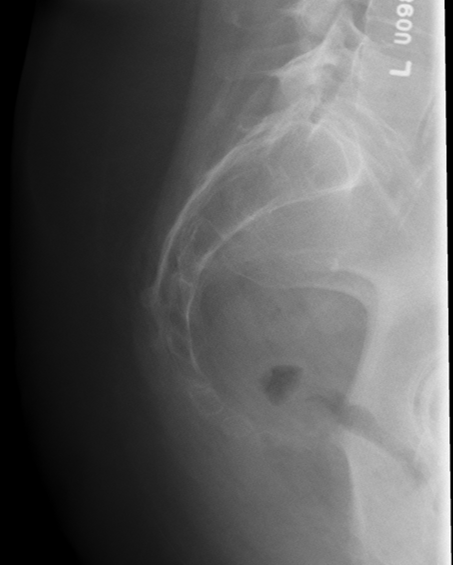
coccyx lateral
Closely superimposed posterior margins of the ischia & ilia, demonstrating no rotation
Bony trabecular detail & surrounding soft tissues
all anatomy
good image
critique this coccyx lateral
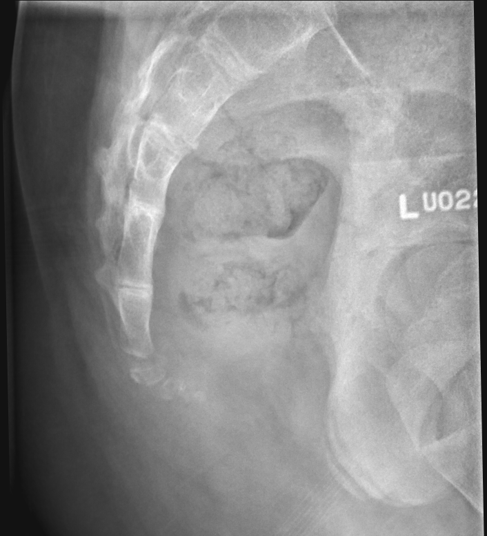
everything on
marker in corner
good image
critique this coccyx lateral
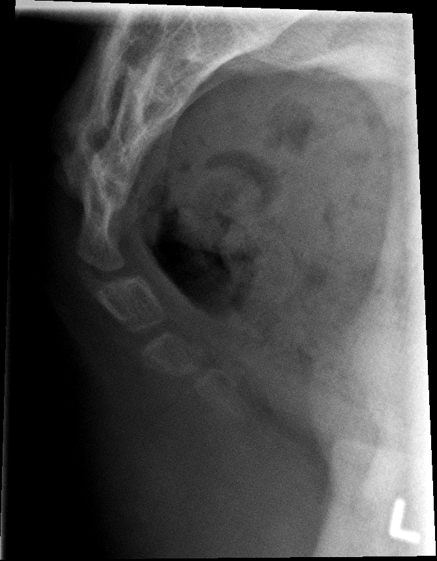
rotation - superimposition on coccyx
repeat
critique this coccyx lateral
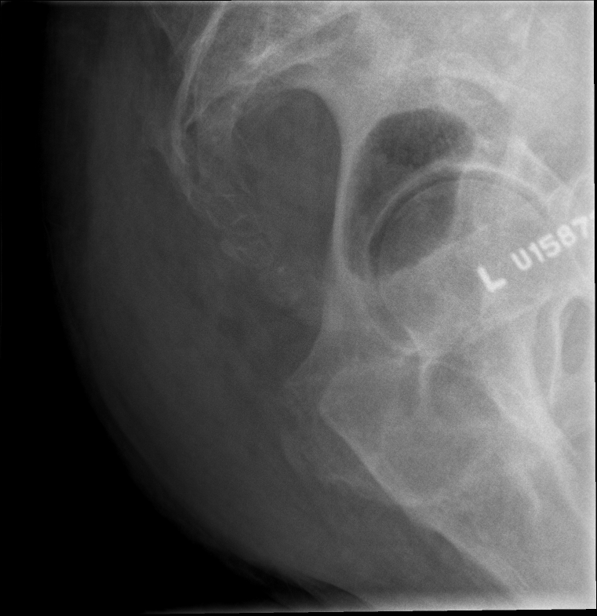
12 X 10
what is the SI joint AP axial collimation?
30 cephalad
what is the tube angle for AP axial SI joints for males?
35 cephalad
what is the tube angle for AP axial SI joints for females?
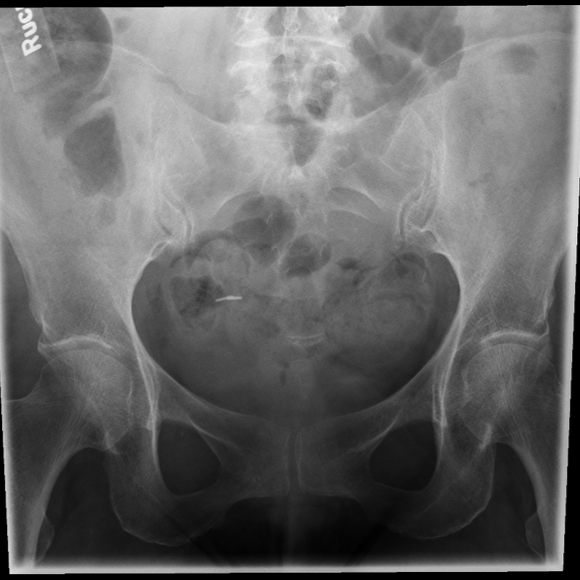
AP axial SI joint
Lumbosacral junction & sacrum
Open intervertebral disk space between L5 and S1
Both sacroiliac joints
decrease tube angle
covering of left SI joint
repeat
critique this AP axial SI joint
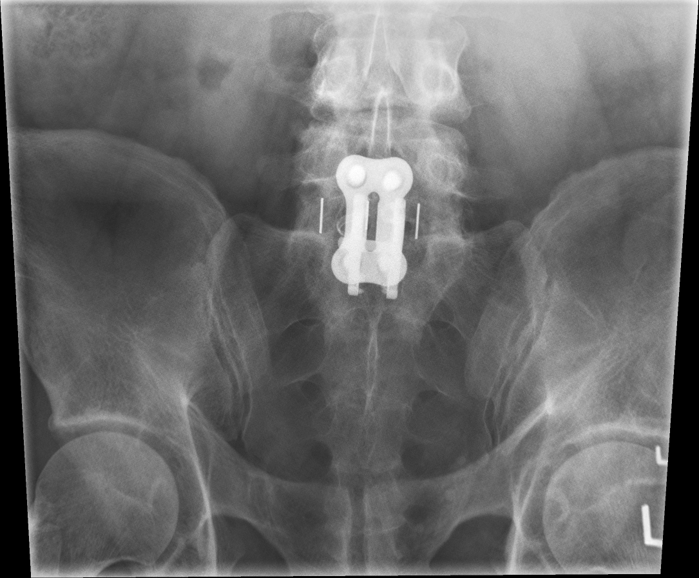
good image
both SI joint are seen
no rotation
critique this AP axial SI joint
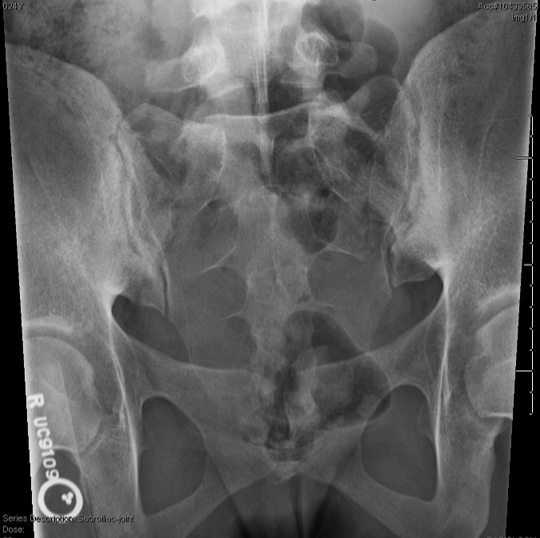
no tube angle
SI joints are too short - not long enough
repeat
critique this AP axial SI joint
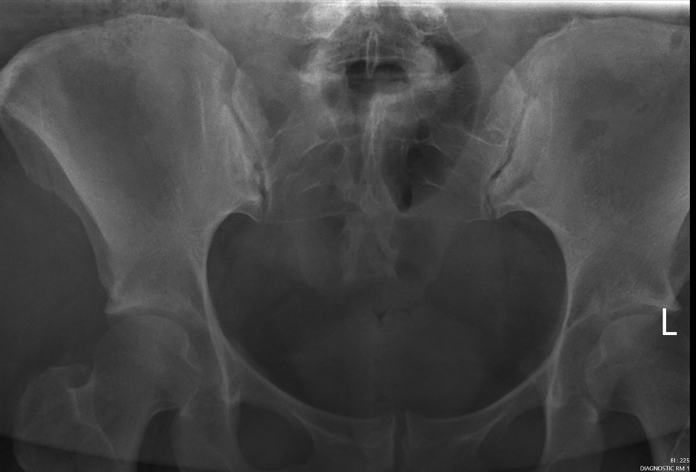
RPO/LPO Oblique SI joints
Open sacroiliac joint space furthest from the IR with minimal overlap of the ilium & sacrum
Joint centered on the radiograph
elevated side
where should you place your marker for oblique SI joints?
under rotated
if the iliac tuberosity is overlapping sacral ala, how is the oblique SI joint rotated?
properly rotated
if the border of the sacrum just inside the inlet, how is the oblique SI joint rotated?
good image
joint is open & clear black line
critique this Oblique SI joints
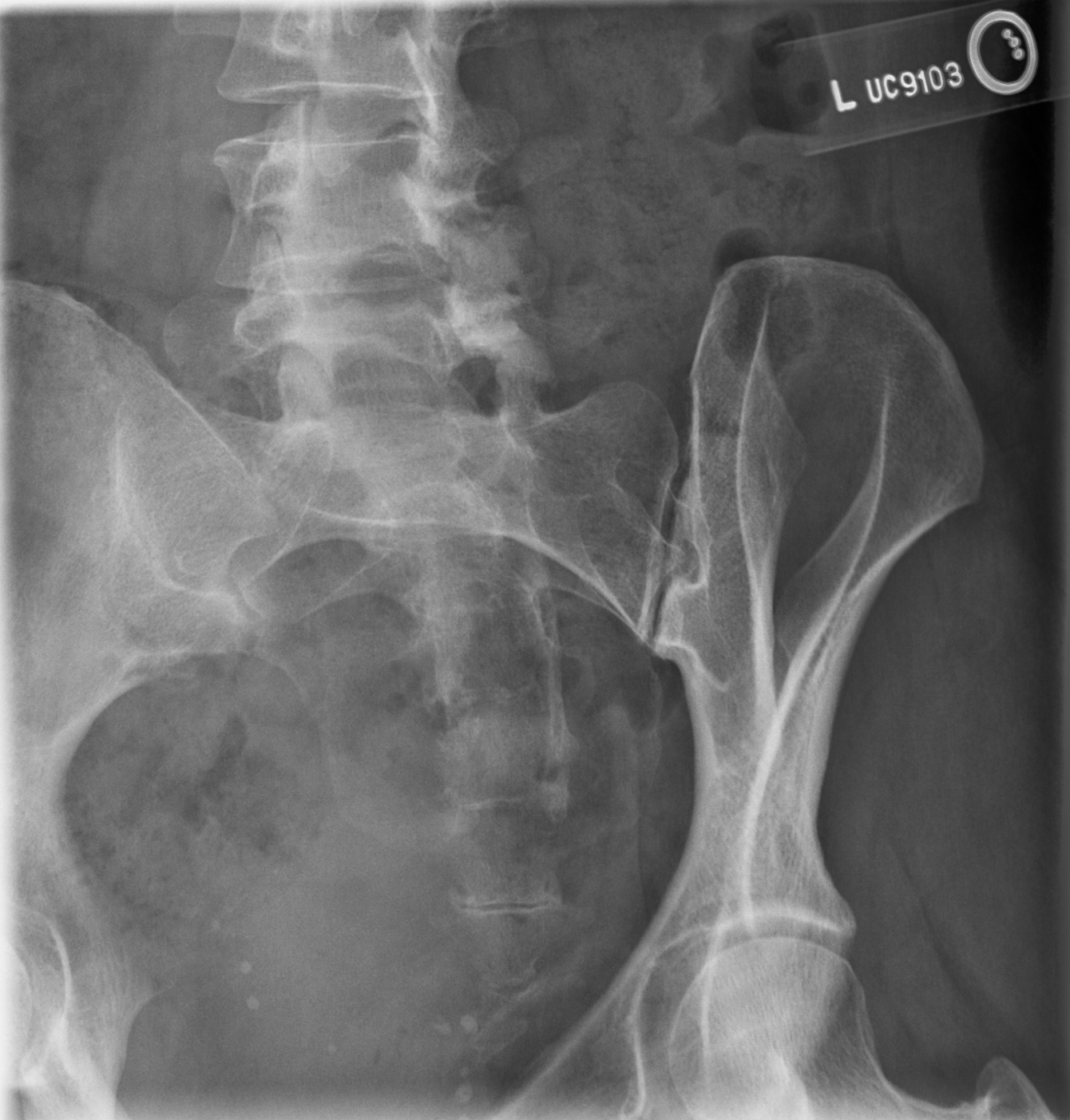
over rotated
critique this Oblique SI joints
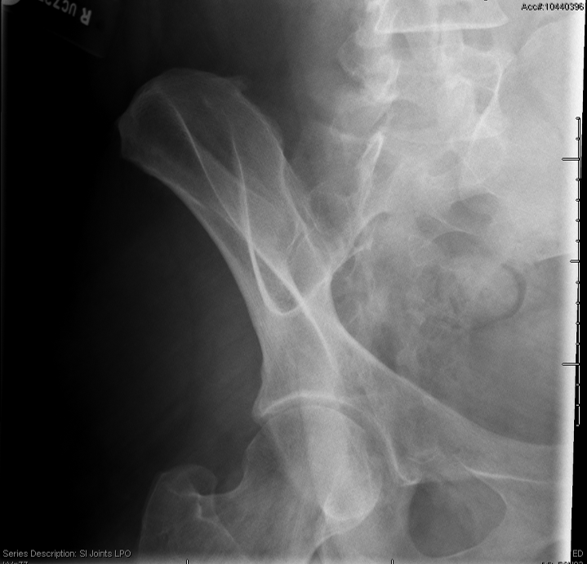
good image
critique this Oblique SI joints
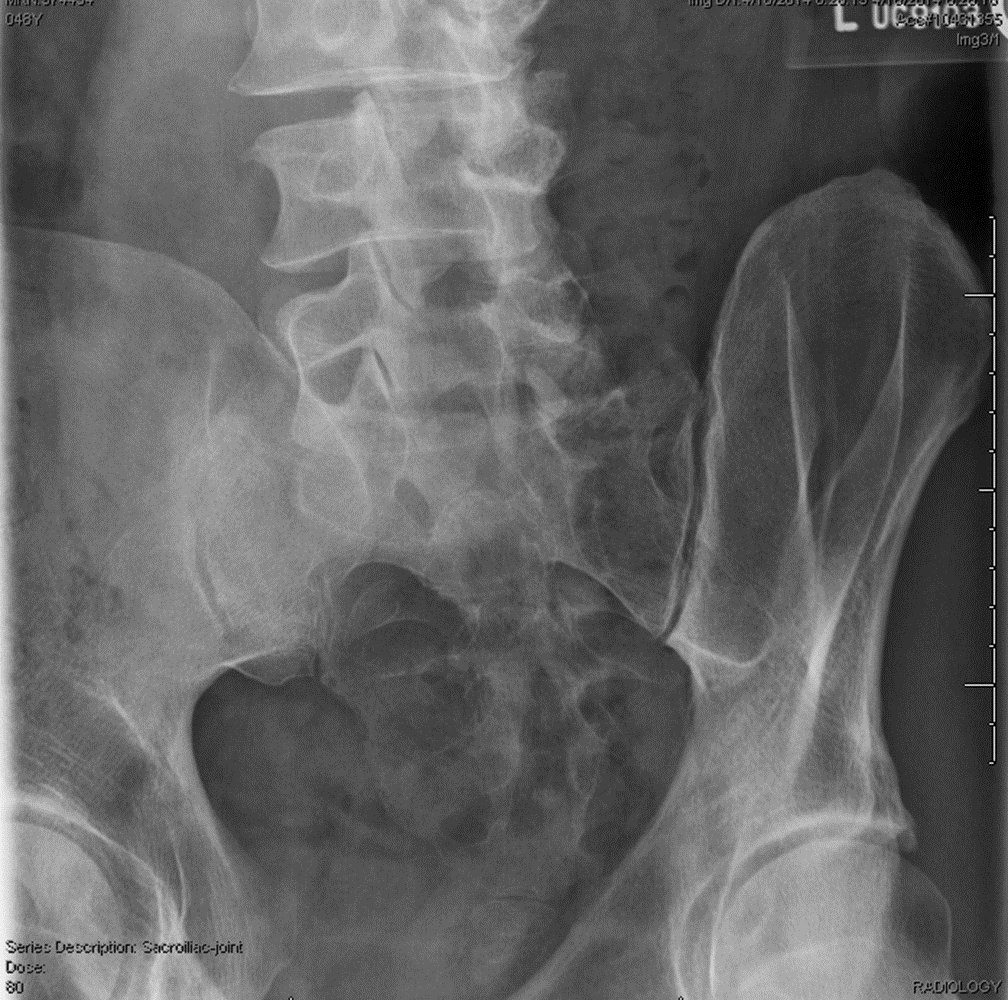
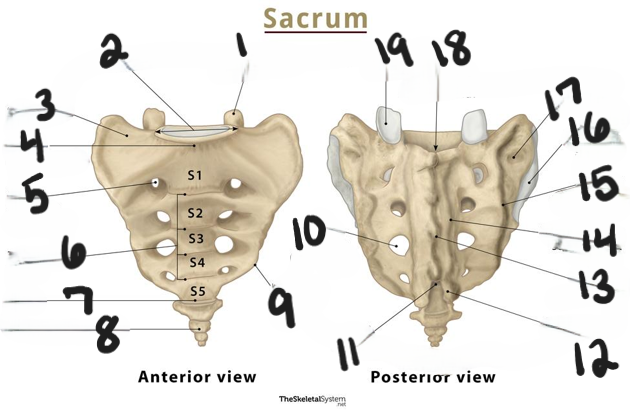
superior articular process
what is #1?
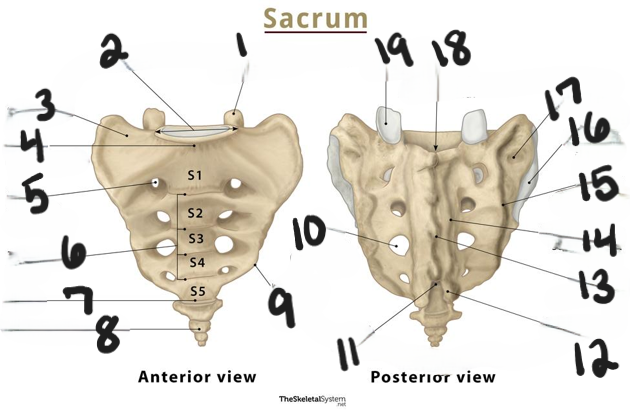
base
what is #2?
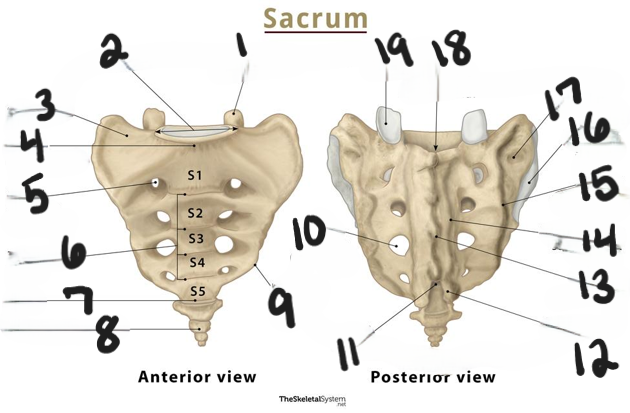
sacral ala
what is #3?
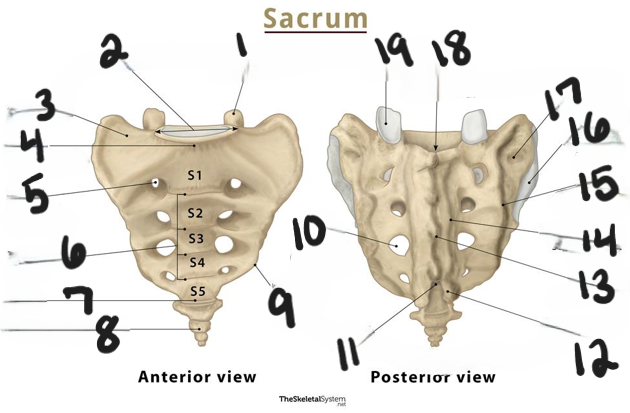
sacral promontory
what is #4?
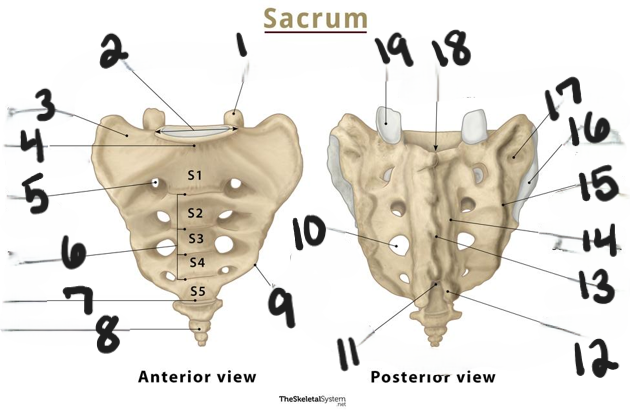
sacral foramen (anterior)
what is #5?
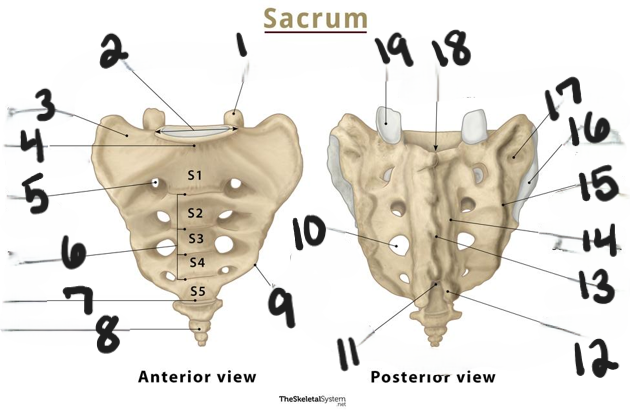
transverse lines
what is #6?
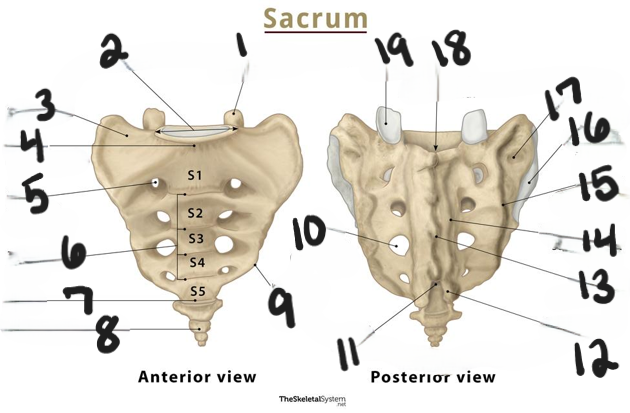
apex
what is #7?
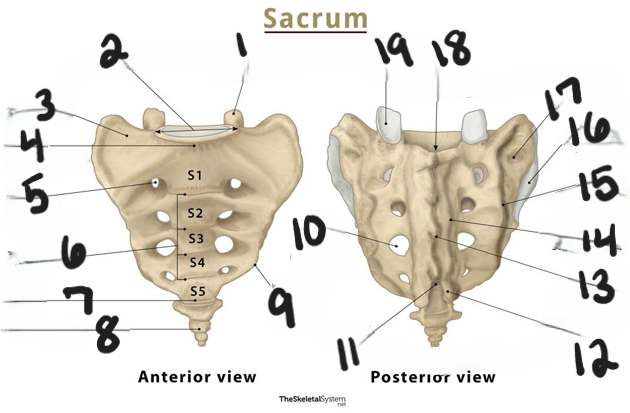
coccyx/tailbone
what is #8?
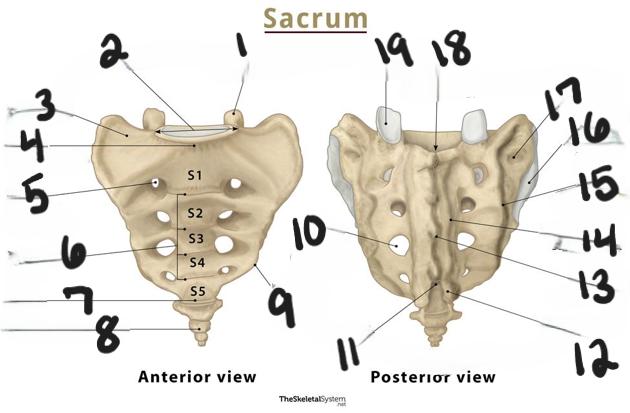
inferior lateral angle
what is #9?
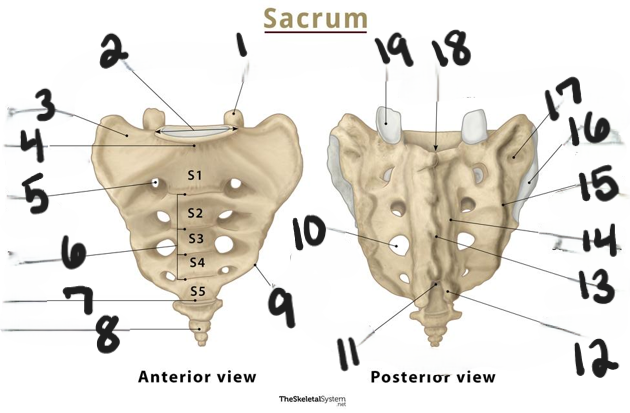
sacral foramen (posterior)
what is #10?
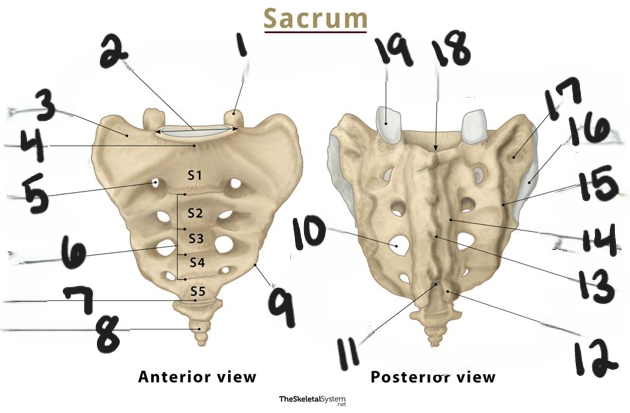
sacral hitatus
what is #11?
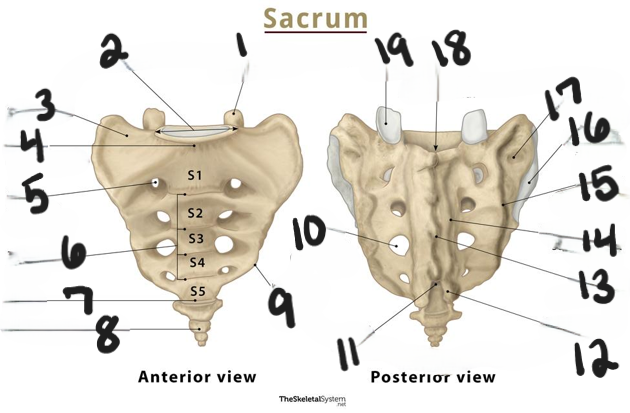
sacral cornu
what is #12?
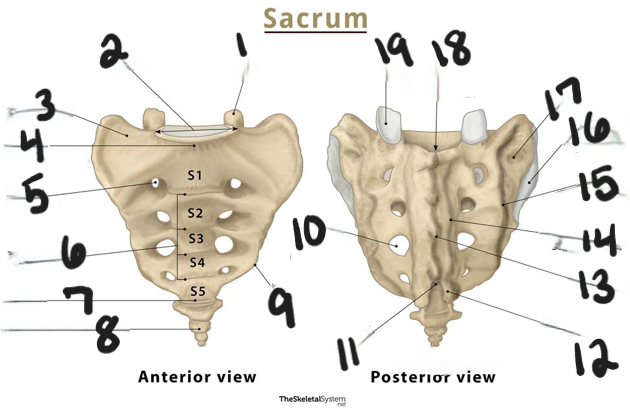
median sacral crest
what is #13?
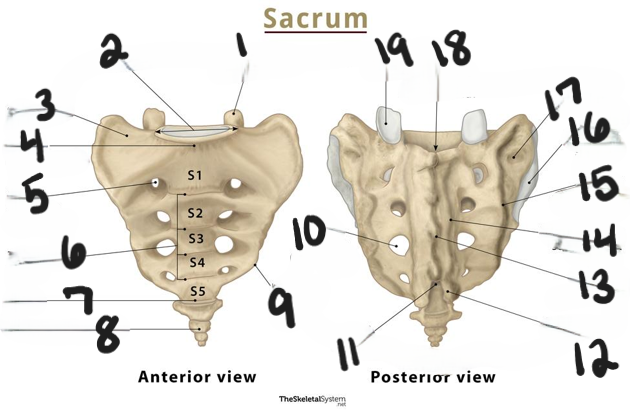
intermediate sacral crest
what is #14?
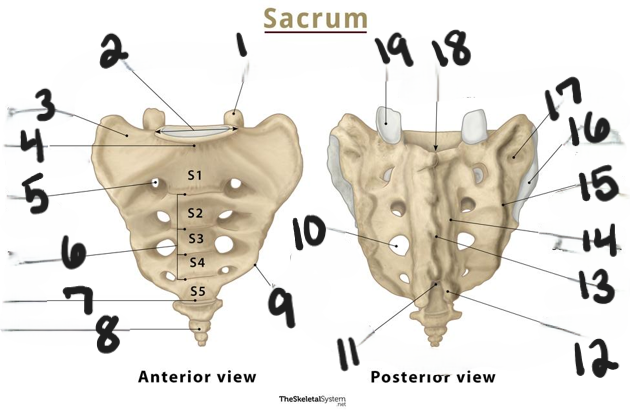
lateral sacral crest
what is #15?
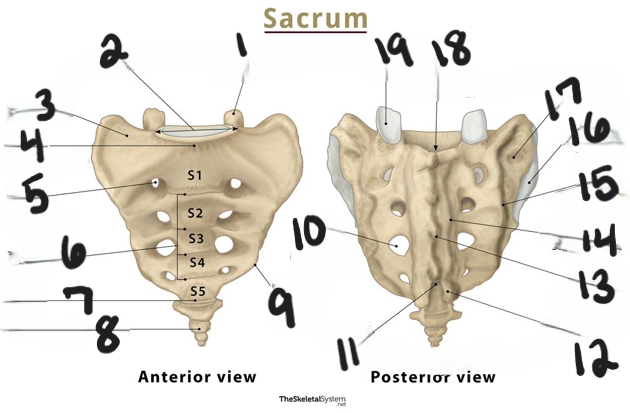
auricular surface
what is #16?
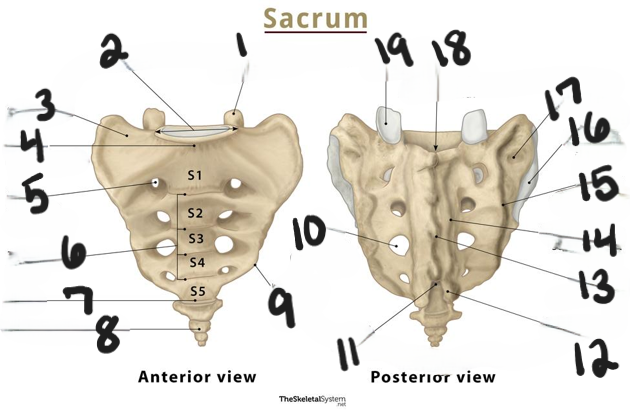
sacral tuberosity
what is #17?
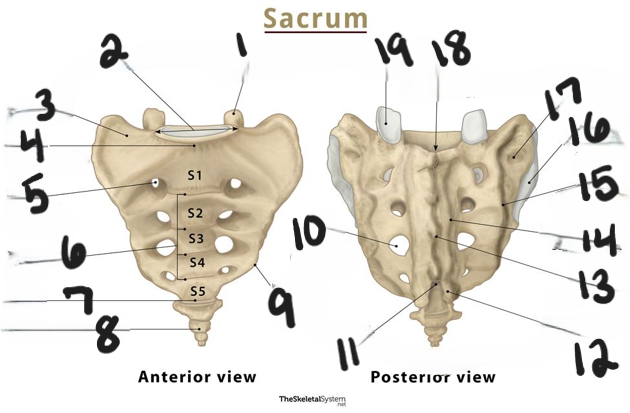
sacral canal
what is #18?
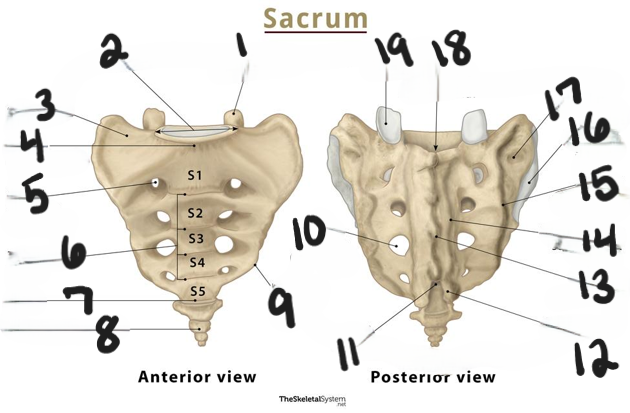
superior articular facet
what is #19?
apex
what is a?
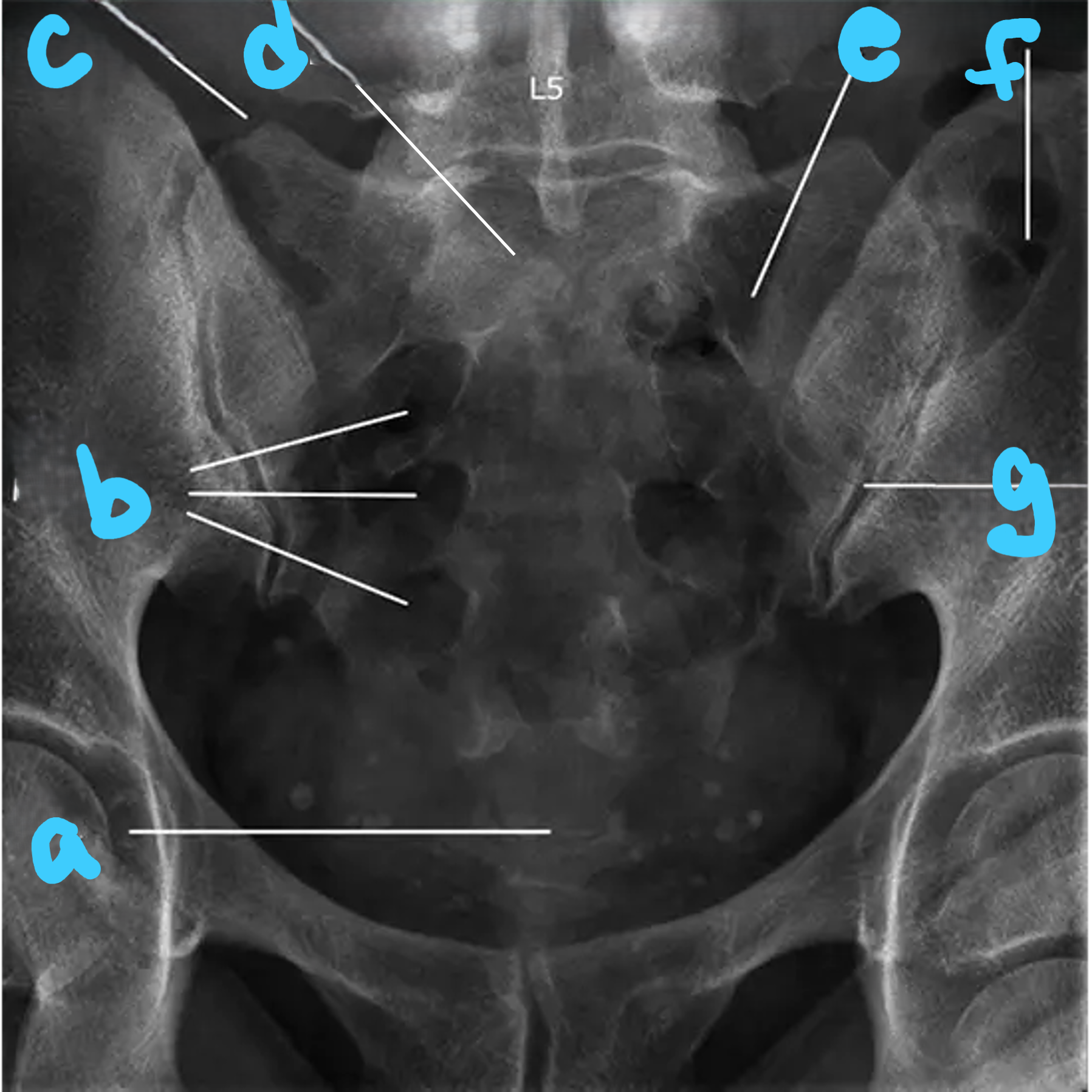
sacral foramina
what is b?
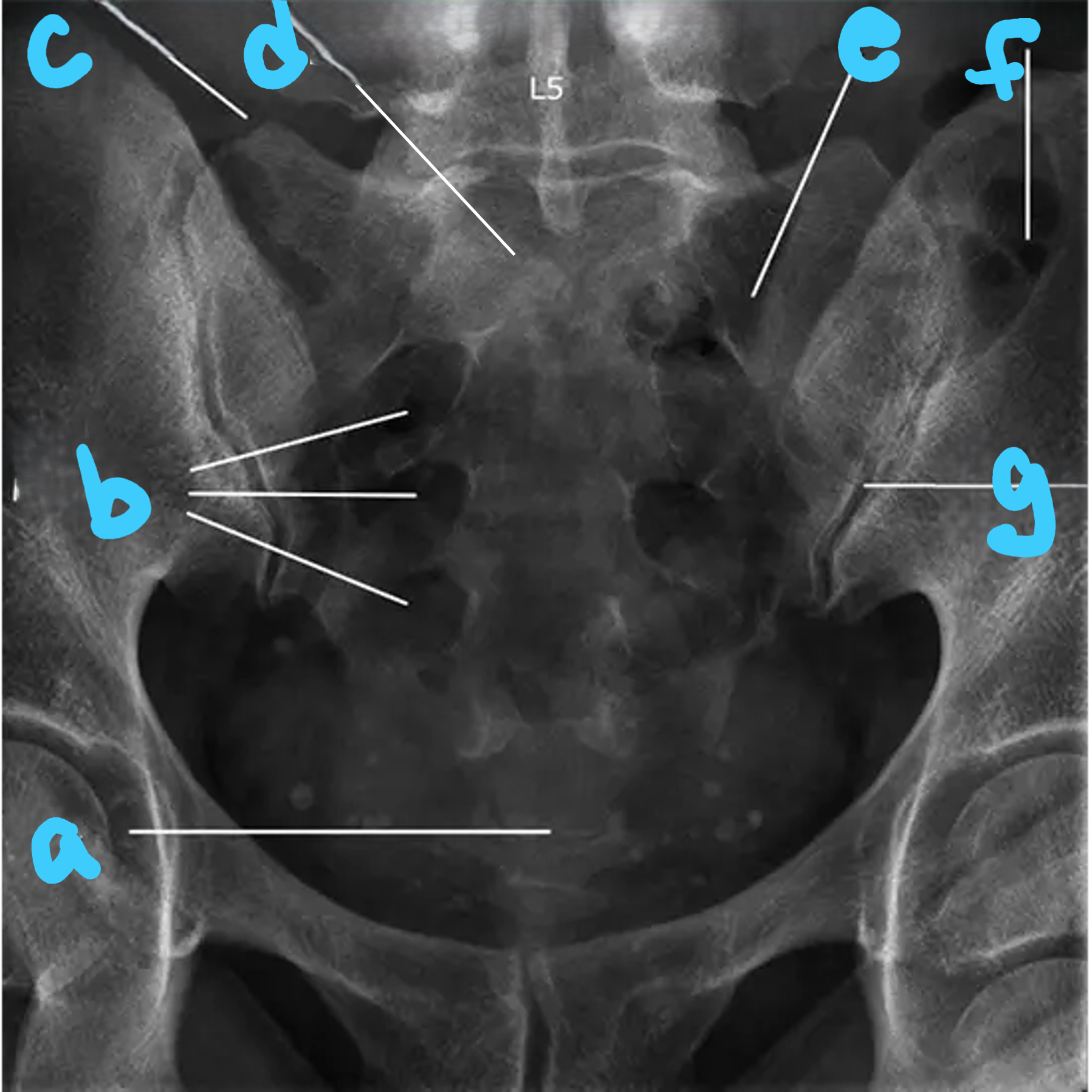
superior articular process
what is c?
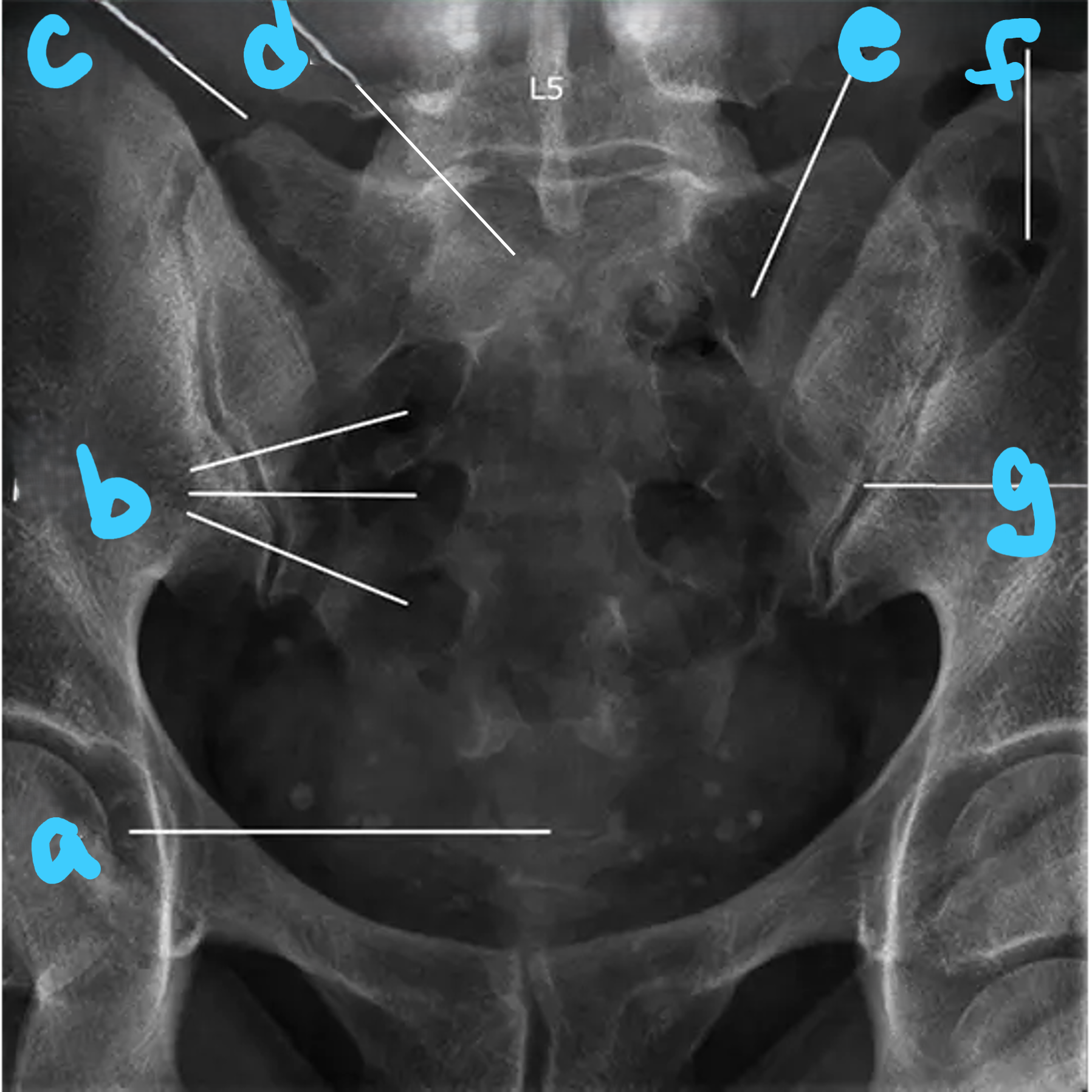
base
what is d?
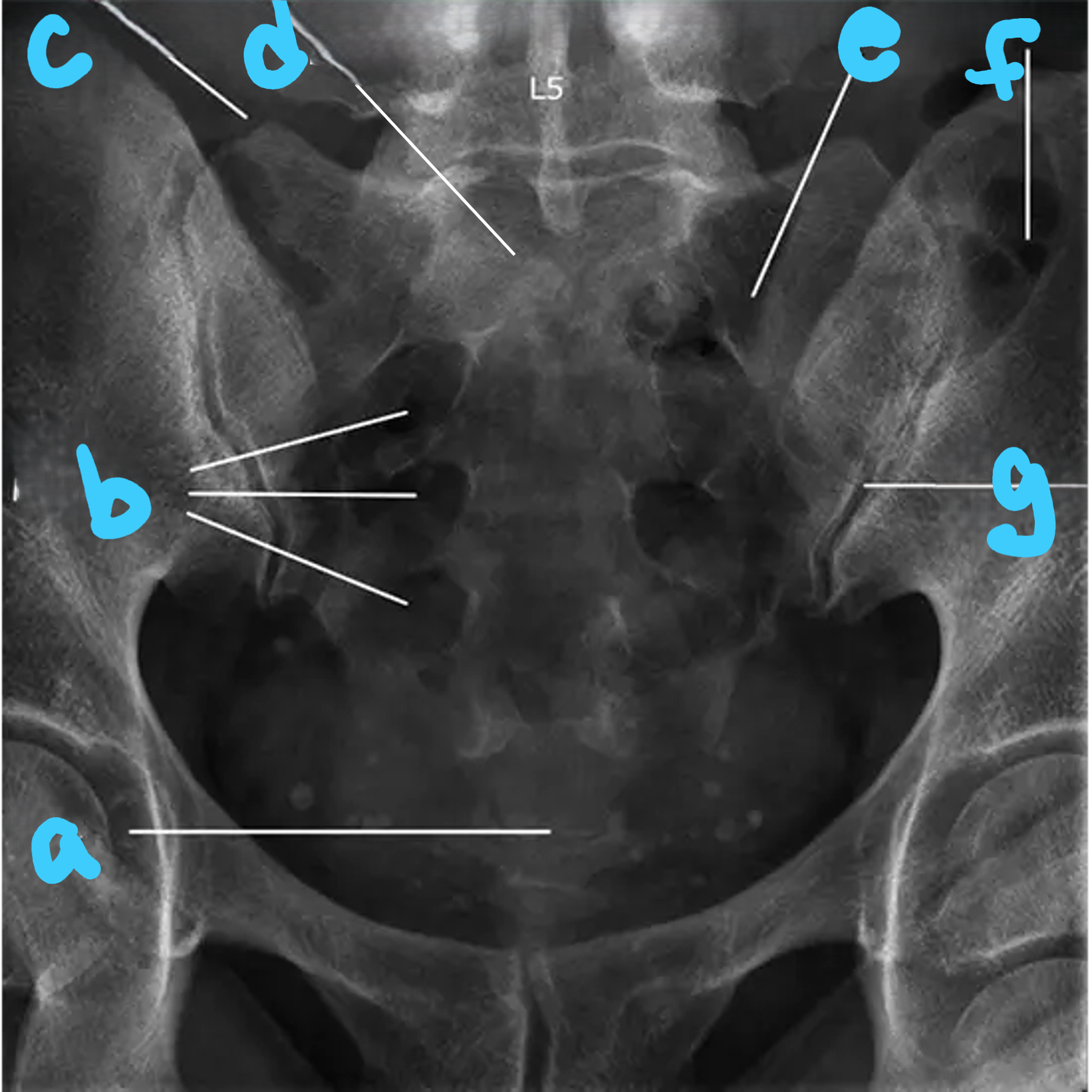
sacrum
what is e?
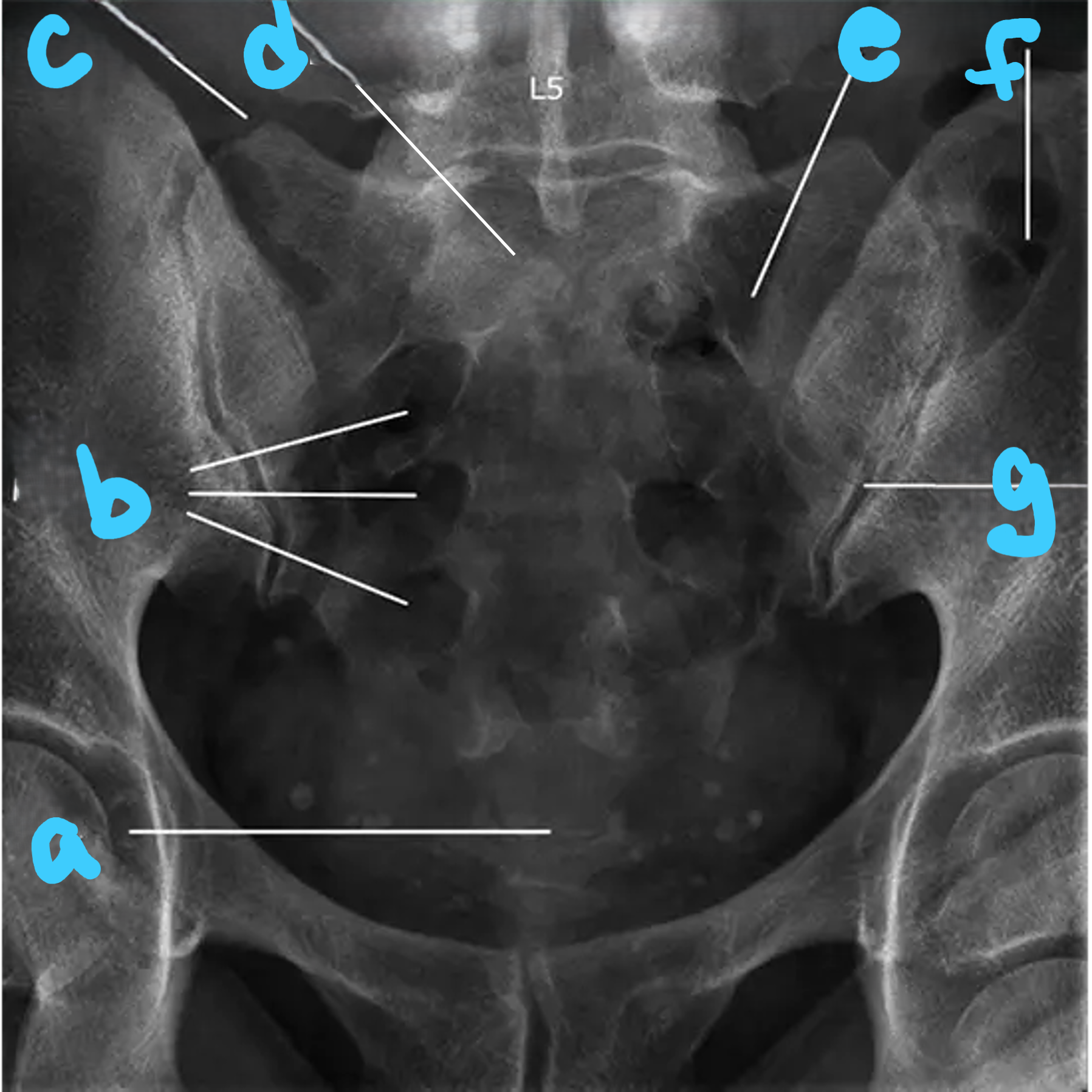
ilium
what is f?
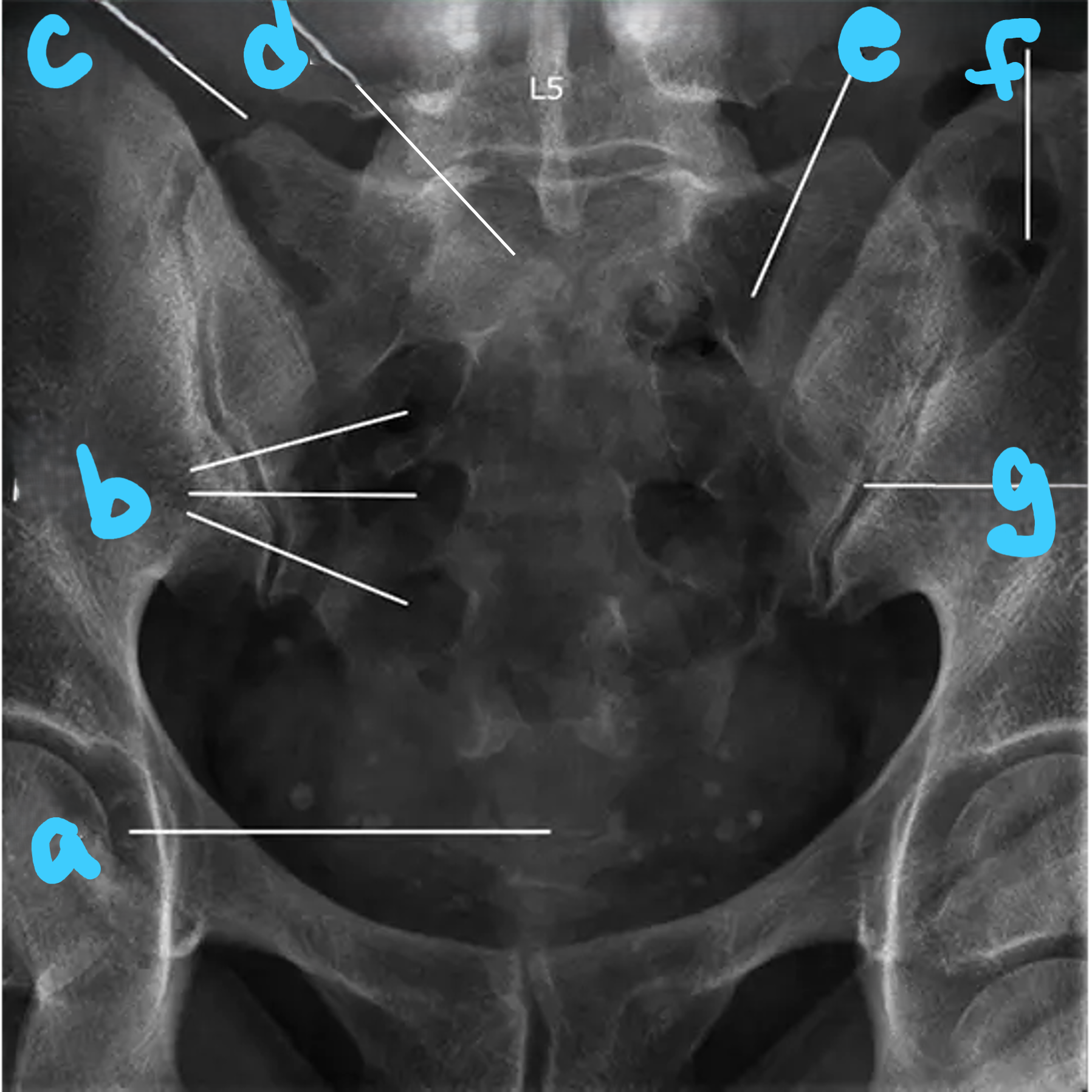
left sacroiliac joint
whar is g?
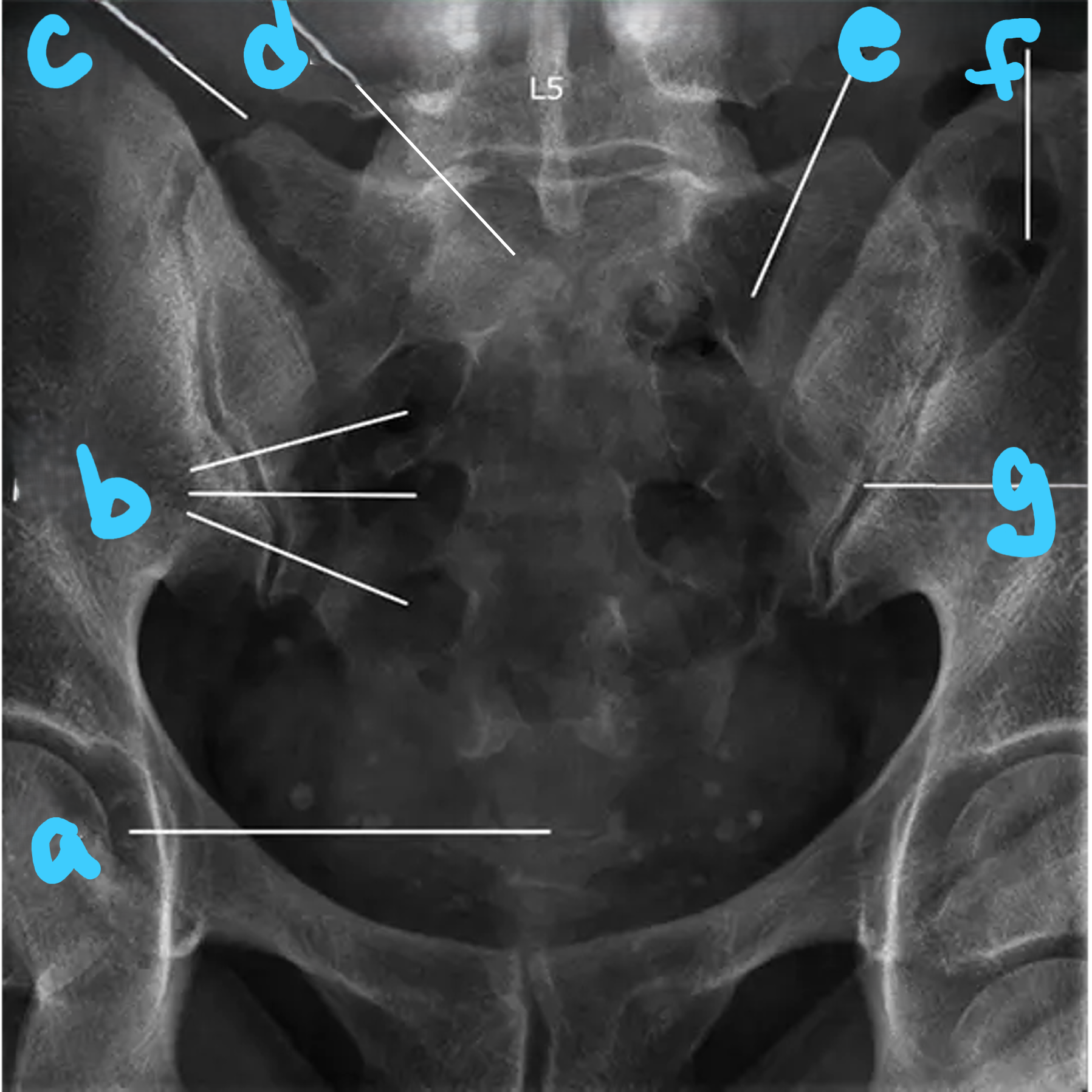
base
what is #1?
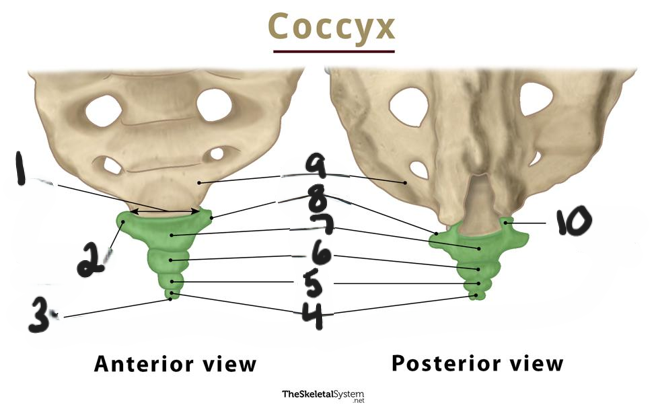
transverse process
what is #2?
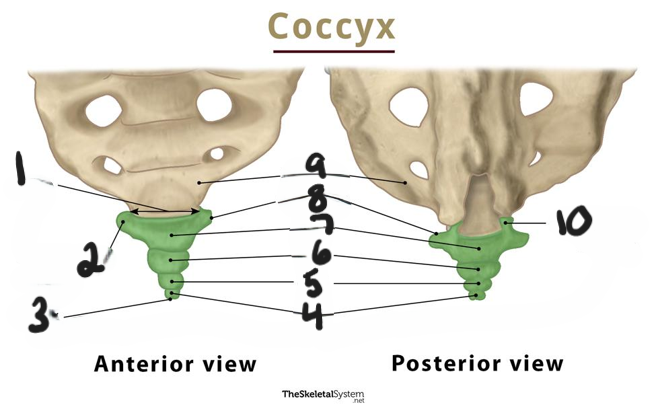
apex
what is #3?
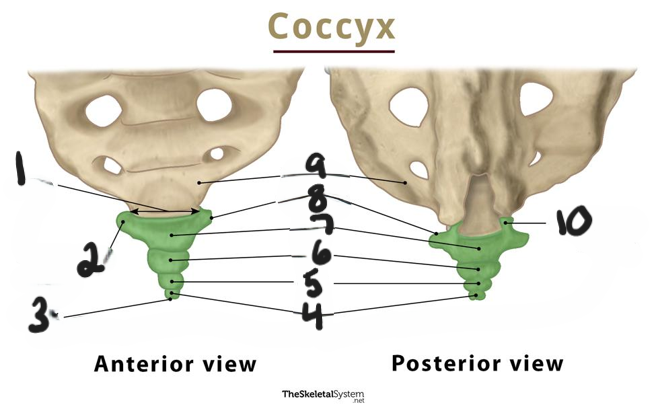
Co4
what is #4?
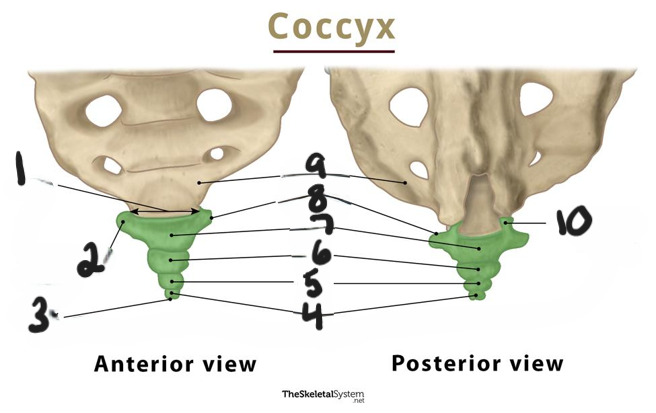
Co3
what is #5?
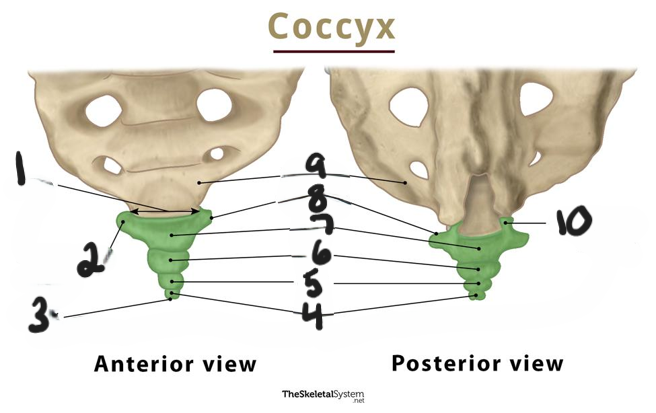
Co2
what is #6?
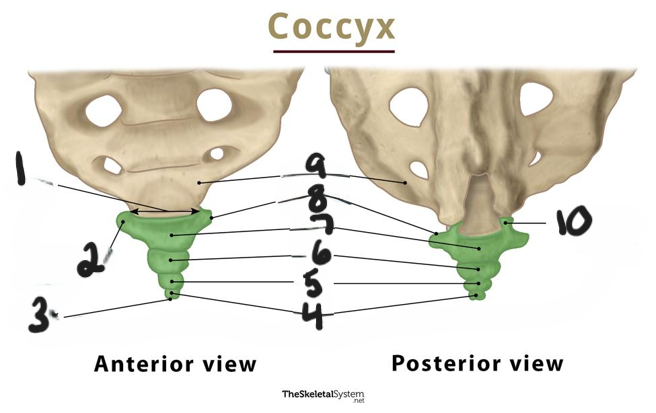
Co1
what is #7?
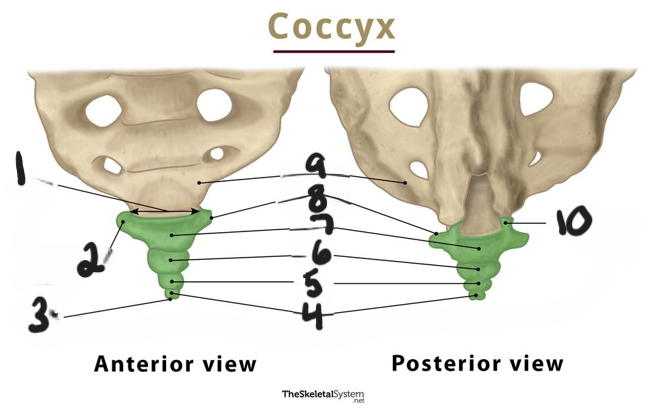
coccyx
what is #8?
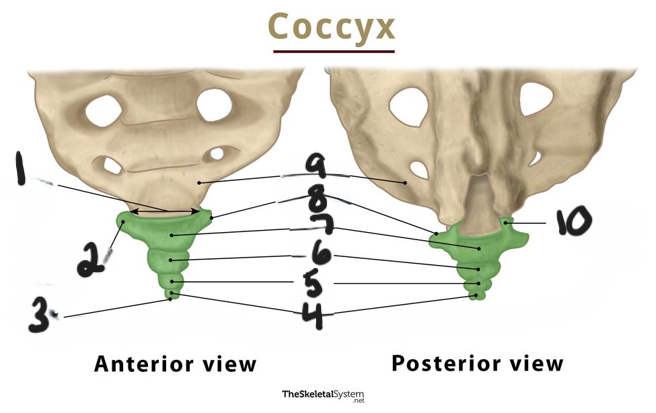
sacrum
what is #9?
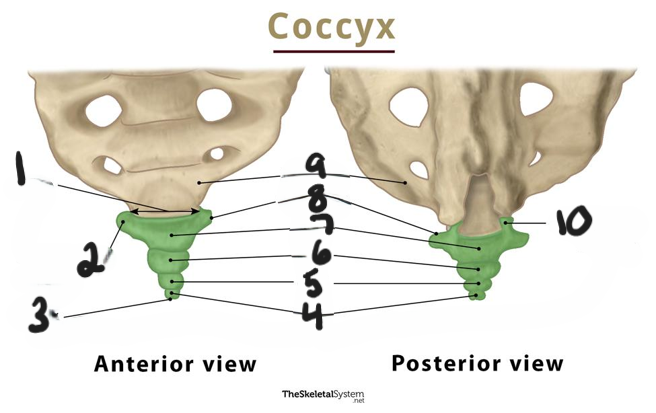
coccygeal cornua
what is #10?
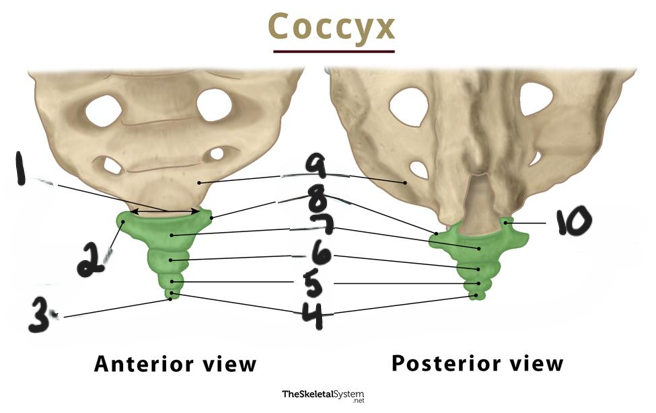
sacral cornua
what is a?
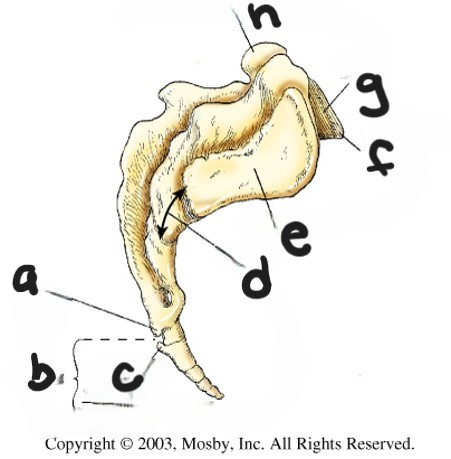
coccyx
what is b?
coccygeal cornu
what is c?
sacrum
what is d?
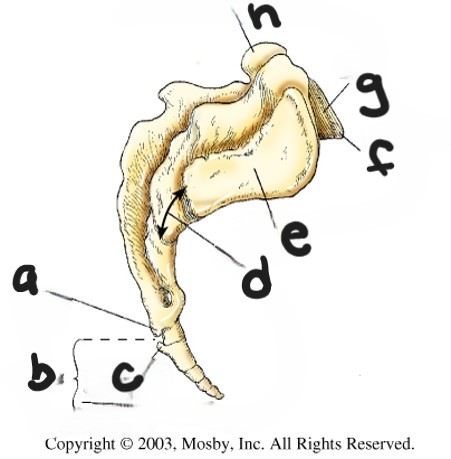
articular surface
what is e?
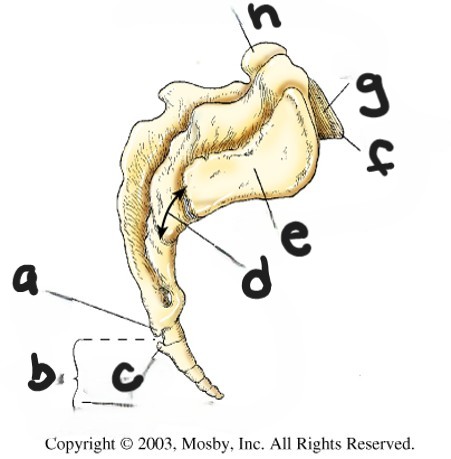
promontory
what is f?
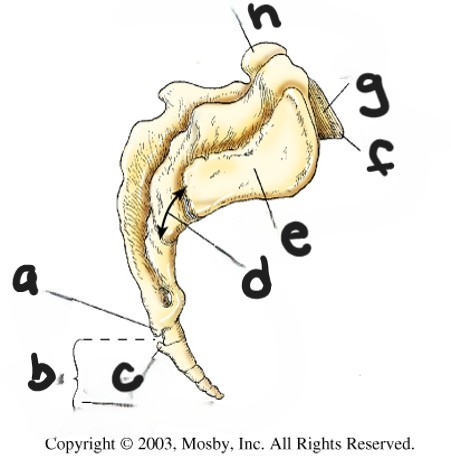
base
what is g?
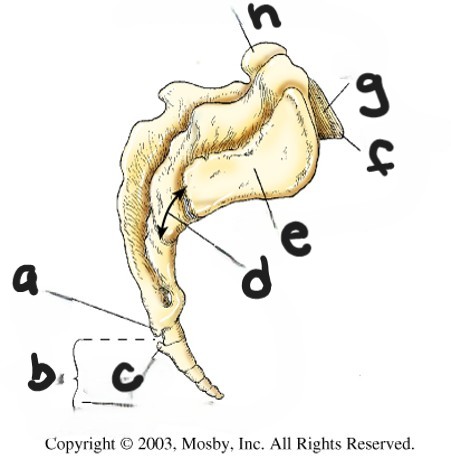
super articular process
what is h?
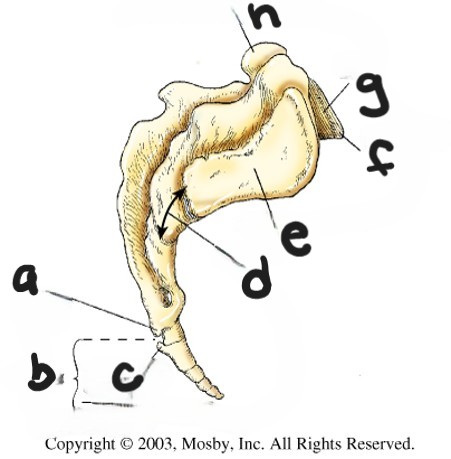
median sacral crest
what is #1?
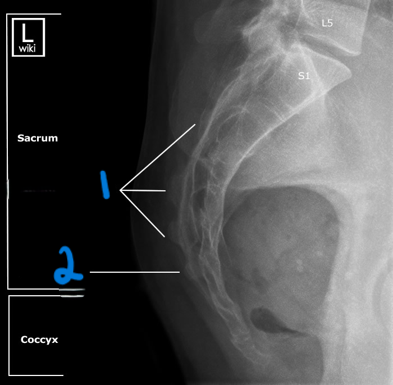
sacral horn
what is #2?
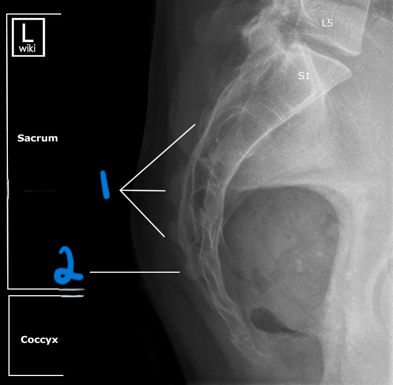
iliac crest
what is #1?
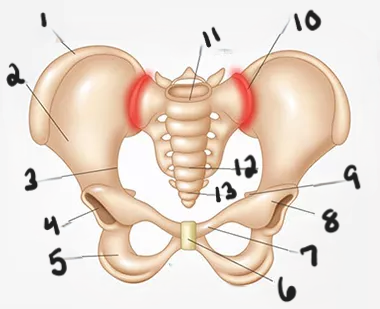
ilium
what is #2?
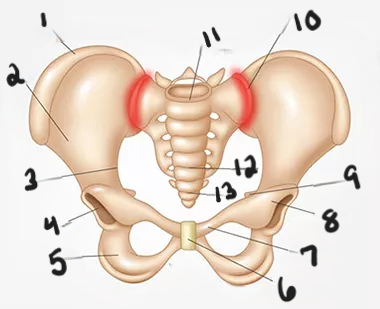
pelvic brim
what is #3?
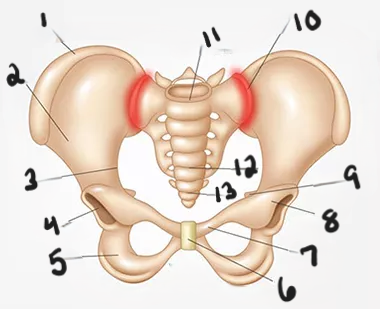
acetabulum
what is #4?
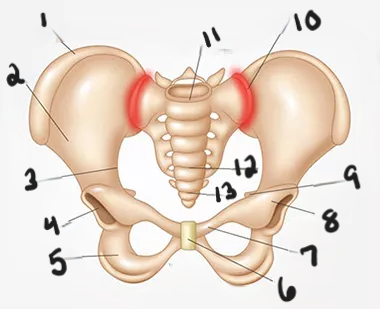
ischium
what is #5?
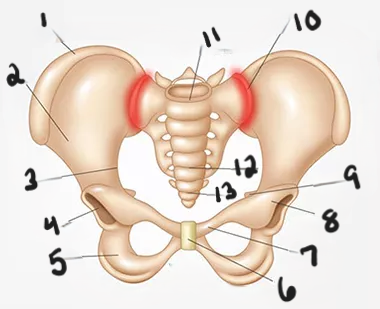
pubic symphysis
what is #6?
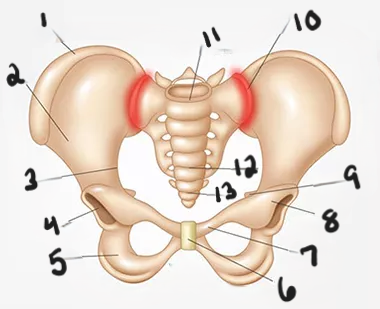
pubic crest
what is #7?
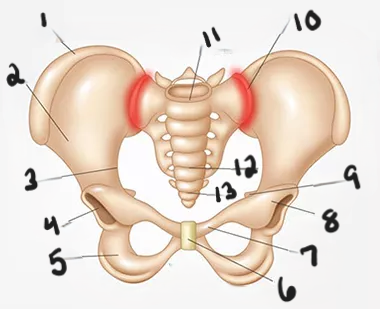
pubic bone
what is #8?
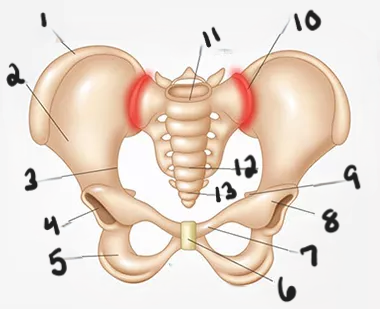
ischial spine
what is #9?
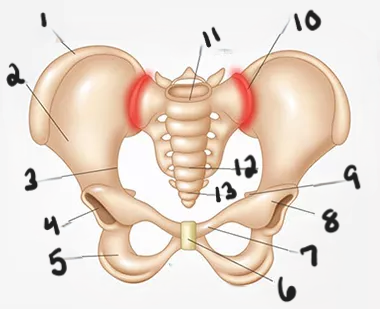
sacroiliac joint
what is #10?