Chapter 2: Life's Chemistry and the Importance of Water
 Call Kai
 Learn
Learn Practice Test
 Spaced Repetition
 Match
Match Flashcards
 Knowt Play
1/72

Name | Mastery | Learn | Test | Matching | Spaced | Call with Kai | Chat |
|---|
No analytics yet
Send a link to your students to track their progress
73 Terms
Atoms
The smallest unit of a chemical element, comprised of a nucleus with protons and neutrons as well as electrons in orbitals
Element
A substance consisting of only one kind of atom that cannot be converted to another substance by ordinary chemical means
Protons
Positively charged particles in an atom that reside in the nucleus
Electrons
Negatively charged particles in an atom that reside in orbital shells around the nucleus
Neutrons
Uncharged particles in an atom that reside in the nucleus; numbers of these can vary with the isotopes of an atom
Nucleus
Where protons and neutrons are gathered in an atom
Electron shells
Where rapidly moving electrons are found, far from the nucleus, such that atoms are mostly empty space
Atomic mass
The mass of the protons plus the mass of the neutrons
Dalton (Da)
The unit of measurement of atomic mass, formerly the atomic mass unit
Atomic number
The number of protons in the nucleus; usually the top number
Periodic table
Where elements are presented in order of atomic number and organized into vertical columns; elements in the same column have the same number of electrons in the outermost shell
Valence shell
The outermost shell of an element; how many electrons reside here in the outermost s and p orbitals determine an element’s chemical properties
Isotopes
Variations of an element with different neutron counts and thus atomic mass
Bohr model
The most common model for atoms proposed by physicist Niels Bohr, where electrons orbiting the nucleus are shown in electron shells differing in distance
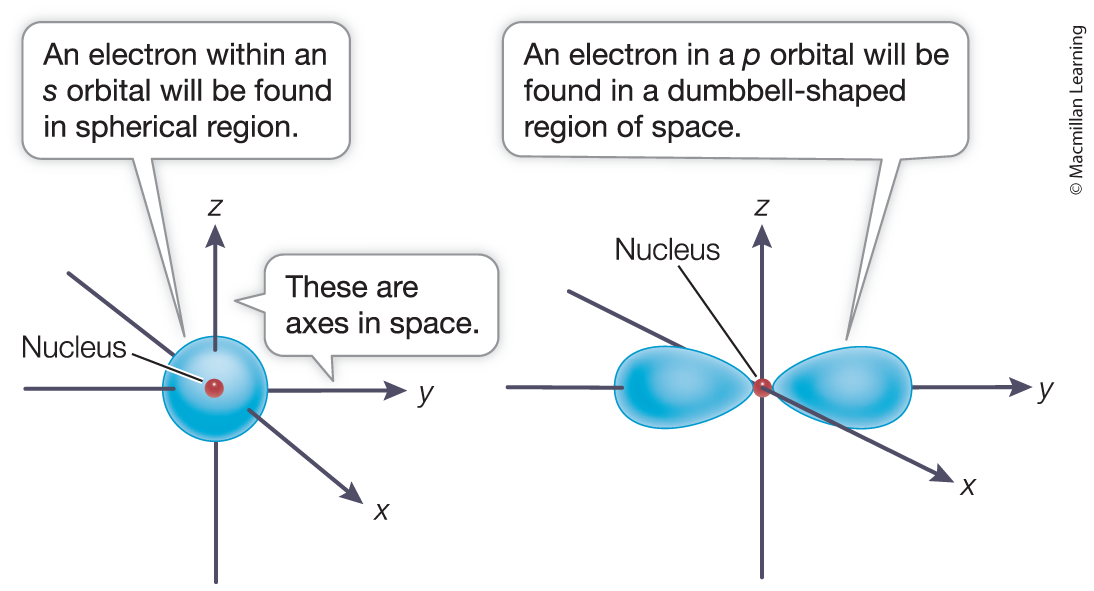
Atomic orbital
Where electrons actually move in each shell for a defined area of space, each with one or two electrons each, including:
Spherical s orbitals
Dumbbell-shaped p orbitals
More higher energy shells with distance
Octet rule
States that an atom will lose, gain, or share electrons to achieve 8 electrons in the outermost shell
Noble gases
The elements in the last column of the periodic table with 8 electrons in the outermost shell, being unreactive to other elements
Electronegativity
An atoms’s tendency to attract electrons from another atom; smaller atoms closer to 8 electrons have higher levels of this — like the most abundant atoms H, C, N, and O
Radioactive decay
The loss of atomic particles to become different isotopes of the same element, or even other elements
Seen with carbon-14 decaying to form nitrogen-14 for greater stability
Chemical bond
An attraction between two atoms
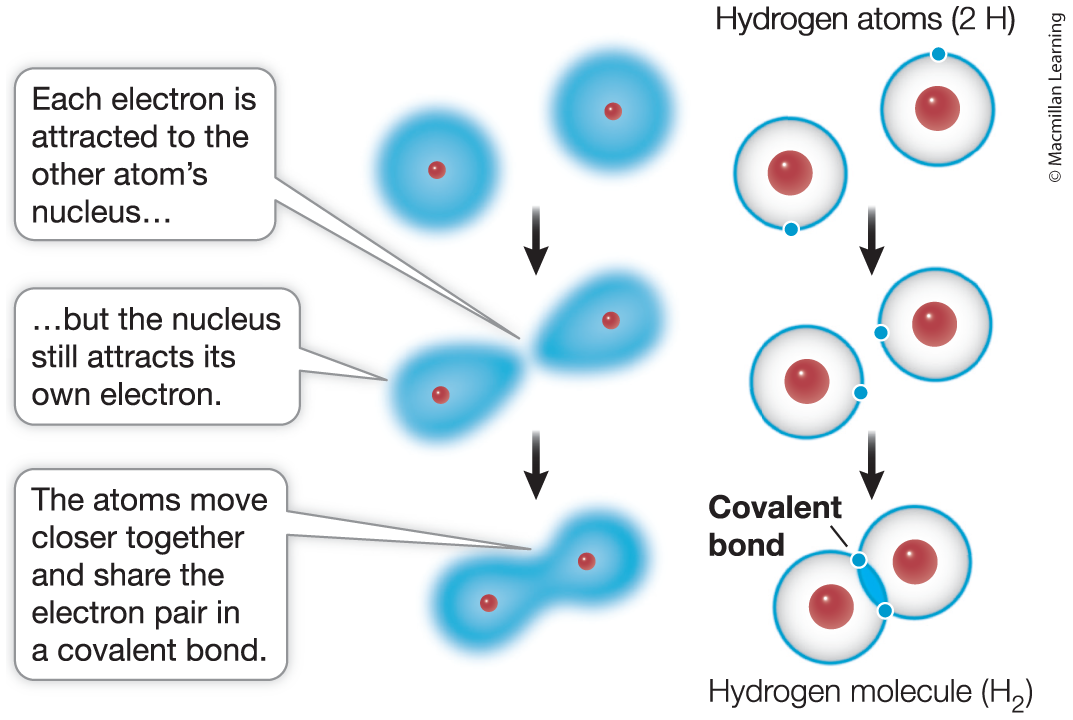
Covalent bond
Strong bonds that result from the sharing of electrons
Forms when two atoms attain more stable configurations by sharing one or more pairs of electrons
Represented in structural formulas by lines drawn between the bonded atoms
Electronegativities cannot be too dissimilar; most common biological molecules have similar electronegativities and form covalent bonds if needed
Orientation
Property of covalent bonds where the length of a covalent bond between a given two elements is the same, and where the angle of each covalent bond with respect to others is also the same
Bond strength
Depends on the atoms involved to determine if a reaction will form
Nonpolar covalent bond
A type of covalent bond that occurs when atoms are shared about equally with the “pull” of each nucleus on the electrons not having a large delta (under a 0.5 difference)
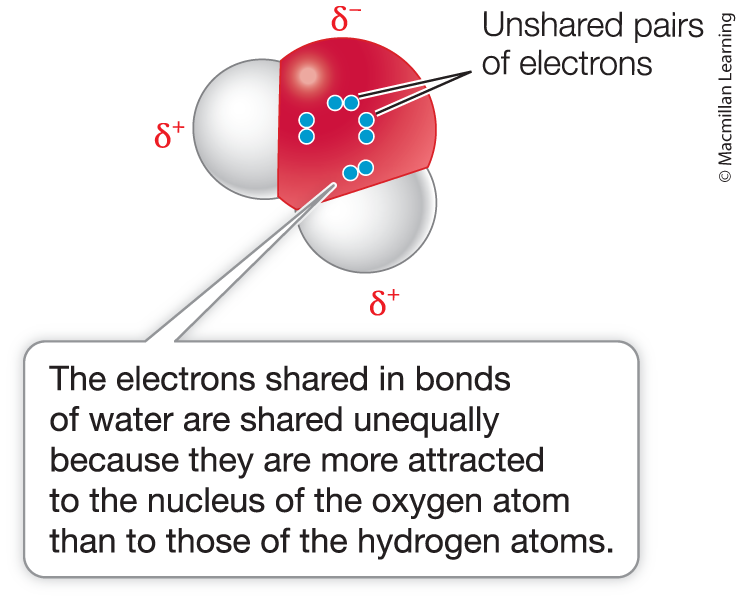
Polar covalent bond
A type of covalent bond where electrons are unequally shared between the two atoms, in a slight charge difference
Seen in H2O, with electrons pulled closer to oxygen due to greater electronegativity
Dipole
A separation of opposite electric charges, such as those in a polar covalent bond
Dipole-dipole interactions
Where a compound can be attracted to slightly oppositely charged atoms in other bonds, creating a weak bond

Ionic bond
Strong bonds that result from the transfer of atoms to another configuration
Occurs between high and low electronegative atoms, creating oppositely-charged ions (greater than 2 difference)
These tend to form crystal lattices with regular, recurring arrangement of the anions and cations (like in table salt)
They also often dissolve in water, rendering the strength irrelevant
Ion
An atom that gains or loses one or more electrons
Cation
The positively charged ion that lost one or more electrons
Anion
The negatively charged ion that gained one or more electrons
Molecule
This is formed when two or more atoms join together chemically
Compound
A molecule formed by at least two different elements
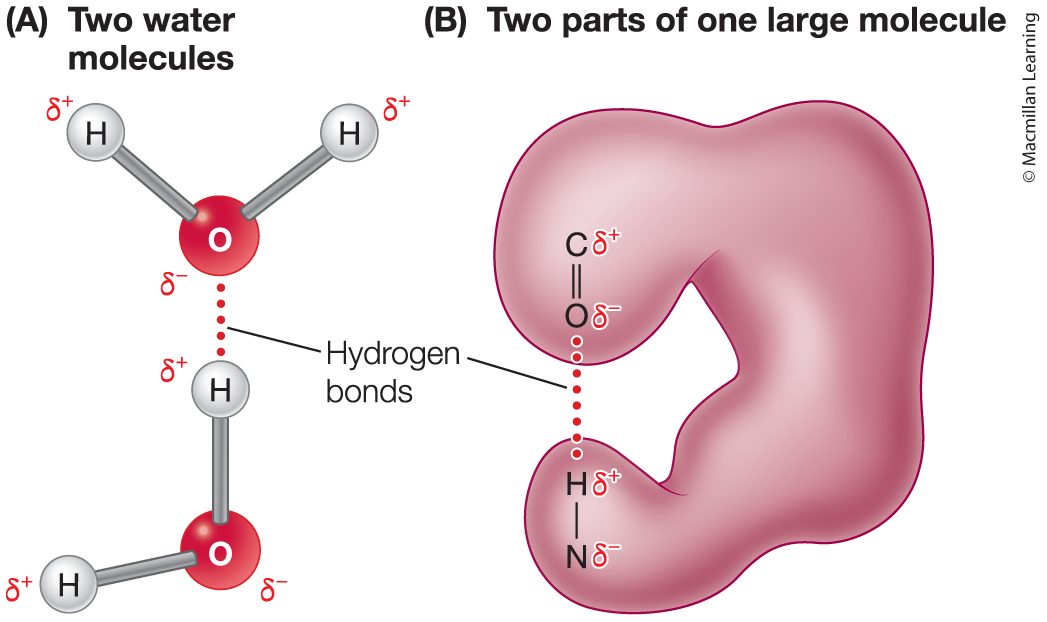
Hydrogen bond
A weak bond caused by electrostatic attractions between slightly-positively charged H and slightly-negatively charged O or N atoms
This is an example of a dipole-dipole interaction
Many can form within one molecule or between molecules, adding strength and determining molecular shape in some cases
van der Waals interactions
Transient electrostatic attraction between two atoms, each of which is in a nonpolar covalent bond
Very small dipoles may form here because of minute asymmetries in electron orbit, which can induce a temporary dipole if close enough
Molecular stability
Inversely correlated to a bond’s potential energy to attain more of this
Energy
The capacity to do work, divided into kinetic (movement) and potential (stored) types
First law of thermodynamics
States that energy cannot be created or destroyed, only conserved
Bond strength
Inversely correlated with a bond’s potential energy and stability; higher levels of energy have lower levels of this
Second law of thermodynamics
States that the total amount of usable energy in a system goes down due to the increase of entropy, defined as randomness or lack of concentration
Usable energy
How much energy is available in the system that is not lost to entropy; this goes down with each transfer due to the second law of thermodynamics
Chemical reaction
An interaction between different groups of atoms, divided into reactants (inputs) and products (outputs)
These conserve energy but result in differences in entropy, properties, and bond energy
Hydrolysis
An exergonic, reversible chemical reaction that releases energy through the use of water; this is naturally more favored
Condensation reaction
An endergonic chemical reaction resulting in the combination of two substances, it results in water as a byproduct and stores free energy in its products
This requires an input of energy and is less favored
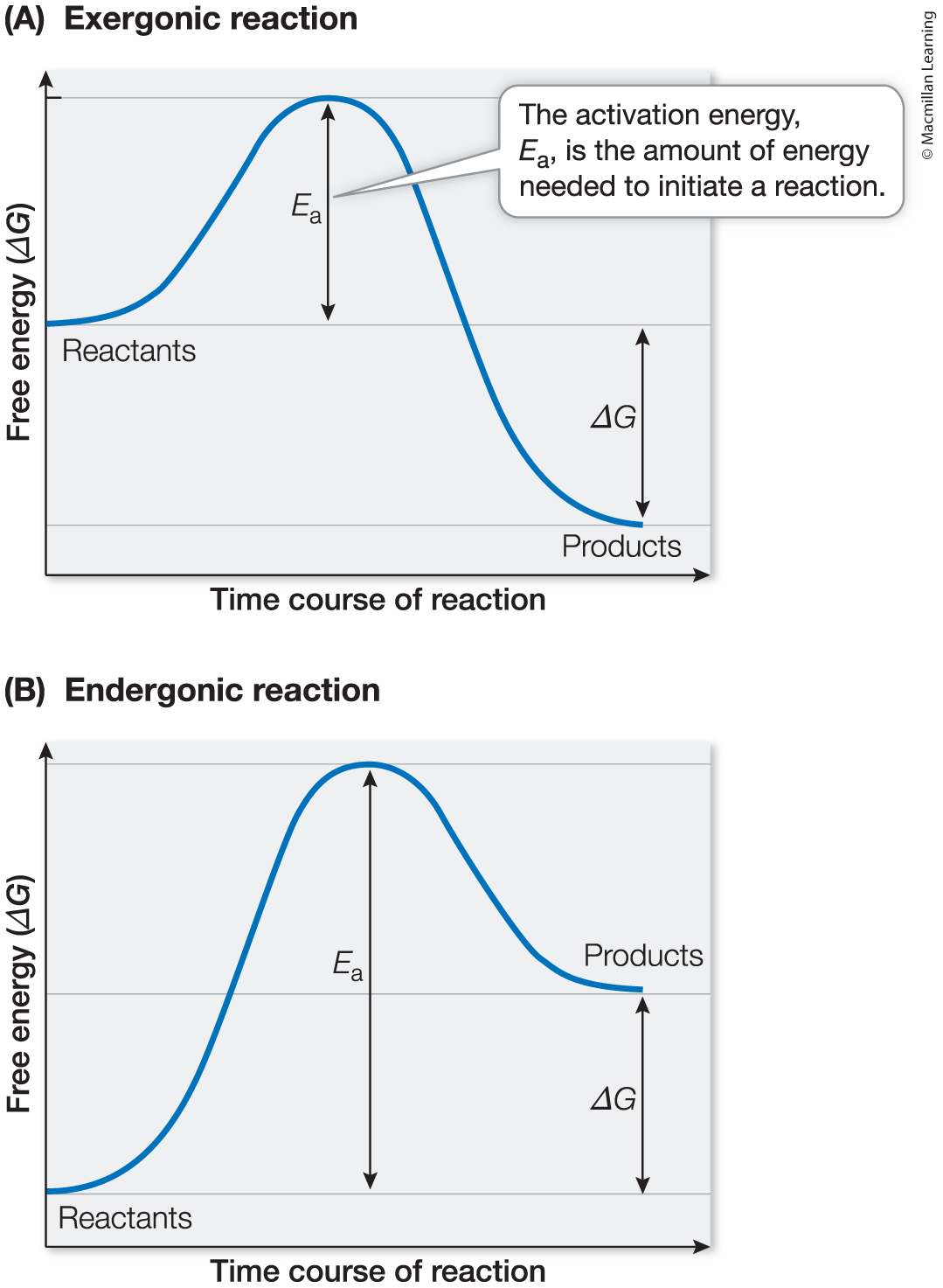
Free energy
A change in the total usable energy between reactions and products, often represented as delta G; this divides exergonic (releasing) and endergonic (absorbing) reactions
Reaction rate
In a chemical reaction, how much of a product is formed over time; this is limited by the required activation energy of the reaction, temperature, and concentration (as these affect collisions)
Equilibrium
The state that occurs when endergonic and exergonic reactions settle into the same reaction rates with no change in relative concentration
Specific heat
The amount of heat needed to raise 1 gram of water by 1 degree Celsius
This is naturally high in water and enables its existence in many organisms, buffering temperature
Heat of vaporization
The amount of energy needed for vaporization
This is naturally high in water and enables the cooling of living organisms due to its absorption
Density
The ratio of a substance’s mass to volume
This is lower in ice compared to water due to greater organization, which enables lakes to freeze top to bottom
Hydrogen bonds
Bonds between hydrogen atoms of different molecules; these can create cohesion (which holds water together for surface tension) and adhesion (which allows water to adhere to another surface)
Solvent
What dissolves a specific substance; these change distributions but do not break molecular structures
Water is a type of this, forming weak attractions with substances with polarity, thus dividing hydrophilic and hydrophobic reactions
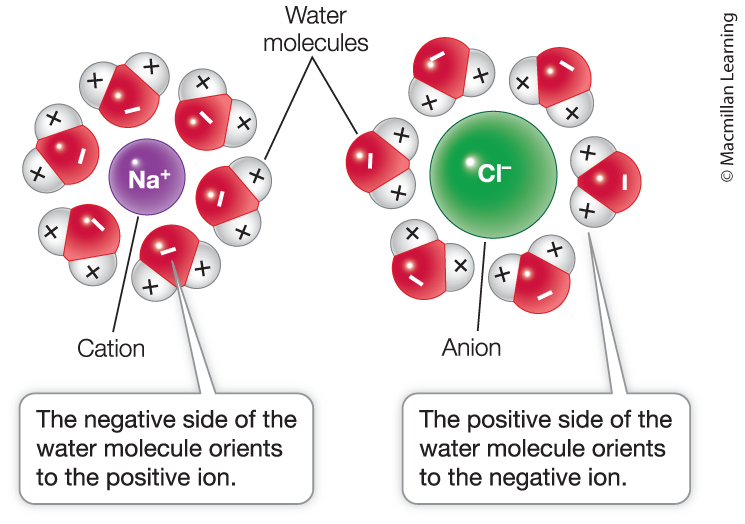
Hydrophilic
The tendency to be attracted to and dissolve in water; this is greater in polar molecules due to the creation of a hydration shell surrounding both ions
The sum of these forces against a bond’s strength determines dissolution
Common in biology
Hydrophobic
The tendency to not be attracted to and dissolve in water; this is seen in non-polar substances such as oil which do not form hydration shells
Amphipathic
Substances that are both hydrophilic and hydrophobic
Self-ionization
When H2O spontaneously ionizes into H3O+ and OH-
Occurs in very small amounts
Neutral solution
A solution in which the concentration of H+ (hydronium) ions is equal to the concentration of OH- (hydroxide) ions
Acids
These raise H+ concentrations relative to OH-
Can be strong or weak depending on substance’s resistance to allowing a free H+
Bases
These produce more OH- against H+ when as a result of dissociation, forming water with some of the H+ ions
Can be strong or weak depending on stability; OH- is just very unstable and easily absorbs an H+
Buffer
A solution that reduces the impact of acids or bases on pH relative to if they were not present at all
Acids adding H+ react with a negative ion in a buffer to form the original reactant, reducing the acid’s impact
Bases adding OH- react with the H+ in a buffer to form water, reducing basic impact
Required in living systems, seen in blood to have a constant pH
pH
The negative log of the concentration of H3O ions
Neutral substances have concentrations of 10-7 H3O M
Acidic substances have concentrations greater than 10-7 H3O M, resulting in a lower number
Basic substances have concentrations less than 10-7 H3O M, resulting in a greater number

Functional groups
Groups of atoms that affect the four macromolecules through their number and location by conferring different properties
Organic chemistry
The study of carbon due to the available bonds that make it highly versatile
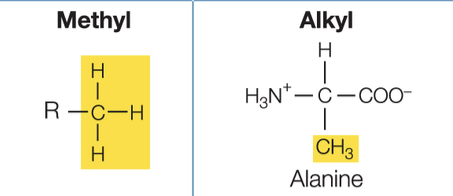
Methyl
A nonpolar group important for the modification of proteins and cytosine (C) nucleotide
Type of alkyl, expressed as CH3 to a substance

Hydroxyl
A polar group involved in hydrogen bonding and condensation reactions
Type of alcohol, expressed as OH to a substance
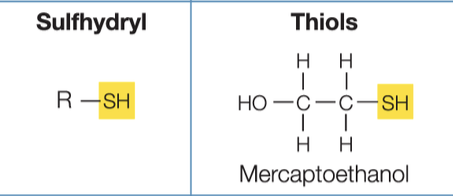
Sulfhydryl
A polar group that can form stabilizing disulfide bridges in proteins
Type of thiol, expressed as SH to a substance

Aldehyde
A very reactive polar group important in energy releasing reactions
Expressed as C that is double bonded to O and single bonded to H
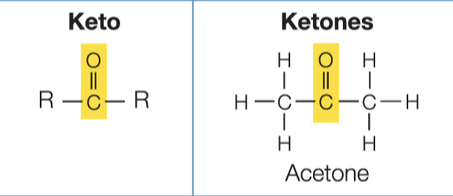
Keto
A polar group important in carbohydrates and energy reactions
Type of ketone, expressed as carbon double bonded to oxygen
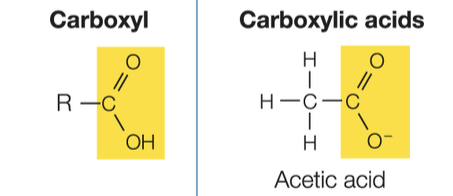
Carboxyl
A charged, acidic group that ionizes in living tissues to form COO- and H+, reacting with amino groups to form peptide bonds
Expressed as C double bonded to H and single bonded to OH
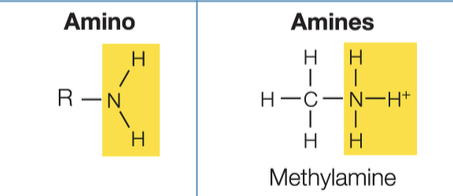
Amino
A charged, basic group that accepts H+ in living tissue to form NH3+; and reacts with carboxyl groups to form peptide bonds
Expressed as N single bonded to two different H atoms

Phosphate
A polar, hydrophilic, and acidic molecule that ionizes in living tissues and enters into condensation reactions
Strongly exergonic with hydrolysis in water
Structural isomers
Molecules with the same chemical composition but different groupings and joinings, like glucose and fructose both having C6H12O6
Stereoisomers
Molecules with the same chemical compositions and groups but differ in their three-dimensional geometry