Nervous System | Organ Systems - MCAT
 Call Kai
 Learn
Learn Practice Test
 Spaced Repetition
 Match
Match Flashcards
 Knowt Play
1/29

30 Terms
Basic and Higher functions of the Nervous System
Basic: Motor, Sensory, Automatic
Higher: Cognition, Emotion, Consciousness
Somatosensory tracts
Position, vibration and fine touch travel together in the dorsal column–medial lemniscus pathway (DCML) (aka posterior column-medial lemniscus pathway (PCML)
Pain, temperature and gross touch travel together in the Anterolateral system aka Spinothalamic tract
Organization of the nervous system
Central Nervous System = Brain + Spinal Cord
Peripheral Nervous System = Nerves + Ganglia
Sensory Neurons
Motor Neurons
Somatic Nervous System → voluntary movement (ft. skeletal muscle)
Autonomic Nervous System → involuntary movement
Sympathetic Nervous System
Parasympathetic Nervous System
Sympathetic vs. Parasympathetic
Functions
Neurotransmitters used
Position of ganglia and length of nerves
Sympathetic → Fight or Flight
Increase heart rate and blood pressure, Direct blood flow to muscles
Preganglionic neurons (primarily) use Acetylcholine, Postganglionic neurons use Norepinephrine
Ganglia in middle of spinal cord
1st neuron sends short axon to 2nd neuron, 2nd neuron sends long axon to target cells
Parasympathetic → Rest and Digest
Decrease heart rate and blood pressure, Direct blood flow to intestines
Neurons use Acetylcholine
Ganglia at bottom and top of spinal cord
1st neuron sends long axon to 2nd neuron, 2nd neuron sends short axon to target cells
Afferent vs. Efferent
From PNS to CNS vs. From CNS to PNS
Arrive vs. Efflux
Lower motor neuron vs. Upper motor neuron
UMNs control LMNs, which control skeletal muscle
UMNs originate in cerebral cortex and brainstem, LMNs originate in brainstem and spinal cord
Motor unit
Lower motor neuron + all the cells it controls
SAME DAVE
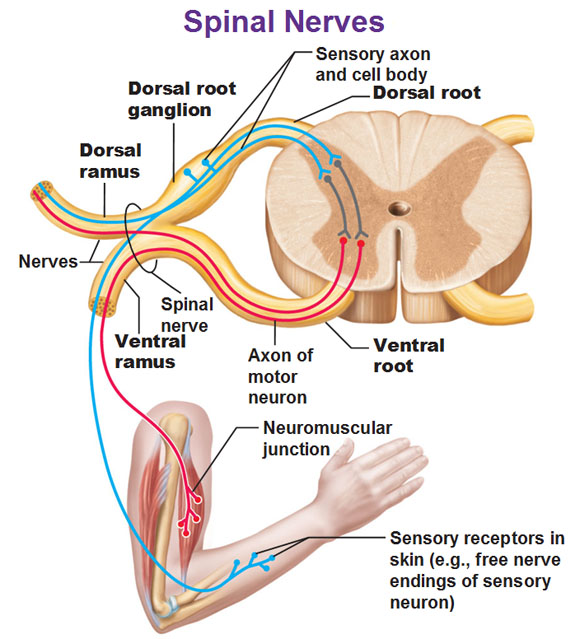
Sensory is Afferent, Motor is Efferent
Dorsal is Afferent, Ventral is Efferent (regarding spinal nerves)
Lower Motor Neuron Signs
Atrophy = shrinkage
Fasciculation = involuntary twitching
Hypotonia = floppage
Hyporeflexia = weaker or absent reflex response
Upper Motor Neuron Signs
Hypertonia
Hyperreflexia
Clonus = rhythmic contraction of antagonist muscles (ft. muscle stretch reflex?)
Extensor Plantar Response = + Babinski sign
Draw a diagram of the developing brain

Corticospinal vs. Corticobulbar tracts
2 paths thru which Upper Motor Neurons get to Lower Motor Neurons
To reach LMNs in the spinal cord, UMN axons cross over to other side where medulla meets spinal cord
To reach LMNs in brainstem, UMN axons may either cross or not cross
Muscle stretch reflex
Muscle contraction in response to stretch
Protects muscle from tearing, helps with posture
eg. knee-jerk reaction: hitting patellar tendon stretches quadriceps femoris muscle, muscle spindles detect stretch and send signal to lower motor neurons in spinal cord to contract quadriceps and to inhibitory neurons to tell LMNs to relax hamstrings
Neural stem cells vs. Neural crest cells
neural cells in CNS are derived from these
vs.
neural cells in PNS are derived from these
Glial cell types
Astrocytes = structural support, scar formation, provide lactate, end-feet are part of blood brain barrier, help clear neurotransmitters from synapse
Ependymal cells = produce cerebrospinal fluid, create leaky barrier b/t cerebrospinal and interstitial fluid
Microglia = macrophages (inflammation converts from resting to active state)
Oligodendrocytes = myelination in CNS (can myelinate several per cell)
Schwann cells = myelination in PNS (can only myelinate once per cell)
Development of neuron
Neural stem/crest cell differentiates into Neuroblast (which can only differentiate into neurons)
neuroblast migrates to final location of soma
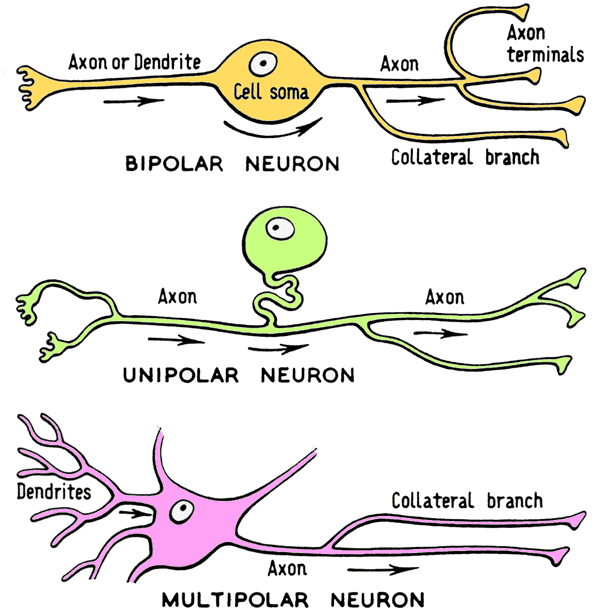
there, it extends axon with growth cone that helps find target = unipolar neuron
unipolar neuron differentiates into bipolar, multipolar, or pseudounipolar mature neuron
Notable neurotransmitters
Functions and locations
Structural classes they belong to
Amino acids: Glutamate, GABA, Glycine
Monoanimes: Serotonin, Histamine, Dopamine, Epinephrine, Norepinephrine
Peptides: Endorphins
Others: Acetylcholine
Glutamate is main excitatory NT in the nervous system; important for learning, memory and cognitive function
GABA is main inhibitory NT in the brain: regulates anxiety, sleep, stress and muscle tone
Glycine is main inhibitory NT in the spinal cord and brainstem: regulates motor control, pain processing and auditory signals
Serotonin regulates mood, sleep, digestion, nausea, wound healing, bone health, sex drive. Primary building block for melatonin low levels linked to depression
Histamine is produced by neurons in the hypothalamus and regulates sleep-wake cycle, appetite, cognitive function
Dopamine is important for reward and motivation, motor control, cognition and attention
Epinephrine regulates metabolism, attention, sleep-wake cycle, panic and excitement (small role as neurotransmitter)
Norepinephrine is main NT in sympathetic nervous system; increases attentional/arousal, regulates sleep-wake cycle, mood and memory, constricts blood vessels (significantly larger role than epinephrine)
Endorphins: natural painkillers, inhibitory NTs released during stress, physical exertion & pleasurable activities 😛
Acetylcholine: enables communication between neurons and muscle (both voluntary and involuntary), regulates memory, learning and attention
Good if u can name 2 things about each NT
(If not specified as excitatory or inhibitory, they probably do a good amount of both)
Frontal Lobe
High-level thinking
Decision-making
Planning and organizing
Impulse control
working memory
Voluntary movement
Speech (incl. broca’s area)
Occipital Lobe
Visual processing
Parietal Lobe
Sensory processing (somatosensation)
touch, pain, temperature, position / movement
Spatial awareness
Data moves from occipital → parietal via dorsal stream
Motion, depth, spatial location
Sensory integration
Math and symbols
Temporal Lobe
Auditory processing
Language (incl. wernicke’s area)
Memory (incl. hippocampus)
Emotions
Visual recognition
Data moves from occipital → temporal via ventral stream
Form, color, detailed object recognition
Cerebellum
Coordination of voluntary movement
Balance and posture
Muscle tone (normal state of continuous light tension)
Cognition
Attention, language processing, working memory
Emotion
Limbic system
what it is
component parts
group of connected structures deep in the brain that control emotions, memory, hunger and basic survival drives
includes
thalamus
hypothalamus
cingulate gyrus
hippocampus
amygdala
Thalamus
relay and processing center
receives and filters sensory*, motor and limbic signals, then sends them to cerebral cortex
*all senses except smell
Hypothalamus
Maintains homeostasis and links nervous to endocrine system
Regulates temperature, hunger, thirst, sleep-wake cycle, blood pressure, heart rate and digestion
Directs pituitary gland
Hippocampus
memory
forms new declarative memories
transfers short term data to long term storage
constructs mental maps for navigation
helps link emotion to memory
Amygdala
edgy
processes fear and anger, initiates “fight or flight”
helps read facial expressions and social cues
helps link emotion to memory
Midbrain
Visual and auditory processing, eye movement and body movement
Bridge that connects forebrain and lower brain
Pons
Bridge between cerebrum, cerebellum and spinal cord
regulates breathing rhythm, sleep states, facial movements and sensations
coordinates voluntary movement, fine motor control and posture
Medulla oblongata
Vitals and reflexes
Basic functions: breathing, heartbeat, blood pressure
Basic Reflexes: coughing, sneezing, swallowing, gagging, vomiting
also is point of crossover for motor nerves