Molecular Genetic Analysis
 Call Kai
 Learn
Learn Practice Test
 Spaced Repetition
 Match
Match Flashcards
 Knowt Play
1/33

Earn XP
Description and Tags
quiz
Name | Mastery | Learn | Test | Matching | Spaced | Call with Kai | Chat |
|---|
No analytics yet
Send a link to your students to track their progress
34 Terms
Forward Genetics
Phenotype —> mutation
1) Mutants fly (with white eyes)
2) You discovers the gene responsible of red pigmentation
Reverse genetics
Mutation —> Phenotype
A Wild type eyes fly with the gene x
Create a nonsense mutations and see that it causes no pigmentation in the eye ( turns to white eyes
PCR
polymerase chain reaction
what is polymerase chain reaction (PCR) specifically used in lab experiment?
DnA synthesis in a test tube —> where they use this technique to make a lot of copies of a target sequences (DNA sequence on the tube that is used to copy) of DNA
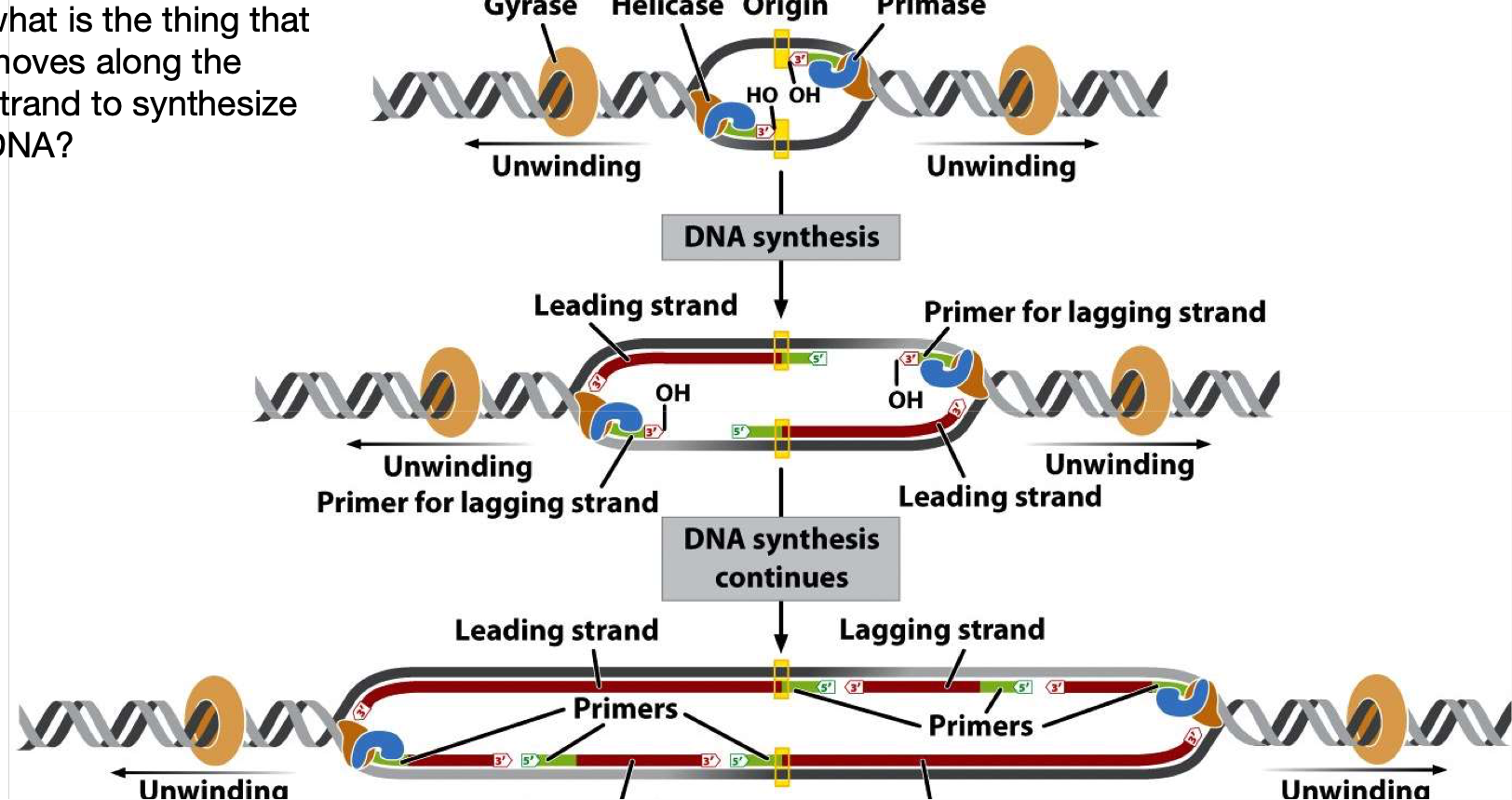
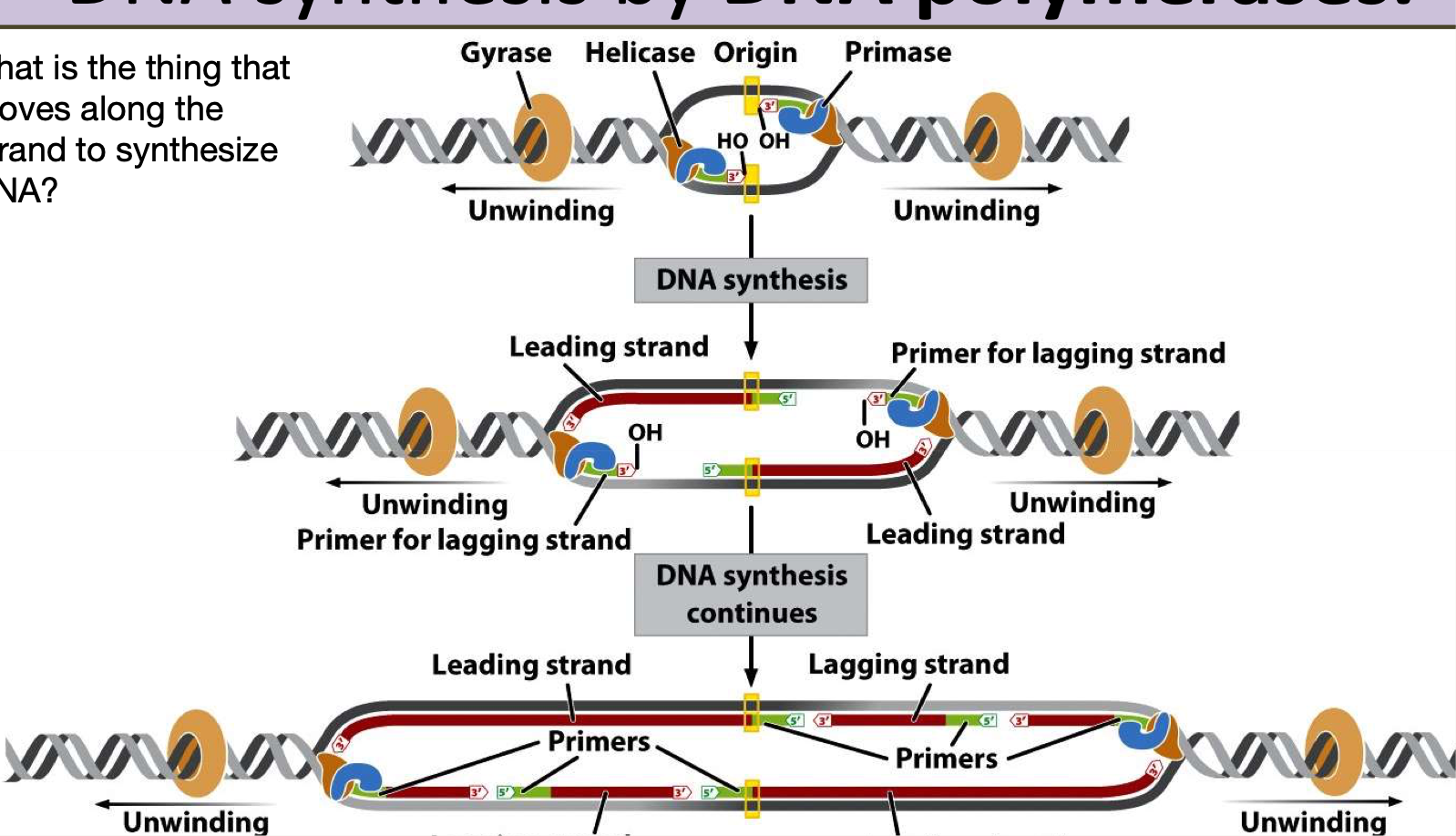
What makes/brings(synthesis) the primer during DNA synthesis? What is needed to start (initiate) DNA synthesis? What moves along the strand that synthesis DNA?
Primase
Primer
DNA polymerase
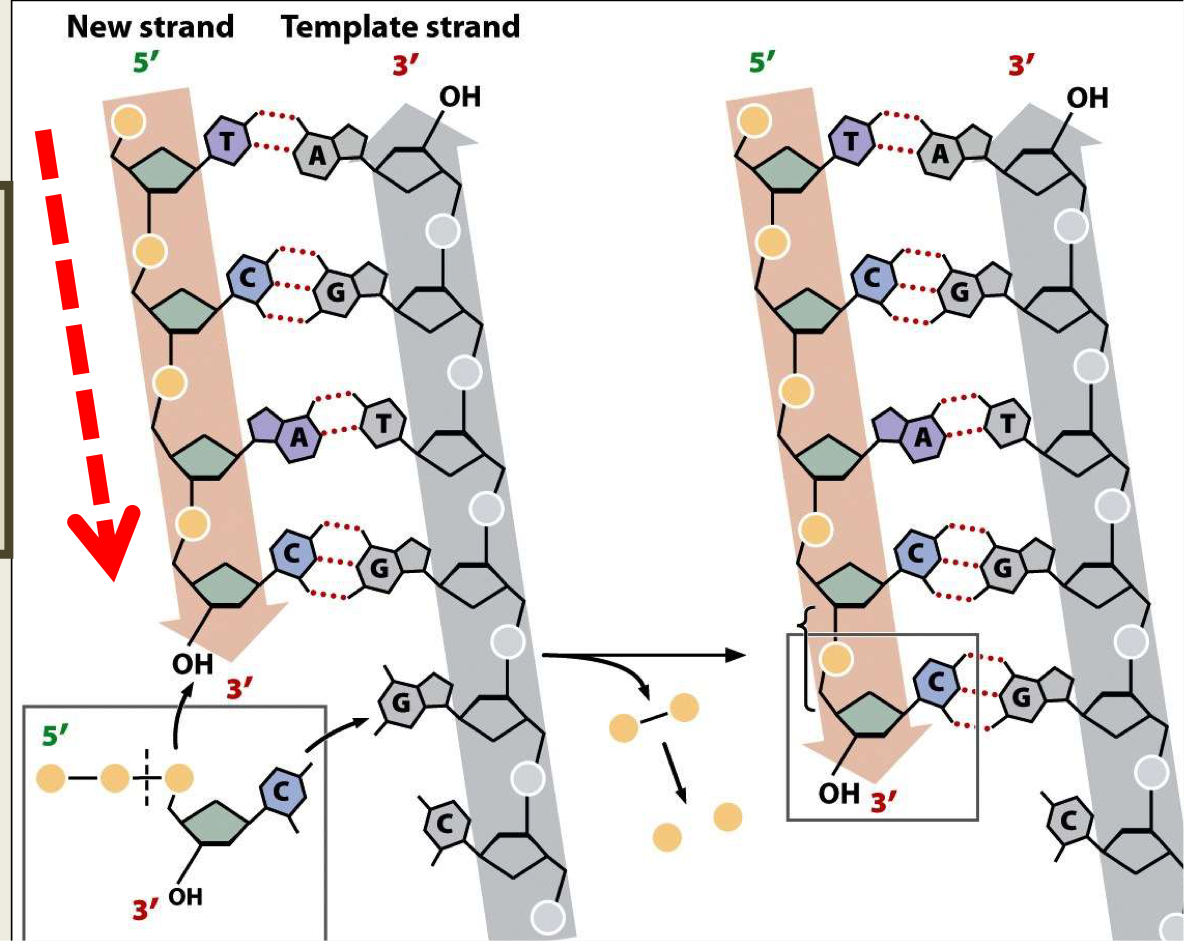
Where does DNA polymerase add dntps during replication?
free 3’OH
Component of a PCR reaction (what is involved)
Template DNA
Taq polymerase
dNTPS
Primers
Buffers
What does the template dna do in a PCR reaction
genomic extraction ( in a lab it is a process of releasing chromosomal DNA from inside cells and separating it from protiens, memebrane, and other material)
what does the taq polymerase do in a pcr reaction?
thermally stable Dna polymerase
what do dNTPS do in PCR reactions?
deoxynucleotide thriphoasphates
brings the building material for new DNA ( A’s, T’s, C’s, and G;s)
What do Primers (oligos) do in PCR reaction?
small part within the sequence that determine the outer bounds of target sequence
used initiate the reaction by providing 3’OH for taq polymerase
used in pairs (forward and reverse primer)
what do buffers do in a PCR reaction? (dont need to know)
maintain stable pH for the reaction
What term describes the growth of amplification during the cycle through 3 temperature in a PCR reaction?
Exponential amplification
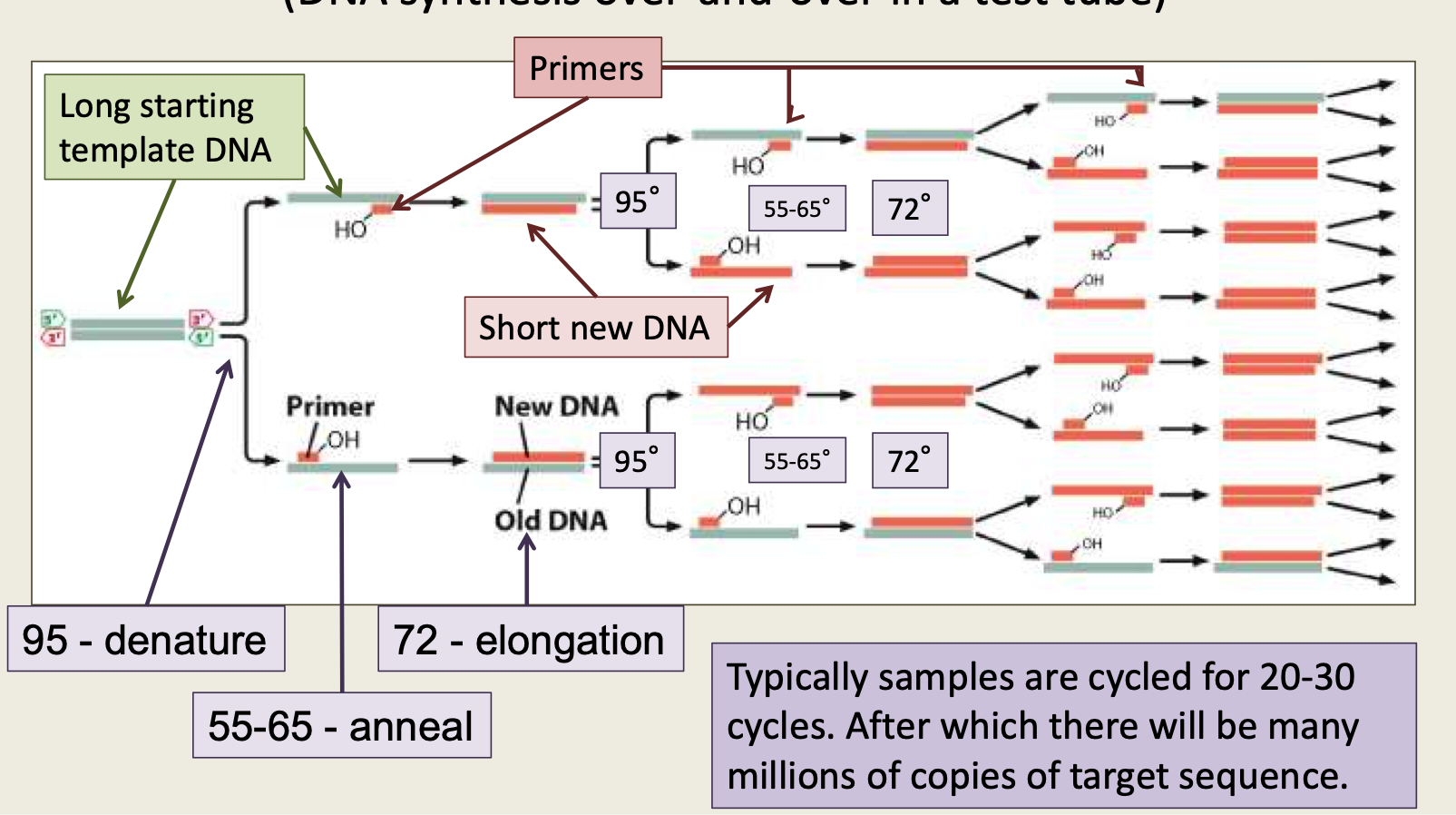
Three stages of PCR reaction and their temps
1) 95 degrees - Denature
2) 55-65 degrees - Anneal
3) 72 degrees- elongation
What happens in the Denature stage of the PCR reaction?
Hydrogen bonds disrupted and created ssDNA
What happens in Anneal stage of the PCR reaction?
Primers anneal (bind from heating and cooling ) to target sequence
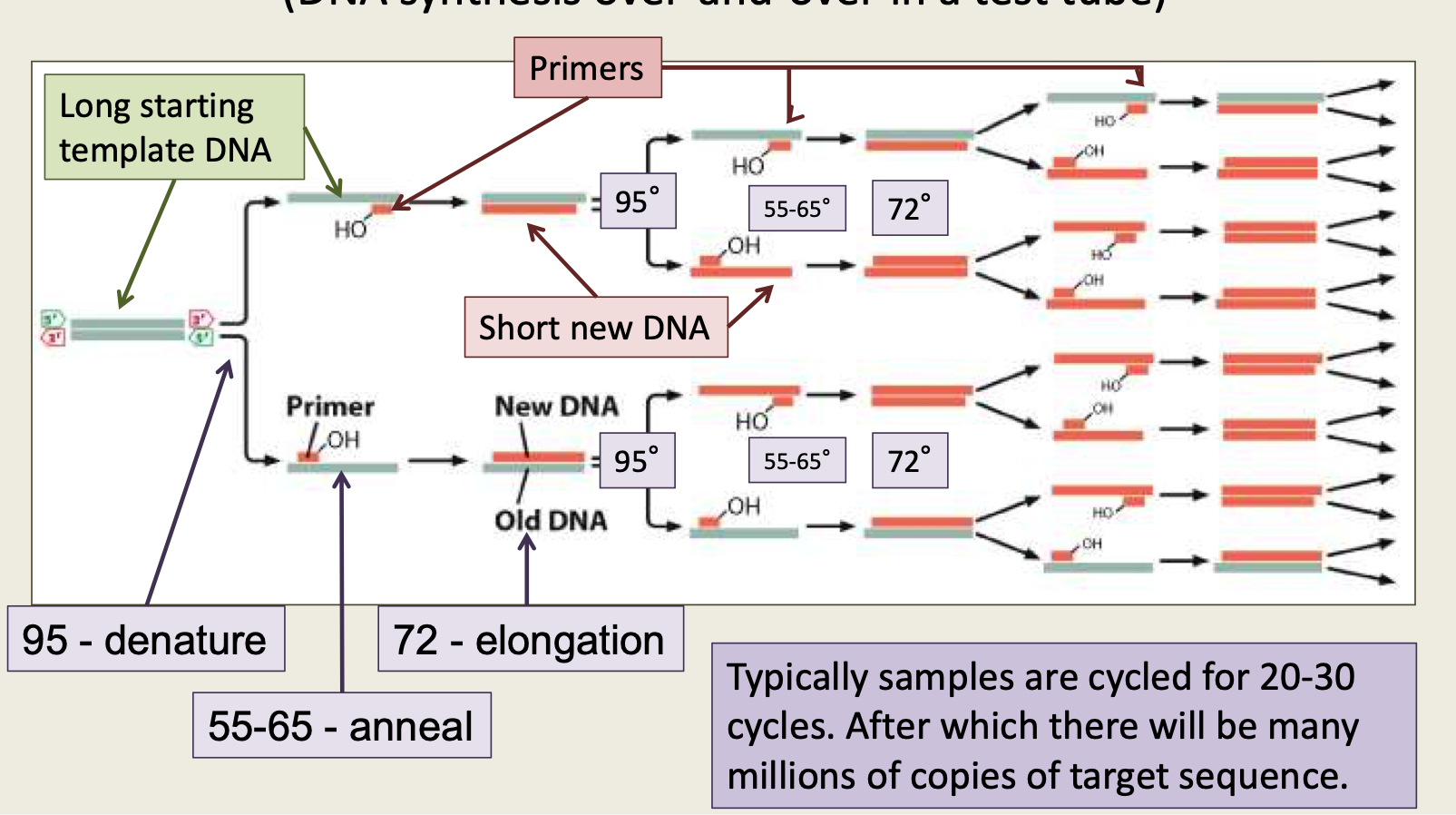
what happens in Elongation stage of the PCR reaction?
Traq polymerase synthesizes new DNA
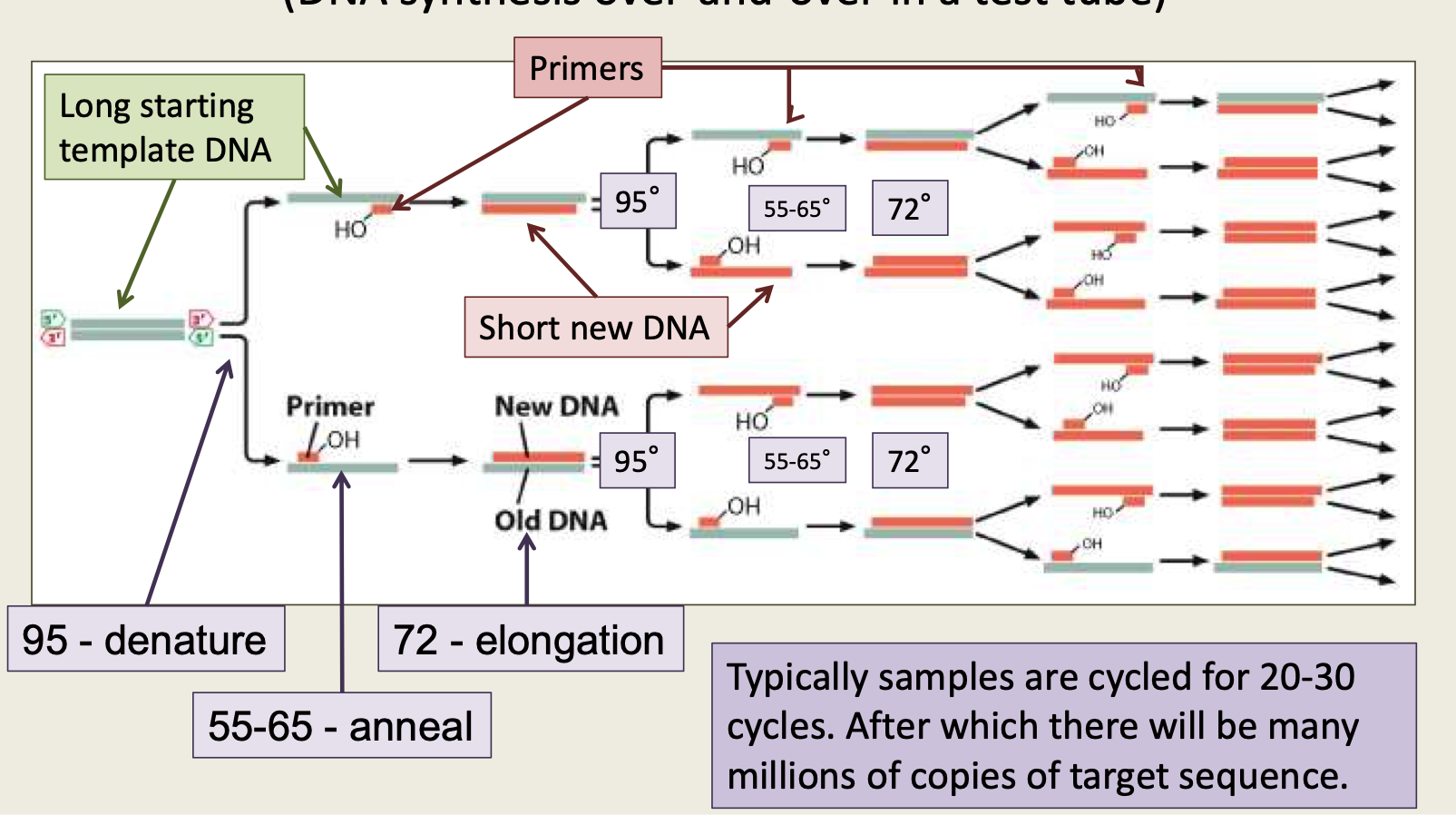
how many cycles do samples typically cycle for? drntk
20-30
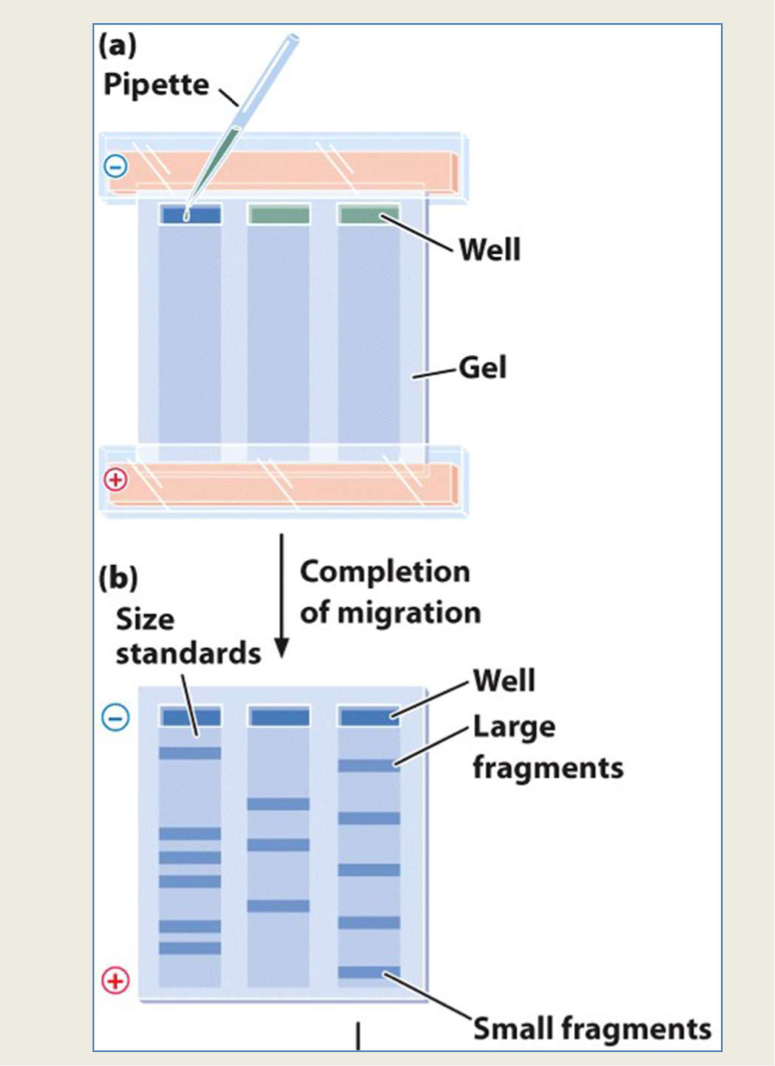
what is Gel electrophoresis/ what are they used for ?
used to separate molecules based on their size
Steps of gel electrophoresis
nuclei acids are put into the gel matrix with a salt buffer
an electrical charge is passed through the gel
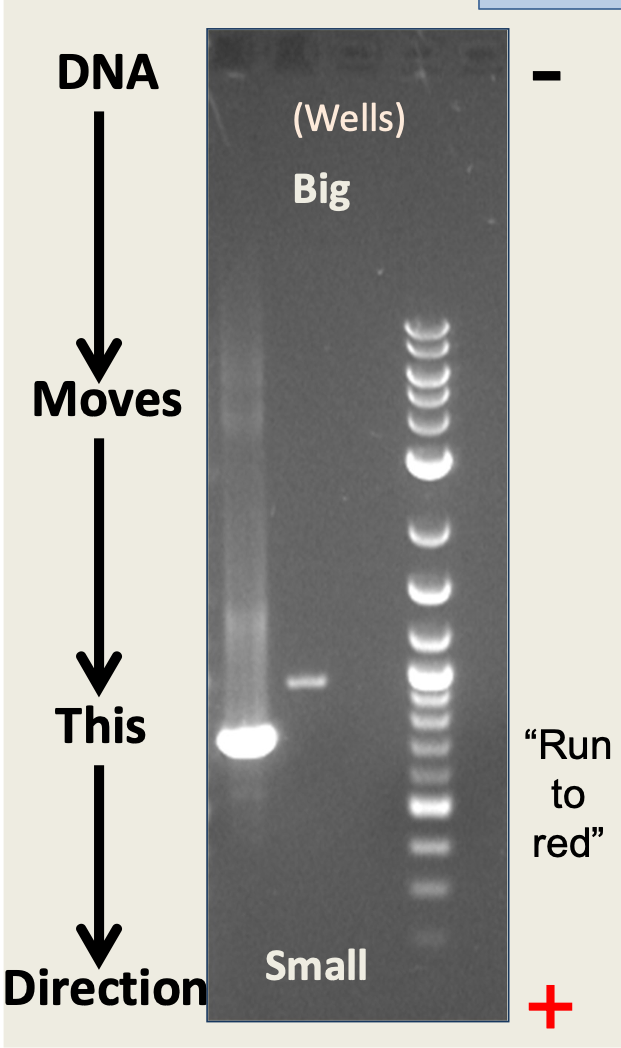
nucleic acids then travel to the positive pole
label is added to DNA or gel (e.g. Etbr, racioactive label) that allows visualization
sample is run alongs a size standard/ladder
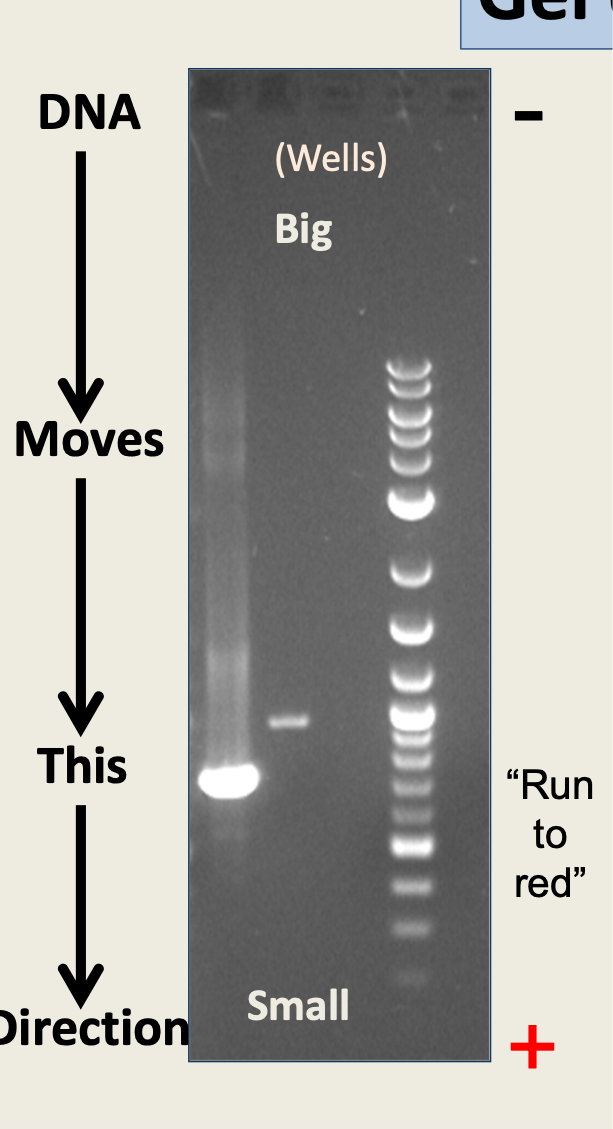
Do smaller or larger fragments of nuleic acids run faster in the gel
smaller fragments
Restriction enzymes/endonuclease (cut nucleic acids inside dna/ rna strand) do
isolate from bacteria (viral defense)
cut dsDNA in sequence specific way
How long are recognition site (sites where proteins/Enzymes bind in DNA strand) for restriction enzymes
4 to 8 bp long
Palindromic ( dont need to know)
a nucleic acid sequence on double-stranded DNA where reading forward (5' to 3') on one strand matches the sequence reading forward on the complementary opposite strand
Most recognition sequences in restricted enzymes are…
palindromic
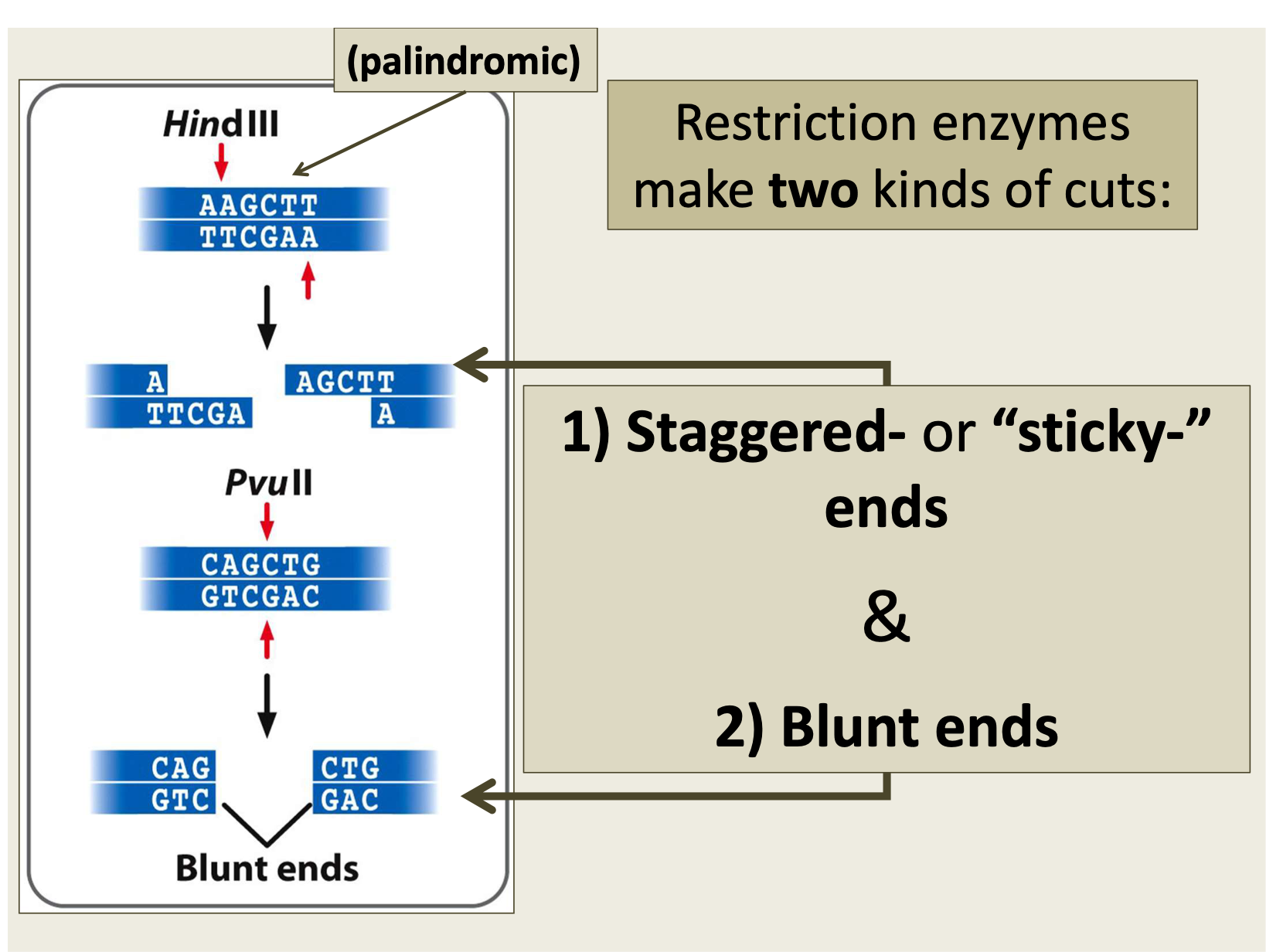
What are the two cuts that restriction enzymes make
1) staggered/ “sticky” ends
2 blunt ends
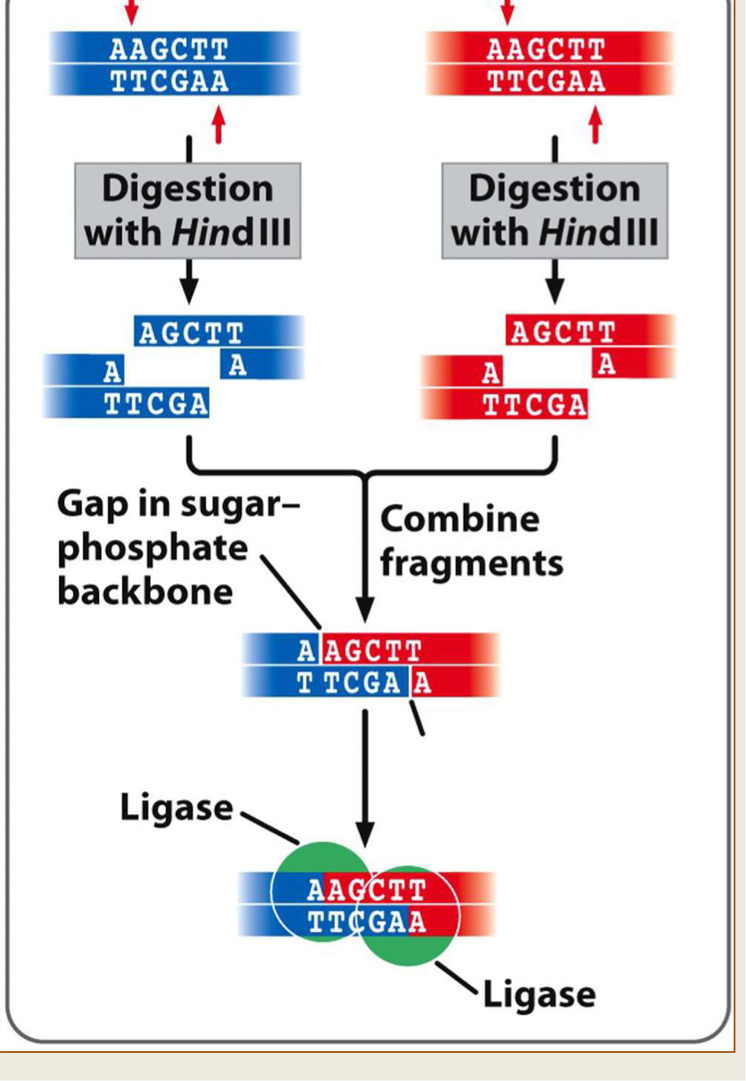
how do restriction enzymes recombine with DNA
Cutting different sources of DNA with sticky end restriction will allow recombination
Vector
an agent that can carry DNA into a cell or organism
Examples of vectors
bacteriophages, viruses, plasmids
What is used to make copies of sequences in bacteria microorganisms
Cloning vector
The process of Plasmid cloning (type of cloning vector)
Both the foregin DNA you want to ‘clone’ and the plasmid are cut with the same ‘sticky-end’ restriction enzyme
recombined the cut sample of DNA and cut plasmid together w DNA ligase
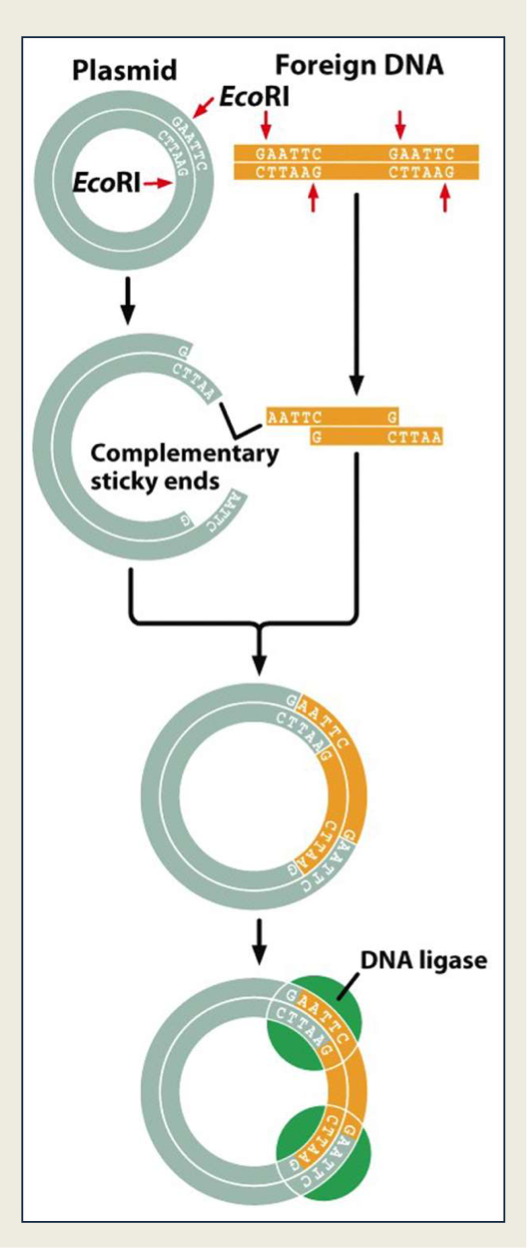
what is bacterial transformation in plasmid cloning
is when the new foreign bacterial DNA from surrounding (target sequence) is in the plasmid it incorporates it
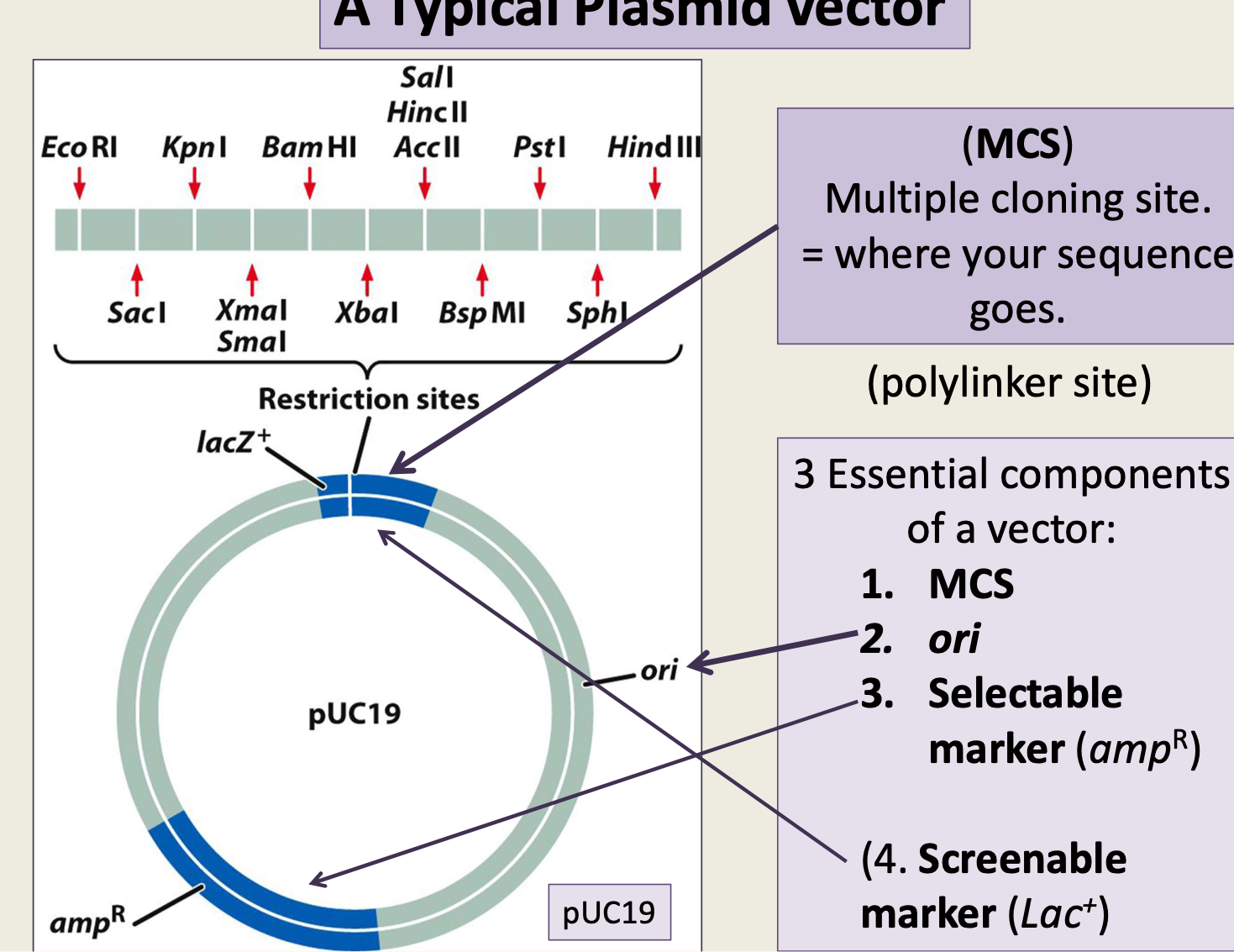
Typical Plasmind vector digram
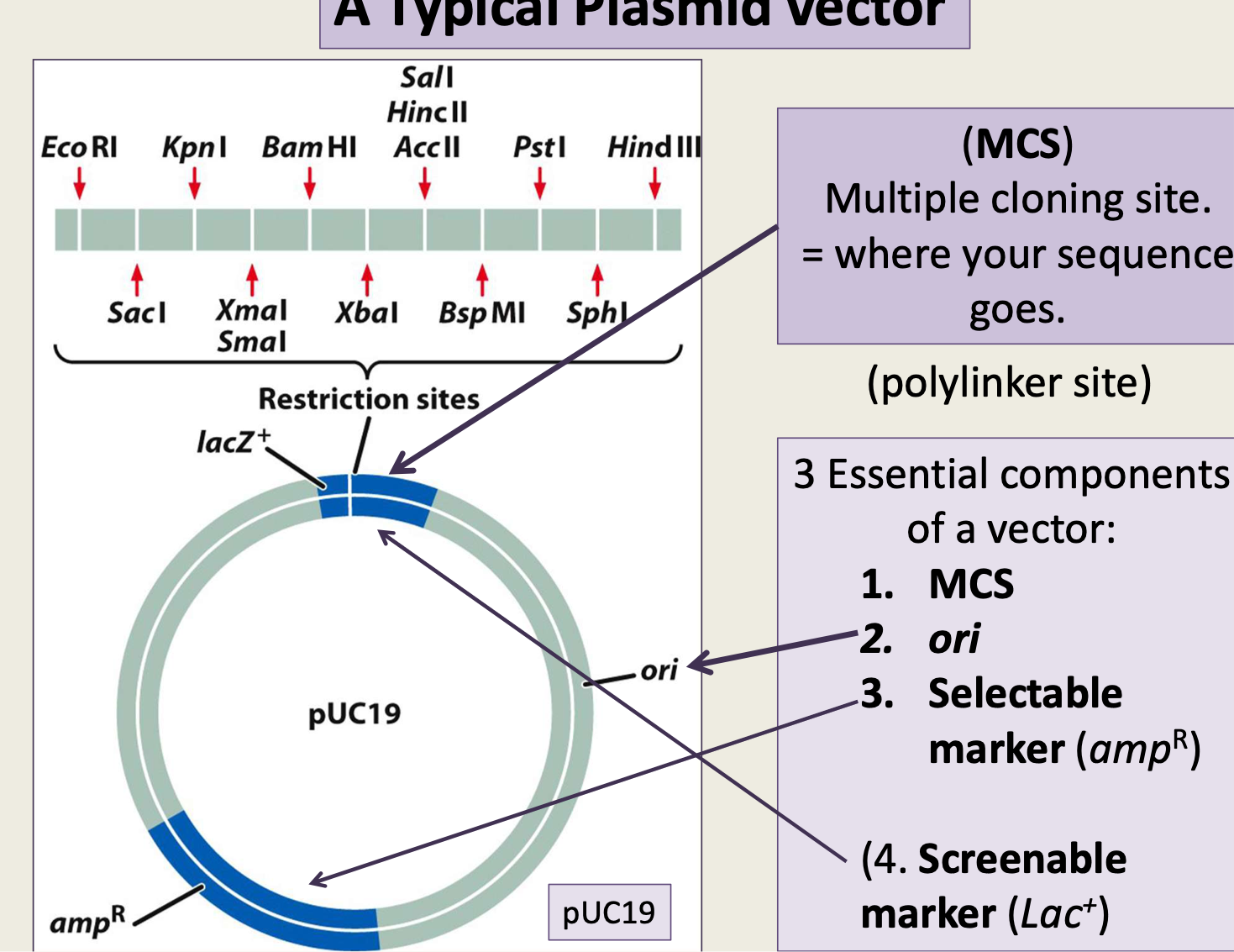
MCS
Multiple Cloning Site
it is where your target sequence/ the foreign DNA goes