Hydraulic Elevator Components Flashcards
 Call Kai
 Learn
Learn Practice Test
 Spaced Repetition
 Match
Match Flashcards
 Knowt Play
1/58

Earn XP
Description and Tags
Flashcards covering the mechanical, safety, electrical, and hydraulic components of an elevator system as described in the lecture notes.
Name | Mastery | Learn | Test | Matching | Spaced | Call with Kai | Chat |
|---|
No analytics yet
Send a link to your students to track their progress
59 Terms
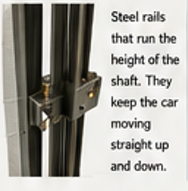
Guide rails
Steel rails that run the height of the shaft. They keep the car moving straight up and down.
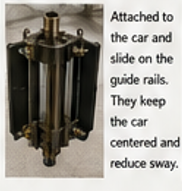
Guide Shoes
Attached to the car and slide on the guide rails. They keep the car centered and reduce sway.
CAR(CAB)
The passenger compartment where people ride.
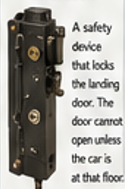
Door Interlock
A safety device that looks the landing door. It only opens when the car is present the door cannot open unless the car is at that floor.
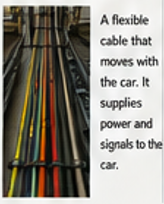
Traveling Cable
A flexible cable that moves with the car. It supplies power and signals to the car.
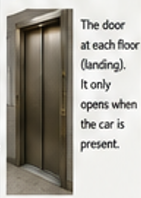
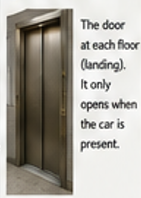
Landing Door
The door at each floor (landing).
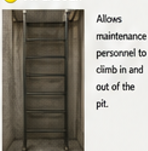
Pit ladder
Allows maintenance personnel to climb in and out of the pil.
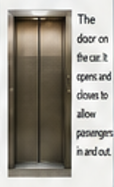
Car Door
The door on the car that opens and closes for passengers
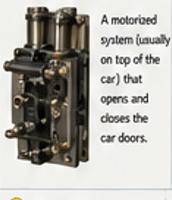
Door operator
A motorized system (usual on top of the car) that opens and closes the car doors.
Hall Button (hop)
The call button outside the elevator used to request the car.
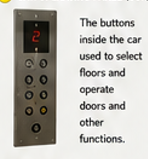
car operating panel (cop)
The buttons inside the car used to select floors and operate doors and other functions.
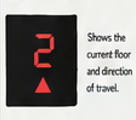
Position Indicator
Shows the currert floor and direction of travel.
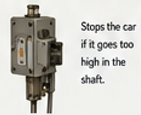
Overhead limit Switch
Stops the car if it goes too high in the shaft.
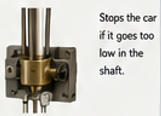
Pit Switch
Stops the car if it goes too low in the shaft.
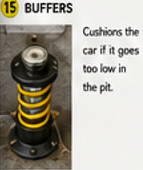
Buffers
Cushions the car if it goes too low in the pit.
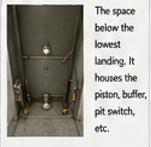
PIT
The space below the lowest landing. It houses the pitton, buffer, pit switch, etc.
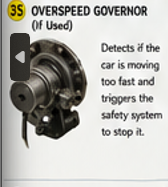
Overspeed Governor
Detects if the car is moving too fast and trippers the safety system to stop it.
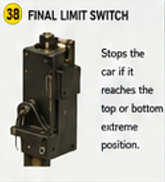
Final Limit Switch
Stops the car if it reaches the top or bottom extreme position.
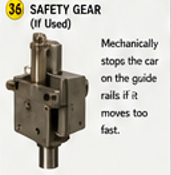
Saftey gear
Mechanically stops the car on the guide rails if car moves too fast.
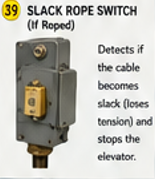
Slack rope Switch
Detects if the cable becomes slack (loses tension) and stops the elevator.
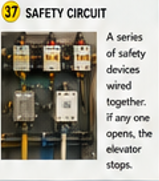
Saftey circuit
A series of safety devices wired together. if any one opens, the elevator stops.
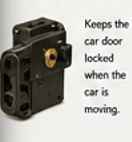
Door Lock (car)
Keeps the car door locked when the car is moving.
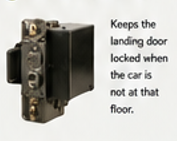
Door Lock (landing)
Keeps the landing door locked when the car is not at that floor.
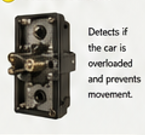
overload Sensor
Detects if the car is overloaded and prevents movement.
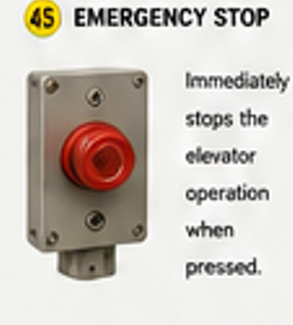
Emergency Stop
Stops all elevator operation immediately when pressed.
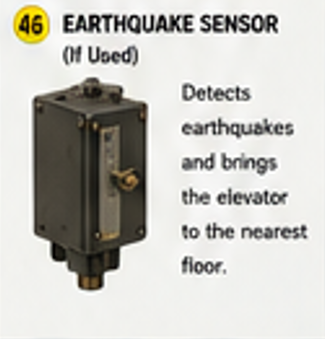
Earthquake Sensor
Detects earthquakes and brings the elevator to the nearest Boor.
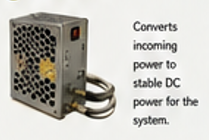
Power Supply
Converts incoming man power to stable DC power for the system.
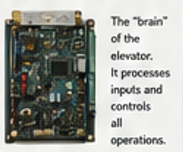
Controller
The "brain" of the elevator. It processes inputs and controls all operations.
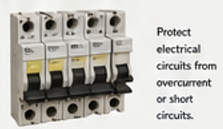
Circuit Breaker Fuses
Protect electrical circuits from overcurrent or short circuits.
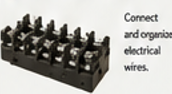
Terminal Blocks
Connect and organize electrical wires.
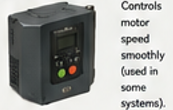
VFD
Controls motor speed smoothly (used in some systems).
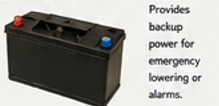
Battery
Provides backup power for emergency lowering or alarms.
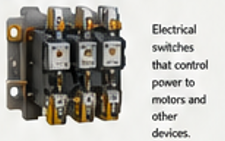
Contacters Relays
Electrical switches that control power to motors and other devices.
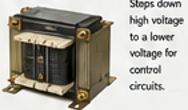
Transformer
Stops down high voltage to a lower voltage for control circuits.
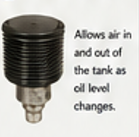
Vent/Breather
Allows air in and out of the tank as oil level changes.
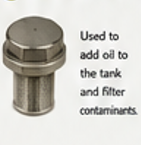
Fill Cap/Strainer
Used to add oil to the oil tank and filter contaminants.
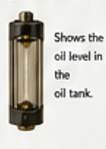
Sight Glass
Shows the oil level in the tank.
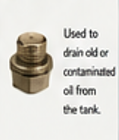
Drain plug
Used to drain old or contaminated ol from the tank.
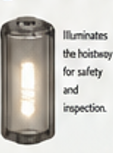
Hoistway Light
Illuminates the hoistway for safety and inspection.
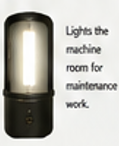
Machine Room Light
Lights the machine room for maintenance work.
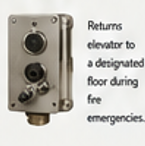
Fire Switch service
Returns elevator to a designated floor during fire emergencies.
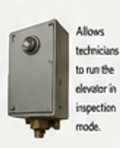
Inspection Box
Allows technicians to run the elevator in inspection mode.
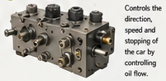
Valve manifold
Controls the direction speed and stopping of the car by controlling oil flow.
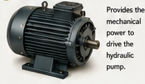
Electric motor
Provides the mechanical power to drive the hydraulic pump.
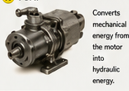
Pump
Converts mechanical energy of the motor into hydraulic energy.
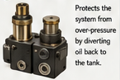
Relief valve
Protects the system from over-pressure by diverting oil back to the tank.
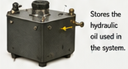
Oil Reservoir (tank)
Stores the hydraulic oil used in the system.
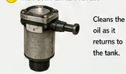
Return Line Fliter
Cleans the oil as it returns to the tank.

Check Valve
Allows oil to flow in only one direction (stops it from flowing back).
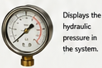
Pressure Gauge
Displays the hydraulic pressure in the system.

Solenoid valve
Controls the direction speed and stopping of the car by controlling oil flow.

Oil Cooler
Cools the hydraulic oil to keep the system running property.

Power Unit Base
The base or tank tha supports al HPU component.

Cylinder
A steel tube that holds the hydraulic oil. The piston moves inside it.

Piston/plunger
The solid steel rod that moves up and down inside the cylinder. It pushes the car up.

Piston Seal
Seals around the piston to prevent oil from leaking past it.

Piston head
The bottom part of the piston that separates the oil from the return side.

Cylinder Seal
Seals between the cylinder and the subide to prevent oil leakage.

Fluid (hydraulic oil)
Tarots the power in the system. It also Lubricates and cool.