Care of the Community Health Client - Environmental Health and Safety Disaster Preparedness
 Call Kai
 Learn
Learn Practice Test
 Spaced Repetition
 Match
Match Flashcards
 Knowt Play
1/44

Earn XP
Description and Tags
LOOK AT ASHLEYS DOCUMENT
Name | Mastery | Learn | Test | Matching | Spaced | Call with Kai | Chat |
|---|
No analytics yet
Send a link to your students to track their progress
45 Terms
objectives:
After successful completion of this module, you will be able to:
•Identify disaster types.
•Discuss the disaster planning process and the role of the nurse in that process.
•Differentiate between biologic, chemical, and radiologic agents and prevention and treatment strategies for exposure to these agents.
•Demonstrate competency and critical thinking in disaster scenarios through participation in Disaster Day, simulation, and tabletop exercises.
•Develop cultural competency in disaster planning and community care.
objectives
LOOK AT ASHLEYS DOCUMENT
LOOK AT ASHLEYS DOCUMENT
breakdown natural or human-made disasters.
•incident causing disruption, destruction, or devastation
•Causes hardships for community members.
•Threaten people’s health and safety
•Can overwhelm resources
breakdown complex emergency w regards to a disaster?
multifaceted humanitarian crisis in a country, region, or society where there is breakdown of authority resulting in internal or external conflict and which requires international response
what is the causalities of a disaster?
•Number of human beings injured or killed by or as a direct result of an incident
•Multiple-casualty incident: >2 but <100
•Mass-casualty incident: >100
what is the scope of a disaster?
•Range of its effect, either geographically or in terms of the number of victims
what is the intensity of a disaster?
•The level of destruction and devastation it causes
what type of disaster is being depicted:
•Hurricane
•Tornadoes
•Blizzards
•Mudslides
•Pandemics/Epidemics
•Tsunamis
•Blizzards
•Avalanches
•Drought
•Wildfire
•Heat Wave
•Volcanic Eruption
natural
what type of disaster is being depicted:
•Conventional Warfare
•Chemical Warfare
•Transportation Accidents
•Hazardous Material Spills
•Civil Unrest/Riots
•Terrorism/Bioterrorism
•Plane Crash
•Nuclear Plant Explosion
•Mass Transit Accidents
•Pollution
human-made
define bioterrorism
•Intentional release of bacteria, viruses, or other toxins for the purpose of causing illness or death
•Partial timeline of alleged bioterrorism events
bioterrorism timeline:
•1346: corpses with the plague hurled over walls (Mongolian war)
•1405: Wine contaminated with leprosy served to French soldiers (Spain)
•1763: British officers give blankets infected with smallpox to Native Americans (Pennsylvania)
•1863: Confederate soldiers leave dead animals in water supply of Union Soldiers (U.S.)
•1984 Salad bars in 10 restaurants contaminated with Salmonella, sickening 750+(Oregon)
•2001 Anthrax in U.S.P.S.
bioterrorism timeline:
why is bioterrorism used?
•Incubation time allows terrorist time to leave the scene
•Difficult to diagnose and trace origin
•Inexpensive and more discreet than other methods
•Can cover large geographic area through person-to-person transmission
•Easy to obtain
what are the following:
•Is there a rapid increase in disease incidence in a normally healthy population?
•Is there an unusual increase of people seeking care, especially with fever, respiratory, or gastrointestinal complaints?
•Is the disease at an uncharacteristic time or in an unusual pattern?
•Are there clusters of patients arriving from a single locale?
•Are there large numbers of rapidly fatal cases—patients who die within 72 hours after admission to the hospital?
•Is there a patient with a disease that is uncommon and has bioterrorism potential (e.g., pulmonary anthrax, smallpox, or plague)?
•Are there unusual numbers of dead or dying animals, unusual liquids/vapors/odors?
the questions we have to ask when recognizing a bioterrorism event
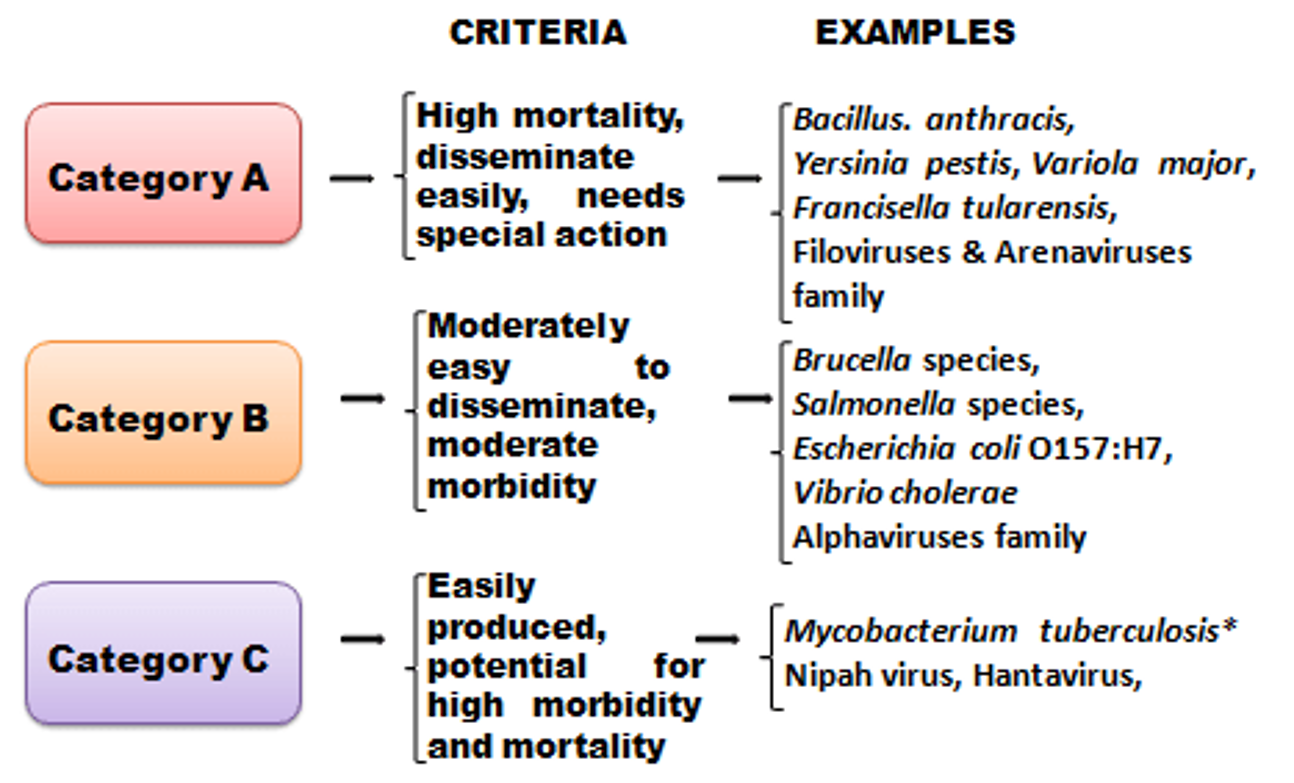
bioterrorism categories
bioterrorism categories
what are the different bioterrorism agents?
Agent | Incubation Period | Mortality |
Anthrax (Bacillus anthraxis) | 1-7 days | 80-90% inhalation form |
Botulism (Clostridium botulinum) | 12-72 hours | Low |
Smallpox | 7-12 days | 20-40% if unvaccinated |
Ebola, Marburg, Lassa fevers | 2-21 days | 50-90% for Ebola |
Plague (Yersinia pestis) | 1-6 days | High if untreated in 24h |
Tularemia (Francisella tularensis) | 3-14 days | Low 5-15% untreated |
what are the characteritsics of chemical disasters?
•The intentional or accidental spill of chemical substances affecting humans and the environment
•Can include chemical weapons such as nerve agents, mustard gas, Agent Orange
•Fear: “Worried well” can overwhelm medical system
what actions need to happen in a chmical disaster?
1.Act quickly.
2.Consult Hazmat.
3.Don appropriate PPE.
4.ABCs.
5.Field decontamination
stay or go graph
Nature of Exposure | Action |
High toxicity, short duration | Shelter in Place |
Low toxicity, long duration | Evacuate |
High toxicity, long duration | Calculate indoor concentrations (HAZMAT) and evacuate if necessary |
what are the characteristics of radiologic disasters?
•Excessive heat, light, radiowaves or microwaves
•Decrease time spent near the source
•Dirty Bomb: intentional release of radiologic agent
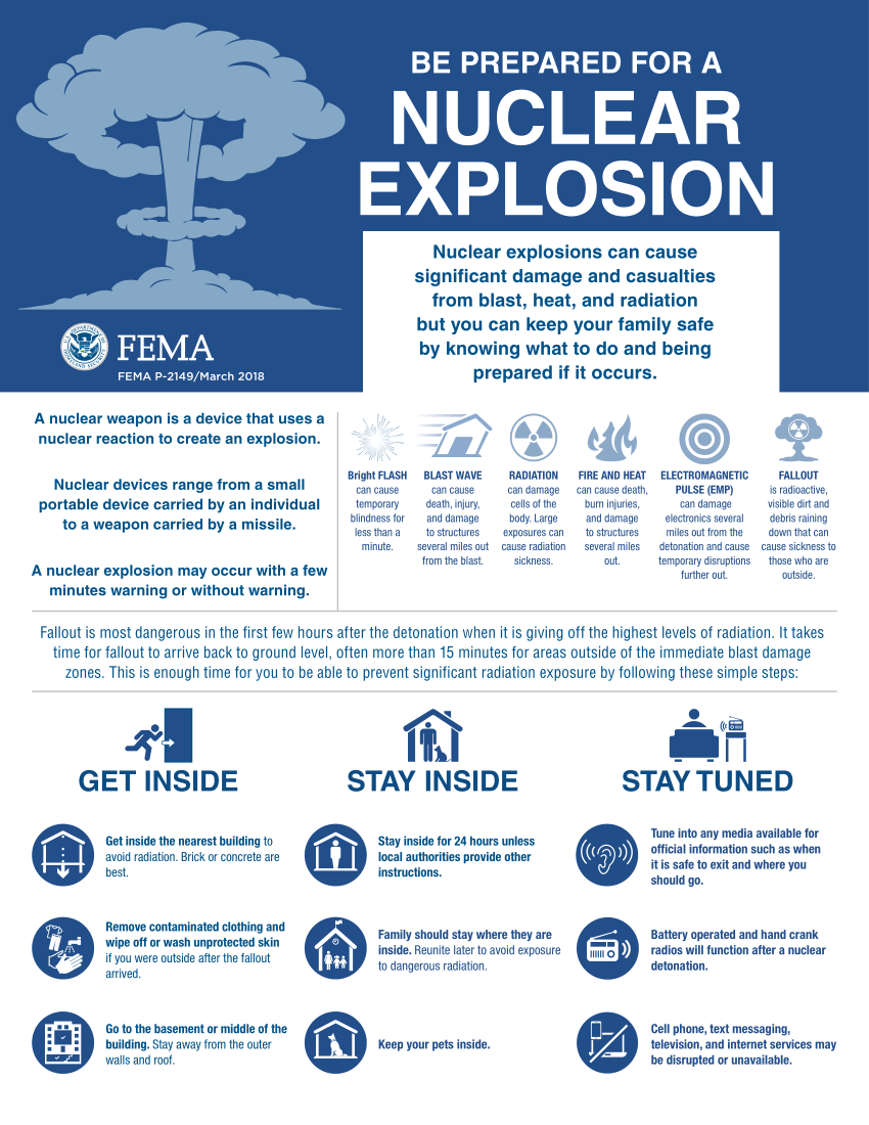
nuclear explosion flier
what are some tactics for radiologic disaster mitigation?
•Leave area quickly
•Shield inside a building
•Remove clothing and seal in double plastic bags
•Shower
•Communication
•Assume any dust is radioactive. Wear PPE.
•Radiation badges
•Physical injuries >>> contamination
what is the following characterizing:
•Any explosion and subsequent blast
•Industrial accident, terrorist attack
•Warlike presentation: shrapnel wounds, dismemberment
•Open area better outcome than confined space
•Temporary deafness
•Focus: stabilization and hospital transfer
•Learning from Boston:
•Large number of Level I trauma in area
•Many first responders already on scene
•Tourniquets saved lives
•Volunteers and bystanders
blast injuries
what are the vulnerable populations in emergencies?
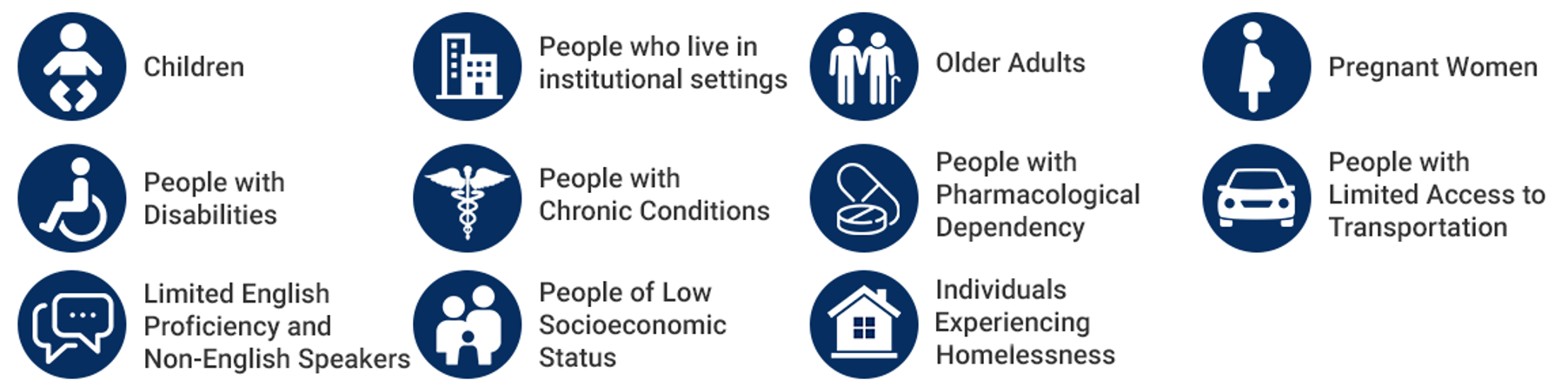
what does the CDC vulnerability index do?
(contributed to disaster preparedness in a culturally diverse society):
•Identifies communities vulnerable to disaster
•SES, Household composition, Ethnicity/Language, and Housing/Transportation
what do safety net policies for vulnerable pops do?
contribute to disaster preparedness in a culturally diverse society:
•Health: Sick leave, universal health insurance, family leave
•Income: increased minimum wage
•Unemployment: extension of benefits, tax credits, employment education/training
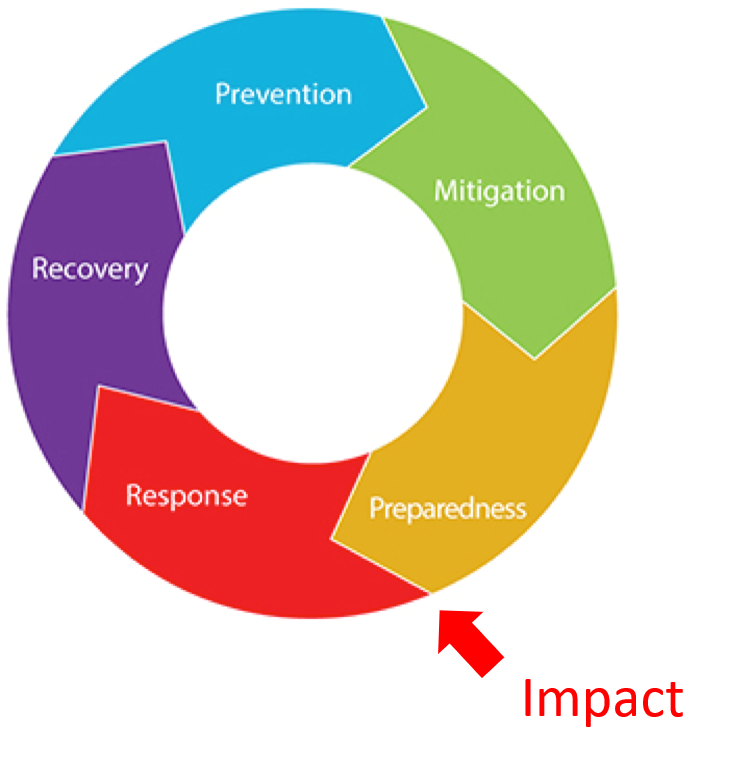
The Disaster Management Cycle and Nursing Role
The Disaster Management Cycle and Nursing Role
what are some preventative actions for a disaster/emergency?
•Identify risks
•Risk and resource maps
•Assess vulnerabilities
•Educate public on actions to take during a disaster
•Community disaster plan
what are some mitigation actions for a disaster/emergency?
•Actions taken when a disaster cannot be prevented
•Construction of dams and levees
•Disaster drills and simulations
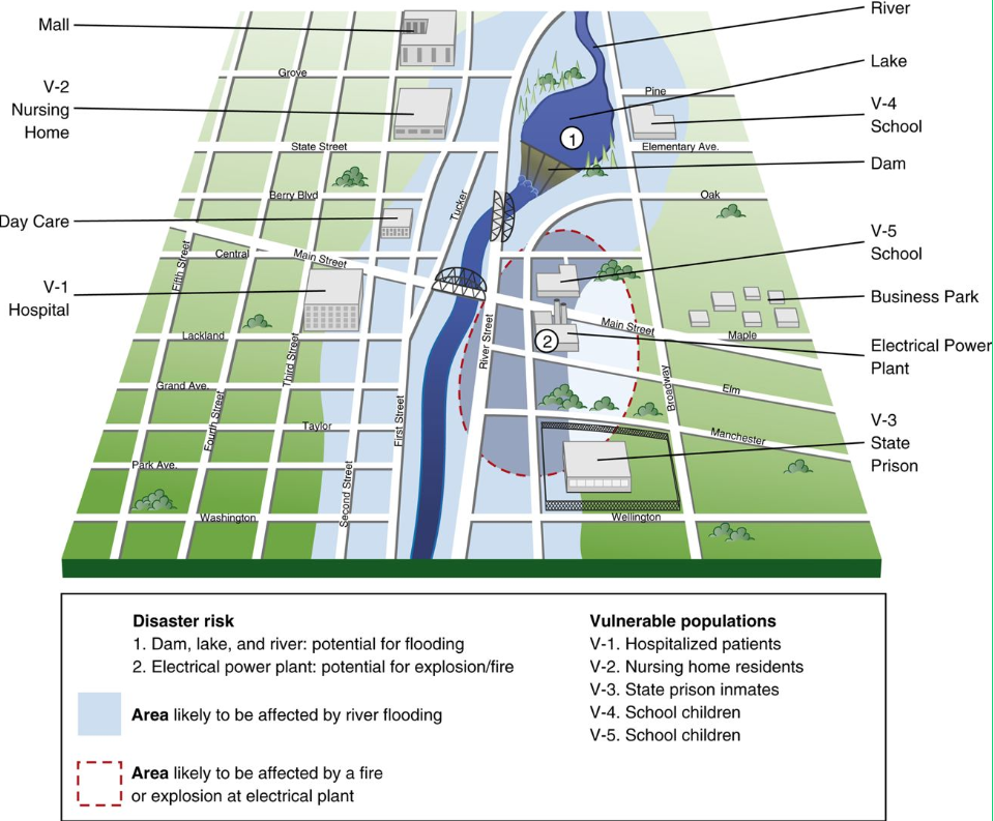
prevention stage risk map
prevention stage risk map
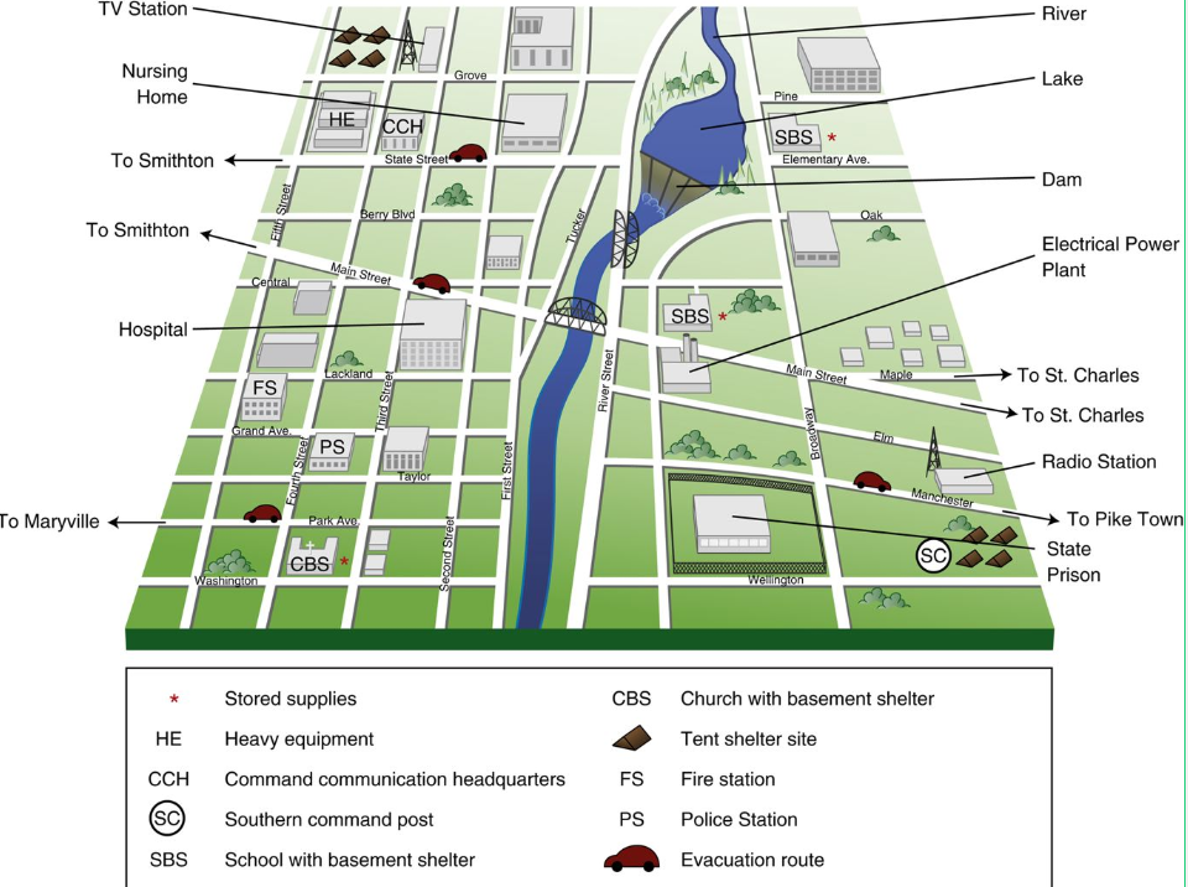
prevention stage resource map
prevention stage resource map
what are some ways to be prepared for a disaster/emergency
•Developing personal, work, and family
disaster plans
•Identifying community evacuation routes
•Identifying emergency shelter locations
•Developing a communication chain
•Performing regular drills
•Stockpiling food, water, medication, and
first-aid supplies
Making sure pet care is included
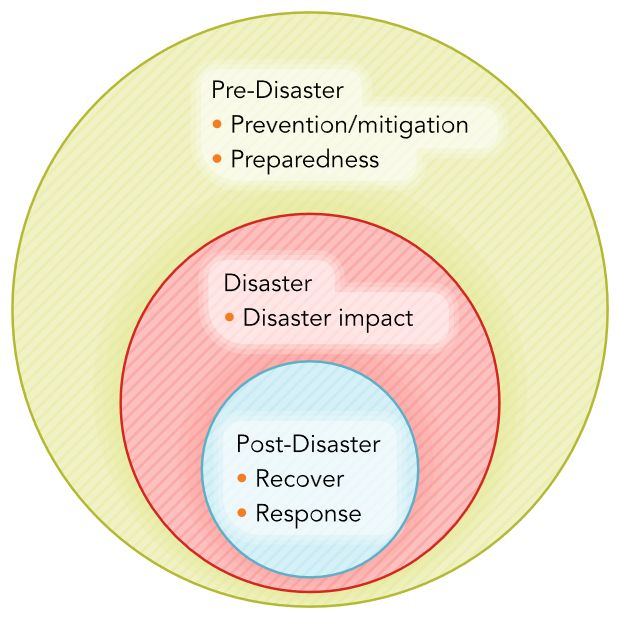
preparedness visual
preparedness visual
what are the first steps in responding to an emergency?
•Determine whether state has sufficient resources to respond.
If not, request aid from federal government.
what are the key portions when respondng to a disaster/emergency
take first steps
•Activate disaster plan
•Providing triage and ongoing care to victims
•Establishing disease surveillance if an outbreak or bioterrorism is suspected
Evaluating any other public health needs that may arise
define the utilitarian approach to triage?
“Do the greatest amount of good for the greatest amount of people while efficiently using resources”
what are the 2 possible methods to triage?
•Simple Triage and Rapid Treatment (START)
—•JumpSTART for pediatrics
•Sort, Assess, Lifesaving Interventions, Treatment/Transport (SALT)
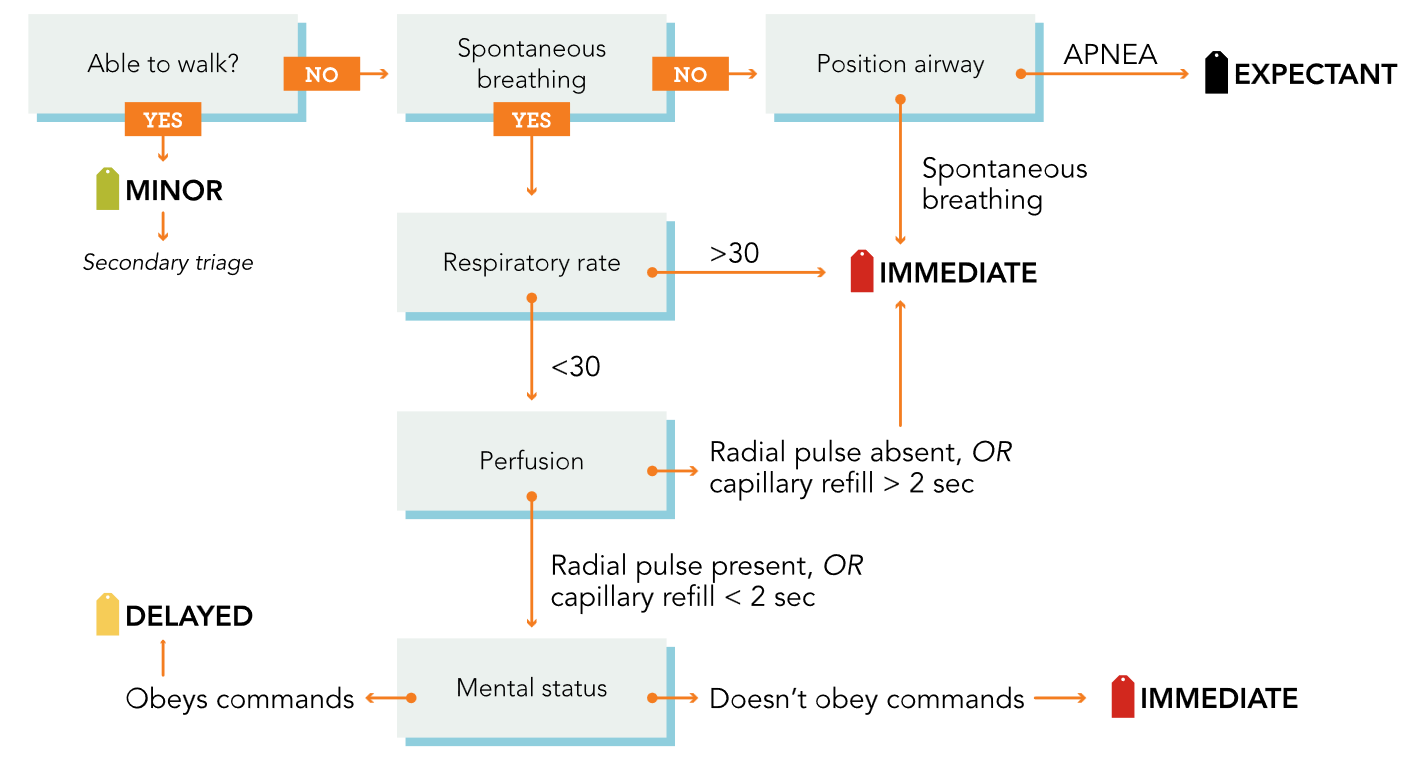
Simple Triage and Rapid Treatment (START)
Simple Triage and Rapid Treatment (START)
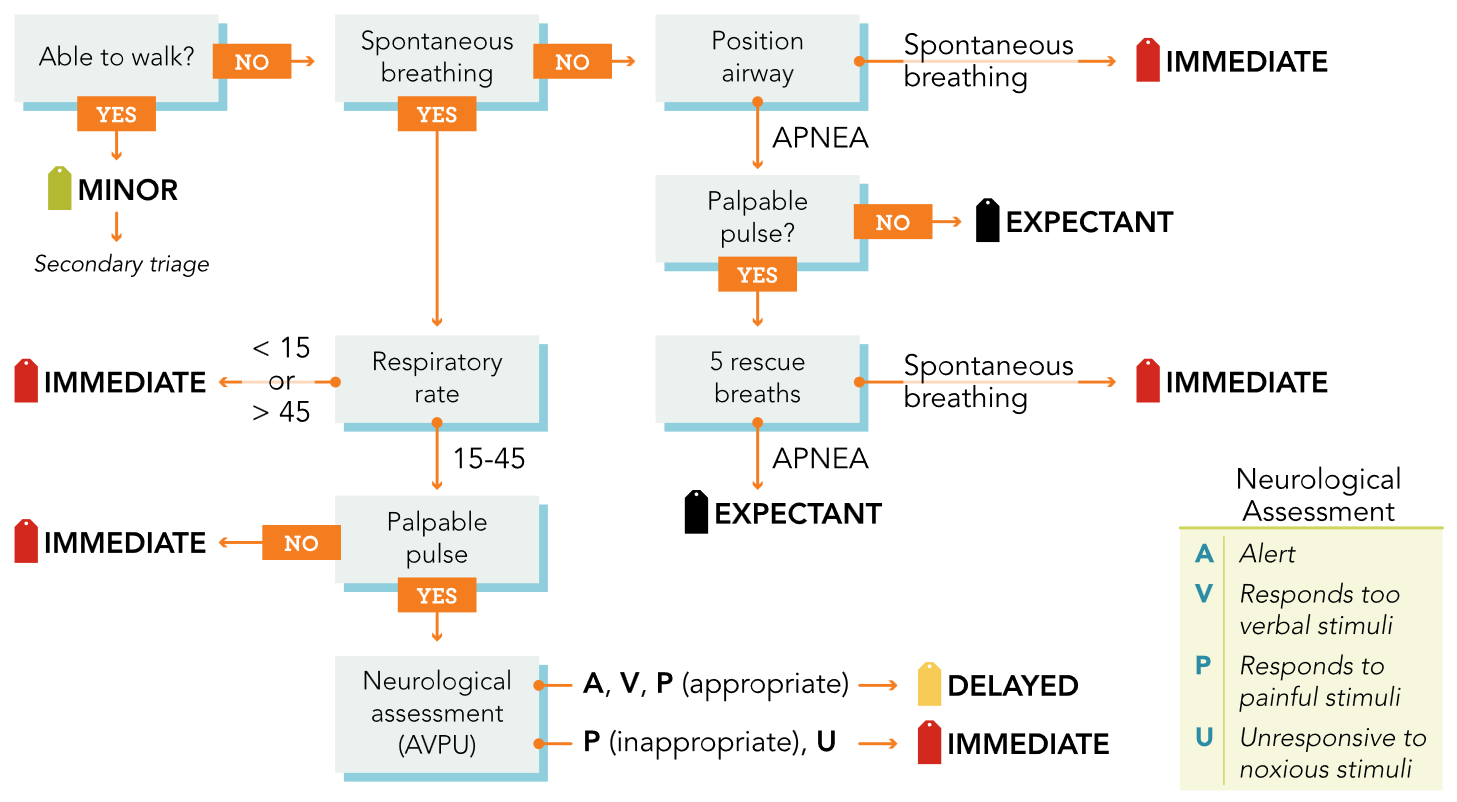
JumpSTART triage
JumpSTART triage
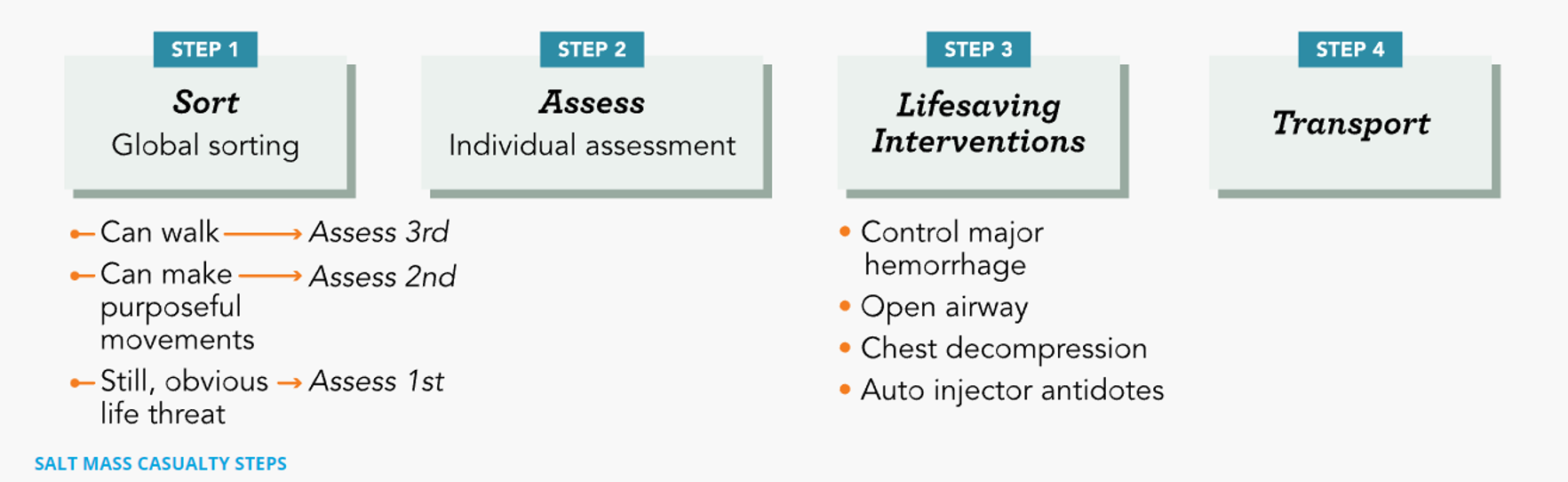
SALT Mass Casualty Steps
SALT Mass Casualty Steps
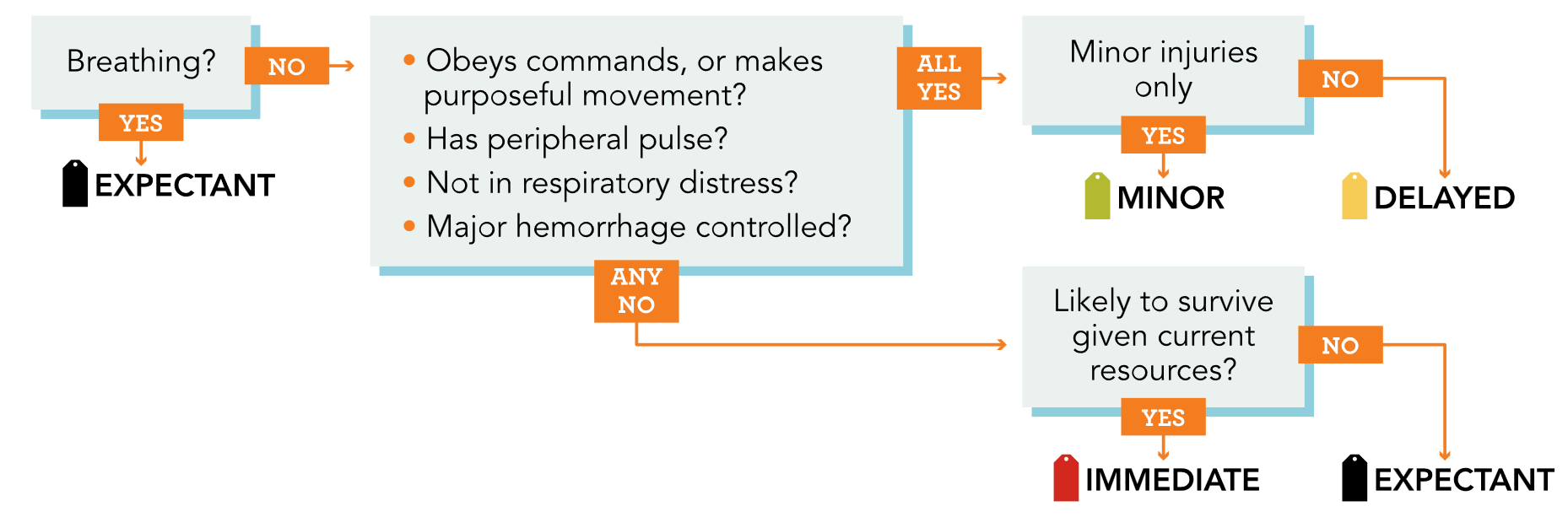
SALT Mass Casualty Triage Algorithm
SALT Mass Casualty Triage Algorithm
what are the characteristics of recovering from a disaster/emergency?
•Begins when threat no longer exists
•Longest and most difficult stage:
•Reunification
•Rebuilding structures
•Resuming activities (if possible)
•Establishing a “new normal”
•Referring workers and victims to mental health services
•Federal assistance, gradually back to local assistance
what is the role of PHN in disaster recovery?
•Ongoing community assessment
•Physiological and psychosocial care
•Assist in reunification
•Referrals to mental health services
•Promote community resilience
—Possible feelings of severe hopelessness, depression, and grief in the disillusionment phase
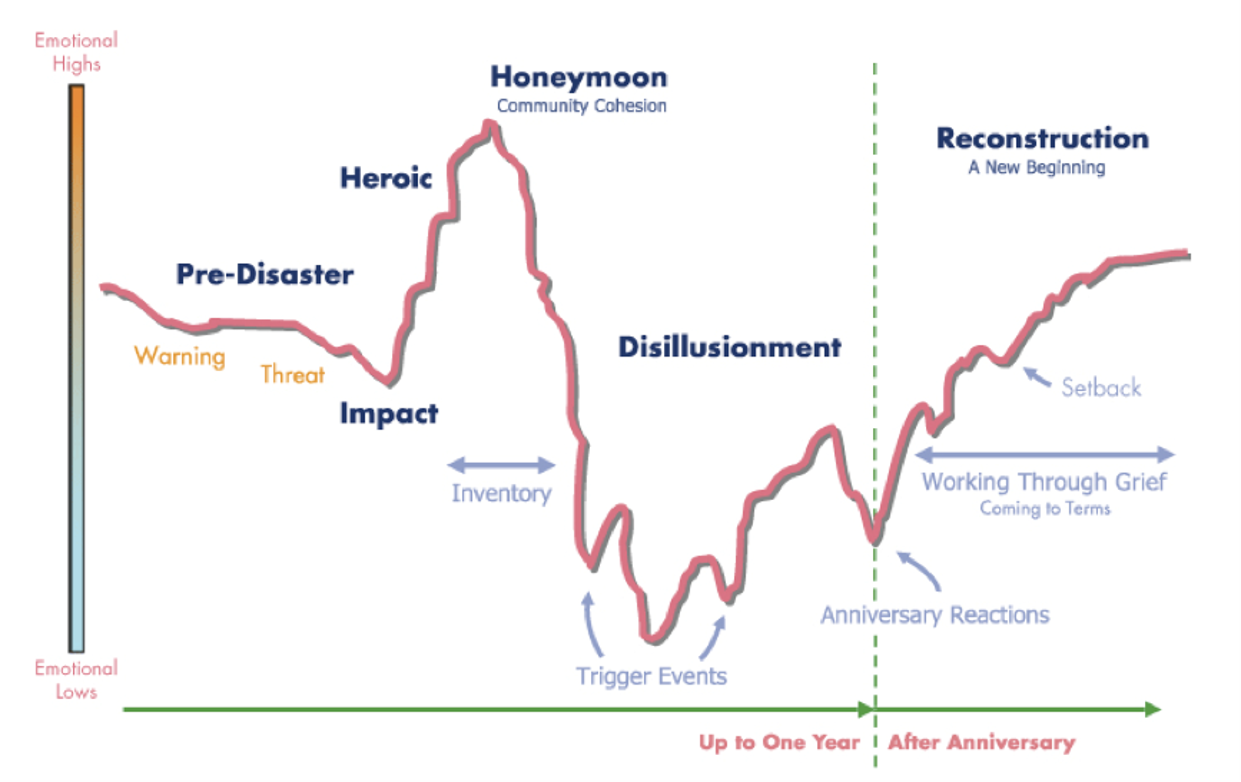
Community phases of recovery following disaster
Community phases of recovery following disaster
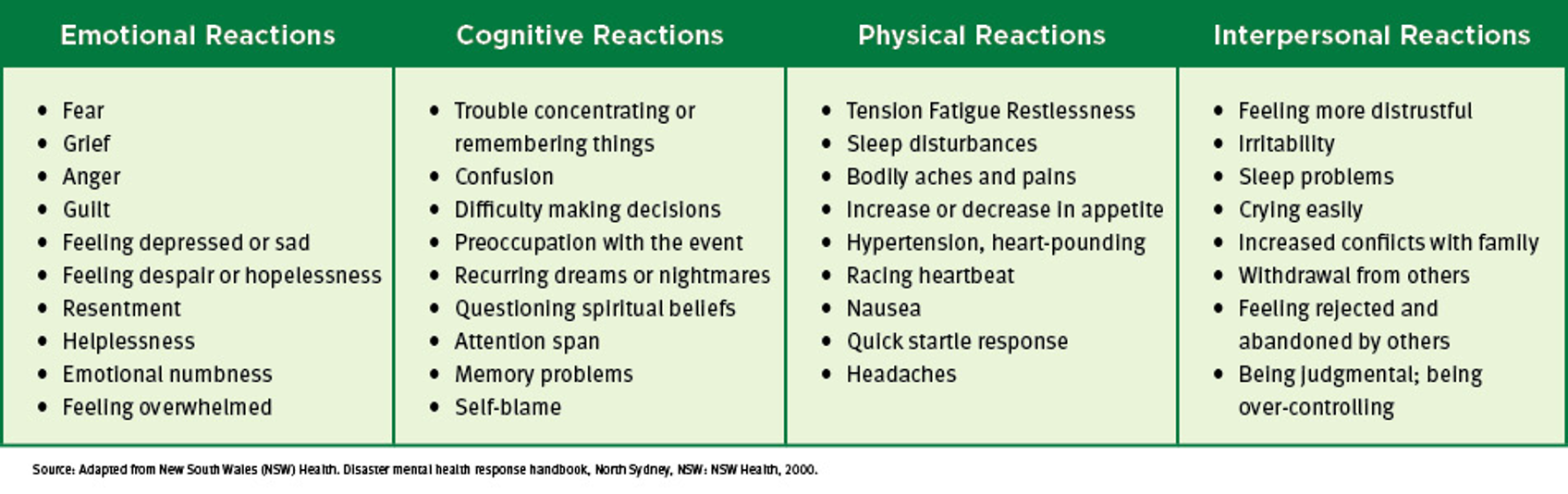
responses to traumatic events
Core Competencies in Disaster Nursing:
•Domain 1: Preparation and planning
•Domain 2: Communication
•Domain 3: Incident Management Systems
•Domain 4: Safety and security
•Domain 5: Assessment
•Domain 6: Intervention
•Domain 7: Recovery
•Domain 8: Law and ethics
Core Competencies in Disaster Nursing