Visual Imagery and Language PSY 654- COG
 Studied by 2 people
 Call Kai
 Learn
Learn Practice Test
 Spaced Repetition
 Match
Match Flashcards
 Knowt Play
1/32

There's no tags or description
Looks like no tags are added yet.
Name | Mastery | Learn | Test | Matching | Spaced |
|---|
No study sessions yet.
33 Terms
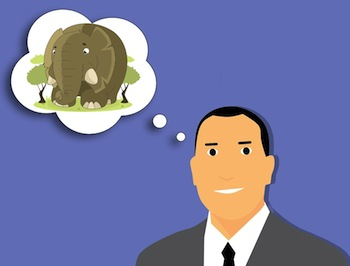
Epiphenomenon
Zenon Pylyshyn
argued visual mental imagery is an epiphenomenon
is something that happens as a side effect of another mental process, but it not useful by itself.
by-product
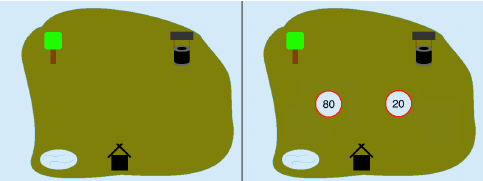
Mental Scanning
Stephen Kosslyn
memorized a map of a fake island with landmarks. .
The farther apart 2 landmarks were on the real map, the longer it took people to “scan” between them in their mental image.
Mental images seem to keep real spatial layout, like perception does.

Mental Walk Task
Stephen Kosslyn
They imagined objects/ animals at different distances
As they imagined walking closer, the object felt bigger in their mind, just like it looks bigger in real vision.
When imagining a big and small animal together, the smaller one lost detail because it took up less “mental visual space.”
Mental imagery follows the same size and distance rules.
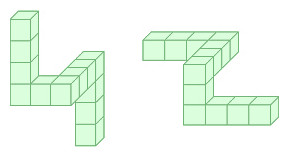
Mental rotation
Roger Shepard and Jacqueline Metzler.
They see 3D shapes and decide if they are the same or different.
They have to mentally rotate one shape in their mind to line it up with the other.
• The more displacement in shapes, the longer it takes people to answer.
Mental imagery follows the same “rotation in space” rules as real perception.
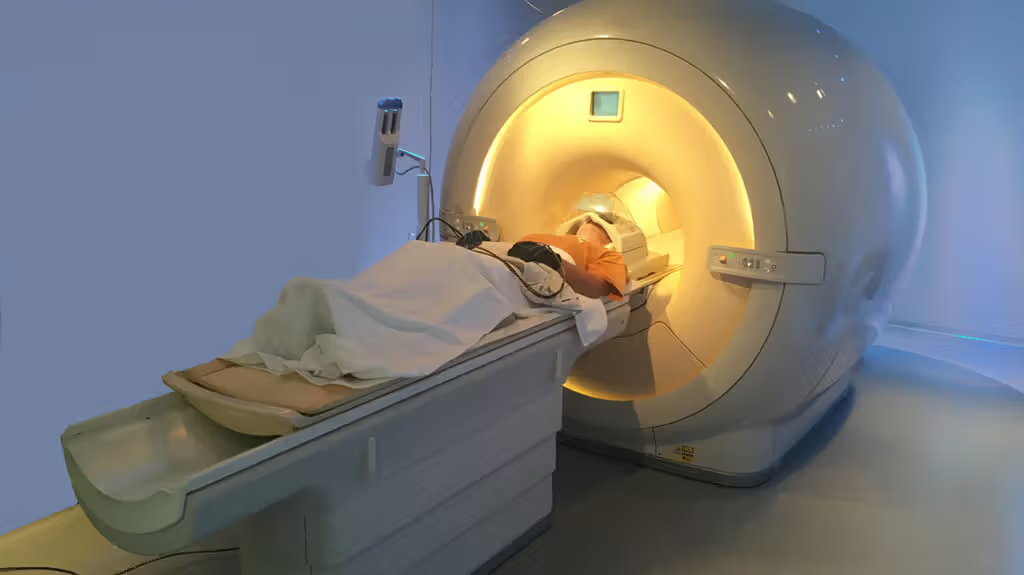
fMRI Evidence of Imagery and Perception
Visual cortex (occipital lobe) is active when people see objects and when they imagine them.
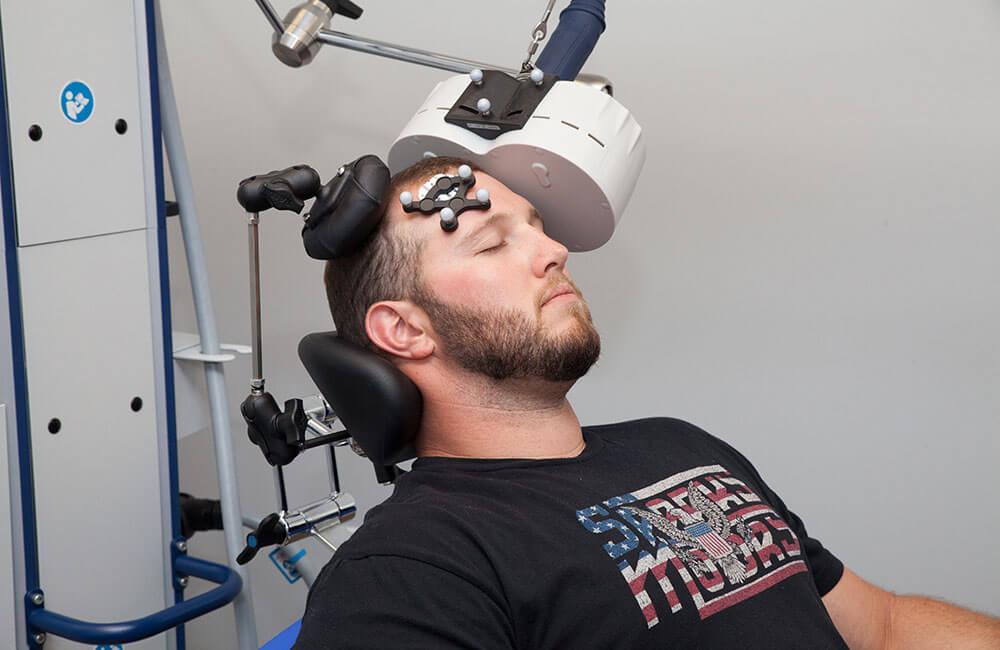
TMS : transcranial magnetic stimulation
IMAGERY AND PERCEPTION
When applied to the visual cortex, people struggle with visual tasks, and they also struggle with imagery versions of those tasks (like remembering or imagining patterns).
visual cortex is NEEDED for it

Neuropsychological Visual Cortex Damage
People with damage to the visual cortex have problems WITH seeing normally, and imagining normally
when asked to imagine a horse, they picture it smaller or farther away, as if their mental “visual field” is shrunken.
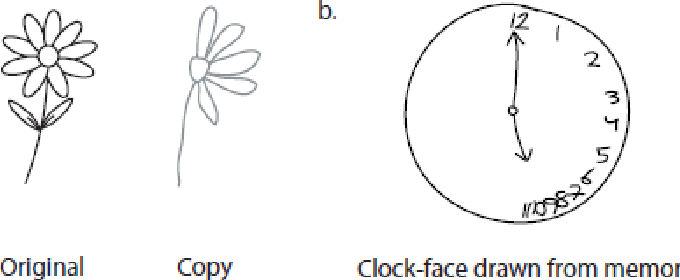
Neuropsychological: Unilateral Neglect
• Damage to the right parietal lobe makes people ignore the left side of space. vice versa.
• Affects seeing and imagining scenes.
• Perception and visual imagery can be dissociated!
→ partially overlapping systems
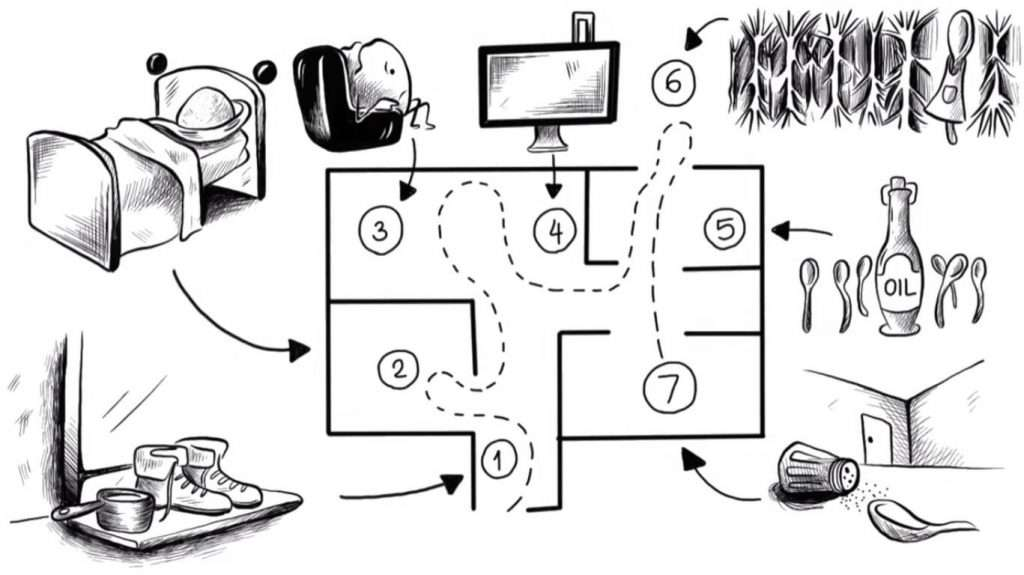
Method of Loci
A memory strategy where you imagine a familiar place ( house) and put each item you need to remember in a specific spot. To recall, you mentally walk through the place and “see” the items again
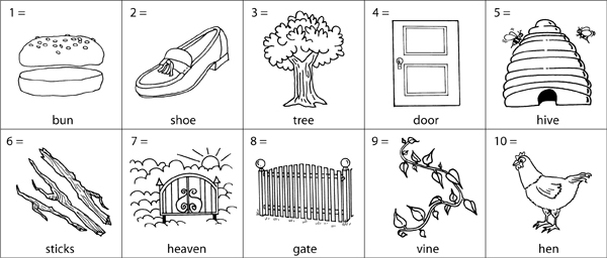
How is Method of Loci SIMILAR and DIFFERENT from PEG WORD METHOD
Similar
Both use vivid mental images to connect new items to strong cues, making recall easier.
Different
Method of loci uses real, familiar locations as cues.
Peg word uses a memorized rhyme list (one bun, two shoe, etc.) as cues

Mental Practice + Athletic Performance
Yes. Mental practice does improve athletic performance
swimmers who combined real practice + imagery produced the best performance overall.
USA
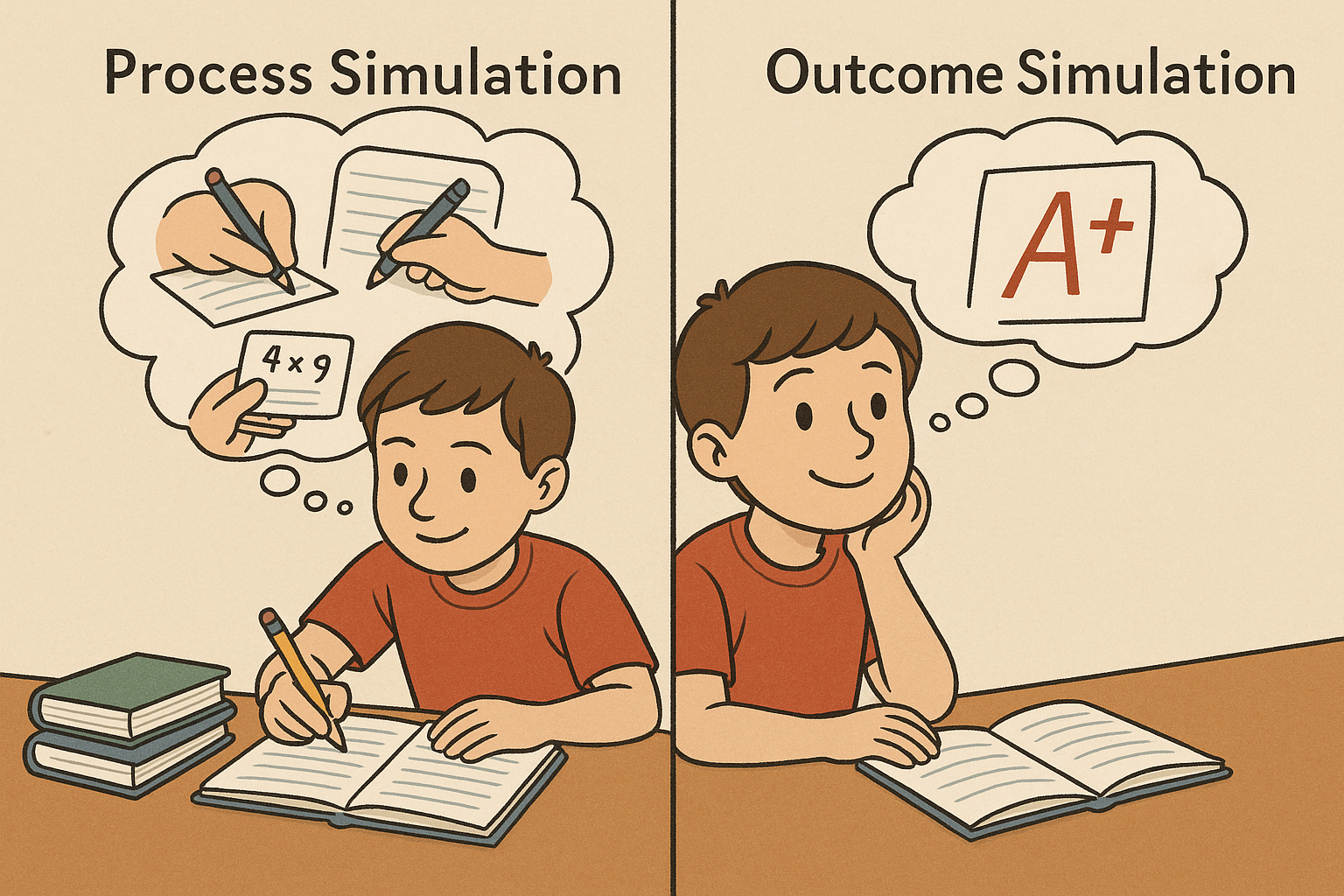
Mental Practice + Academics
Shelley Taylor
Yes, but it depends on the type of imagery.
showed that process simulation (imagining yourself studying, taking notes, doing the work) led to better exam scores, while outcome simulation (imagining getting an A+) did not help.
Shelly Taylor; Outcome Simulations
imagining the final success, like picturing an A+. This did not improve grades compared to the control group.
Shelly Taylor: Process Simulation
imagining the actions that lead to success, like studying, taking notes, using flashcards. This group got the best exam score
shows that imagery only helps when it focuses on the steps, not just the goal.
Imagination Reduces Impulsive Decisions
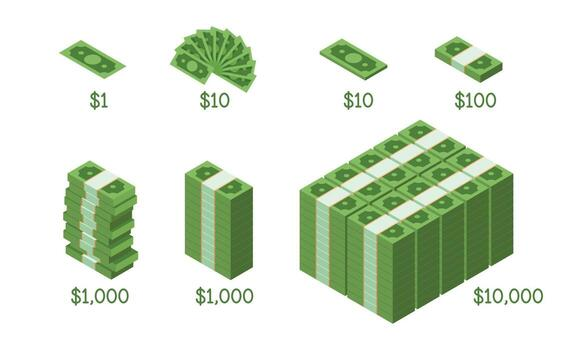
Imagination helps people be less impulsive because it makes the future feel more real and detailed in the present moment.
Ex: people choose $10 now instead of $100 in 3 months (future feels far away)
when people imagine the future clearly (like imagining a friend visiting in 3 months and going to dinner), they stop being impulsive, wait for the bigger reward.
Phonemes
are the sounds that make up words. 47 in english
Example: “bit” is made of 3 phonemes /b/ /i/ /t/.
E makes a different sound in WE, and WET
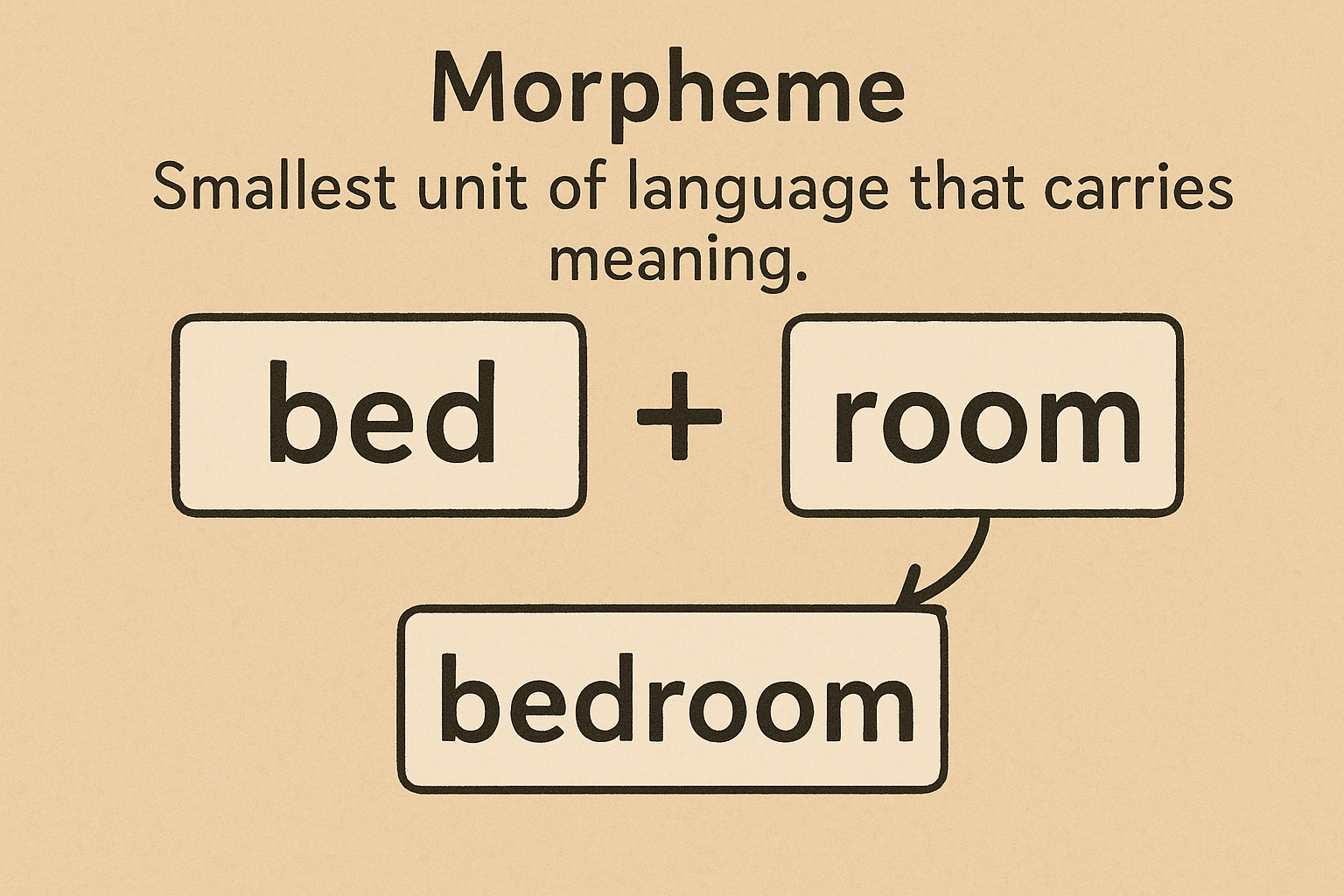
Morpheme
is the smallest unit of sound that has meaning or a grammatical function.
One morpheme : “truck,” “table.”
Two morpheme : “bedroom” (bed + room), “trucks” (truck + s).
“s” in “trucks” is both a phoneme (sound) and a morpheme (plural meaning)
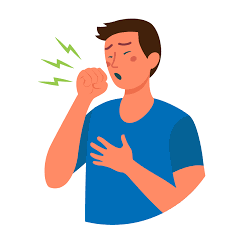
How context helps people perceive :Phonemes
Context helps your brain “fill in” missing or unclear sounds.
in the legislator video, the “s” sound was replaced by a cough, but people still heard the full word because the sentence
—> This is the phonemic restoration effect.
without context only 50% of ppl could figure it out
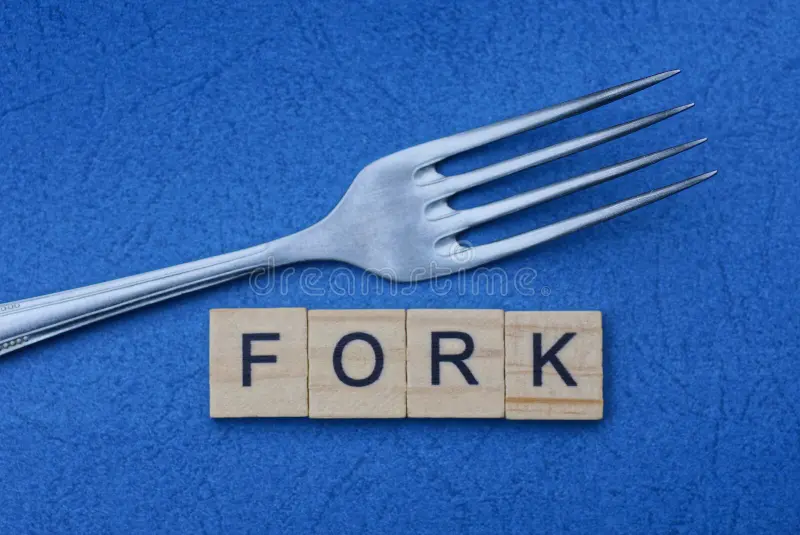
Word superiority effect
Pollack and Pickett (1964)
Context helps with recognizing letters.
people are more accurate identifying a letter (like the K) when it appears in a real word like FORK than the word RFOK.
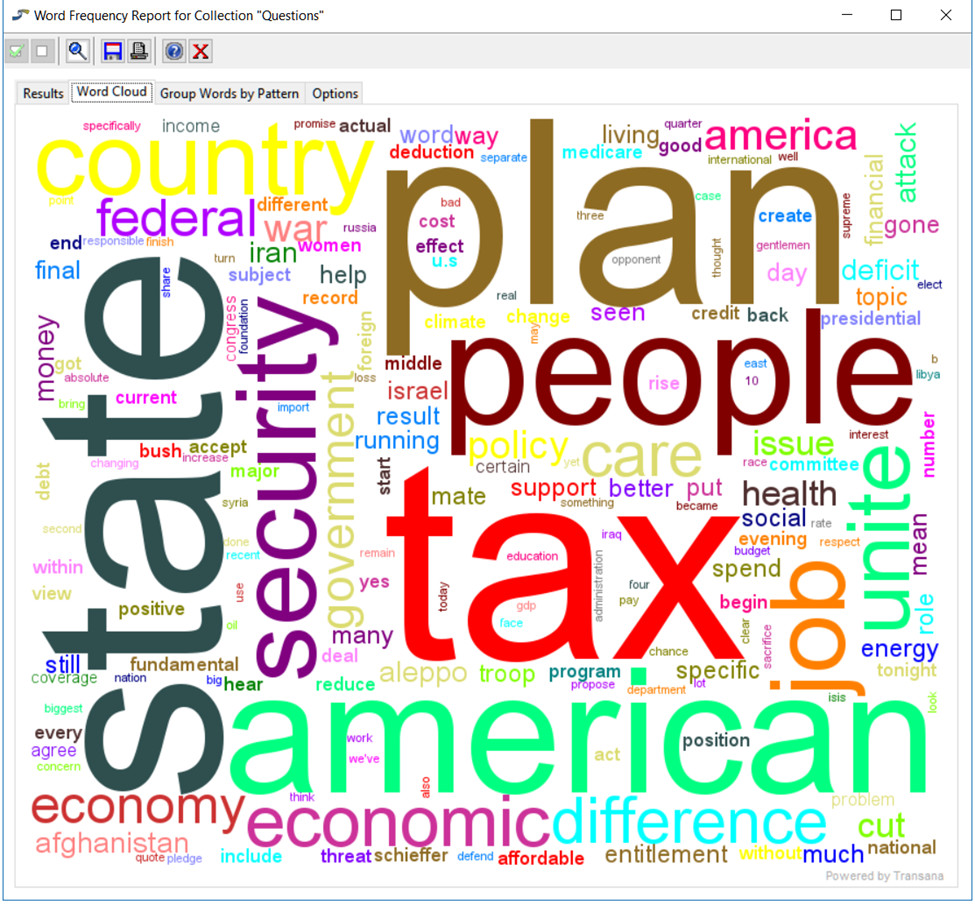
Word Frequency Effect
We recognize and process common words faster than rare words.
Example bless, history, develop = Easy
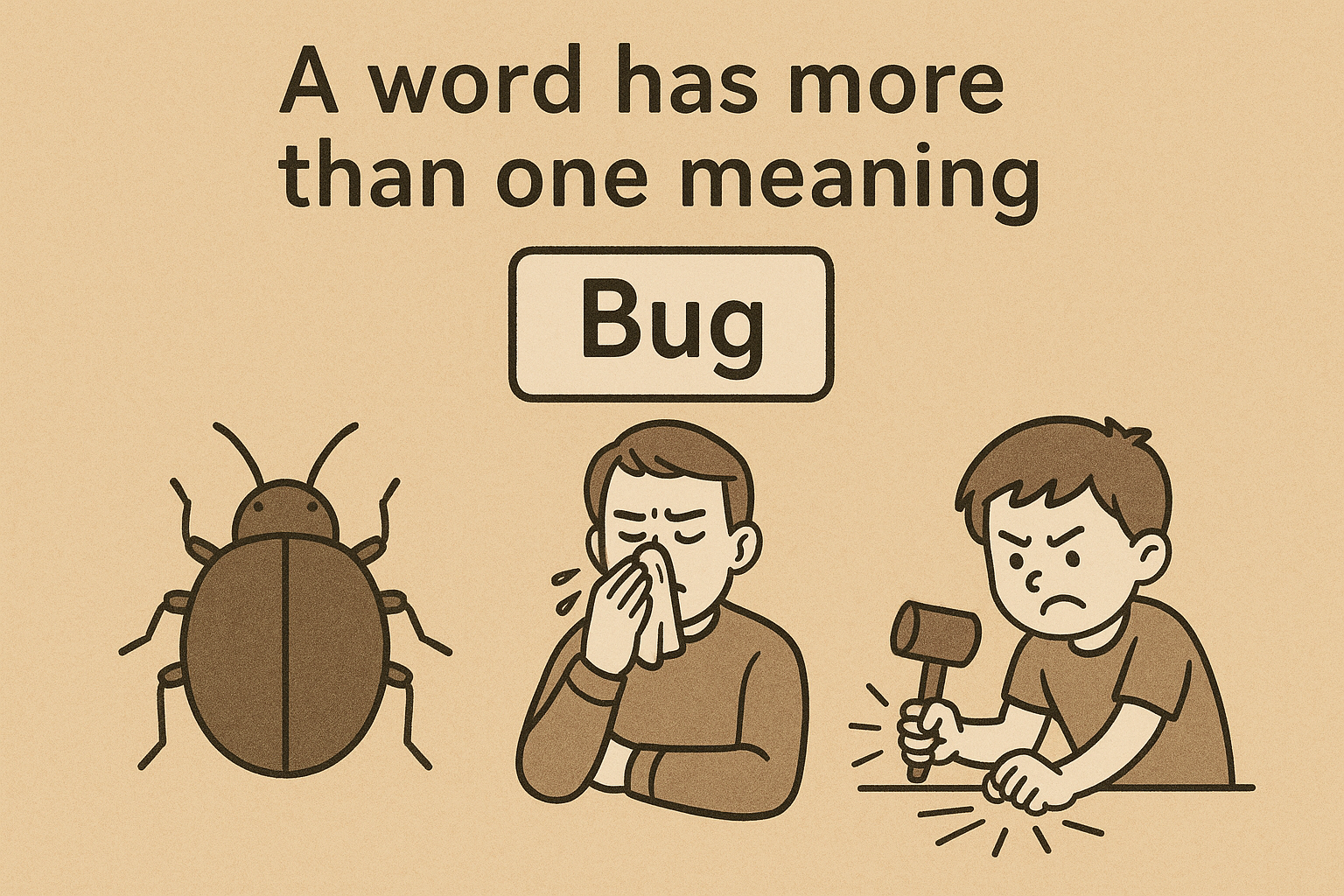
Lexical Ambiguity
a word has more than one meaning.
Ex: “bug” can mean an insect, an illness, or something annoying.
Lexical Ambiguity → Processing
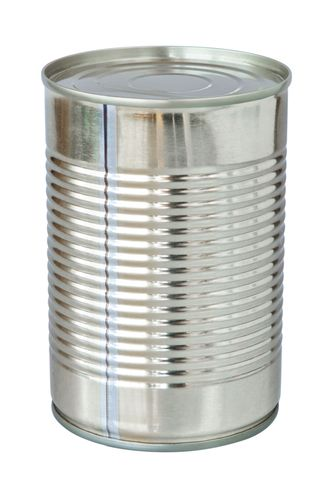
If a word has one very dominant meaning (biased dominance), we pick the meaning quickly, so processing is fast.
Ex: “tin” usually means the metal, so it is quick to understand.
Brocas Aphasia
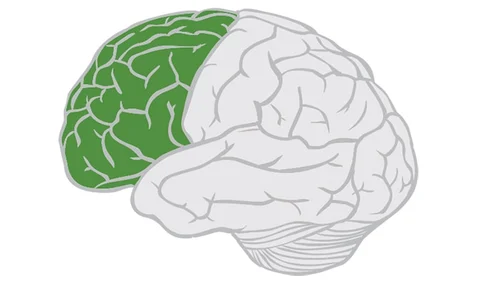
damage in the FRONTAL lobe
Main problem is with LANGUAGE production
Still understand what others are saying
Wernicke’s Aphasia
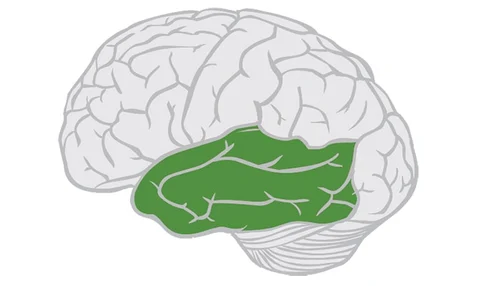
damage in the TEMPORAL lobe
Main problem is UNDERSTANDING language
still can produce language
Late Closure: Syntax First Approach
we first use syntax (grammar rules) to build the structure of a sentence, and only later bring in meaning and context.
Ex; After the musician played the piano..
Anaphoric Inference
Linking a pronoun back to the correct person or thing.
Example: “Izzy really likes to dance. She told me it's fun.” You infer that “she” = Izzy

Instrument Inference
Figuring out what tool or object is being used, even if it is not named.
Example: Thinking of pen and paper when you read about writing Hamlet.

Causal Inference
Working out cause and effect between sentences.
Example: “Sharon took an aspirin. Her headache went away.” You infer that the aspirin caused the headache to go away.

Given New Contract
When we speak, we start with given information (stuff the listener already knows) and then introduce new information
→ If people already know you got beer from the trunk, they understand “The beer was warm” much faster.

Syntactic coordination
People naturally match each other’s sentence structure.
“if confederate says their sentence →The girl gave the book to the boy,” you tend to describe the picture using a similar structure. (78%).

Situation Models
mental representation of the events, objects, and relationships described in a text or story.
“He hammered a nail into the wall”
—> People see this in their mind as a nail going sideways into a wall.
Faster when mental image matches given orientation.

Sapir Whorf Hypothesis
• The language you speak can influence how you think/ perceive the world
linguistic relativity
Russian has two basic words for blue. s light, g, dark
Bilingualism
strengthens working memory, delays dementia (1 decade), and makes thinking more flexible depending on context
dreams: more dominant language