Organic Chemistry 2 Converting Alcohols
 Call Kai
 Learn
Learn Practice Test
 Spaced Repetition
 Match
Match Flashcards
 Knowt Play
1/19

There's no tags or description
Looks like no tags are added yet.
Name | Mastery | Learn | Test | Matching | Spaced | Call with Kai | Chat |
|---|
No analytics yet
Send a link to your students to track their progress
20 Terms
E1 mechanism

best for 3’
LG leaves, makes carbocation, rar possible to make more stable carbocation

Zaitsev vs. Hoffman products
predict which major alkene product will be made in elimination reaction
Zaitsev = more substituted
Hoffman = less substituted
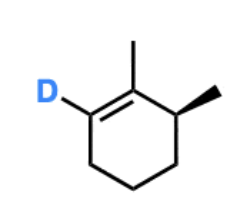
E2 mechanism
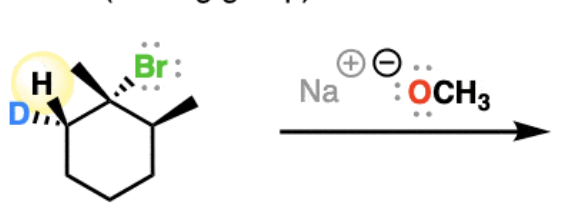
one step, need LG that is anti-periplanar (180 degrees from attacking group)
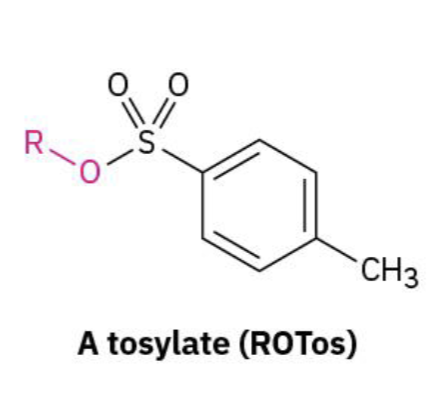
converting an alcohol to tosylate

e- from O attack S, causing pie bond to O to break, e- move up to other O
O- reforms double bond, kick off X LG
pyridine grabs H on ROH, leaving RO-tosylate
substitution through a halide

1.) PBr3 or SOCl2 convert to an alkyl halide via SNs
first product has inverted stereochem, then second reaction with a strong nucleophile gives a net retention of stereochemistry

substitution through a tosylate
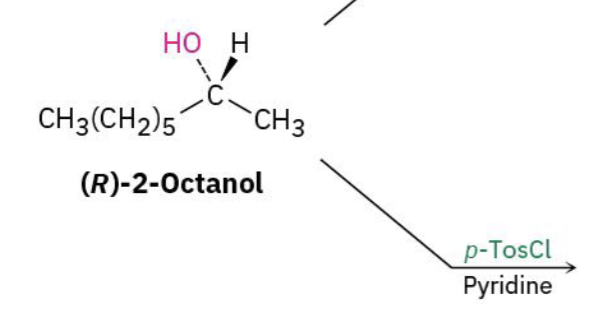
gives a net inversion of stereochemistry
1.) tosylate rxn occurs, stereochem is retained in step 1
2.) react with strong nucleophile to displace with an SN2 reaction, causing inversion

dehydration of alcohols to alkenes

remove water via strong acid catalyst ex. H2SO4, H3O+

strong nucleophiles for inversion or retention reactions
step 2 after tosylate or alkyl halide creation


oxidation of primary alcohols
can be oxidized to a aldehyde and then to carboxylic acid

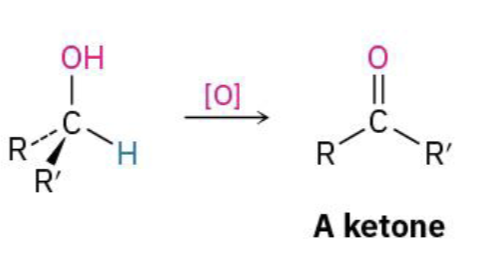
oxidizing a secondary alcohol
can be oxidized to a ketone
oxidizing a tertiary alcohol
no rxn will occur
Dess-Martin periodinane
used to stop oxidation at the aldehyde (if 1’ alc) or ketone (if 2’ alc) product

need anhydrous conditions
When water is present in oxidation mechanism
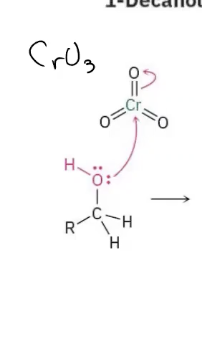
use chromate so product stops at aldehyde
CrO3

PCC and PDC
help 1’ alcohols stop at aldehydes
prevent over oxidation to carboxylic acid
Protection of alcohols

used to temporarily mask -OH group so that undergo unwanted reaction
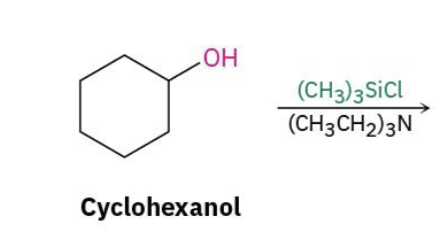
convert alcohol to TMS, makes it inert to gringard reagent

Example alcohol protection

Deprotection of alcohol

use F- ion to strip off silicon

Using alcohol protection during Gringard Reagnent
1.) protect alcohol with silcon

2.) form gringard reagent

3.) do gringard reaction

4.) remove protecting group

pinacol rar/dehydration