Acute Lymphoblastic Leukemia (ALL)
 Call Kai
 Learn
Learn Practice Test
 Spaced Repetition
 Match
Match Flashcards
 Knowt Play
1/17

There's no tags or description
Looks like no tags are added yet.
Name | Mastery | Learn | Test | Matching | Spaced | Call with Kai | Chat |
|---|
No analytics yet
Send a link to your students to track their progress
18 Terms
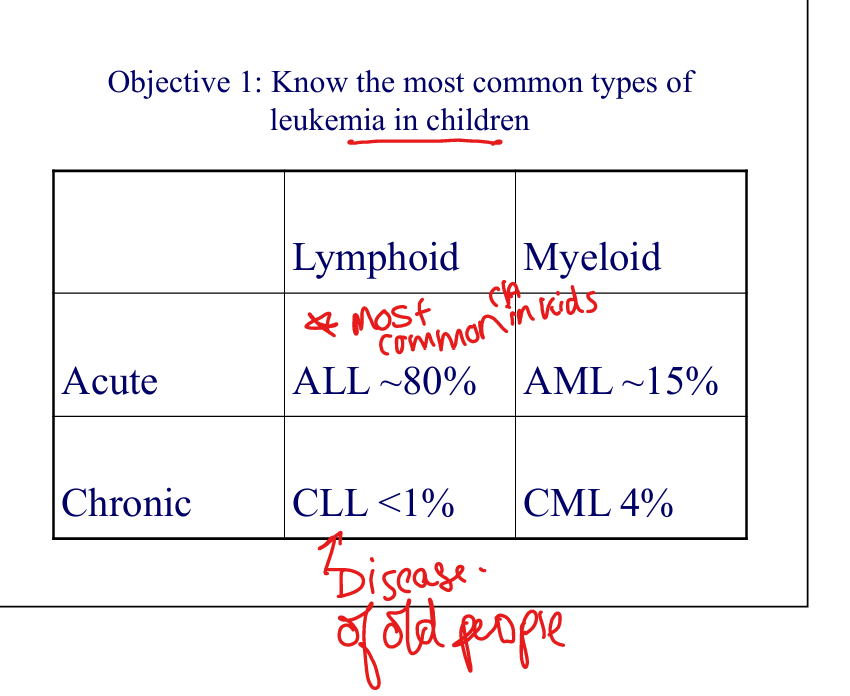
What are the most common types of leukemia in children
ALL is the most common pediatric leukemia (~80%), followed by AML (~15%), with CML and CLL being rare (<5% combined).
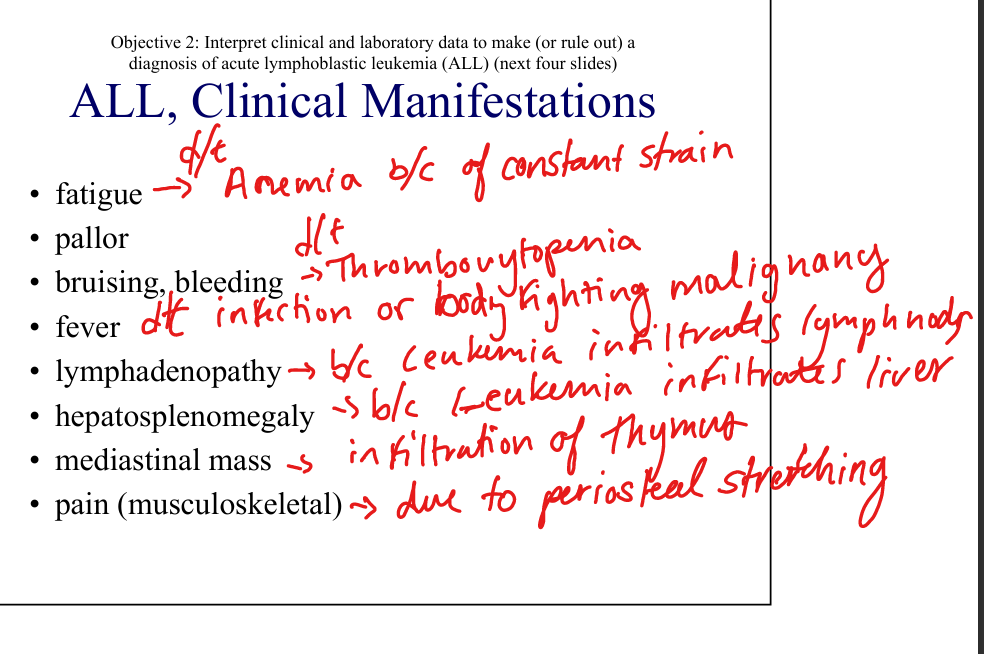
Clinical sx of Acute Lymphoblast Leukemia (ALL)
Fatigue(bc of anemia), pallor, bruising/bleeding (due to thrombocytopenia), Fever, lymphadenopathy, hepatosplenomegaly, medistinal mass, bone pain
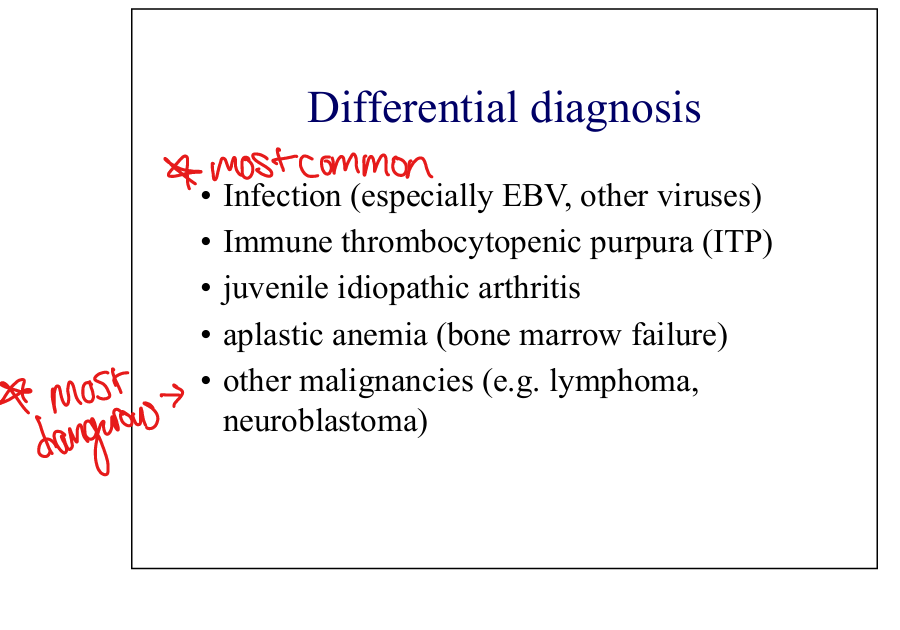
Differential diagnosis with ALL
Consider infections (EBV), ITP, juvenile idiopathic arthritis, aplastic anemia, lymphoma, and neuroblastoma
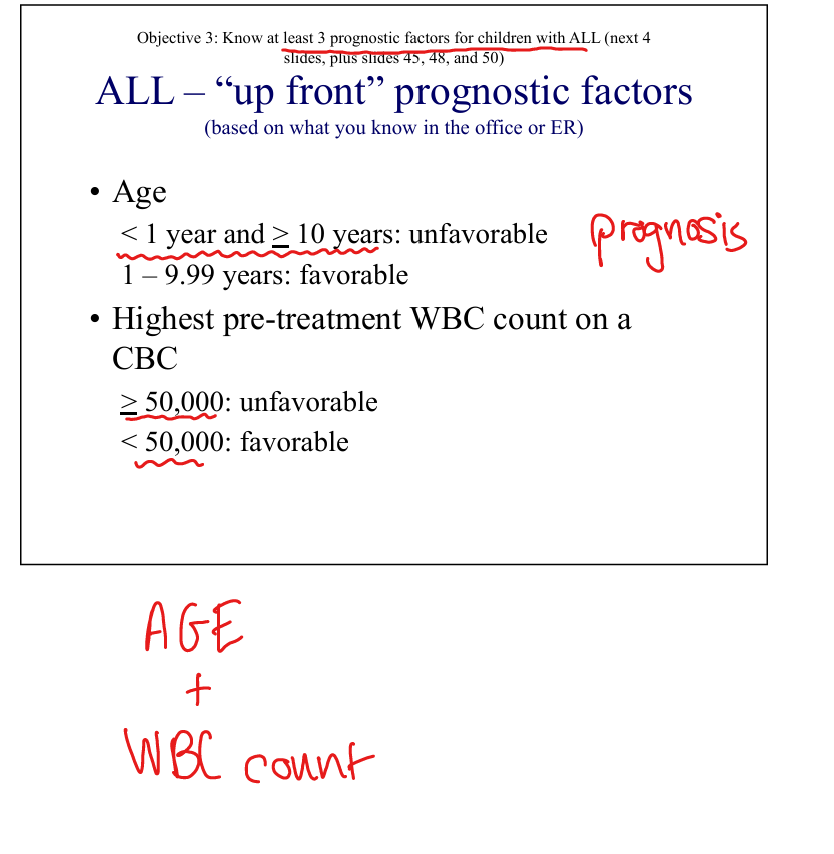
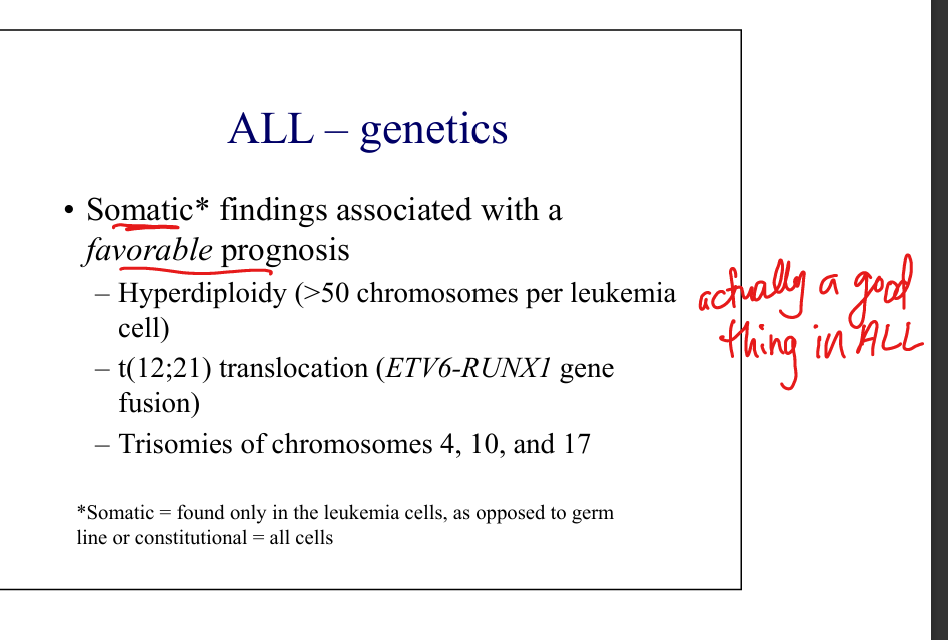
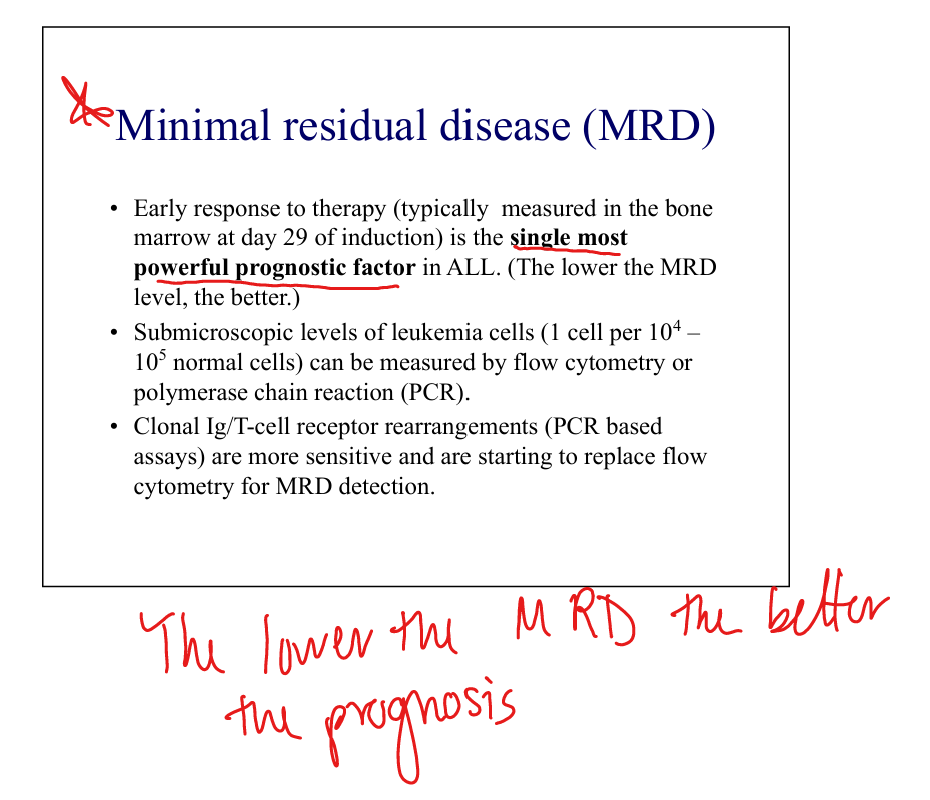
Identify prognostic factors of ALL
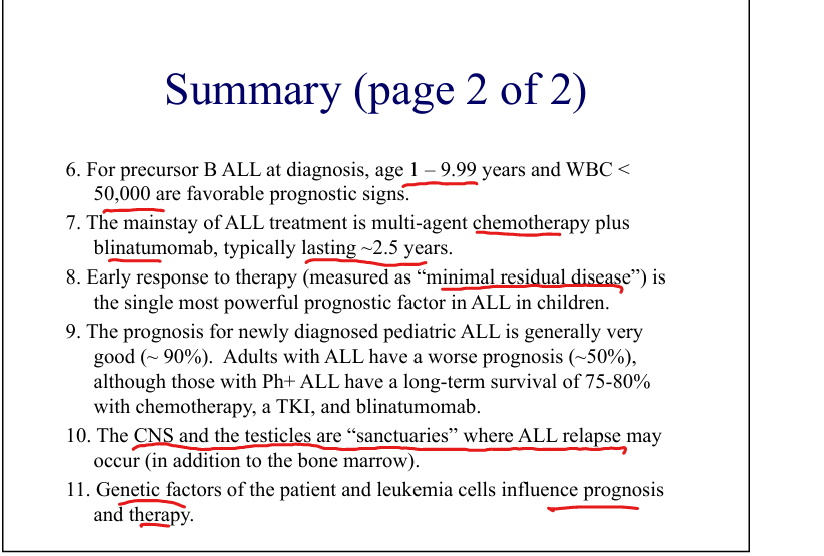
Ages 1–9.99 years are favorable, <1 or ≥10 years are unfavorable.
WBC <50,000 is favorable, ≥50,000 is unfavorable.
Favorable Hyperdiploidy (>50 chromosomes), t(12;21) is favorable
Minimal residual disease (MRD)=lower the MRD the better prognosis
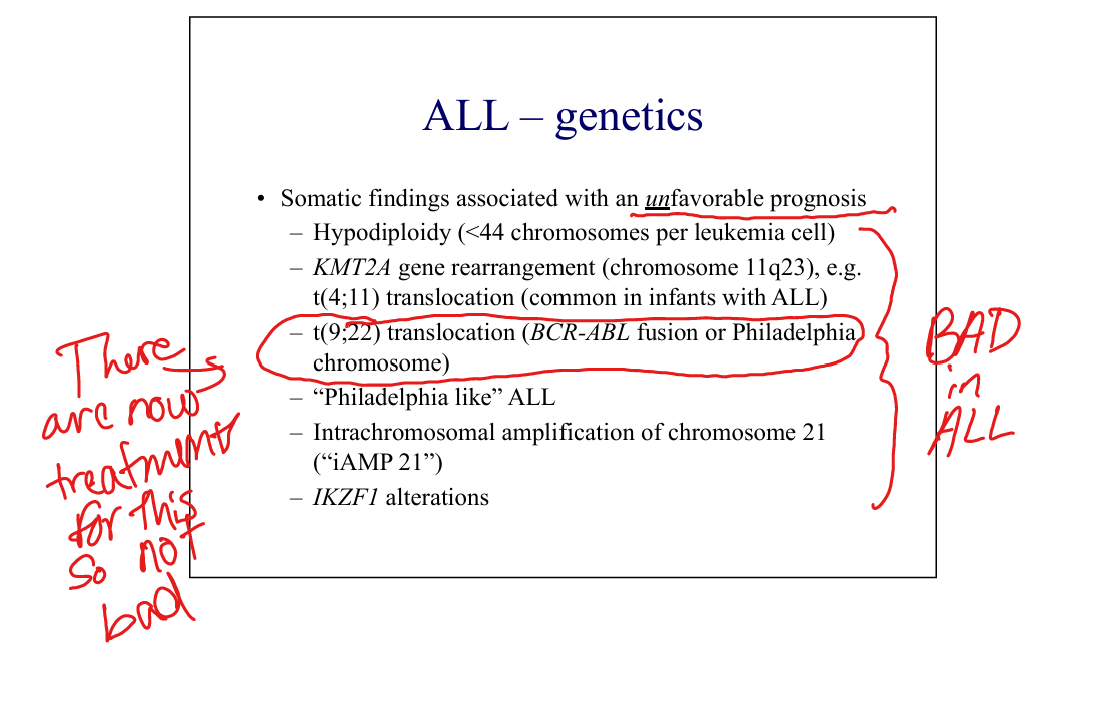
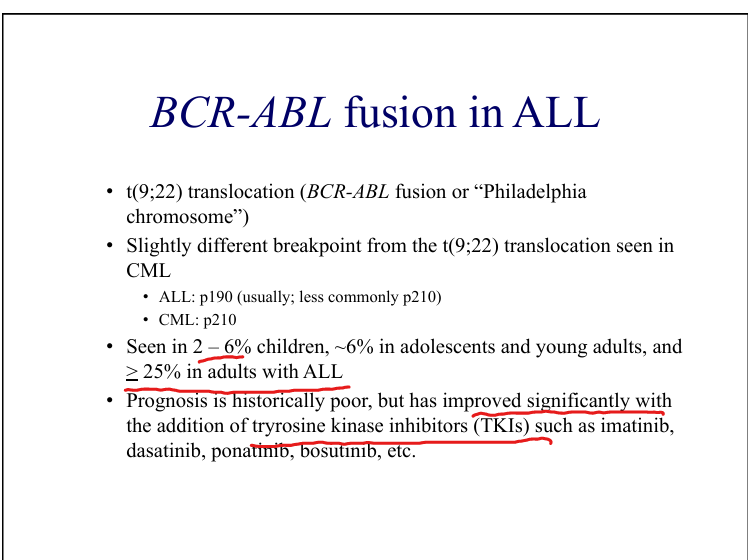
ALL t(9:22) translocation aka ___. treated with
BCR-ABL or Philadephia chromosome; Treated with Tyrosine Kinase Inhibitors(tyrosine kinase increases cell growth)
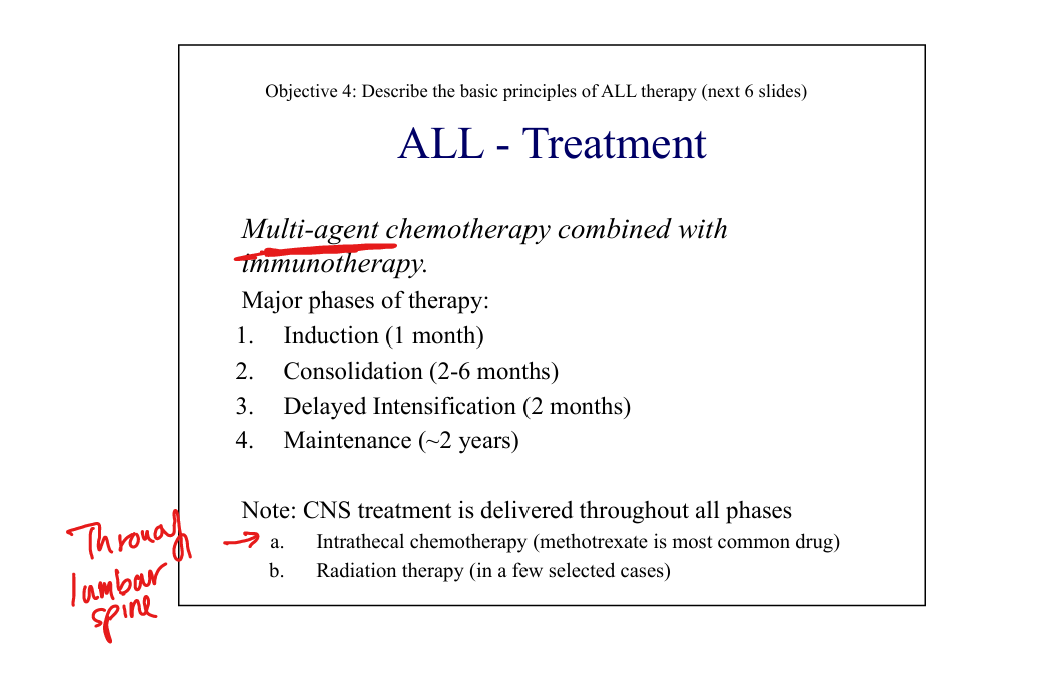
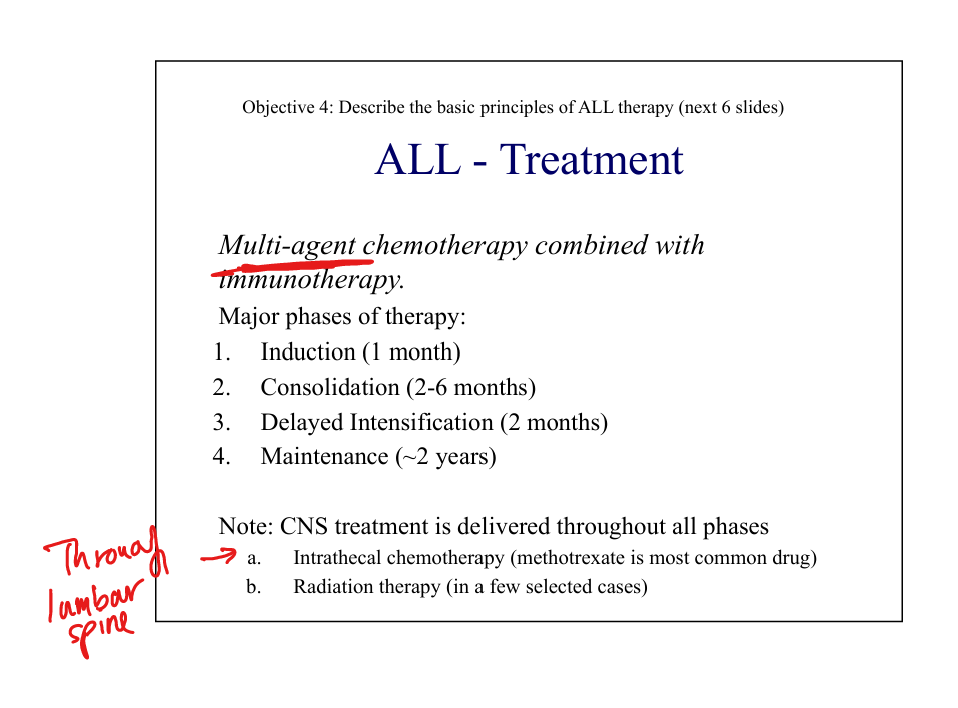
Describe CNS-directed therapy in Acute Lymphoblast Leukemia (ALL)
Intrathecal methotrexate throughout treatment, radiation only for select cases.
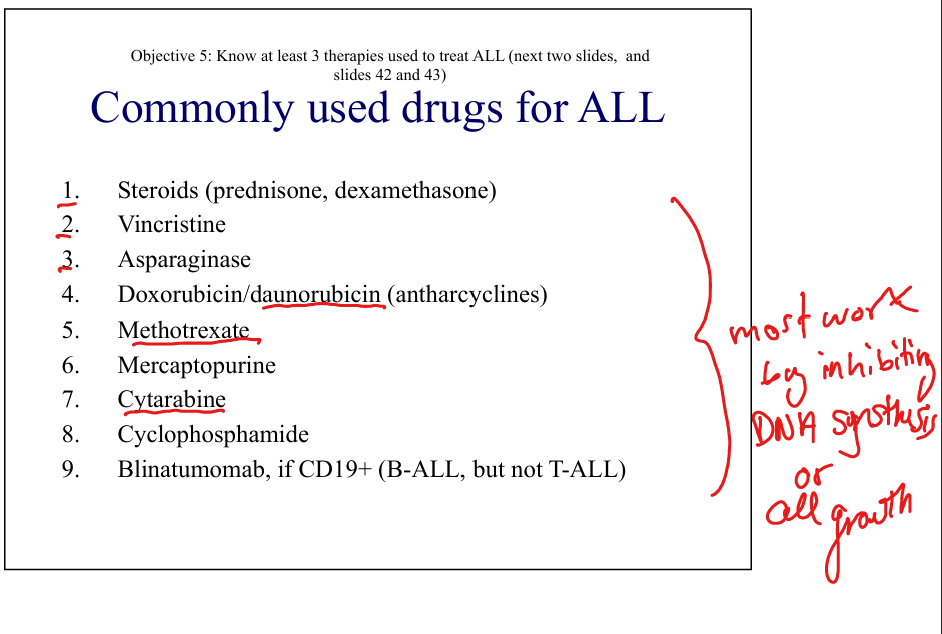
List therapy used in ALL:
Steroids
Vincristine
Daunorubicin
Methotrexate
Cytarabine
Blinatumomab, if CD19+ (for B-ALL not T-ALL)
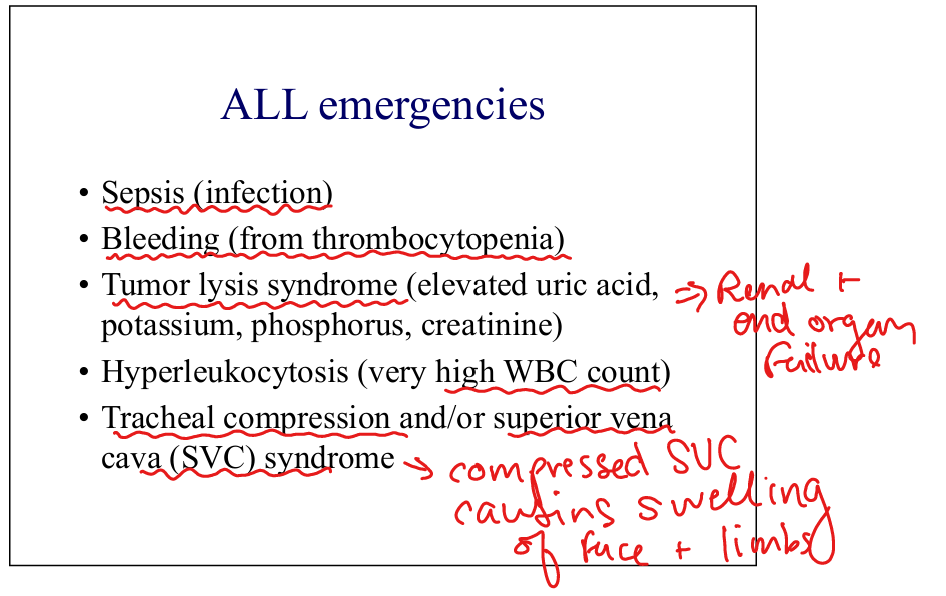
ALL emergencies
Sepsis, bleeding(from thrombocytopenia), tumor lysis syndrome, hyper leukocytosis, tracheal compression and/or superior vena cava syndrome(compressed SVC causing swelling of face and limbs)
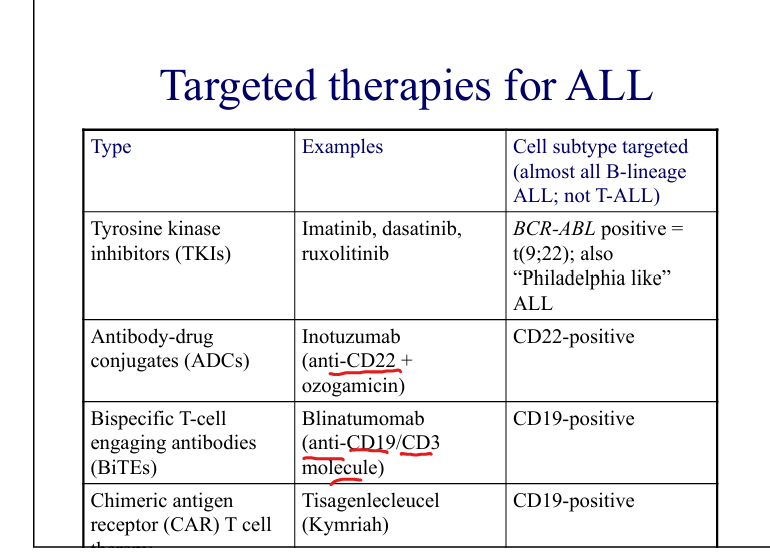
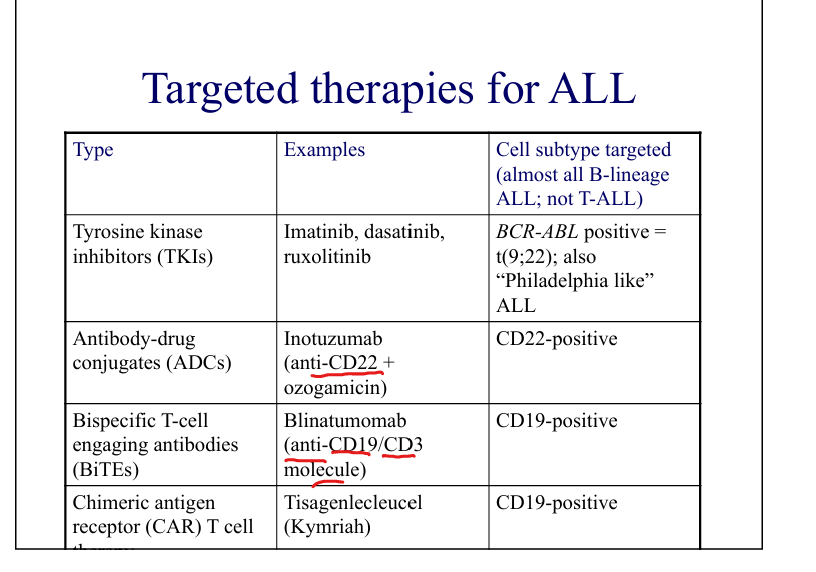
List therapy used in ALL: Blinatumomab
CD19+/CD3 BiTE used in B-ALL.
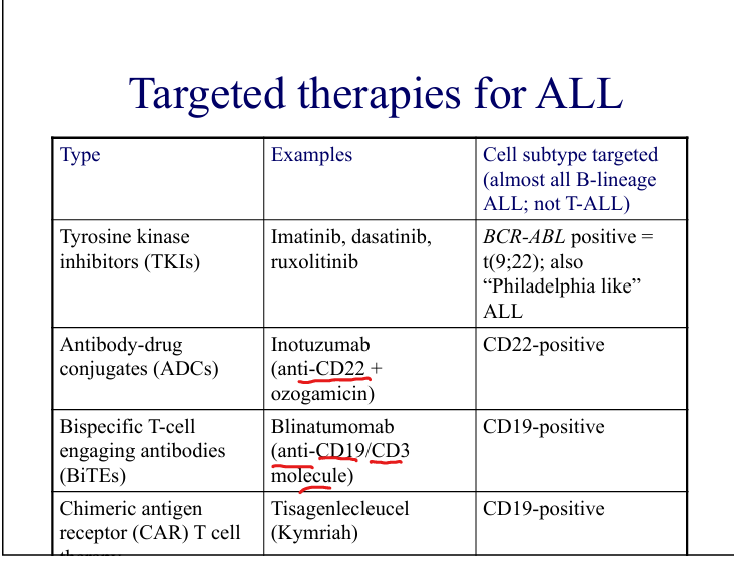
List therapy used in ALL: CAR-T therapy
CD19-directed tisagenlecleucel for relapsed/refractory B-ALL.
List therapy used in ALL: TKIs targeting what?
Imatinib/dasatinib for BCR-ABL–positive »t(9:22) philadelphia chromosome ALL.
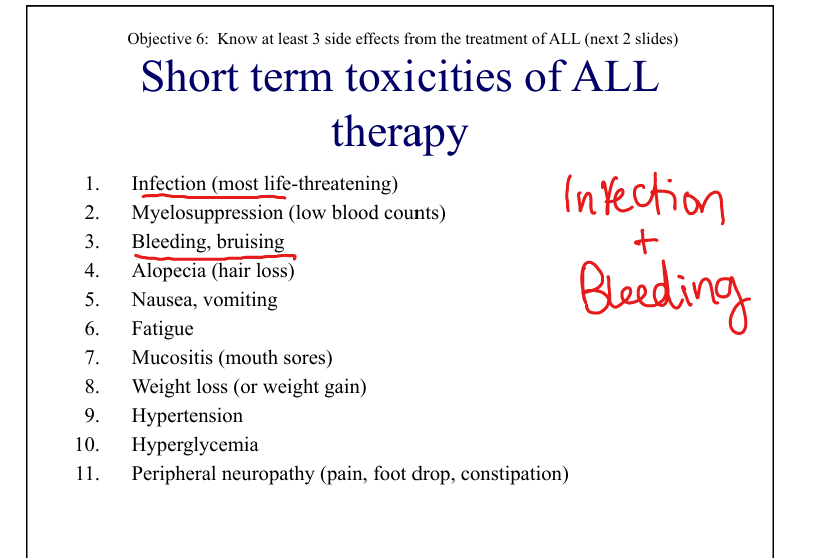
List side effects of ALL therapy:
Short term: Infection, myelosuppression, bleeding/bruising, hair loss, N/V, fatigue, weight loss, mout sores, HTN, peripheral neuropathy, hyperglycemia
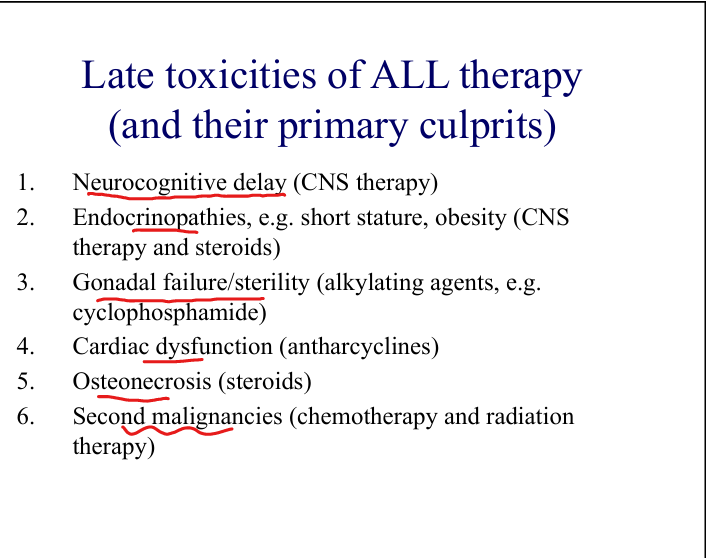
Long term: neurocognitive delay, endocrinopathies, gonadal failure, cardiac dysfunction, osteonecrosis, secondary malignancies
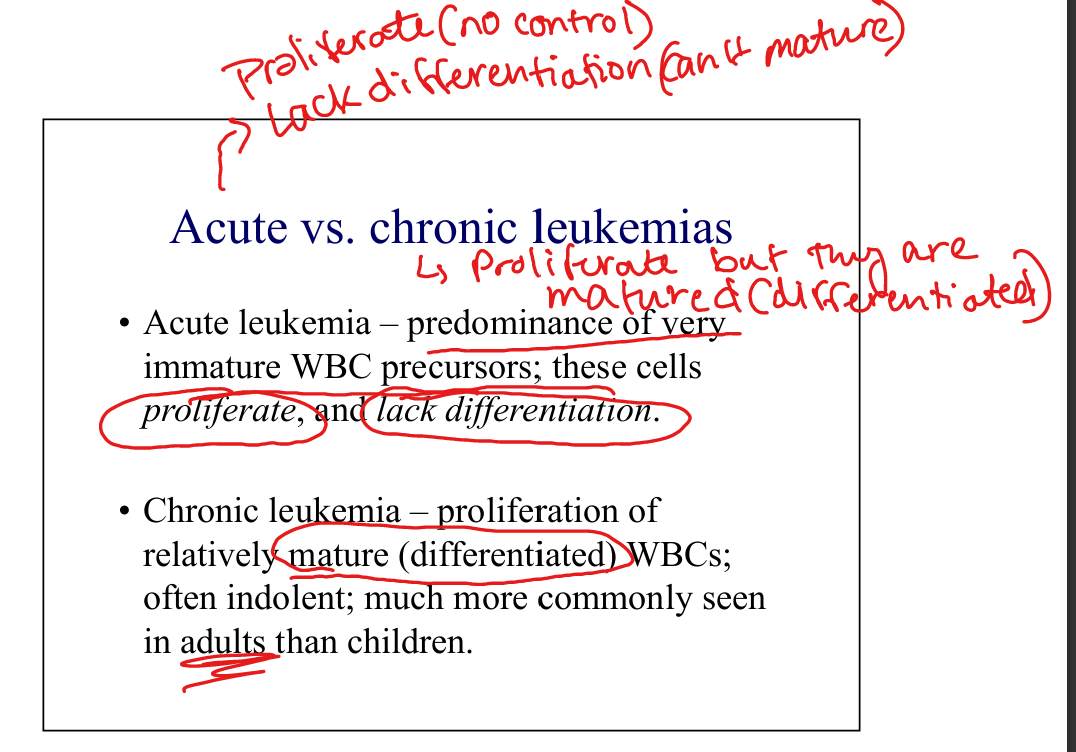
Difference between Acute and Chronic Leukemias
Acute:”: proliferate and lack differentiation(immature)
Chronic: proliferation of mature cells; often seen in adults
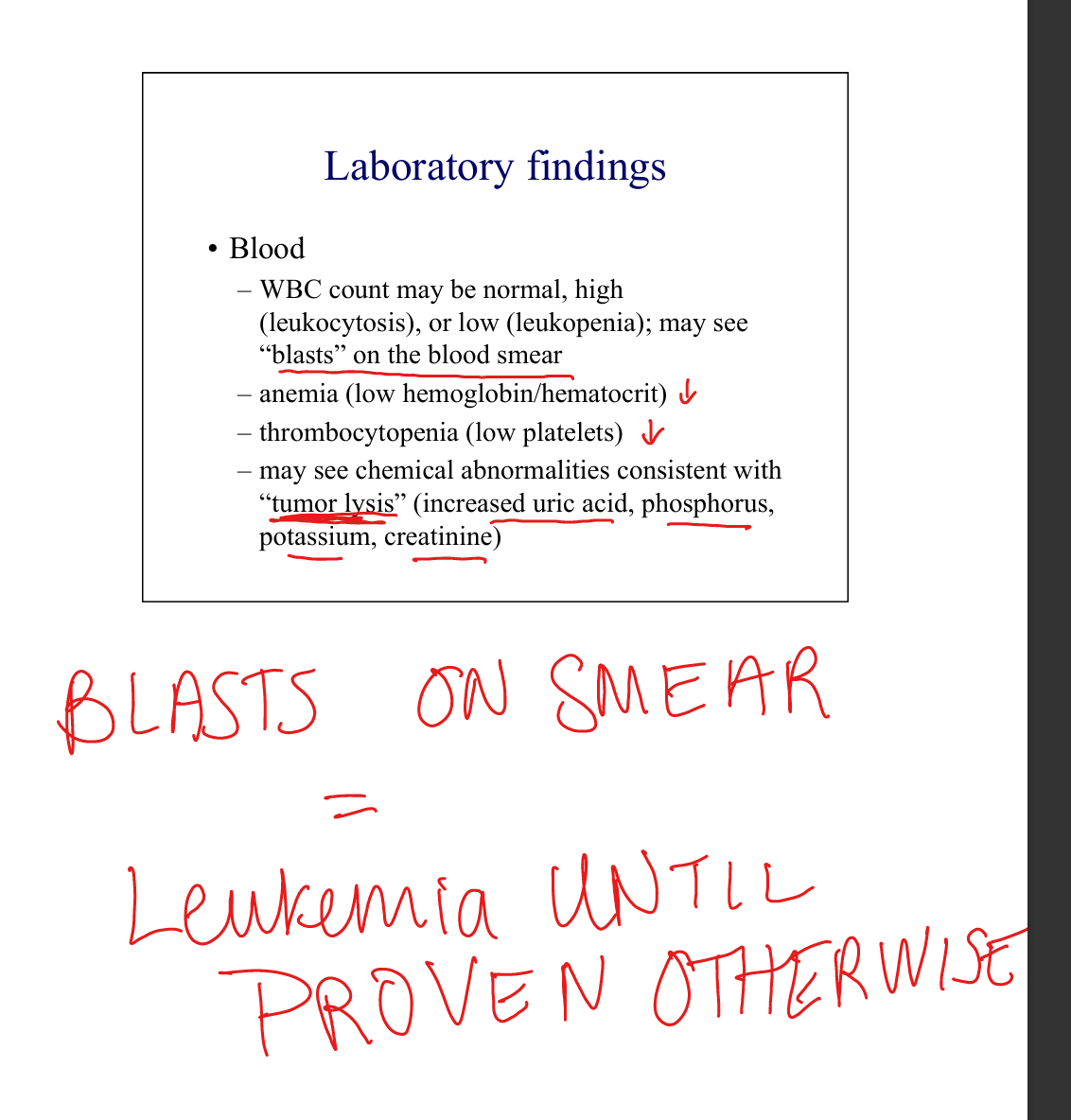
Lab findings in Acute Lymphoblastic Leukemia (ALL)
WBC count change, Anemia, Thrombocytopenia, BLASTS (>20% lymphoblasts on smear)
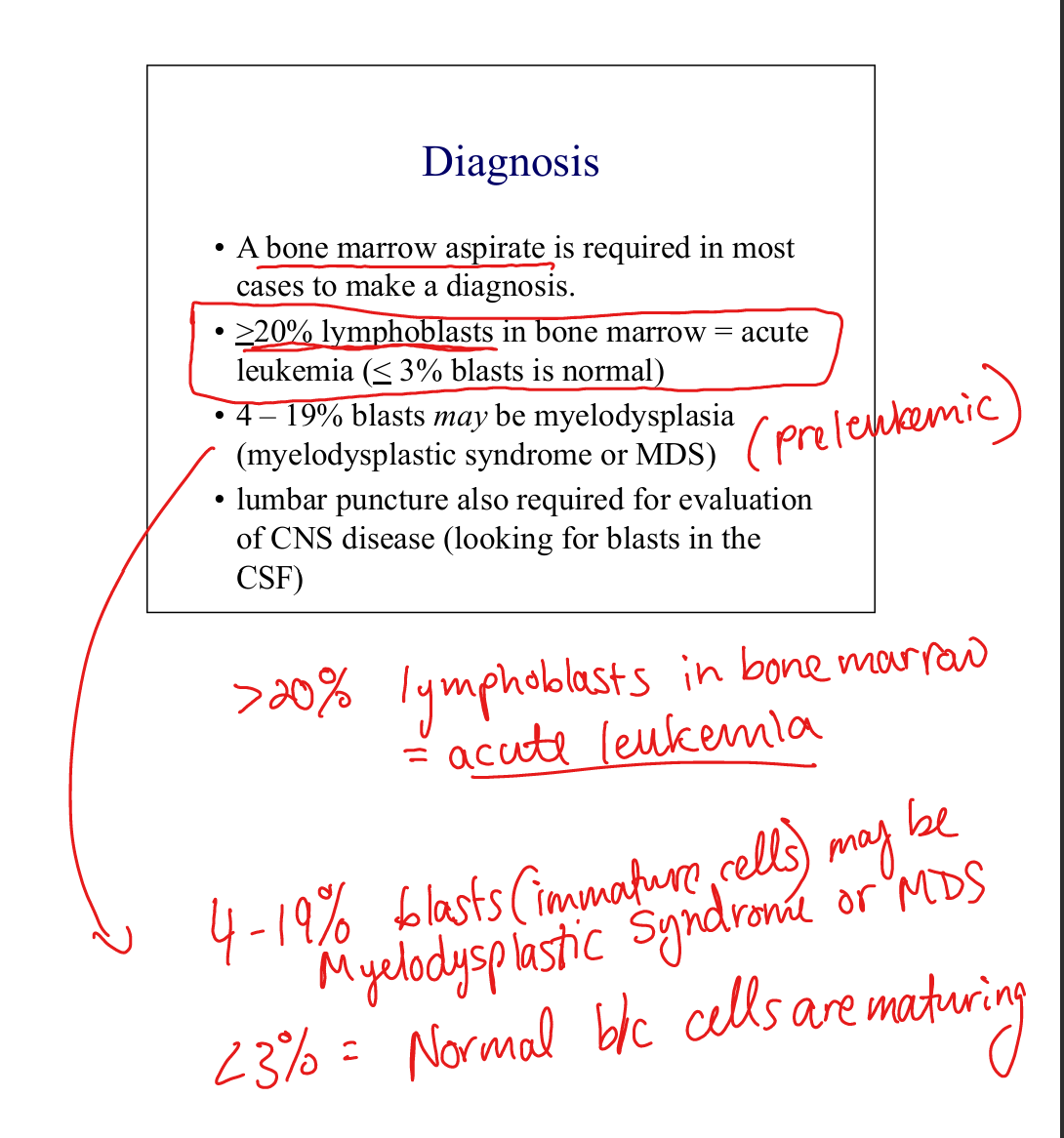
Diagnosis of ALL requires
>20% lymphoblasts in bone marrow= acute leukemia
Peak age for ALL
2-4 years old
Sanctuaries for ALL relapse
CNS, testicles and bone marrow again
ALL phases of treatment
Induction (1 mo), Consolidation (2-6 mo), Delayed Intensification (2 mo), Maintencance (~2 yrs)