Bones and Bone Tissue
 Call Kai
 Learn
Learn Practice Test
 Spaced Repetition
 Match
Match Flashcards
 Knowt Play
1/14

There's no tags or description
Looks like no tags are added yet.
Name | Mastery | Learn | Test | Matching | Spaced | Call with Kai | Chat |
|---|
No analytics yet
Send a link to your students to track their progress
15 Terms
Skeletal System
Includes the bones, joints, and other supporting tissue
Bones
Main organs of the system; Adults typically have 206 bones
Each bone includes:
Bone (Osseous) Tissue
Dense regular collagenous tissue
Dense irregular connective tissue
A tissue called Bone Marrow
Functions of the Skeletal System
protection, mineral storage and acid base homeostasis, blood cell formation, fat storage, movement, support
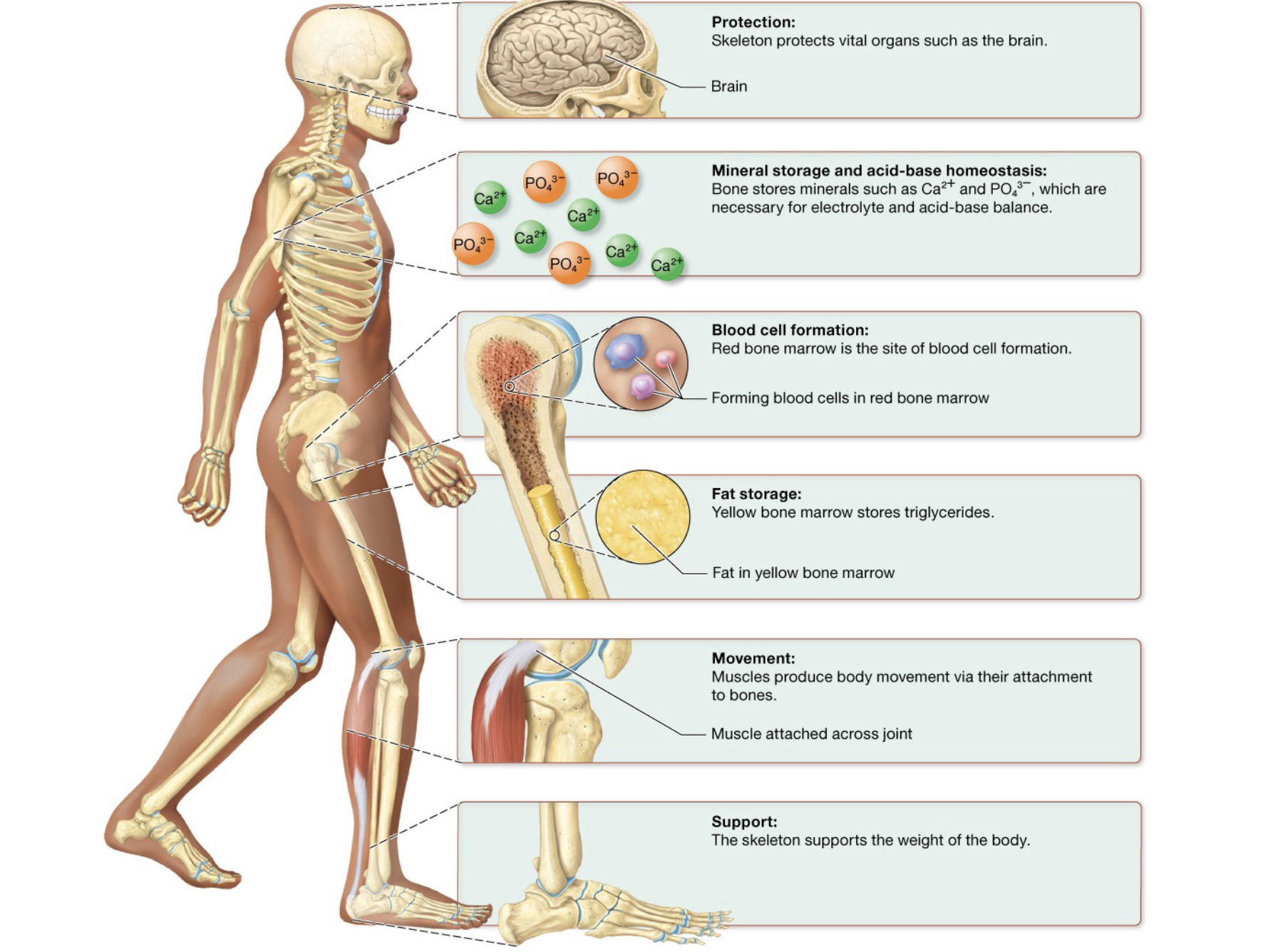
Protection
Bones such as the skull, sternum, and ribs protect underlying organs
Mineral Storage and Acid Base Homeostasis
Bone stores minerals including calcium, phosphorus, and magnesium salts
These minerals are electrolytes, acids, and bases in the blood, and are critical for electrolyte and acid-base maintenance
Blood Cell Formation
Red Bone Marrow in bones is the site of Hematopoiesis, or formation of blood cells
Fat Storage
Yellow Bone Marrow in bones contains adipocytes with stored triglyceride
Movement
Bones are the sites of attachment for most skeletal muscles
When muscles contract, they pull the bones which generates movement around a joint
Support
The skeleton supports the weight of the body and provides its structural framework
Classification of Bone by Shape
long bones, short bones, flat bones, irregular bones, sesamoid bones,
Long Bones
Longer than wide
ex. bones of the limbs; Some long bones are very small

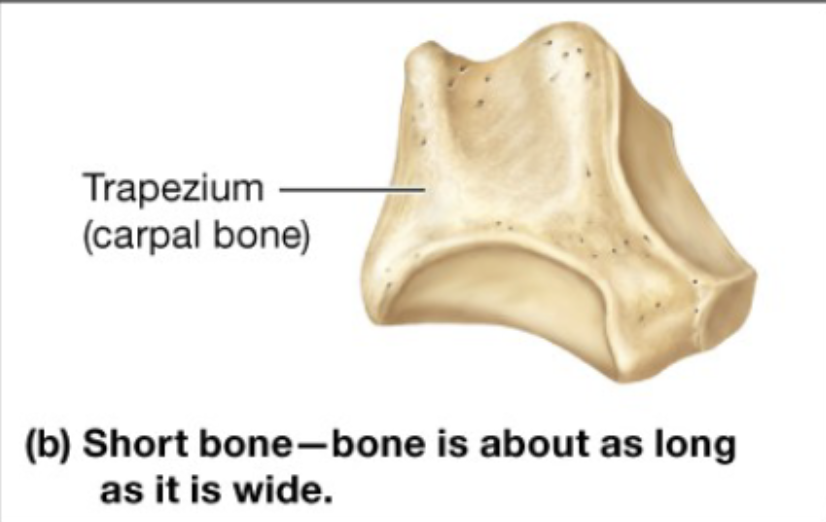
Short Bones
About as long as wide or roughly cube- shaped
ex. the wrist and ankle bones
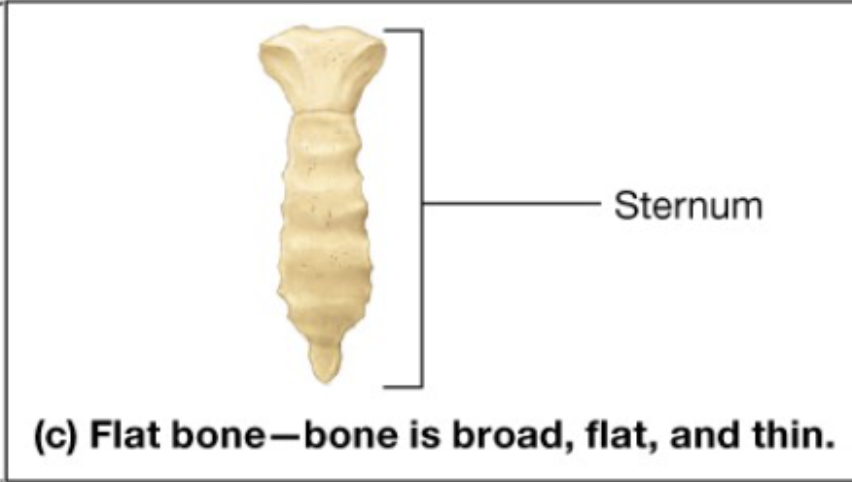
Flat Bones
Thin and broad
ex. most of the skull bones and bones of the pelvis
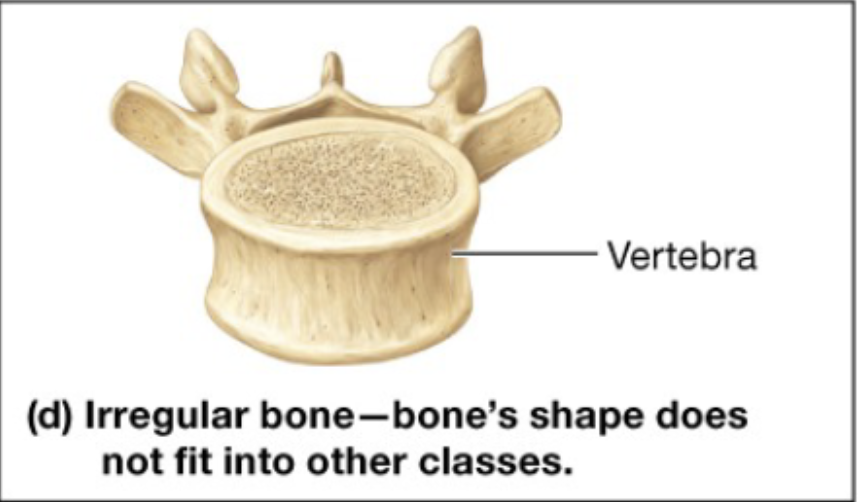
Irregular Bones
Irregular shapes
ex. the vertebrae
Sesamoid Bones
Small, flat, oval-shaped bones located within tendons
ex. the kneecap
