biology - genetic variation
 Call Kai
 Learn
Learn Practice Test
 Spaced Repetition
 Match
Match Flashcards
 Knowt Play
1/38

There's no tags or description
Looks like no tags are added yet.
Name | Mastery | Learn | Test | Matching | Spaced | Call with Kai | Chat |
|---|
No analytics yet
Send a link to your students to track their progress
39 Terms
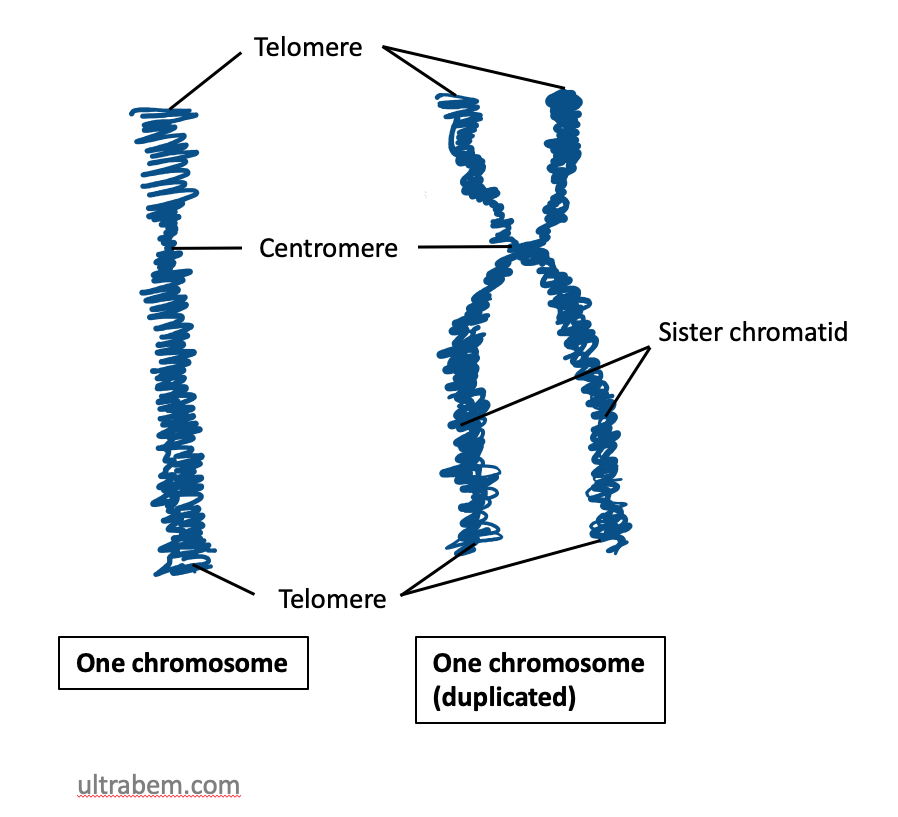
chromosome
long, coiled DNA molecule carrying many genes
DNA
molecule that stores genetic information. polymer made of repeating units called nucleotides
nucleotides have a phosphate group, a deoxyribose sugar and one of four nitrogenous bases
gene
a section of DNA that influences a specific characteristic. order of base sequences determines the gene
allele
an alternative version of a gene. you get one allele from each parent.
genotype
heterozygous (Aa) = dominant trait
homozygous dominant (AA) = dominant trait
homozygous recessive (aa) = recessive trait
gamete
mature haploid cell that unites during reproduction to form a zygote
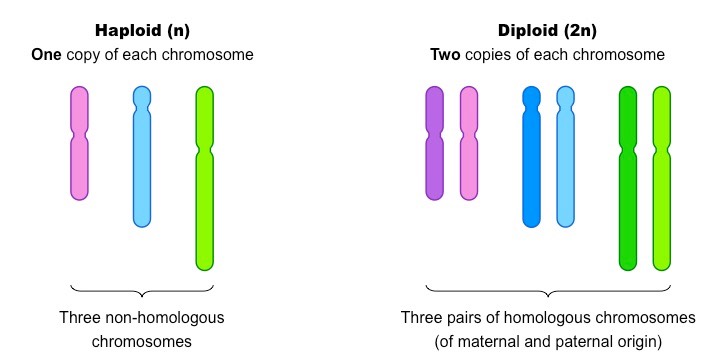
haploid (n) vs diploid (2n)
cell containing a single set of unpaired chromosomes
cell containing two chromosome sets, one from each parent
meiosis process
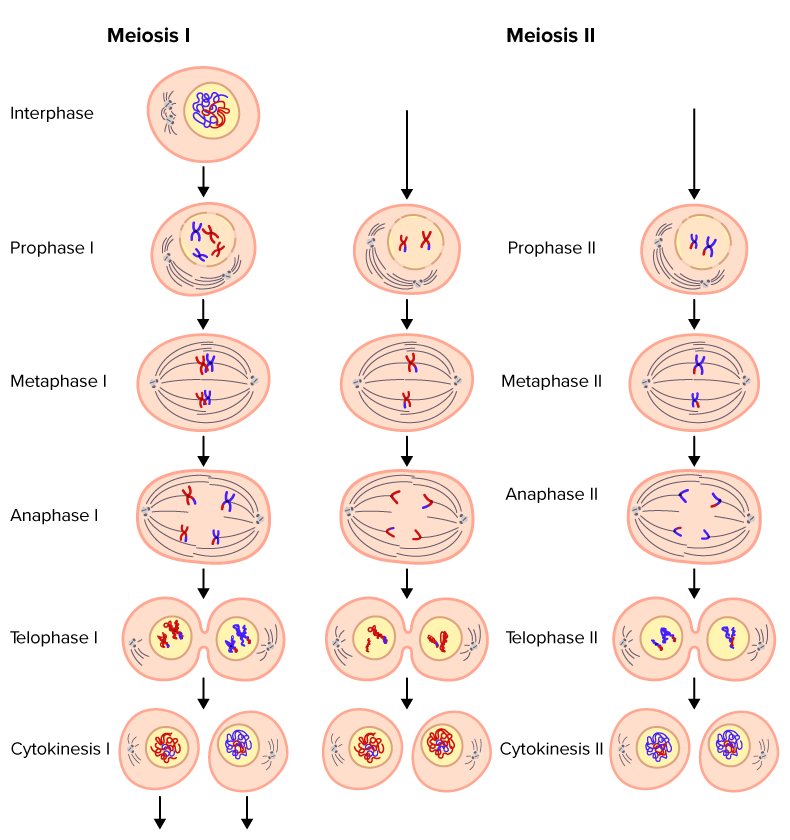
interphase - DNA is copied
prophase 1 - chromosomes pair up with matching partners and swapping over happens
metaphase 1 - chromosome pairs line up in the middle of the cell
anaphase 1 - pairs are pulled apart to opposite sides of the cell
telophase 1 and cytokinesis - cell splits into two new daughter cells
prophase 2 - chromosomes get ready to split
metaphase 2 - chromosomes line up in a single line down the cell
anaphase 2 - the sides of each chromosomes (sister chromatids) are pulled apart to opposite ends
telophase 2 and cytokinesis - cells divide again, resulting in four haploid cells
in meiosis 1, sister chromatids stay together. in meiosis 2, they separate
crossing over (FOUR SOURCES OF VARIATION)
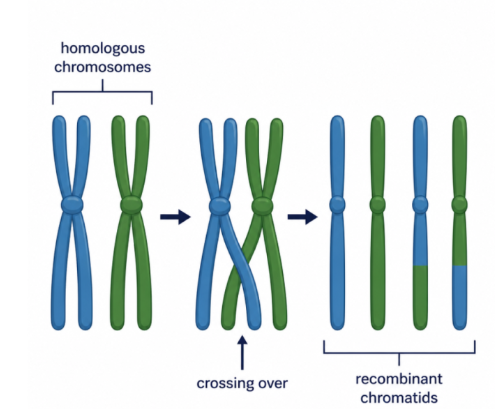
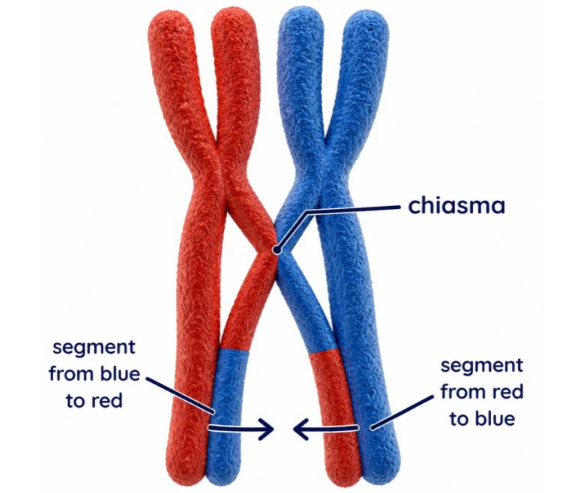
prophase 1, non sister chromatids exchange DNA segments, forming recombinant chromatids with new allele combinations
independent assortment (FOUR SOURCES OF VARIATION)
at metaphase 1, each homologous pair aligns independently and randomly. this creates 2n possible chromosome combinations (n = number of pairs)
random fertilization (FOUR SOURCES OF VARIATION)
any sperm can fuse with any egg, so two genetically different gametes combine to form a unique zygote
mutation (FOUR SOURCES OF VARIATION)
a change in the DNA base sequence can create a new allele. mutations are the original source of new genetic information
kinds of asexual reproduction
binary fission - parent cell copies genetic material, grows lager and splits down middle to form two identical daughter cells
fragmentation - organism splits off into pieces and the different pieces grow into a full individual
budding - new organism/plant shoots out from the parent. the bud gets bigger until it separates to become an entirely different new clone
parthenogenesis - an embryo grows from an unfertilized egg when a female’s egg triggers its own cell division
spore formation - spores carrying genetic material float through the air on wind or rain or other animals or bugs to take root in a different location to the parents
vegetative propagation - new plants grow from the stem or roots of a parent plant NOT from a new seed
segregation
paired alleles separation during meiosis = each gamete gets one (anaphase 2)
each gamete only carries one allele for each trait so that when sperm meets egg, offspring end up with the correct diploid number
prophase and synapsis
homologous pairs line up close in a process called synapsis
non sister chromatids can touch at points called chiasmata then break and reattatch to each other
linked genes
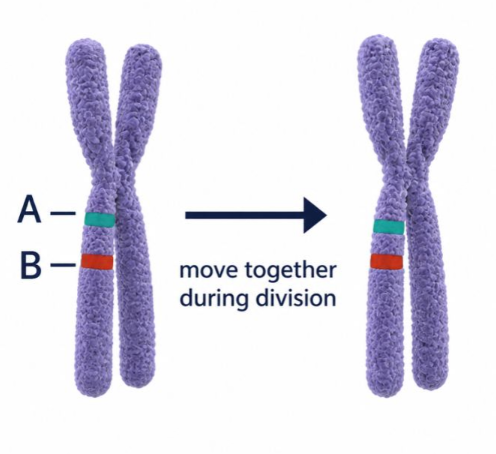
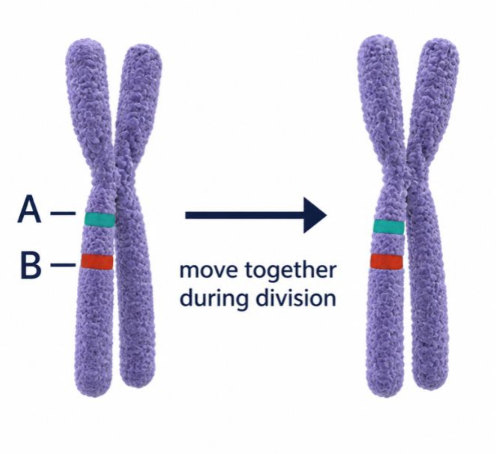
genes close together on the same chromosome are ‘linked’ meaning they tend to be inherited together as they are unlikely to be separated by crossing over → this reduces expected variation in offspring as alleles don’t sort independently
sex linked genes
these genes are on the x or y chromosome. x is larger to some x-linked genes have not matching gene on y.
example = red green colour blindness is x-linked. male needs one affected allele, female usually needs two
x linked traits can be inherited differently from typical genes
test crossing
crossing a dominant trait expressing individual to see if it is heterozygous or homozygous dominant. cross it with a homozygous recessive to see if original individual has recessive gene present - if recessive individual is born, its heterozygous and if enough offspring are born with no recessive phenotypes being expressed, then you can be pretty certain, the original individual is homozygous dominant
dihybrid cross
cross between individuals involving two pairs of contrasting traits (genetically determined characteristic or condition)
mendel’s laws
law of segregation - alleles for different traits separate into different gametes so that the haploids have one allele
law of independent assortment - inheritance of one trait does not affect the inheritance of another because homologous pairs align randomly (provided genes are on different chromosomes)
solving dihybrid cross
FOIL method
RrYy
first = RR
outer = Ry
inner = rY
last = ry

ratio
9:3:3:1 if genes are on different chromosomes
if you see a ratio that deviates significantly from 9:3:3:1 in a large sample, suspect gene linkage
co-dominance
both alleles in a heterozygous cross are fully and equally expressed
multiple alleles
a gene having more that two possible alleles in a population (e.g. blood types IA, IB, i)
incomplete dominance
alleles are blended together so no allele is completely dominant
lethal allele
an allele causing death in an organism (typically when homozygous)
lethal alleles cause death before being born if you have two (WHEN THEY’RE HOMOZYGOUS)
lethal alleles removed from phenotypic ratio
carrier
an individual possessing one recessive allele without trait expression
solving pedigree charts
start with recessive allele bearing person
mutation
permanent change in the base sequence of DNA
mutagens are environmental agents increasing the rate of mutation e.g. harmful rays, chemicals, ect
ONLY WAY TO MAKE NEW ALLELES
gene pool
total set of alleles in a population
ways in which mutations occur
nucleotides can be deleted, inserted or swapped and this can change the protein shape as protein chain may no longer work properly/cannot fold properly
mutations can occur in coding (1%) and non coding (99%) - non coding mutations till impact phenotypes as non-coding impacts expression
kinds of mutations
somatic = body cell, not inheritable, often caused by environmental factors
gametic = sex cell, inheritable, every cell in offspring will carry gene
causes of mutation
spontaneous → occurs during dna replication when polymerase makes a mistake (gametic)
induced by mutagens → physical or chemical mutagens like sun/cigarettes (somatic)
mutation impacts
silent mutations occur when bases that change still code same protein (GTA = protein one and GAA = protein 1)
harmful = protein function is impacted and can cause diseases like cystic fibrosis
beneficial = highly unlikely. causes survival advantage AS THOSE WITH THE MUTATION SURVIVE LONG ENOUGH TO HAVE OFFSPRING
epigenetics
changes in gene expression without DNA sequence shifts
plasticity
a genotype’s capacity to produce varied phenotypes in environment. also results in evolutionary advantage as it allows survival in fluctuating conditions
environmental variation
organisms are rarely at genetic maximum - instead, their environmental factors like nutrition, temperature and light determine variation
norm of reaction

range of phenotypes produced by a singular genotypes across different environments → genes provide potential while environment depends point within range
multifactorial
genes affected by both genotype and environment