Exam 1 Complete Review
 Call Kai
 Learn
Learn Practice Test
 Spaced Repetition
 Match
Match Flashcards
 Knowt Play
1/75

Earn XP
Description and Tags
Not finished
Name | Mastery | Learn | Test | Matching | Spaced | Call with Kai | Chat |
|---|
No analytics yet
Send a link to your students to track their progress
76 Terms
What is a dose?
the amount of the drug required to elicit a biological response
☆ What is dose-response relationship?
the intensity of the response elicited by a drug is proportional to the dose administered
☆ What is the first thing (the minimum dose) on a concentration-response curve?
threshold dose
Who was the father of modern toxicology?
Paracelsus
What is potency?
dose required to elicit an affect of a given intensity
What is effective dose 50 (ED50)?
dose that produced 50% of the drugs maximal effect
What is efficacy?
ability of drug to elicit an effect
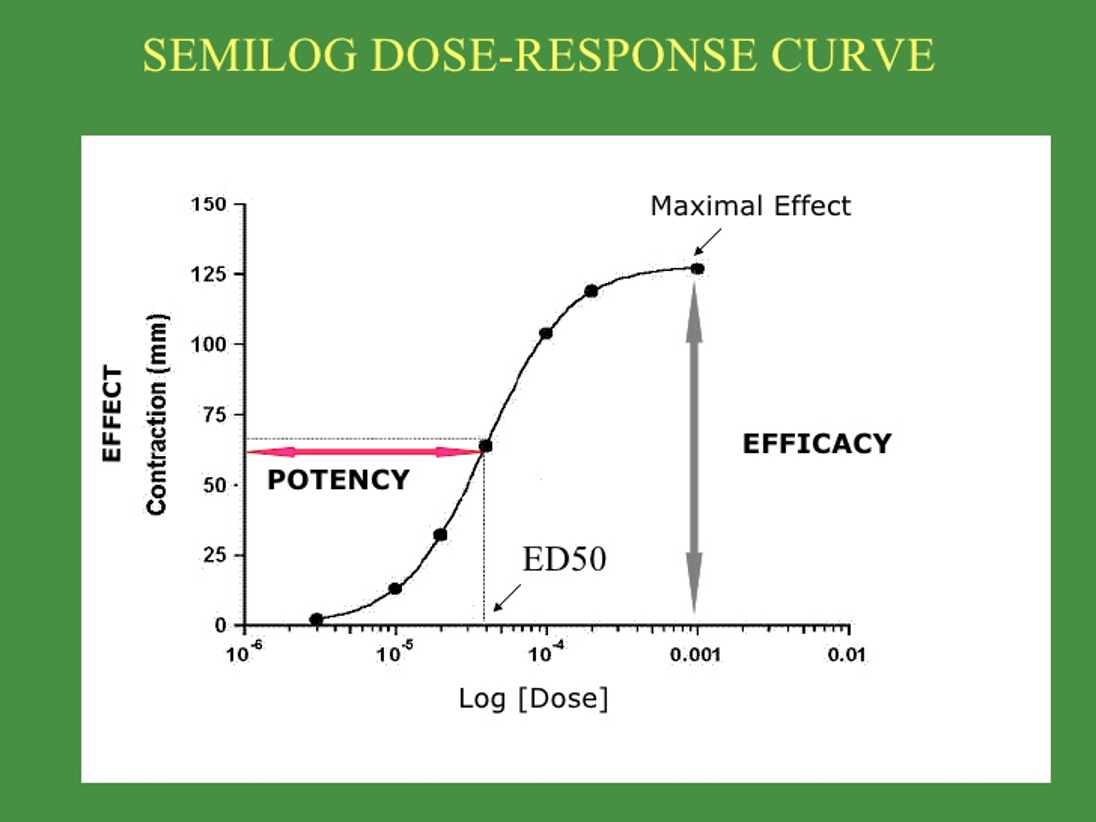
☆ On which axis is potency observed?
x axis
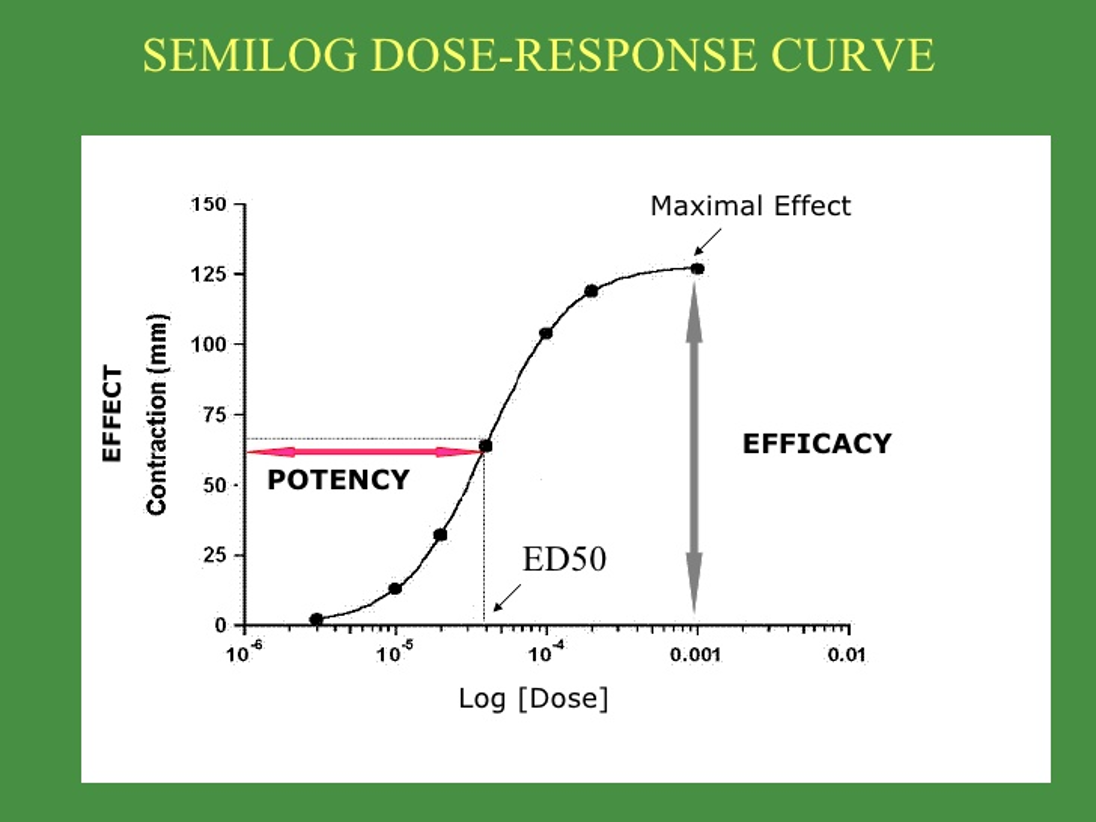
☆ On which axis is efficacy observed?
y axis
How do you calculate therapeutic index?
TI=TD50/ED50
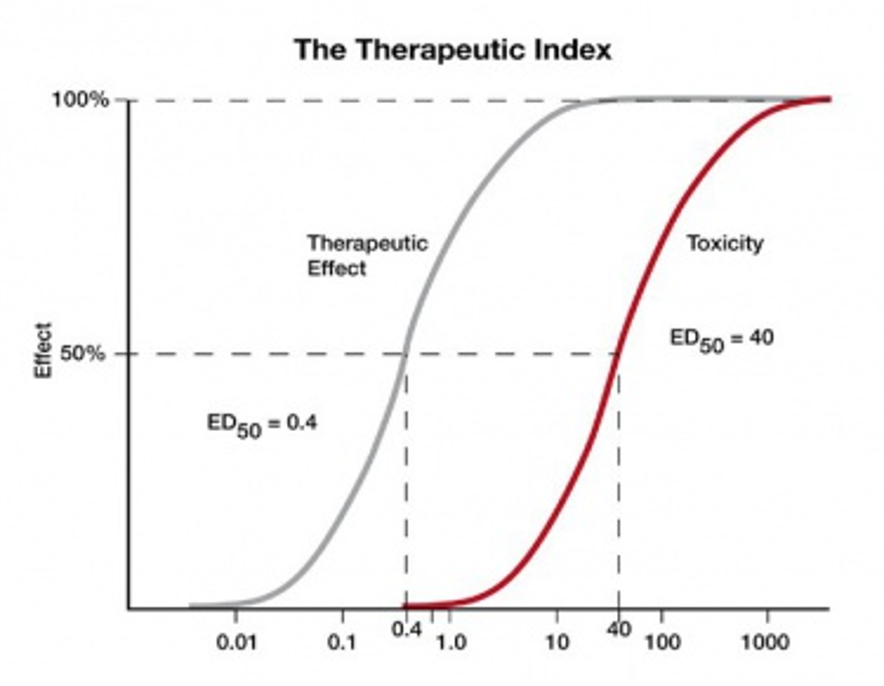
Calculate the therapeutic index.
TI=100
What are the four basic types of receptors?
ligand-gated ions channels, G-protein-coupled-receptors, Receptor Tyrosine Kinases, and nuclear receptors
In the ligand-gated ion channels, what is an example of a fast neurotransmitter?
Glutamate
☆ In G-protein coupled receptors, how many transmembrane spanning receptors are there?
7
True or False: G-protein-couple receptors use second messenger system? Hint: cAMP pathway
true
What is an example of a G-protein-coupled receptor?
dopamine receptor
In receptor tyrosine kinases, what do the membrane receptors mainly respond to?
protein mediators
What is an exmaple of a kinase-linked receptor?
insulin receptor
True or False: In kinase-linked receptors, intracellular domain is linked by a single transmembrane helix?
true
☆ True or False: Tyrosine kinase inhibitors are used to treat cancer?
true
☆ What is an example of a cancer?
mast cell tumor
☆ What regulates nuclear receptors?
gene transcription
☆ In nuclear receptors, where is the inactive form found?
cytosol
☆ In nuclear receptors, where is the active form found?
nucleus
Which is an example of a nuclear receptor?
estrogen receptor
What are other drug targets?
other ion channels (calcium channel blockers), enzymes, transporters, non-cellular actions
What are non-cellular actions?
physical effects, chemical reactions, physiochemical mechanisms, modification of the composition of body fluids
What are the types of receptor binding?
covalent and non-covalent
What is a covalent bond?
binding in which electrons are shared
What is a non-covalent bond?
reversible; ionic, hydrogen bonding, van der waals attraction, hydrophobic effect
Drug response is _______ to the percentage of receptors occupied.
proportional
Two sedative drugs (Drug A and Drug B) each decrease CNS activity. When given together, their combine effect equals the sum of each drug’s effect individually. What type of response is this?
additive = response of treatment with two drug A and B = response A + response B; act through same or similar biochemical mechanism
☆ Drug A reduces heart rate by 20 bpm. Drug B reduces heart rate by 30 bpm. Together they reduce the heart rate by 70 bpm. What is the correct classification?
Synergistic = response of treatment with two drugs A and B > response A + response B; act through differing mechanisms that interact to elicit the same physiologic response
☆ Two analgesic drugs are given together. Drug A normally reduces pain by 40% and drug B by 30%. Together they only reduce pain by 50%. What is this type of interaction?
less than additive = response of treatment with two drugs A and B < response A + response B; likely antagonize one another
What is a competitive antagonist?
competes with the agonist for the same receptor
What is a non-competitive antagonist?
may bind to the same receptor or an associated molecule
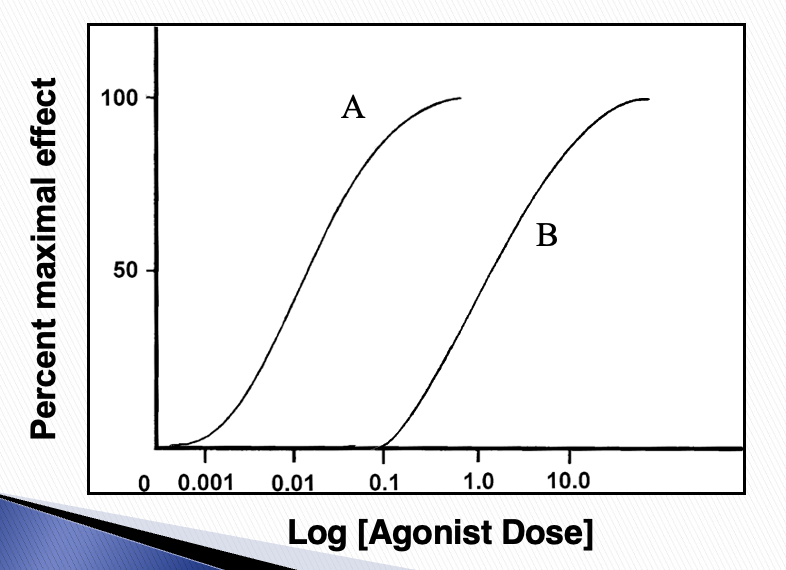
☆ What best explains the relationship between A and B on the graph provided?
A is the dose of the agonist alone whereas B is the agonist + antagonist
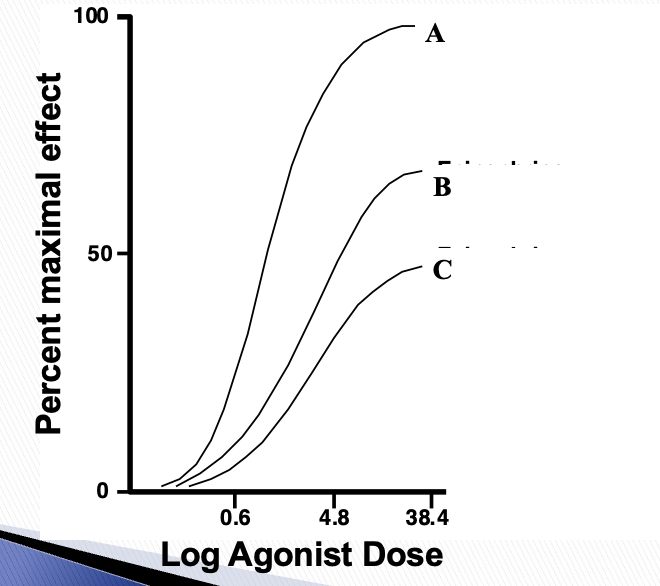
☆ What best explains the relationship between A, B, and C on the graph provided?
A is the dose of the agonist, B is the dose of the antagonist, and C is the dose of the agonist + antagonist
What is needed to overcome an antagonist?
increase the dose of the agonist
Where does distribution begin?
blood first and then tissues
What is the main route of elimination?
kidney (urine), but can also be feces
☆ What is another name for metabolism?
biotransformation: conversion of drug to water soluble form more easily eliminated by the kidney
☆ What are the routes of administration?
oral, subcutaneous, intramuscular, intravenous, and transdermal (patch)
What is the subcutaneous administration route used for?
protein drugs (to avoid their digestion if taken)
What is the intramuscular administration route used for?
larger volumes of drug
Which is an example of transdermal administration? (patch)
fentanyl for pain and nitroglycerin (chest pain)
Which is the common route of administration outside of a veterinary clinic?
oral
☆ What is bioavailability?
the fraction of administered drug that enters the systemic circulation for delivery to the target cells or tissue
☆ Which of the routes of administration have the best bioavailability?
IV (drug is 100% absorbed)
☆ What are the factors affecting gut absorption of drug?
mechanism for absorption, solubility, ionization, integrity of GI tract and its epithelial barrier, interactions with other drugs, absorption of surface area, blood supply
☆ What are the 4 mechanisms of absorption through cells?
passive diffusion, absorption and efflux through carrier-mediated transport, passive paracellular diffusion
☆ What compounds are associated in passive diffusion?
hydrophobic (lipophilic : non-ionized form)
What molecules pass easily in passive diffusion?
smaller sized
True or False: Fentanyl is more potent than morphine.
True
☆ What is the location of absorption for weak acids? Ex: NSAID
stomach
☆ What is the location of absorption for weak bases? Ex: propranolol
intestine
☆ What are the two types of transport involved in absorption through carrier-mediated transport?
facultative (no energy) and active transport (ATP)
What molecules pass easily in absorption through carrier-mediated transport?
larger sized
☆ What is the ATP-dependent efflux pump in carrier mediated transport efflux?
P-glycoprotein (P-gp)
Do P-glycoprotein pump drugs in or out of a cell?
out (efflux)
☆ What does the over expression of P-glycoprotein in tumor cells cause?
multidrug resistence (MDR) - resistance to cancer and antibiotics
Does the over expression of P-gp in tumor cells increase or decrease drug levels inside the tumor?
decreases
Where is P-glycoprotein found in high amounts?
BBB, intestinal epithelium in lower GI, renal tubular cells (kidney)
What dog breed has a MDR1 mutation that lacks functional P-gp at the blood brain barrier?
collie and collie cross breeds
☆ In paracellular transport, what impacts the “bulk flow” of drugs?
passage between epithelial and endothelial cells
☆ What can often limit the distribution of drugs to the brain?
endothelial tight junctions
☆☆☆ What is the consequence of protein binding?
decreases percentages of drug available for exhibiting drug action and can also lead to drug-drug interactions
☆ True or False: P-glycoprotein reduces drug distribution to tissues?
True
☆ Which fraction of a drug is pharmacologically active?
free (unbound) drug
Do highly protein-bound drugs have high or low tissue distribution?
low
What is volume of distribution (Vd)?
amount of tissue to which a drug is distributed
How is volume of distribution calculated?
amount of drug in body ÷ plasma drug concentration
What does a large Vd indicate?
drug distributes well into tissues; more tissue distribution
What does a small Vd indicate?
drug does not distribute well into tissues (stays in blood); little tissue distribution
What factors can decrease Vd?
geriatric cases, weight loss, dehydration
What factors can increase Vd?
fluid retention and obesity