Colby College: PS111 - Unit 1 Test
 Call Kai
 Learn
Learn Practice Test
 Spaced Repetition
 Match
Match Flashcards
 Knowt Play
1/49

There's no tags or description
Looks like no tags are added yet.
Name | Mastery | Learn | Test | Matching | Spaced | Call with Kai | Chat |
|---|
No analytics yet
Send a link to your students to track their progress
50 Terms

Friontal Lobe - for decision making, planning, and personality.
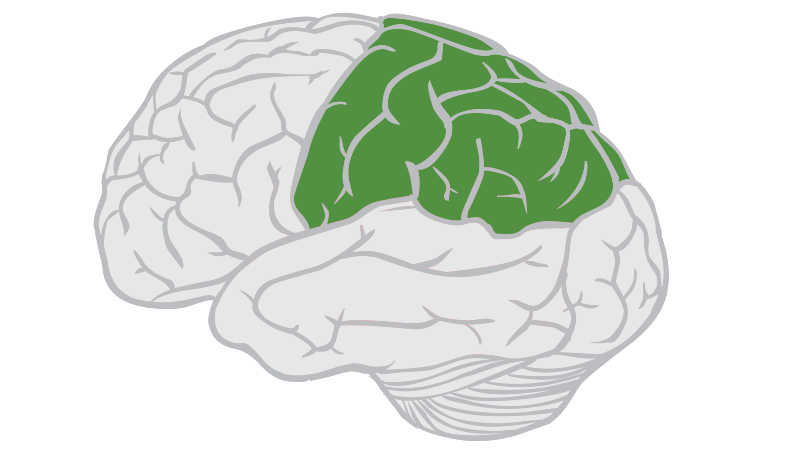
Parietal lobe
parietal lobe - somatosensation, spatial awareness, and coordination of movement.

Temporal Lobe - Memory, Auditory, Language processing

Occipital Lobe - Visual stimulus processing

Grey Matter
Cerebral cortex, information processing

White Matter
Inner brain, neural communication, where action potentials happen
Motor cortex - what, where, organization
controls voluntary movements - In frontal lobe - Somatotopic organization
Auditory Cortex - what, where, organization
Processes sound - temporal lobe - Tonotopic organization
Visual Cortex - what, where, organization
Processes visual stimuli to send to association areas - occipital lobe - retinotopic organization
Somatosensory Cortex - what, where, organization
Processes body touch, & movement sensations - Parietal Lobe - Somatotopic Organization
Somatotopic Organization Meaning
Nearby regions of the brain work together for nearby tasks. ex). Similar flavors are processed in nearby parts of the brain.
Tonotopic Organization Meaning
Auditory receptors; how the brain processes audio stimuli
Retinotopic Organization Meaning
The stages of visual processing. 1. basic forms & shapes 2. more context like color 3. recognizable features like eyes and nose

What is this, name the parts, name their purpose
Neuron -
Dendrites: Listens and takes in input from other neurons
Cell Body: Decides whether to use the input and fire an action potential
Axon: Sends output to other neurons
FFA - Fusiform face area
Association area that recognizes faces
PPA - Parahippocampal Place Area
Association area for recognizing locations like your school
Association Cortex functions
Takes the information from primary and secondary cortexes and integrates it in specialized ways
Neural Communication: Electrical
Change in membrane voltage that opens voltage-gated channels
neural communication: Chemical
Neurotransmitters from one neuron send inhibitory or excitatory signals to another through synaptic connection to another neuron → opens ligand-gated channels of other neuron
Sodium-potassium Pump: resting
Cell is polarized: inside of cell is more negative than outside
Sodium-potassium Pump: Reaching threshold
Neurotransmitters bind to ligand-gated channels, channels open at -55mv, sodium enters cell.
Sodium-potassium Pump: Depolarization
Sodium rushes into cell and makes inside more positive than outside
Sodium-potassium Pump: Repolarization
Potassium voltage-gates open at 40mv after action-potential, inside of cell starts becoming more negative again
Sodium-potassium Pump: hyperpolarization
Too much potassium enters cell, makes cell too negative. Some eventually leaves and cell goes back to normal -77mv at resting.
Excitatory Signals
Synaptic signals from other neurons that make inside of a neuron more likely to fire
Inhibitory Signals
Synaptic signals from other neurons that make inside of a neuron less likely to fire
Psychology
Scientific study of behavior
Naturalistic Observation
watch how animals behave
Survey
ask an animal about themselves or others
Experimentation - behavioral and somatic intervention
Observe how performance tasks change animal behavior.
Behavioral: animal does task → measure behavior changes
Somatic: change animal’s body → measure behavior changes
Mind-Body Problem
How does the mind relate to the body
Dualism
The brain is separate from the mind
Materialism
Brain functions cause the mind to exist
Episodic memory
Long-term memories of events in our lives
Implicit Memory
Long-term memories used and acquired subconsciously - procedural memory
ex). Learning to ride a bike
Associative memory
the strong connection built by neurons coded for specific stimuli over time
ex). keys & desk → associate the keys with being on my desk i.e, see my desk and wonder ‘where are my keys?’
Synaptic plasticity
Learning → The more neurons fire together, the stronger their connection becomes
Hippocampus
The memory center of the brain, integrates stimulus from association areas like the perirhinal cortex (what) and parahippocampal cortex (where) to form full memories
Dorsal Stream
“where” memory, processes stimulus relating to locations
Ventral Stream
“what” memory, processes stimulus relating to objects
Parahippocampal Cortex
Processes stimuli relating to locations - “where” memory
Perirhinal Cortex
Processes stimuli relating to objects - “what” memory
Biomarkers of Alzheimers
Amyloid beta plaques
Nerual fribulator tangles
Alzheimer’s Disease
Degenerative brain disorder where Amyloid beta plaques and neural fribulator tangles build up and disrupt the connection between the associative memory cortexes and the hippocampus.
Parkinson’s Disease
Degenerative disorder that depletes the basal ganglia’s substantia nigra, disrupting dopamine channels. Creates uncontrollable body movements and affects implicit memory
Long-term potentiation
The stimulation of neuron connections in order to increase associations and therefore also memory retention
Would an Alzheimer’s or Parkinson’s patient do worse on Cued recall?
Alzheimers, because the disease disrupts episodic memory.
Would an Alzheimer’s or Parkinson’s patient do worse on learning to brush their teeth?
Parkinson’s, because the disease affects implicit memory.
Hypothalamus
Limbic neural structure → hunger, thirst, temperature regulation
Thalamus
Sensory contorl center → Relays information about about incoming motor & sensory information