Autonomic Nervous System: Structure, Function, and Regulation in Anatomy & Physiology
 Call Kai
 Learn
Learn Practice Test
 Spaced Repetition
 Match
Match Flashcards
 Knowt Play
1/58

There's no tags or description
Looks like no tags are added yet.
Name | Mastery | Learn | Test | Matching | Spaced | Call with Kai |
|---|
No analytics yet
Send a link to your students to track their progress
59 Terms
Autonomic Nervous System (ANS)
Maintains homeostasis by regulating involuntary activities such as heart rate, breathing rate, body temperature, and digestion.
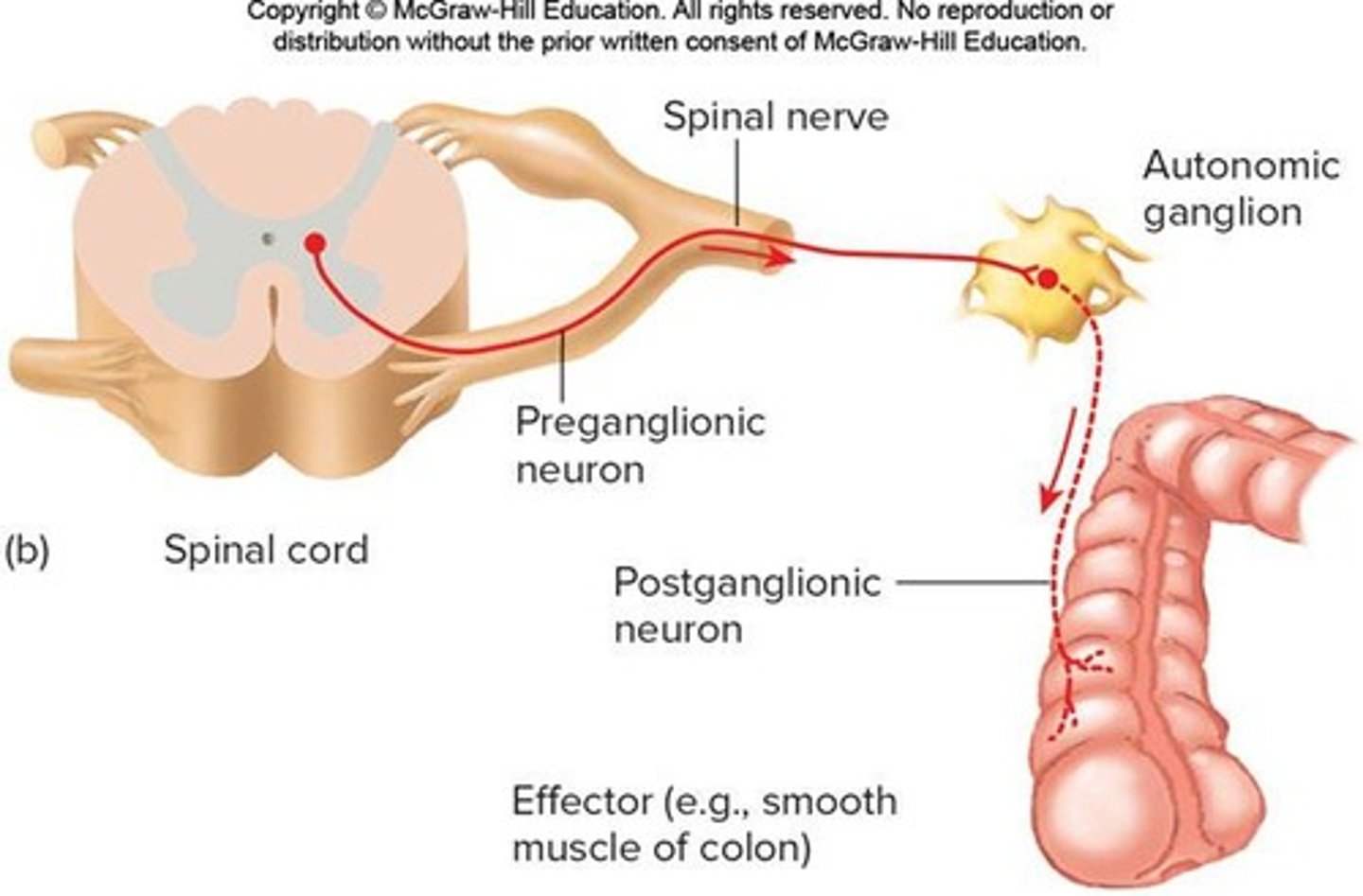
Motor Division of Nervous System
Divided into somatic motor (skeletal muscle) and autonomic motor (smooth muscle, cardiac muscle, glands).
Sympathetic Division
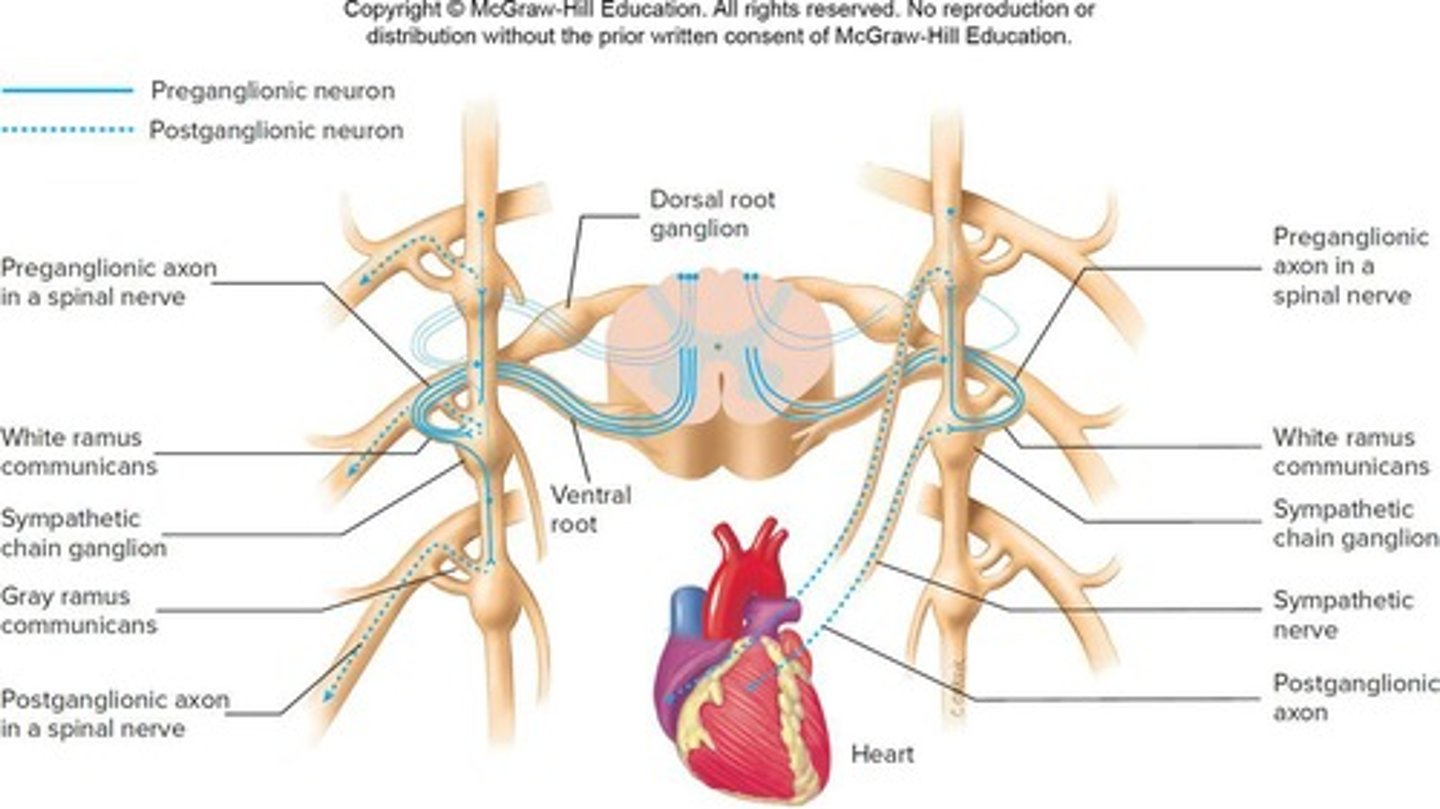
Part of the ANS with preganglionic cell bodies located in the lateral horns of the spinal cord from T1 to L2.
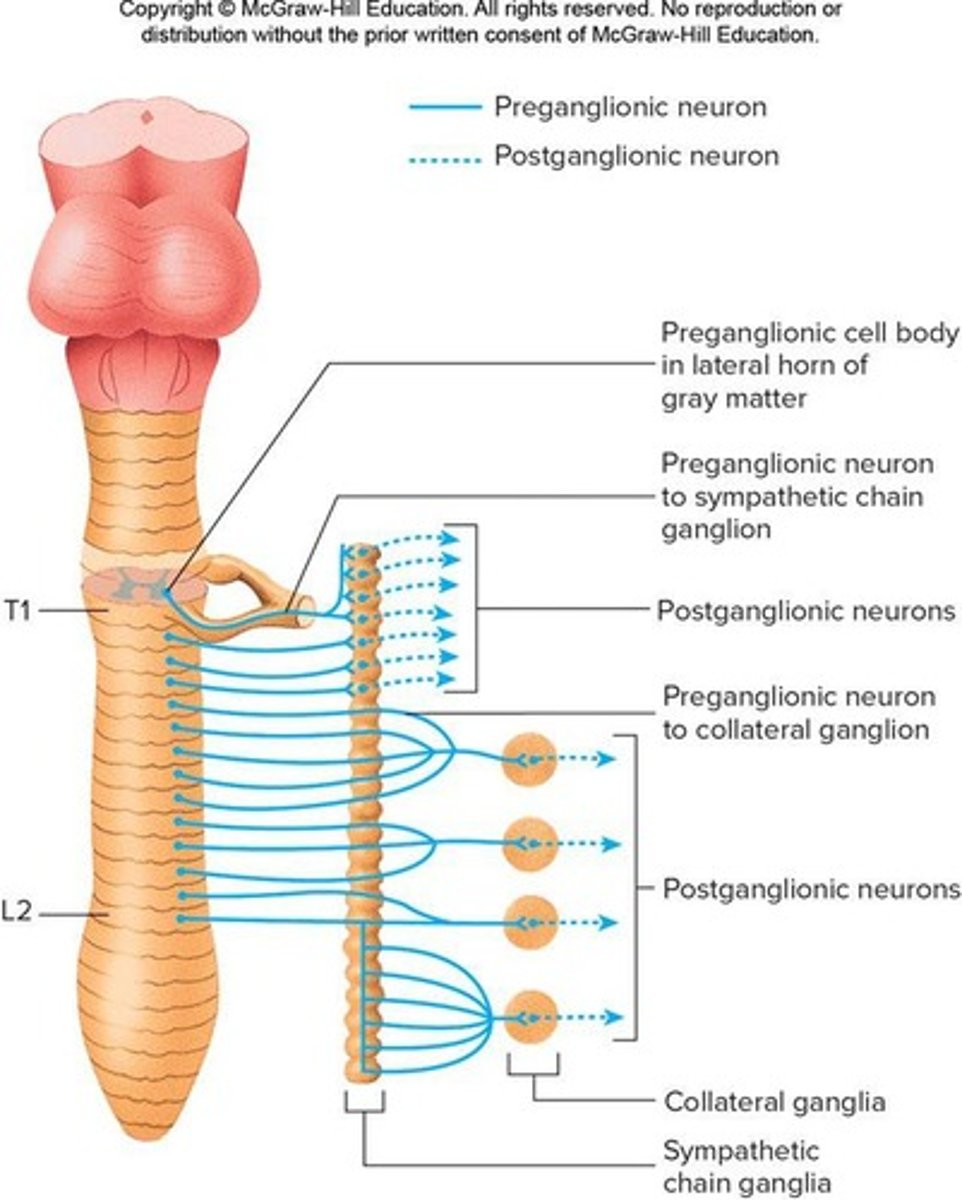
Preganglionic Axons
Pass through ventral roots to white rami communicantes to the sympathetic chain ganglia or collateral ganglia.
Somatic Nervous System
Innervates skeletal muscles and involves conscious and unconscious movement.
Autonomic Nervous System
Innervates smooth and cardiac muscle and glands, and is regulated unconsciously.
Neurons in Somatic System
One neuron; myelinated.
Neurons in Autonomic System
Two neurons; first is myelinated, second is unmyelinated.
Acetylcholine in Somatic System
Acts as the neurotransmitter at the neuromuscular junction.
Receptor Molecules in Somatic System
Nicotinic receptors are present.
Acetylcholine and Norepinephrine in Autonomic System
Released by preganglionic neurons and ACh or norepinephrine by postganglionic neurons.
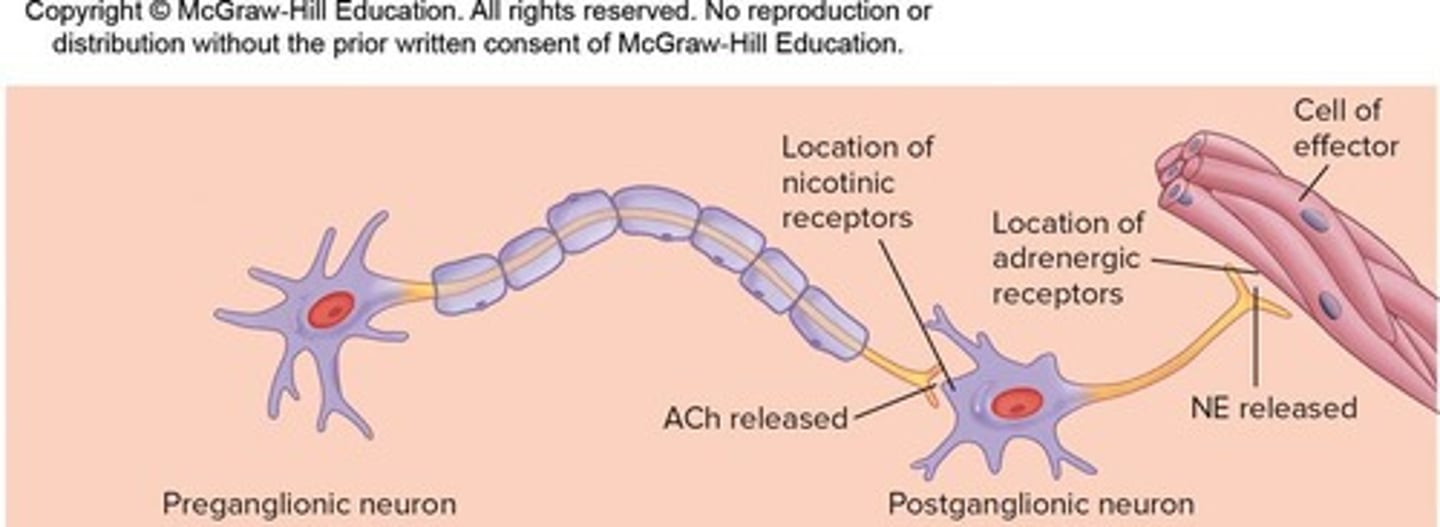
Receptor Molecules in Autonomic System
Varies with synapse and neurotransmitter.
Routes of Sympathetic Axons
Include spinal nerves, sympathetic nerves, splanchnic nerves, and innervation to the adrenal gland.
Spinal Nerves in Sympathetic Pathway
Preganglionic axons synapse with postganglionic neurons within the sympathetic chain.
Sympathetic Nerves
Preganglionic axons synapse with postganglionic neurons, which exit the ganglia through sympathetic nerves.
Splanchnic Nerves
Preganglionic axons pass through the chain ganglia without synapsing to form splanchnic nerves.
Collateral Ganglia
Preganglionic axons synapse with postganglionic neurons in these ganglia, which send fibers to target organs.
Adrenal Medulla
Derived from the same cells as postganglionic ANS cells and secretes epinephrine and norepinephrine.
Epinephrine and Norepinephrine
Hormones secreted by the adrenal medulla that promote physical activity.
Spinal nerve route
A pathway taken by sympathetic axons.
Sympathetic nerve route
A pathway taken by sympathetic axons.
Collateral ganglia via splanchnic nerve
A pathway taken by sympathetic axons.
Adrenal medulla via splanchnic nerve
A pathway taken by sympathetic axons.
Preganglionic cell bodies
Located in nuclei of brainstem or lateral parts of spinal cord gray matter from S2 to S4 in the parasympathetic division.
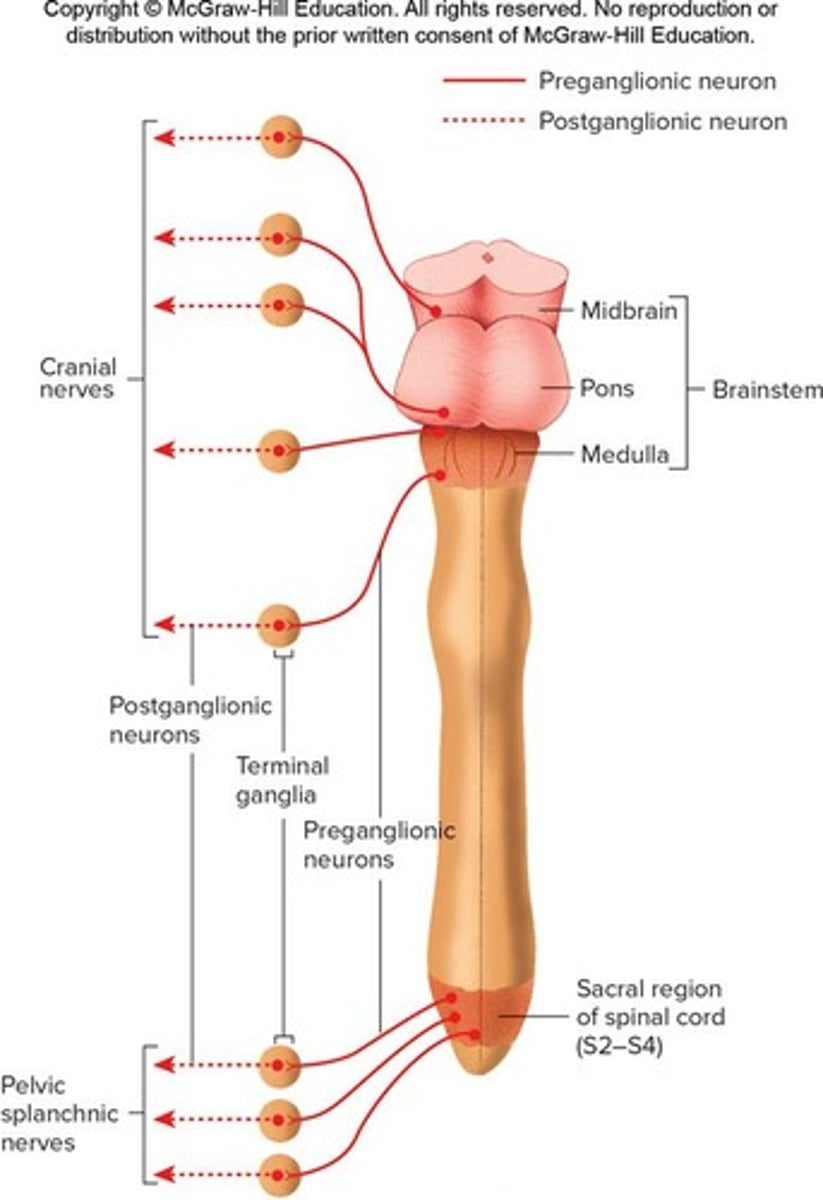
Preganglionic axons from brain
Pass to terminal ganglia through cranial nerves III, VII, IX, and X.
Preganglionic axons from sacral region
Pass through pelvic splanchnic nerves to terminal ganglia.
Terminal ganglia
Located near the organ innervated or embedded in the wall of the organ.
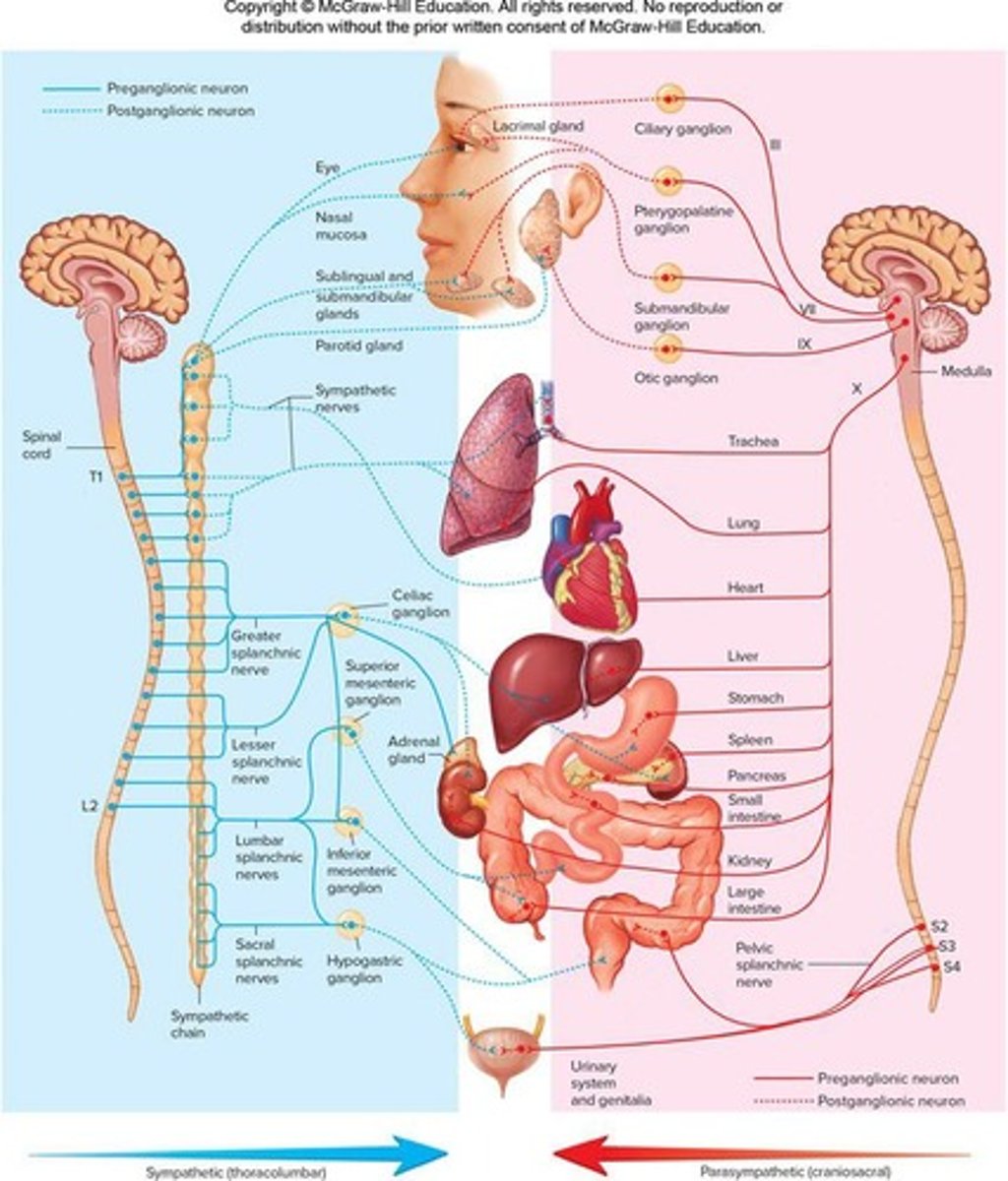
Sympathetic axons
Reach organs through spinal nerves, head and neck nerve plexuses, thoracic nerve plexuses, and abdominopelvic nerve plexuses.
Parasympathetic axons
Reach organs through cranial nerves and pelvic splanchnic nerves.
Oculomotor nerve (III)
Innervates ciliary muscles and iris through the ciliary ganglion.
Facial nerve (VII)
Innervates lacrimal glands, mucosal glands of nasal cavity and palate, and some salivary glands through pterygopalatine and submandibular ganglia.
Glossopharyngeal nerve (IX)
Innervates the parotid salivary gland through the otic ganglion.
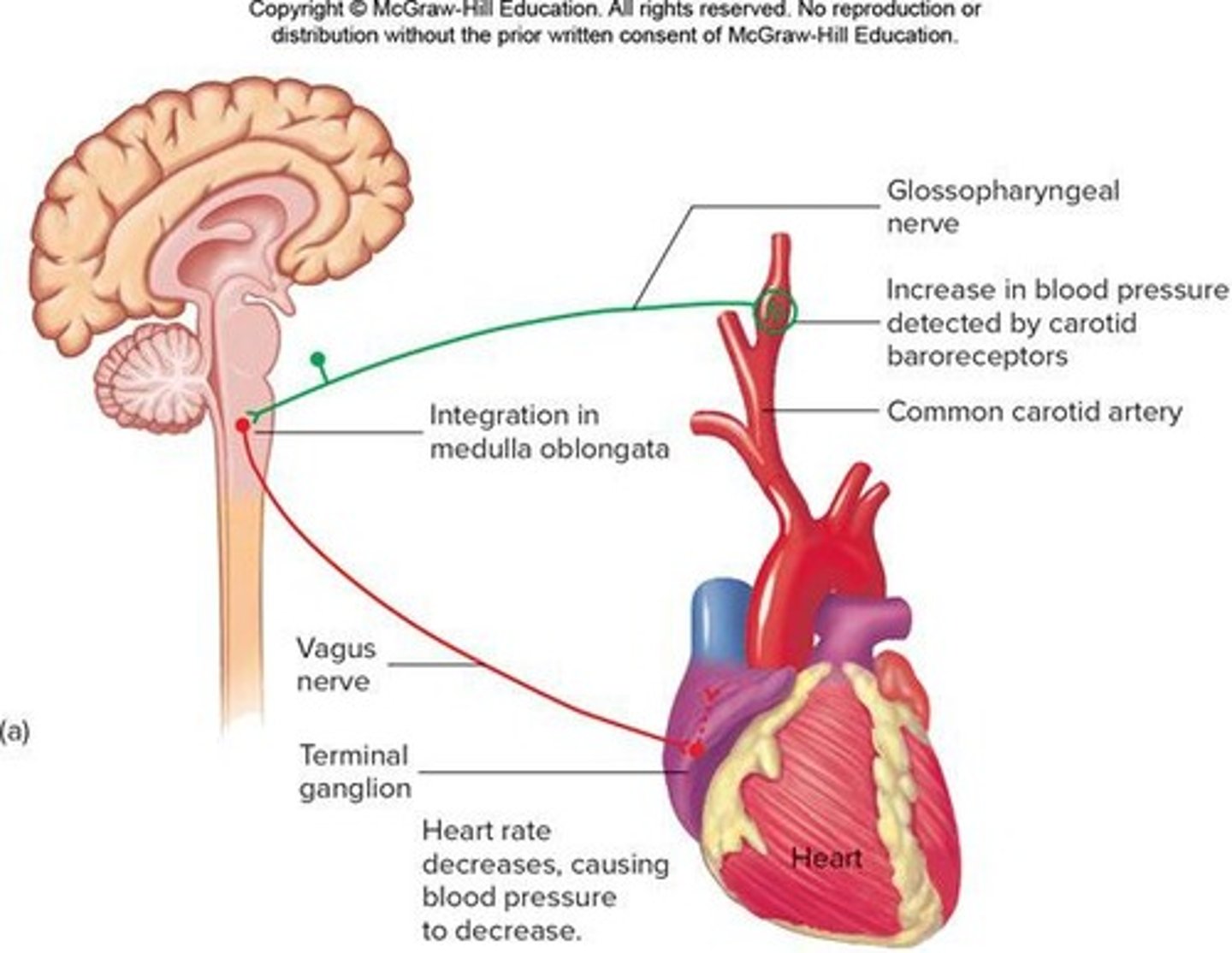
Vagus nerve
Supplies heart, lungs, and esophagus through the esophageal plexus.
Abdominopelvic nerve plexuses
Parts of vagus nerve supply stomach and other viscera.
Pelvic splanchnic nerves
Innervate colon, urinary bladder, and reproductive organs.
Sensory neurons in autonomic nerve plexuses
Parts of reflex arcs regulating organ activities, transmitting pain and pressure sensations from organs to the CNS.
Enteric Nervous System
Consists of nerve plexuses within the wall of the digestive tract.
Dual innervation
Innervation by both sympathetic and parasympathetic divisions; most organs are dually innervated.
Sympathetic influences during exercise
Includes increased heart rate, vasodilation of blood vessels in skeletal and cardiac muscle, dilation of air passages, increased glucose production, increased body temperature, and decreased digestion and urine production.
Parasympathetic influences during resting conditions
Includes simulation of digestion and urine production, lowering heart rate, and constricting air passages.
Neurotransmitters
Primary substances produced by neurons of the ANS.
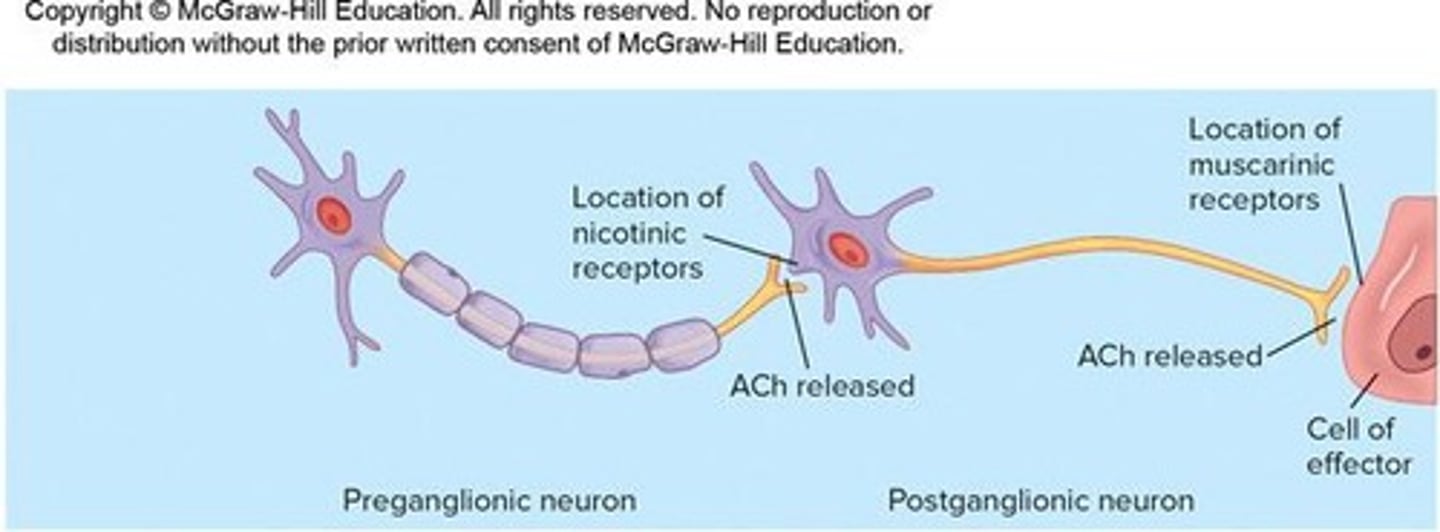
Acetylcholine
Released by cholinergic neurons.
Norepinephrine
Released by adrenergic neurons.
Cholinergic
Receptors that bind acetylcholine, with two forms: nicotinic and muscarinic.
Nicotinic
All receptors on postganglionic neurons, all skeletal muscles, adrenal glands.
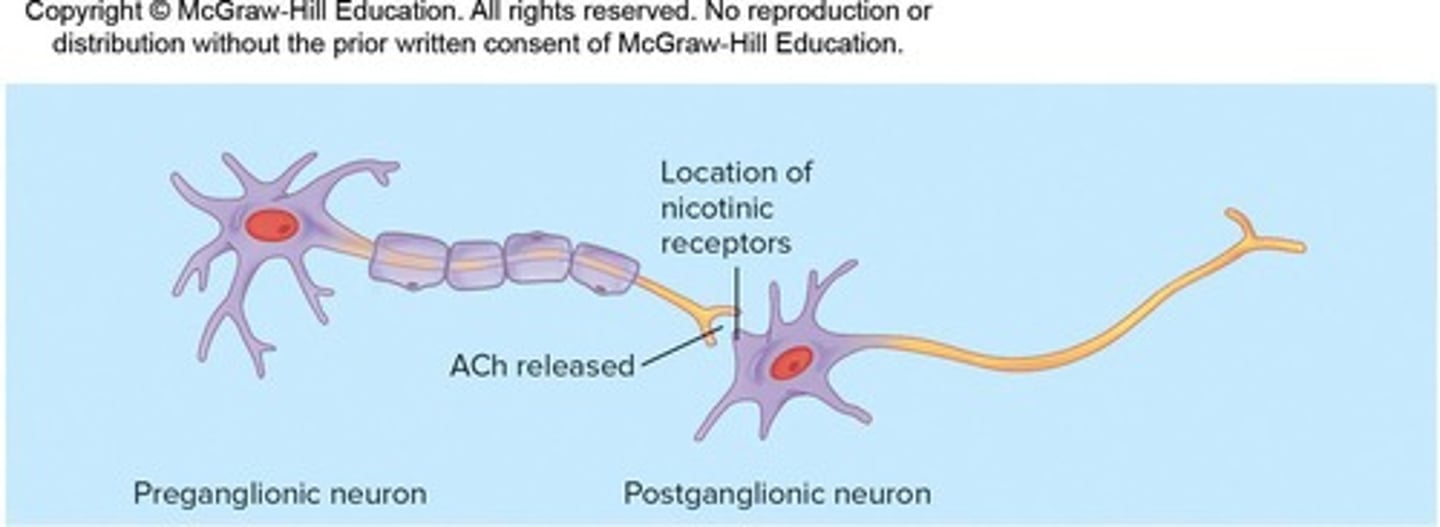
Muscarinic
All receptors on parasympathetic effectors and some sweat glands; may be excitatory or inhibitory.
Adrenergic receptors
Bind norepinephrine/epinephrine, further subdivided into alpha and beta receptors.
α1 and β1
Usually have opposite effects than α2 and β2.
Nicotinic receptors location
Located on the cell bodies of both sympathetic and parasympathetic postganglionic neurons in autonomic ganglia.
Muscarinic receptors location
Located on the cells of all parasympathetic effectors and some sympathetic effectors, such as sweat glands.
Adrenergic receptors location
Located on most sympathetic effectors.
Autonomic reflexes
Control most of the activity of visceral organs, glands, and blood vessels.
Hypothalamus
Has overall control of the ANS and influences autonomic reflex activity.
Local reflex
Does not involve CNS; produces involuntary, unconscious, stereotypical response to stimulus.
Parasympathetic reflex
Via vagus lowers heart rate.
Sympathetic reflex
Via cardiac accelerator nerves causes heart rate to increase.
Coordinated activities
Both divisions may act together to coordinate the activities of different structures.
Sympathetic effects
Usually more widespread and general.
Parasympathetic effects
Usually more local.

