7 Parrell Parking
 Call Kai
 Learn
Learn Practice Test
 Spaced Repetition
 Match
Match Flashcards
 Knowt Play
1/9

There's no tags or description
Looks like no tags are added yet.
Name | Mastery | Learn | Test | Matching | Spaced | Call with Kai | Chat |
|---|
No analytics yet
Send a link to your students to track their progress
10 Terms
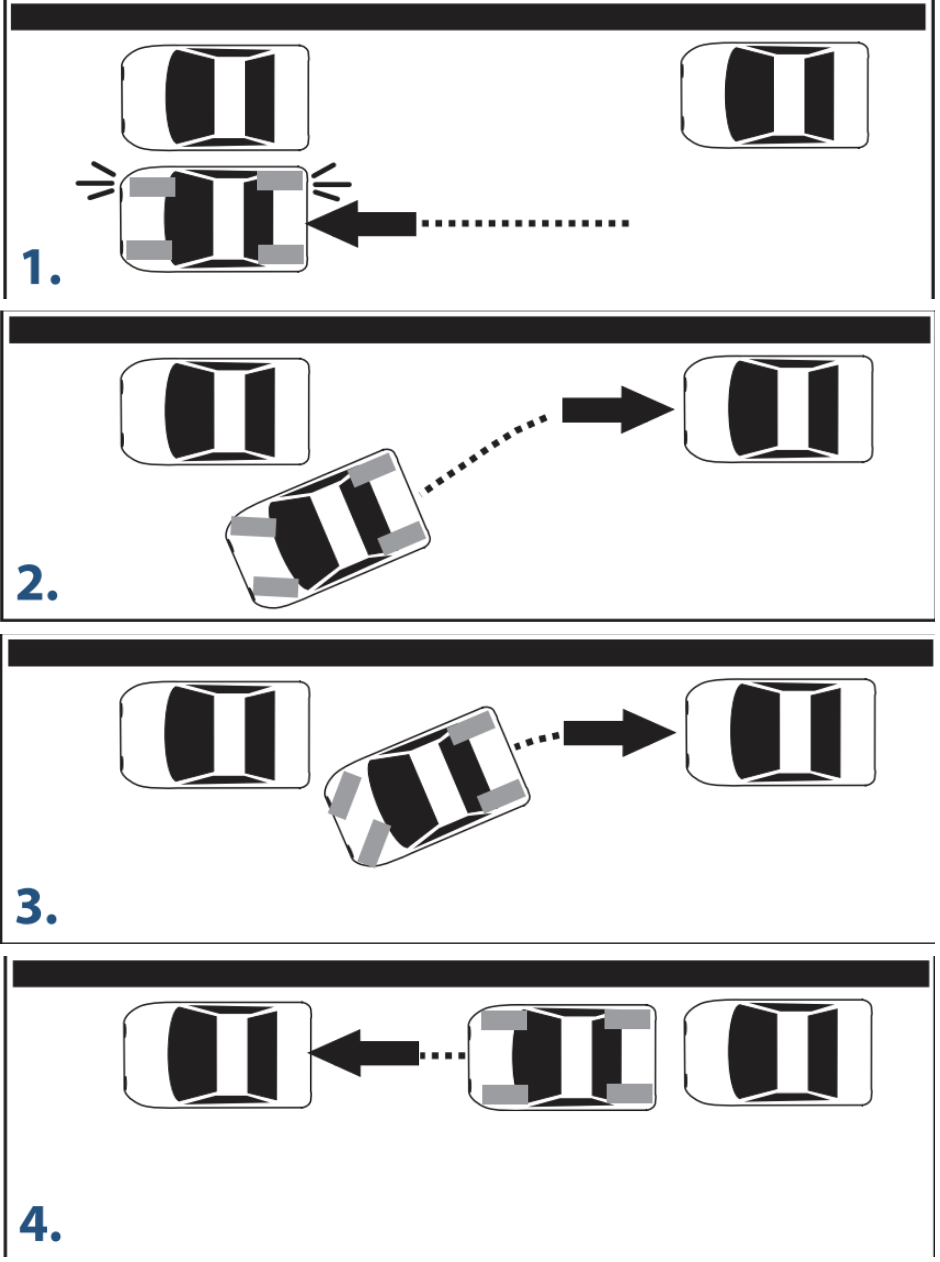
How to Park
Select a space that is large enough for your car on your side of the road. Check your mirrors before you stop & signal to warn other drivers. Stop next to the vehicle in front of the space
Check for pedestrians or oncoming traffic. Back the vehicle slowly and begin to turn your steering wheel completely toward the near curb. Look through the rear window when you back up. Look to the side and front occasionally to make sure you will not touch the vehicle ahead
When your front wheels are opposite the back bumper of the vehicle ahead, turn the steering wheel the other way while you continue to back up.
Bring your wheels straight and pull forward. Allow room for the vehicles ahead and behind you. In your final parking position, your wheels must be no more than one foot (30 cm) from the curb.
How to park on a Hill
After you park on a hill, make sure to set your parking brake. Put the transmission in “Park” (or, if your vehicle has a manual transmission, put the transmission into 1st gear). Turn the wheels toward the curb or side of the road, so they will keep your vehicle from heading into traffic.
How to pull out from parallel parking
Make sure your wheels are straight, back up to the vehicle behind you and turn your wheels away from the curb.
How to enter safely into traffic
Turn your head to look over your right shoulder and check through the rear-window
Use your interior rear-view mirror to help keep an eye on hazards behind your car
Signal your intentions to move from your parking space into traffic
Check your side mirrors for oncoming people and other cars
Turn your head to look over your left shoulder out through the rear-window and begin to slowly drive forward. Make sure you avoid the vehicle parked ahead
Look through the rear-window, drive into traffic lane when it is safe
Standing is
when a vehicle is stopped to receive or discharge passengers (think when an uber picks u up and drops u off)
No Parking Sign
you can make a temporary stop to load or discharge merchandise or passengers.
No Standing Sign
you can only make a temporary stop to load or discharge passengers. The driver cannot exit the vehicle.
No Stopping Sign
you can stop only to obey a traffic sign, signal or officer or to prevent conflicts with other vehicles
You cannot park, stop or stand
• Within 15 feet (5 m) of a fire hydrant • On the road side of a parked vehicle (“double parking”). • On a sidewalk or in a crosswalk. • In an intersection, unless permitted by signs or parking meters. • On railroad tracks. • Next to or opposite road work, construction or other obstructions if your vehicle blocks traffic. • Within 30 feet (10 m) of a pedestrian safety area, unless another distance is marked. • On a bridge or in a tunnel.
Parking or standing is not allowed:
• In front of a driveway. • Within 20 feet (6 m) of a crosswalk at an intersection. • Within 30 feet (10 m) of a traffic light, STOP sign or YIELD sign. • Within 20 feet (6 m) of a fire station driveway or within 75 feet (23 m) on the opposite side of the road. • Along a curb that is cut, lowered or made for access to the sidewalk. You cannot park your vehicle within 50 feet (15 m) of a railroad crossing.