Additional Causes of Bone Marrow Failure
 Call Kai
 Learn
Learn Practice Test
 Spaced Repetition
 Match
Match Flashcards
 Knowt Play
1/16

There's no tags or description
Looks like no tags are added yet.
Name | Mastery | Learn | Test | Matching | Spaced | Call with Kai | Chat |
|---|
No analytics yet
Send a link to your students to track their progress
17 Terms
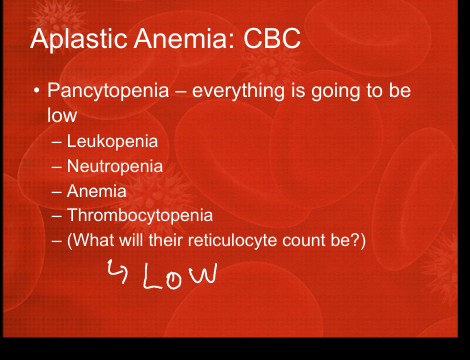
Aplastic anemia—peripheral blood findings
Pancytopenia with low WBC, low ANC, anemia, thrombocytopenia, and very low reticulocyte count
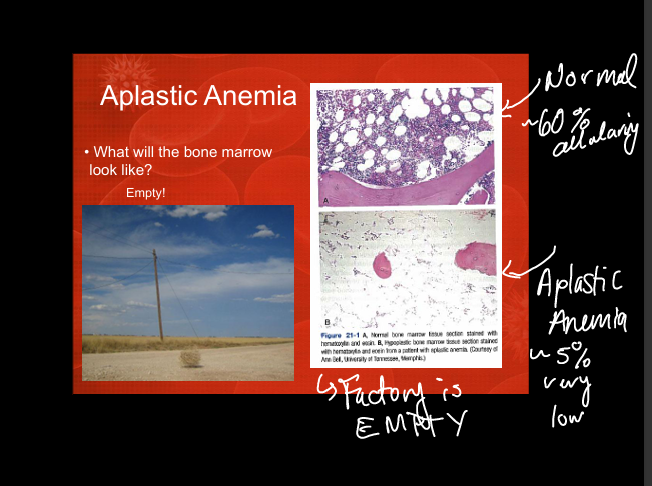
Aplastic anemia—bone marrow findings
Hypocellular marrow with markedly decreased hematopoietic cells (“empty marrow”), replaced by fat
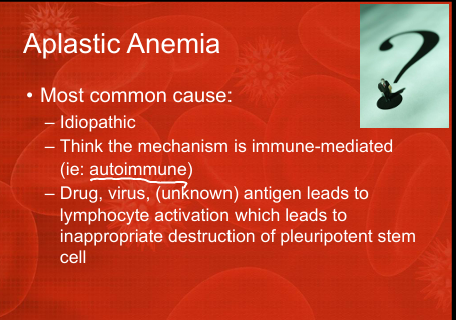
Pathophysiology of aplastic anemia
Idiopathic immune-mediated destruction of pluripotent stem cells
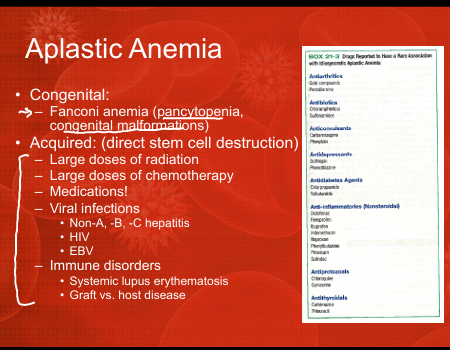
Causes of aplastic anemia
Congenital (Fanconi), radiation, chemotherapy, medications, viral infections (non-A/B/C hepatitis, HIV, EBV), autoimmune disease (SLE), GVHD
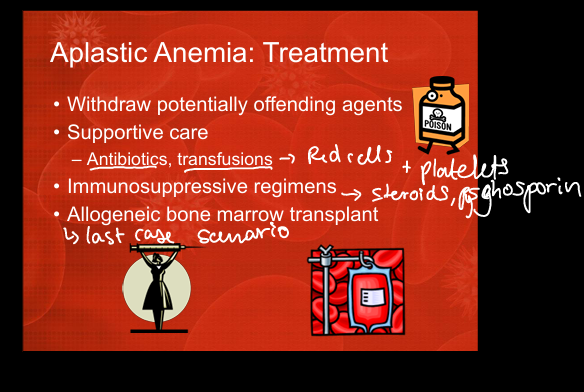
Treatment of aplastic anemia
Remove offending agents, supportive care, immunosuppression (steroids, cyclosporine), allogeneic stem cell transplant
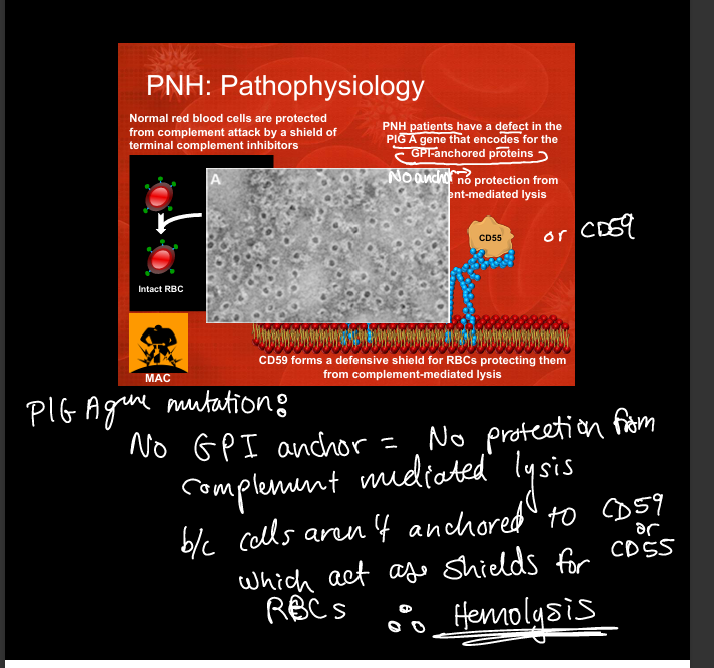
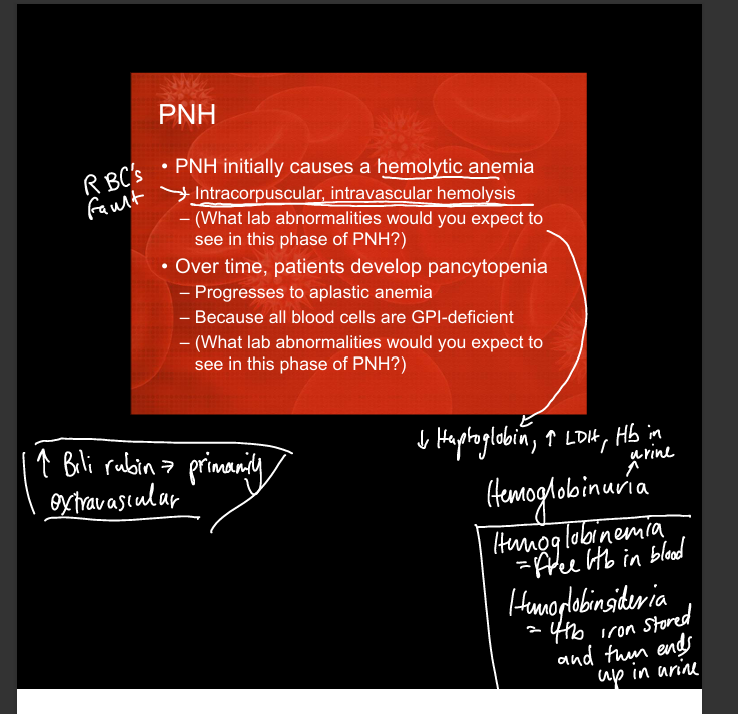
Paroxysmal Nocturnal Hemoglobinuria (PNH)—pathophysiology
PIGA mutation → loss of GPI anchors → absence of CD55/CD59 shield → complement-mediated intravascular hemolysis
Paroxysmal Nocturnal Hemoglobinuria (PNH)—initial hematologic abnormality
Intravascular hemolytic anemia with elevated LDH, low haptoglobin, hemoglobinemia, hemoglobinuria
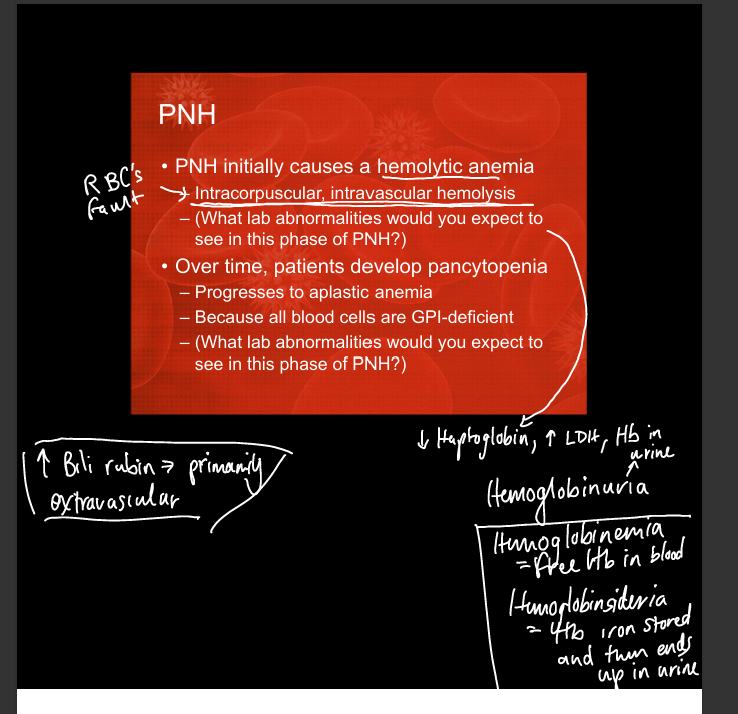
Paroxysmal Nocturnal Hemoglobinuria (PNH)—late hematologic abnormality
Pancytopenia due to stem cell involvement and progression toward aplastic anemia
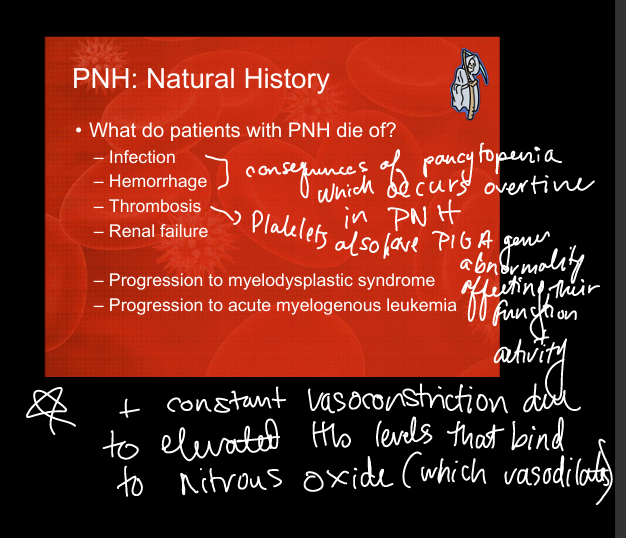
Paroxysmal Nocturnal Hemoglobinuria (PNH)—major causes of death
Infection, hemorrhage, thrombosis, renal failure, progression to MDS/AML
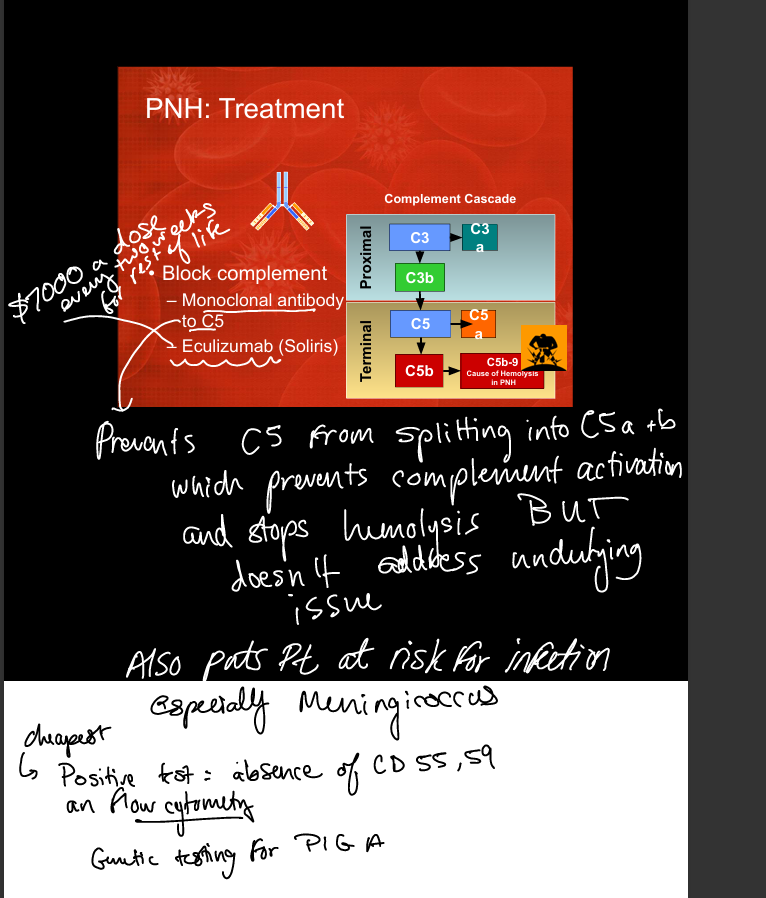
Paroxysmal Nocturnal Hemoglobinuria (PNH)—diagnostic test
Flow cytometry showing absence of CD55 and CD59 on RBCs/WBCs
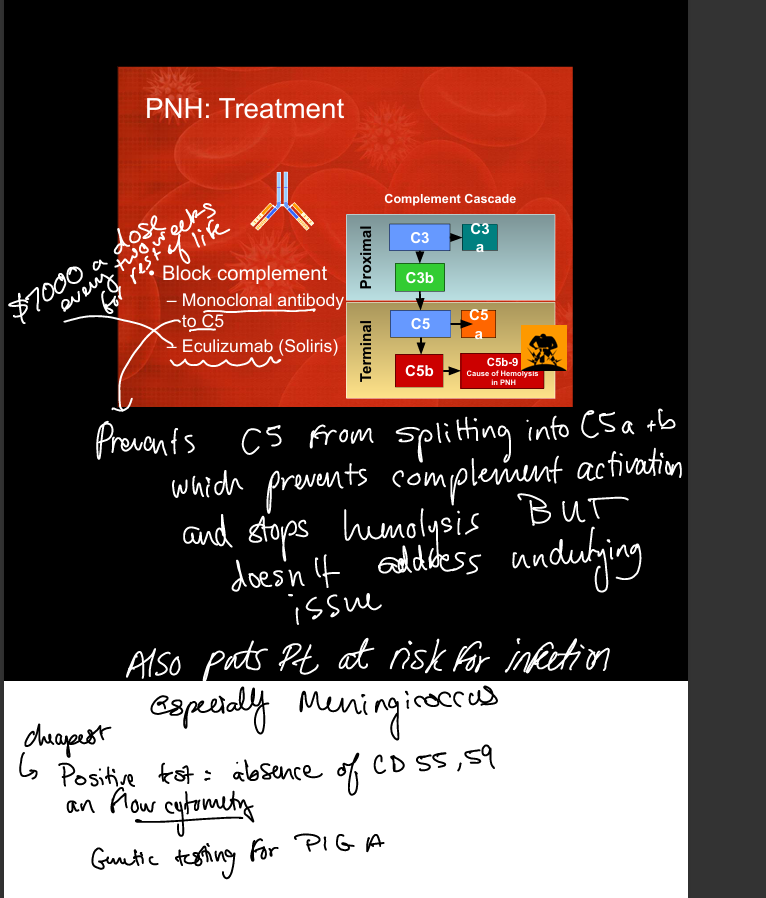
Paroxysmal Nocturnal Hemoglobinuria (PNH)—treatment
Eculizumab (anti-C5 monoclonal antibody) to block terminal complement activation
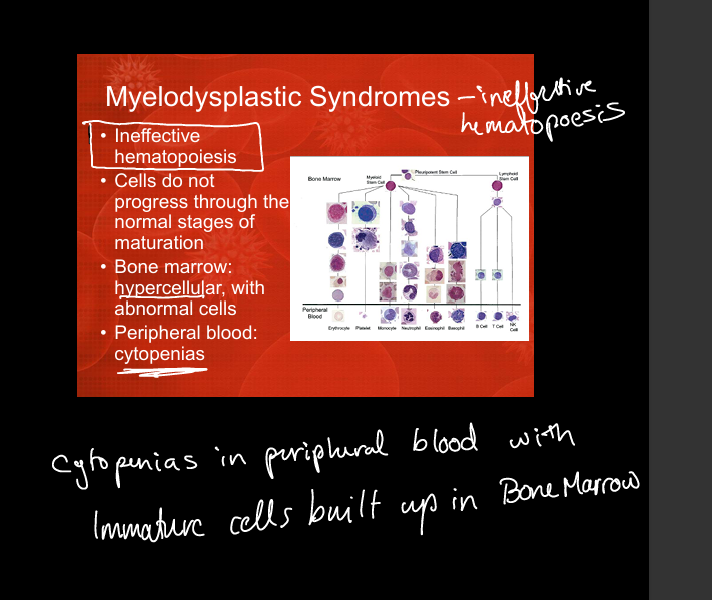
Myelodysplastic Syndromes (MDS)—peripheral blood findings
Cytopenias (anemia, neutropenia, thrombocytopenia) with dysplastic cells bc it is a disorder of ineffective hematopoesis
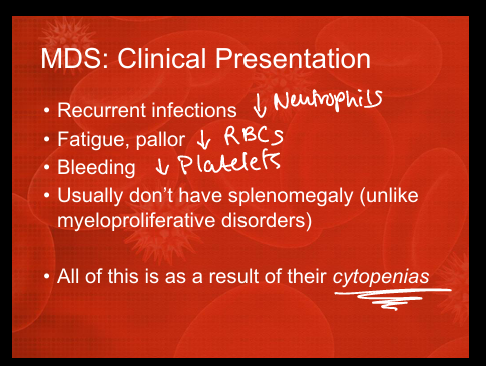
Myelodysplastic Syndromes (MDS)—clinical presentation
Fatigue, infections, bleeding
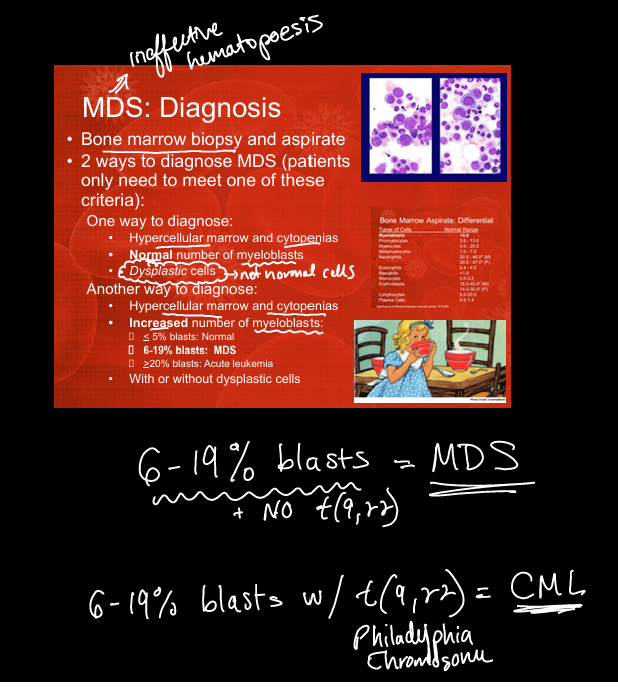
Myelodysplastic Syndromes (MDS)—two diagnostic criterion
Hypercellular marrow + cytopenias + dysplasia with normal blast count (<5%)
OR
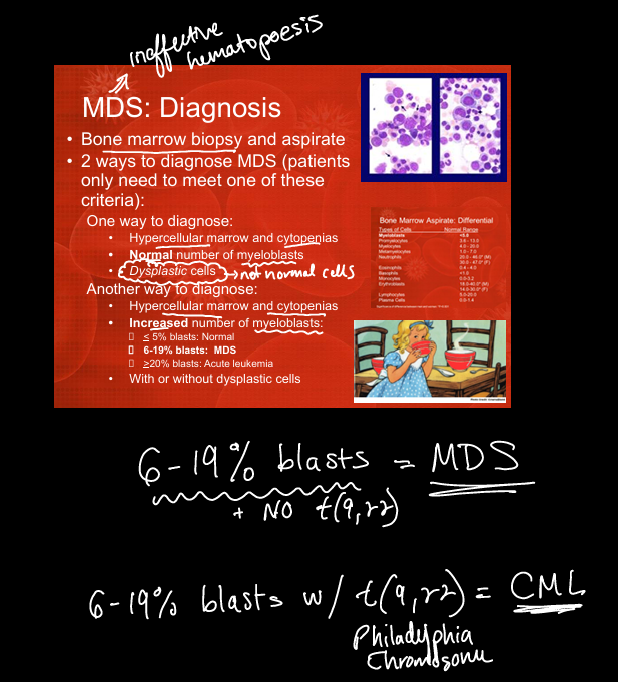
Hypercellular marrow + cytopenias + increased blasts (6–19%) without meeting AML threshold
Blast cutoff distinguishing Myelodysplastic Syndromes (MDS) from AML
≥20% blasts = AML
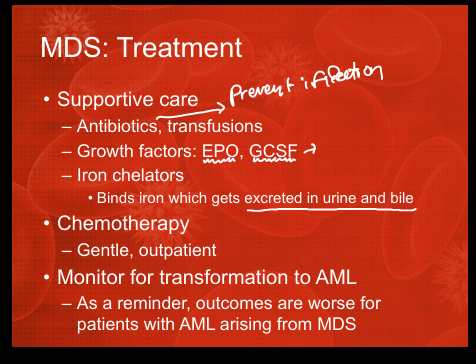
MDS—treatment
Supportive care, transfusions, growth factors (EPO, G-CSF), iron chelation, gentle chemotherapy, monitor for AML transformation
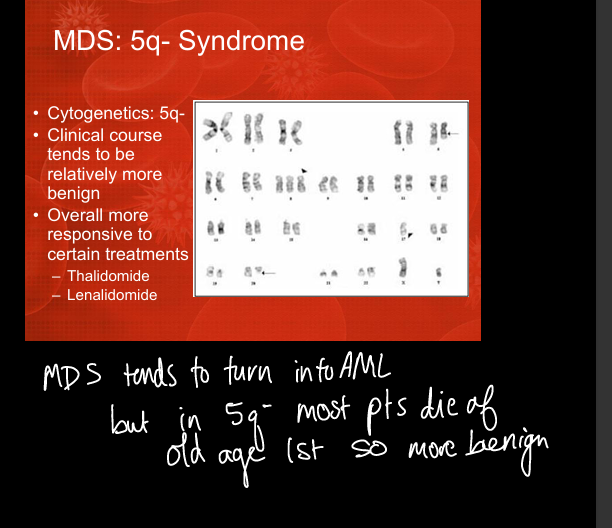
MDS—5q- syndrome
Isolated del(5q), more benign course, responsive to lenalidomide