Meiosis - Oogenesis and Spermatogenesis
 Call Kai
 Learn
Learn Practice Test
 Spaced Repetition
 Match
Match Flashcards
 Knowt Play
1/14

There's no tags or description
Looks like no tags are added yet.
Name | Mastery | Learn | Test | Matching | Spaced | Call with Kai | Chat |
|---|
No analytics yet
Send a link to your students to track their progress
15 Terms
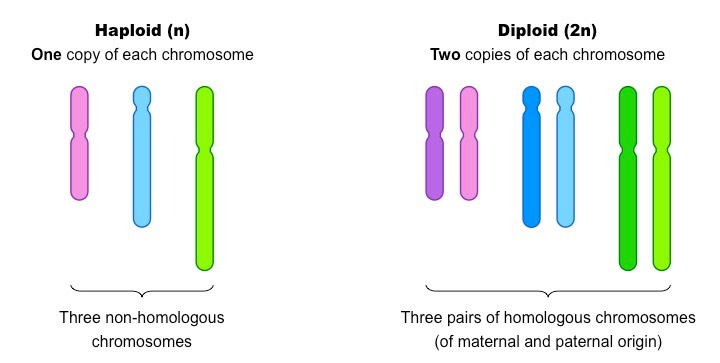
How is diploid different to haploid?
Diploid (2n) | Haploid (n) |
|
|
Why is meiosis essential?
Meiosis: Specialised cell division that produces halpoid gametes
Each gamete (sperm and egg) must be haploid to ensure the zygote is diploid
Differs between sexes
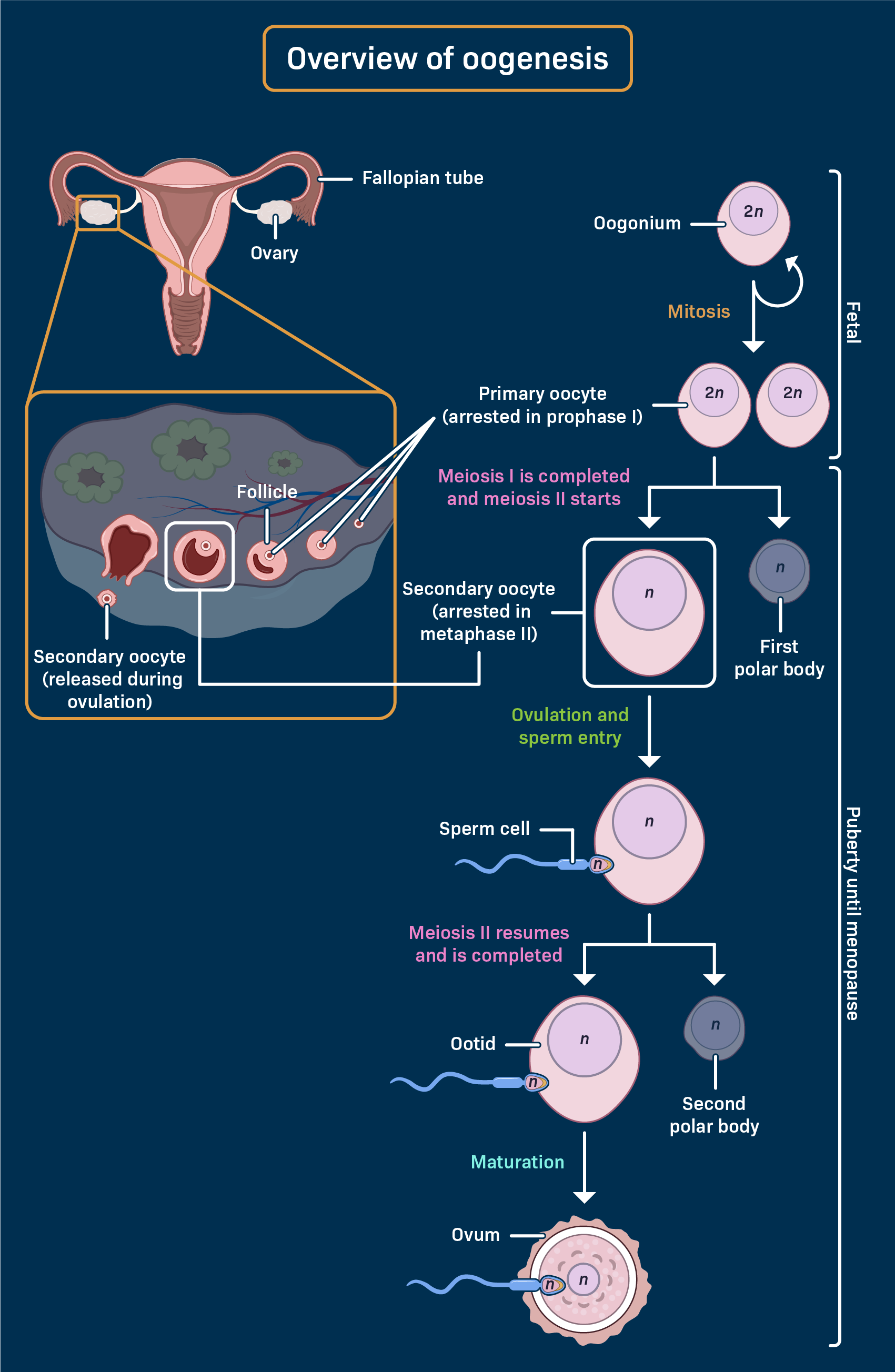
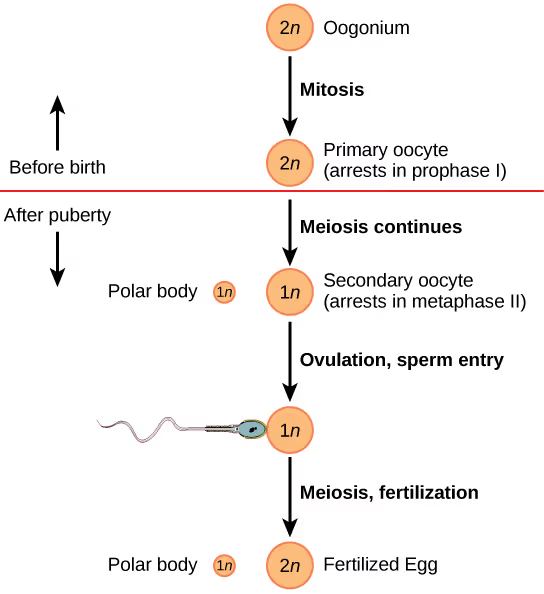
What processes in oogenesis occur before birth during fetal development?
Germ cells (stem cells) migrate to the developing ovaries
They divide via mitosis to produce many diploid oogonia
Oogonia develop into primary oocytes (with 2 sets of chromosomes)
Each primary oocyte begins meiosis but arrests in Prophase i
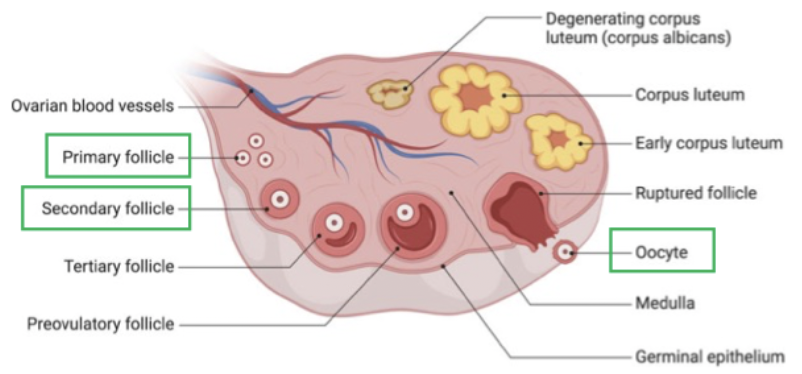
Primary oocytes are enclosed by follicle cells, forming primary follicles
How does the follicle enable oogenesis?
Follicle: The functional, fluid-filled sac in the ovary that houses, nourishes, and protects a developing primary oocyte
Ensures the primary oocyte matures for eventual release during ovulation (as a secondary oocyte)
How is oogenesis resumed during puberty?
Puberty triggers hormone release which causes a primary oocyte to resume meiosis I during each menstrual cycle
Usually one oocyte completes meiosis I during a cycle
When is Meiosis I completed and what does it involve the production of?
Completed right before ovulation
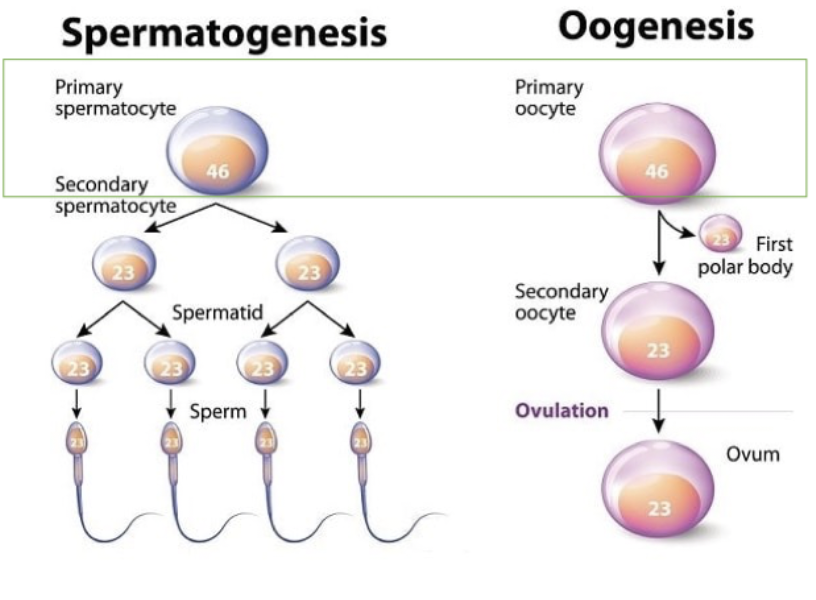
The primary oocyte divides unequally via cytokinesis, producing:
A large haploid secondary oocyte containing almost all the cytoplasm and nutrients
A small polar body containing excess chromosomes and very little cytoplasm which usually disingegrates
Why is the division of cytoplasm unequal during the completion of Meiosis I in oogenesis?
The future egg requires a large amount of cytoplasm, nutrients and organelles to support early embryonic development if fertilisation occurs
Unequal division ensures the secondary oocyte keeps this to create a single viable egg whilst shedding unneeded genetic material into small, disposable polar bodies
What immediately follows the completion of Meiosis I in oogensis and what does it involve?
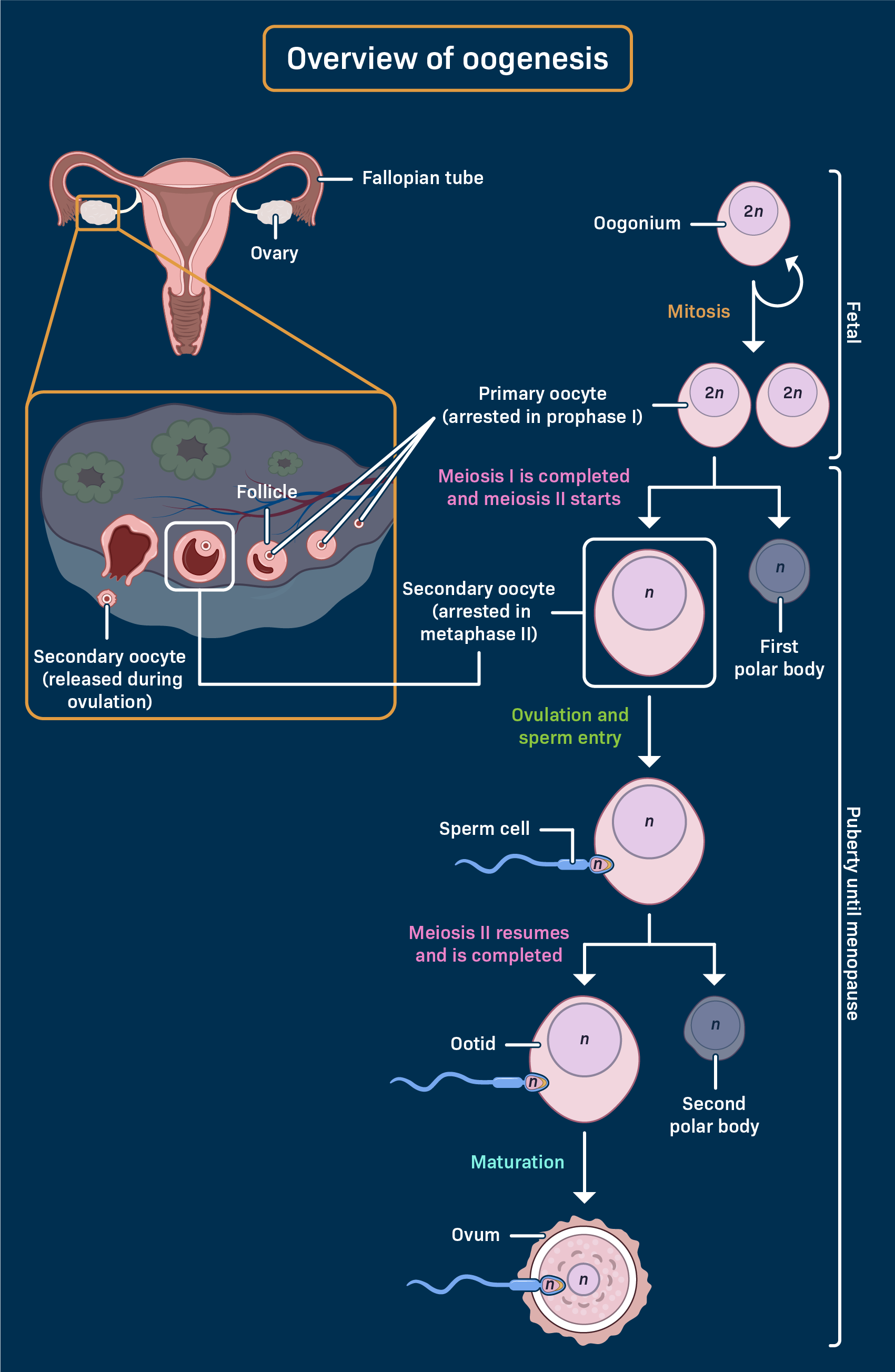
Meiosis II follows Meiosis I (formation of secondary oocyte)
The secondary oocyte immediately begins Meiosis II but arrests in metaphase II
Approx 14 days before the next period, ovulation occurs
The arrested secondary oocyte in metaphase II ruptures from the follicle
Released into the ovary to enter the fallopian tube
Why do arrests occur in particular stages of oogenesis?
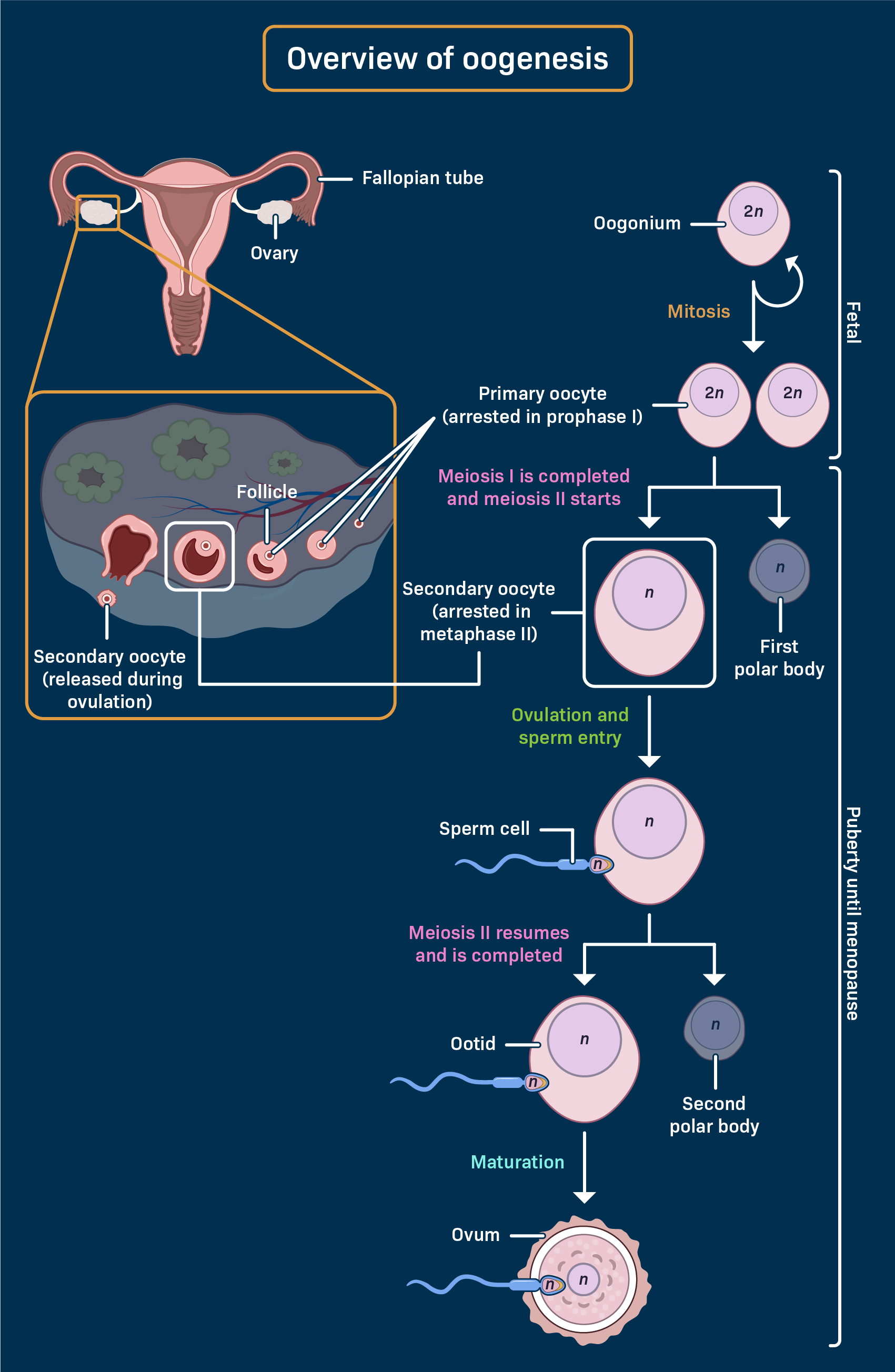
Primary oocytes: Arrest in prophase I before birth to preserve a supply of immature eggs for future reproductive years
Secondary oocytes: Arrest in metaphase II after ovulation and only complete meiosis II if fertilisation by a sperm occurs
Arrests ensure that usually only one egg matures per menstrual cycle and that meiosis is only completed when fertilisation is possible
What occurs from puberty in spermatogenesis before Meiosis I occurs?
Germ cells (spermatogonoia) within the seminiferous tubules of the testes divide via mitosis to maintain a supply of cells for sperm production
Some spermatogonia develop into primary spermatocytes
Sertoli cells provide nutrients for this development
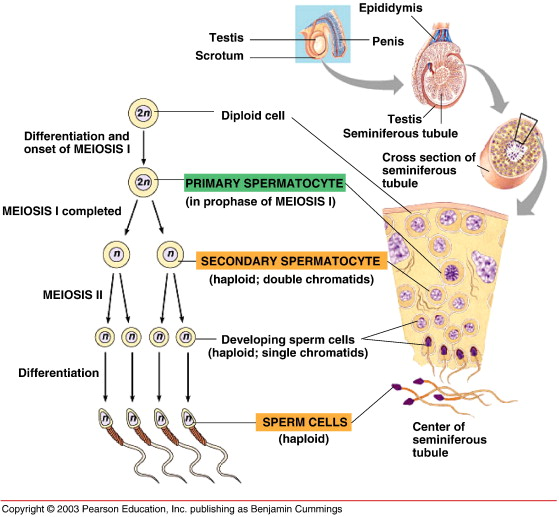
What occurs after the production of primary spermatocytes? What does this produce?
Each primary spermatocyte undergoes meiosis I
Produces 2 haploid secondary spermatocytes
Cytokinesis is equal, both cells recieve similar amounts of cytoplasm
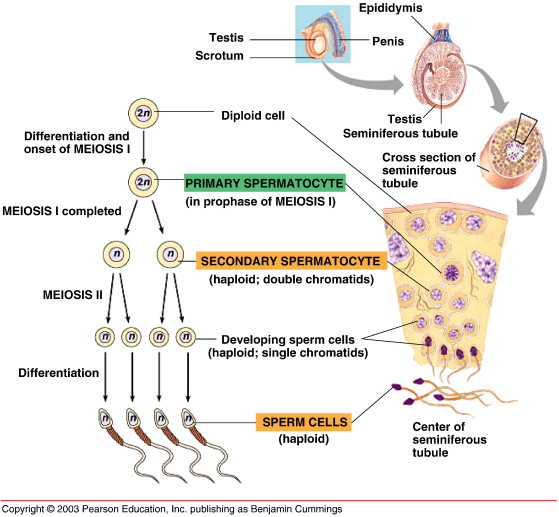
How does one primary spermatocyte become 4 haploid spermatids following Meiosis I?
Through Meiosis II
Each secondary spermatocyte undergoes this to produce 4 haploid spermatids
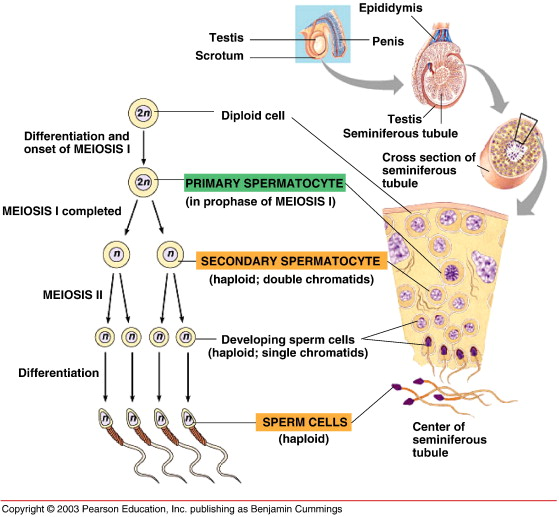
How do spermatids become mature sperm?
Spermatids are transported from the seminiferous tubules to the epididmyis
They mature and differentiate into mature sperm
Involves development of a tail from the cytoplasm to allow movement (motile)
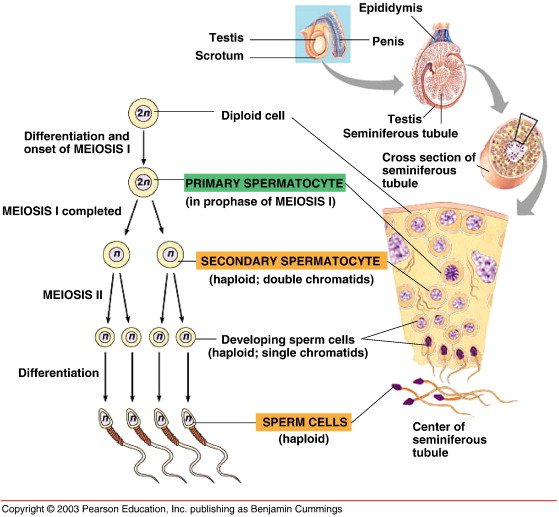
How do you define oogenesis and spermatogenesis?
Oogenesis: Process by which female gametes (ova/egg cells) are produced by meiosis in the ovaries
Spermatogenesis: Process by which male gametes (sperm cells) are produced by meiosis in the testes
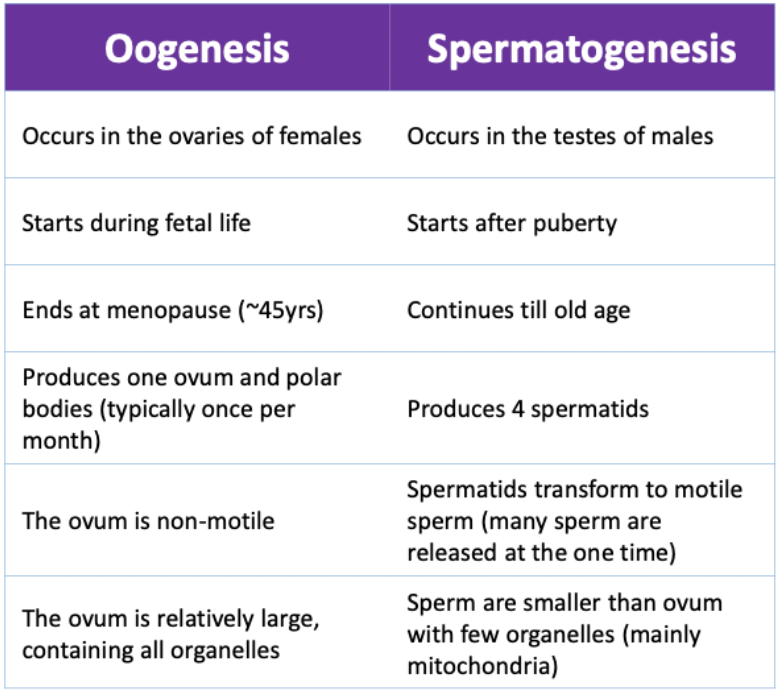
How does oogenesis different to spermatogenesis?
| Oogenesis | Spermatogenesis |
Location? | Ovaries | Testes (seminiferous tubules) |
Beginning? | Begins before birth | Begins at puberty |
Ending? | Ends at menopause | Continues throughout life |
Amount able to be produced? | Finite number of primary oocytes to produce a finite amount of ovum | Sperm produced continuously |
Final product? | Produces 1 ovum + polar bodies | Produces 4 sperm |
Size and complexity? | Large ovum contains abundant cytoplasm, organelles and nutrients | Small sperm with few organelles (mainly mitochondria to swim) |
Motility? | Non-motile egg | Motile sperm |
Arrests? | Arrests in prophase I & metaphase II | No prolonged arrests |
How many released? | ~1 egg released per cycle | Millions of sperm produced daily |
Time to develop? | — | ~74 days for one sperm to develop |