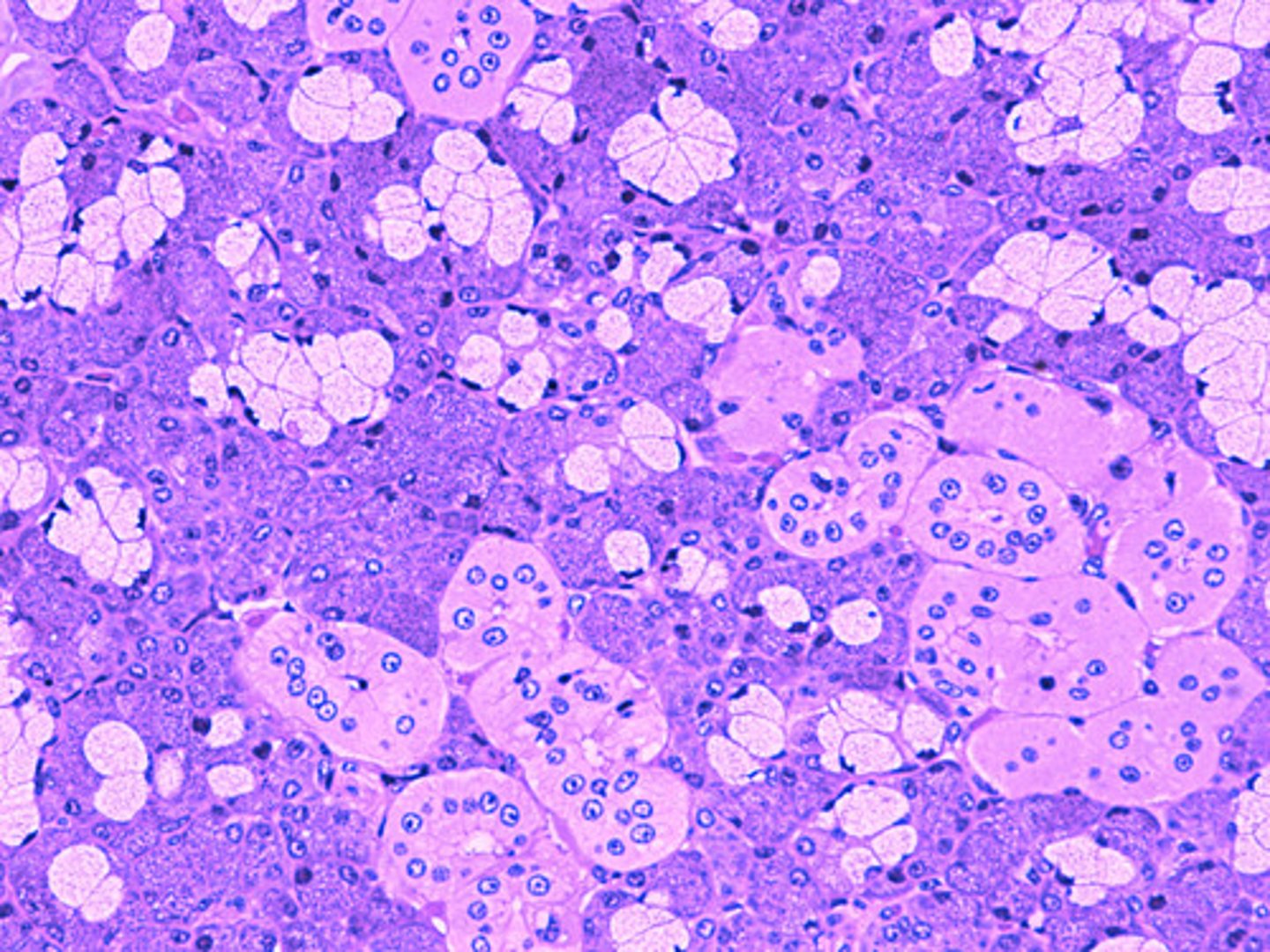
Anatomy Lab 2- Digestive system
 Call Kai
 Learn
Learn Practice Test
 Spaced Repetition
 Match
Match Flashcards
 Knowt Play
1/107

There's no tags or description
Looks like no tags are added yet.
Name | Mastery | Learn | Test | Matching | Spaced | Call with Kai | Chat |
|---|
No analytics yet
Send a link to your students to track their progress
108 Terms
digestive tract (alimentary canal)
The __________________ is composed of a hollow tube that runs from the mouth to the anus and is technically "outside" the body.
mouth, pharynx, esophagus, stomach, SI, LI
organs of digestive tract
accessory organs
The ____________ secrete digestive products into the canal
accessory organs
pancreas, liver, gallbladder, salivary glands
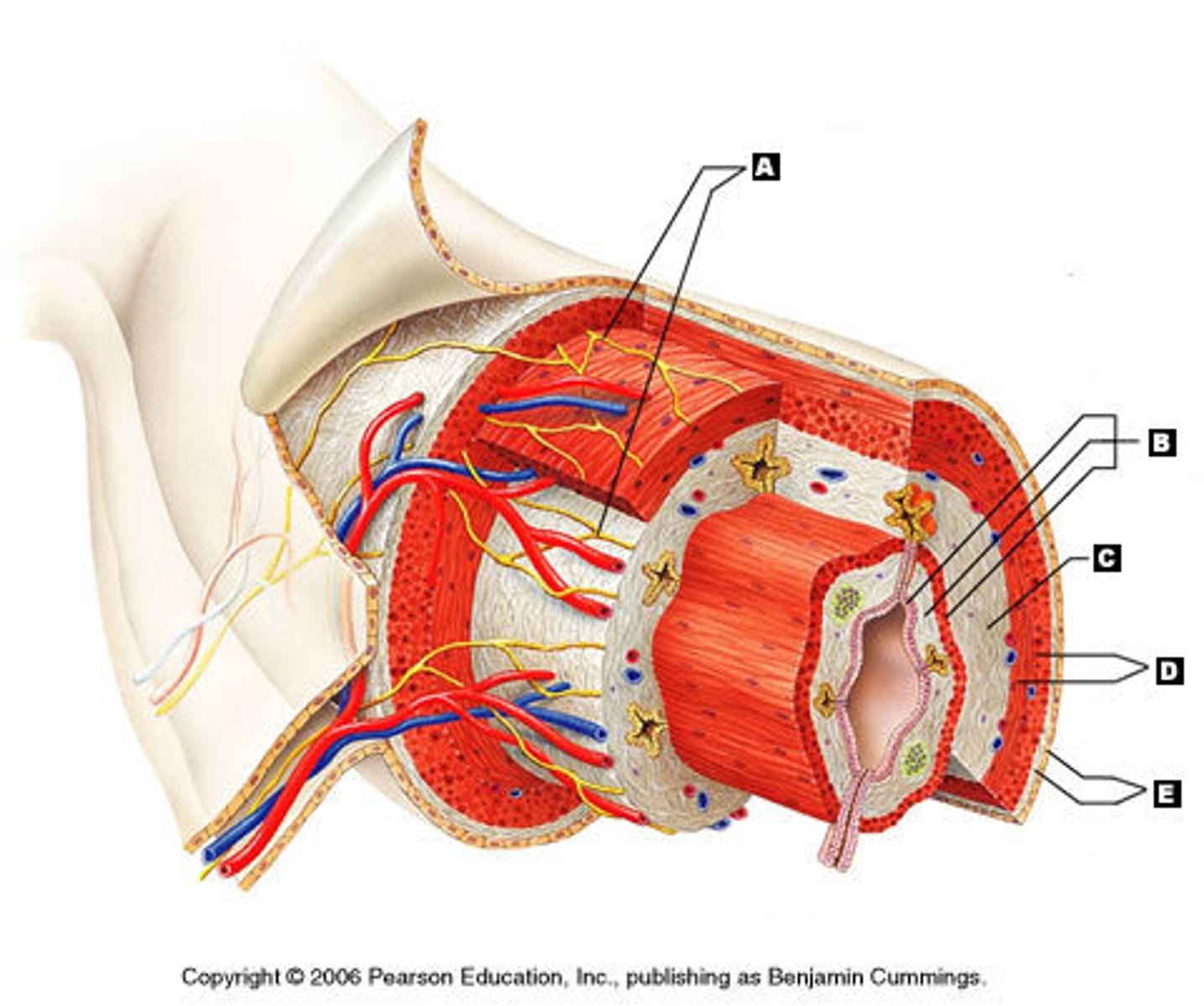
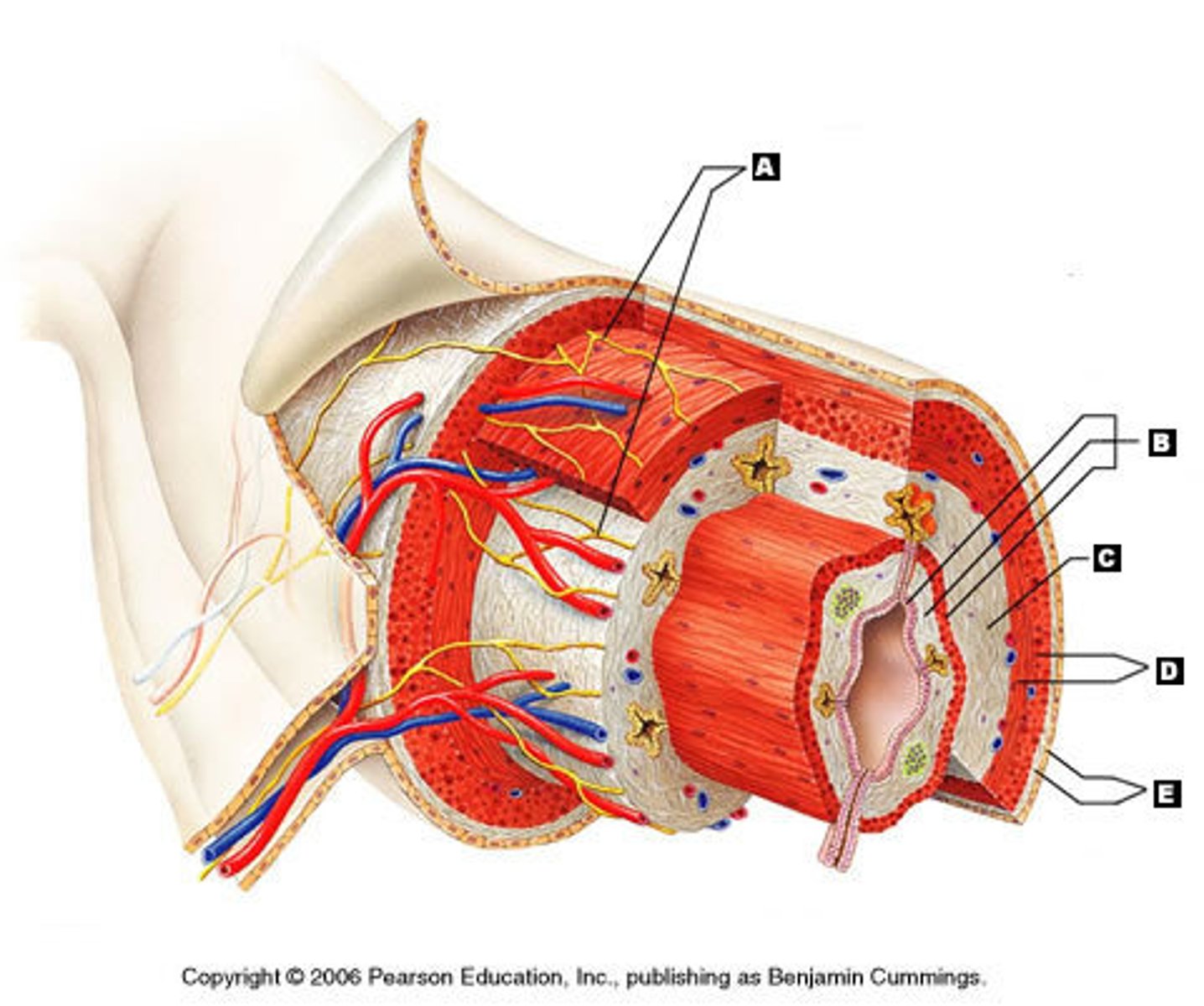
Mucosa
Name B secretion (mucous, enzymes), absorption, and protection (bacteria,enzymes)
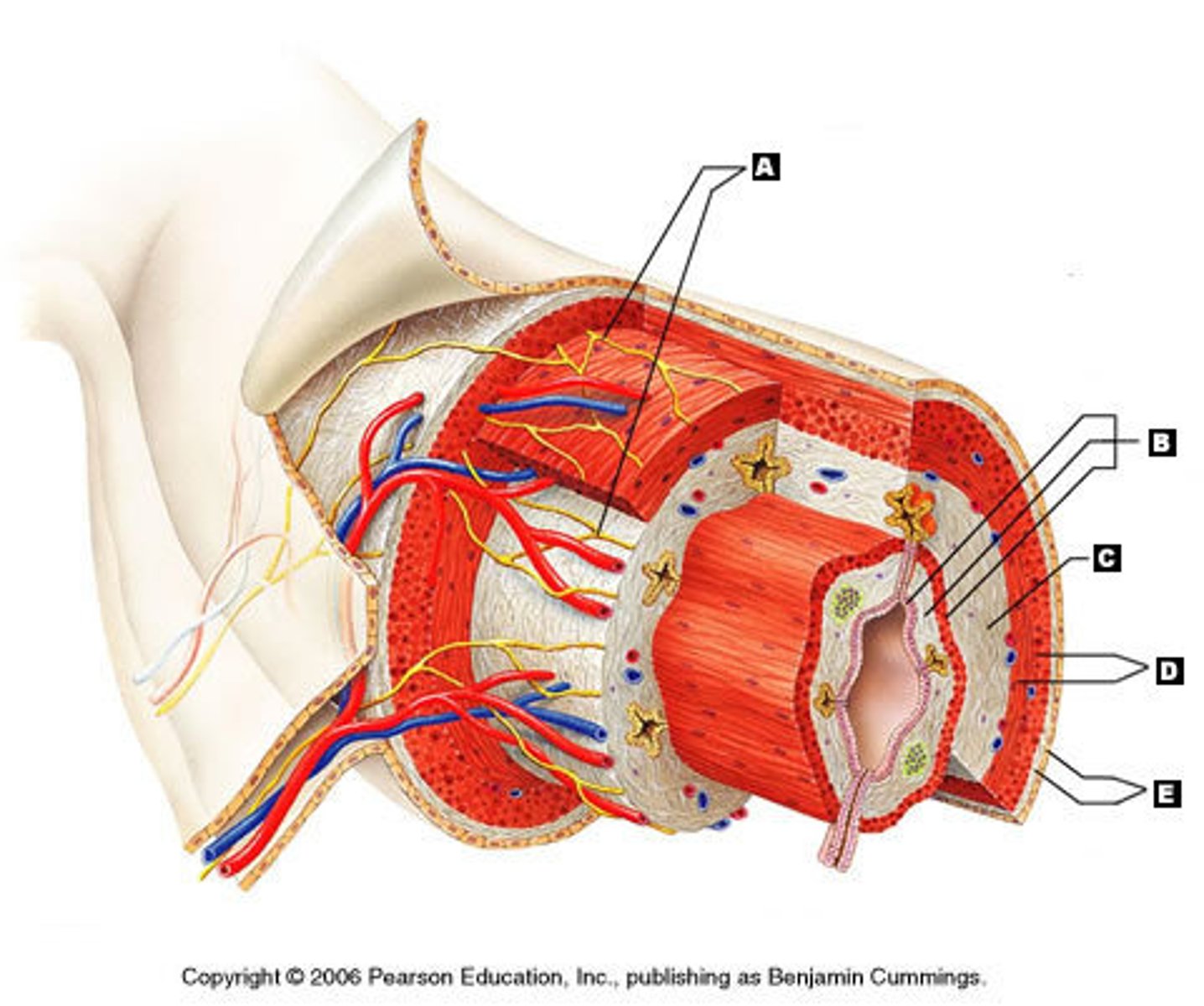
submucosa
Name C connective tissue, contains the parasympathetic submucosal plexus
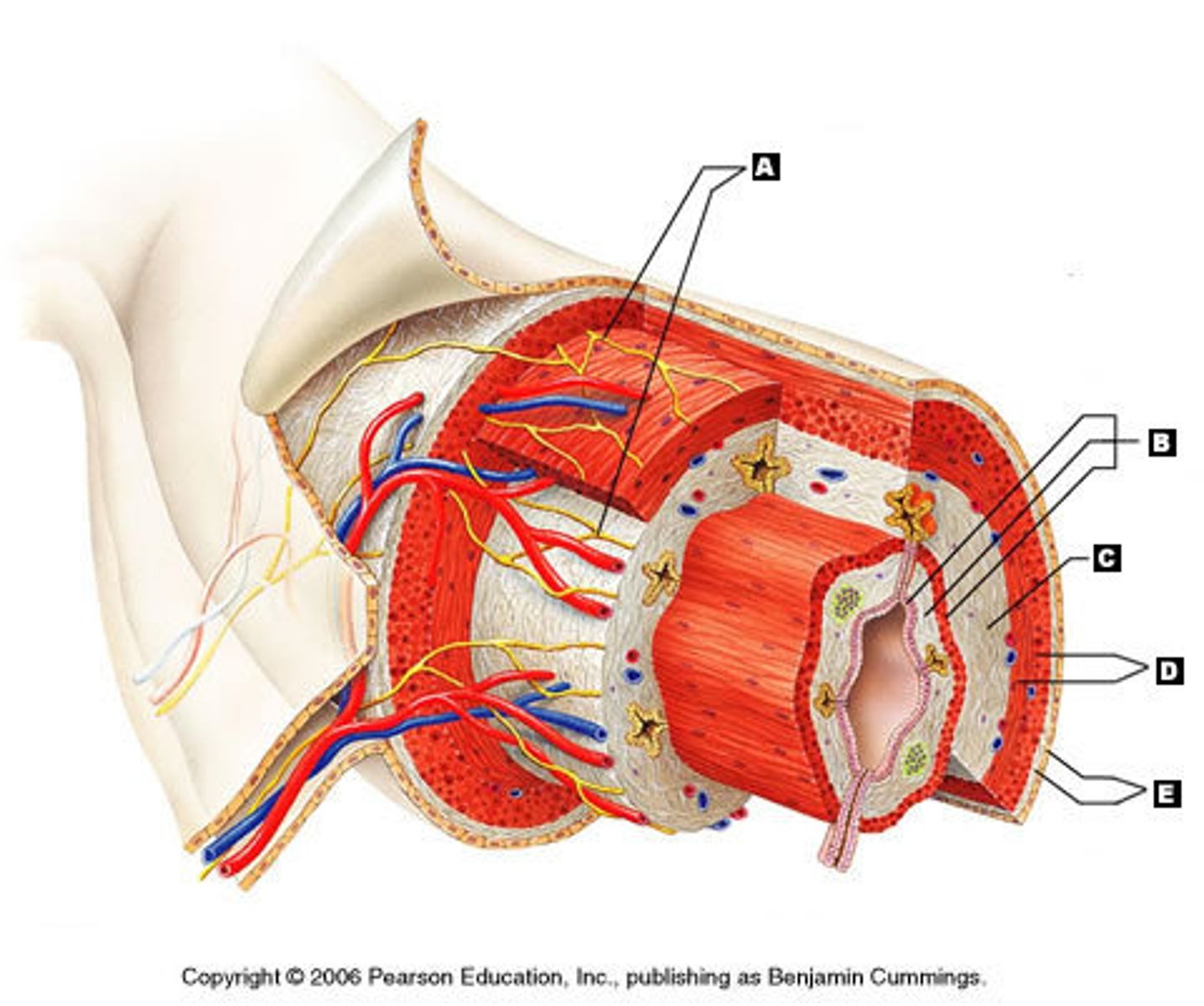
Muscularis
Name D smooth muscle, inner layer = circular, outer layer = longitudinal. Myenteric plexus - more parasympathetic fibers
Serosa
Name E. reduce friction and helps anchor organs in place.
1. Ingestion
2. Digestion
3. Absorption
4. Defecation
functions of the digestive system
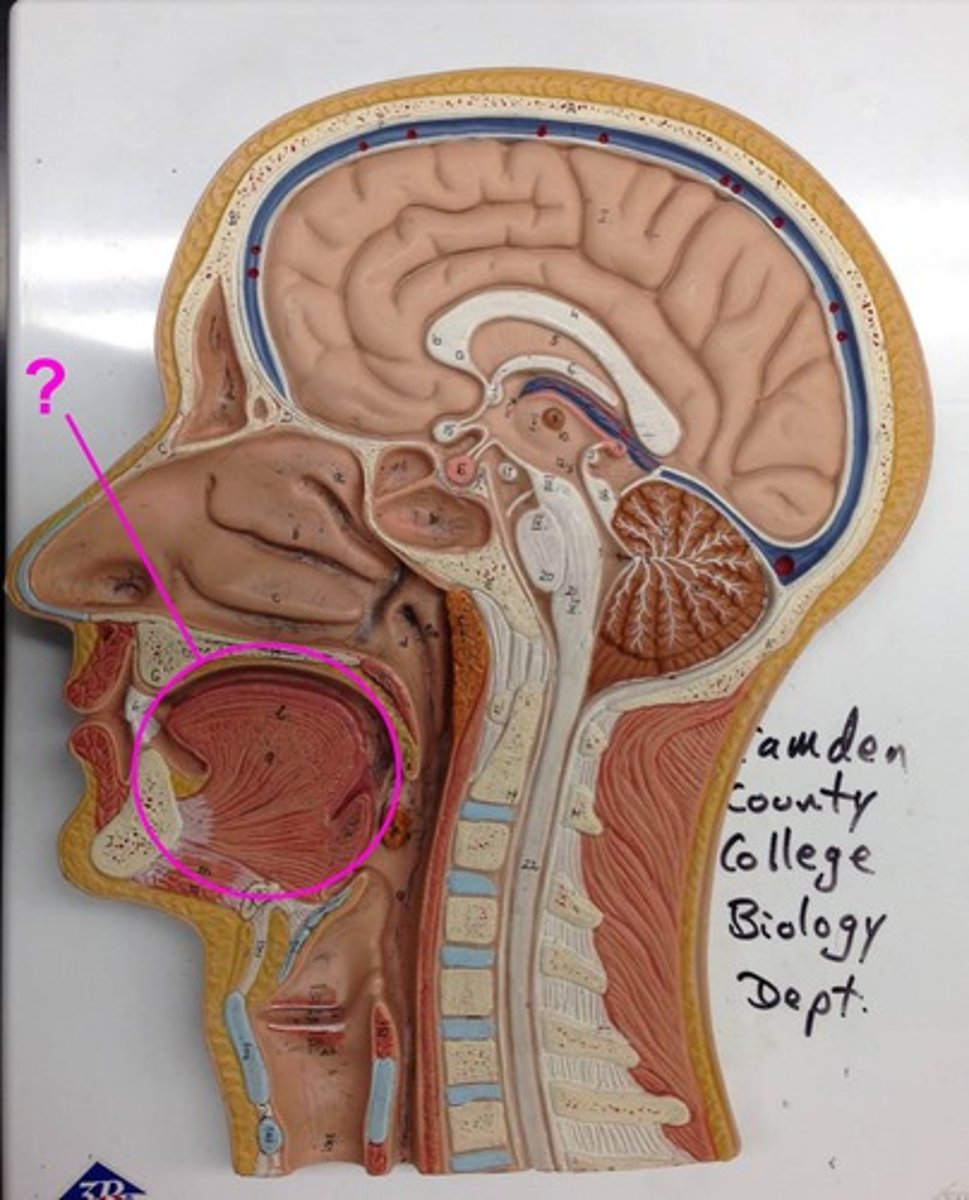
oral cavity
name this cavity; teeth are 2123 arranged “dental formula” (32 total teeth)
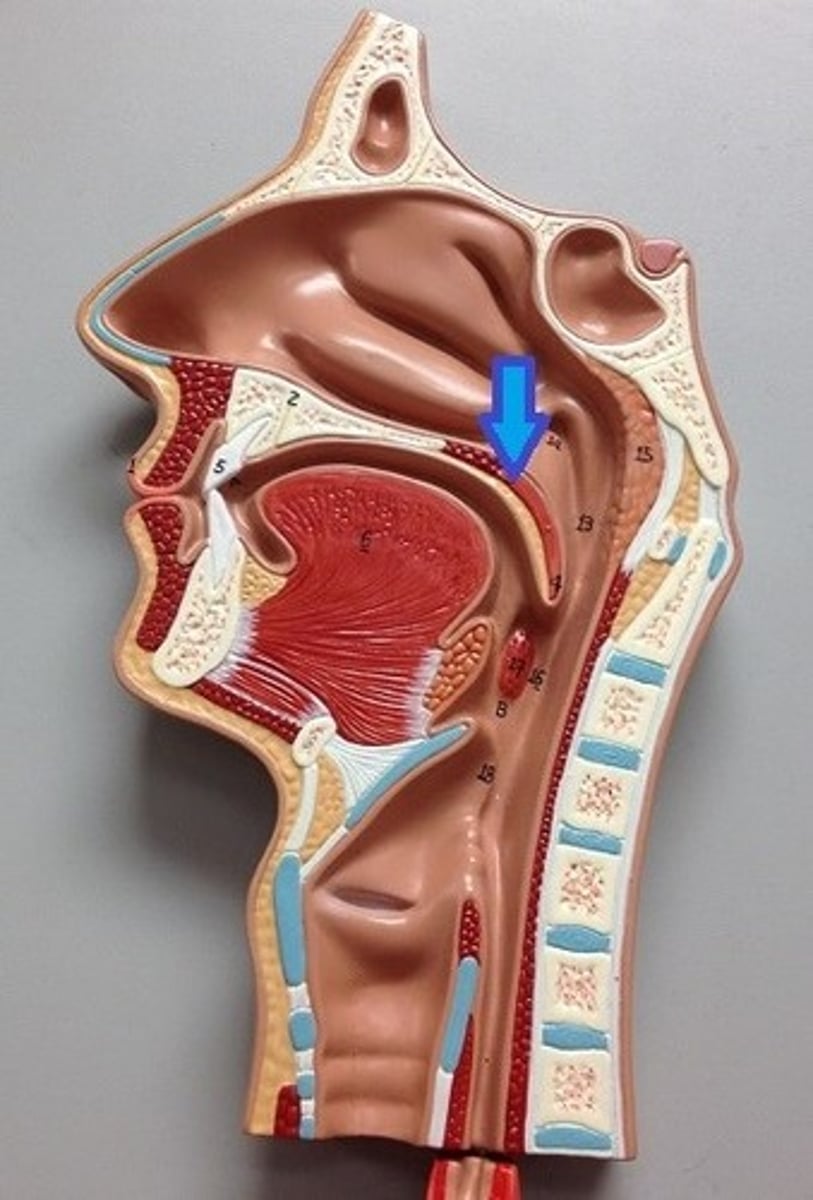
soft palate
name this
uvula
name this
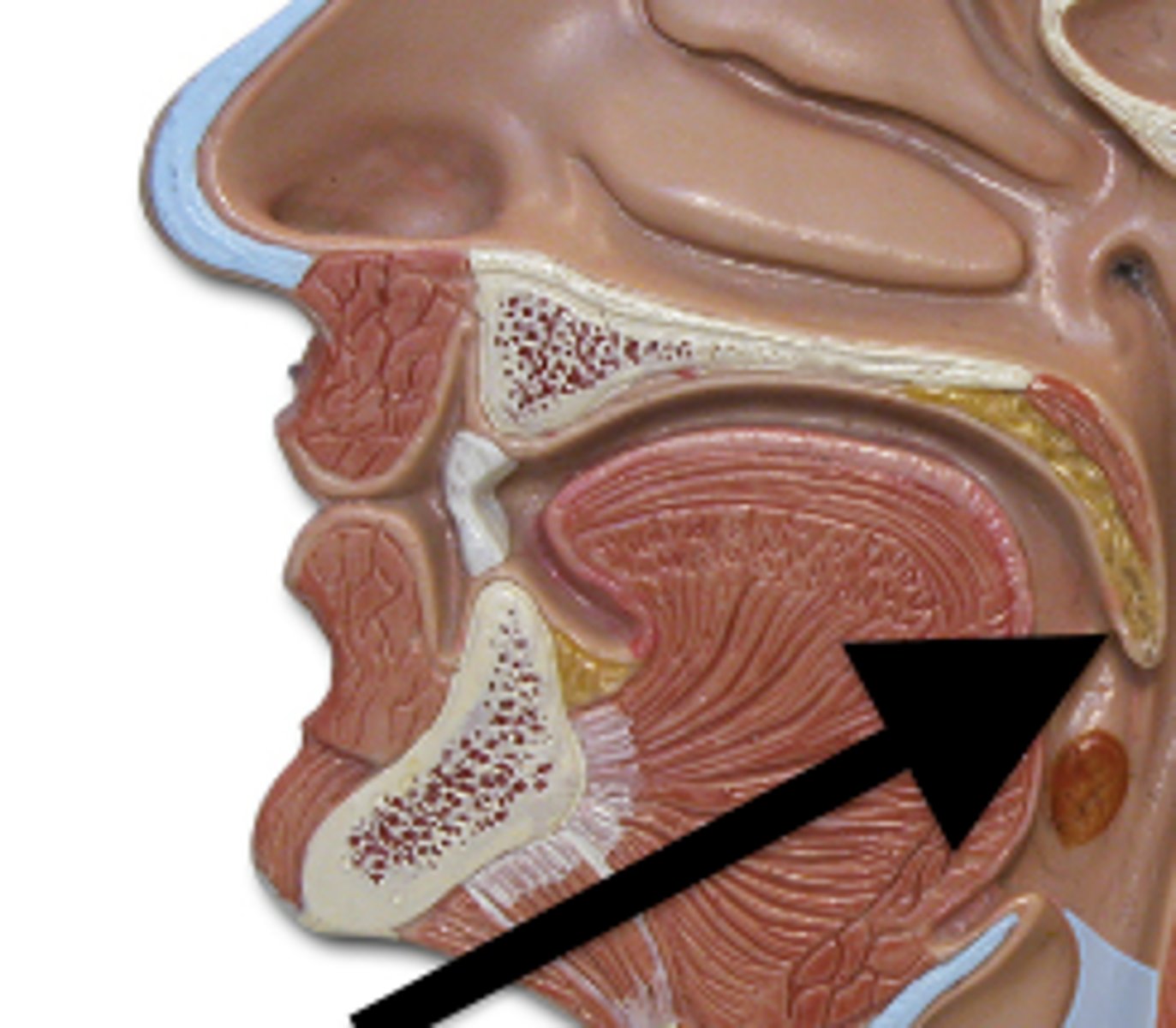
hard palate
name this
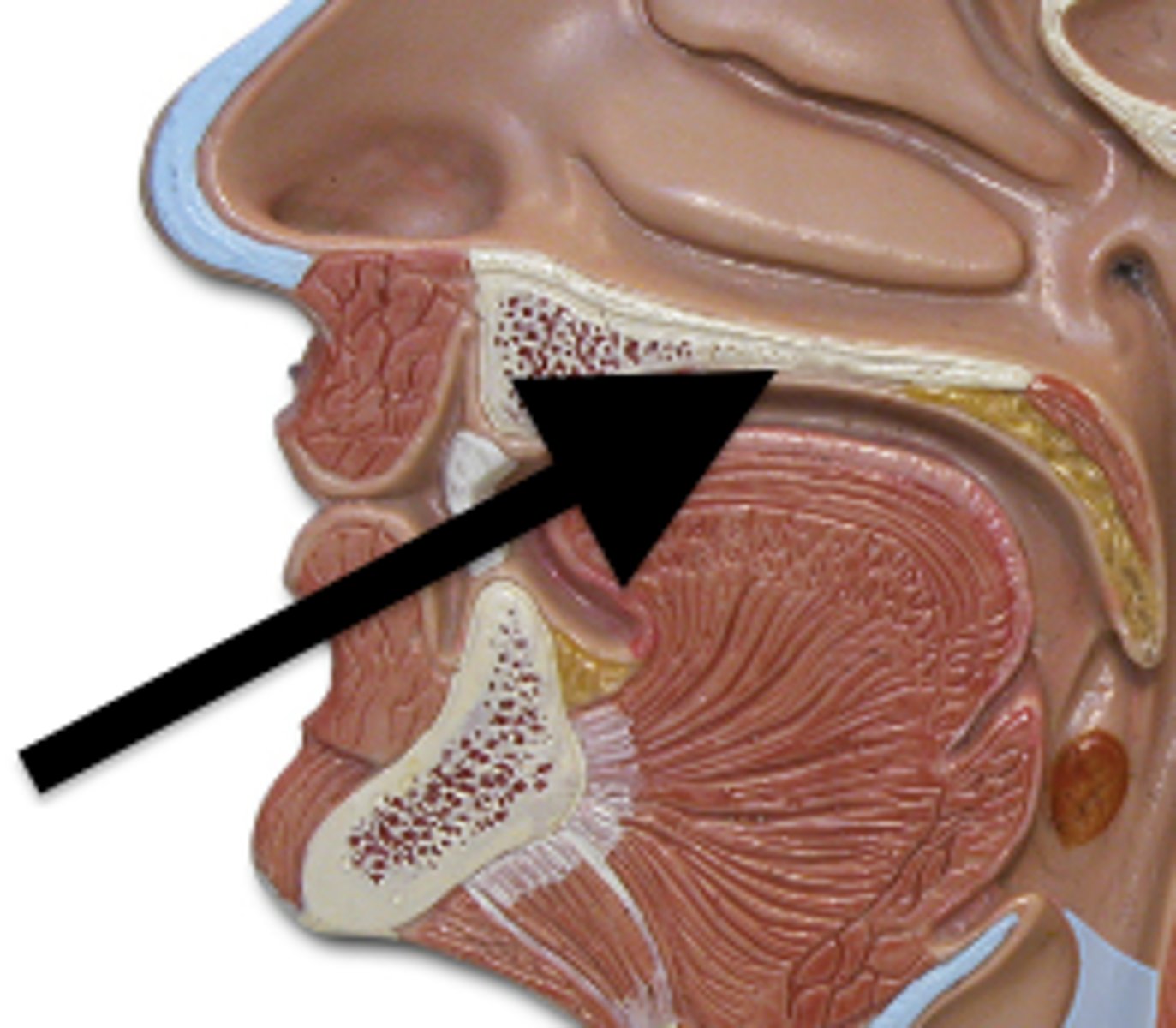
tongue
name this
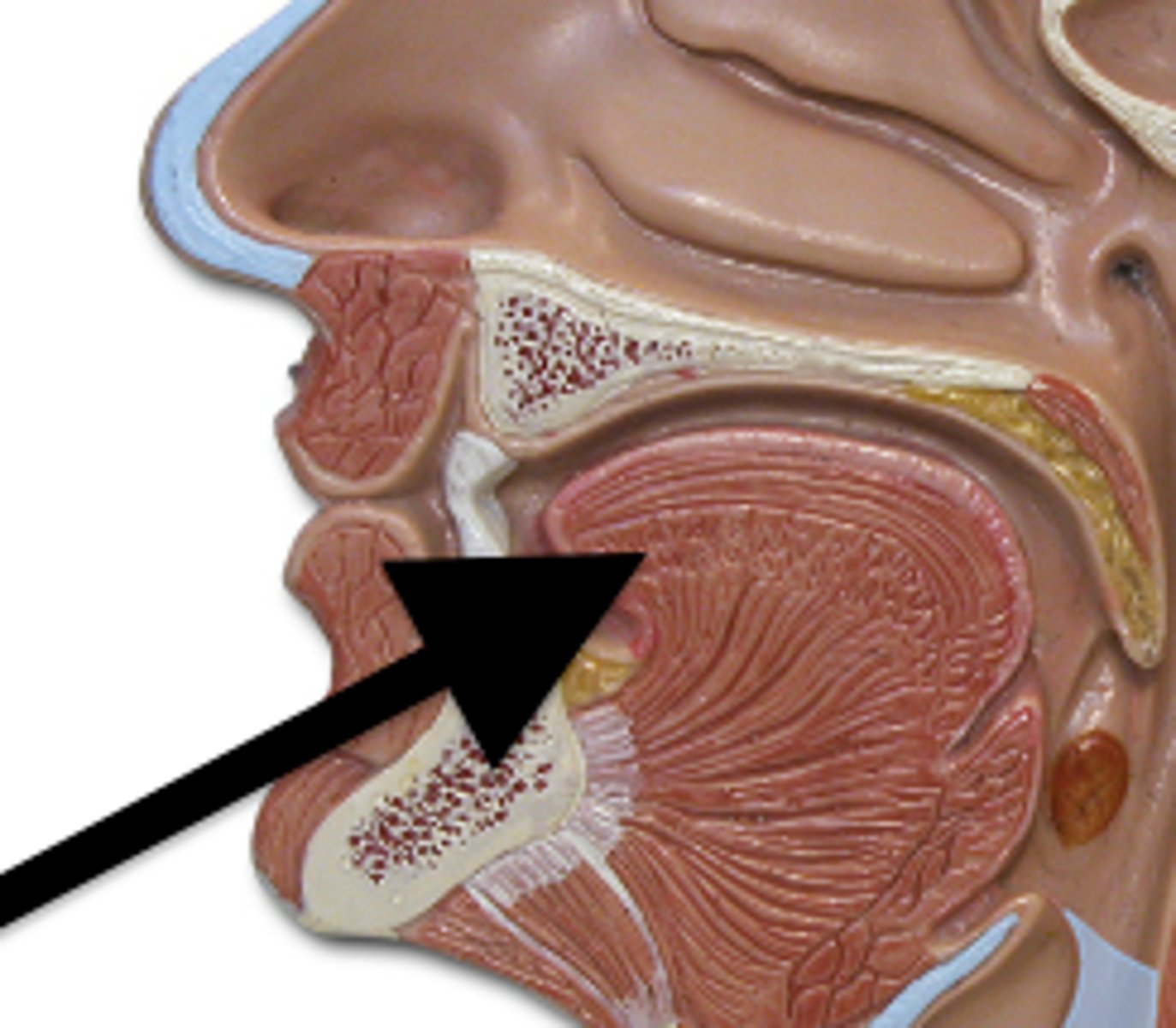
epiglottis
name this
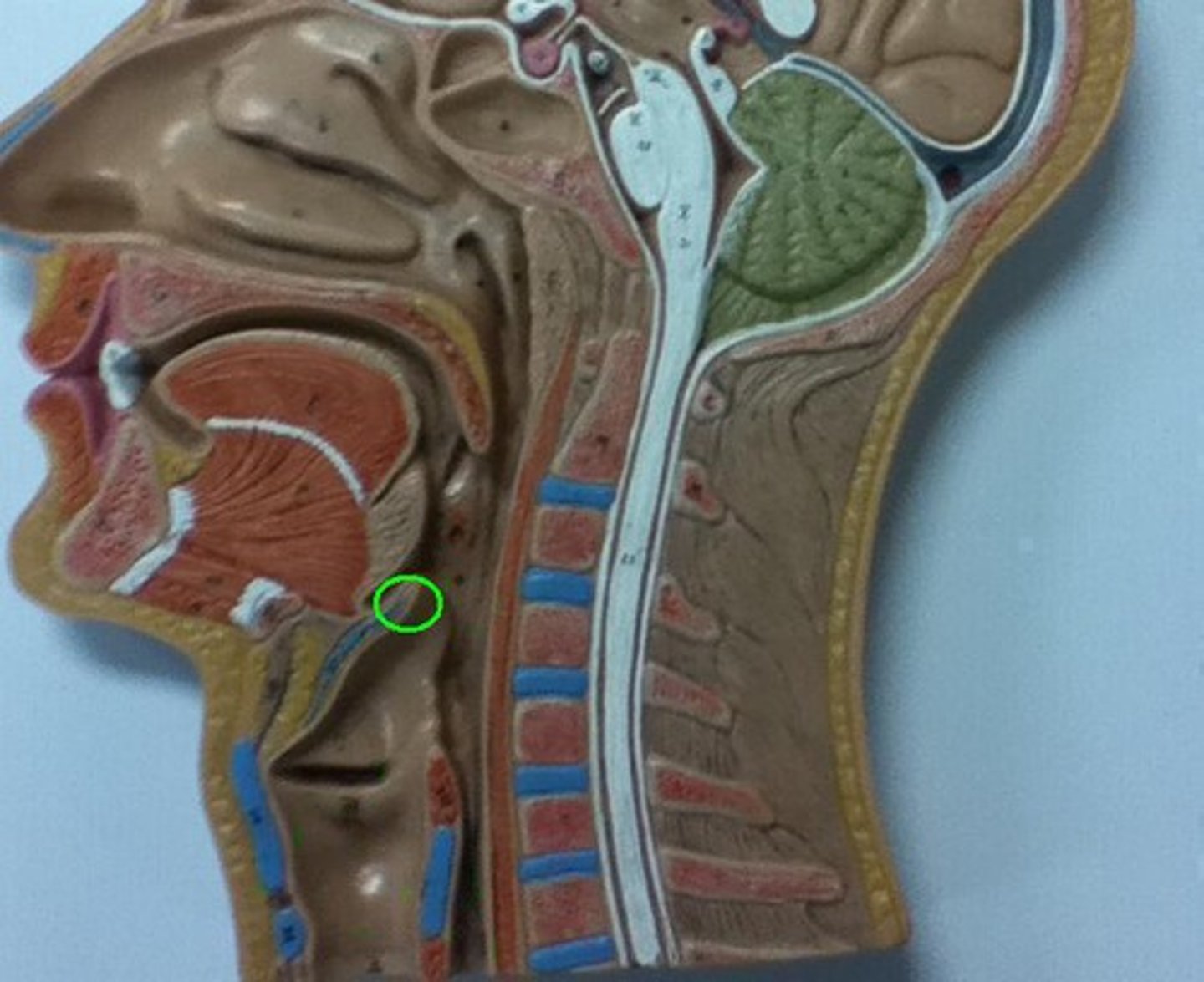
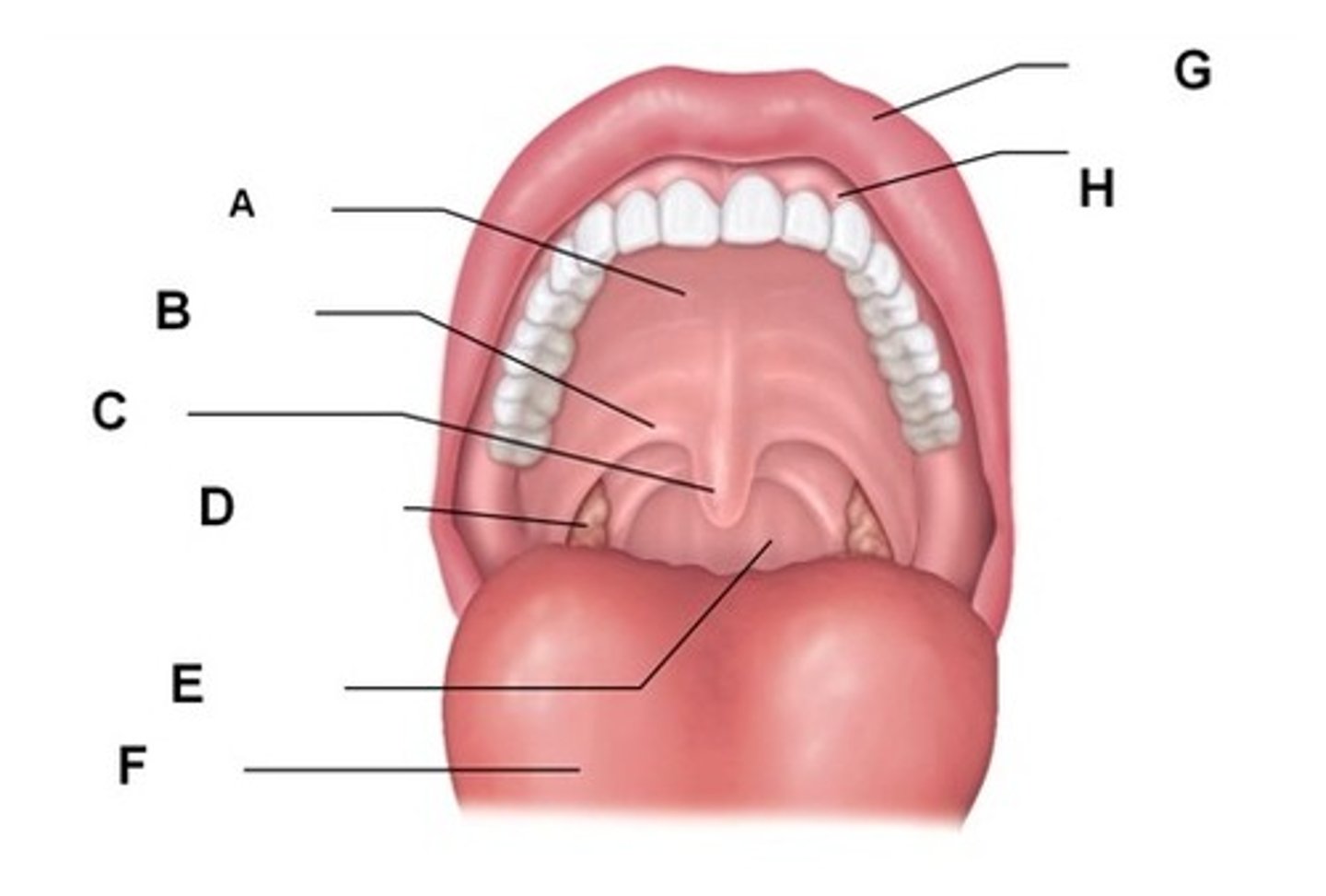
hard palate
name A
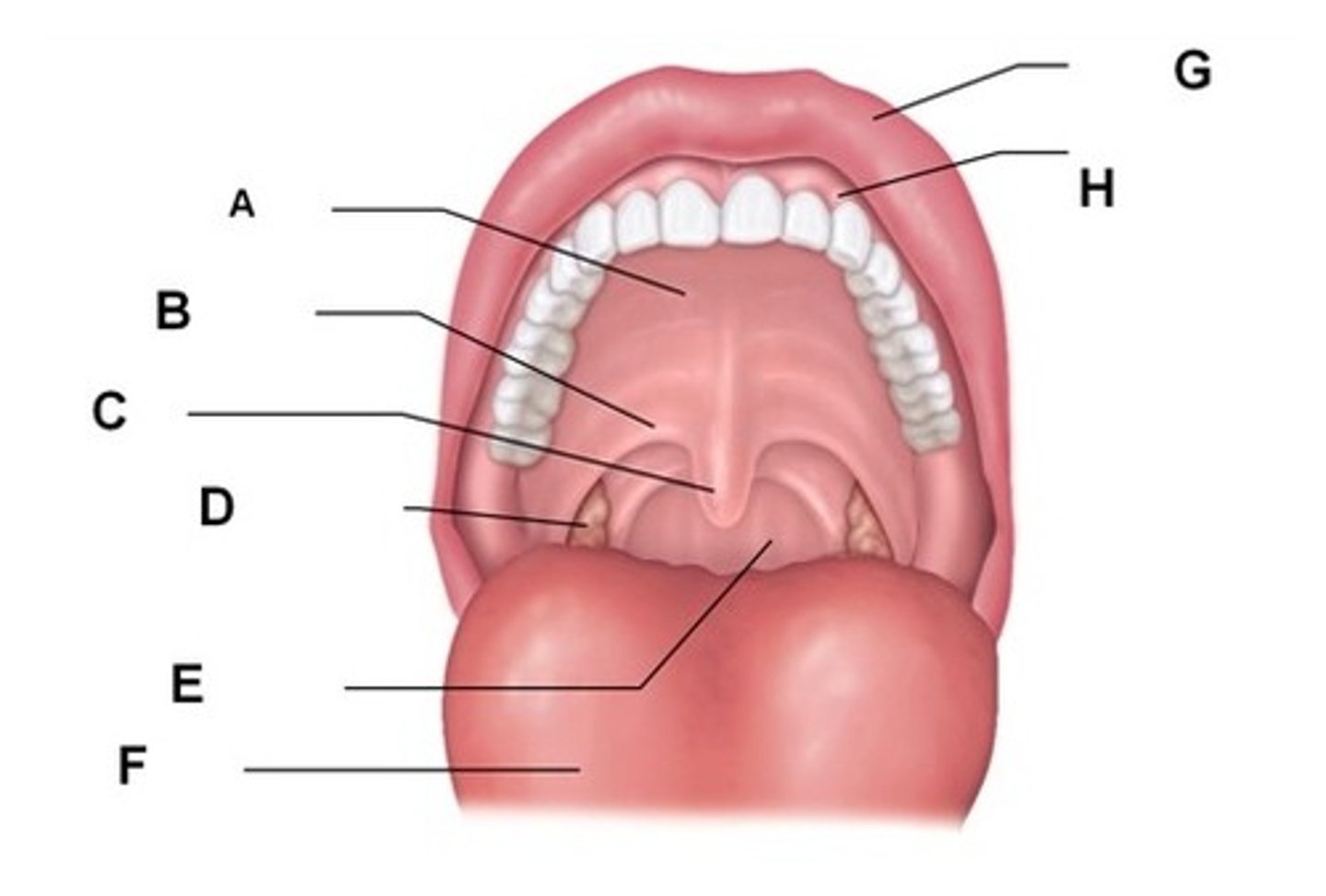
soft palate
name B
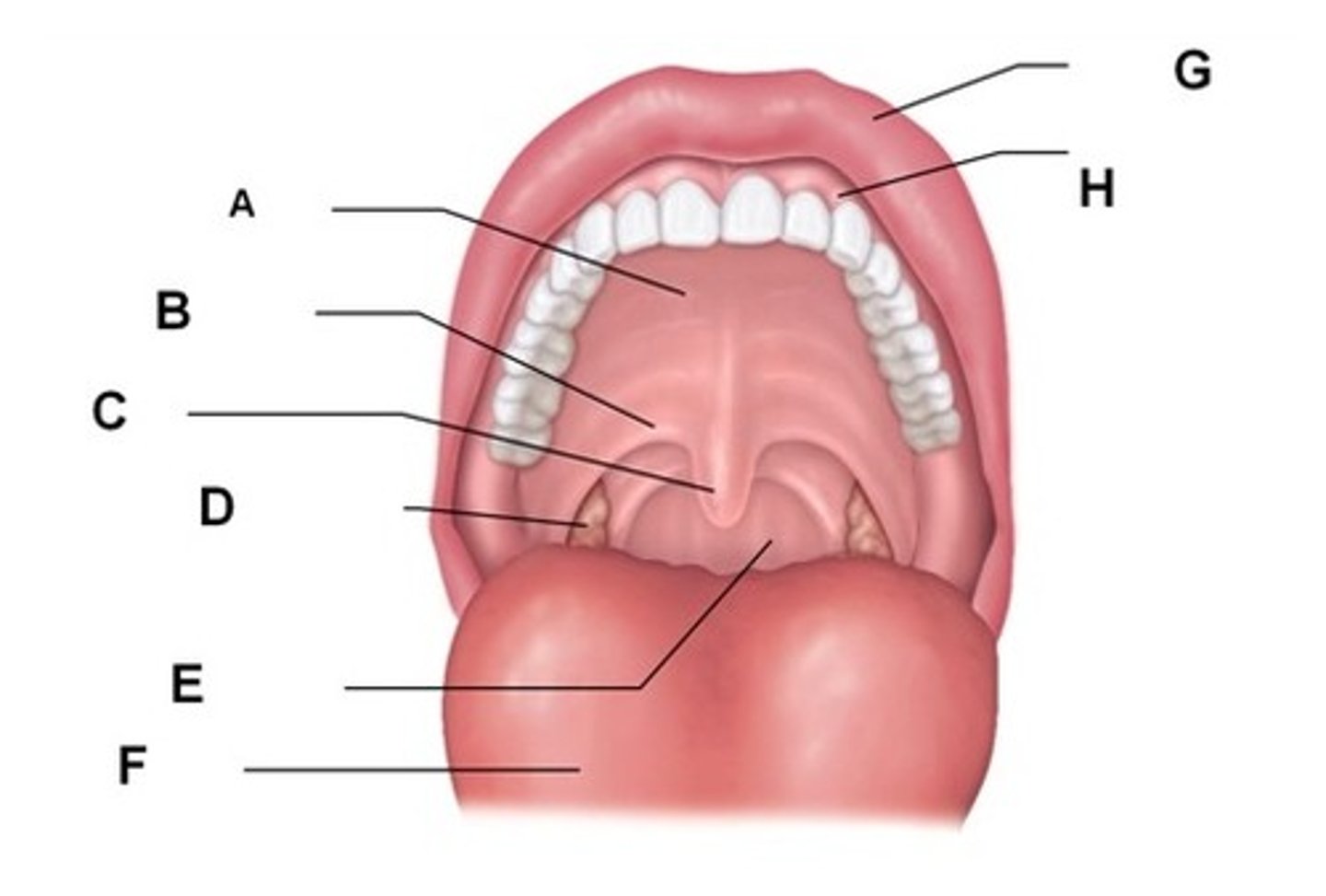
uvula
name this
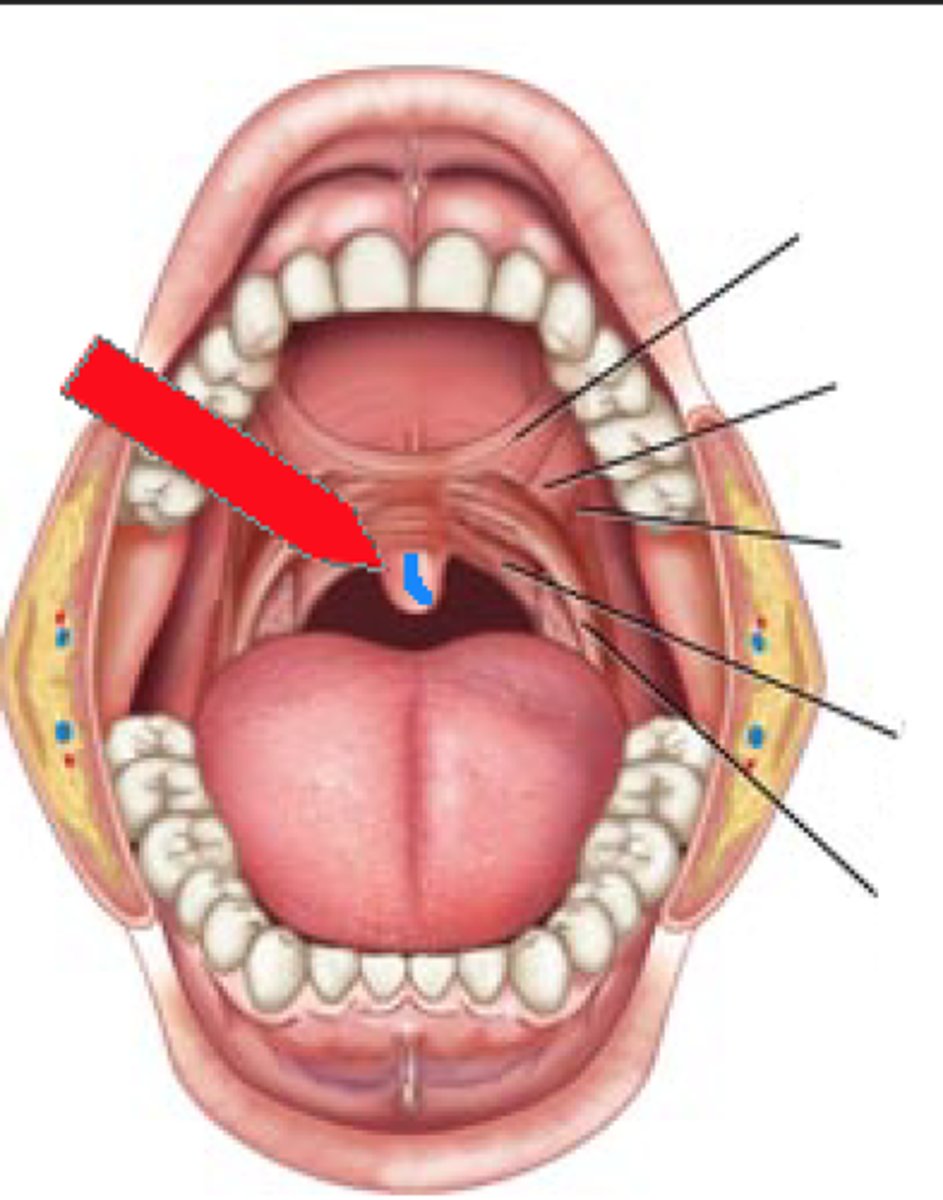
tongue
name F
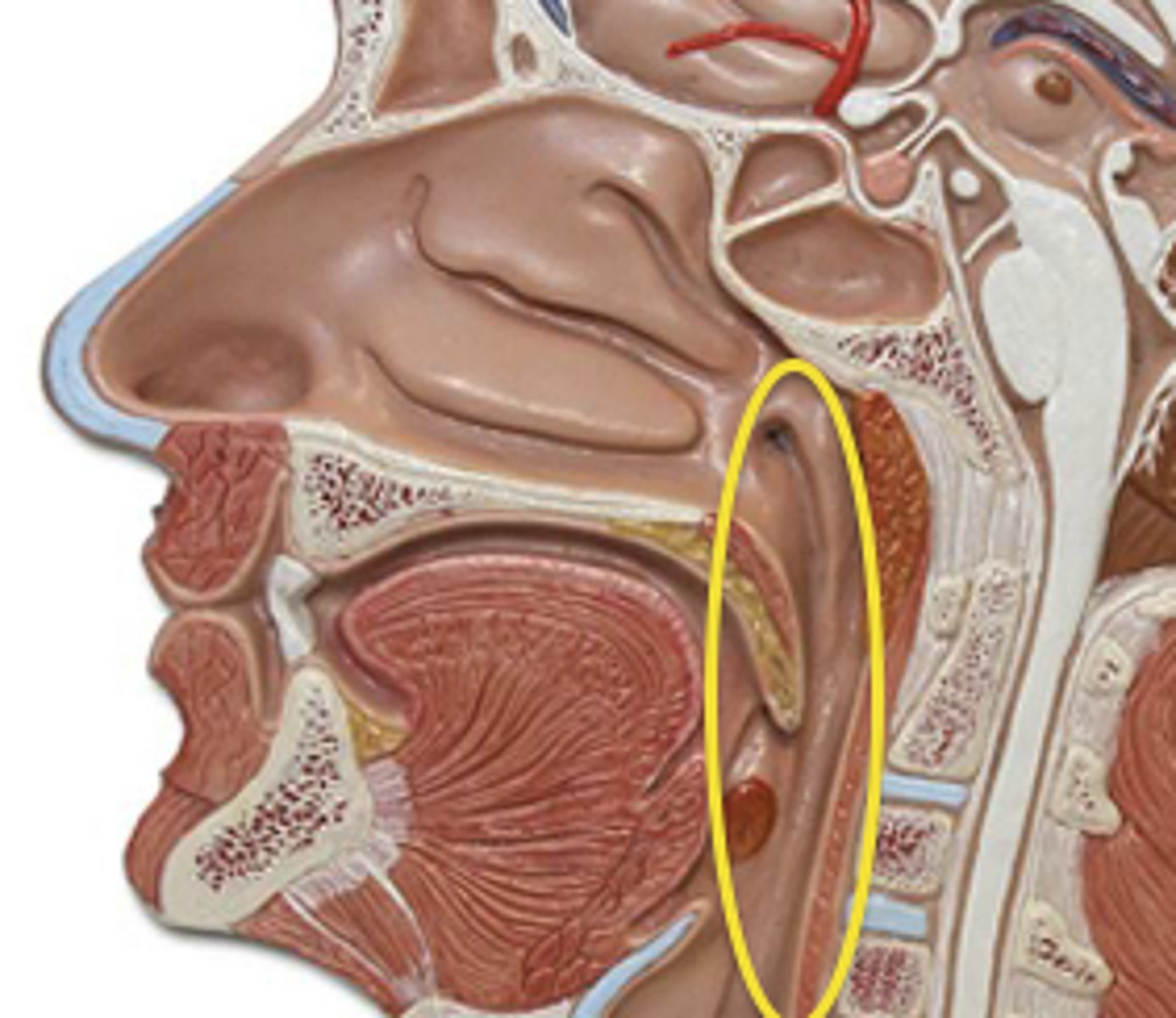
pharynx
▪ Common passageway for food and air.
▪ Swallowing reflex is initiated here.
▪ Food should not pass into nasopharynx
pharynx
name this
esophagus
About 10 inches long.▪ Lies posterior to trachea against spine
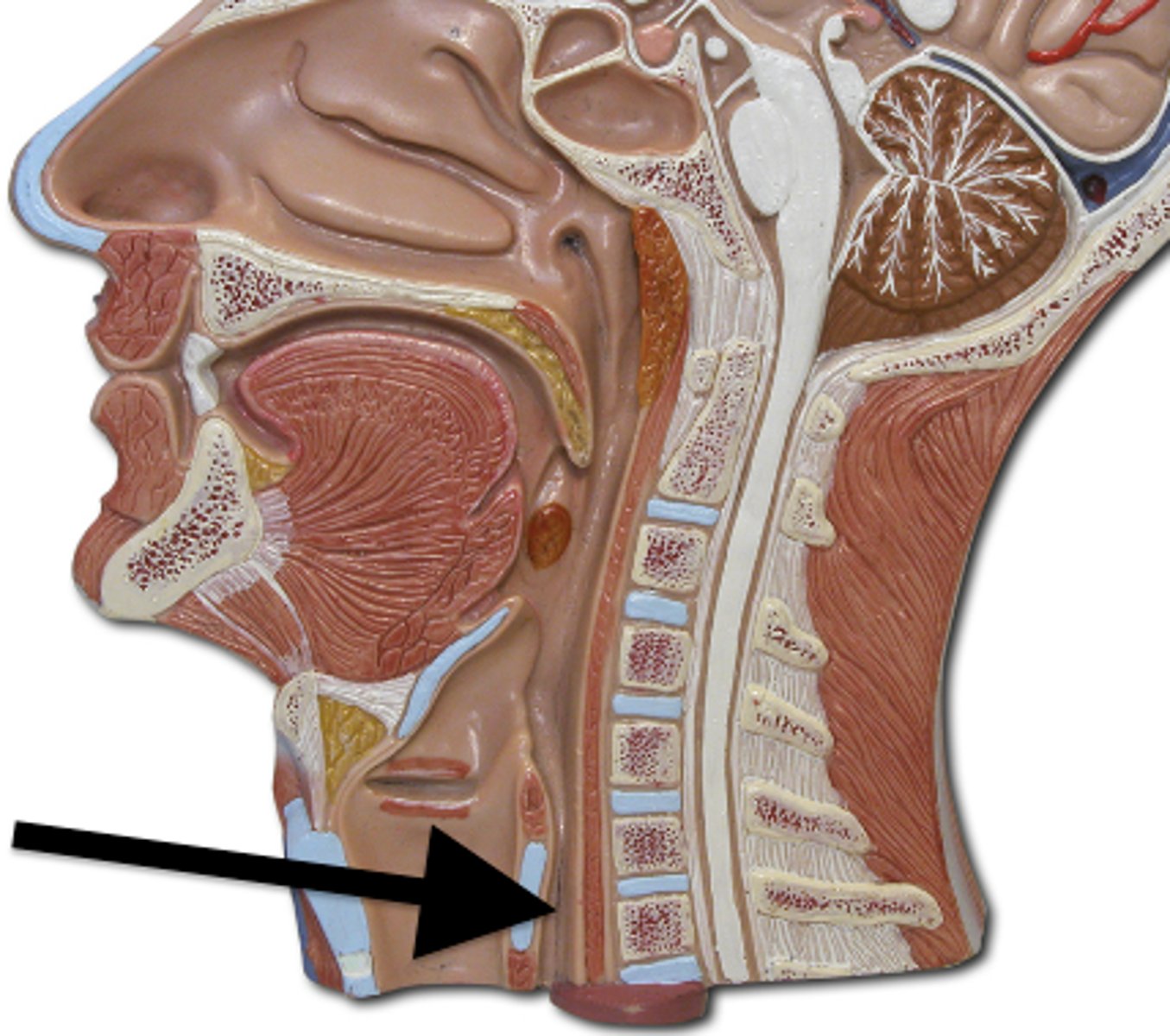
incisors
name this
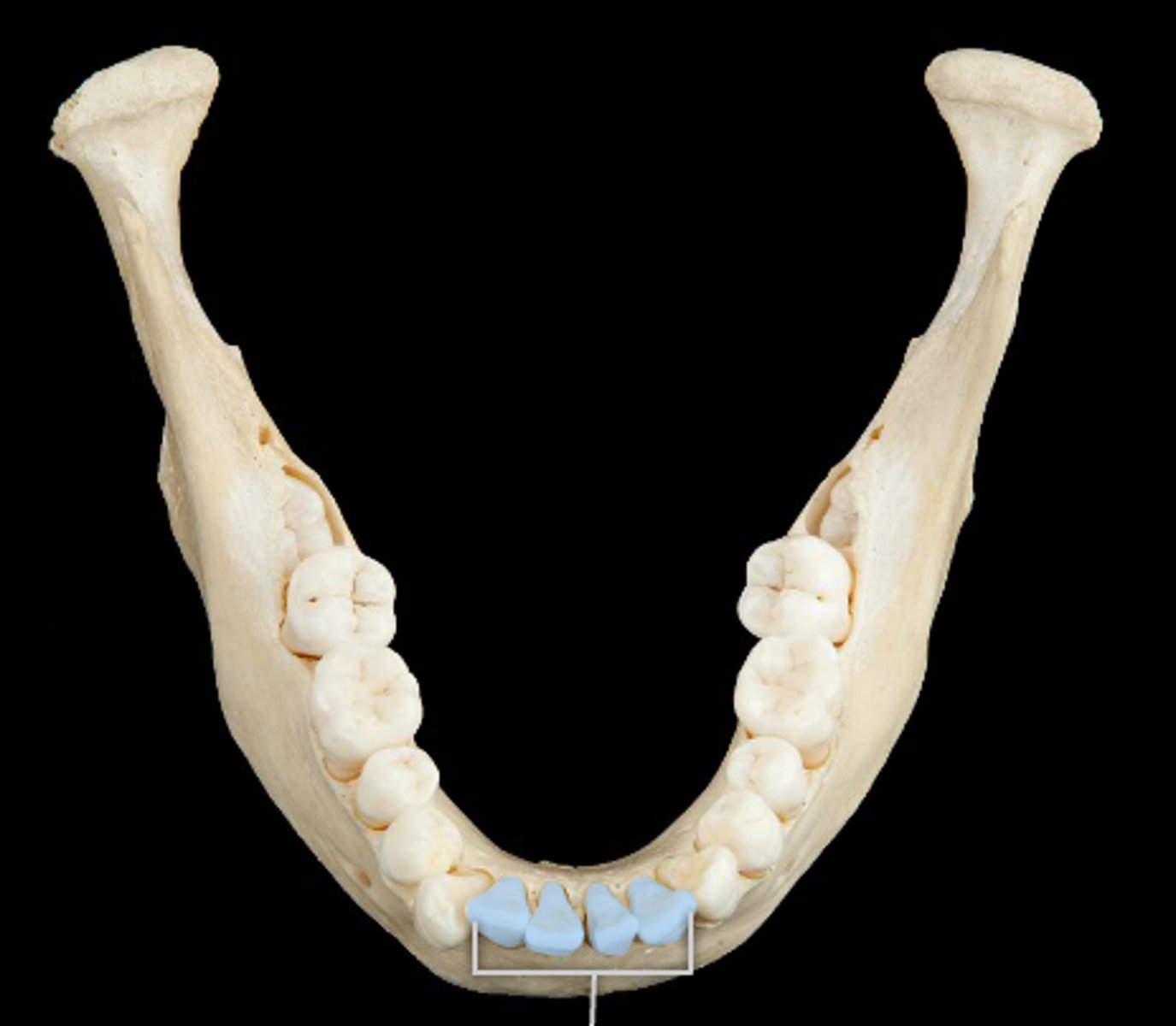
canine
name this
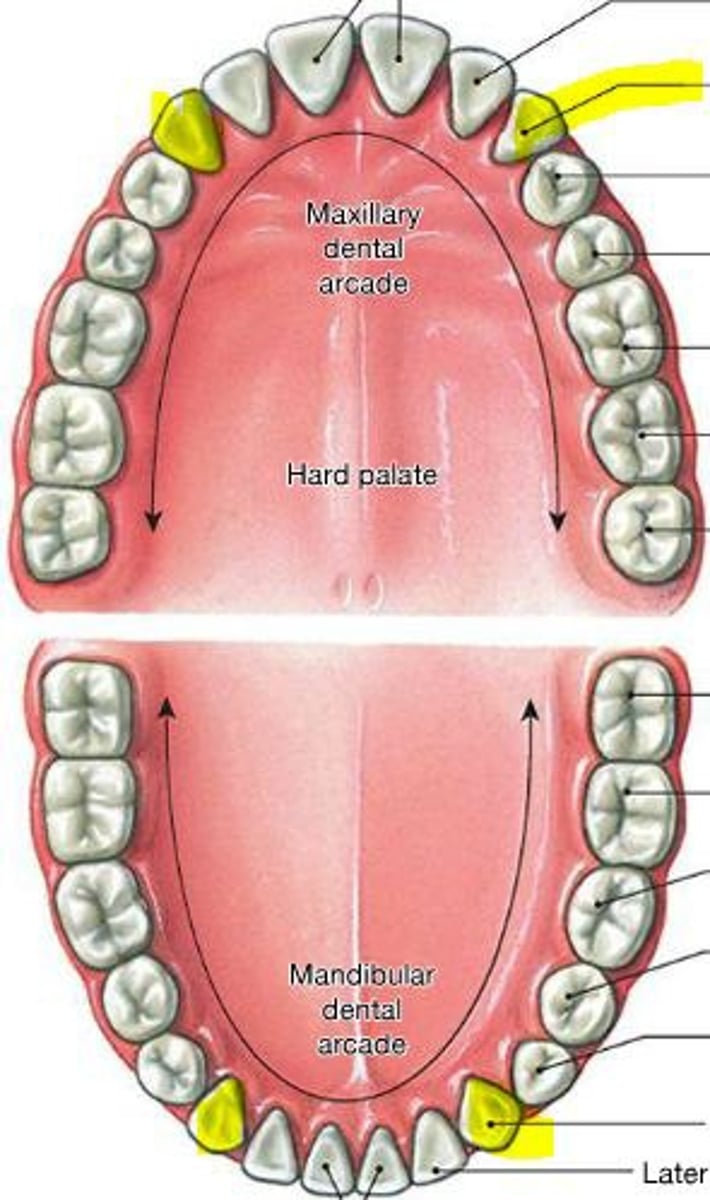
premolar
name this
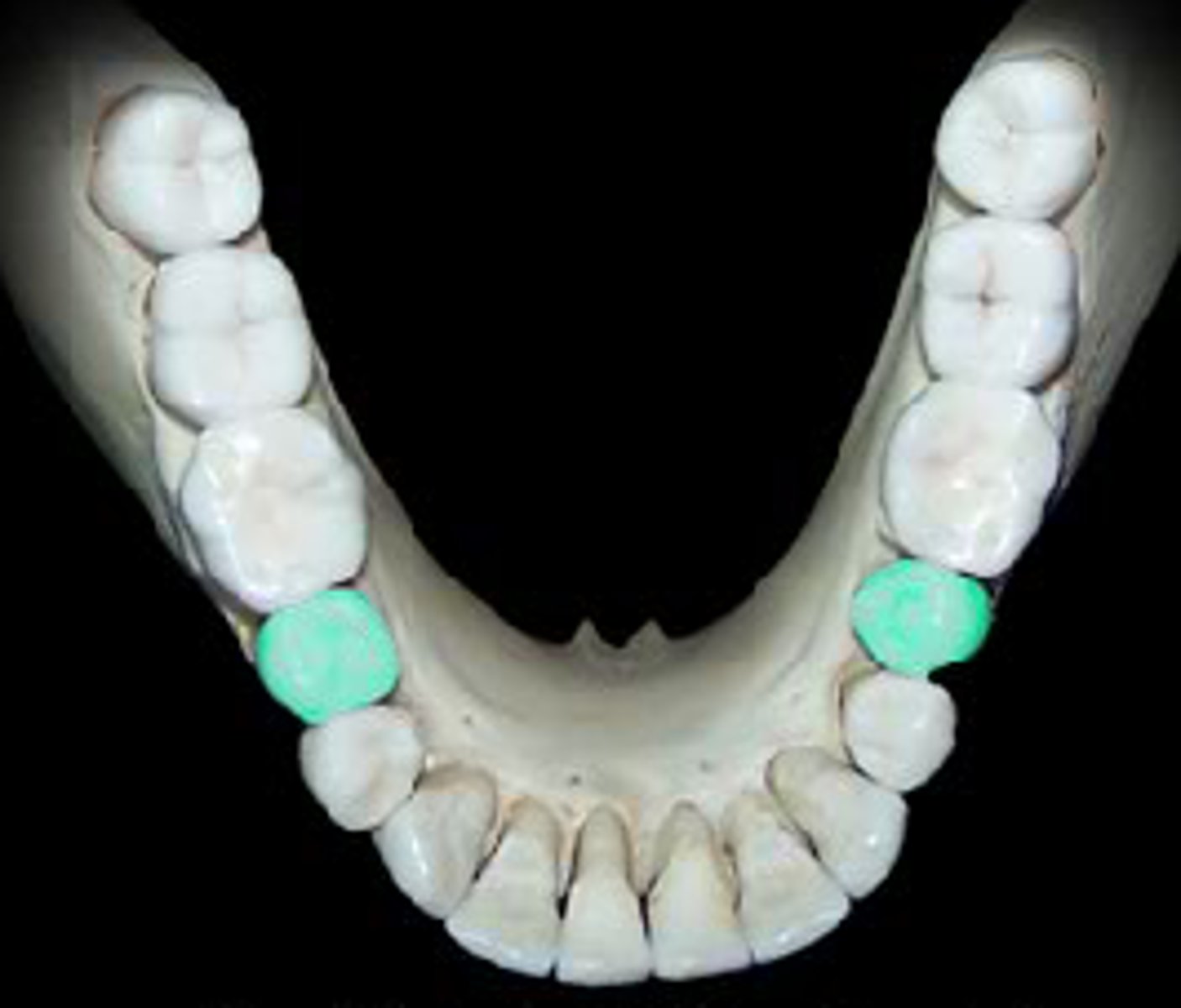
molars
name this
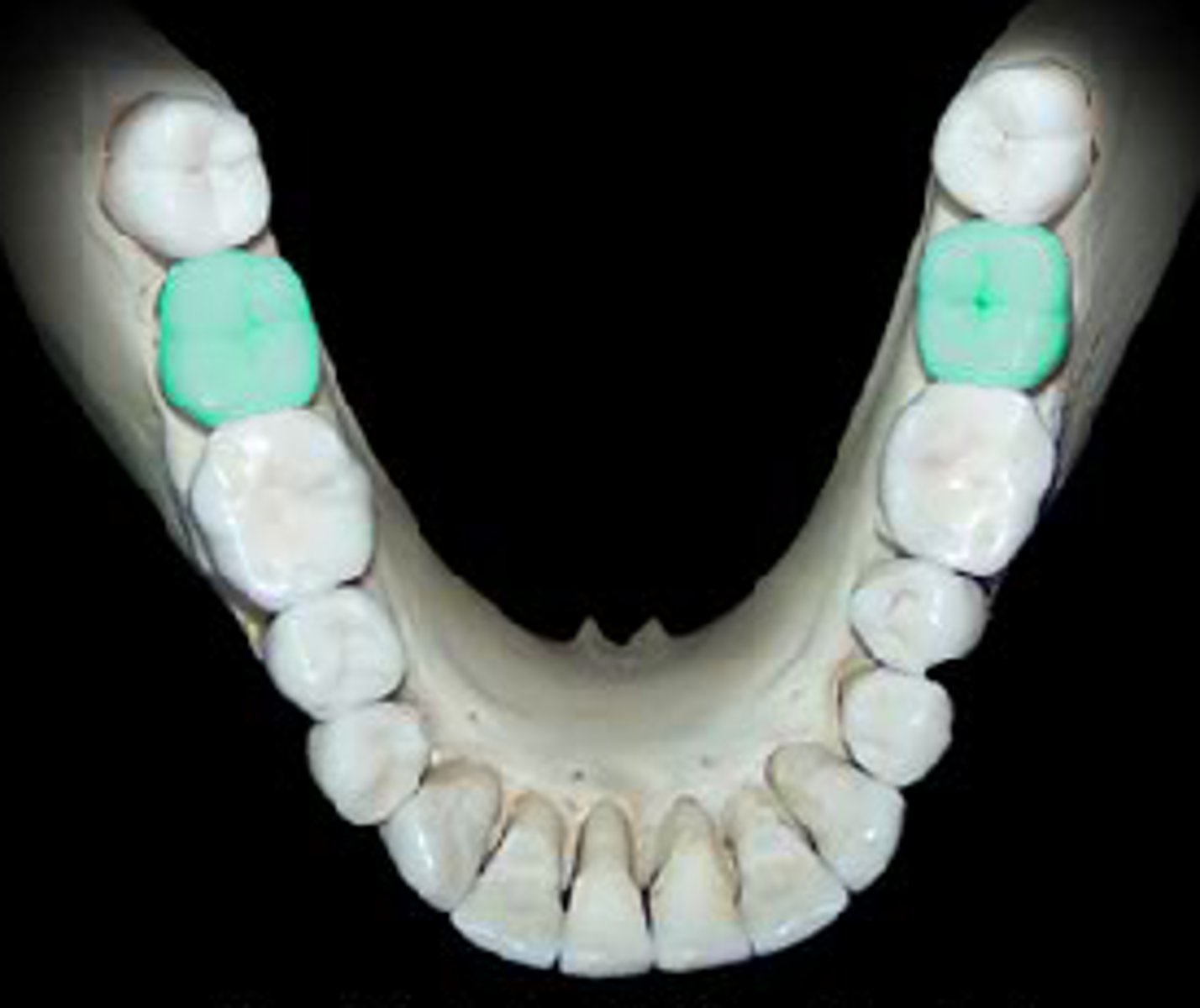
skeletal, smooth
esophagus muscles-> superior ________ inferior ______
stratified squamous epithelium
the esophagus is lined with
gastroesophageal
Entrance into stomach is called the _____________ junction
peritoneum
Most of the organs of the abdominal cavity are covered with a serous membrane that is called the
organs, abdominal
The visceral layer is on the _______ and the parietal layer
attaches to the inside of the _________l wall.
left upper abdominal quandrant
stomach lies in the
cardia
name this
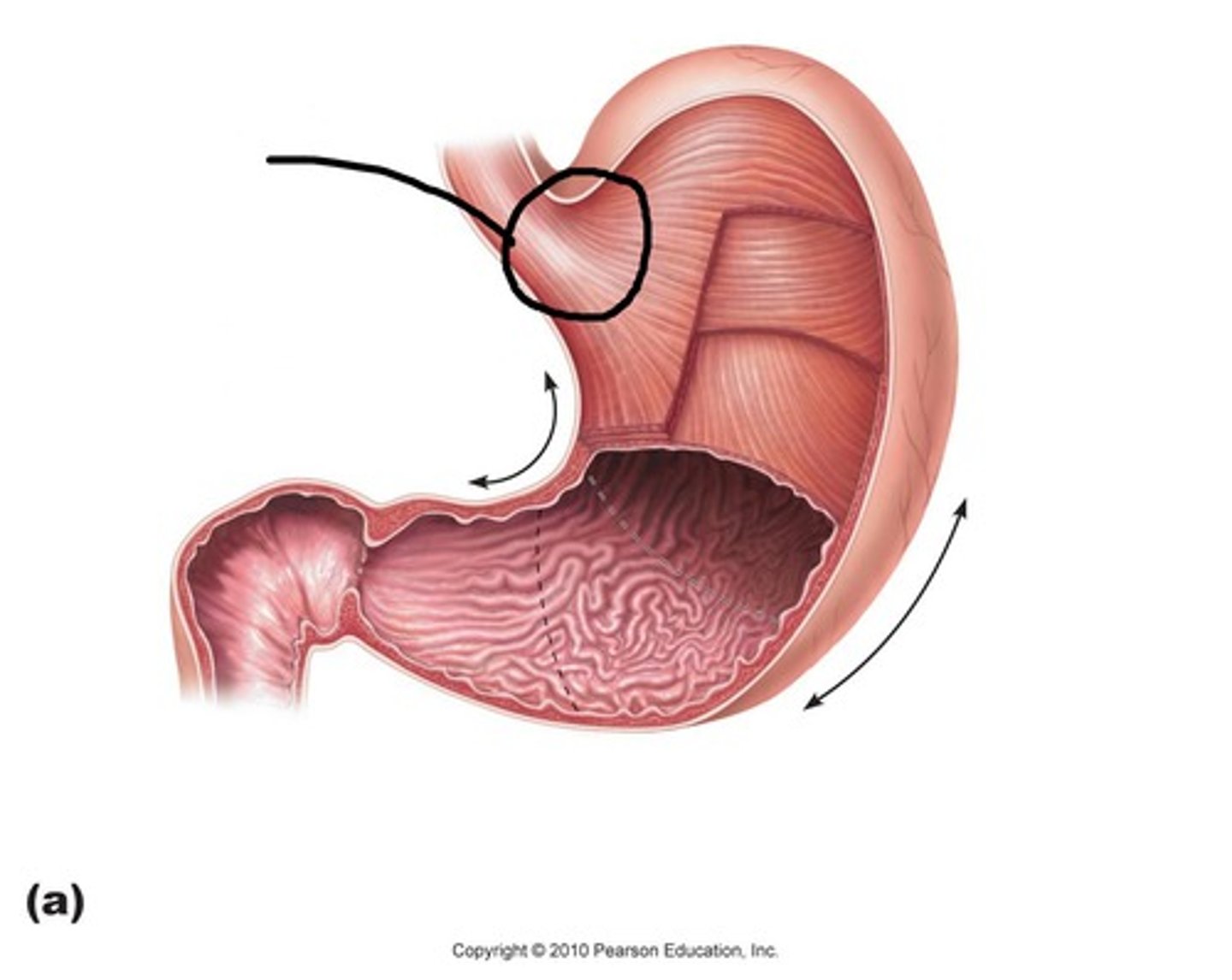
fundus
name E
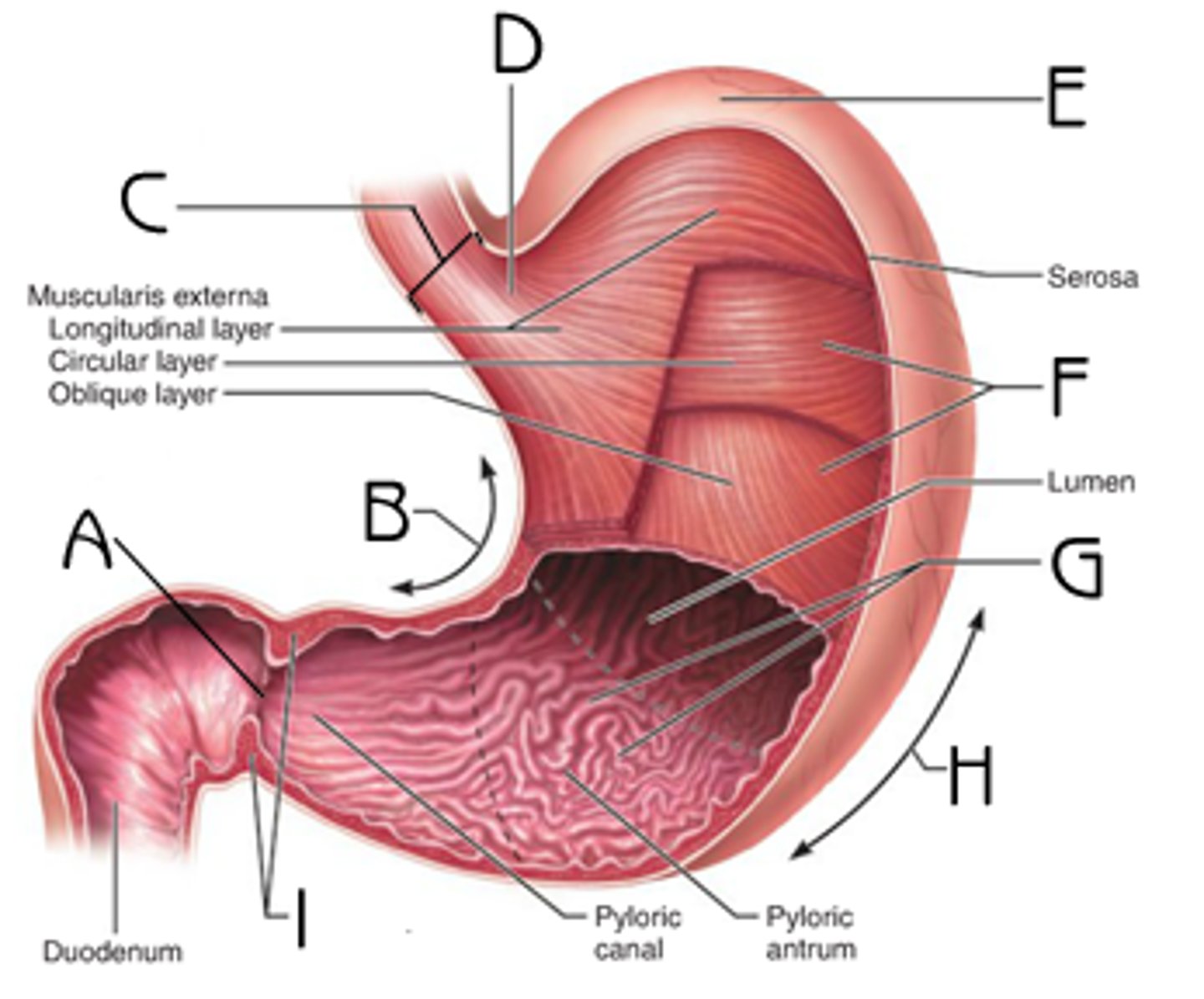
body
name F
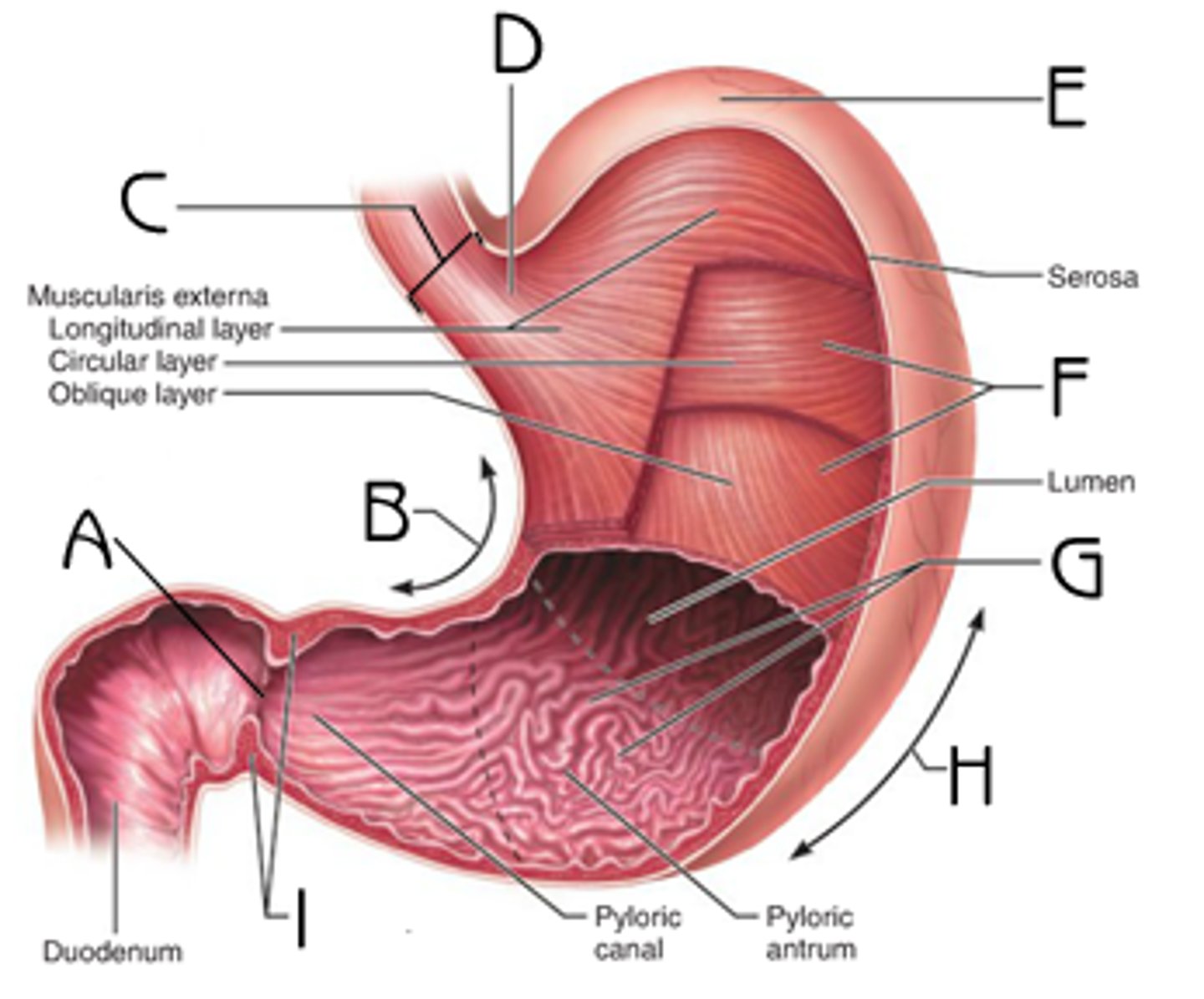
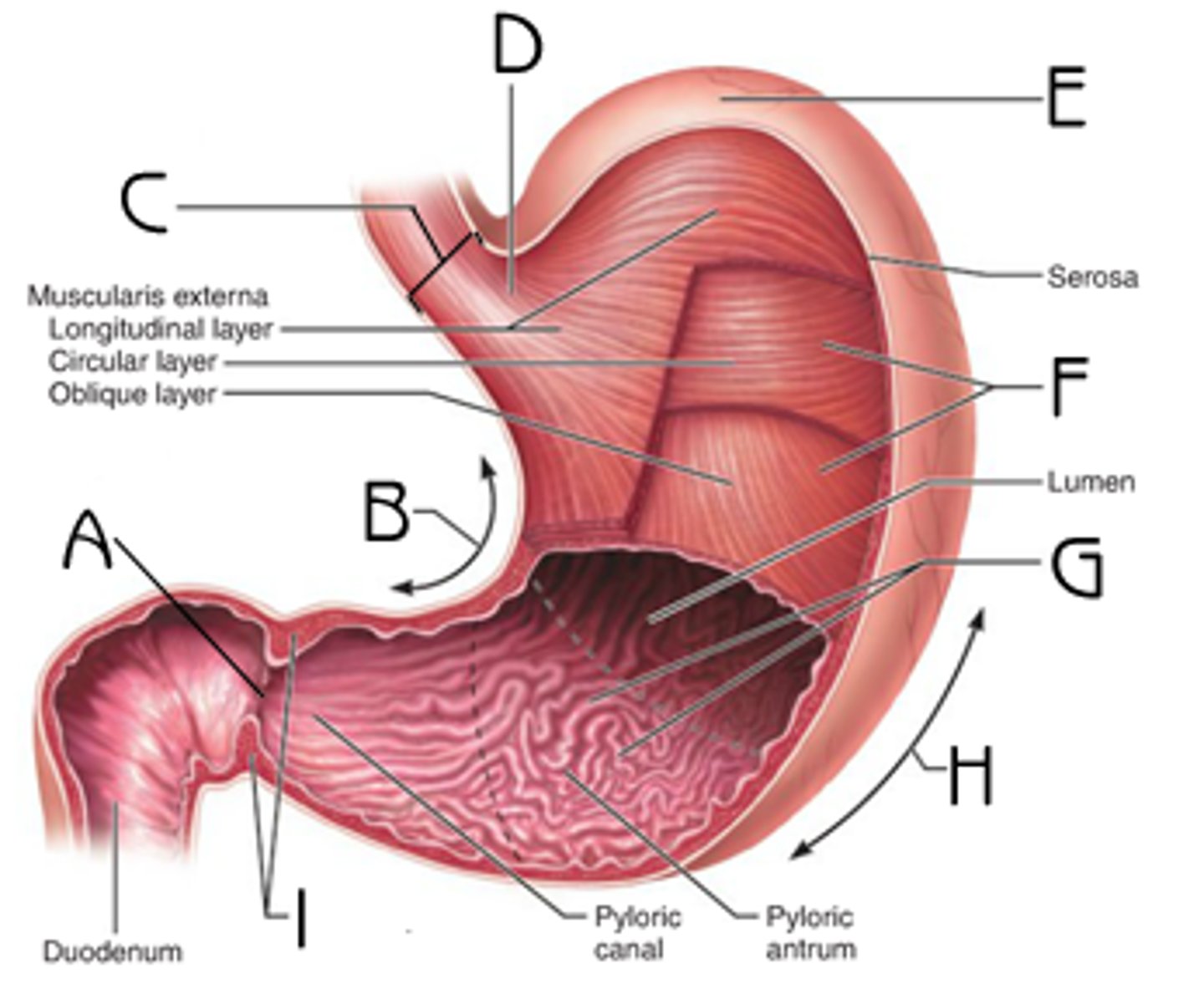
rugae of mucosa
name 12
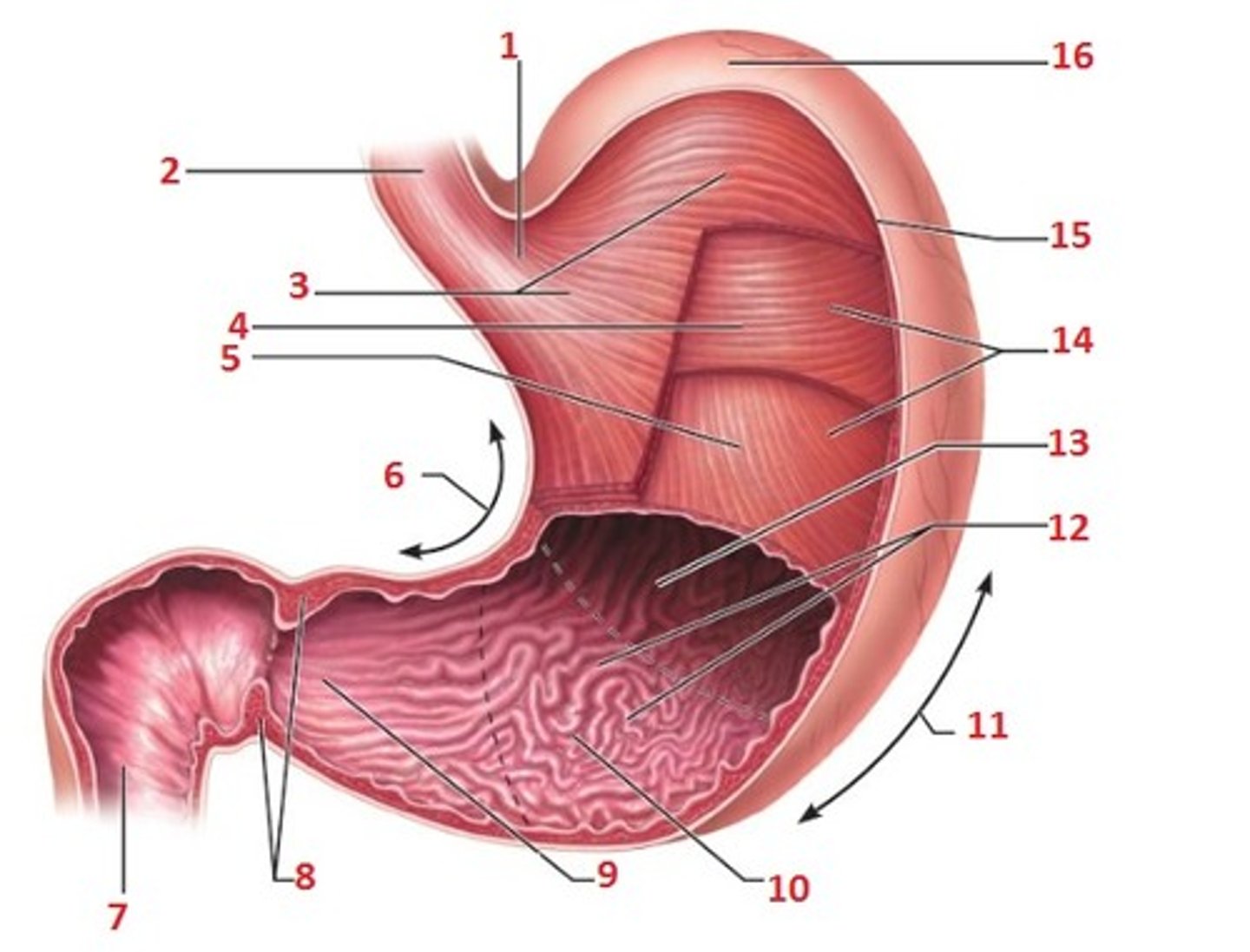
pyloric sphincter (valve) at pylorus
name this
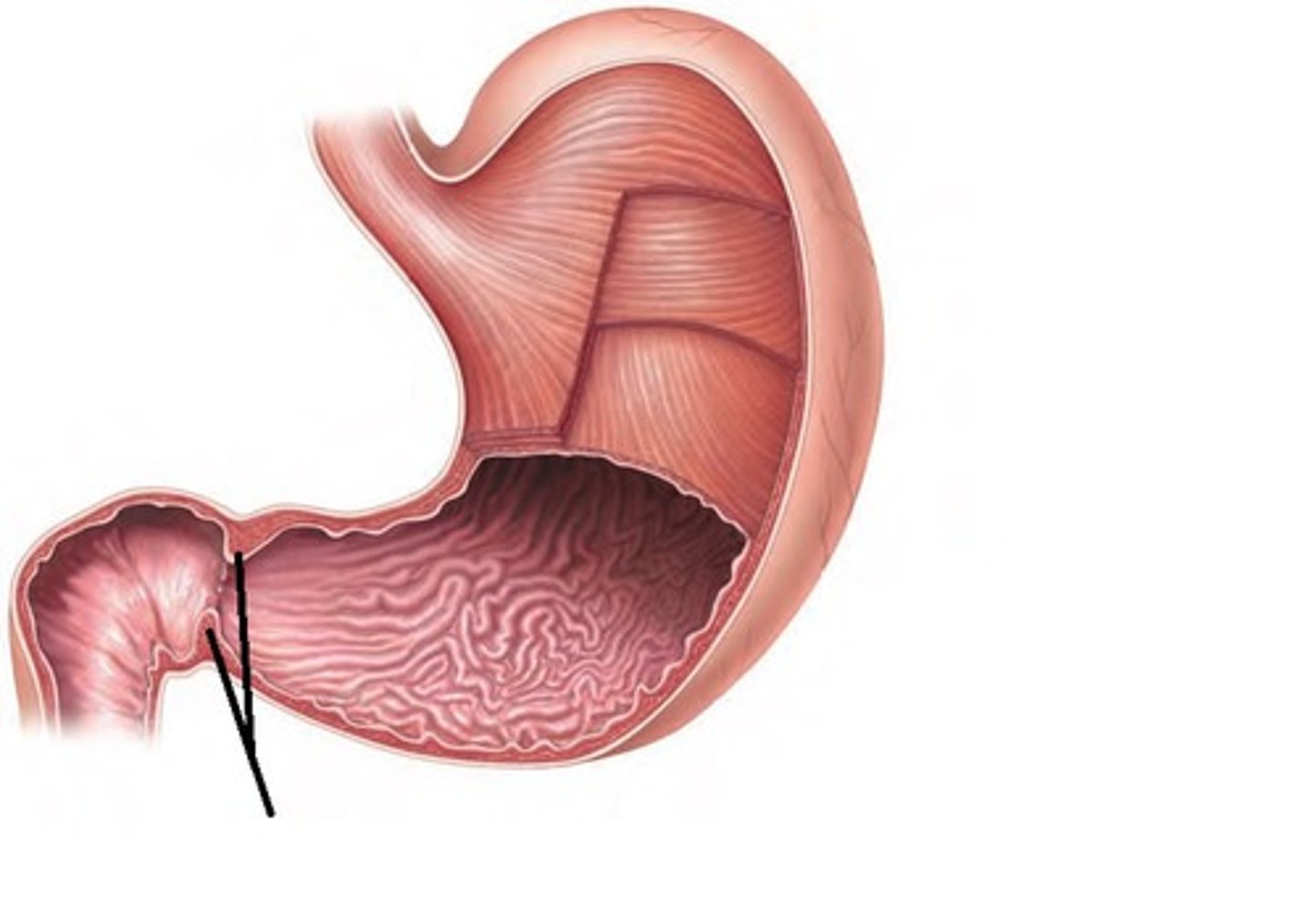
muscularis externa
name this
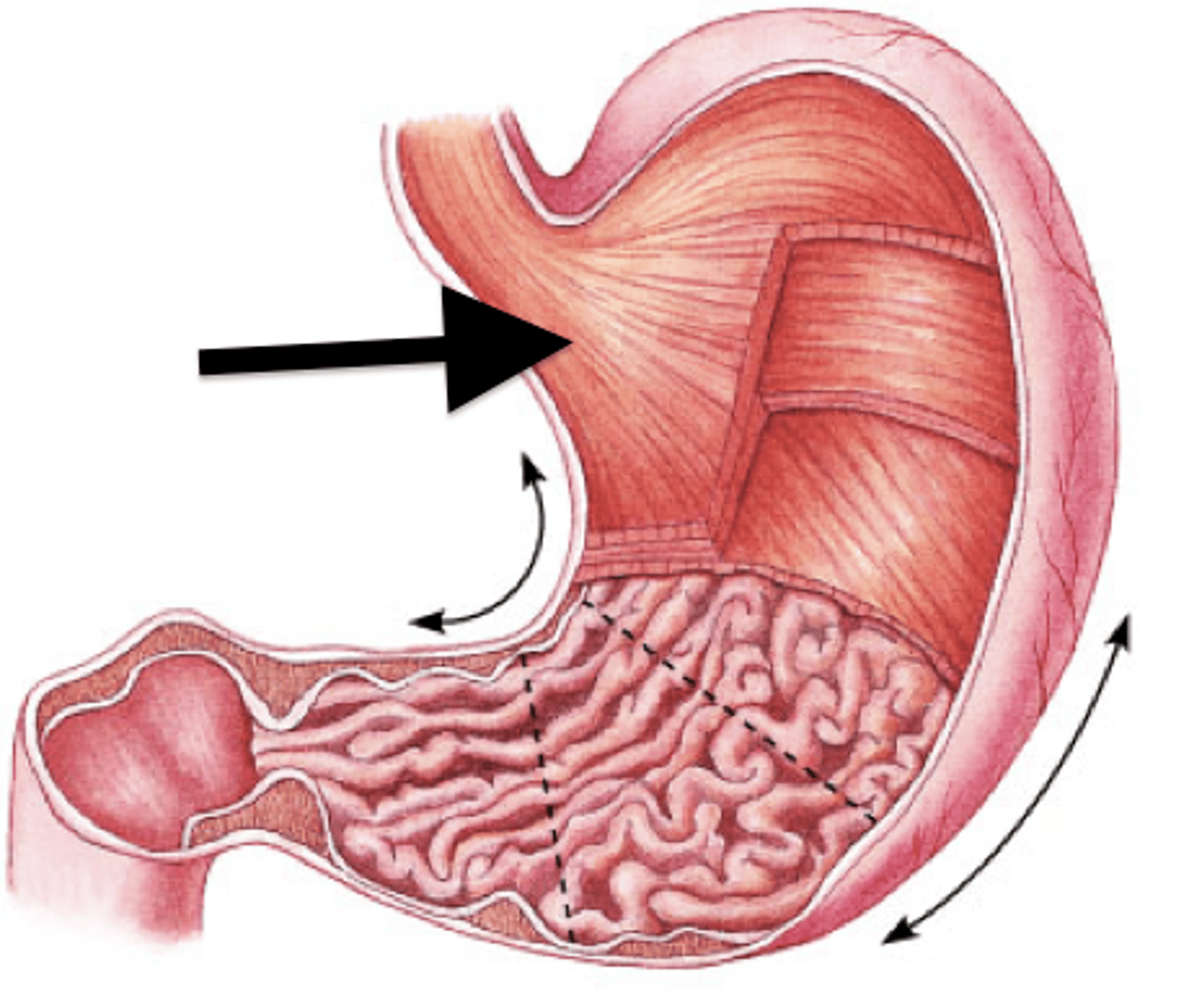
mucous cells
secrete mucus with coats and protects the stomach lining
parietal cell
secrete HCl- important for protein digestion, and intrisnic factor- vitmain B12 absorption (found in the stomach)
chief cells
secrete pepsinogen - important for protein digestion
endocrine cells
secrete gastrin - important for hunger response
greater curvature
F
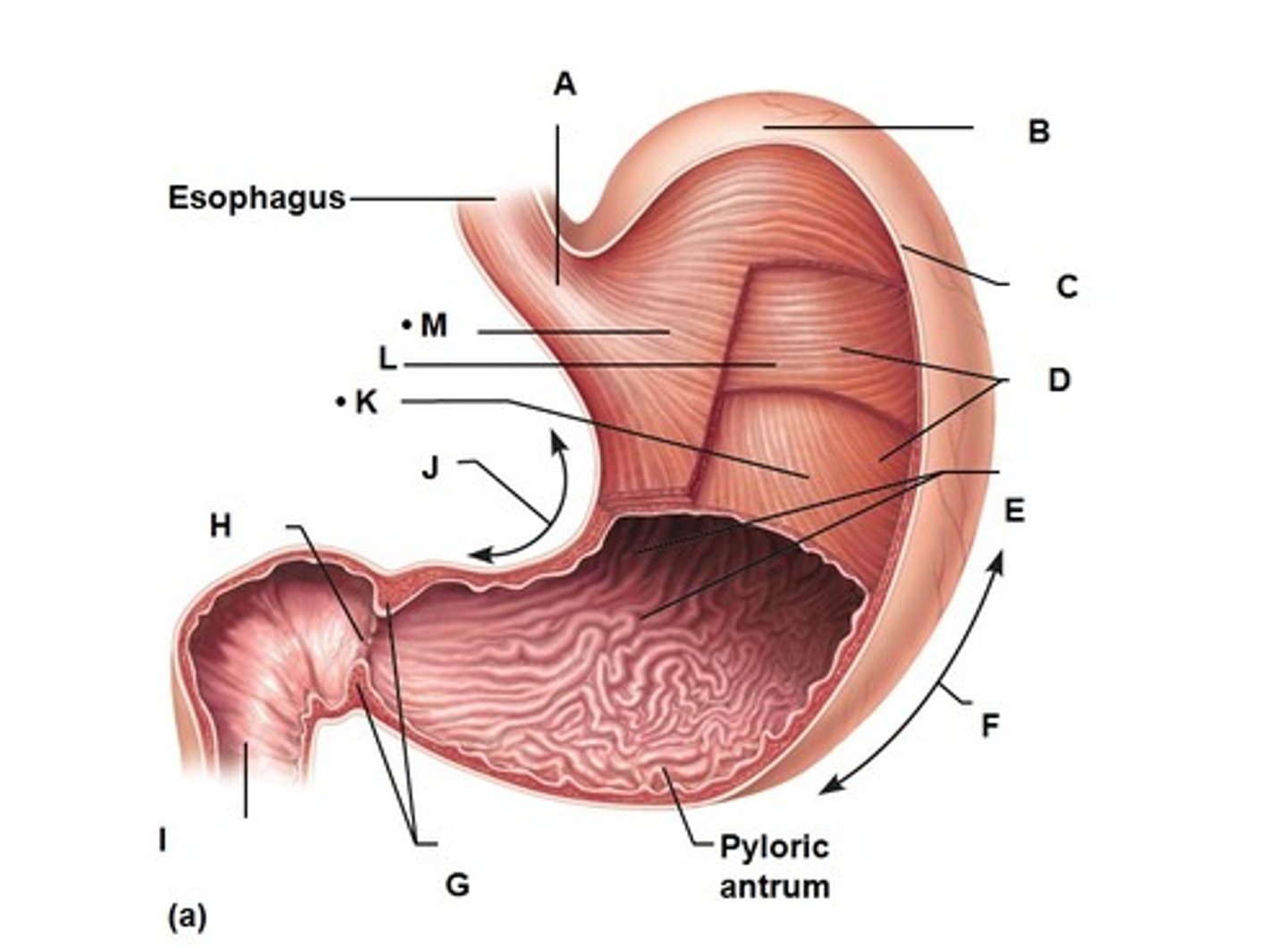
lesser curvature
B
rugae
Folds = _______ -> increases surface area, contain gastric pits
churning action
Muscularis layer - has an added oblique layer to add to the _____________ of the stomach
simple columnar epithelium
Mucosa is composed of
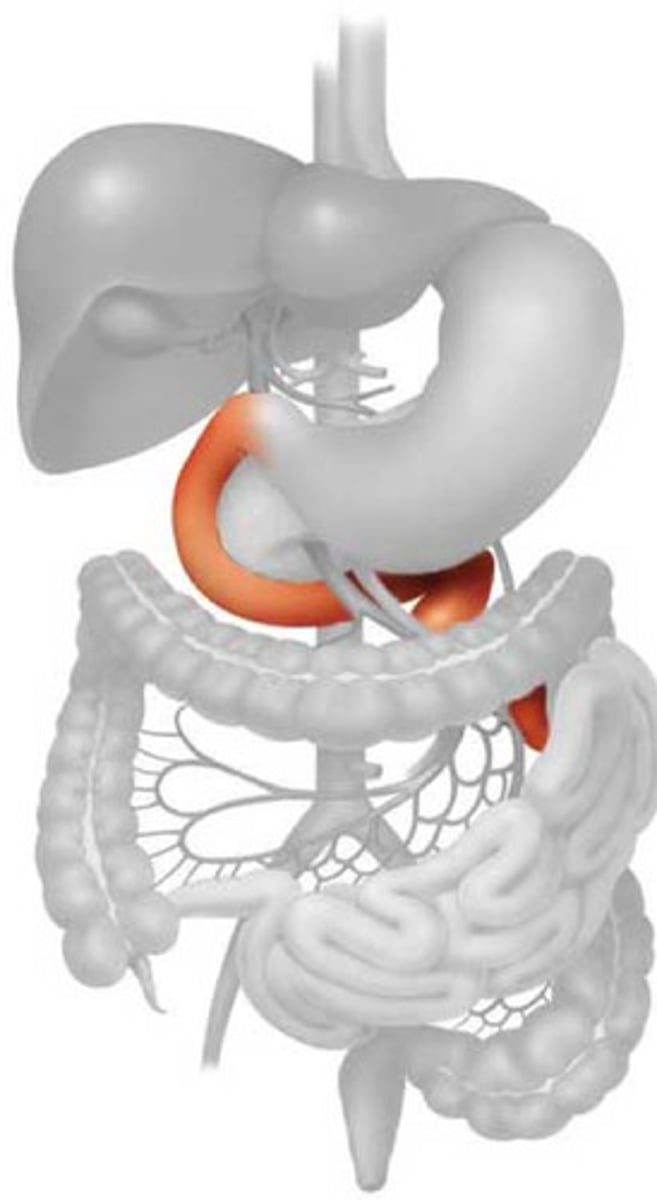
duodenum
name this (digestion and absorption)
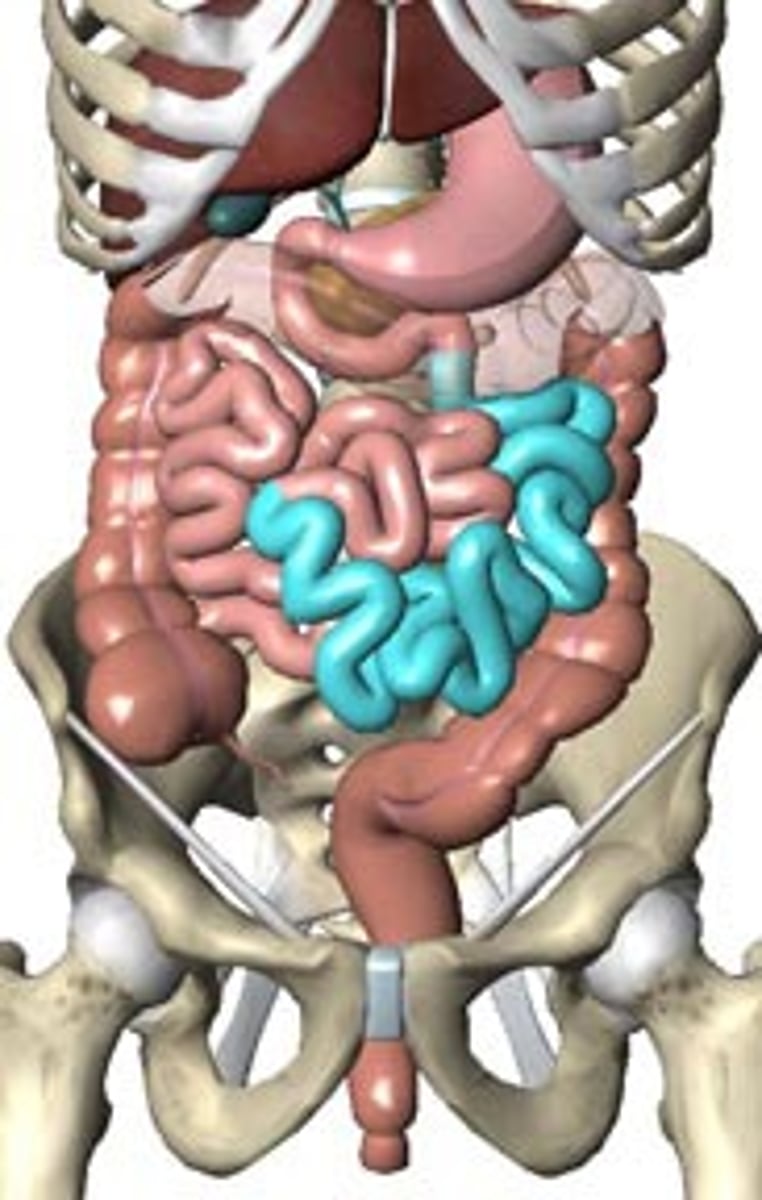
jejunum
name this (digestion and absorption)
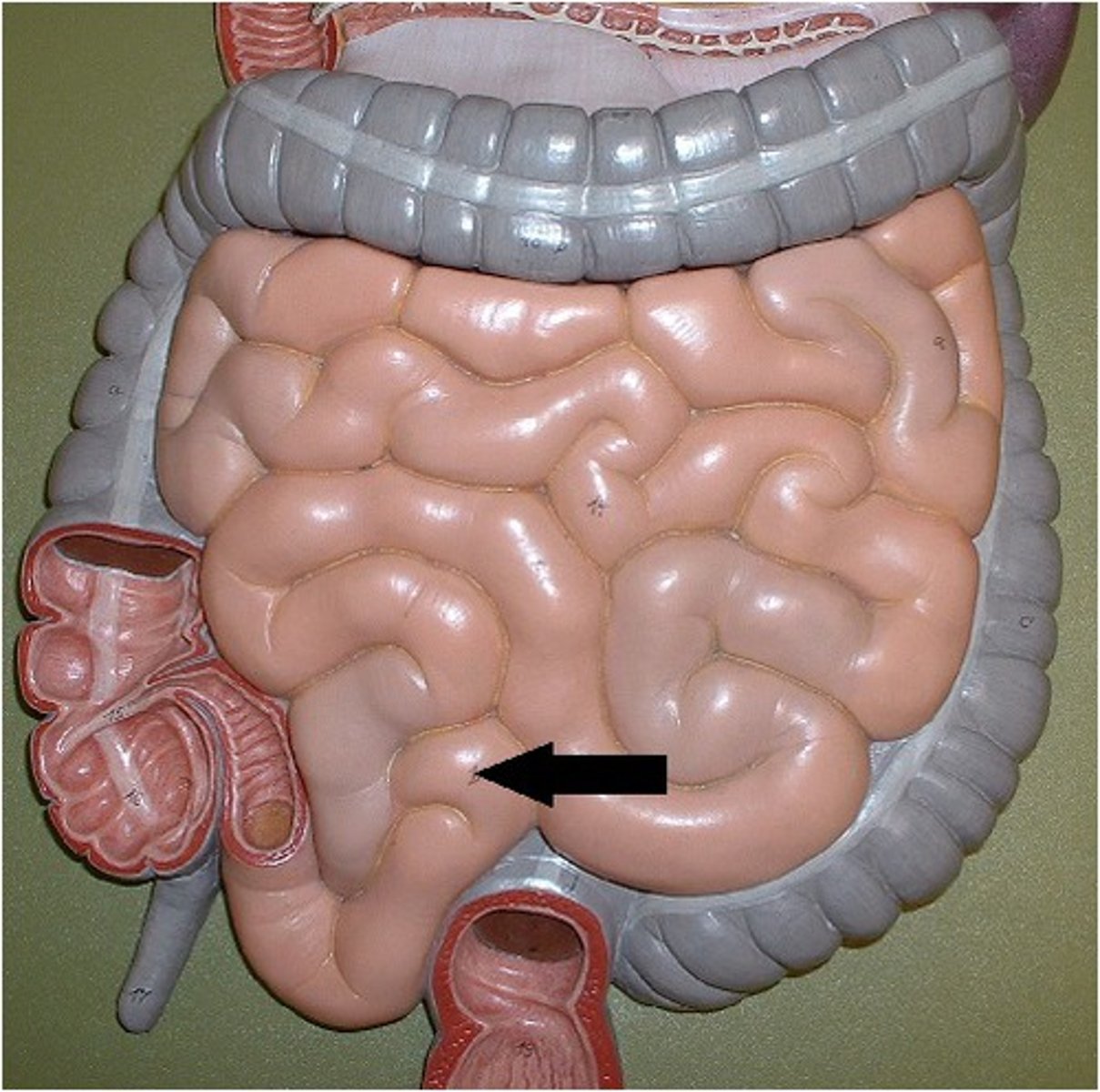
ileum
name this (compaction and absorption)
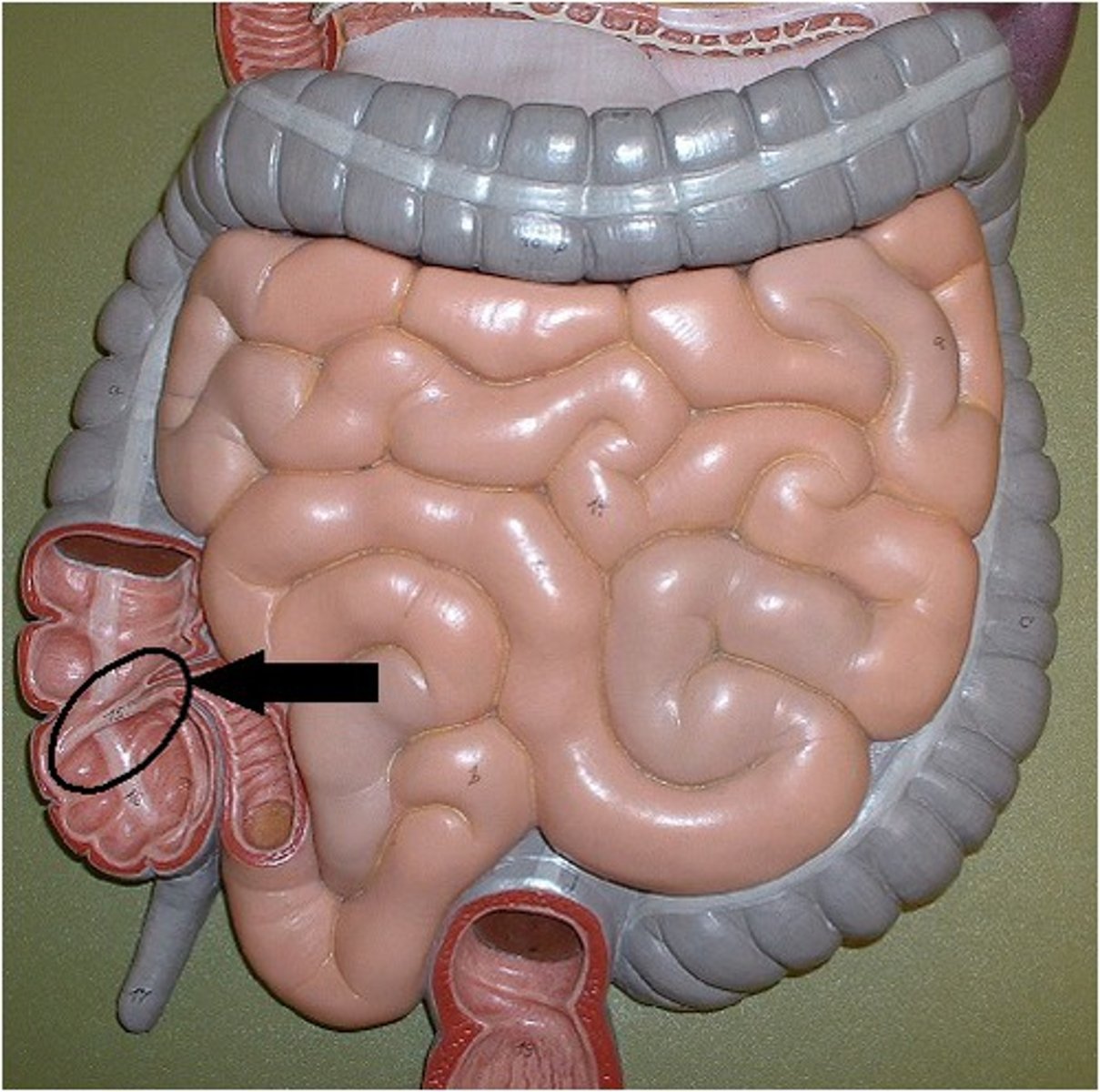
ileocecal valve
name this
Surface area
plicae circularis (circular folds of the mucosa and submucosa in the small intestine) , villi, microvilli increase
brush bordem
hydrolytic enzymes bound to microvilli and used in digestion
villi
Carbohydrates, lipids, and proteins are broken down to their componentmolecules and absorbed through the
lacteals
Fats are absorbed into specialized lymphatic structures called
cecum
B
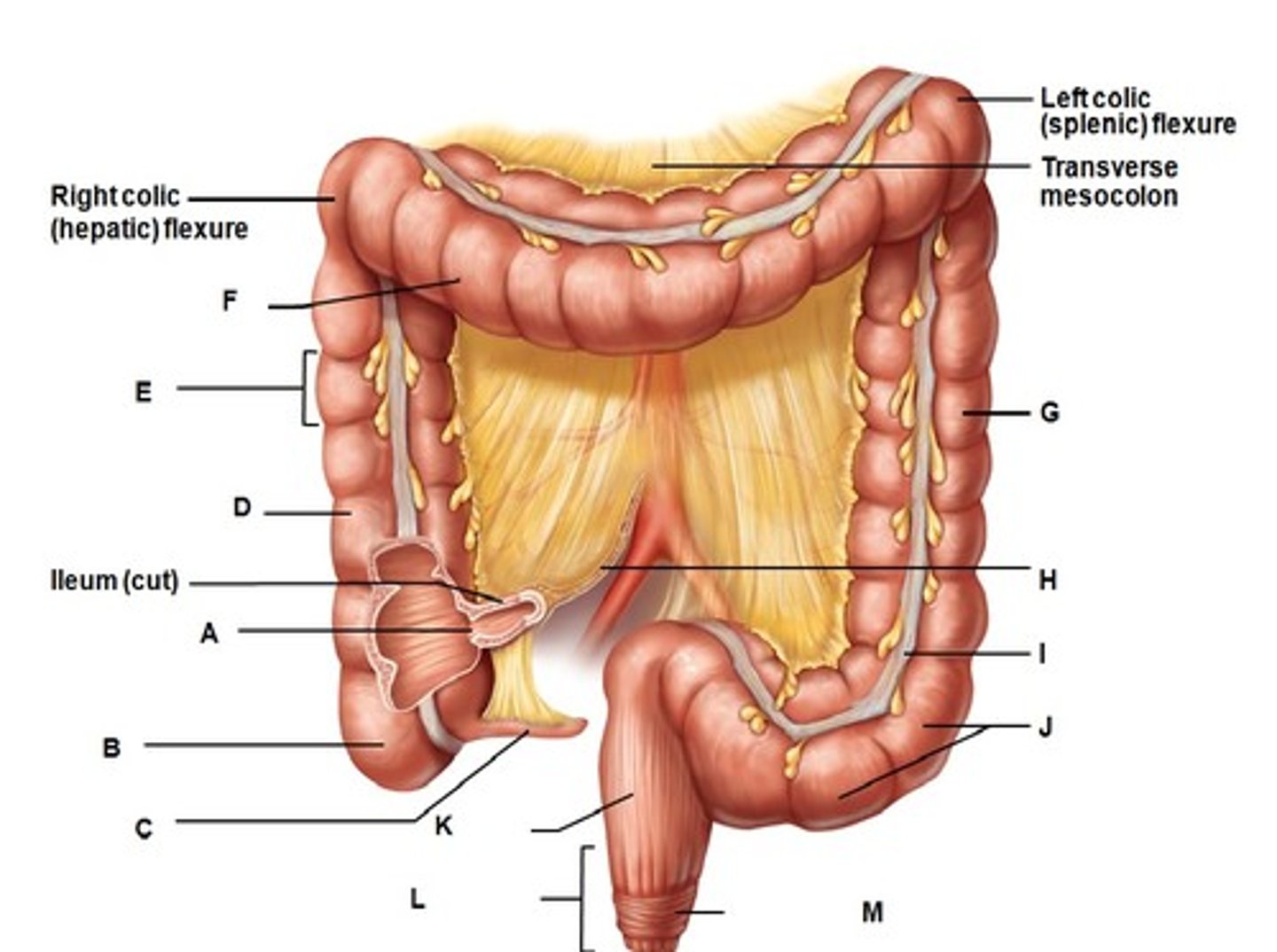
ileocecal valve
prevents food from moving back into the small intestine once it has entered the large intestine ( name A)
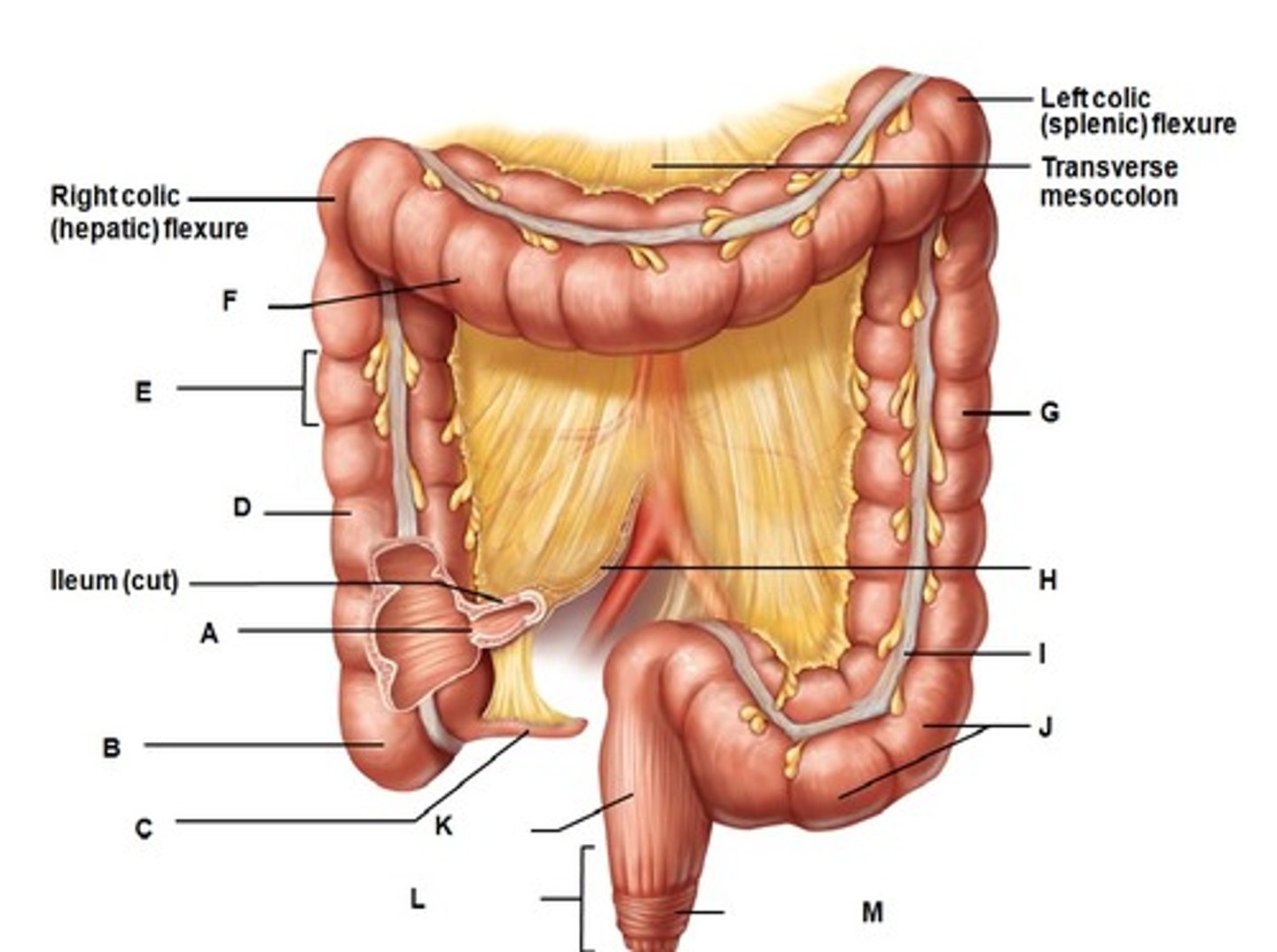
ascending colon
name D
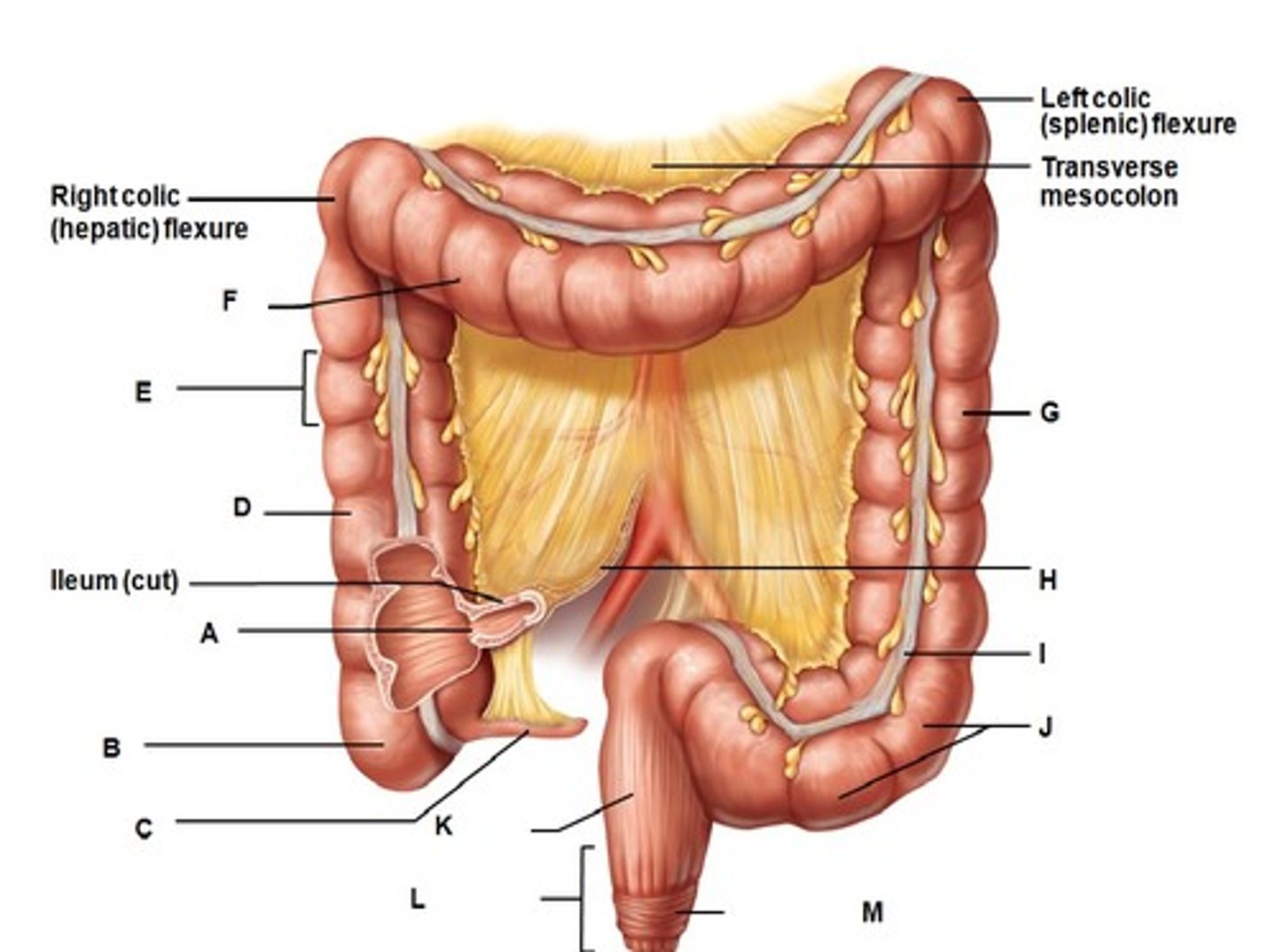
transverse colon
name F
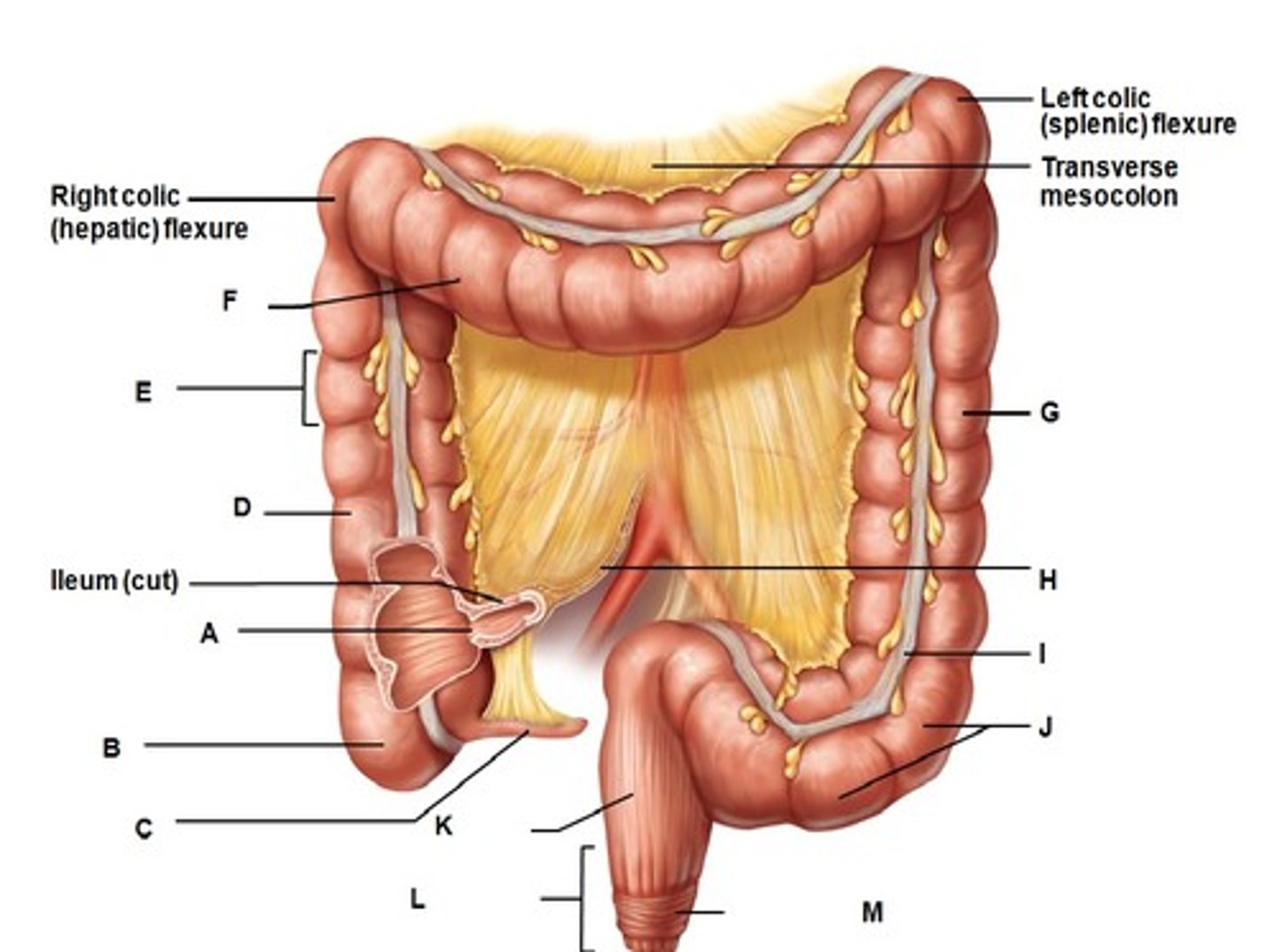
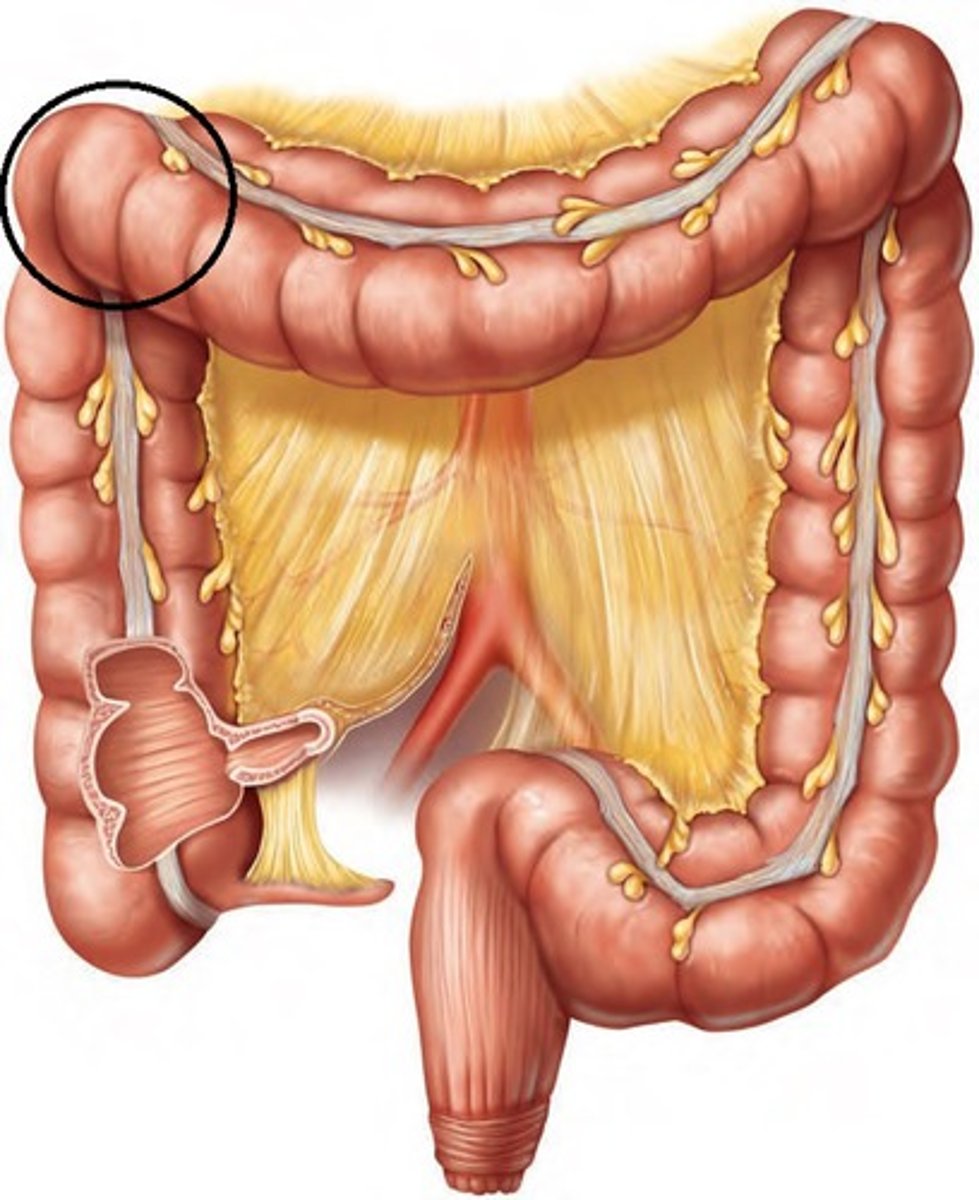
right colic (hepatic) flexure
name this
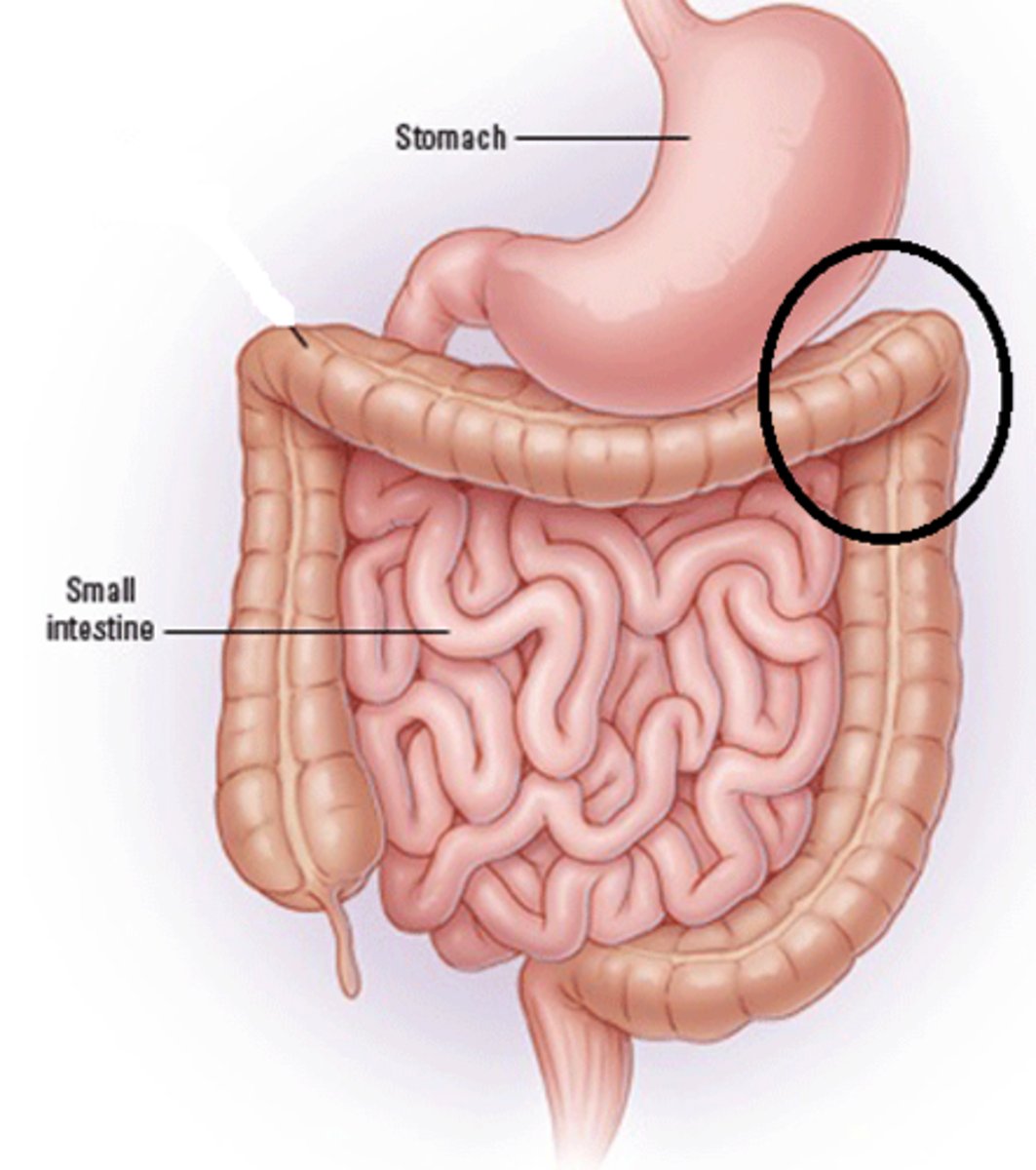
left colic (spleric) flexure
name this
descending colon
name G
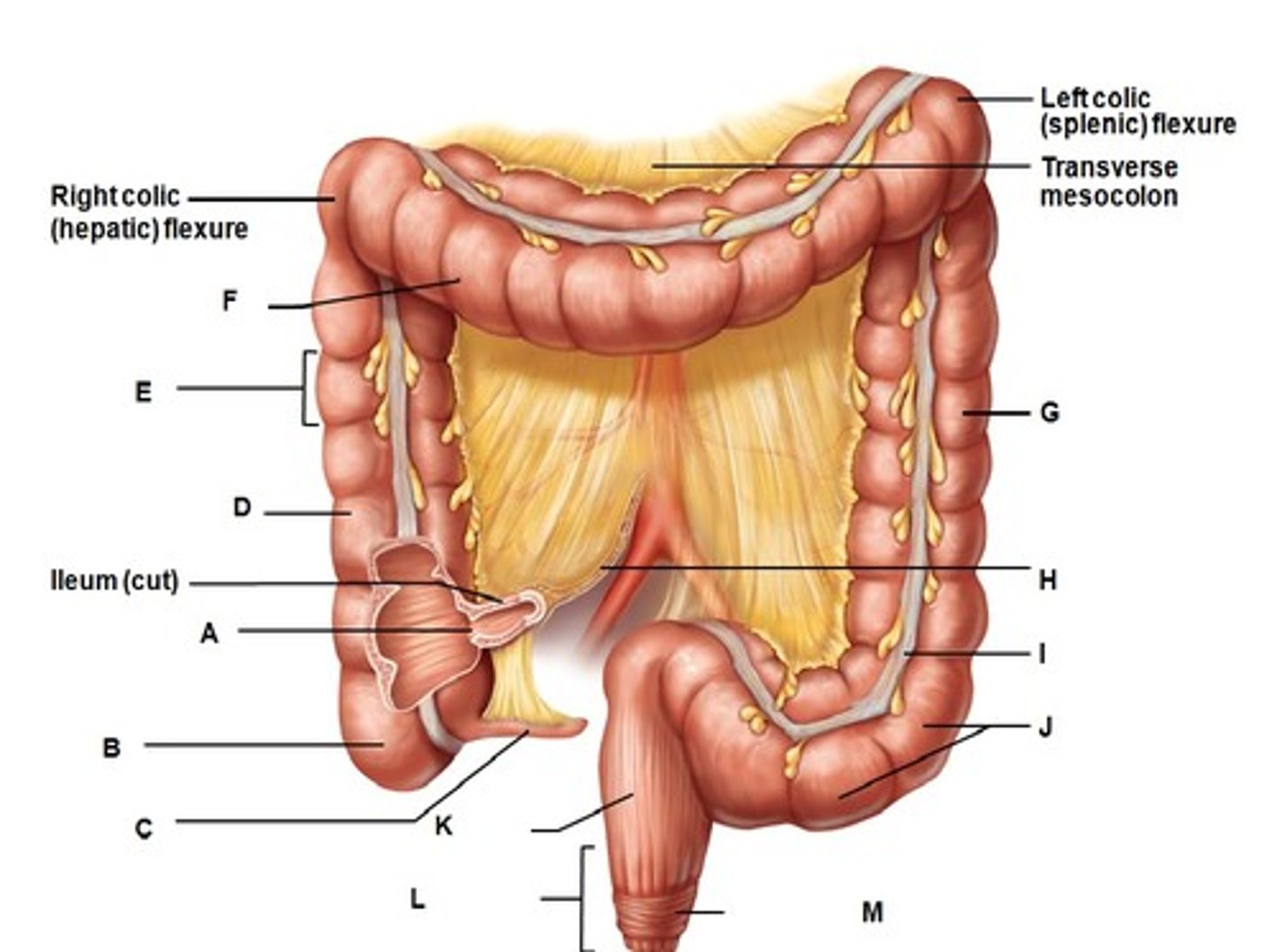
sigmoid colon
name K
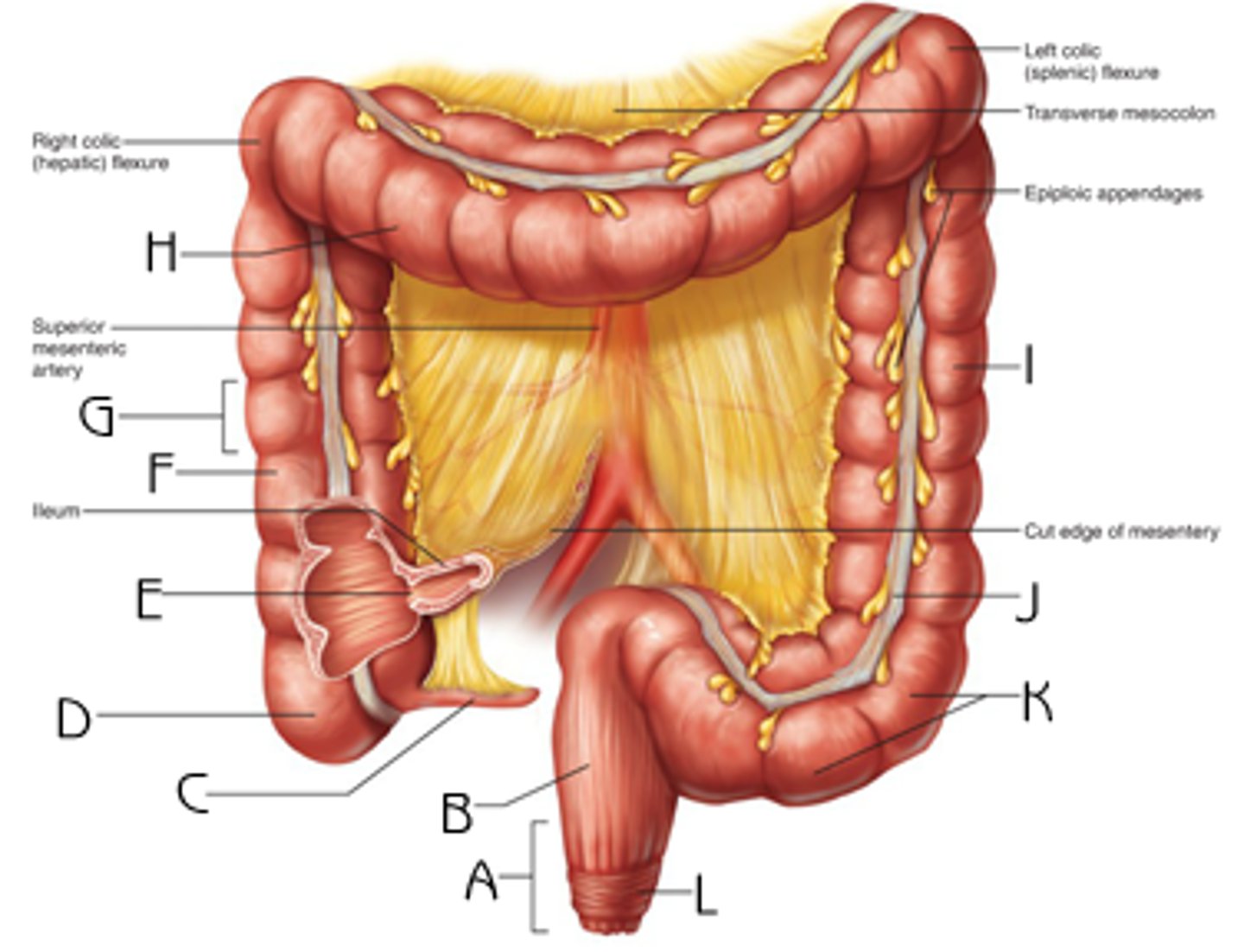
rectum
name B
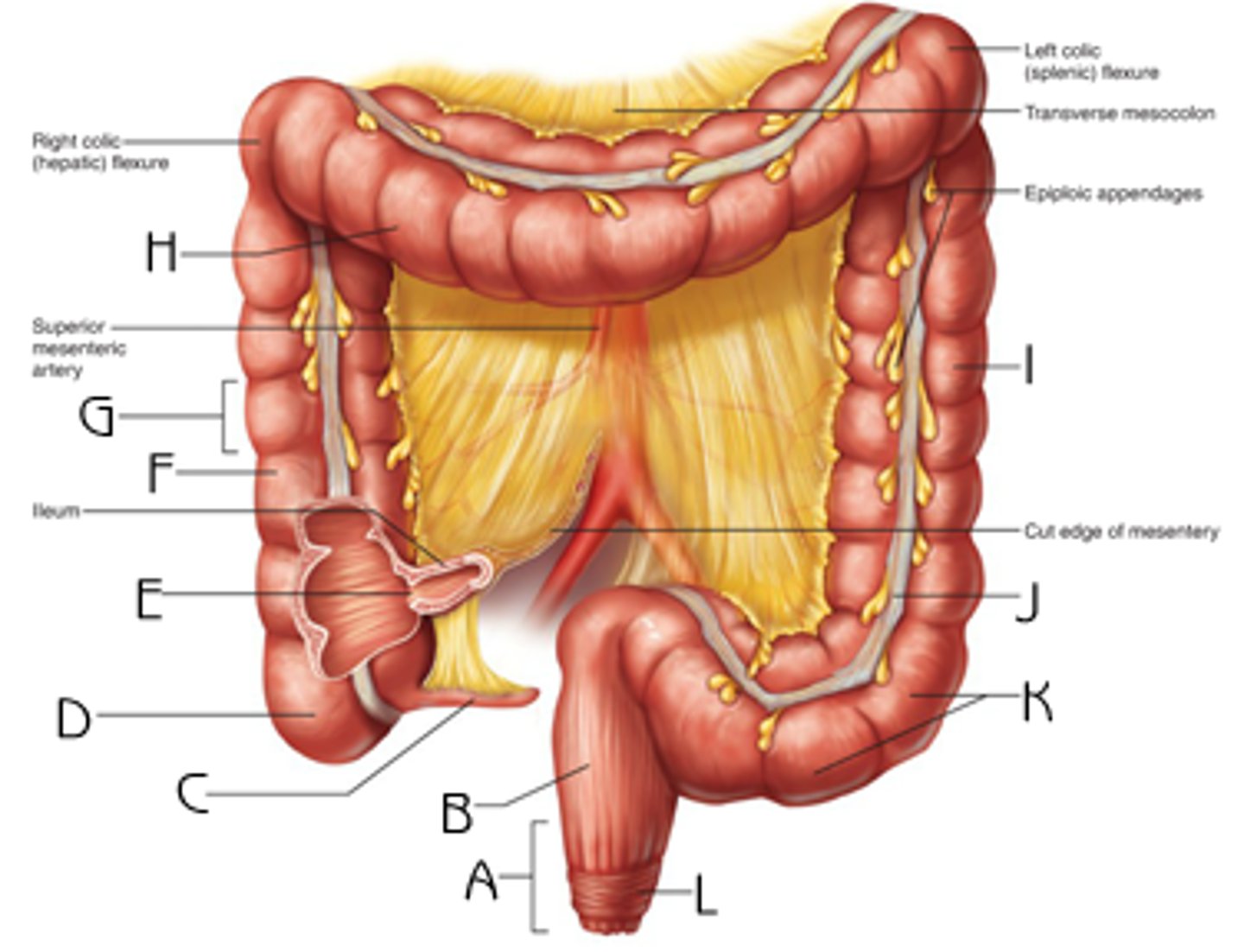
anal canal
name L
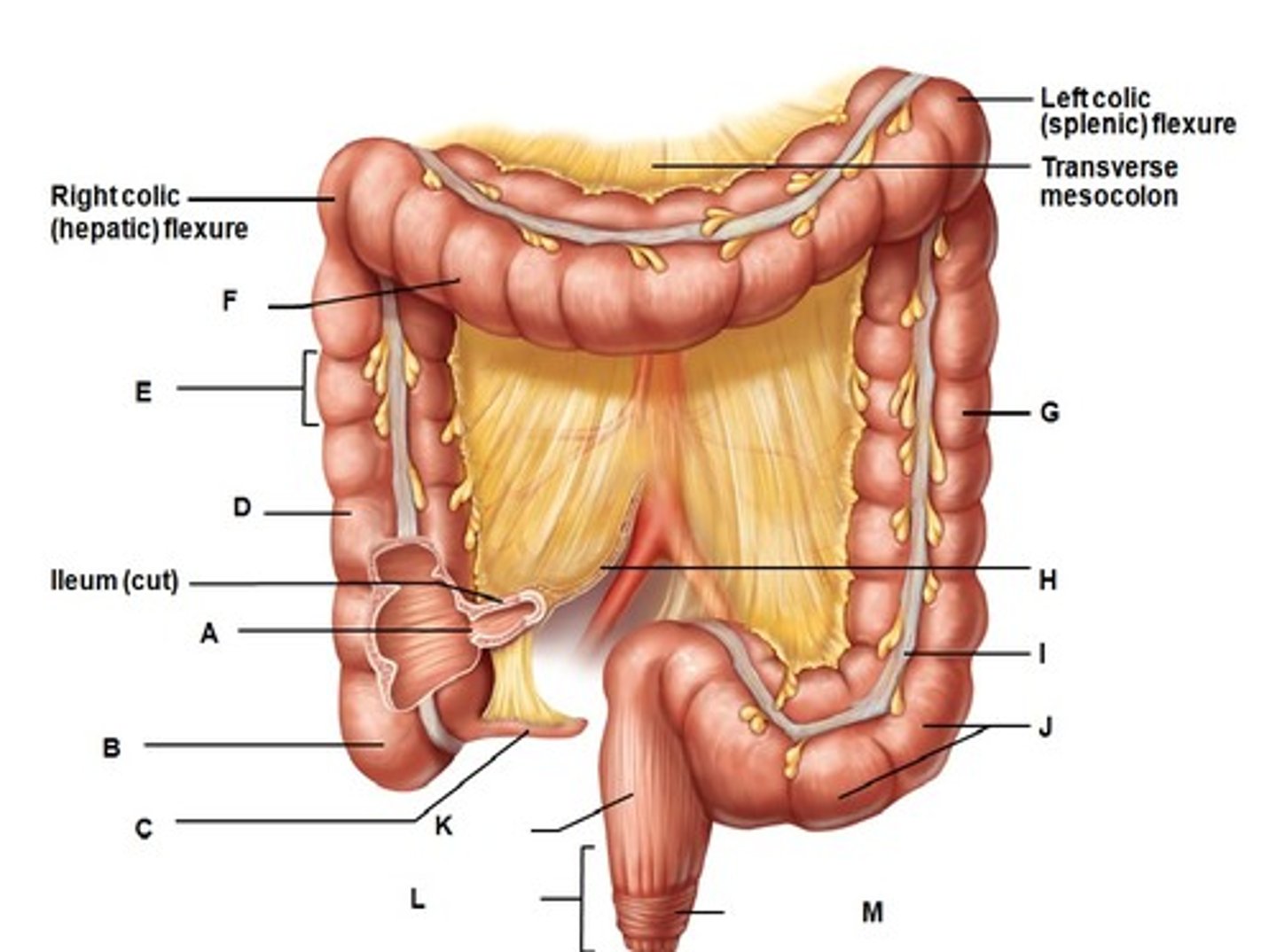
Cecum -> ascending colon -> hepatic flexure -> transverse colon -> splenic
flexure ->descending colon->sigmoid colon->rectum->anus
large intestine pathway
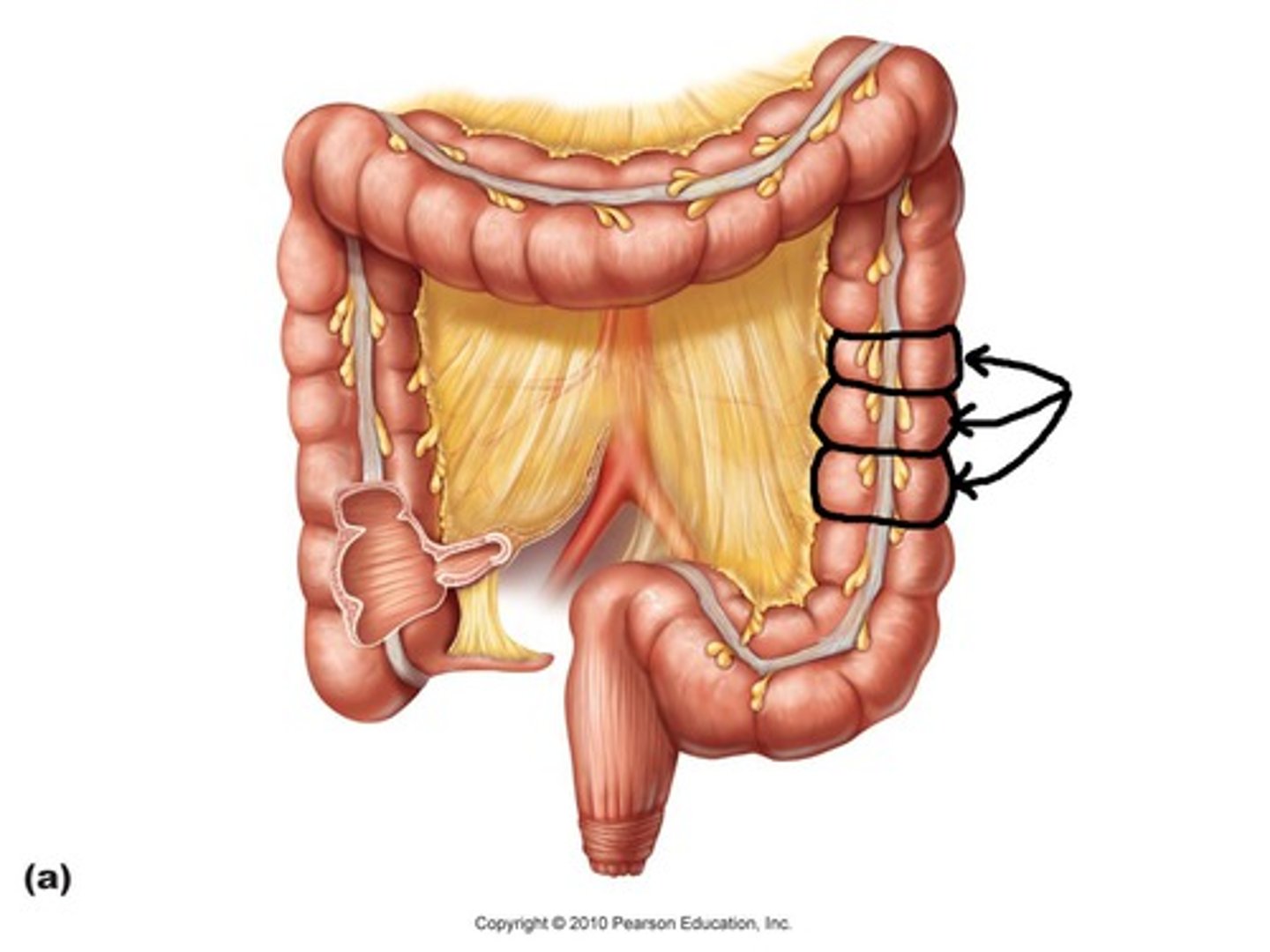
haustra
folds in large intenstine
function of large intesntine
*Consolidate and move unusable fecal material out of the body.
▪ Site of vitamin B and K manufacture by bacteria.
▪ Reclaims most water and some electrolytes from undigested food
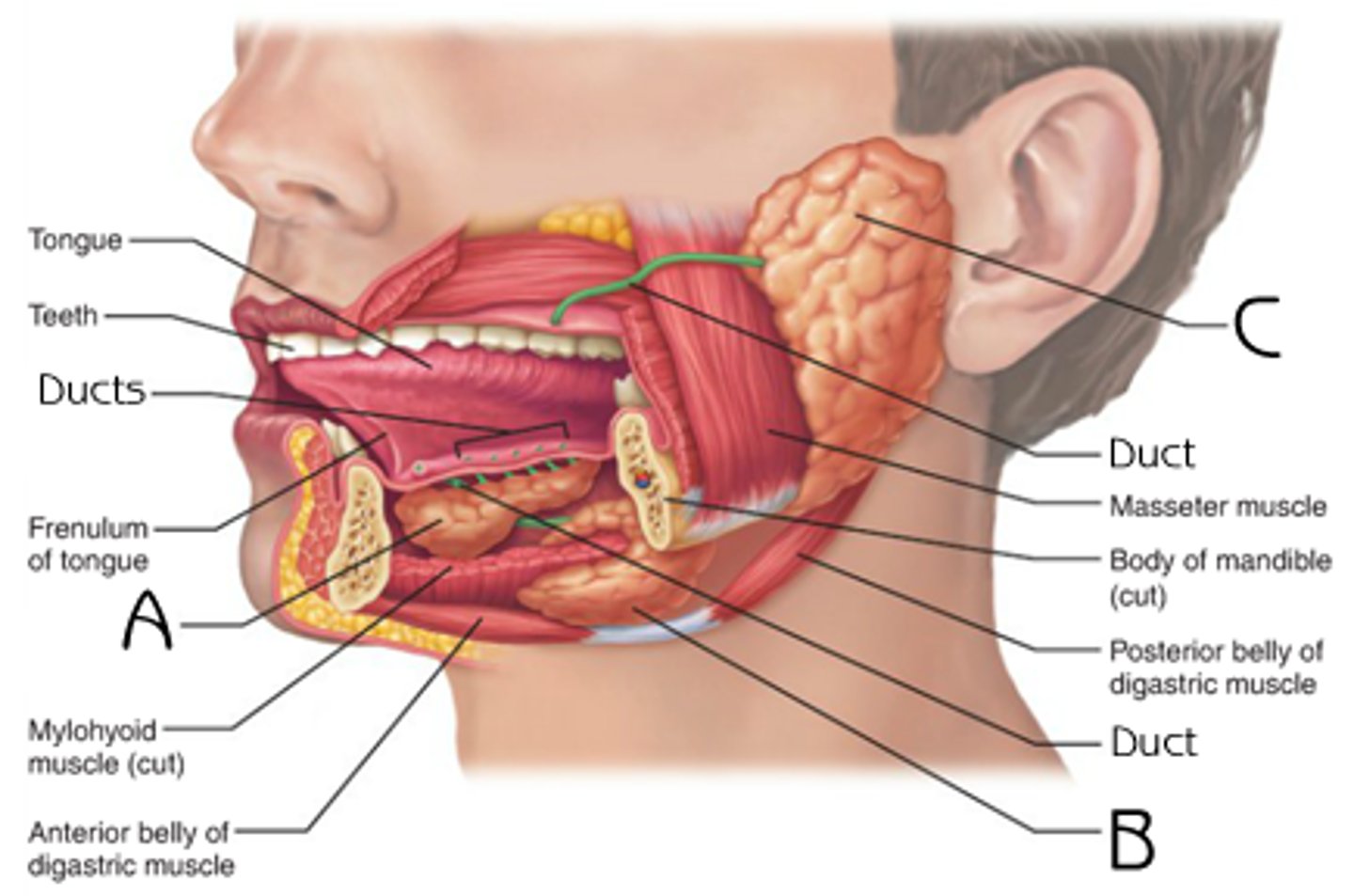
parotid gland
name C (anterior to ear, empties above second molar)
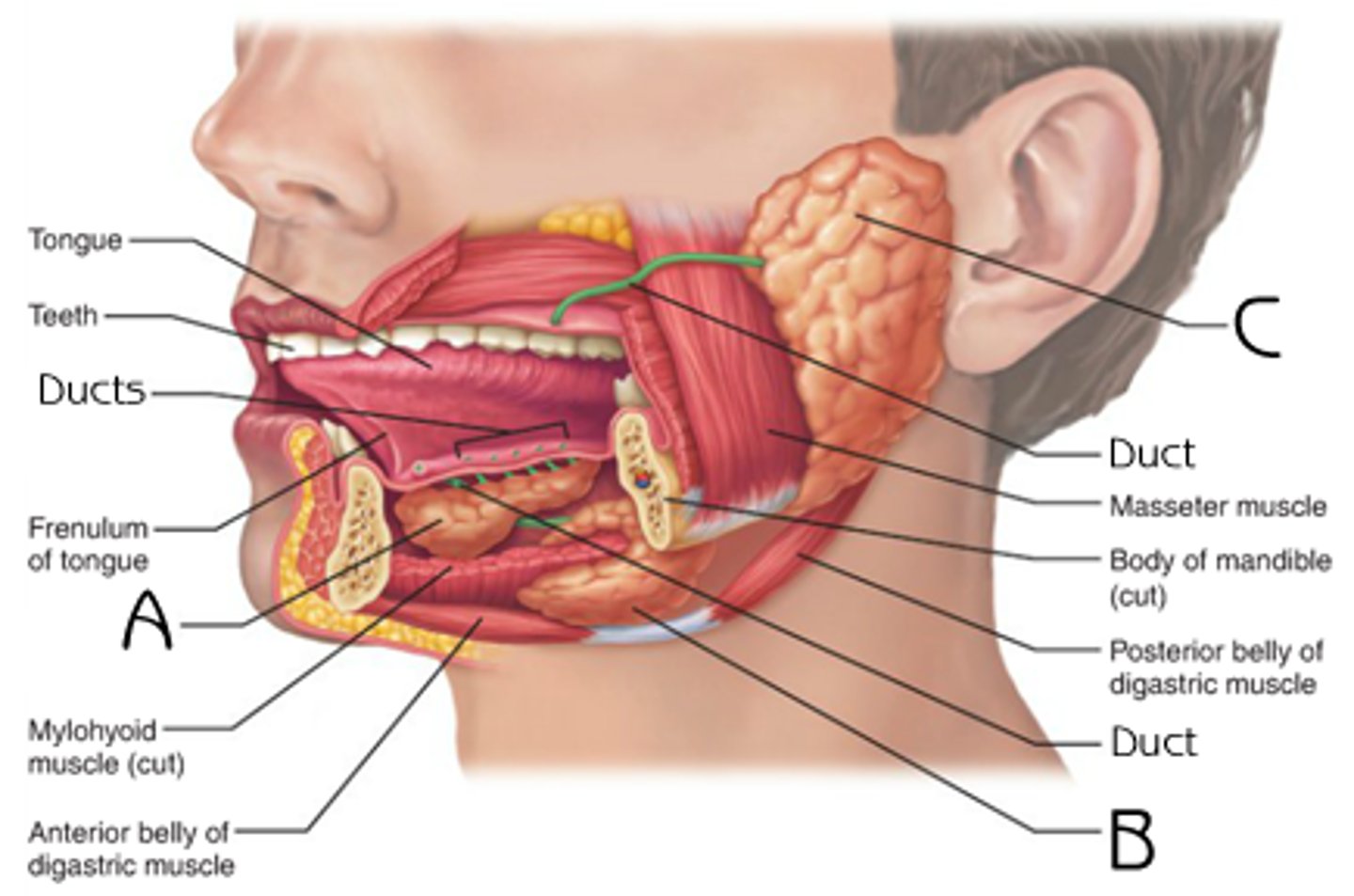
submandibular gland
name B (nside arch of the mandible, empties under tongue)
sublingual gland
name this (under the tongue - empties under the tongue)
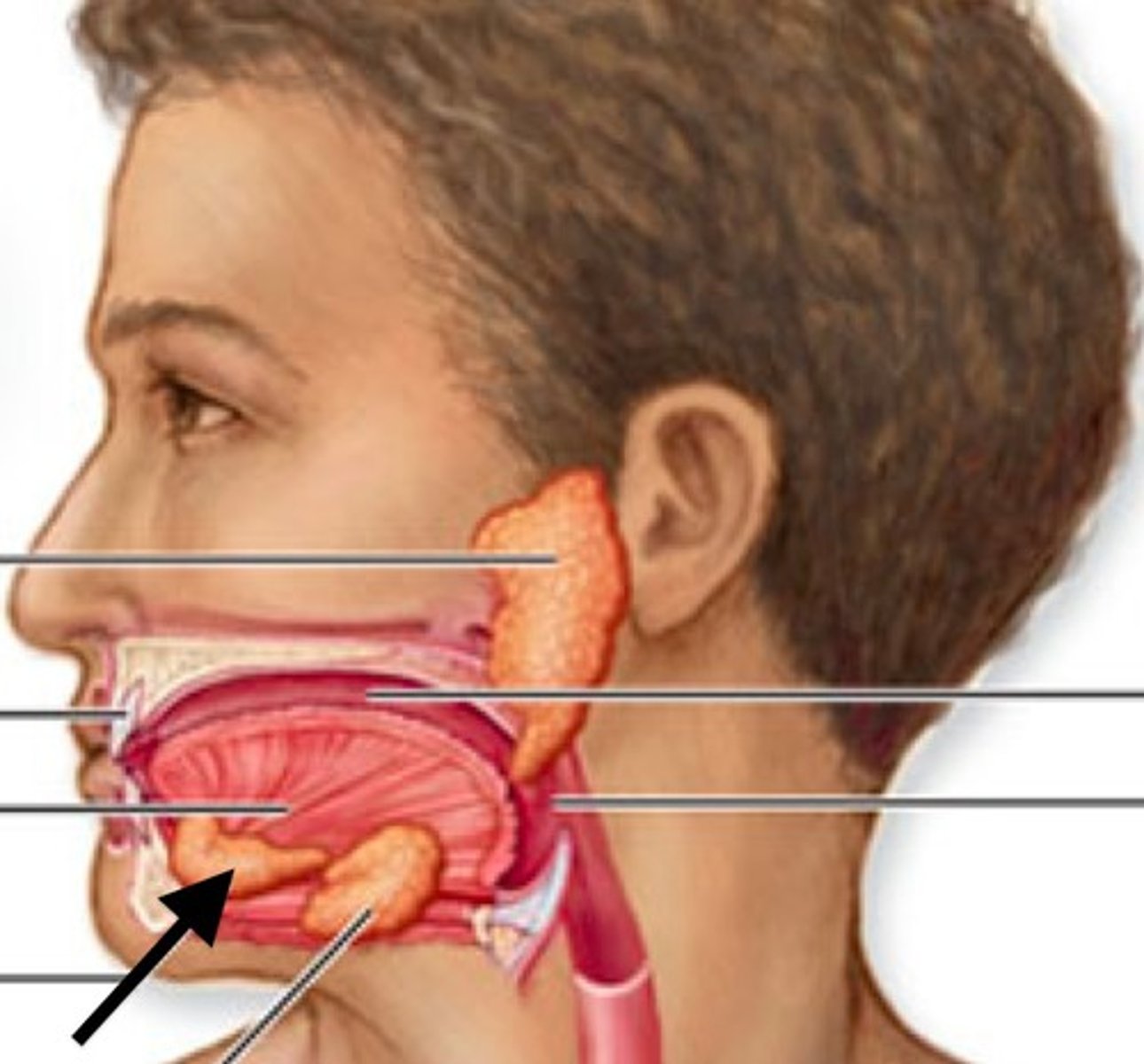
mucin and salivary amylase
sublingual gland secrete. ______ (lubricates food) and ______ which begins the digestion of starches (carbs)
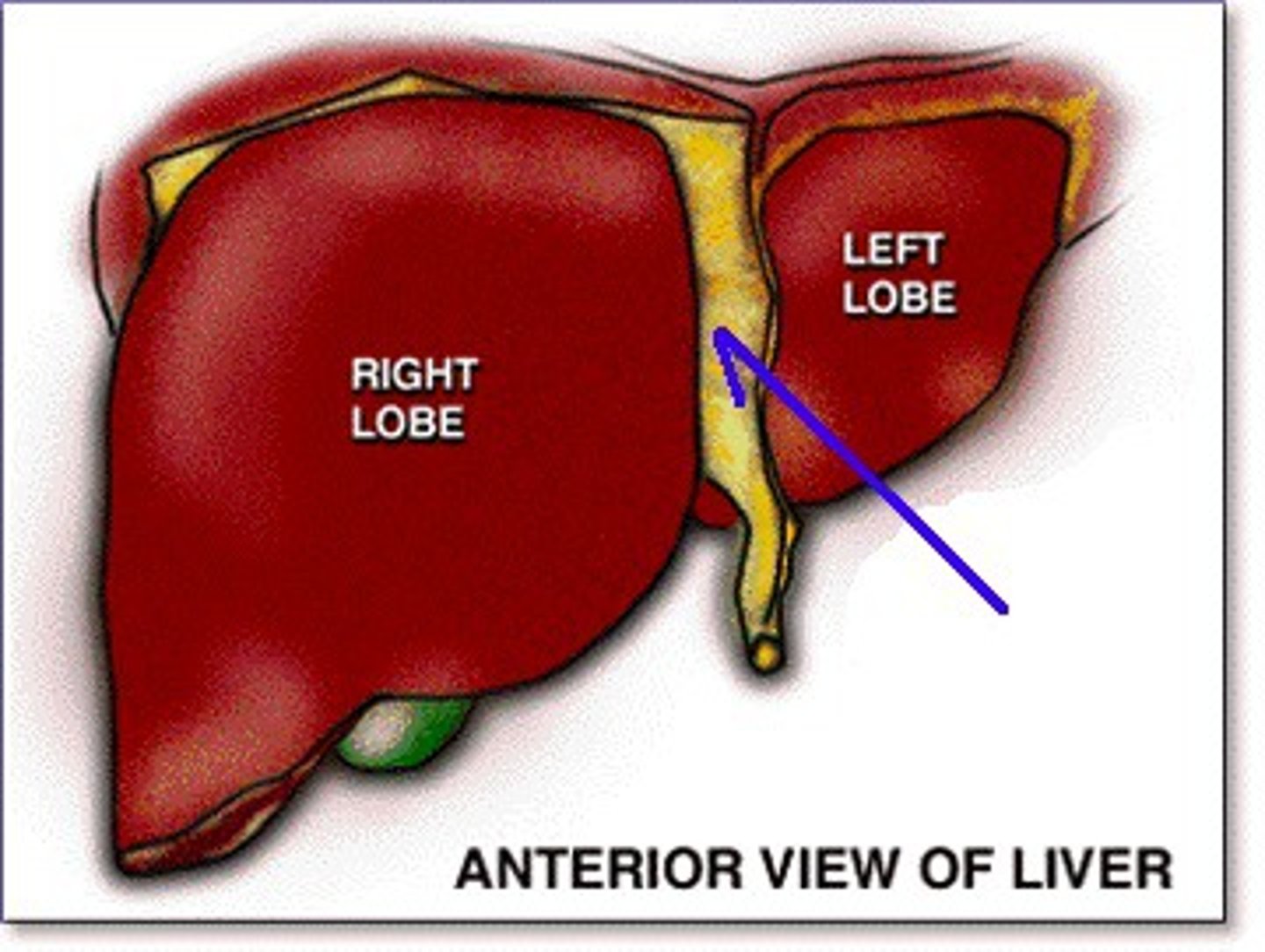
right lobe of liver
name A
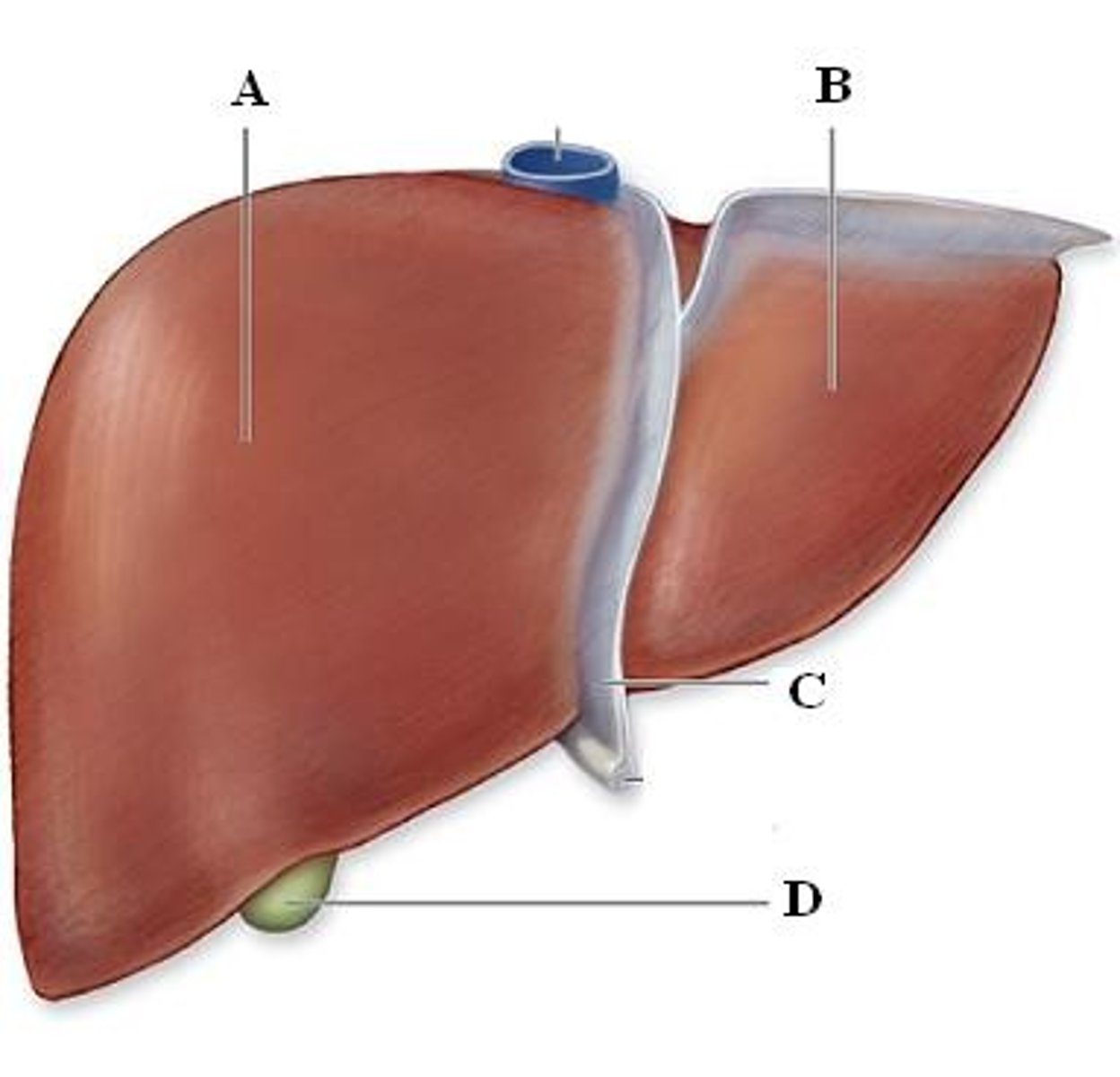
left lobe of liver
name B
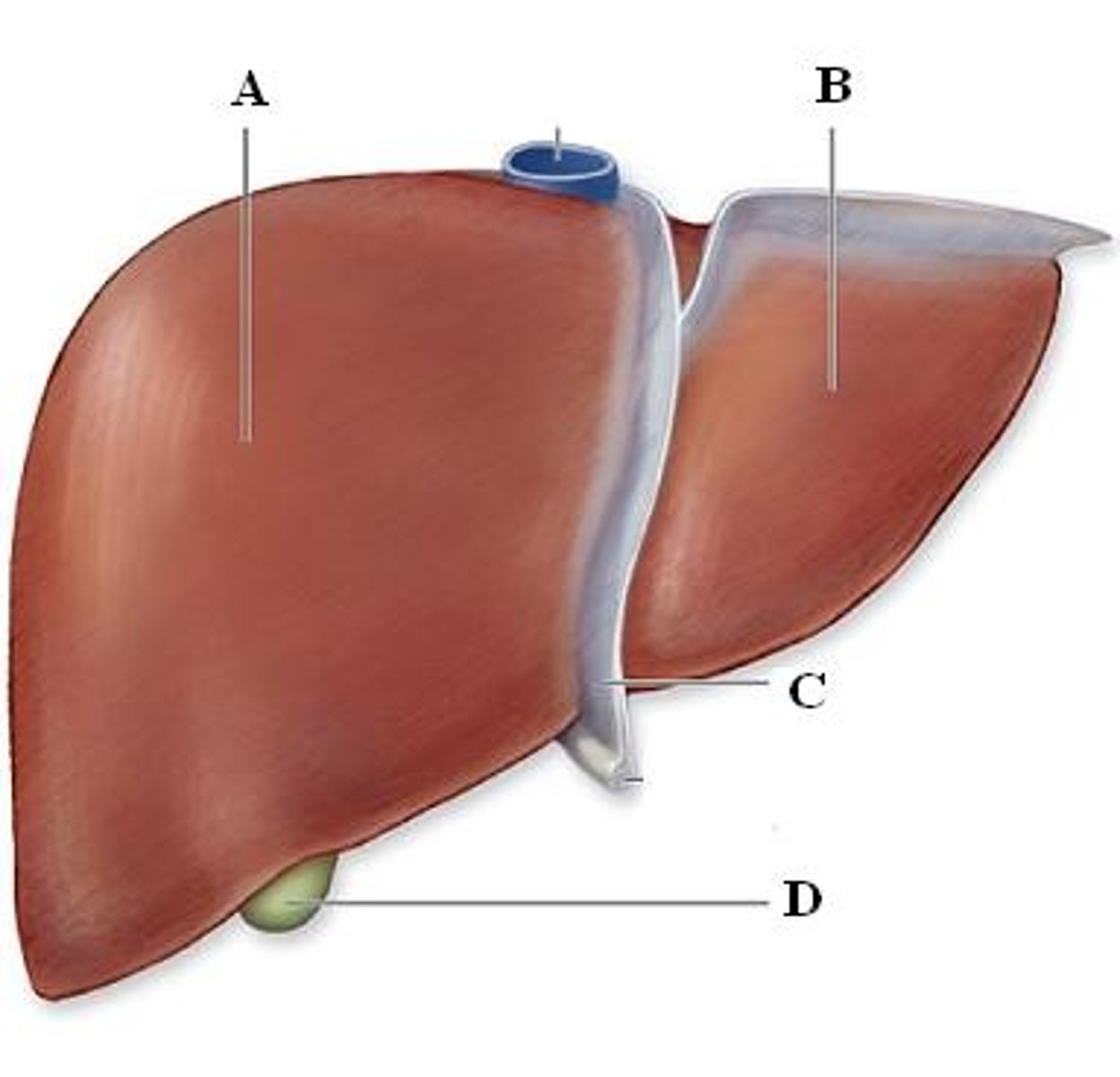
falciform ligament
name this
bile, fat
the liver manufactures _____ which emulsifies _____
hepatic portal vein
liver recieves blood from digestive organs via the
stores, concentrates bile
gall bladder function
cystic duct, hepatic duct, common bile duct
Releases bile through __________ which joins the ________ from the liver and makes the ______________
gallstones
Clinically - 5Fs fair, fat, forty, female, fertile - perfect conditions for
pancreas
Lies posterior to stomach in the retroperitoneal space with its head projecting near the duodenum. Pancreatic duct
Produces many important enzymes that are used in the SI.
pancreatic duct
pathway for pancreatic enzymes, joins the common bile duct as the hepatopancreatic ampulla (ampulla of Vater)
hepatopancreatic sphincter
From the ampulla there is a sphincter that allows the digestive products into the SI called the _____________________ (sphincter of Oddi)
major duodenal papilla
The ________________ is the opening into the SI.(there is sometimes a minoras well)
pancreatitis
Blockage of any of the pancreas structures mentioned beforecan lead to digestion of pancreas by its own enzymes =
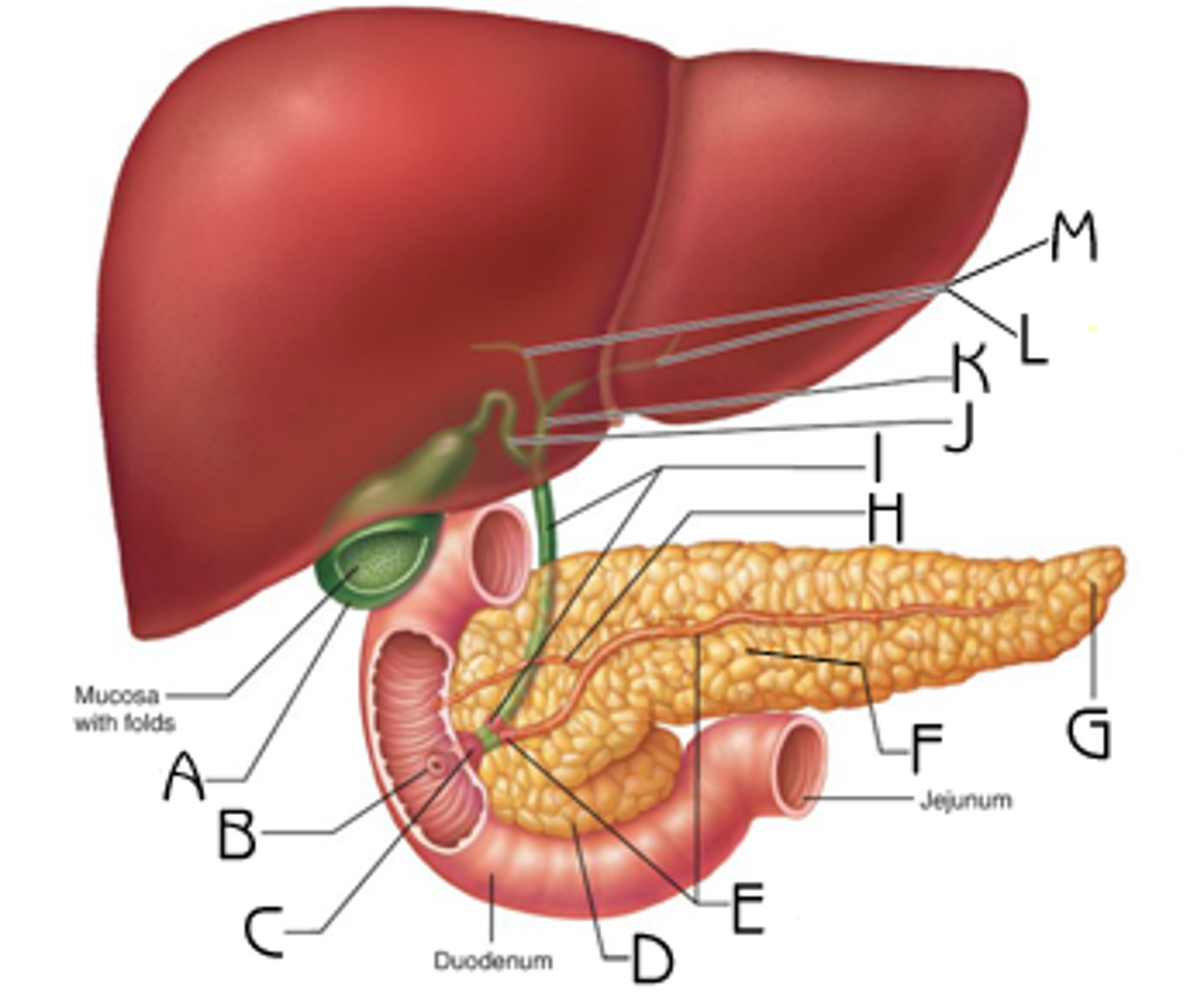
gallbladder
name A
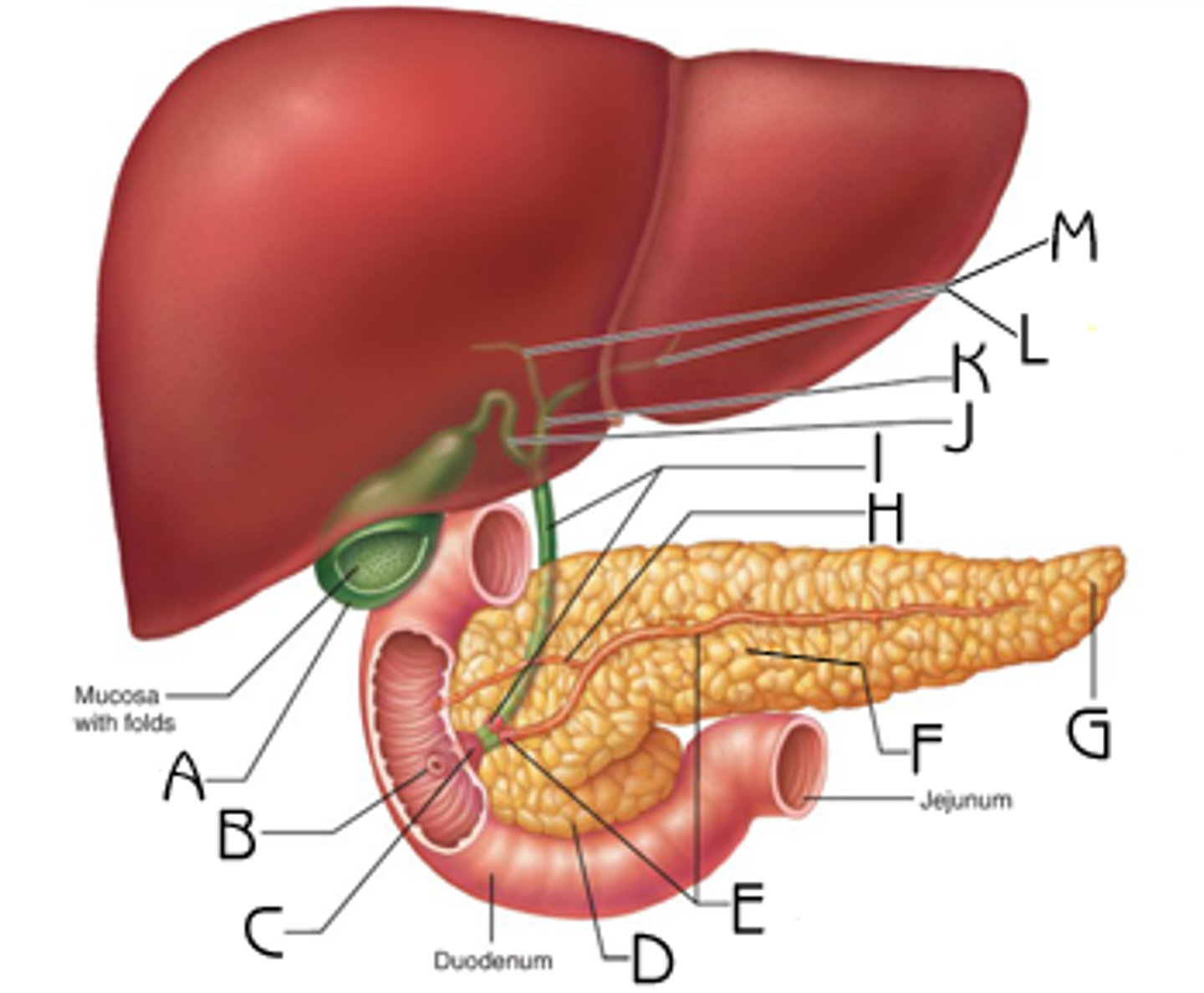
right and left hepatic ducts of liver
name M
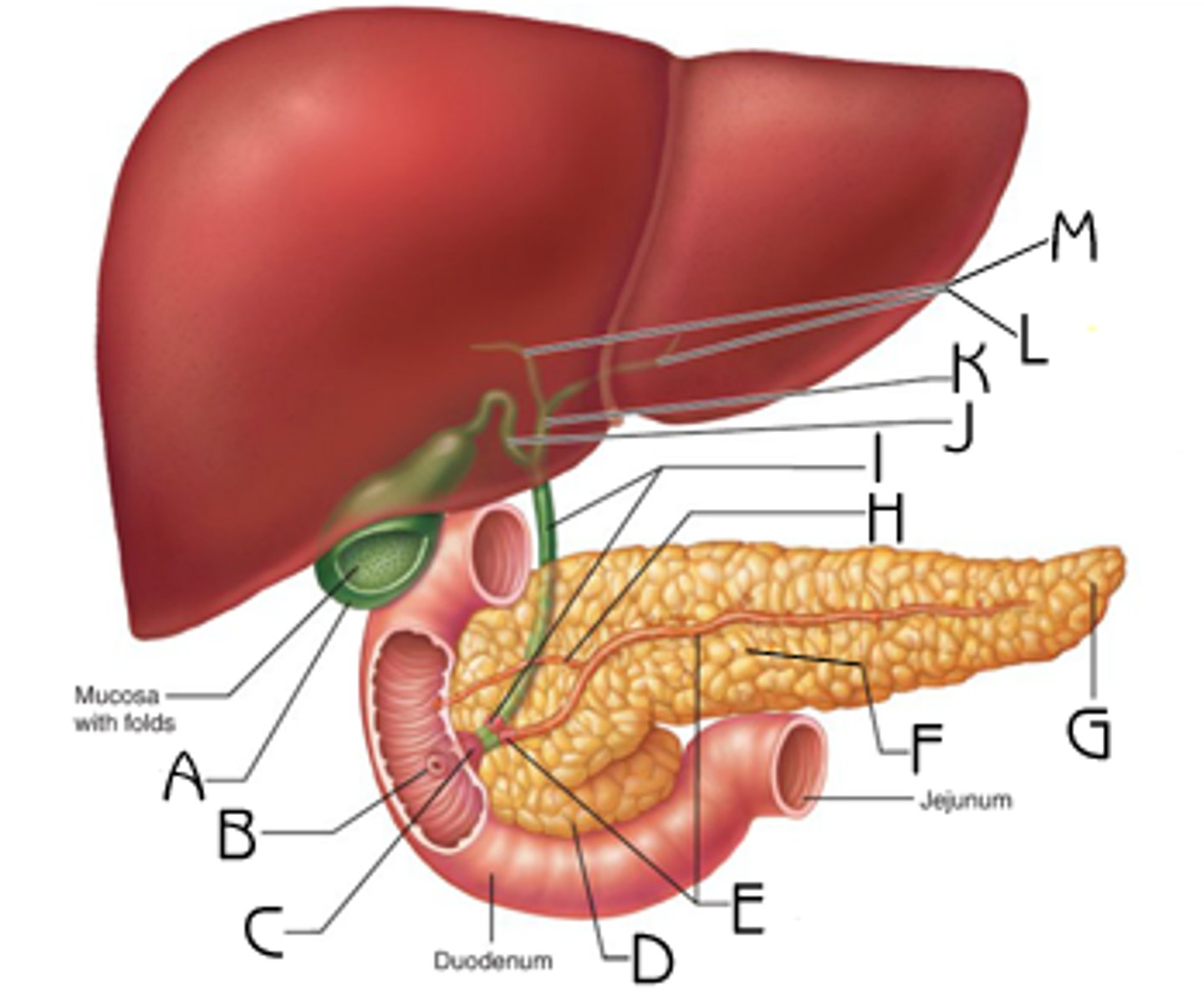
cystic duct
D
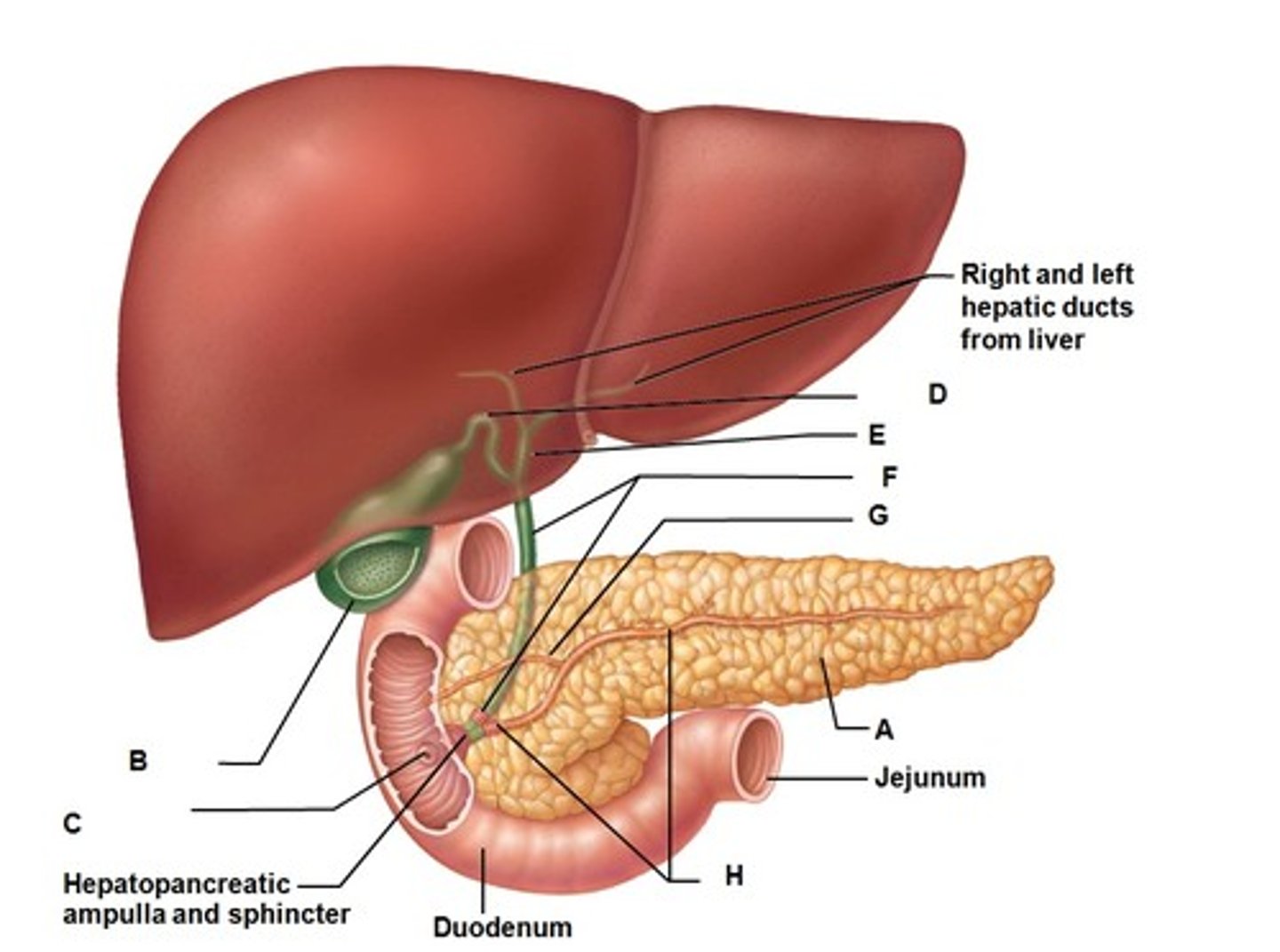
common hepatic duct
K
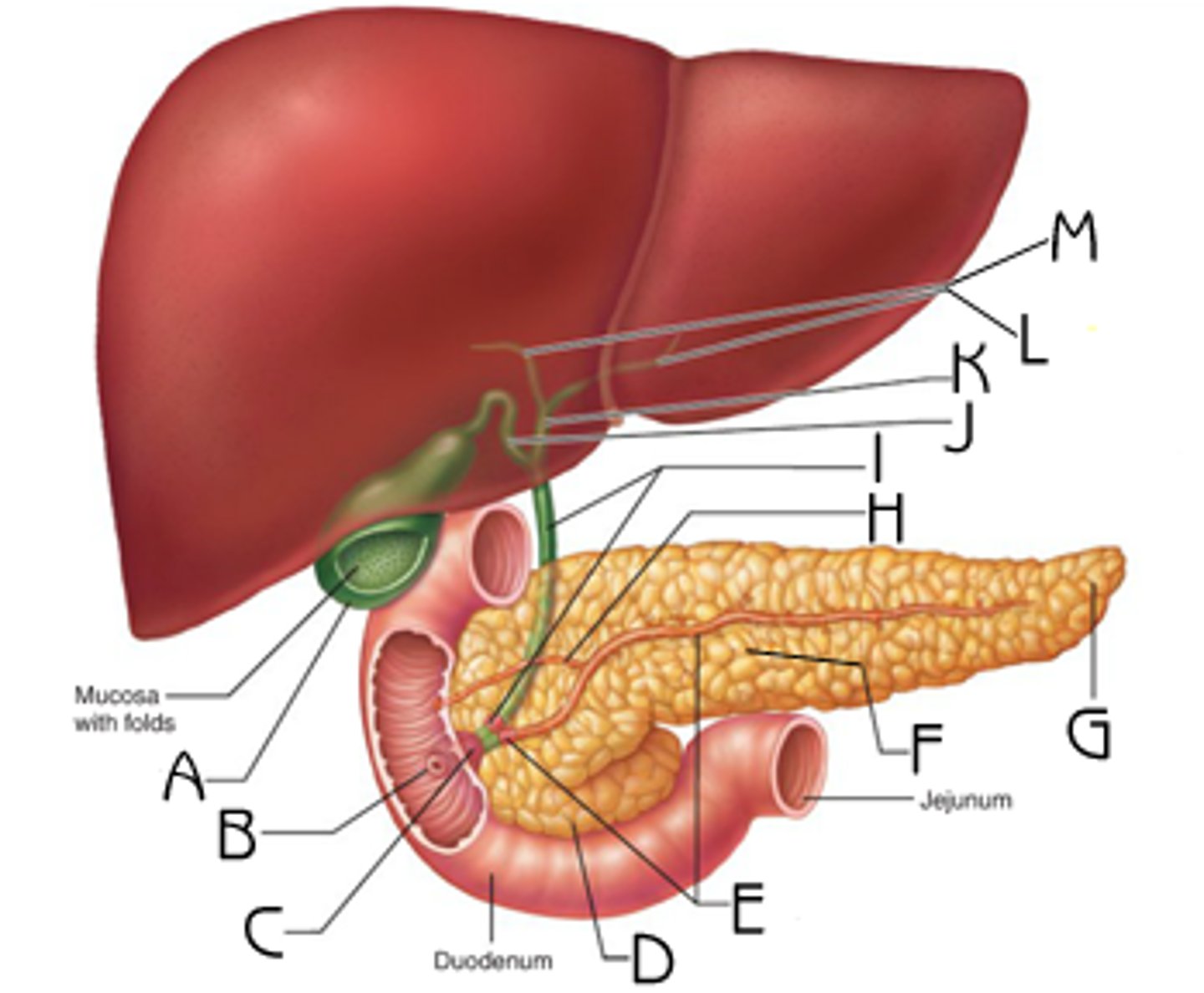
major duodenal papilla
B
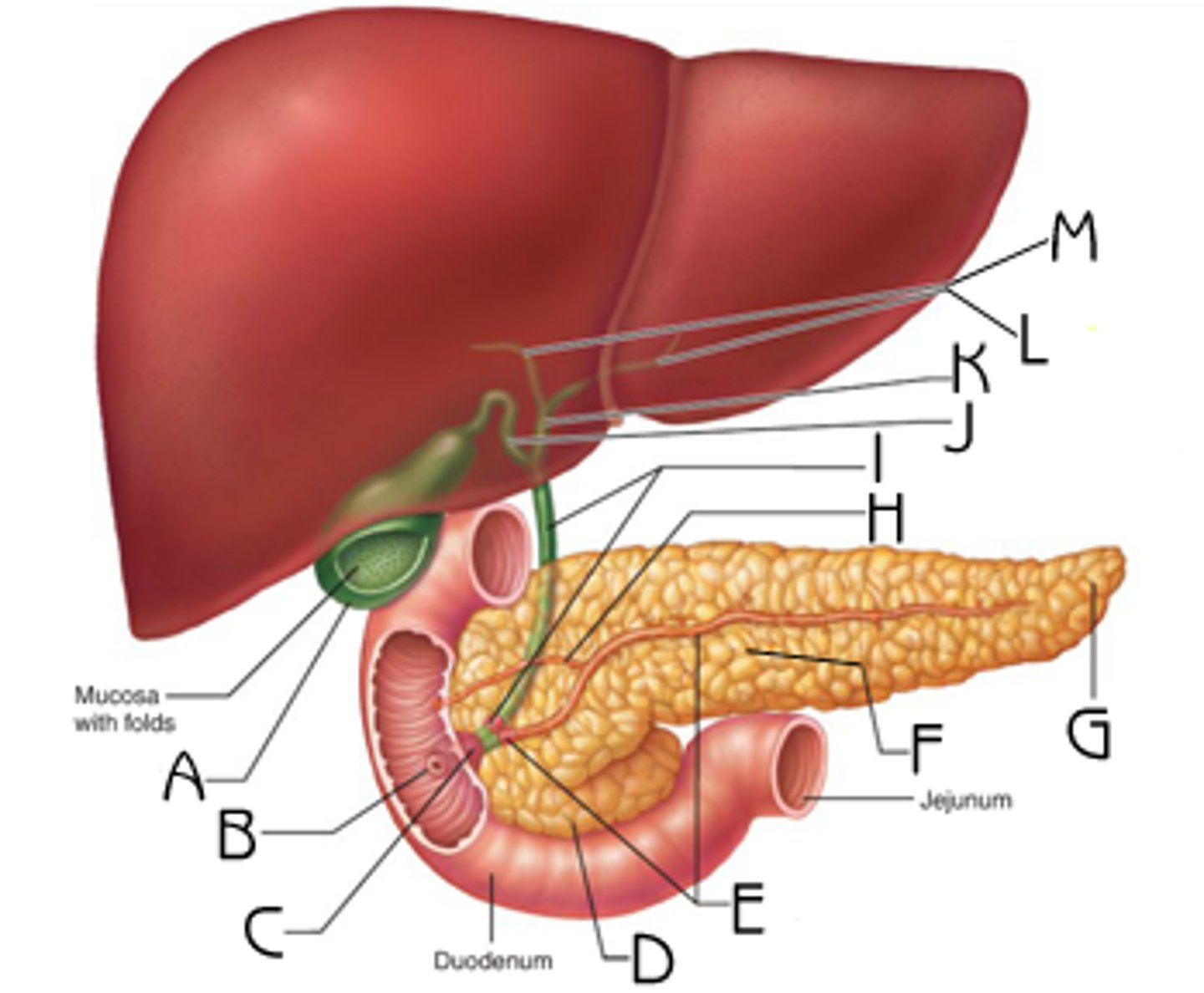
hepatopancreatic ampulla and sphincter
name C
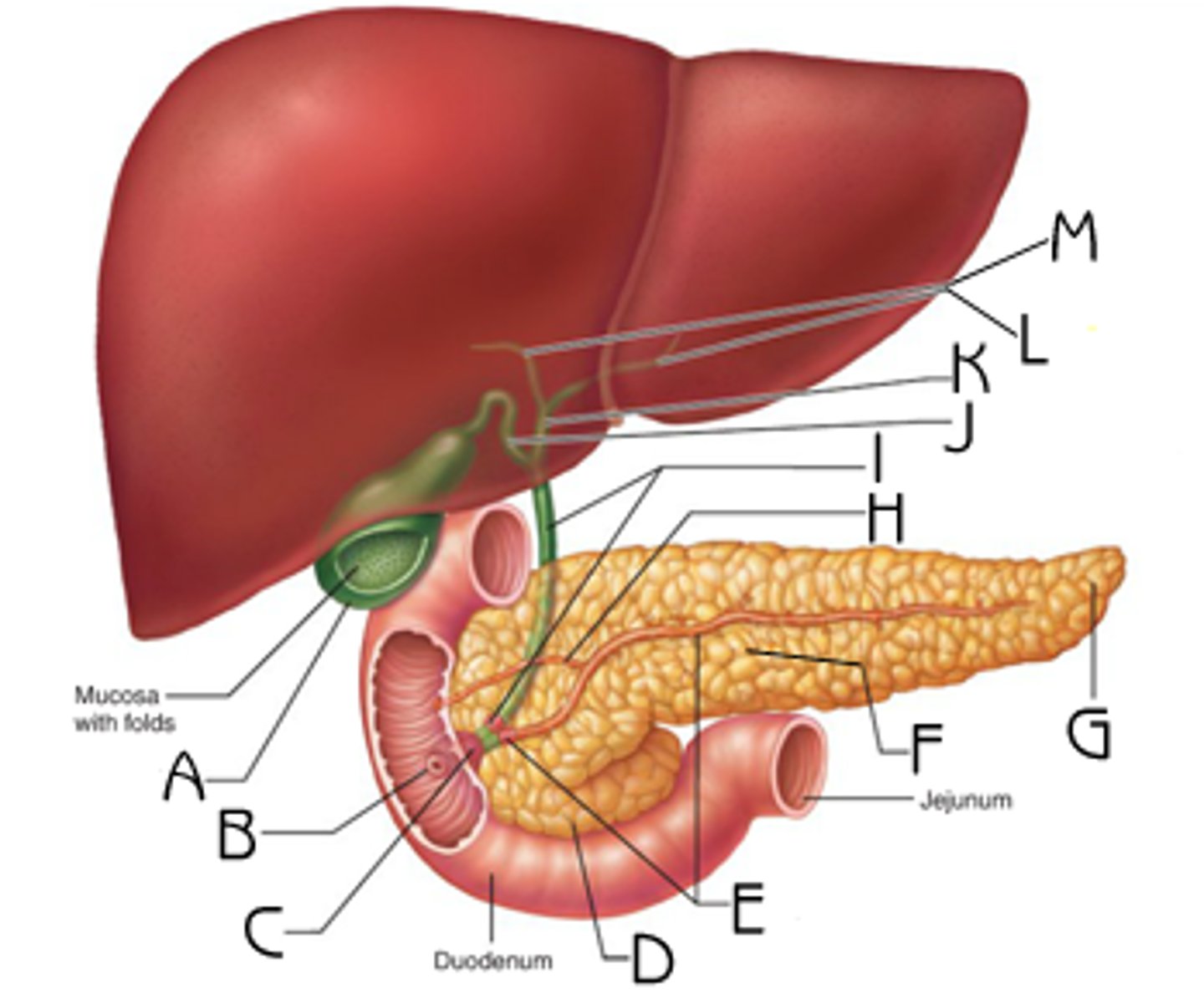
main pancreatic duct and sphincter
name E
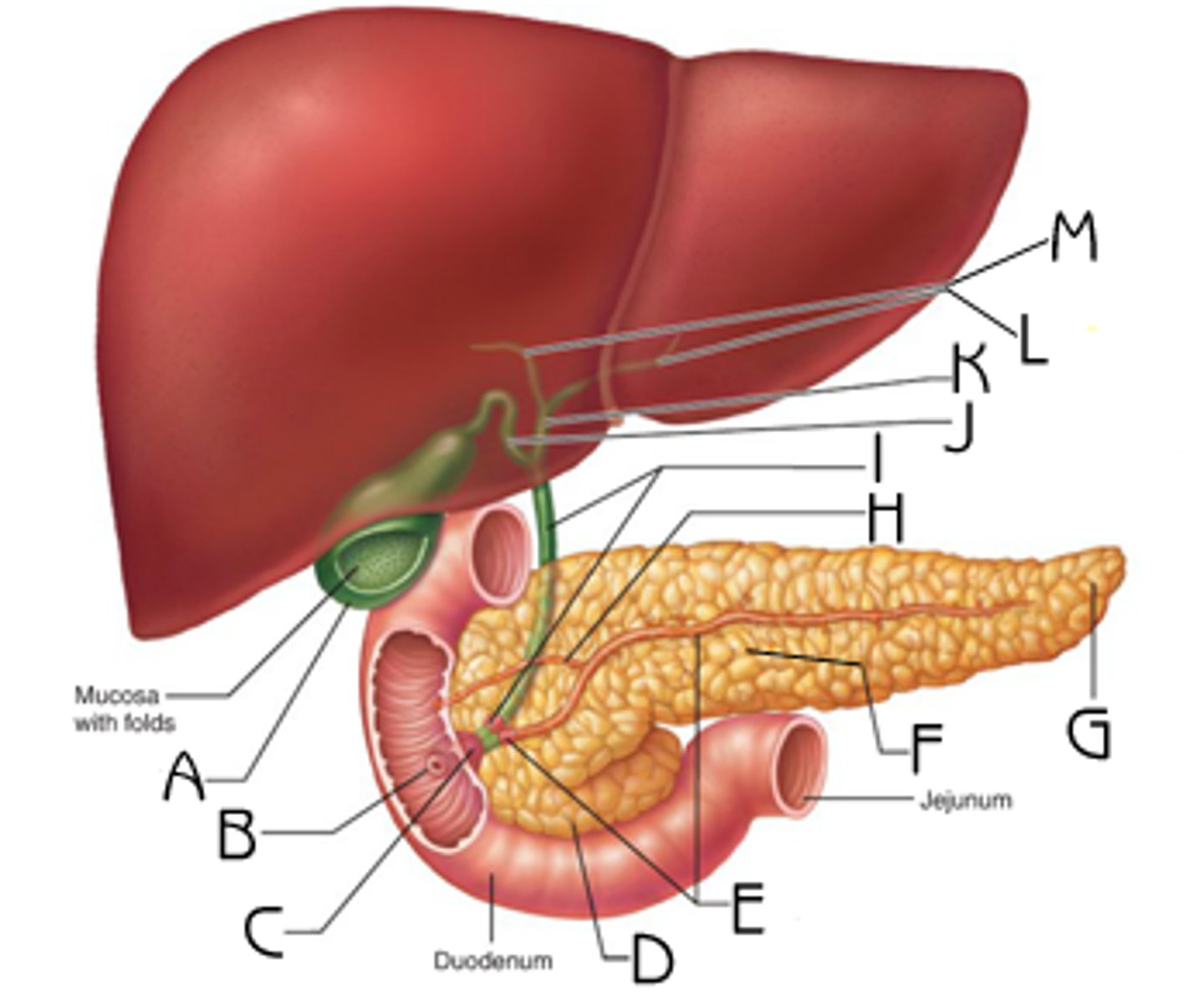
pancreas
name F
carbohydrate digestion
pancreatic amylase
protein digestion
pancreatic proteases
fat digestion
pancreatic lipase
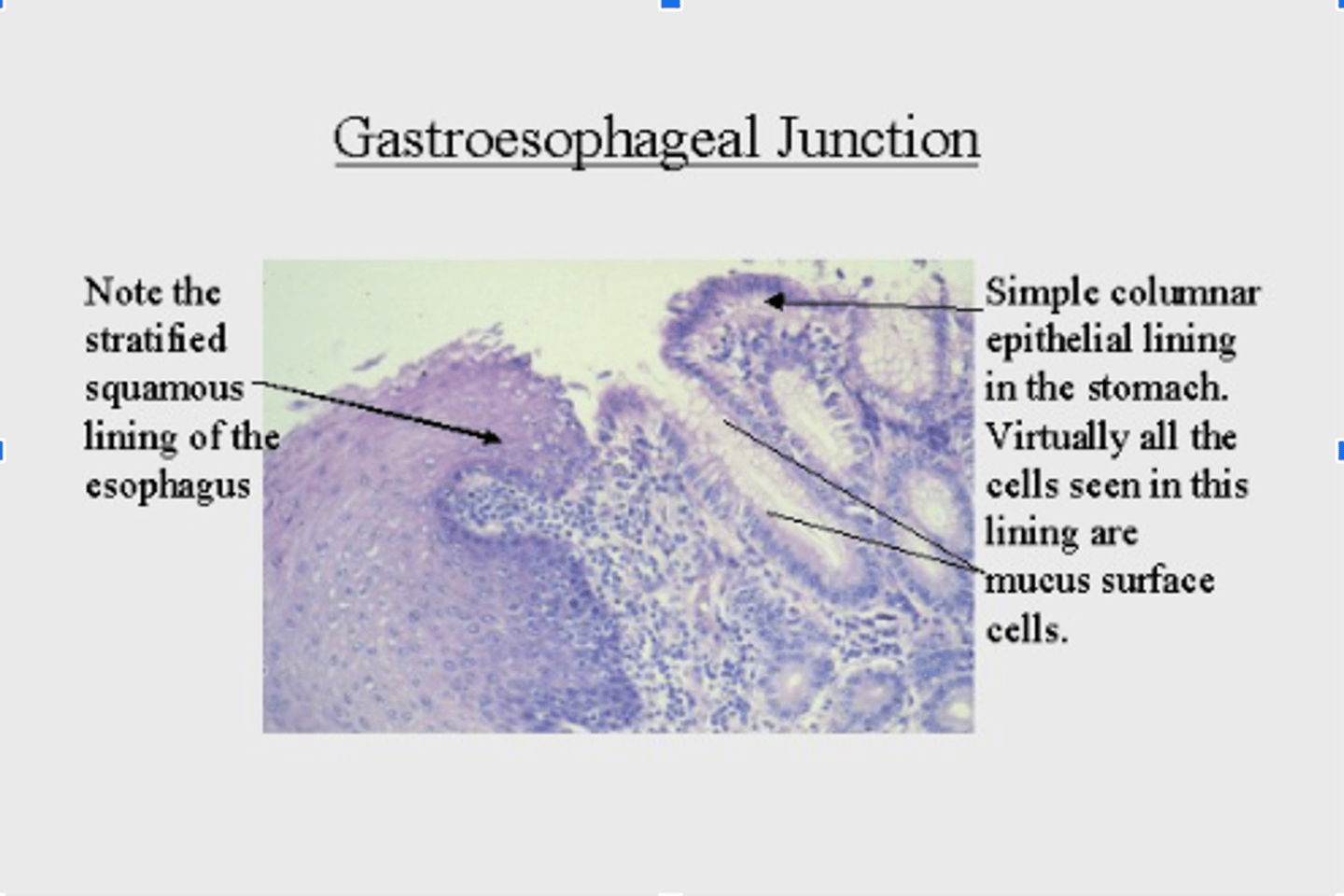
gastroesophageal junction histology
- esophagus: stratified squamous epithelium
- stomach: simple columnar epithelium
duodenum
name this
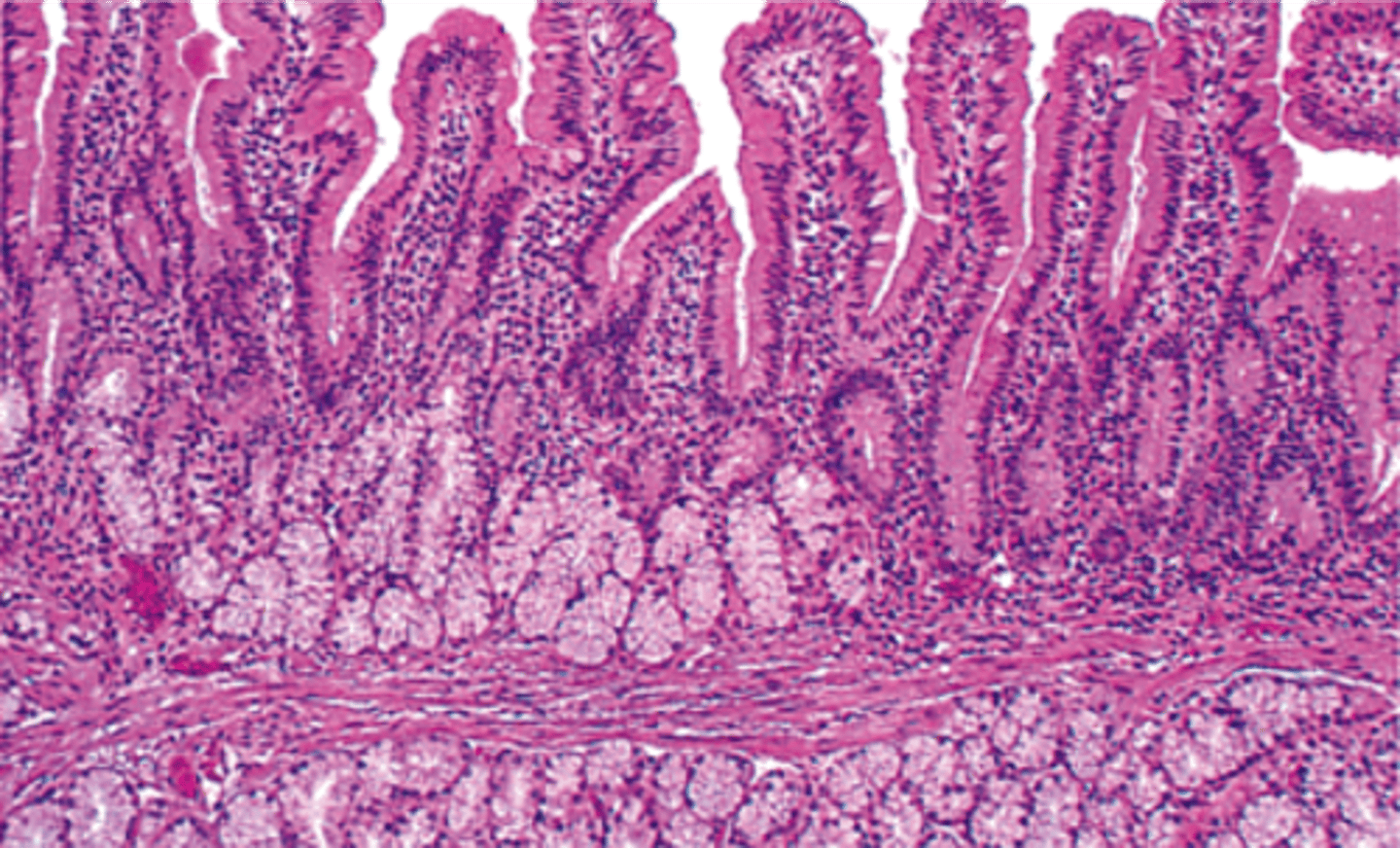
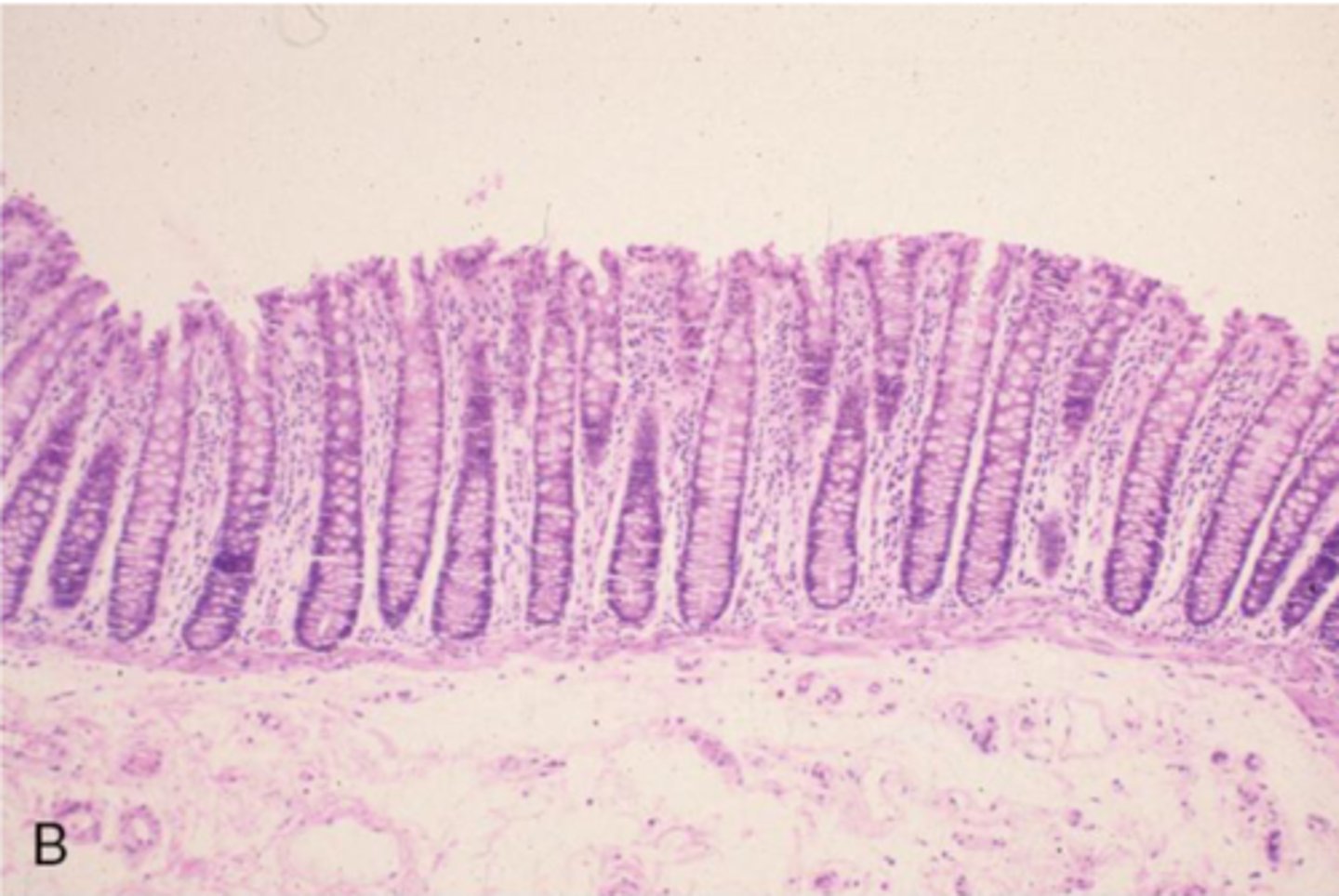
colon
name this
submandibular salivary gland
name this