Bio-Metabolism
 Call Kai
 Learn
Learn Practice Test
 Spaced Repetition
 Match
Match Flashcards
 Knowt Play
1/68

There's no tags or description
Looks like no tags are added yet.
Name | Mastery | Learn | Test | Matching | Spaced | Call with Kai | Chat |
|---|
No analytics yet
Send a link to your students to track their progress
69 Terms
The overall general chemical reaction for photosynthesis:
6 CO₂ + 6 H₂O + Light Energy → C₆H₁₂O₆ + 6 O₂
Recall the metabolism lab with the fish, leech and Elodea. The fish sample required the most NaOH for the titration because:
The fish has the lowest pH so it requires more NaOH.
Why would Elodea exposed to light have a lower respiration rate then Elodea kept in the dark as measured in CO2 mM/mlxhr?
If a plant is photosynthesizing the CO2 in the air stream will be lower after being exposed to the plant; if it is respiring the CO2 concentration will be higher
All of the following processes remove carbon dioxide from the atmosphere except. Refer to the carbon cycle as needed.
photosynthesis
There are a variety of processes that add carbon to the atmosphere, but select the one process that has exceeded the earth’s ability to absorb and store the extra carbon.
diffusion, bicarbonate sedimentation
Unlike energy, carbon and oxygen atoms are continually recycled.
True
Organisms that can photosynthesize are also referred to as
photoautotrophs
All of the following can photosynthesize except:
Elodea in the dark
The primary phytopigment of plant photosynthesis:
chlorophyll
Vascular plants can regulate gas exchange in their leaves by:
stomata photosynthesis
Photosynthesis is well known to produce oxygen. What is the source of oxygen?
H2O
Carbon dioxide is “fixed” during photosynthesis into:
oxalcetate or carbohydrate
The energy source from sunlight that excites phytopigments:
photons
This solar power results in a transfer of energy to reaction centers then exciting:
chemical energy
This energy then powers the thylakoid’s electron transport chain by pumping:
hydrogen ions through the membrane
A concentration gradient across the membrane and flow of protons activates:
H+ concentration gradient
The final electron acceptor:
Oxygen
Carbon fixation is performed by the enzyme:
rubisco
During carbon fixation, CO2 gas molecules are combined with:
RUBP
These 3-C PGA molecules from carbon fixation are rearranged and reduced by enzymes into:
G3P
The energy carrying molecules from the light reaction that power these reactions (mark all that apply):
ATP + NADPH
Glucose (C6H12O6) is ultimately synthesized from 2 molecules of:
Carbon dioxide and water
What kind of plants are better suited to surviving in hot arid environments Mark all that apply.
succulent plants, cacti, pineapples
While CAM plants fix carbon dioxide at night in vacuoles, C4 plants fix carbon dioxide:
by the c4 path or mesophyll & bundle sheath cell
C4 plants rely on fixing carbon dioxide into four carbon molecules of:
oxaloacete
In C4 plants, four carbon molecules provide what molecule to the Calvin Cycle?
CO2
The C4 pathway was an evolutionary response to hot and dry environments.
True
Which of the following plant pigments were separated on the chromatogram paper? Mark all that apply.
b-carotene, violaxanthin, lutein, chl a, chl b
Which two wavelengths of the electromagnetic spectrum produces the two highest rates of photosynthesis? Select all that apply.
b carotene, xiolaxanthun, 450-650
The color of visible light energy that is least absorbed and produces the lowest rate of photosynthesis:
chl b, green
Both plants and animals have mitochondria and are capable of respiring.
true
Which reactions produce CO2 during cellular respiration?
the Krebs cycle & pyruvate oxidation
The enzymatic pathway of _________________________ produces pyruvate, NADH and ATP:
anabolic pathways or glycolysis
In the absence of oxygen certain organisms perform:
fermentation to produce ATP
Fermentation can result in the following products except:
ethanol, lactic acid, CO2, hydrogen gas, butyric acid, acetone
Fermentation pathways are more energy limited than aerobic respiration producing only:
cellular energy
When a molecule is oxidized it loses an electron and may become positively charged.
true
All life on earth is solar powered because:
animals get energy from plants and plants get energy from photosynthesis which comes from the sun
Plants and animals create their own energy.
false
Electron energy is supplied by (mark all that apply):
electrochemical cells
These molecules supply electrons to the:
electron transport chain
The electron transport chain is embedded in the:
inner mitochondrial membrane
The energized transport chain actively pumps:
protons out of the mitochondrial mix
A concentration gradient activates the:
ions down the outside of the cells to the inside
The final electron acceptor and product:
NADPH
Molecules such as NAD+ can gain electrons and therefore become reduced.
true
Chemiosmosis results in the passive flow of concentrated H+ across a membrane through a “molecular mill” called:
oxidative phosphorylation
ATP synthase is a mechanical mill and enzyme that catalyzes the production of:
ATP
Which organelle(s) is (are) now living endosymbiotically inside eukaryotic cells and critical for metabolism? Mark all that apply.
mitochondria and chloroplasts
One source of evidence that cellular symbiosis formed between certain once free-living bacterial cells now acting as double-membraned organelles with their larger host cell:
Endosymbiotic theory

A
Atmosphere of Carbon Dioxide and Oxygen
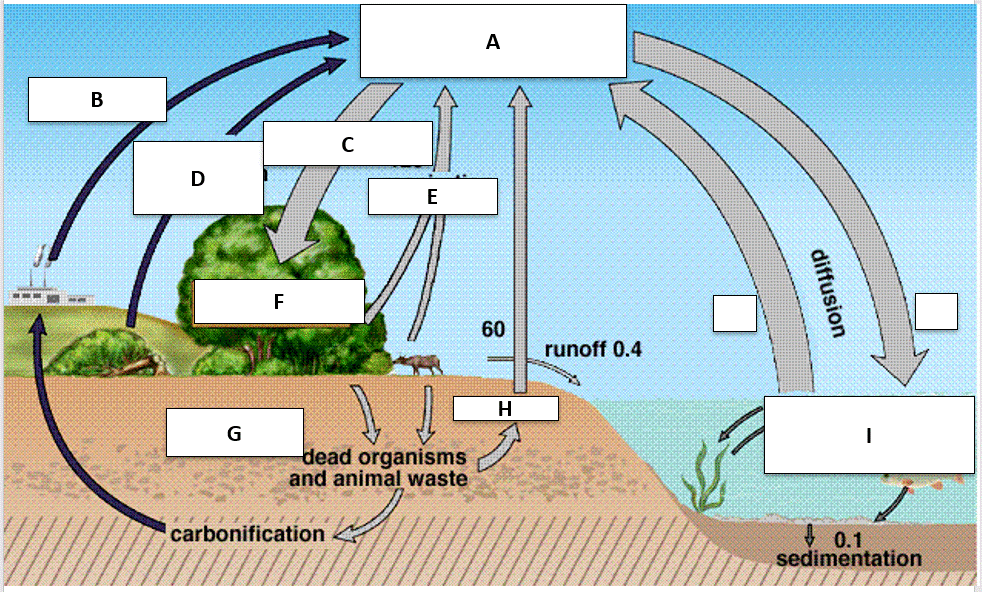
B
Combustion of Fossil Fuels

C
Photosynthesis
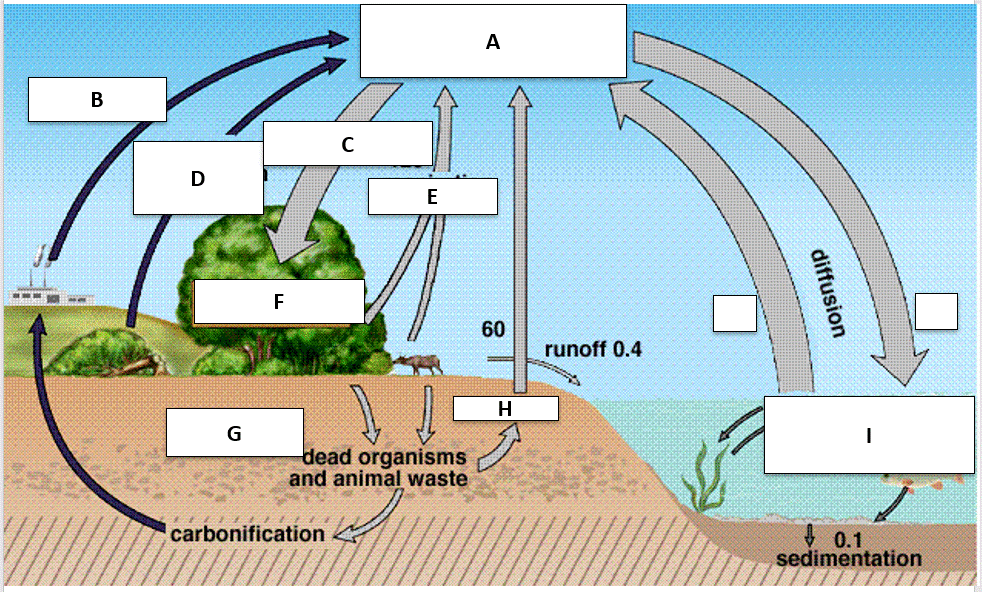
D
Deforestation
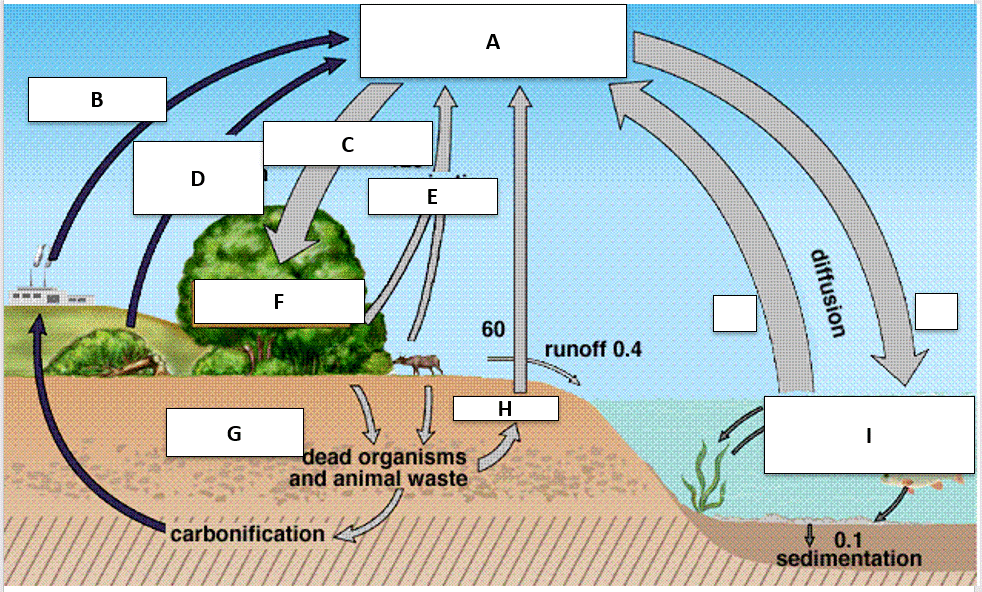
E
Respiration by plants and animals
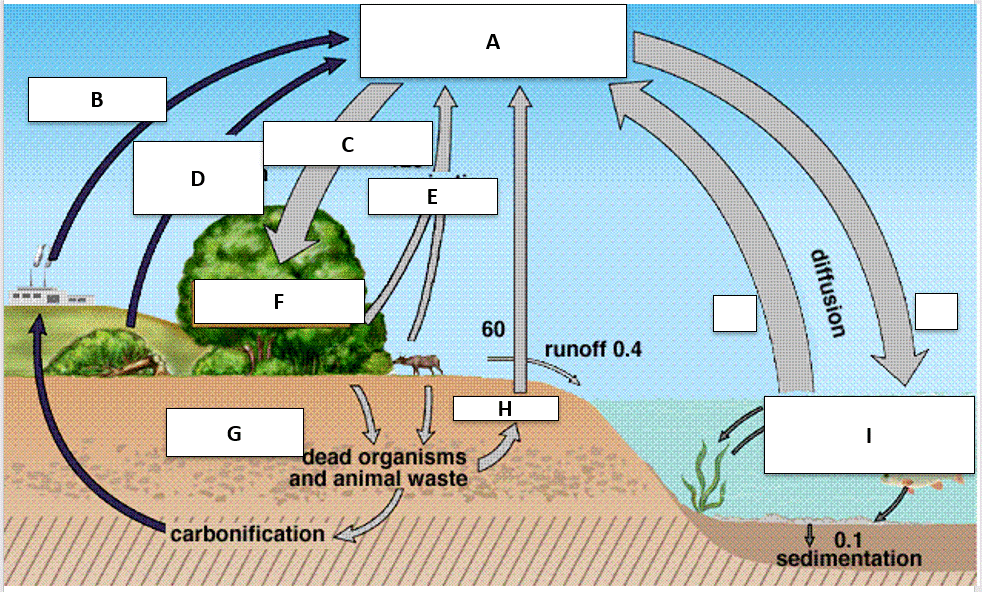
F
Land Plant biomass

G
Soils

H
Microbial Decay Respiration

I
Ocean bicarbonates (HCO3-)
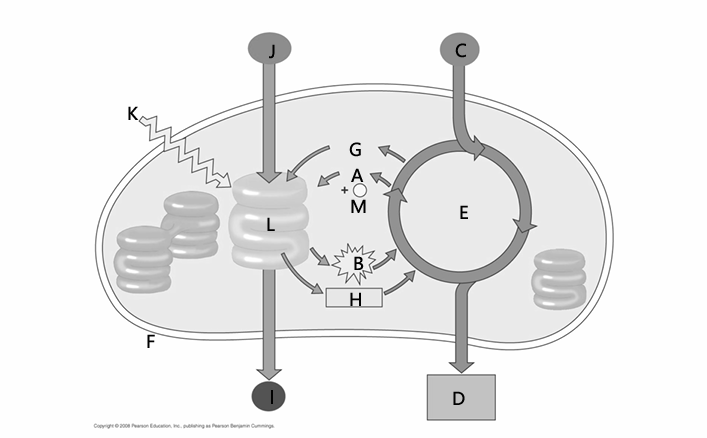
A
ADP
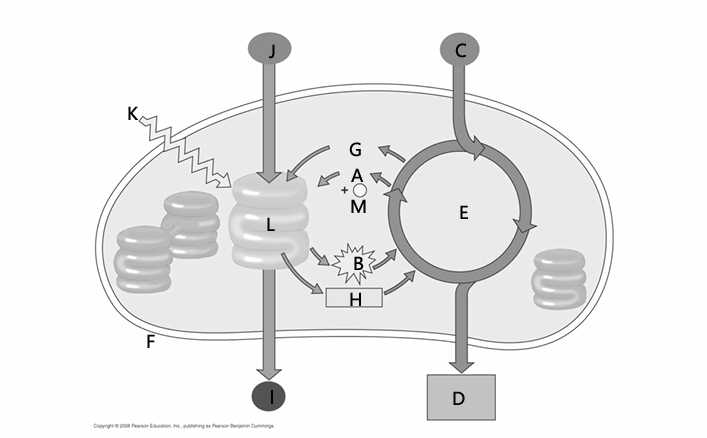
B
ATP

C
Co2
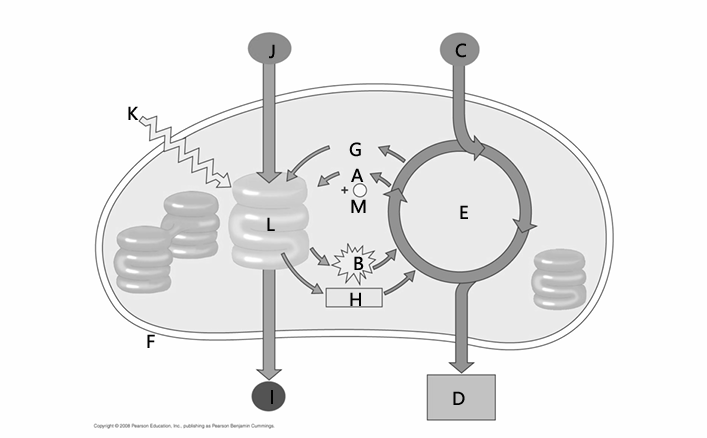
D
CH2O (Sugar)

E
Calvin Cycle
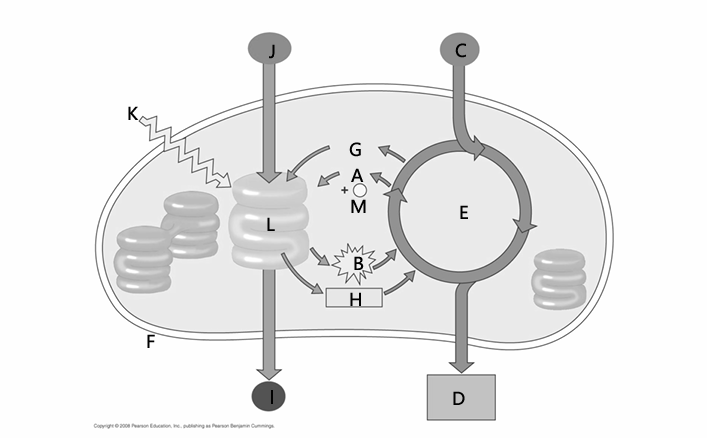
F
Chloroplast
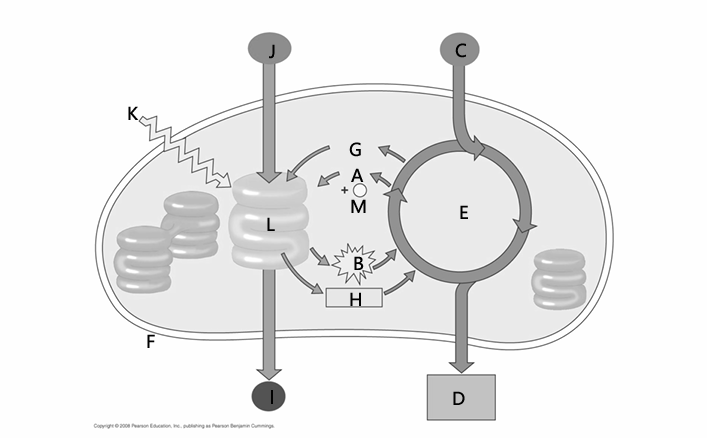
G
NADP+

H
NADPH
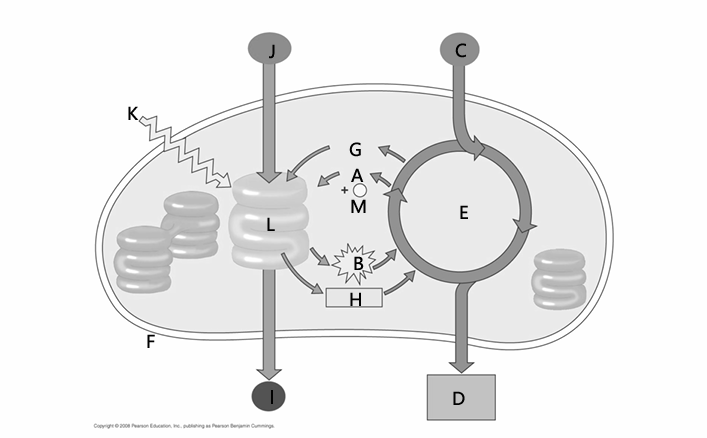
I
O2

J
H2O