6. active transport
 Studied by 0 people
 Call Kai
 Learn
Learn Practice Test
 Spaced Repetition
 Match
Match Flashcards
 Knowt Play
1/5

There's no tags or description
Looks like no tags are added yet.
Name | Mastery | Learn | Test | Matching | Spaced |
|---|
No study sessions yet.
6 Terms
ACTIVE TRANSPORT- DEFINITION
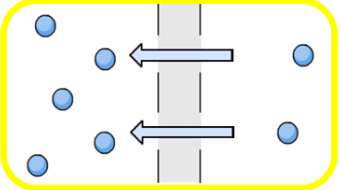
movement of molecules against a concentration or electrochemical gradient
requires energy
ACTIVE TRANSPORT
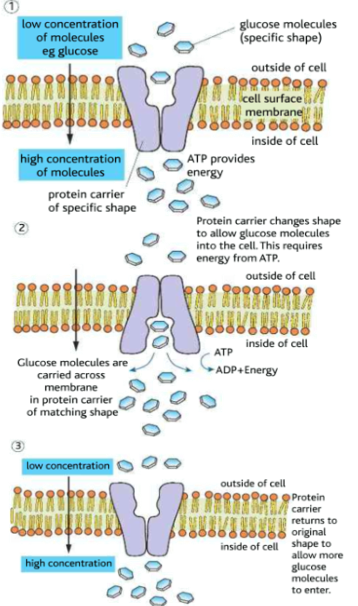
molecule (e.g. glucose) binds to receptor site on the carrier protein
the molecule must be the correct shape to ‘fit’ the receptor to be transported
ATP (from respiration) attaches to the membrane protein on the inside of the cell
ATPase catalyses the hydrolysis of ATP into ADP which releases energy
this causes a change in shape of the protein
the molecule can now get in but not out
ACTIVE TRANSPORT- IMAGE
ACTIVE TRANSPORT- EVIDENCE
active transport requires energy in the form of ATP from cellular respiration
evidence for active transport comes from linking these two processes together i.e. showing that without ATP active transport can’t take place
active transport only takes place in living things
rate of active transport is dependent on temperature and oxygen conc-these affect respiration so ATP production
cells known to carry out lots of active transport contain many mitochondria – site of cellular respiration
poisons that stop respiration or prevent ATPase working also stop active transport
ENDOCYTOSIS
materials can be surrounded by and taken up into membrane bound vesicles by endocytosis
this can happen on a large scale such as when WBCs ingest bacteria (phagocytosis)
can also happen on microscopic level when tiny amounts of surrounding fluid are taken into minute vacuoles (pinocytosis)
electron microscopes have shown this is very common as cells take in extracellular fluid as a source of nutrients and minerals
EXOCYTOSIS
term for emptying of a membrane-bound vesicle at cell surface
e.g. in cells producing hormones, secretory vesicles from golgi containing the hormone fuse with the cell surface membrane releasing their contents
both endocytosis and exocytosis are made possible by the fluid nature of the cell membrane- formation of vesicles and fusing with cell membrane are active processes so ATP is required