Module 2 - Organisation Of Living Things
 Call Kai
 Learn
Learn Practice Test
 Spaced Repetition
 Match
Match Flashcards
 Knowt Play
 Podcast
1/89

There's no tags or description
Looks like no tags are added yet.
Name | Mastery | Learn | Test | Matching | Spaced | Call with Kai | Chat |
|---|
No analytics yet
Send a link to your students to track their progress
90 Terms
In which domains do you find unicellular, colonial, and multicellular organisms?
There are unicellular and colonial life forms in all three domains. Only eukaryotic cells form multicellular organisms.
List some characteristics of living organisms
Movement, respiration, growth, reproduction, excretion, sensitivity, and nutrition
Explain why multicellular organisms need specialised cells
They rely on specialisation in order to differentiate and take on unique structures and functions. Specialised cells perform specific tasks far more efficiently than a generic cell could, further enhacing performance
What are unicellular organisms?
They are made of only one cell and is responsible for all its own life processes
Unicellular organisms have a _________ surface to area volume ration
high
What are colonial organisms?
Group of identical single-celled organisms collectively where all individuals are capable of carrying out each function necessary for life
What are multicellular organisms?
They are made up of different types of cells, where similar cells are grouped together and perform specialised functions that combine together for efficient functioning of the organism
Can multicellular cells live independently?
No
List the levels of organisation in order
Atoms, molecules, organelles, cells, tissues, organs, systems, organisms
What is cell differentiation?
Cell differentiation is the process by which an unspecialised cell develops specific structures and functions, resulting in cell specialisation
How does cell differentiation differ from cell specialisation?
Differentiation makes the cell specialised. When a cell differentiates, it is then specialised to perform a specific function. For example, a single cell is differentiated with a neuron-specific gene, therefore making it specialised to carry nerve signals within the neuron
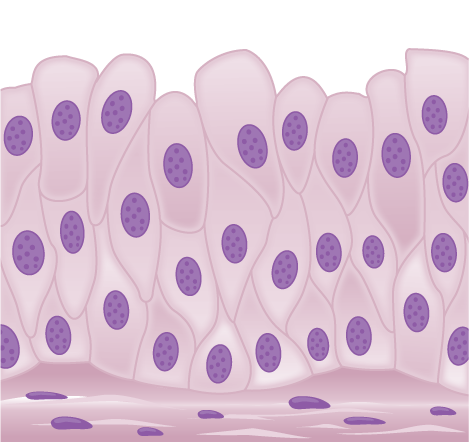
What tissue is this?
Epithelial
What is the function of the epithelial tissue?
Acts as a protective layer and barrier against infection or water loss
Where can epithelial tissues be found?
They cover many surfaces and linings of body cavities, including the inside of our mouths (cheek cells), outer layer skin, stomaching lining, and the outside surroundings of organs

What tissue is this?
Muscle tissue
What is the function of the muscle tissue?
Specialised to convert chemical energy from ATP into mechanical energy for movement as well as being responsible for movement, process of digestion, waste elimination, breathing, speech, and blood circulation.
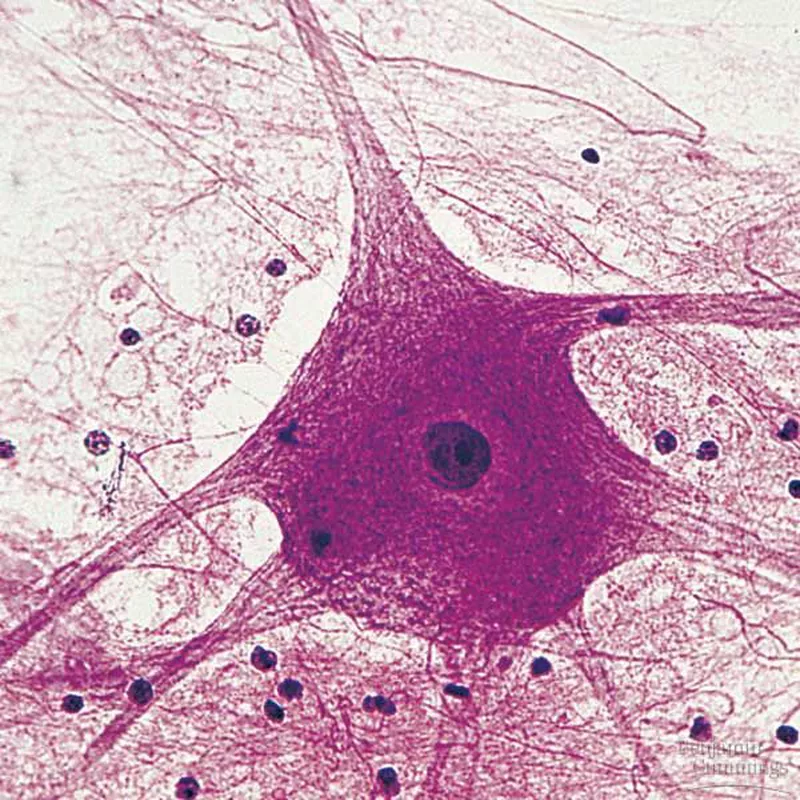
What tissue is this?
Nervous tissue
What is the role of neurons?
Contains dendrites which pick up signals from the brain and send them out to other parts of the body using impulses (electric signals)

What muscles is this?
Connective tissue
What is the function of the connective tissue?
Connects or separates, and supports all the other types of tissues in the body and consists of an extracellular matrix with cells scattered throughout

What type of tissue is this?
Meristematic tissue
What is the function of the meristematic tissue?
Where cell division occurs to produce new growth
Where are meristematic tissues found?
At the tips of roots and shoots

What tissue is this?
Vascular tissue
What is the function of vascular tissues?
Responsible for the transport of substances around the plant
Where can vascular tissues be found?
In the roots, stems, and leaves
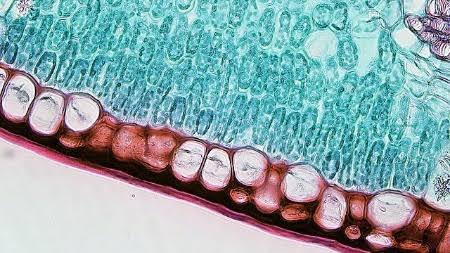
What tissue is this?
Dermal tissue
What is the function of dermal tissues?
Protects the plant and controls interactions with its surroundings
Where can dermal tissues be found?
They are found on the outer surface of stems and leaves

What tissue is this?
Ground tissue
What is the function of ground tissues?
Specialised for food storage, structural support, and photosynthesis
Where can ground tissues be found?
They make up the rest of the internal plant structure
What are organs?
Different types of tissues that are grouped together to perform a particular function
The heart contains four tissues. What are they?
Epithelial, connective, nervous, and muscular tissues
What are systems?
Different organs that are grouped together to form an organ system that is responsible for a particular body function
What is the role of the cardiovascular system?
Responsible for the movement of oxygen, nutrient, and waste around the body
How do unicellular organisms take in nutrients and remove waste?
By using diffusion, osmosis, and active trasnport across the cell membrane
How does the structure of blood cells support its function?
They are very small and have a particular shape, allowing them to pass through capillaries and maximise SA:V for efficient gass exchange
How does the structure of elongated palisade cells support its function?
They are flattened to give greater SA:V to maximise absorption of oxygen and water
What are tissues?
Specialised cells that perform a similar function
What are cardiac muscles specialised in?
Fast, involuntary contraction without the need for external stimuli
List the structural organisation of multicellular organisms in order
Organelle, cell, tissue, organ, organ system, multicellular organism
List the structural organisation for humans in order
Cell, tissue, organ, system, organism
List the structural organisation of flowering plants in order
Cell, tissue, organ, system, organism
What are some structural features of red blood cells?
Disc shape
No nucleus
Very small, allowing them to pass through capillaries and maximise SA:V
What is the specialised function of a red blood cell?
Carrying oxygen
What are some structural features of a white blood cell?
Larger nucleus
Larger cell
What is the specialised function of a white blood cell?
Fights infection
What are some structural features of nerve cells?
Long axons
Myeline Sheath
Dendrites
Synapses
What is the specialised function of a nerve cell?
Carries nerve messages to and from the brain
What are some structural features of epidermal cells?
Transparent, outer layer
Some modified as guard cells
Waxy cuticle
What is the specialised function of an epidermal cell?
Allows light through to photosynthesis cells and is involved in gaseous exchange
What are some structural features of a phloem cell?
Sieve plate
Two-way flow
Cells have end walls with perforations (sieves)
What is the specialised function of a phloem cell?
Transport food (glucose) and water collected from photosynthesis to other parts of the plants
What are some structural features of a xylem cell?
Thickened dead cells forms a tube
One-way flow
No end walls between cells
Lignin within their walls, helping them stay strong and stiff
What is the specialised function of a xylem cell?
Transport water and minerals upwards
What are some structural features of a guard cell?
Opened when full of water
Closed when needed in order to prevent pathogens from entering
What is the specialised function of a guard cell?
Gaseous exchange and water loss
What are some structural features of the palisade mesophyll cell?
Many chloroplasts
What is the specialised function of the palisade mesophyll cell?
Photosynthesis
What are the 11 major systems within the human body?
Digestive
Excretory
Respiratory
Musculoskeletal
Circulatory
Lymphatic
Integumentary
Endocrine
Nervous
Immune
Reproductive
What are the three types of muscle tissue?
Skeletal, cardiac, and smooth
Are cardiac and smooth muscles involuntary or voluntary?
Involuntary
Are skeletal muscles involuntary or voluntary?
What is the function of skeletal muscles?
Movement
What is the function of smooth muscles?
Line blood vessels and intestines to help move things down the pipe
What are the two types of connective tissues?
Proper and specialised
Proper connective tissue can be divided into two types. What are they?
Loose and dense
Specialised connective tissue can be divided into three types. What are they?
Blood, bone, and cartilage
Ground tissue are broken up into three subgroups. What are they?
Parenchyma, collenchyma, and sclerenchyma
What is parenchyma tissue responsible for?
Makes up the photosynthetic layer in leaves (mesophyll) where gas exchange, food storage, and food (sugars) production occurs. Also replaces lost tissue from physical trauma and diseases as well as cover wounds
Where can parenchyma tissues be found?
In the roots of plants, the majority of a seed, and wherever structural support is needed
Where can dermal tissues be found?
Outermost layer of the plant
What is the role of the epidermis within plant tissues?
Serves as a protective layer
What is cuticle on dermal tissues?
A waxy substance that prevents water from escaping as well as protecting from invasion by many pathogens
What are the hairlike structures on dermal tissues repsonsible for?
Gas nutrient transfer and deterring insect herbivores
What is the stomata?
Opening in the leaf for exchange of water and gases
Can the vascular tissue be found in all plant species?
No
What is the function of vascular tissues in plants?
Redistributes water and nutrients through a plant’s body, allowing for trees to grow tall without losing the capacity for nutrient transport between distantly separated parts
What are the two types of vascular tissues in plants?
Xylem and phloem
What causes the water to get drawn up in the xylem?
The negative pressure from evaporation
What is the cohesion tension mechanism (CTM)?
Water is initially pulled through capillary action and once it is established, this column of water never breaks
Transpiration of water happens through the phloem or xylem?
Xylem
Translocation of sucrose happens through the phloem or xylem?
Phloem
What are autotrophs?
Living things that produce their own organic materials
What are heterotrophs?
Living things that consume organic material produced by others
What is the function of dorsiventral leaves?
To effectively perform photosynthesis while conserving water
What is the function of isobilateral leaves?
Responsible for food production, gaseous exchange, and transpiration
Do dorsiventral leaves grow horizontally or vertically? Explain why.
They grow horizontally so that the majority of photosynthetic cells are facing upwards and receiving light in the day for photosynthesis
Do isobilateral leaves grow horizontally or vertically? Explain why.
They grow vertically to receive sunlight equally on both sides