1. Psoriasis
 Call Kai
 Learn
Learn Practice Test
 Spaced Repetition
 Match
Match Flashcards
 Knowt Play
1/6

There's no tags or description
Looks like no tags are added yet.
Name | Mastery | Learn | Test | Matching | Spaced | Call with Kai | Chat |
|---|
No analytics yet
Send a link to your students to track their progress
7 Terms
Etiology and Pathophysiology
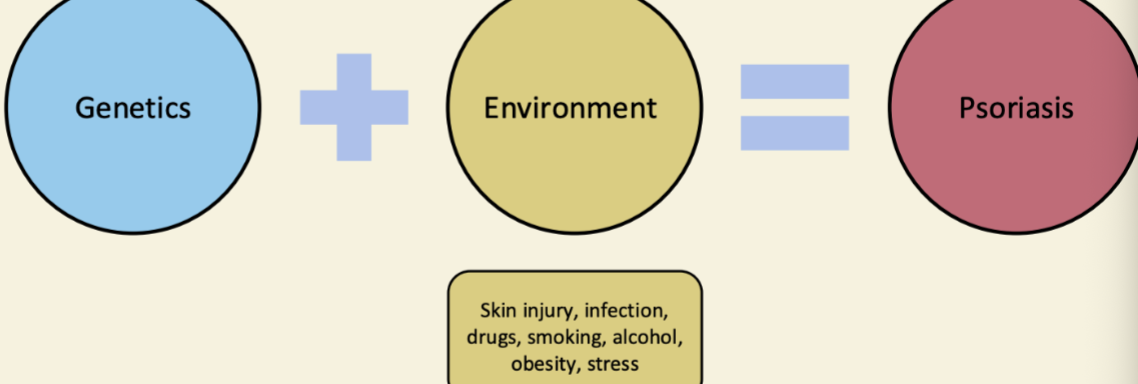
Not rlly known; involved interplay between keratinocytes and innate cells, subsequent T cell activation, and inflammation and keratinocyte hyperplasia through various cytokines
A prevailing theory is that keratinocytes release antimicrobial peptides in response to injury. On peptide is LL37
LL37 bound to DNA from other damaged cells can be recognized by TLRs on dendritic cells
Dendritic cells activate other cells including helper T cells, which seem to play a larger role, specifically the Th17 cells, which produce IL17
Leads back to increased inflammation, angiogenesis, and keratinocyte hyperplasia
Clinical Presentation
Plaques: skin lesions red in color, usually covered in flaky, silvery scales; often are itching
Can develop in specific areas such as knees or elbows, or can be widespread
Various comorbidities associated with psoriasis: psoriatic arthritis, hypertension, obesity, diabetes, crohn’s disease, multiple sclerosis, psychological disorders (depression/anxiety)
Agents
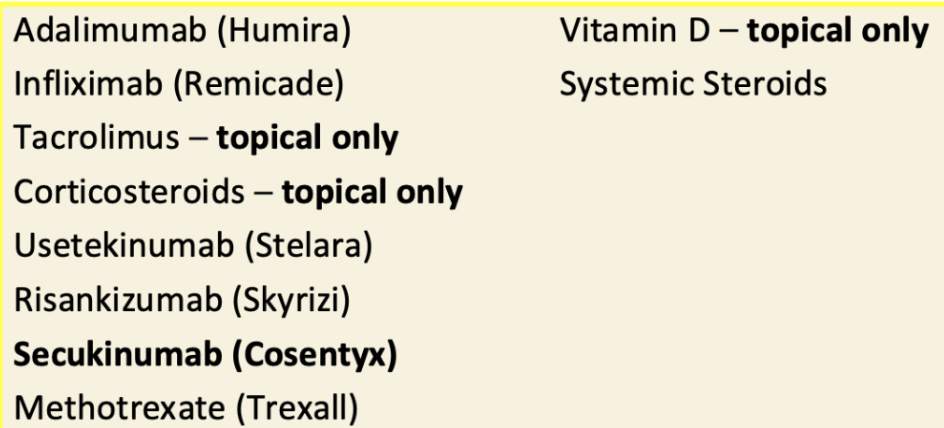
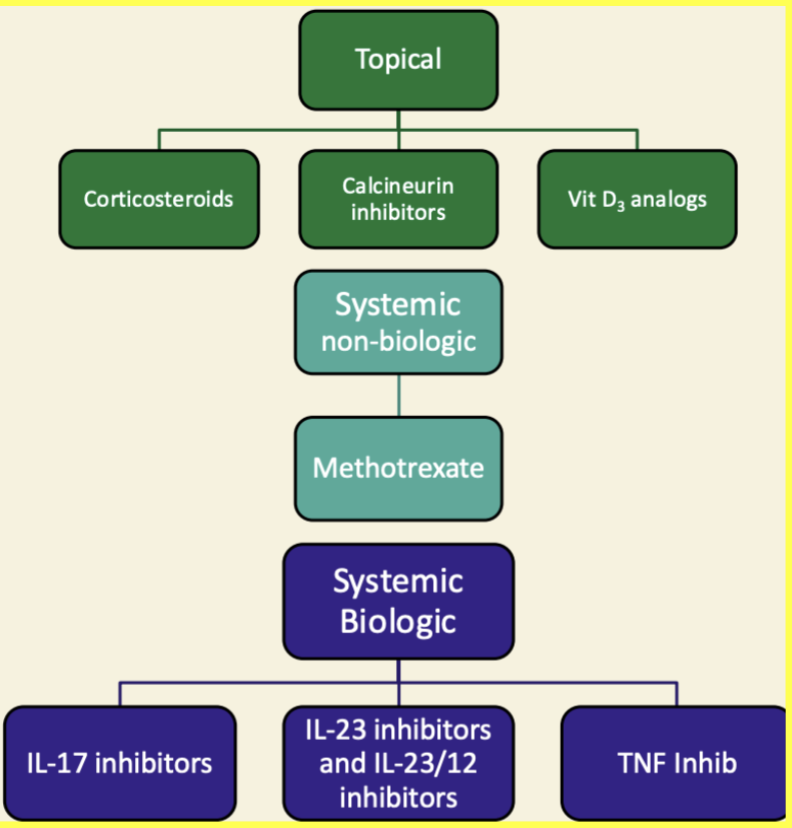
Topical agents
Corticosteroids (hydrocortisone, triamcinolone, betamethasone, clobetasol, etc)
Mechanism: antipyretic and vasoconstrictor
Calineurin inhibitors (tacrolimus and pimecrolimus)
Vitamin D3 analogs (calcipotriol, calcitriol)
Acts on vit D receptor (VDR) on keratinocytes to inhibit keratinocyte proliferation and enhance keratinocyte differentiation
Also has direct immune effects by inhibiting interleukin production and some T cell function
Calcineurin Inhibitors
Cyclosporine (Gengraf), Tacrolimus (Progaf), and Voclosporin (Lupkynis)
Tacrolimus topical for psoriasis
Blocks T-cell proliferation by inhibiting calcineurin leading to a decrease in the production of IL-2 and other cytokines
Interleukin Receptor Antagonist
IL-17
Secukinumab, ixekizumab, brodalumab, bimekizumab
IL-17 is a key cytokine in psoriasis, with keratinocyte expressing IL-17 receptors
Affect the IL-17 pathway, leading to reduced cytokine production and reduced inflammation
IL-23 (mostly inhibitors)
Ustekinumab, risankizumab, guselkumab, tildrakizumab, mirikizumab
Guselkumab, tildrakizumab, and risakizumab bind to IL-23 (or subunit of it)
Ustekinumab binds to IL-23 and IL-12
Biologics: antidrug antibodies
Cause some level of immune response against them (AKA immunogenicity)
As a result of that immunogenicity, our body sometimes produces antibodies against biologics
Antidrug antibodies
Leads to reduction of failure of response to biologics over time - key reason why patient may need to switch treatments
Most common anti-cytokine biologics (TND, IL)