Potential Interview Questions !!!
 Call Kai
 Learn
Learn Practice Test
 Spaced Repetition
 Match
Match Flashcards
 Knowt Play
1/36

There's no tags or description
Looks like no tags are added yet.
Name | Mastery | Learn | Test | Matching | Spaced | Call with Kai | Chat |
|---|
No analytics yet
Send a link to your students to track their progress
37 Terms
What is the difference between encryption and hashing?
Encryption is reversible process of turning data to be unreadable through a algorithm & Key (two way) (RSA)
Hashing is a form of encryption that cant be decrypted, verifies integrity (one way) (SHA)
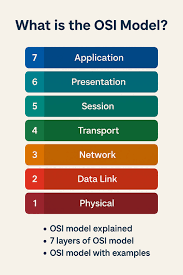
What is the OSI model?
Operating system Interconnection, a international standard that defines a framework for protocols and networking components.
Standardizes how diverse communication systems interact
What is risk?
The possibility of suffering a harm or lost
What is a threat?
A circumstance or event with the potential to cause harm to an asset
What is a vulnerability?
An asset characteristic that can be exploited by a threat to cause harm. Also be the result of a lack of security or weakness in controls
Why are preventative controls better than detective controls? Why are detective controls better than preventative controls?
Detective control identify issues and used for quality control
Preventative controls stop issue before causing damage
What is the difference between a Host-based IDS (HIDS) and a Network-based IDS (NIDS)? When would you prefer one over the other?
How does signature-based detection differ from anomaly-based detection in IDS systems?
What are false positives and false negatives in IDS? Which is more dangerous in a production environment and why?
What is a subnet, and why is subnetting important for security?
The information that tells a device how to interpret the network and host portions of an IP address
Subnetting: The creation of a network within a network by by manipulating how an IP address is split into network and host portions
which limits the lateral movement of attacker
confines breaches to a single segment
How does TLS/SSL work at a high level?
What is a virus ?
Type of malicious software (malware) designed to attach itself to a legitimate file or program in order to spread from one system to another.
Objective : Modify information
Examples : Resident (hides in system) , boot sector (targets hard drive)
What is a worm?
similar to a virus but it does not modify the program. A type of malware that can replicate itself and spread across computers and networks without needing a host file or any user interaction.
Objective : is to eat at system resources
Examples: SQL Slammer (brought down banks, airlines, and emergency service due to internet congestion) Struxnet (targeted Iran nuclear facilities)
What is a Trojan ?
Malware that disguises itself as legitimate file or application to trick users into executing it. This creates back doors
Router
Directs data to correct direction, assigns IP addresses
Switch
Deals with local network so device gets correct packet
Hub
Sends data to every device, outdated
Access Point
Extends wireless connectivity for large coverage
Modem
connects devices in network to the internet with Internet service provider (ISP)
Gateway
Used when systems are not compatible for translation and connection
Network Interface Card (NIC)
Connects device to network
Proxy Server
Sits between device and internet for privacy
IDS
Intrusion detection system
IPS
Intrusion prevention system
IP Address
Tells the network where to deliver data, has 4 numbers (0-255)
Port
A logical endpoint (0-65535)
80 → HTTP (Web)
443 → HTTPS (Secure web)
22 → SSH (Remove access)
53 → DNS (Name lookup)
Client Server Model
Client Requests Servers Respond
Peer to Peer
Every device is both client and server
Bandwidth
Max data transferred per second, Mbps / Gbps
Latency
Time delay for data to reach destination, milliseconds lower is better
OSI Model :
OSI Model :
OSI Model : Session (Conversation Manager)
OSI Model : Transport (Delivery Guarantee)
delivery of data between applications and manages port numbers, layer 4
TCP is ordered connection oriented delivery
UDP is connectionless with no guaranteed delivery
OSI Model : Network (Logical addressing and routing)
Determines best path between networks with protocols, layer 3
OSI Model : Data Link (Local delivery and mac addressing)
Handles delivery within LAN and error detection with checksum, layer 2
OSI Model : Physical (The Actual Wire)
Deals media types and devices, layer 1