Concept 24.2: Speciation can take place with or without geographic separation
 Call Kai
 Learn
Learn Practice Test
 Spaced Repetition
 Match
Match Flashcards
 Knowt Play
1/5

Name | Mastery | Learn | Test | Matching | Spaced | Call with Kai | Chat |
|---|
No analytics yet
Send a link to your students to track their progress
6 Terms
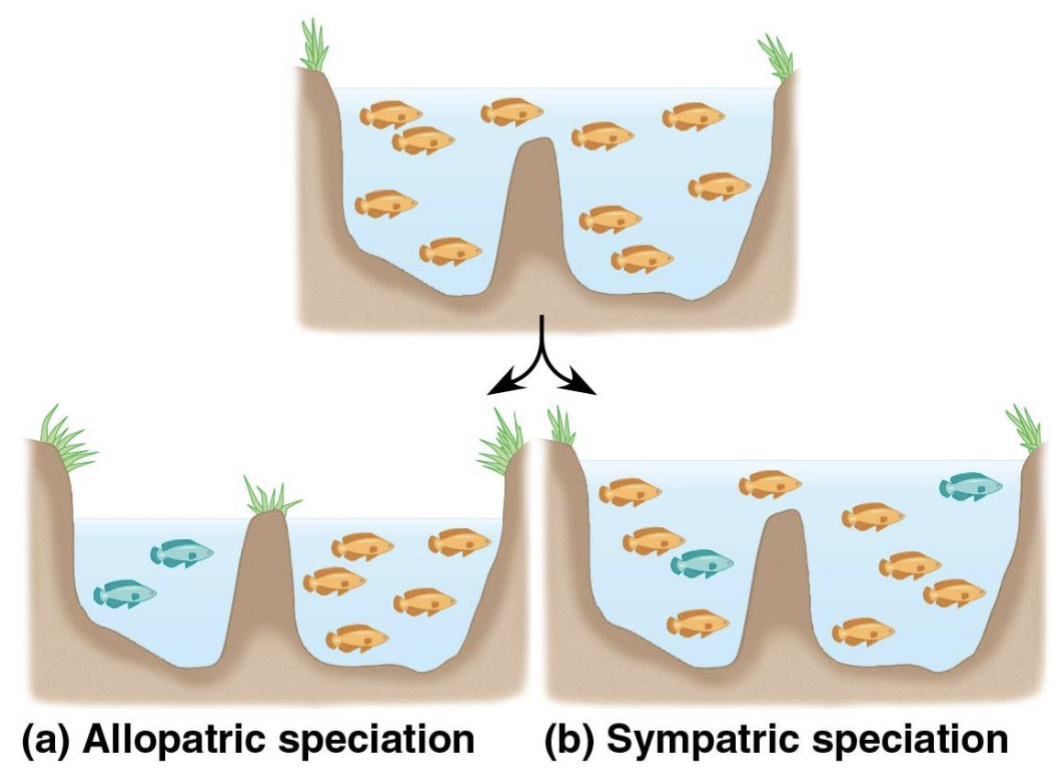
Speciation
The separation of a species into two different species, the two major types being:
Allopatric (geogrpahical isolation)
Sympatric (no geographical isolation)
It may also occur through mutation, natural selection, and genetic drift — which can result in reproductive isolation
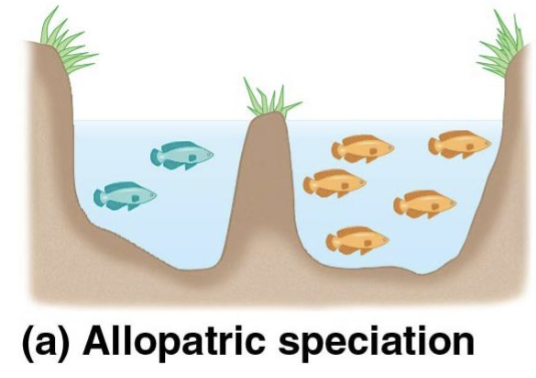
Allopatric speciation
Speciation where gene flow is interrupted when a population is divided into geographically isolated subpopulations, eventually creating barriers to reproduction with genetic changes
Depends on the ability of organisms to move about
The water in a lake may subside and form two lakes with separated populations if fish are unable to bypass it
Individuals colonizing a remote area can lead to this without geographical change
Seen in the flightless cormorant of the Galapagos originating from a flying mainland species
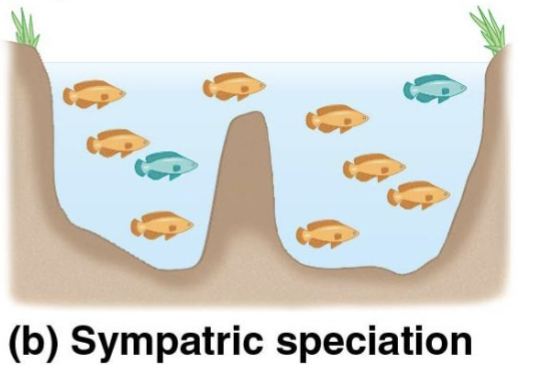
Sympatric speciation
Speciation where the two populations are not geographically isolated; is less common than allopatric speciation
Occurs if gene flow is reduced by factors such as:
Polyploidy
Reproductive selection
Habitat differentiation
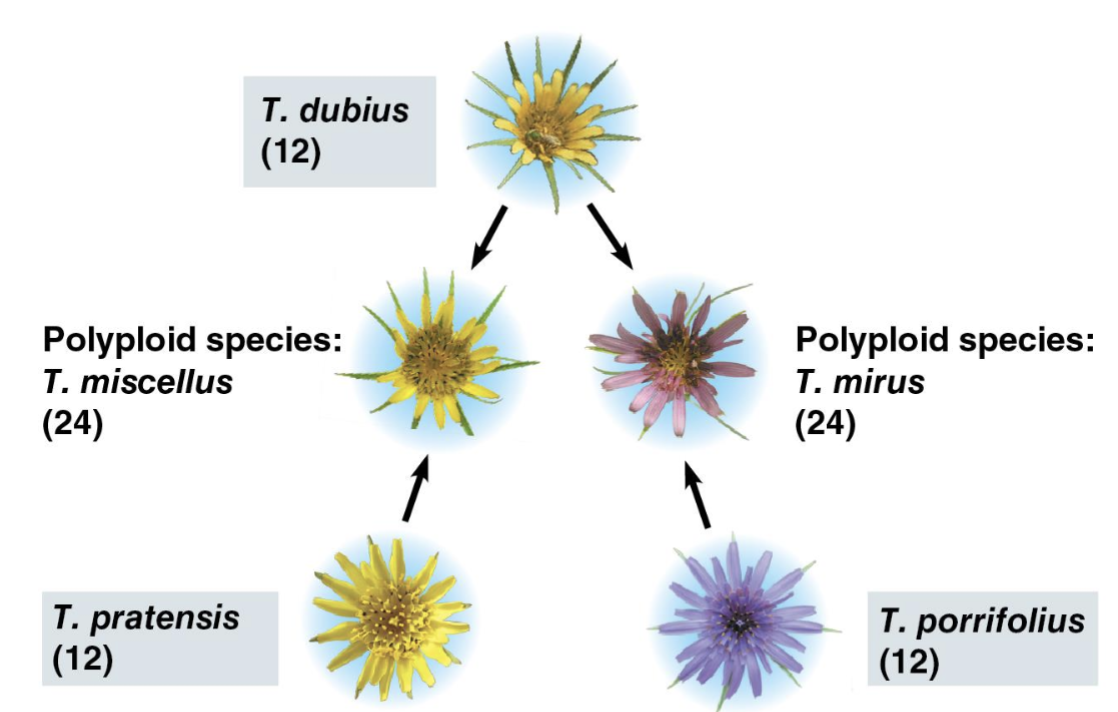
Polyploidy
Type of sympatric speciation with the accidental presence of extra sets of chromosomes during cell division
Can form a new species within a single generation without geographic separation
Common in plants but rare in animals, as seen in the genus Tragopogon and many important agricultural crops
New species can be produced using chemicals to induce errors in cell division
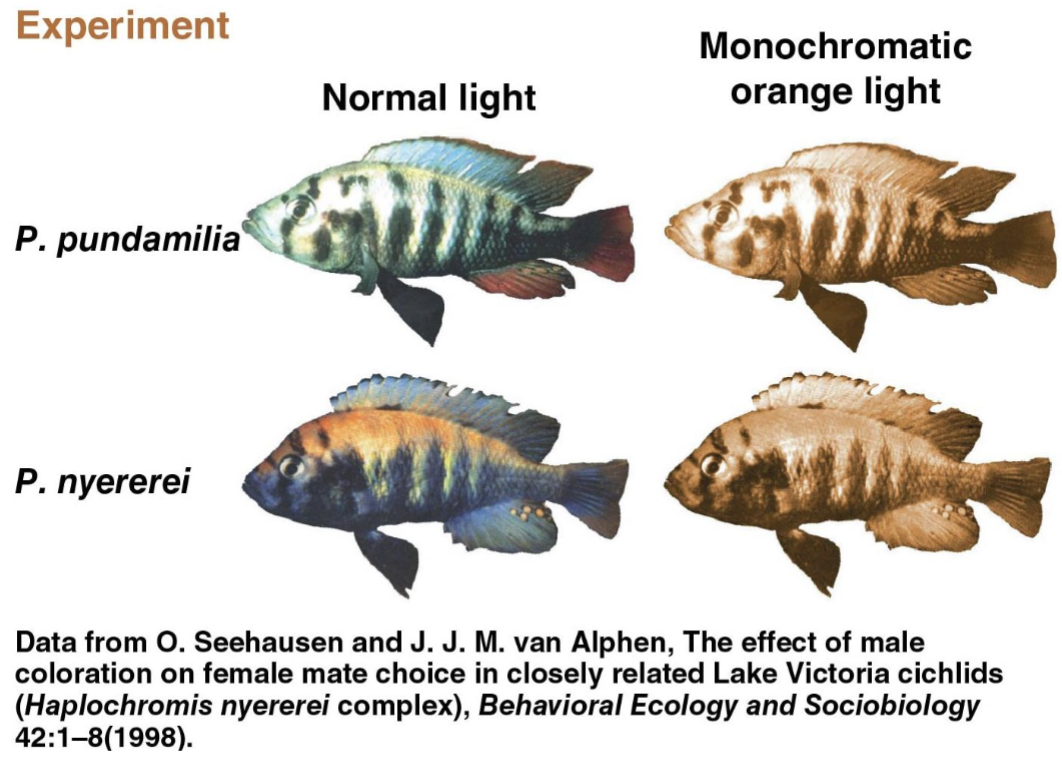
Reproductive selection
Type of sympatric speciation with female mate choice being influenced by male characteristics or behaviors
Habitat differentiation
Type of sympatric speciation resulting from the exploitation of new habitats or resources
Apple maggot flies evolved in North America after switching hosts from hawthorn to apple — this resulted in isolation between groups using different hosts and the advancement of apple maggot flies accelerating