Persistent Right Aortic Arch
 Call Kai
 Learn
Learn Practice Test
 Spaced Repetition
 Match
Match Flashcards
 Knowt Play
1/13

Earn XP
Description and Tags
VOCABULARY flashcards covering the pathophysiology, clinical presentation, diagnosis, and surgical management of Persistent Right Aortic Arch based on lecture notes.
Name | Mastery | Learn | Test | Matching | Spaced | Call with Kai | Chat |
|---|
No analytics yet
Send a link to your students to track their progress
14 Terms
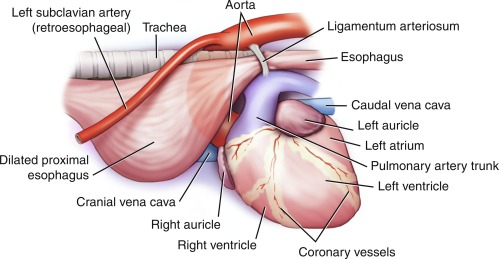
Persistent Right Aortic Arch (PRAA)
The most common vascular ring anomaly (95% of cases) in veterinary patients, occurring when the right 4th arch is retained during development instead of the left.
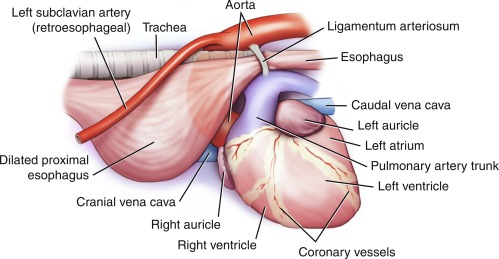
Vascular ring anomaly (VRA)
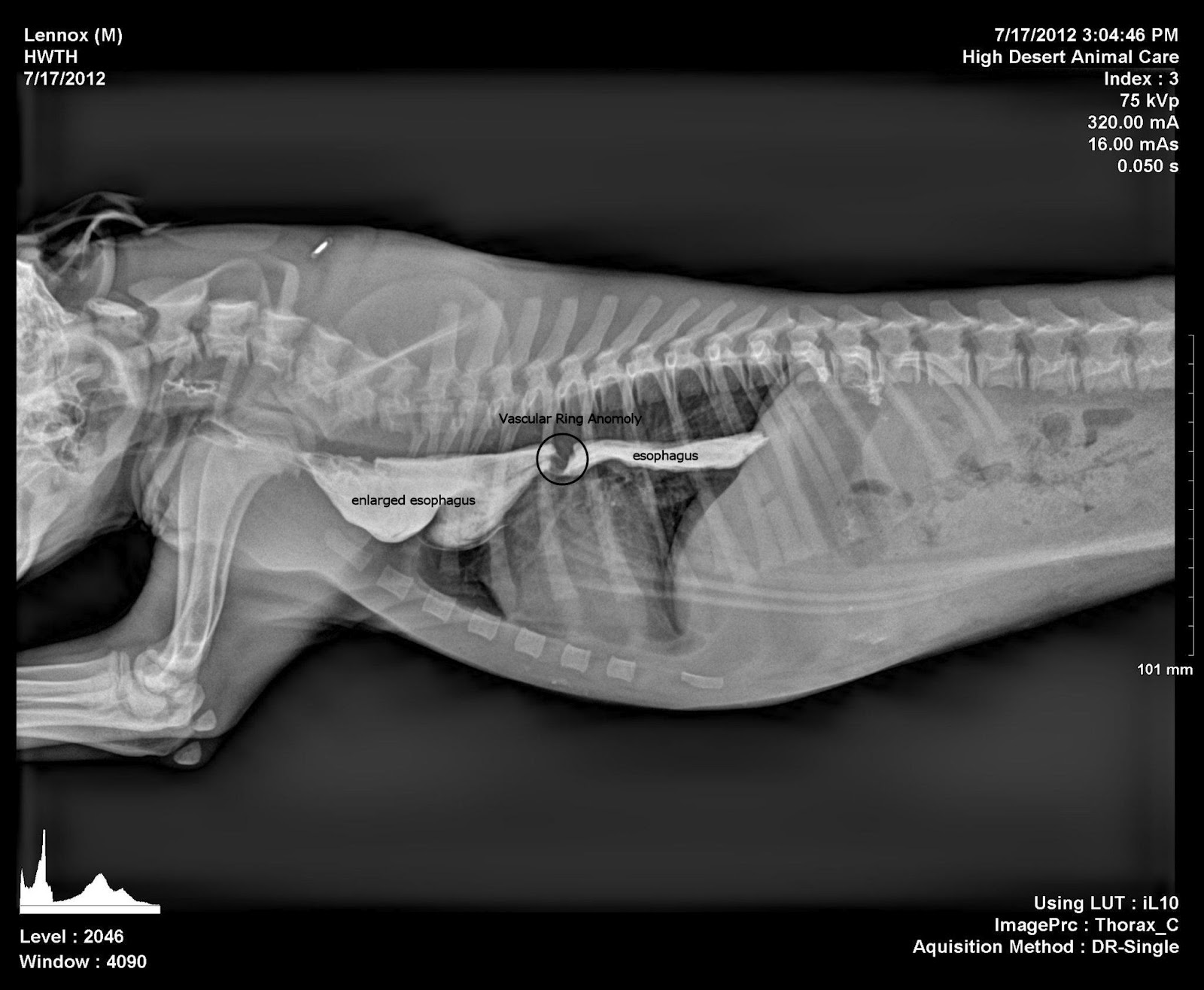
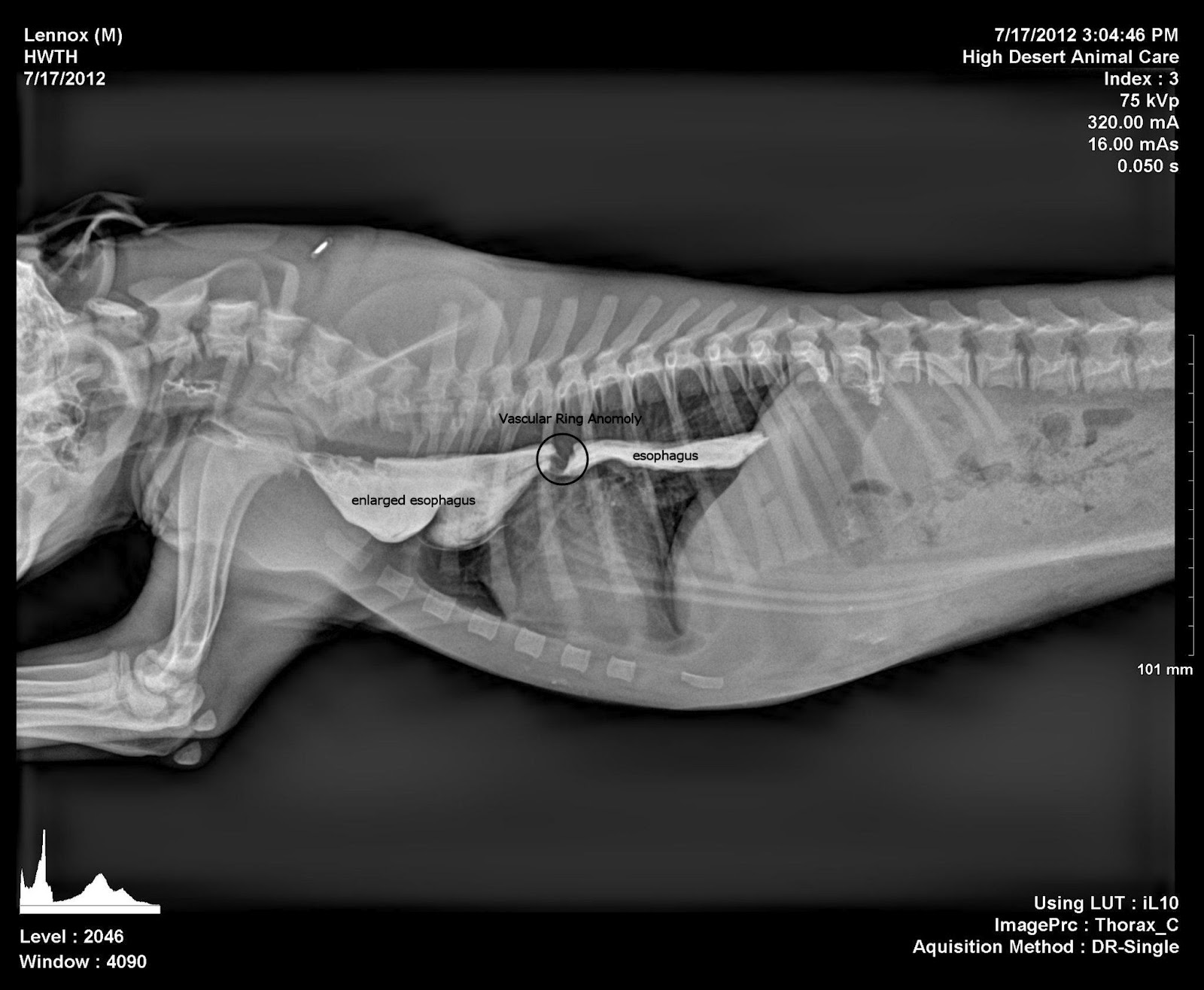
A condition where vascular structures partially or completely encircle the esophagus, resulting in focal constriction/obstruction and progressive oral dilatation.
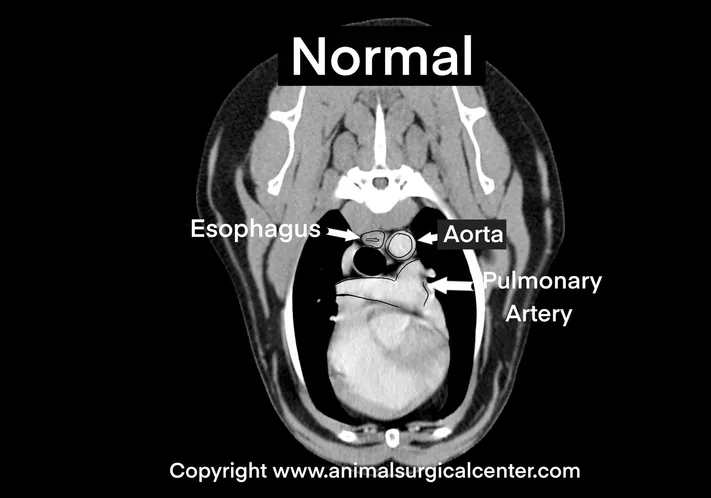
Normal Aortic Development
A process where the left 4th arch develops into the adult aortic arch and the ductus arteriosus originates from the left side of the main pulmonary artery (MPA) trunk.
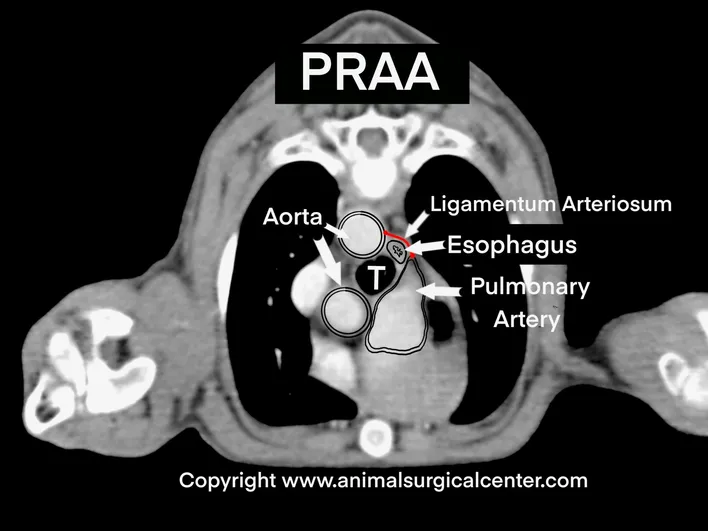
German shepherds
A dog breed specifically identified as being overrepresented in studies of Persistent Right Aortic Arch (PRAA).
Segmental esophageal dilatation
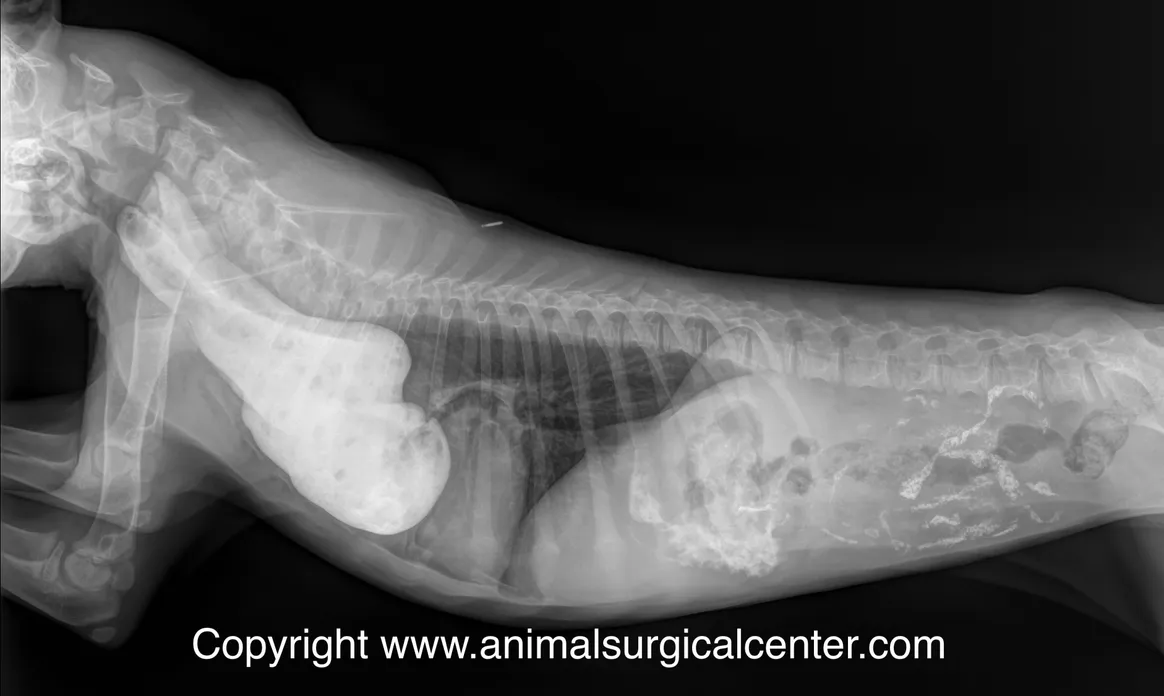
A key radiographic sign of a vascular ring anomaly, appearing as an air-filled, dilated cranial esophagus with abrupt narrowing at the heart base.
Positive contrast esophagram
Also known as a barium swallow, this imaging study improves assessment of the esophagus and helps diagnose a vascular ring anomaly when plain films are inadequate.
Slurry diet
A specific dietary consistency used to manage symptoms and improve the nutritional status of malnourished PRAA patients before surgical intervention.

Bailey chair
A specially designed seat used for elevated feedings to allow gravity to assist food passage in animals with esophageal dysfunction.

Elevated feeding duration
The management practice of maintaining a patient in an upright position for at least ≥20 minutes after feeding to reduce regurgitation.
Lateral thoracotomy
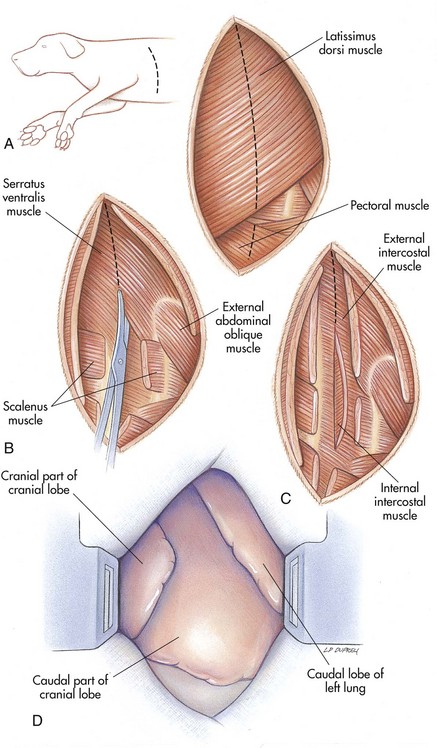
The surgical approach used to access the thoracic cavity to identify and dissect the ligamentum arteriosum in Persistent Right Aortic Arch cases.
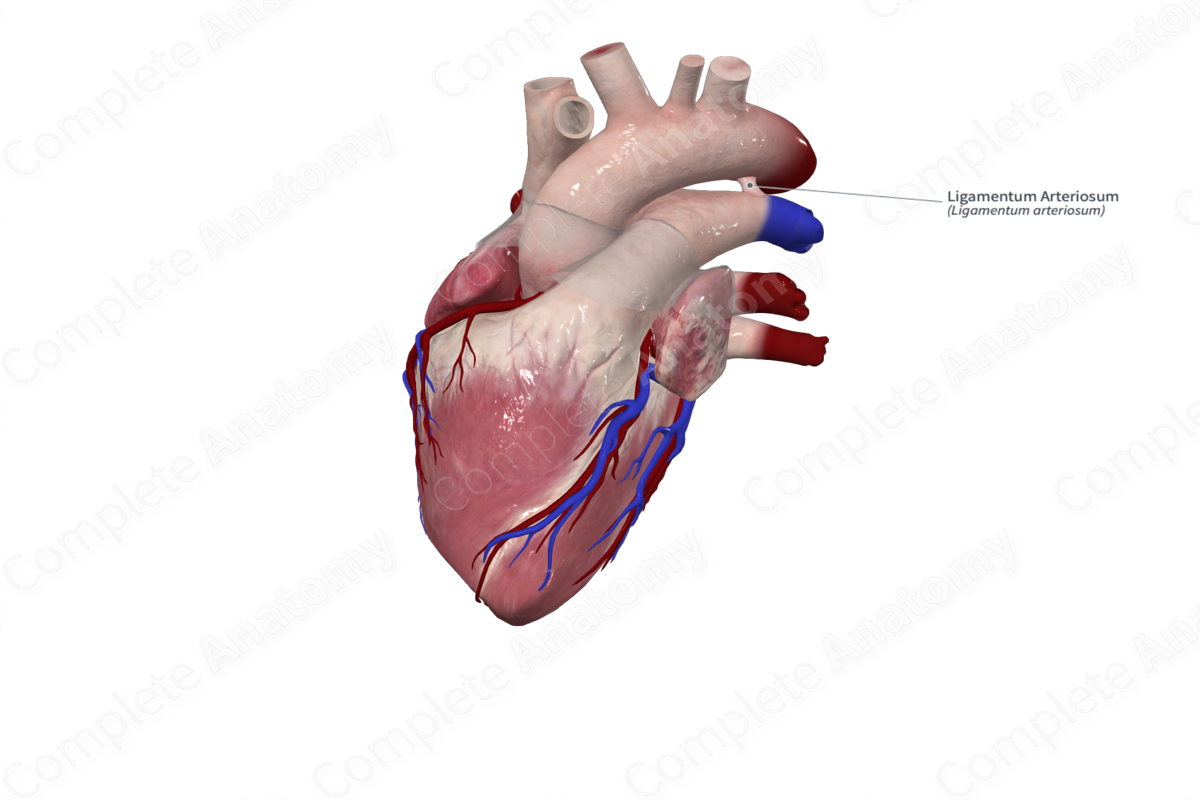
Ligamentum arteriosum (LA)
The vascular structure that must be suture ligated and divided to release esophageal entrapment caused by a Persistent Right Aortic Arch.
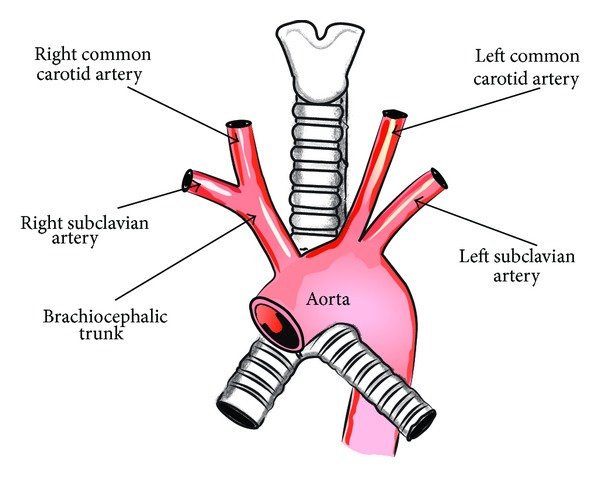
Aberrant subclavian arteries
Vascular structures that may concurrently contribute to esophageal constriction and may require division during surgery.
Aspiration pneumonia
A common respiratory complication in patients with Persistent Right Aortic Arch due to frequent regurgitation and esophageal dysfunction.
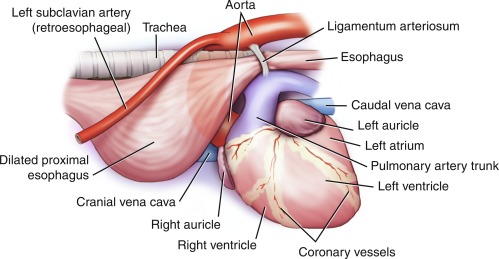
Cranial thoracic esophageal dilatation
The specific anatomical region of the esophagus that becomes severely dilated in PRAA patients, often visible on lateral and VD thoracic radiographs.