1.2_QUESTIONED DOCUMENT
 Call Kai
 Learn
Learn Practice Test
 Spaced Repetition
 Match
Match Flashcards
 Knowt Play
1/52

There's no tags or description
Looks like no tags are added yet.
Name | Mastery | Learn | Test | Matching | Spaced | Call with Kai | Chat |
|---|
No analytics yet
Send a link to your students to track their progress
53 Terms
Conventional or Ordinary Copy Book Form
Highly individualized or Personalized
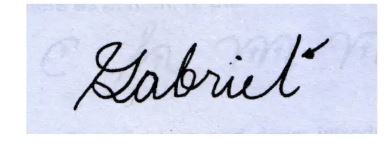
kinds of signiture
Conventional or Ordinary Copy Book Form
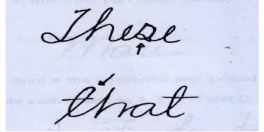
the letters are legible (capable of being read)
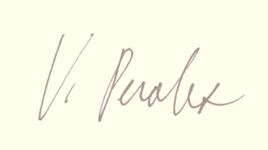
Highly individualized or Personalized
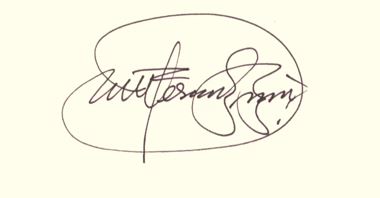
characterized by a series of intertwining strokes, ornamentation and flourishes
Forgery
Is an act of falsifying or counterfeiting any treasure or bank notes, paper bills or any documents which are payable to the bearer.
Is an act of simulating or tracing somebody's signature without the latter's consent for profit.
it is commited by any person who, with intent to defrud, signs the name of another, or a fictitious person, knowing that he has no authority to do so, or falsely makes, alters forges or counterfeits any check, draft due bill for the payment of money or property, or counterfeits or forges the seal or handwriting of another knowing the same to be fake, altered, forge or counterfeited, with intent to prejudice, damage or defraud any person.
Simple forgery
Simulated or Copied forgery
Traced Forgery
Major Types of Forgery
Simple forgery
Is a forged signature where no attempt has been made to make a copy or facsimile of the genuine writing of a person purported to sign the document. Also known as spurious signature
Simulated or Copied forgery
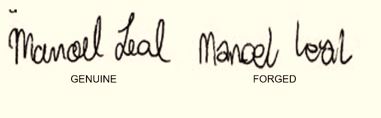
Is a forged signature which resembles the genuine signature written in free-hand. It is considered as the most skillful form of forgery.
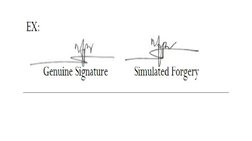
Traced Forgery
Is a forged signature which closely resembles the genuine made by some tracing process or outline form.
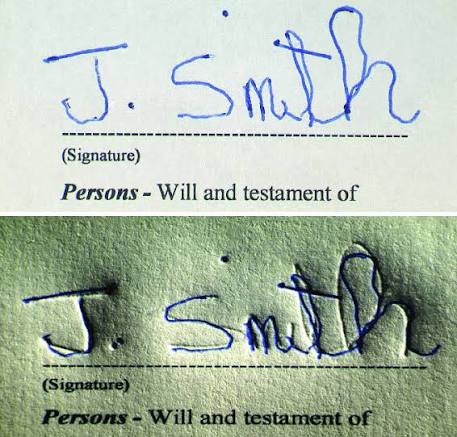
A. Carbon outline process
B. Indention process
C. Projection or transmitted light process
D. Laser method
Methods of tracing
Carbon outline process
uses carbon paper.
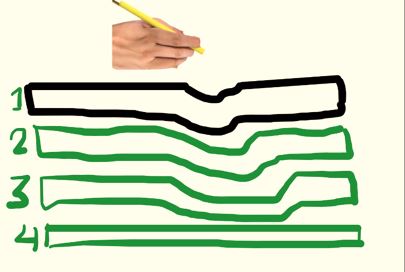
Indention process
uses considerable pressure, Canal-like process.
with suitable pressure or force the outline of the genuine signature with a pointed instrument. The outline is then directly inked, in some instances, the outline is first retraced lightly with a pecil before it is finally retraced with suitable ink.
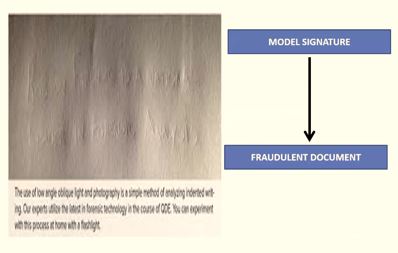
EDSA (Electro Static Detection Apparatus
instrument use for examination of intended writings
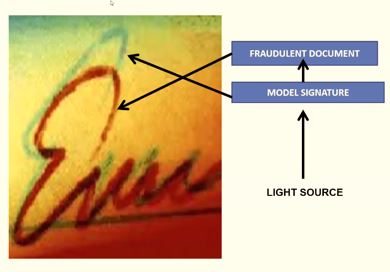
Projection or transmitted light process
uses light from the back or bottom.
spurious document is placed immdiately over the genuine signiture, with strong light directed through the two sheet of paper from below or behind; outline, which is seen through upper sheets, is then traced
Laser method
uses hologram
Characteristics
It refers to any property, marks or elements which distinguishes. -
Also referred to as identifying details.
Class Characteristics
Characteristics or properties which are common or which can be found in the specimen writing of other person.
Individual Characteristics
Characteristics which are highly personal or peculiar. That which is unlikely to occur in other's handwriting.
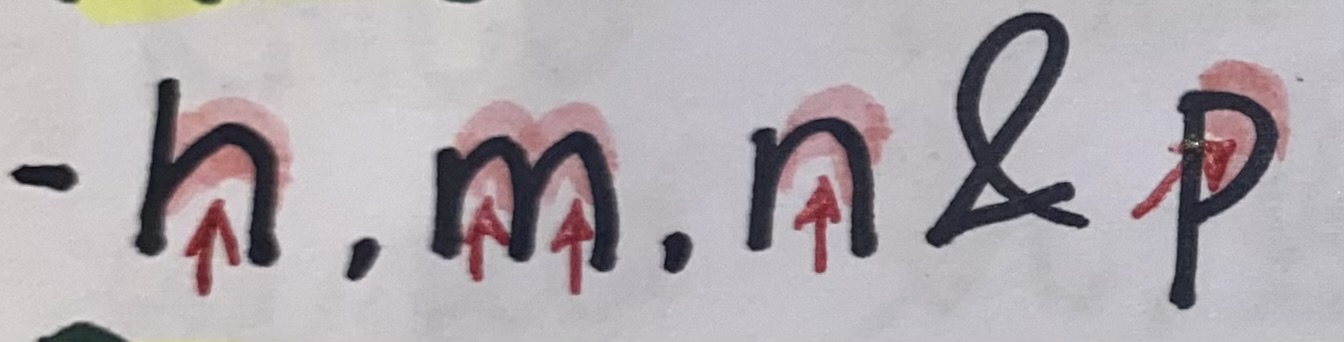
Arc
the rounded inner part of an upper curve, bend or crook,
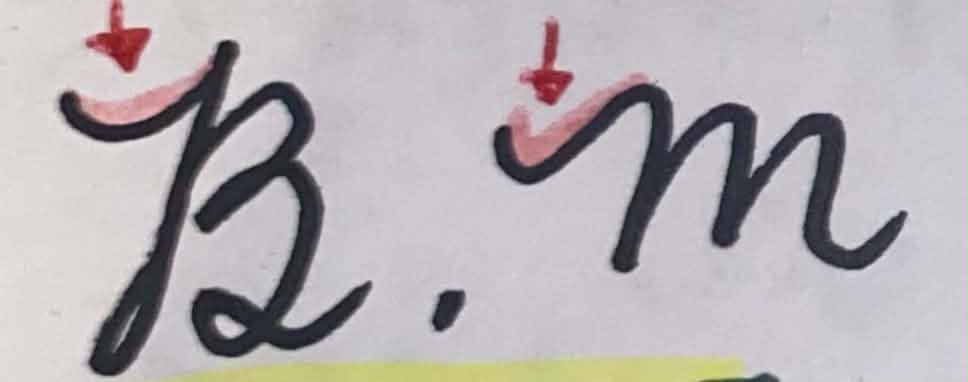
Beard
is an introductory up and down strokes found in some capital letters. Also sometimes called as double hitch.
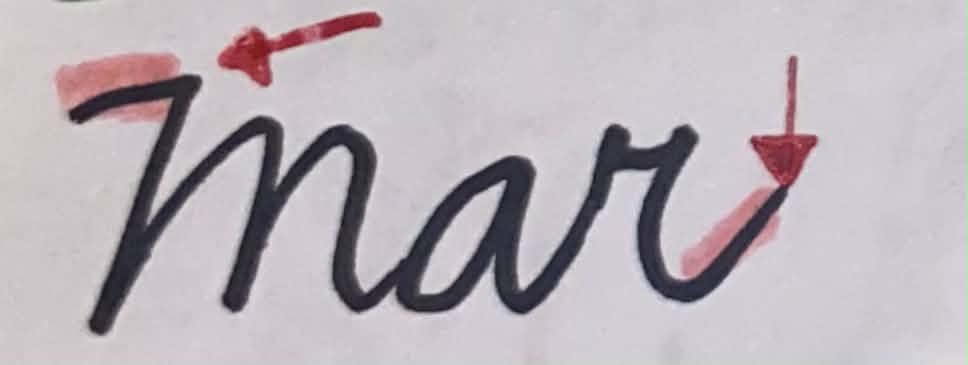
Blunt
is a part of a stroke characterized by an abrupt beginning or end at which the pen does not creates a diminishing stroke.
Buckle Knot
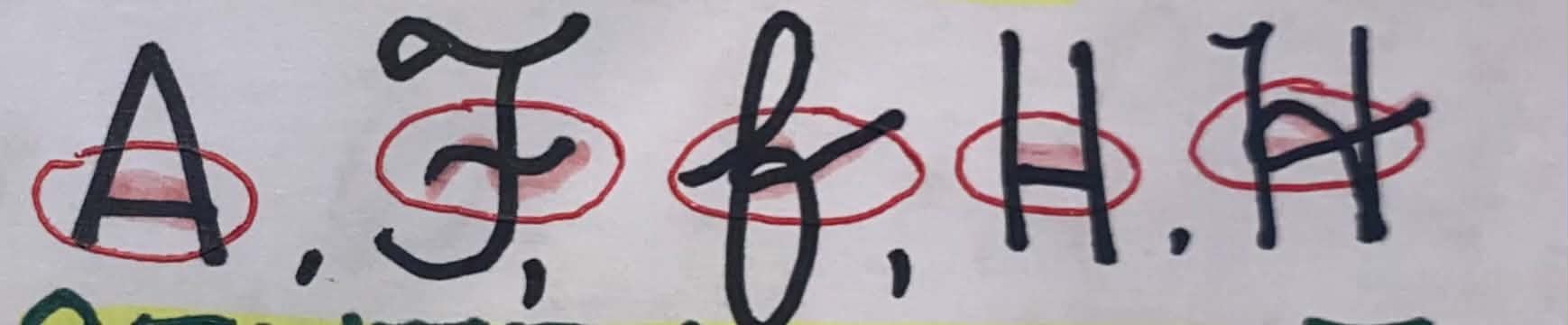
is a horizontal or loop strokes used to complete letters A, H, F and D.
Central Part
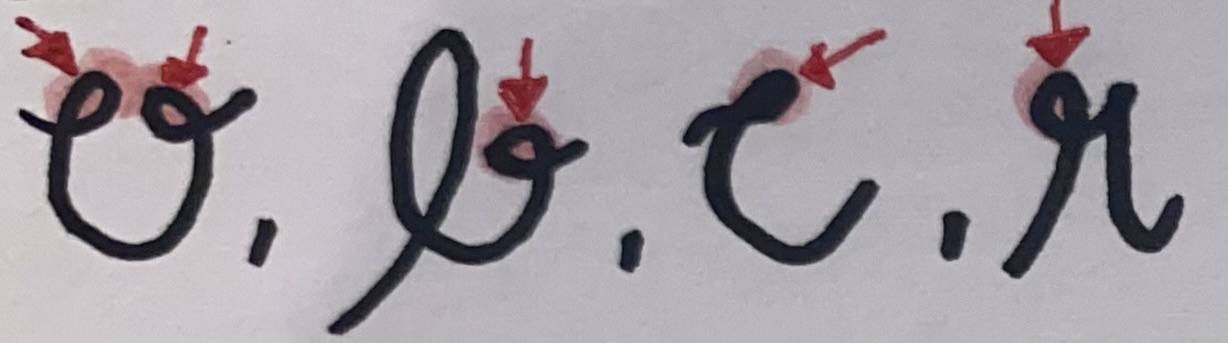
is the body of the letter. Characterized by a small rounded or circular stroke.

Ductus-link/ Ductus-broken
refers to the connection between letters, either joined or disconnected.

Eyelet/ eyeloop
refers to small oblong strokes.
Hitch
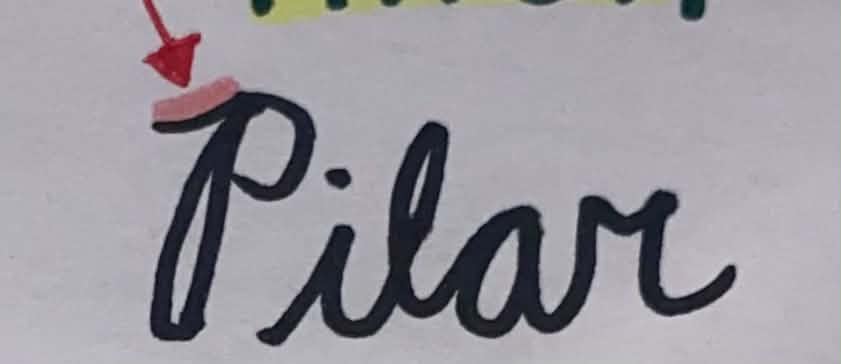
an introductory backward stroke found in most capital letters and in some small letters
Humps
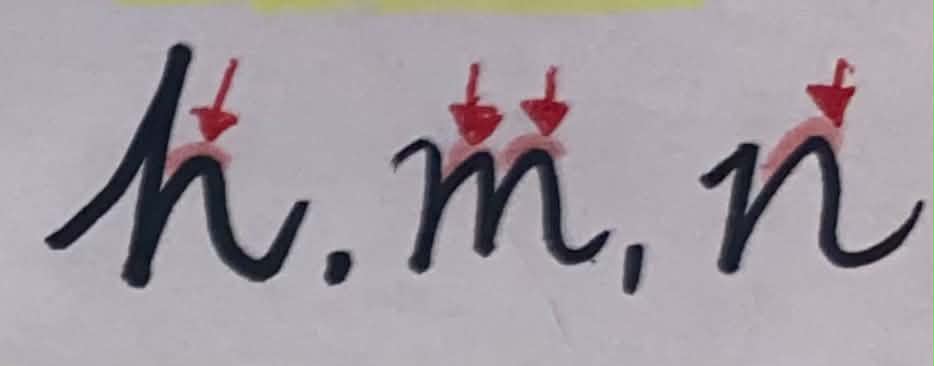
is the outer portion of an upper curve bend or crook, (see arc)
Knob
is a tiny pool of an ink at the beginning or ending strokes.
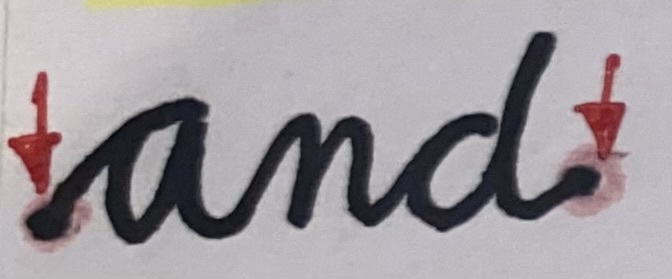
Loop
is an oblong stroke
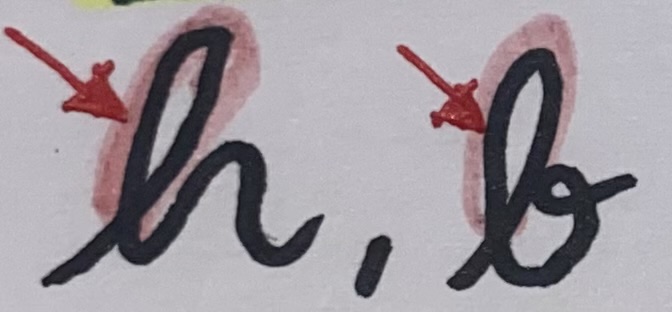
Stem/shank/staff
is considered as the backbone of the letter characterized by a long downward stroke

Initial/terminal Spur
a long running initial or terminal strokes.

Through
refers to any garland form of a letter strokes
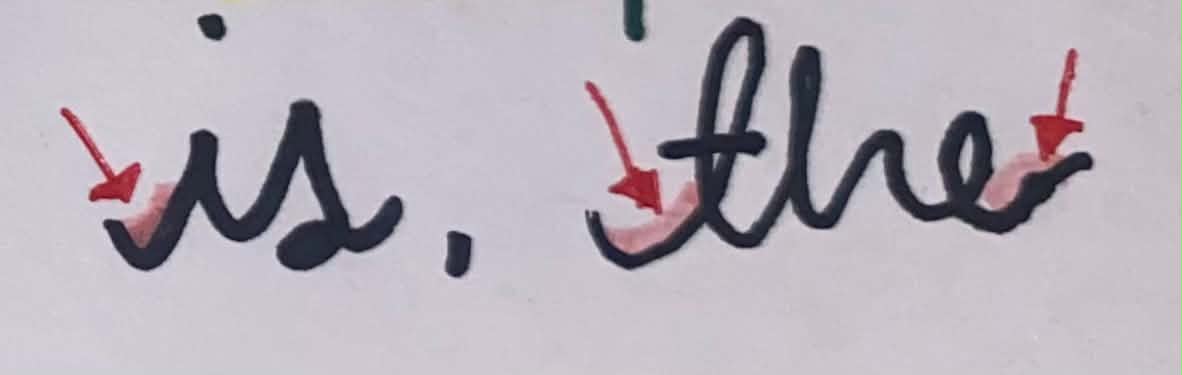
Whirl
is the lone upward strokes usually found opposite the stem
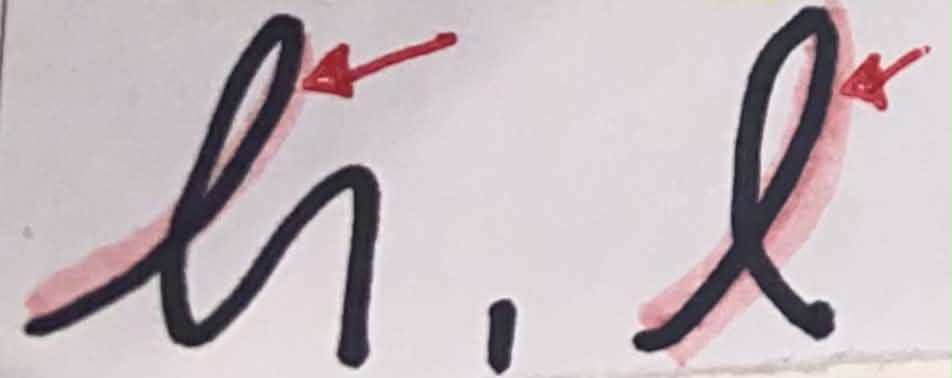
Hiatus
An obvious gap between letters.
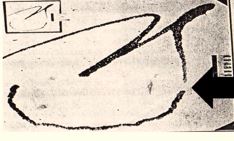
Interuption in strokes produced withouht lifting the writing instrument. Possibily caused by speed in writing or by defective writing instrument
Pen Jump
Embellishments
Are added strokes that serve as an ornamental or flourish to the design of the letters. They considered unnecessary to the legibility of the writing.
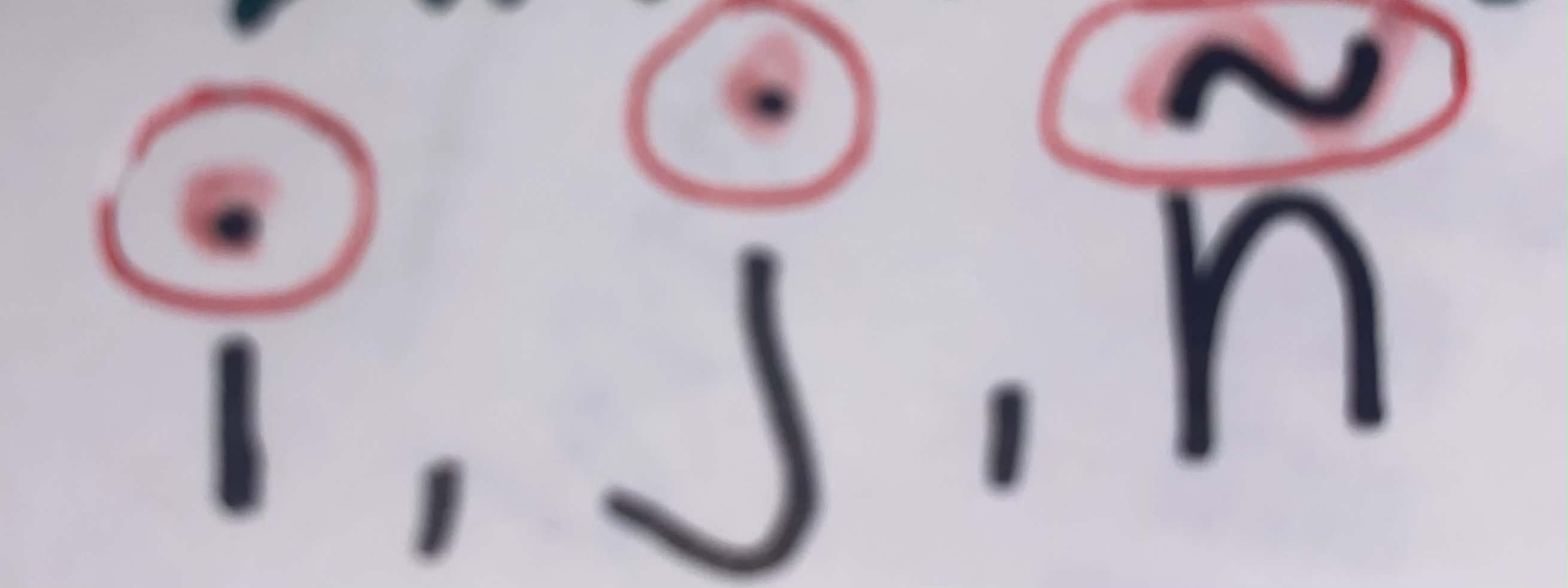
Diacritics
A stroke added to complete certain letters. They are necessary to the legibility of the letters.
Writing Movement
Refers to all factors relative to the motion of the pen.
Line Quality
Are the visible records in the written strokes of the basic movements and manner of holding instrument. It is derived from a combination of factors, including writing skill, speed, and rhythm, freedom of movement, shading and pen emphasis.
Fingers
hand
forearm
whole arm
Types of movement
Finger
used by beginners
The thumb, the first and second and slightly the third fingers are in actual motion. Most usually employed by children and illiterates.
Hand
wrist serves as the point of pivotal & of limited freedom
produced by the movement or action of the whole hand with the wrist as the center of attraction
Forearm
most skillful type of movement
movement of the shoulder, hand and arm with the support of the table.
Whole arm
used for ornamental or large writings
action of the entire arm without resting. i.e., blackboard writing
Pen pressure
is the average or usual pressure applied in the writing.
Pen Emphasis
is the act of intermittently forcing the pen against the paper surface with an increase in speed
Rhythm
is the harmonious or balance recurrence of strokes or impulses.
Skills
refers to the degree of writer's proficiency in writing
Speed
cannot be measured precisely from the finished handwriting but it can be interpreted in broad term as to either fast, slow or moderate.
Pen-lift
an interruption in strokes caused by sudden removal of the writing instrument from the paper surface.
disconnection between letters and letter combination may be due to lack of movement control.
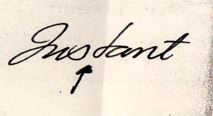
Shading
refers to the more obvious increase in the width of the letter strokes.
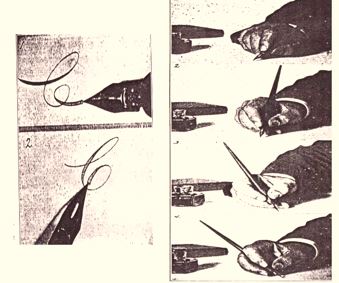
Pen Position/ Pen Hold
is the relative location of the pen in relation to the paper surface.
Pen scope
represents the reach of the hand while the wrist at rest.
Retracing or retraced
is the stroke which goes back over another writing strokes that is slightly to occur in other's writing.
Retouching or patching
is a stroke which goes back over a defective portion of a writing to repair or correct an error.