Unit 2 test study guide
 Call Kai
 Learn
Learn Practice Test
 Spaced Repetition
 Match
Match Flashcards
1/21

There's no tags or description
Looks like no tags are added yet.
Name | Mastery | Learn | Test | Matching | Spaced | Call with Kai | Chat |
|---|
No analytics yet
Send a link to your students to track their progress
22 Terms
Study the graph.
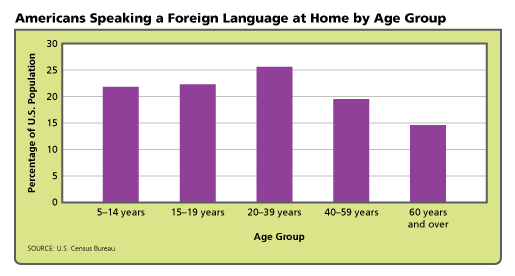
What can be inferred from this data?
Immigrants tend to be younger than other Americans.
Which factor best explains Canada’s economic success?
the high level of education of its people
Which of the following American Indian culture groups was most likely to use canoes?
Northwestern peoples
Study the table.
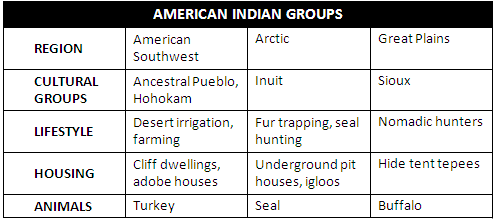
Using the information in the table, what BEST explains why the Sioux used tepees as housing?
Because the Sioux were nomadic, they needed to use materials that could be easily packed and moved.
How did the environment influence the American Indian cultures of the Northwest and Southwest?
The Northwest had a mild climate with plentiful food supplies provided by rivers, large forests, and the ocean. Thus, its peoples did not have to farm, yet could still live in permanent settlements and create complex societies. In the Southwest, the climate was hot and dry and there were fewer food resources. The Ancestral Puebloan Indians had to develop agriculture in order to build permanent communities.
Which of the following would be the most likely place for an unemployed Canadian fisherman from Newfoundland to move?
Alberta because of its jobs in the energy sector
Read the excerpt
“It is hereby declared that the protection of the environment is essential to the well-being of Canadians and that the primary purpose of this Act is to contribute to sustainable development [development that does not harm the environment] through pollution prevention.”
—Canadian Environmental Protection Act, 1999
Based on the excerpt, what is the main purpose of this law?
preventing pollution of the environment
Which of the following terms correctly describe Canada’s government? Choose the TWO correct answers.
A a presidential democracy
B an absolute monarchy
C a constitutional monarchy
D a parliamentary democracy
C and D
Which of the following best describes the transportation of newly enslaved Africans to the English colonies?
A.
Enslaved African families were allowed to remain together.
B.
Enslaved Africans were allowed to leave the hold and go up on deck freely.
C.
Enslaved Africans were forced aboard ships and chained together to prevent mutinies.
D.
Enslaved Africans could choose to make the journey or return to their homelands.
Enslaved Africans were forced aboard ships and chained together to prevent mutinies.
What archaeological evidence taught scholars about the culture of the Mississippians?
large earthen mounds built for religious purpose.
How does Canada's climate affect where its people live?
Most Canadians live in the southern part of the country, where temperatures are milder.
Place the events in U.S. history in correct chronological order. Place the earliest event at the top and the last event at the bottom.
World War II
Civil War
Great Depression
Mexican–American War
Mexican-American War 2. Civil War 3. Great Depression 4. World War II
Study the map.
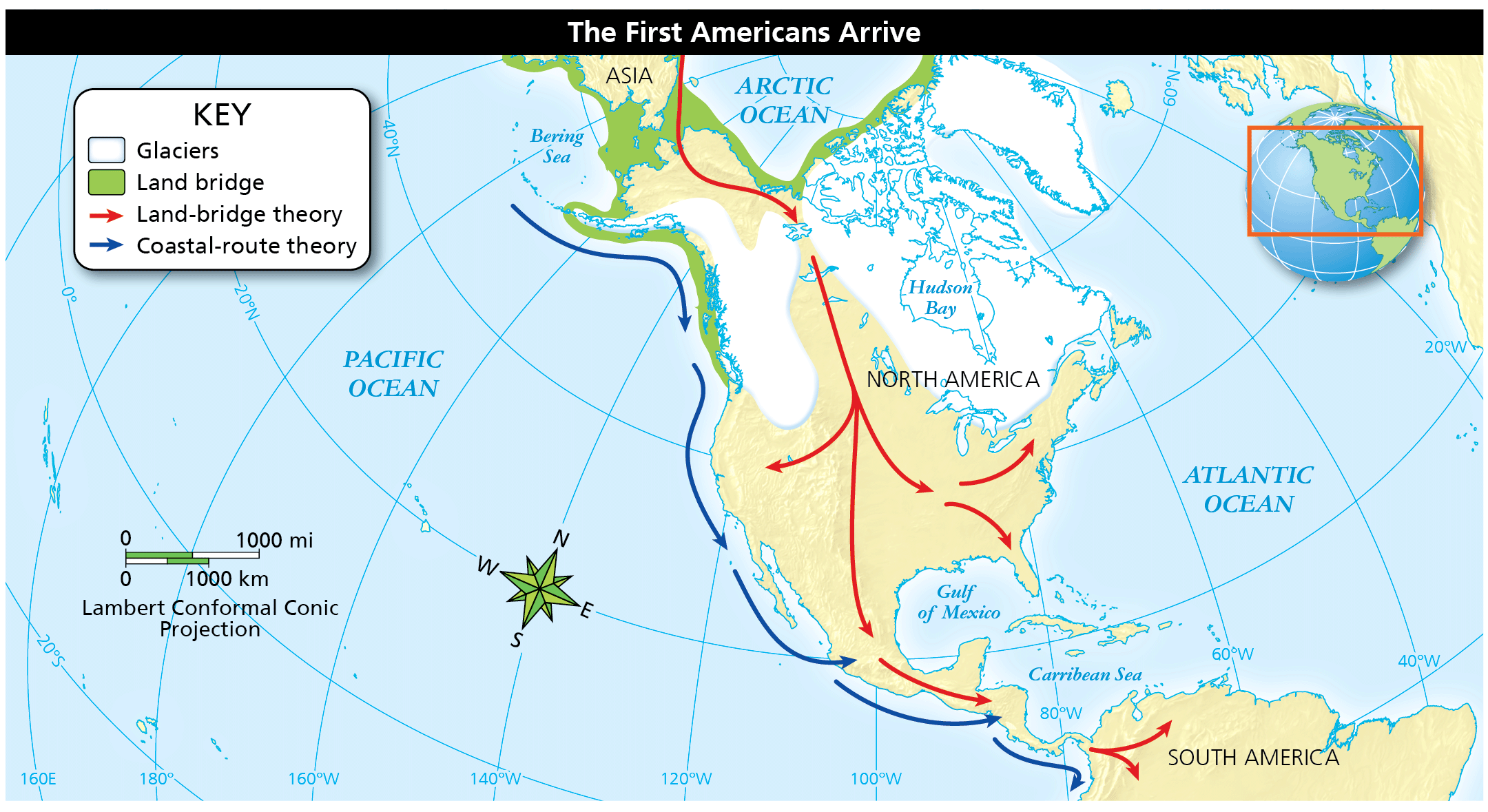
According to the map, how did people first arrive in North America?
They walked or paddled along the shoreline from Asia to North America.
The Ancestral Puebloans were a group of peoples who had to learn to adapt to
A a cold, dry climate.
B a warm, rainy climate.
C a cold, wet climate.
D a warm, dry climate.
D
In the United States, which ethnic or racial group has most frequently had conflicts with natural gas and oil companies over land use?
American Indians
Which of the following was a cause of the Civil War in the United States?
A.
The South wanted new states to allow slavery and the North did not.
B.
The North wanted new states to allow slavery and the South did not.
C.
The North wanted to end the slave trade with Africa.
D.
The South wanted to maintain the slave trade with Africa.
A. The South wanted new states to allow slavery and the North did not.
Read the quote.
“I am Dekanawidah [identified as the traditional founder of the Iroquois Confederacy] and with the Five Nations confederate [united for a common purpose] lords I plant the Tree of the Great Peace. . . . Under the shade of this Tree of the Great Peace we spread the soft white feathery down of the globe thistle as seats for you Adodarhoh [an Onondaga chief], and your cousin lords. . . . There shall you sit and watch the council fire of the confederacy of the Five Nations, and all the affairs of the Five Nations shall be transacted at this place before you.
. . . We place at the top of the Tree of the Long Leaves an eagle who is able to see afar. If he sees in the distance any evil approaching or any danger threatening he will at once warn the people of the confederacy. The smoke of the confederate council fire shall ever ascend and pierce the sky so that other nations who may be allies may see the council fire of the Great Peace . . .”
—Iroquois Constitution
Based on this excerpt, what was the purpose of the Iroquois League?
to work together and defend each other to keep peace
What natural resource most attracted European traders to the lands that later became Canada?
Animal furs
The outcome of the French and Indian War was significant for the British most of all because they
gained control of French land east of the Mississippi.
Study the image.
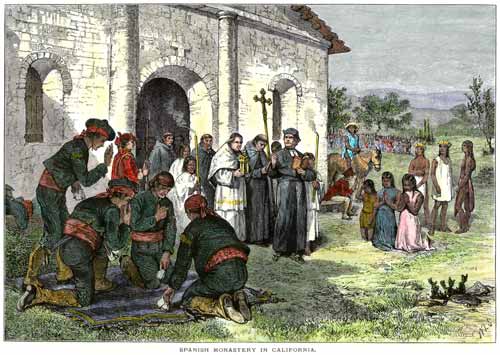
What generalization about the experiences of American Indians on Spanish missions does this image best support?
American Indians were expected to convert to Christianity.
Read the excerpt.
“We hold these truths to be self-evident, that all men are created equal, that they are endowed by their Creator with certain unalienable Rights, that among these are Life, Liberty and the pursuit of Happiness.”
—United States Declaration of Independence
Based on this excerpt, which of the following ideas most contributed to inspiring the American Revolution?
A.
ideas about equality and rights
B.
a desire for greater happiness
C.
a desire to free people from slavery
D.
ideas about property rights
A. ideas about equality and rights
How are Canada’s settlement patterns similar to those of the United States?
Most Canadians live in urban areas, as do most Americans. Canadian and American rural areas have lower population densities. Many Canadian cities are also located near rivers and other bodies of water, as are American cities