Pharm Chapter 2 Part 2: Metabolism and Excretion
 Call Kai
 Learn
Learn Practice Test
 Spaced Repetition
 Match
Match Flashcards
 Knowt Play
1/20

There's no tags or description
Looks like no tags are added yet.
Name | Mastery | Learn | Test | Matching | Spaced | Call with Kai | Chat |
|---|
No analytics yet
Send a link to your students to track their progress
21 Terms
STUDY GUIDE:
What is metabolism?
drug metabolism is also known as biotransformation
• it is enzymatic alteration of drug structure
What is the purpose of metabolism?
not necessarily deactivation but to make the drug more easily excreted by the kidneys (via urine -- mostly water!)
What is the major organ involved in drug metabolism?
most often takes place in the LIVER
How does metabolism (usually) affect the drug in terms of its physiochemical properties?
usually by increasing polarity and/or attaching hydrophilic groups
• causes high water solubility, allowing the drug to enter water/urine to be excreted
• is usually more polar and less lipid soluble than its parent compound
What is the difference between synthetic and non-synthetic drug metabolism?
• Synthetic: Phase II
• Non-synthetic: Phase I
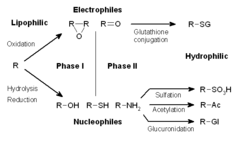
What is phase I metabolism?
non-synthetic → increases polarity & increases water solubility
• in phase I reactions, lipid molecules are metabolized by three processes, oxidation, reduction, and hydrolysis, which require very little energy
• these reactions are carried out by cytochrome P450 enzymes ("mixed function oxidases" in liver)

What is phase II metabolism?
synthetic → conjugation reactions (addition of groups from endogenous cofactors)
• reactions involve conjugation with any of the following agents: glucuronic acid, sulfuric acid, acetic acid, or an amino acid
• The most common conjugation occurs with glucuronic acid; this conjugation is termed glucuronidation
• This mechanism, either alone or in combination with a phase I reaction, allows the body to convert a lipid-soluble drug to a more polar compound → increases water solubility
• The enzymes that mediate the conjugation are termed transferases
What is an adverse consequence of metabolism of acetaminophen, especially in cases of overdose?
• acute liver injury
• mitochondrial dysfunction
• oxidative stress
?
What is the First-Pass Effect? How would you get around (avoid) this effect?
When drugs are given orally, they are absorbed through the intestinal wall and then pass through the hepatic (liver) portal circulation, which can inactivate some drugs. This is termed the first-pass effect because the drug passes through the liver first before it circulates in the systemic circulation
• During the drug's first pass through the liver, it is metabolized and the amount of drug available to produce a systemic effect i reduced
• Circumvent by: avoiding oral route of administration (do sublingual, transdermal, or rectal suppositories)
Cytochrome P450 3A4 (CYP3A4) is responsible for _____ metabolism of about ____% of drugs out on the market.
Phase I; 50%
T/F: Different drugs, foods, and the environment can affect drug metabolism.
TRUE
If a heavy grapefruit juice drinker takes a drug that is metabolized by CYP3A4, what would happen to the drug concentration in his/her body plasma?
Grapefruit contains furocoumarins or psoralens:
• these irreversibly inhibit cytochrome P450 3A4 (CYP3A4)
• inhibiting CYP3A4 reduces/slows down drug metabolism
• this can cause meds to enter the body quicker or stay in the body longer -- can increase toxicity or increase side effects
What is the major route of drug excretion?
renal (kidney) → urine (glomerular filtration)
• other ways:
• bile GI feces
• GI tract
• lungs
• sweat/saliva/milk
What properties of drugs affect drug excretion?
High water solubility of drug = easier excretion from body
???
Understand how different routes of administration can result in differences in time of onset as well as the site of drug actions.
• Closer to blood vessel/vein = higher administration & action
• IN vein or vessel = duration is shorter
• IV is faster onset. Oral is slower onset due to having to go through GI tract
• Plasma protein binding = delayed effects & longer duration of action with high protein binding
• Drugs binding to plasma proteins depresses Vd. Low Vd = high concentration in blood
• Drugs administered in solution avoid pre-absorption steps, providing faster onset of action
Which route results in the fastest onset of drug effects (in general)?
IV (intravenous) administration
Which route is the slowest in its onset?
Oral administration
Which route of administration is subject to the First Pass effect?
oral administration
What is enterohepatic cycling?
substances excreted from the liver are excreted into the bile to pass into the intestine, are reabsorbed, then return to the liver to be reused
What are factors affecting drug metabolism?
• Plasma protein binding
• Localization/sequestration of drugs in tissues - if there, drug is not active
• Disease - especially Liver disease
• Drug-drug interactions
• inhibition of drug metabolism
• induction of drug metabolism
• azole antifungals, macrolide antibiotics
• Diet (grapefruit)
• Age
• Environmental chemicals