L35 - Cell Signalling: Adrenalin
 Call Kai
 Learn
Learn Practice Test
 Spaced Repetition
 Match
Match Flashcards
 Knowt Play
1/8

There's no tags or description
Looks like no tags are added yet.
Name | Mastery | Learn | Test | Matching | Spaced | Call with Kai | Chat |
|---|
No analytics yet
Send a link to your students to track their progress
9 Terms
Adrenalin Cell signalling
uses: G-protein-coupled receptors = 3 things working to together → turn on enzyme
a cell-surface receptor/ signal cascade
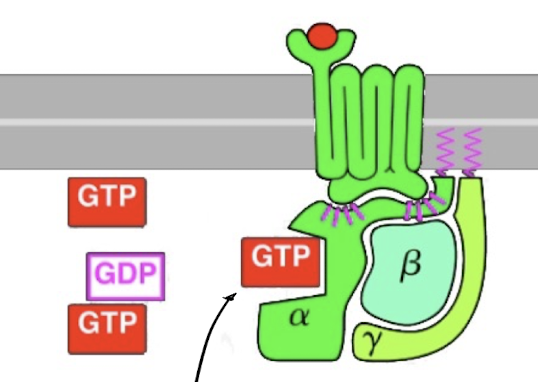
G-proteins: lipid-linked (very mobile) + controlled by GTP
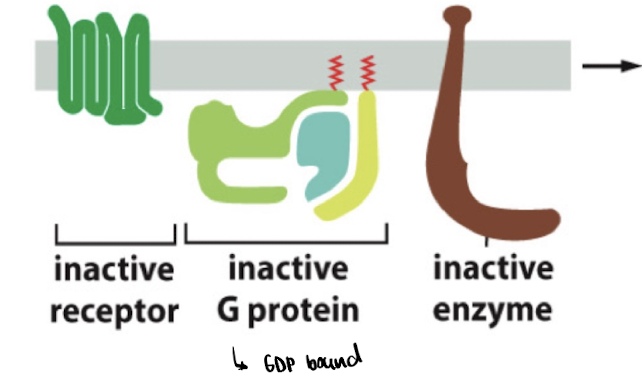
→ active: when signal binds to receptor
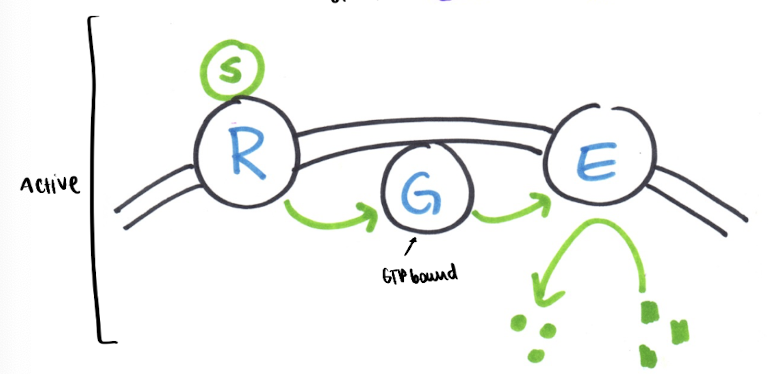
GTP attached to alphas unit is eventually hydrolyzed to GDP → THUS, will need to be reactivated
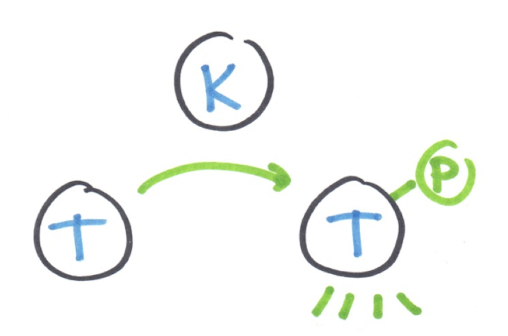
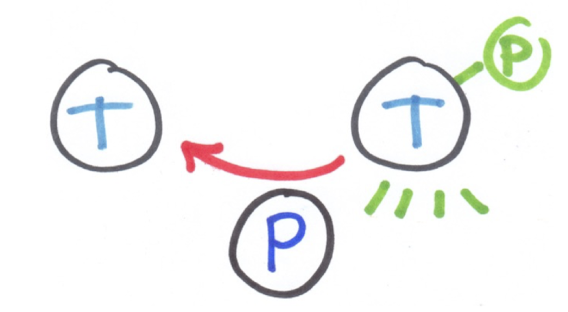
Kinases
kinases = phosphorylate other proteins using ATP
regulates target proteins (usually activates them)
activity: high or zero
phosphates = remove phosphates
usually inactivates a target protein
activity: ALWAYS low activity → thus, if kinases are off the target protein is dephosphorylated
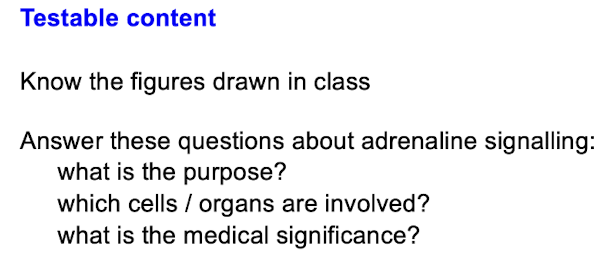
Purpose of Adrenalin signalling
= flight or fight hormone
adrenalin/ epinephrine
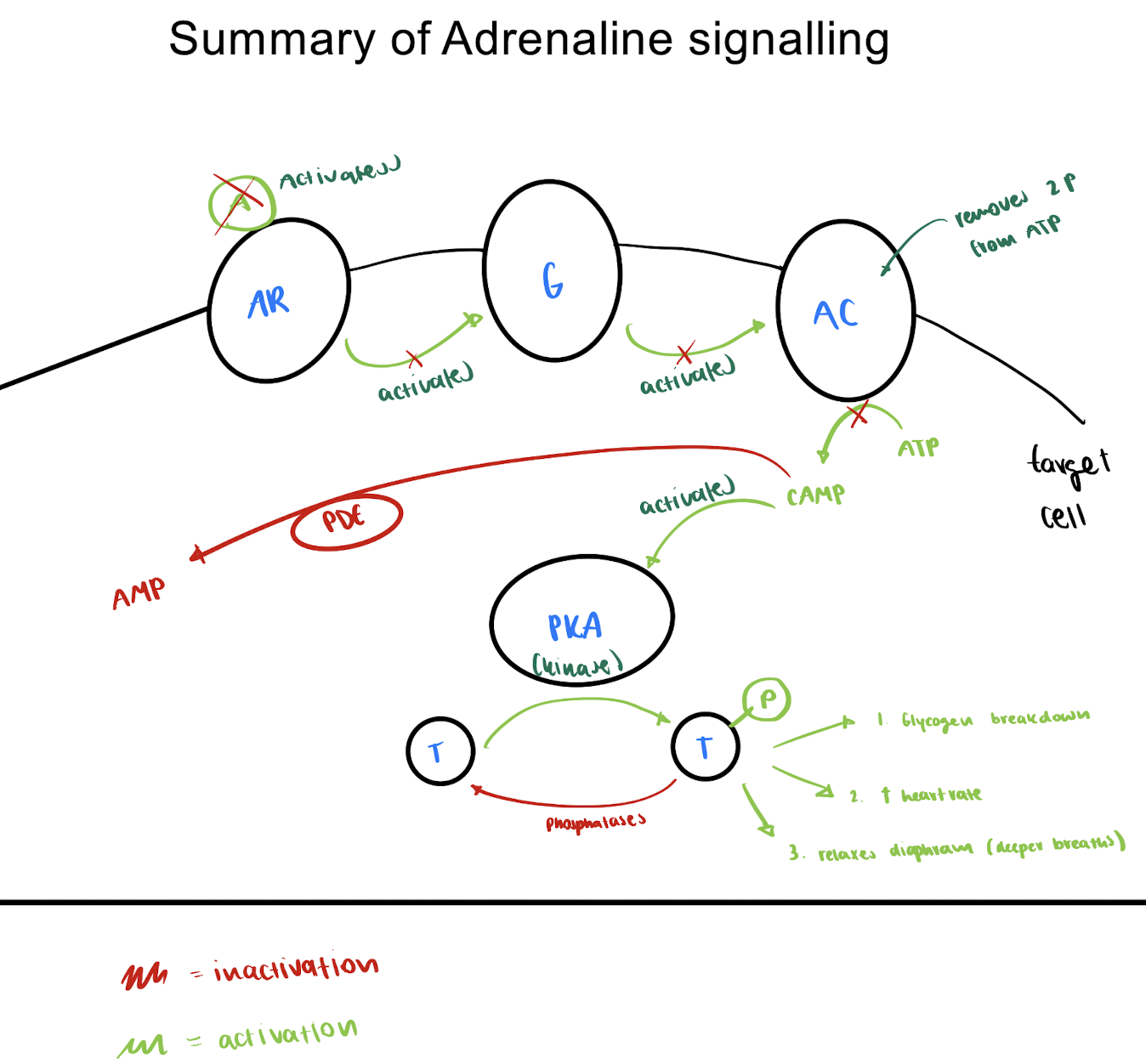
Adrenalin Signalling: Activation
adrenal glands release adrenalin via regulated exocytosis
binds to adrenalin receptor → activates G-protein-coupled receptors
adenylyl cyclase: ATP → cAMP
cAMP activates PKA (kinase)
kinase phosphorylates (activates) target protein
activated target protein:
glycogen breakdown
increases heart rate
relaxes diaphragm (can take easier deeper breaths)
Adrenalin Signalling: Responses
glycogen breakdown by PKA
glycogen = for short-term energy storage
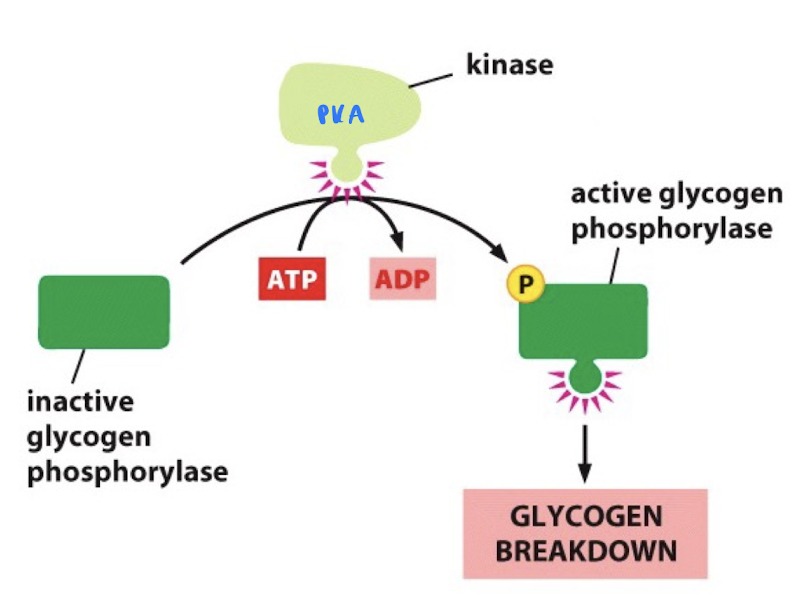
liver cells break down glycogen → fill blood w glucose
muscle cells break down glycogen → use energy to make ATP
→ PKA also inhibits glycogen synthase by phosphorylation (dont want to make glycogen rn)
increased heart rate
easier breathing by relaxing diaphragm muscles
pupils dilate
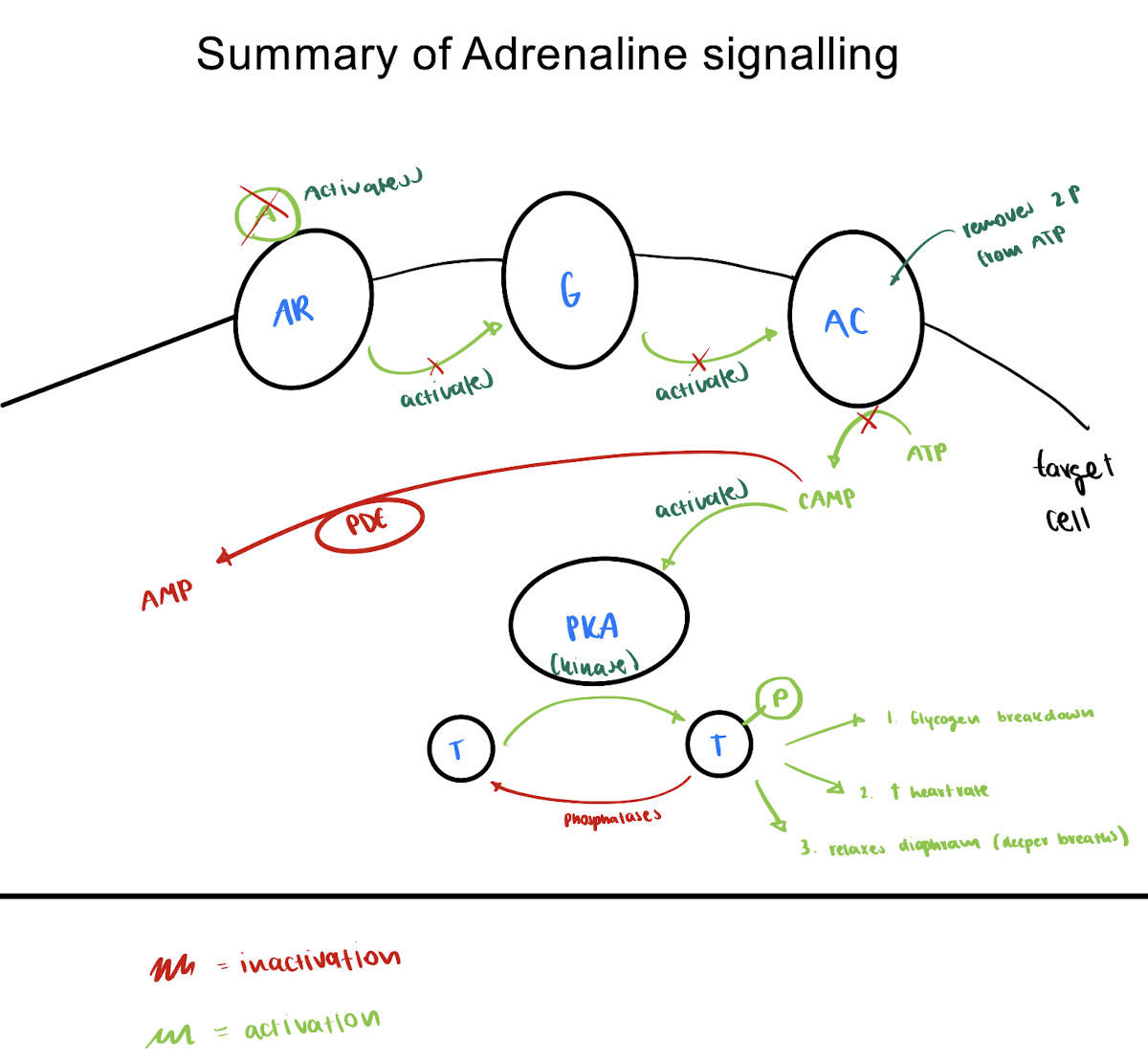
Adrenalin Signalling: Deactivation
remove adrenalin outside cells
via: diffusion, degradation, & uptake
breakdown of cAMP inside cells
via: phosphodiesterase (PDEs)
mech: cAMP -PDE→ AMP
removal of phosphates from target protein
bc: phosphatases always have low activity
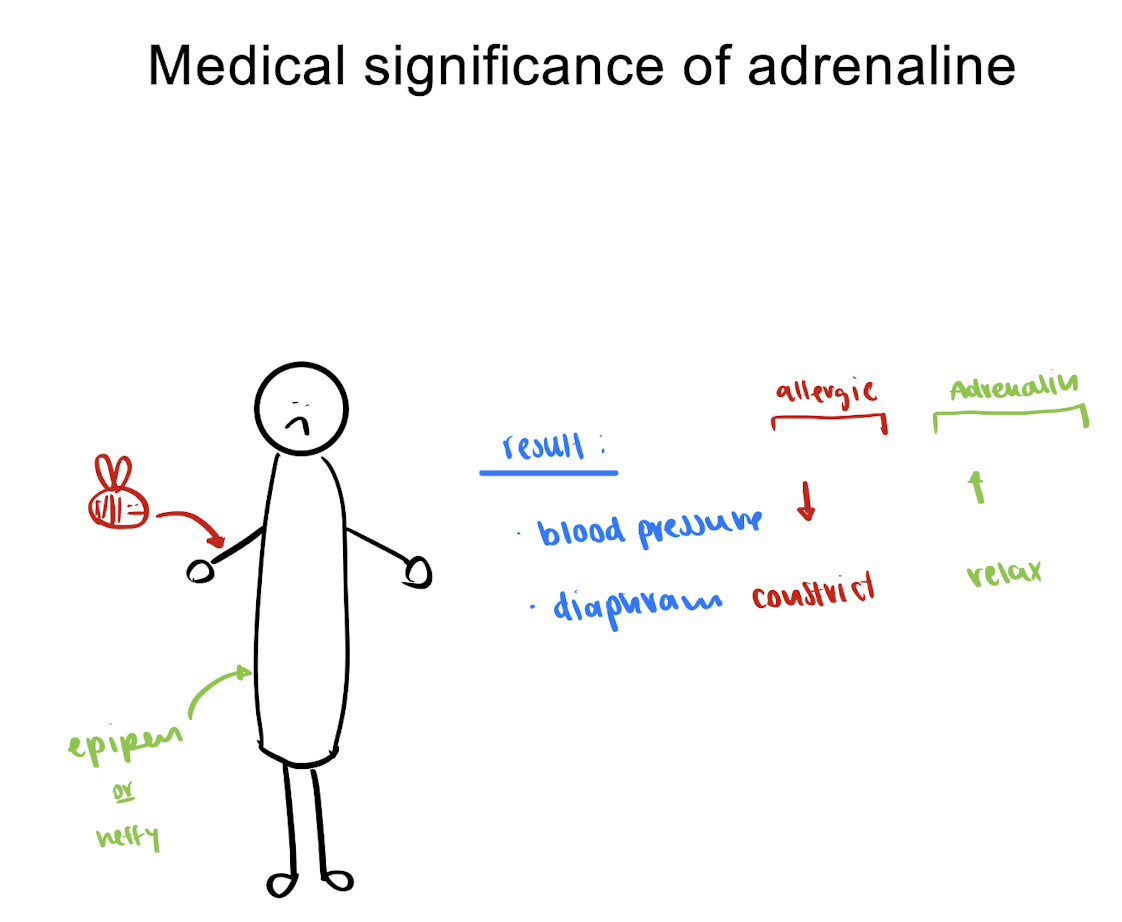
Adrenalin Signalling: Medical Significance
to help anaphylactic shock
by:
→ increasing bp
→ relaxing diaphragm
THUS, adrenalin does the opposite of anaphylactic symptoms (low bp, constricted diaphragm)
using: epipens, neffy
Examinable Content