6.6 Women as Religious Figures
 Call Kai
 Learn
Learn Practice Test
 Spaced Repetition
 Match
Match Flashcards
 Knowt Play
1/3

Earn XP
Description and Tags
6.6 Women as Religious Figures
Name | Mastery | Learn | Test | Matching | Spaced | Call with Kai | Chat |
|---|
No analytics yet
Send a link to your students to track their progress
4 Terms
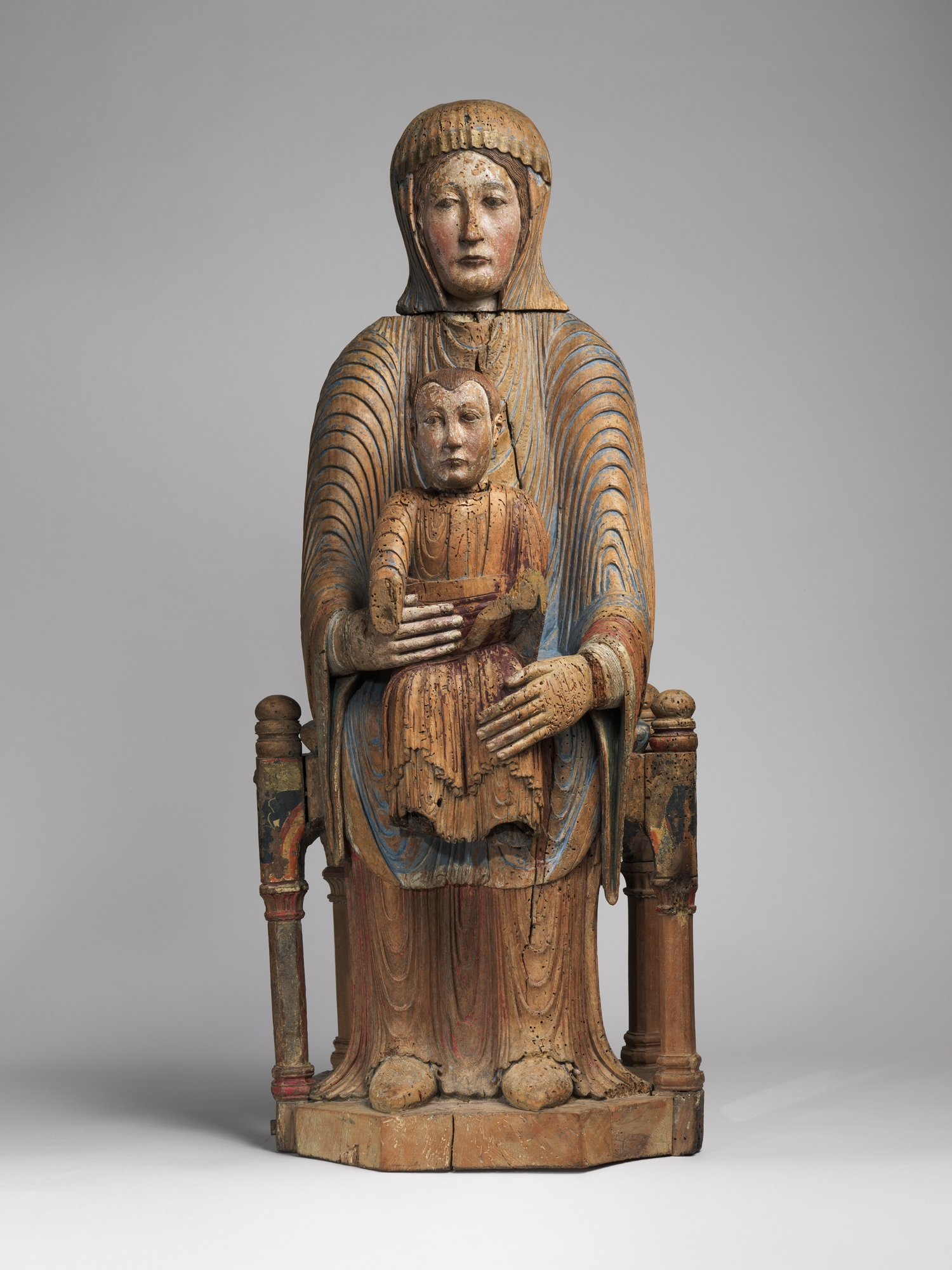
Virgin and Child (Morgan Madonna), France, second half 12th century; painted wood, approx. 2.5'
In this era of strict religious doctrines, large freestanding sculptures were considered idols which was not aligned with the Second Commandment.
- small sculptures or vessels for relics were acceptable.
- this small wooden sculpture of the Madonna holding her infant son, Jesus, known as the Morgan Madonna.
- her growing popularity where people see a softer side to Christianity with the depiction of this loving mother (in contrast to her son in Last Judgment scenes, for instance).
-On her lap, baby Jesus holds a bible as a symbol of divine wisdom while his other hand would've shown a blessing gesture (both hands missing).
-So this statue is considered a "throne of wisdom" Madonna because her lap is Christ's throne.
This sculpture would've been painted originally, but much like the art we saw in both the Byzantine and HIberno-Saxon worlds, there's a strong use of line in the stylized repeat folds of the holy family's robes. A cavity within Mary's shoulder (rear) likely made this a reliquary.
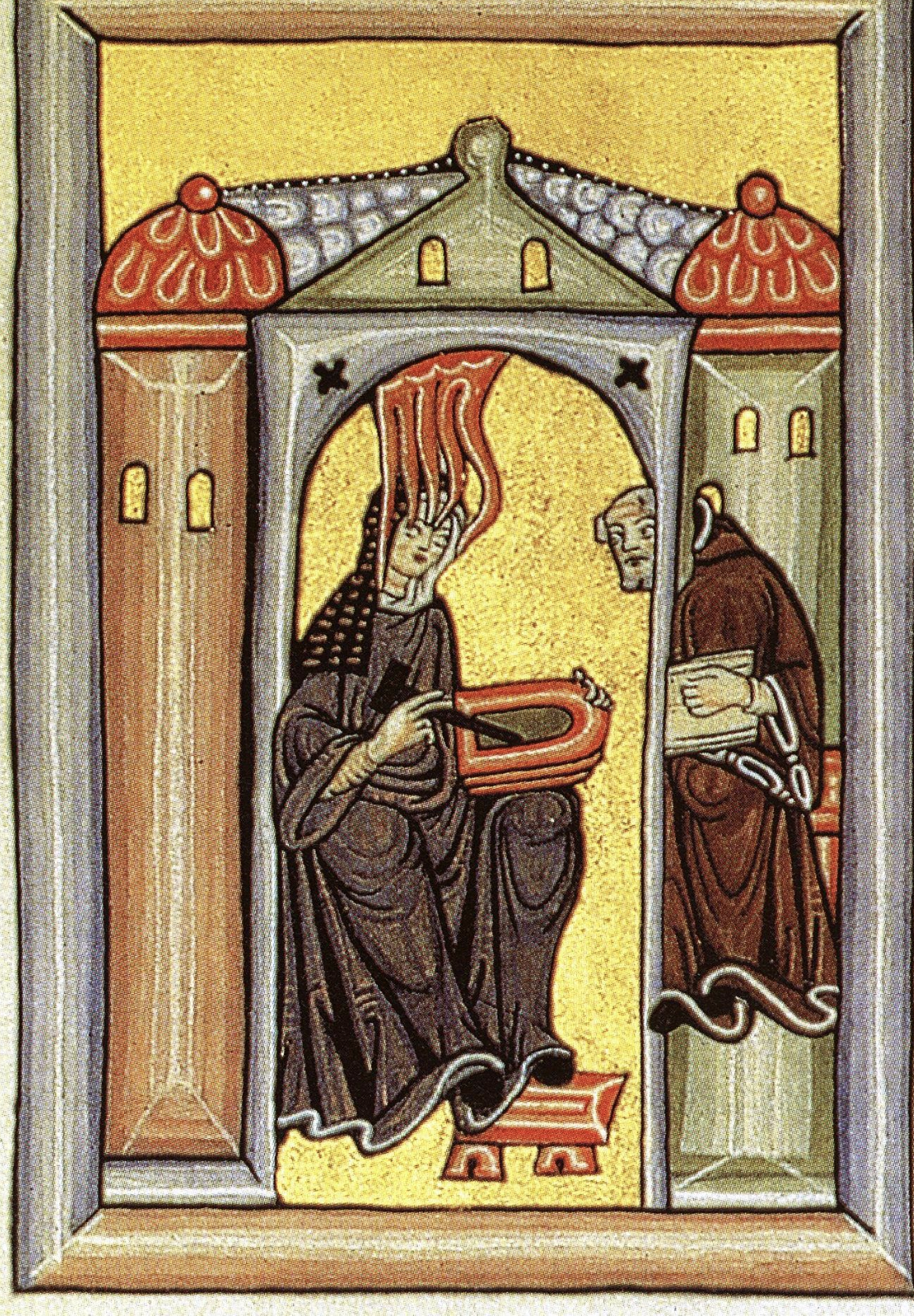
Hildegard receives her visions, Germany, ca. 1150-1179.
five tongues of fire reaching down from above to her head as she dictates the visions on a wax tablet. A monk is there as well, showing that he will take her notations and transfer them to a manuscript.
.
.
.
.