Art History Ancient Greece: Hellenistic Period

0.0(0)
Studied by 0 people
call kaiCall Kai
Locked
learnLearn
examPractice Test
spaced repetitionSpaced Repetition
heart puzzleMatch
flashcardsFlashcards
GameKnowt Play
Card Sorting

1/4

encourage image

There's no tags or description

Looks like no tags are added yet.

Last updated 8:31 PM on 9/21/26
Name
Mastery
Learn
Test
Matching
Spaced
Call with Kai
Chat

No analytics yet

Send a link to your students to track their progress

5 Terms

1
New cards

Terms

Classical: the visual culture, architecture, and aesthetics of ancient Greece and Rome, spanning roughly from the 8th century BCE to the 5th century CE

Relief Sculpture: a three-dimensional artwork that remains attached to a solid flat background surface instead of standing freely on its own

Hellenistic: Moving away from the calm, idealized perfection and strict restraint of the earlier Classical period, Hellenistic art embraced real human experiences and was very emotional

Canon of Proportion

Idealized

Contrapposto

Pediment

Frieze

<p><u>Classical:</u> the visual culture, architecture, and aesthetics of ancient Greece and Rome, spanning roughly from the 8th century BCE to the 5th century CE</p><p><u>Relief Sculpture:</u> a three-dimensional artwork that remains attached to a solid flat background surface instead of standing freely on its own</p><p><u>Hellenistic:</u> Moving away from the calm, idealized perfection and strict restraint of the earlier Classical period, Hellenistic art embraced real human experiences and was very emotional</p><p><u>Canon of Proportion</u></p><p><u>Idealized</u></p><p><u>Contrapposto</u></p><p><u>Pediment</u></p><p><u>Frieze</u></p><p></p>
2
New cards
<p>Athena Frieze of Altar of Zeus at Pergamon </p>

Athena Frieze of Altar of Zeus at Pergamon

  • The Action: Athena is shown at the dramatic climax of the battle, grabbing the young Giant by the hair as her sacred snake attacks him.

  • Supporting Figures: Alcyoneus’s (the giants) mother rises from the ground in agony, pleading for her son's life, while a winged Nike (goddess of victory) flies in to crown Athena with a victory wreath.

  • Symbolism: The mythological defeat of the chaotic Giants by the rational gods served as a political metaphor for the Pergamene kingdom's victory over the invading Gauls, symbolizing the triumph of Greek order, civilization, and culture over chaos and barbarism.

<ul><li><p><span><strong>The Action:</strong> Athena is shown at the dramatic climax of the battle, grabbing the young Giant by the hair as her sacred snake attacks him.</span> </p></li><li><p><span><strong>Supporting Figures:</strong> Alcyoneus’s (the giants) mother rises from the ground in agony, pleading for her son's life, while a winged <strong>Nike (goddess of victory)</strong> flies in to crown Athena with a victory wreath.</span></p></li><li><p><span><strong>Symbolism:</strong> The mythological defeat of the chaotic Giants by the rational gods served as a political metaphor for the Pergamene kingdom's victory over the invading Gauls, symbolizing the triumph of Greek order, civilization, and culture over chaos and barbarism.</span> </p></li></ul><p></p>
3
New cards
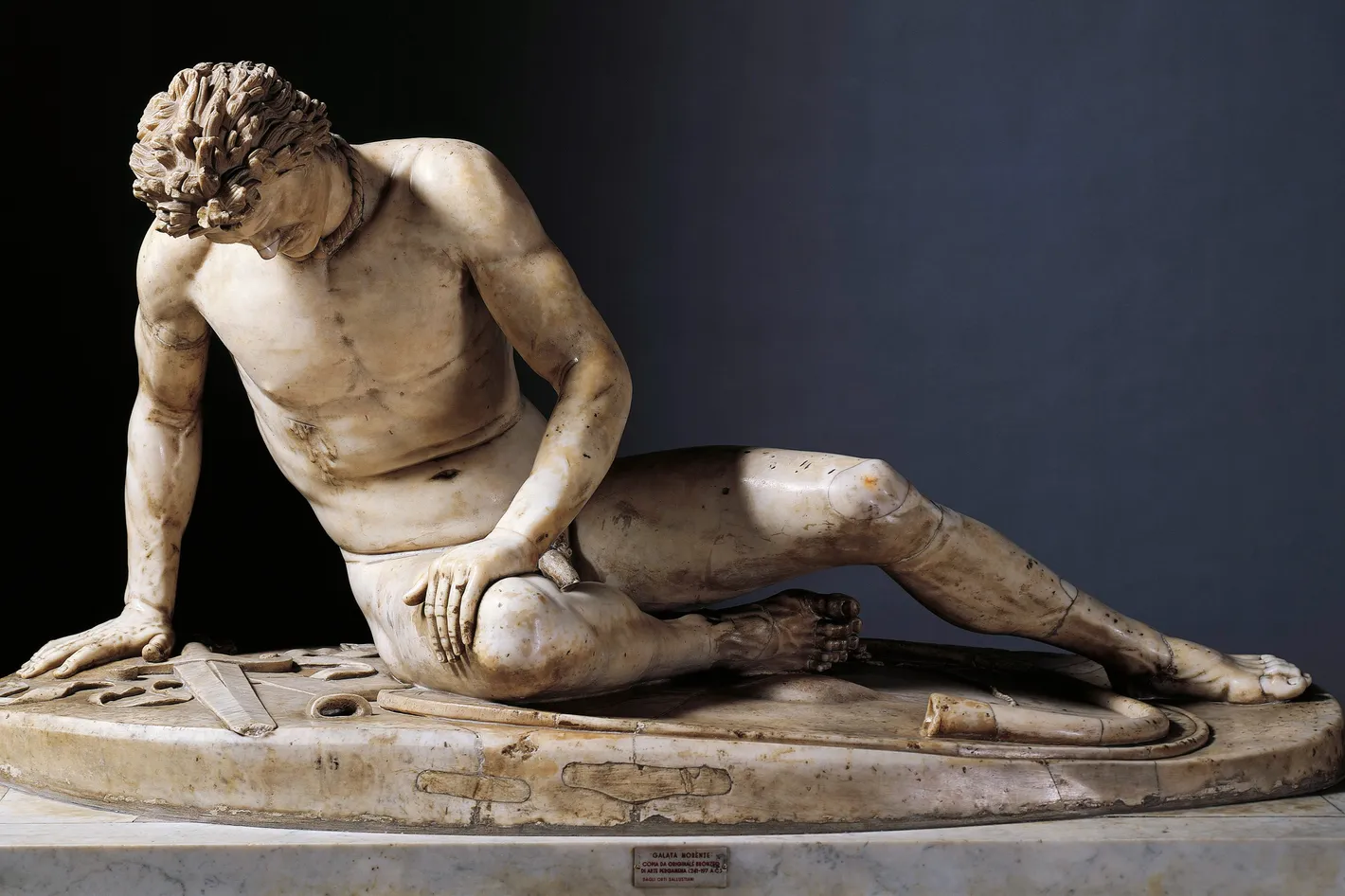
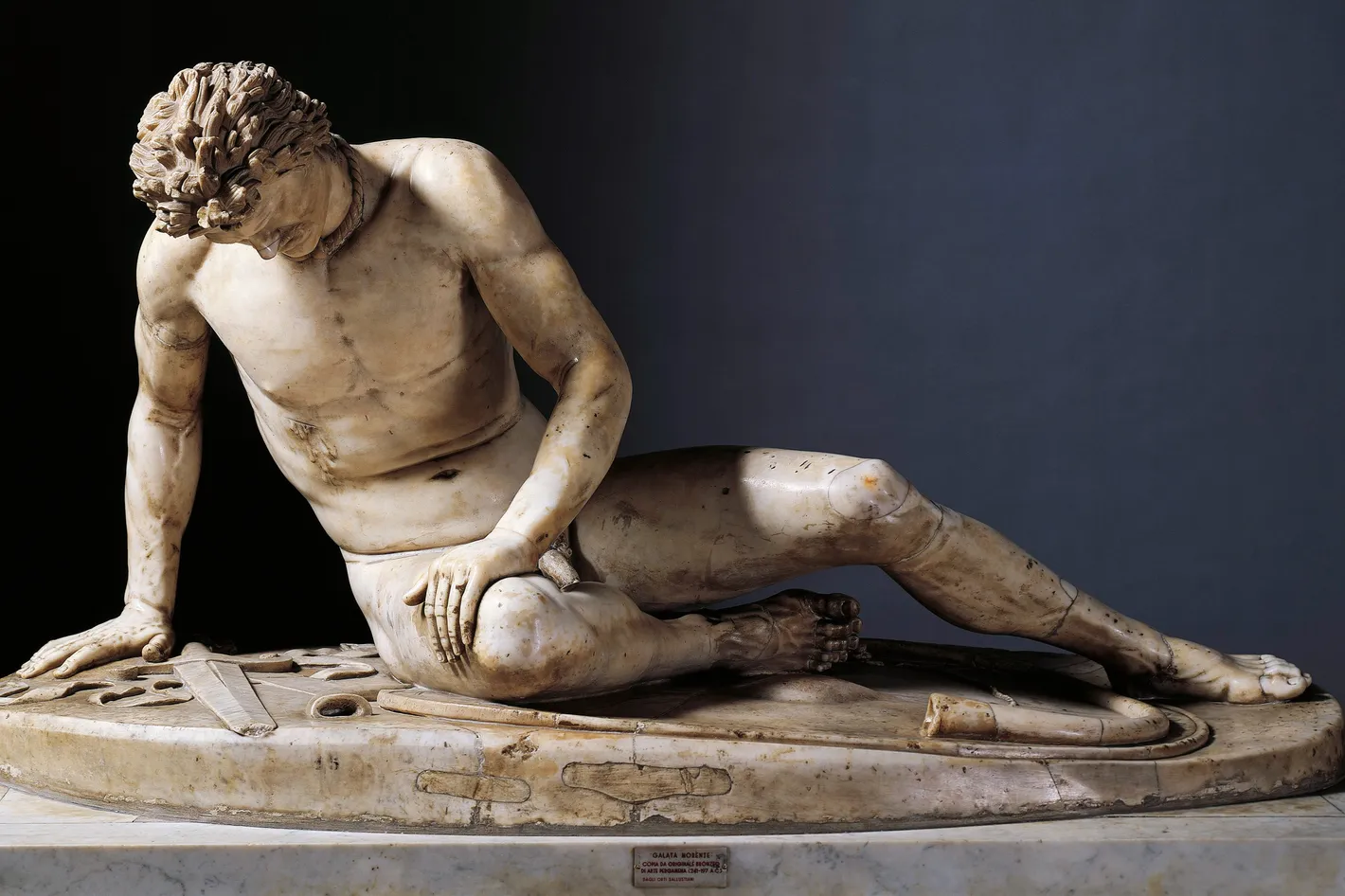
<p>Dying Gaul </p>

Dying Gaul

  • Exaggerated style

  • New style → this guy isn’t Greek! He’s a Gaul from modern day France

  • Gauls were fearsome warriors/barbarians

  • The statue is both honoring the enemy and celebrating their defeat

  • He is wearing a torc → given to warriors for bravery

<ul><li><p>Exaggerated style</p></li><li><p>New style → this guy isn’t Greek! He’s a Gaul from modern day France</p></li><li><p>Gauls were fearsome warriors/barbarians </p></li><li><p>The statue is both honoring the enemy and celebrating their defeat</p></li><li><p>He is wearing a torc → given to warriors for bravery</p></li></ul><p></p>
4
New cards
<p>Nike of Samothrace</p>

Nike of Samothrace

  • Very Dramatic

  • Beautiful Folds

  • Shows movement in the drapery

  • Shows victory


<ul><li><p>Very Dramatic </p></li><li><p>Beautiful Folds </p></li><li><p>Shows movement in the drapery</p></li><li><p>Shows victory</p></li></ul><p></p>
5
New cards
<p>Laocoon and his Sons </p>

Laocoon and his Sons

  • Subject: a Trojan priest Laocoon and his two sons being attacked by giant sea serpents

  • The Story: Laocoön, a Trojan priest, warned his city not to bring the Greeks' wooden horse inside Troy ("Beware of Greeks bearing gifts")

  • The Punishment: Gods favoring the Greeks (Athena) sent giant sea serpents to silence and punish him and his sons


<ul><li><p><u>Subject:</u> a Trojan priest Laocoon and his two sons being attacked by giant sea serpents</p></li><li><p><span><strong>The Story:</strong> Laocoön, a Trojan priest, warned his city not to bring the Greeks' wooden horse inside Troy ("Beware of Greeks bearing gifts") </span></p></li><li><p><span><strong>The Punishment:</strong> Gods favoring the Greeks (Athena) sent giant sea serpents to silence and punish him and his sons</span></p></li></ul><p></p>



