Chapter 4: Completing the Accounting System
 Call Kai
 Learn
Learn Practice Test
 Spaced Repetition
 Match
Match Flashcards
 Knowt Play
1/26

There's no tags or description
Looks like no tags are added yet.
Name | Mastery | Learn | Test | Matching | Spaced | Call with Kai | Chat |
|---|
No analytics yet
Send a link to your students to track their progress
27 Terms
Describe flow of accounting information from unadjusted trial balance into adjusted trial balance and financial statement
The spreadsheet begins with unadjusted trial balance
the unadjusted trial balance verifies that total of debits = credits
Flow of account from adjusted trial balance into financial statements?
Revenues and expenses flow into income
Common stock and dividends flow into stockholders equity
Asset and liabilities flow into balance sheet. Common stock and retained earnings also flow into balance sheet
What would be the primary objective of the accounting system?
It will allow managers and accountants to see the effect of adjustments on the finanical statements
Income Statement
It’s prepared directly from the adjusted trial balance columns spreadsheet, beginning with fees earned
The expenses in the income statement are listed in order of size, beginning with the large items and ending with Miscellaneous expense
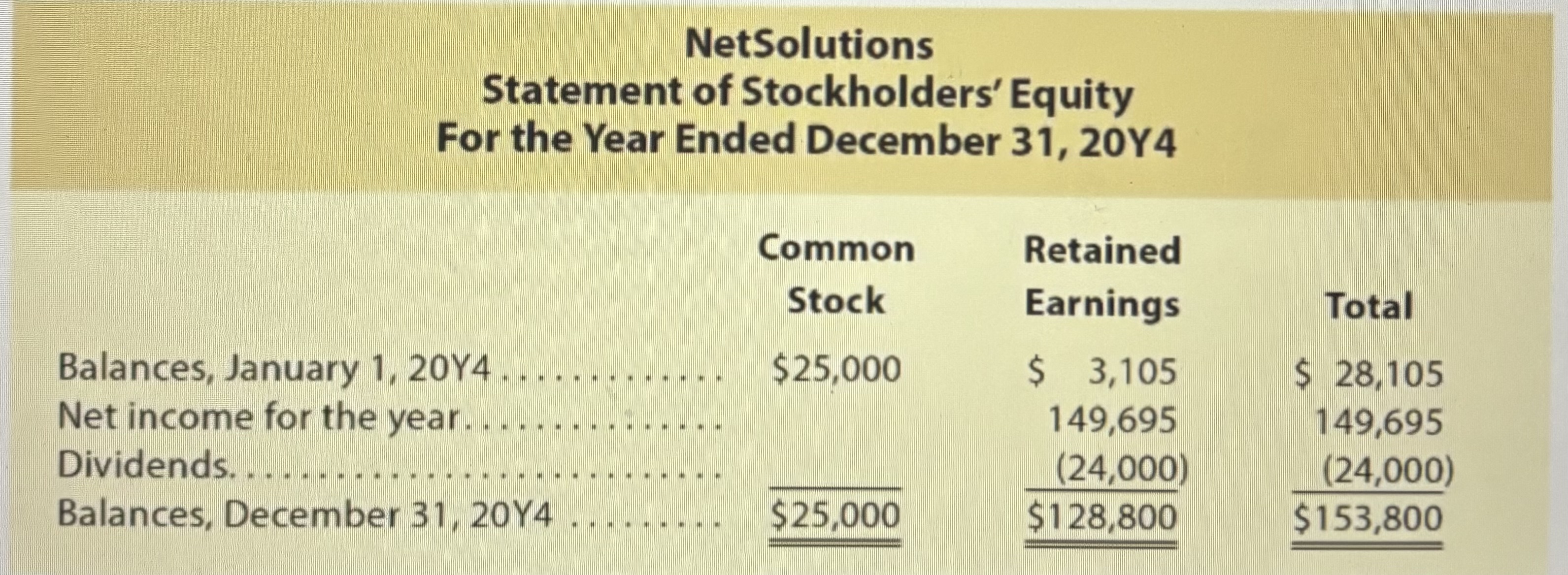
Stockholders equity
Enter beginning balance for common stock and retained earnings
Ending balance = Stock + earnings - Dividends

Balance sheet
Assets → CA, Property, equipment, Plant, and Notes payable
Liabilities → CL (All payables except Notes), Long-termLiabilities (loans and bonds payable)
Stockholders equity → common stock and retained earnings
Statement of Cash Flow
Is prepared by analyzing cash amount → operating, investing, and financial activity
While the income statement, statement of stockholders' equity, and balance sheet can be prepared from the Adjusted Trial Balance columns, the statement of cash flows is prepared by analyzing the cash account.
In doing so, each cash transaction is classified as an operating, investing, or financing activity.
In practice, however, the statement of cash flows is normally prepared using a different, more complex method called the indirect method.
Permanent Account
reported on balance sheet and are carried forward from year to year
ae those who will always be there
also known as Real Account
ex. cash, accounts receivable, equipment, Accumulated depreciation, common stock, and retained earnings
Temporary accounts
reported on Income statement are not carried foward from year to year
Those that will not be repeated after the period will = 0
ex. revenues, expenses, fees earned
Closing entries
Journal entries that transfer balances
At the beginning of the next period, temporary accounts should have zero balances.
To achieve this, temporary account balances are transferred to permanent accounts at the end of the accounting period.
transfer process is called the closing process
If closing exceeds debit, then there was a loss, and we would need to debit retained earnings
What are the two steps involving closing entries?
Revenues and expenses account balances are transferred to retained earnings account
Balance of dividends account is transferred to retained earnings account
Post closing trial balance
Its purpose is to verify that the ledger is in balance at the beginning of next period
its prepared after closing entries
accounts and amounts should agree exactly with accounts and amounts of balance sheet at the end period
What is the accounting system?
is the process that begins with analyzing and journalizing transactions and ends with post-closing trial balance
What is step one in accounting system?
Transactions are analyzed and recorded in ledger
analyze and record using double-entry system
What is step two in accounting system?
Transactions are posted to the ledger
Credits and debits are posted to the account in the order they occur in the journal
What is step three in accounting system?
unadjusted trial balance is prepared
Unadjusted is prepared to determine if error has happened
What is step four in accounting system?
Adjusted data are assembled and analyzed.
Accounts need to be updated: accrued revenue and expenses, unearned revenue, prepaid expenses, and depreciation for land
What is step five in accounting system?
optimal end-of-period spreadsheet is prepared
End-of-period spreadsheet is not required, but useful in showing the flow of accounting info from the unadjusted trial balance to the adjusted trial balance
What is step six in accounting system?
Adjusting entries are journalized and posted to the ledgers
Each adjusting entry affects at least one income statement and one balance sheet
What is step seven in accounting system?
An adjusted trial balance is prepared
After adjustments, an adjusted trial balance is prepared
What is step eight in accounting system?
Financial statements are made.
MOST important outcome is Financial statement: is equity → balance sheet
What is step nine in accounting system?
Closing entries are journalized and posted to the ledger
Prepare the TWO closing entries
What is step ten in accounting system?
The post-closing balance is prepared
Prepare post-closing trial balance
Why is Accrual Basis of Accounting required by GAAP
The primary alternative to the accrual basis per GAAP is the cash basis of accounting, which records transactions only when cash is received or paid.
The accrual basis of accounting uses the revenue and expense recognition principles to record revenues and expenses.
Under the revenue recognition principle, revenues are recorded when earned, which is when the services have been performed or products have been delivered to customers.
Under the expense recognition principle, the expenses incurred in generating revenue are recorded in the same period as the related revenue.
What is liability and its two measures of short-term?
Is the ability to convert assets into cash
Working Capital
Current Ratio
Working Capital
Is the excess of current assets of a business over current liabilities
FORMULA: Current Assets — Current Liabilities
Current Ratio
measures a company’s ability to cover its current liabilities against its current assets
FORMULA → Current Assets / Current Liabilities