MIDTERM LESSON 4: Epistatic Interactions
 Call Kai
 Learn
Learn Practice Test
 Spaced Repetition
 Match
Match Flashcards
 Knowt Play
1/11

There's no tags or description
Looks like no tags are added yet.
Name | Mastery | Learn | Test | Matching | Spaced | Call with Kai | Chat |
|---|
No analytics yet
Send a link to your students to track their progress
12 Terms
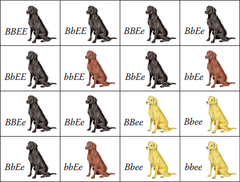
Epistatic gene
- gene that masks
- has no effect on the genotype, or genetic composition, of the gene being controlled.
- It affects only the phenotype.
Hypostatic gene
- gene that is masked
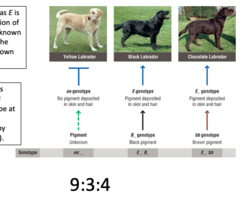
Epistasis
- a type of polygenic interaction where one gene controls the phenotype of another gene for a trait.
- Both genes have an influence on the physical appearance of the trait, but the one that shows epistasis masks the effect of the other.
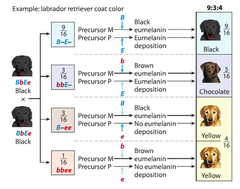
bully genes
- genes that show epistasis are?
- The phenotype is going to be determined by the gene that shows epistasis because it masks the expression of the other gene.
EXAMPLE: Albinism - If a person has the gene for albinism, their hair, skin, and/or eyes will have little or no pigment no matter what their genes say their color should be. It is because the gene for albinism, the bully gene, shoves them in a locker.

Bombay phenotype
A more complex example of epistasis is a blood type

Bombay blood group, or hh
- is a rare blood type.
- This blood phenotype was first
discovered in Bombay by Dr. Y. M. Bhende in 1952.
- It is mostly found in the Indian
sub-continent (India, Bangladesh, Pakistan) and Iran.
- Results from interaction between a gene called H and the I gene that confers ABO blood type.

H gene
controls the placement of a
molecule to which antigens A and B attach on the red blood cell surface.
blood group A
means that the person has antigen of type 'A' and antibody of type 'B' in his/her blood.
blood group AB
have both antigen A and B in their blood and no antibodies
blood type O
have only antibodies A and В
and no antigens.
ABO blood group
is determined by the alleles IA
,IB , and i, while the H gene controls the production of the H antigen, which is necessary for the expression of ABO antigens.

bombay phenotype
occurs when an individual is homozygous recessive (hh) at the H locus, preventing the formation of the H antigen and thereby masking the ABO alleles, so the person appears as blood type O regardless of their ABO genotype.