Exam 3- Medical Botany USF
 Call Kai
 Learn
Learn Practice Test
 Spaced Repetition
 Match
Match Flashcards
 Knowt Play
1/99

There's no tags or description
Looks like no tags are added yet.
Name | Mastery | Learn | Test | Matching | Spaced | Call with Kai | Chat |
|---|
No analytics yet
Send a link to your students to track their progress
100 Terms
Taxus Alkaloids
Taxaceae
Taxus spp.
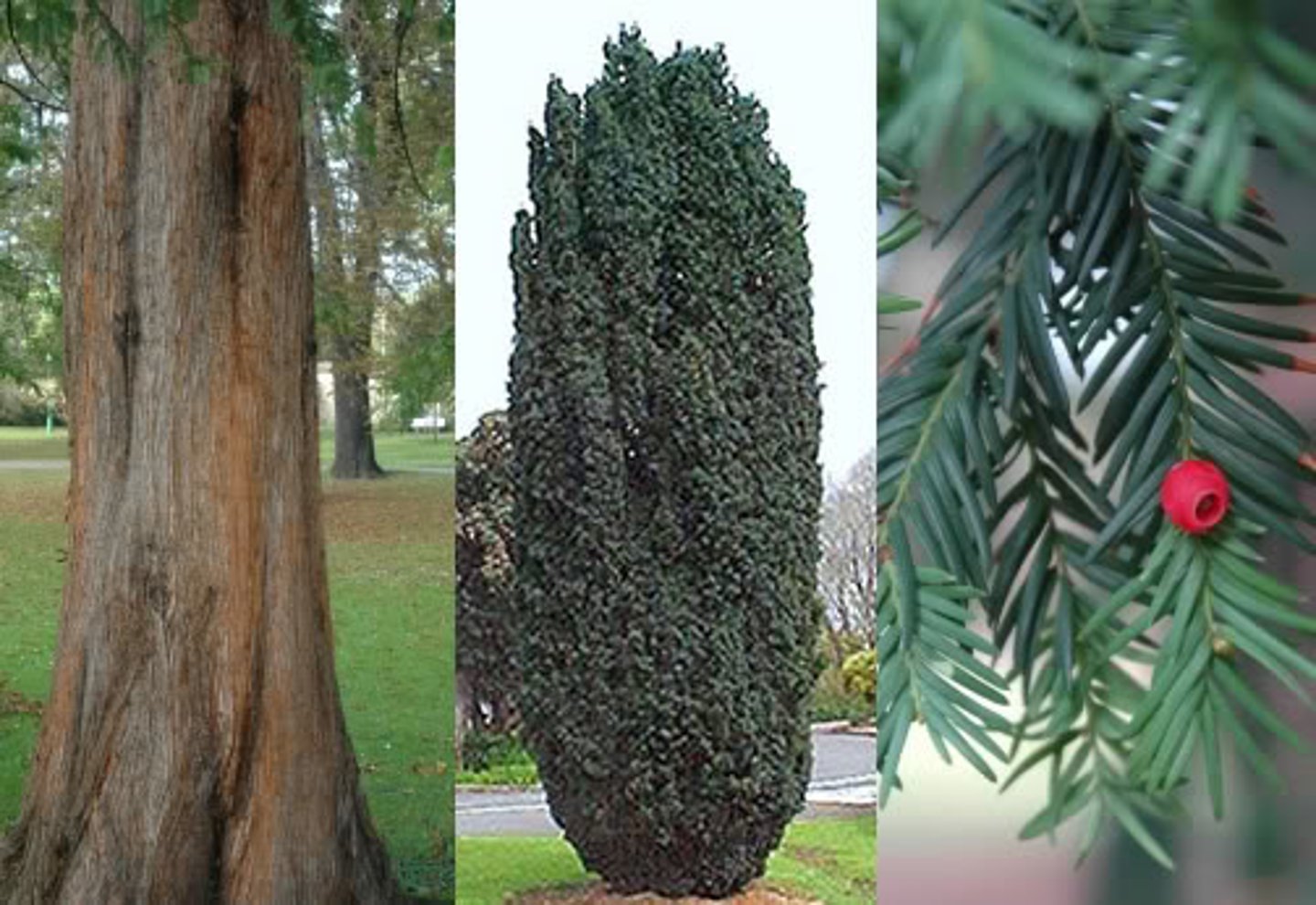
yew- common ornamental shrub/tree
non-flowering conifer
Taxus baccata (Yew)
Taxine B
Found in plant parts- leaves and seeds
red aril edible
Taxus baccata (Yew)- Chemical side
antagonist calcium and sodium channels
cause hypertension, cardiac arrest, death
Taxus baccata (Yew)- drug interactions
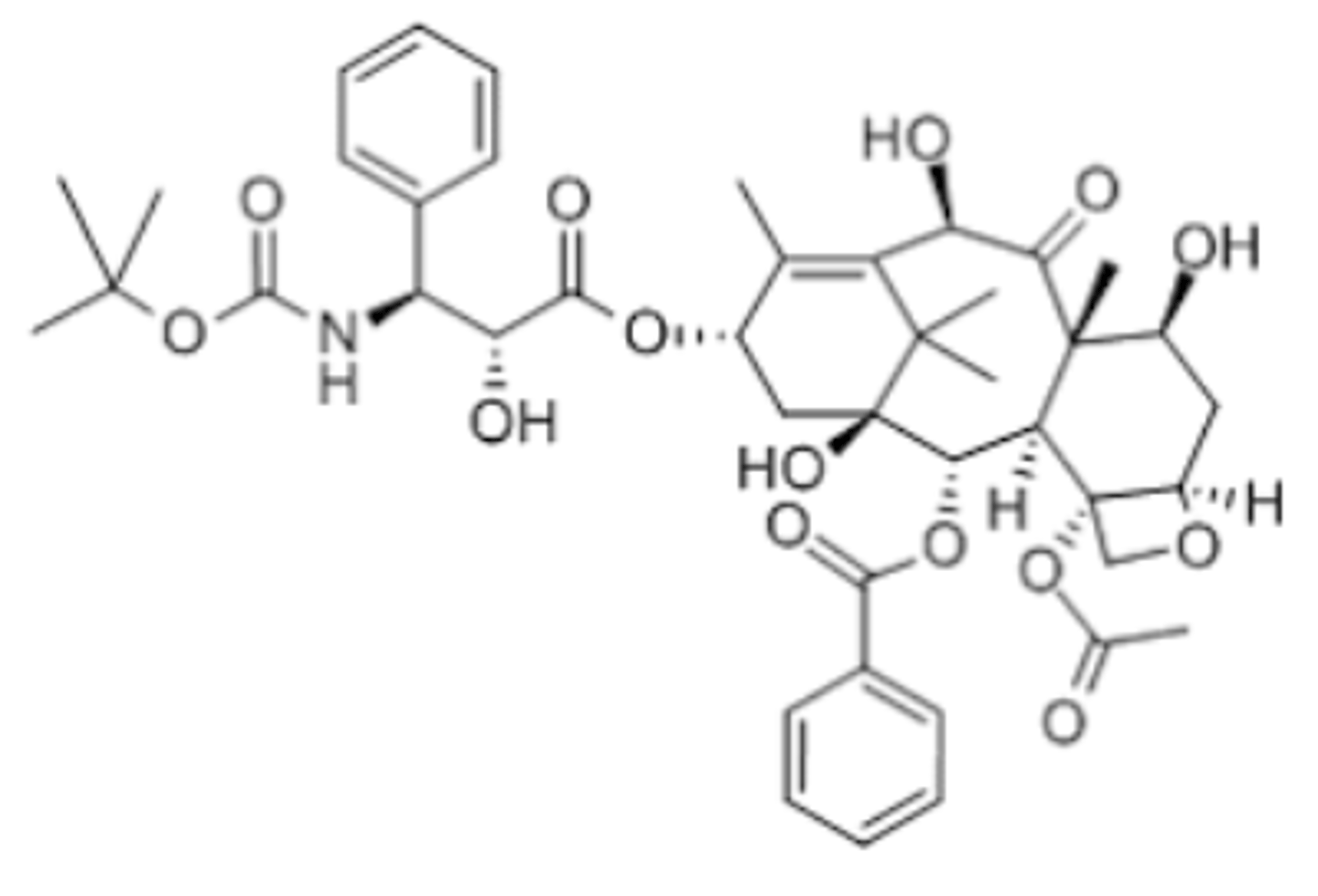
ANTI-Cancer agents, work in relatively low dose, semisynthetic approach
Yew
slow growing, all parts toxic except aril (even after drying)
Juniper
Female seed cone produced by tree; cone contains spice --> derived from conifers
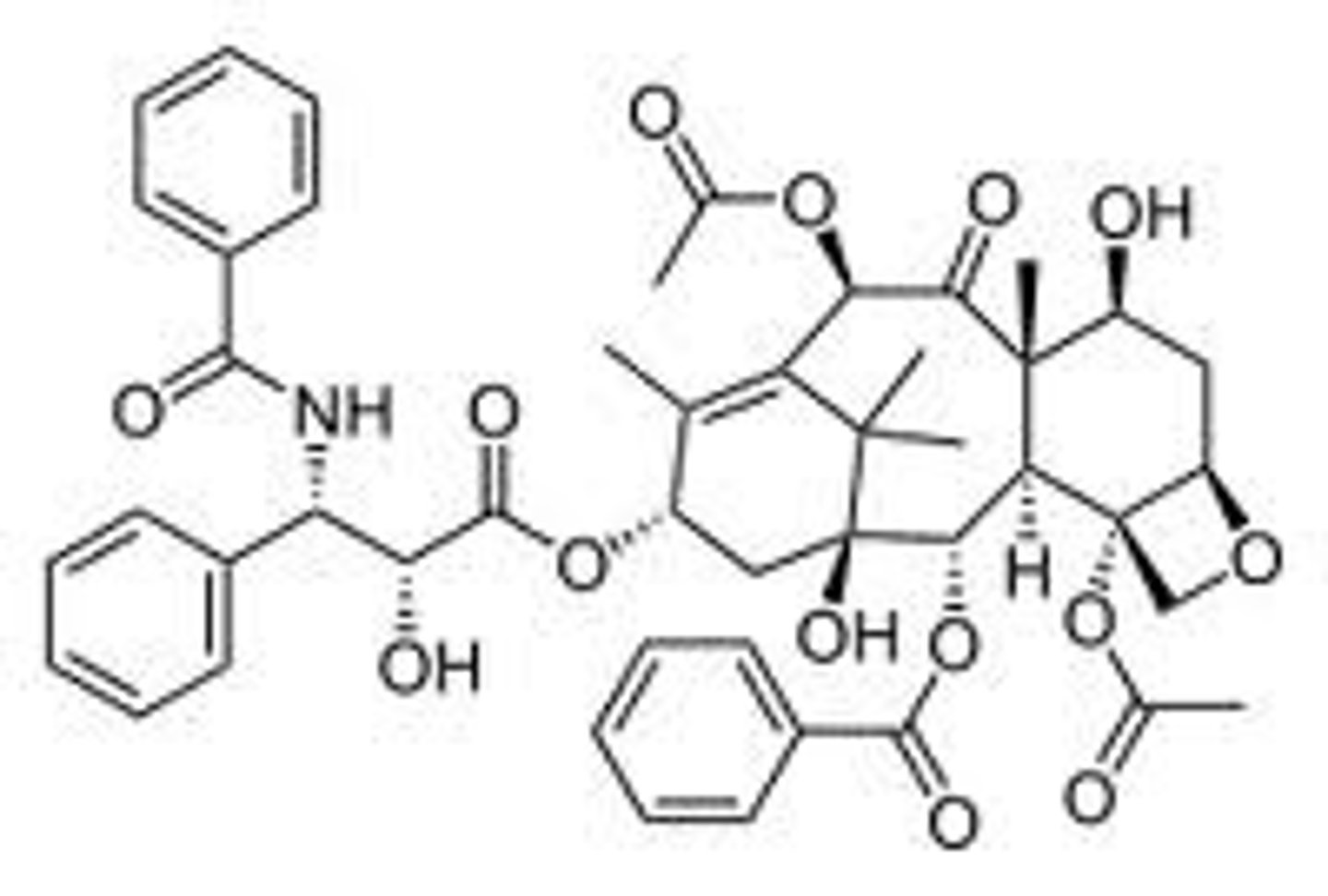
Paclitaxel
Taxus spp.
binds tublin --> prevents breakdown, induced apoptosis (cell death), used in combo with other drugs
Docetaxel
Semi-synthetic analogue
Cardiac Glycosides
Apocyanaceae, Plantaginaceae, Asparagaceae, Ranunculaceae
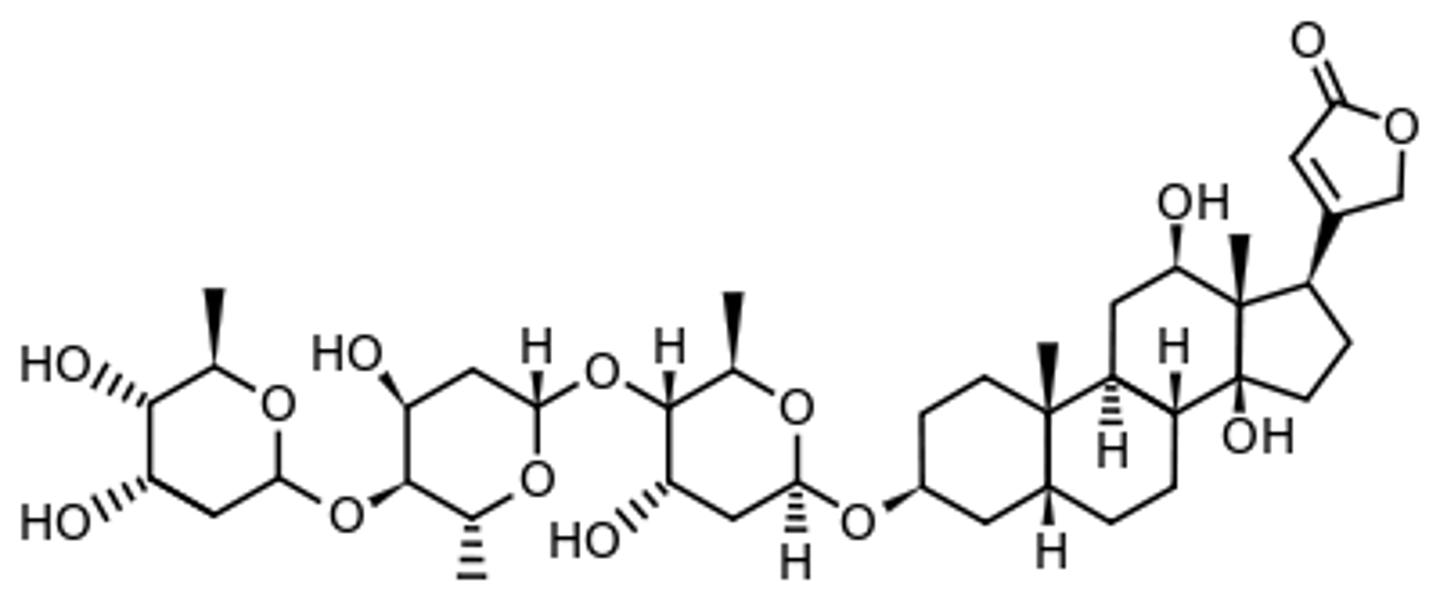
Two types of Cardiac Glycosides
Cardenolide and Bufadienolide
Glycosides
Compounds formed from sugars and other molecules.
glycosidic bond
bond between sugar and aglycone
sugar= usually carbon ring(s) with many hydroxyl groups
Aglycone
Non-sugar component of glycosides.
Mechanism of Cardiac glycosides
1) Increased intracellular Na+ concentration 2) Decreased Na+ Electrochemical gradient 3) Decreased Na/Ca antiporter activity 4) Increased intracellular Ca2+ concentration (tropain) --> causes intense and irregular contractions or death
Apocynaceae (Dogbane Family)
5000 spp., some produce cardioactive steroids / some produce monoterpene indole alkaloids with nervous system effects
Strophanthus kombe
Apocynaceae, arrow kills an elephant
Plantaginaceae family
Digitalis lanata (foxglove family)
Digoxin
Plantaginaceae family, used in systolic heart failure --> increase cardiac input --> reduce hospitalization
Oubain
increases cardiac output, less readily absorbed by the GI tract, rapidly eliminated
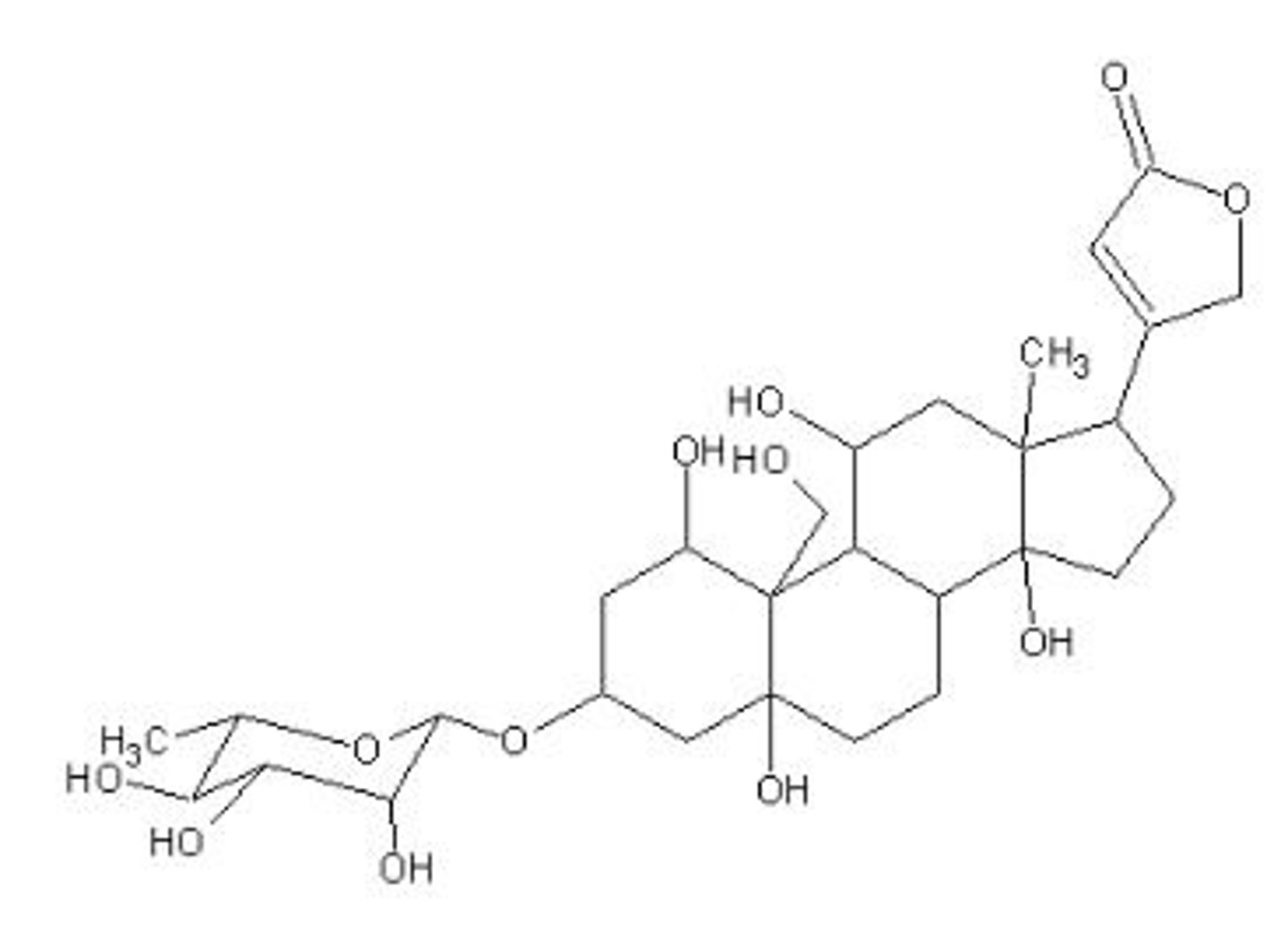
Nerium oleander
Apocynaceae
Nerium oleander toxicity
Caused by presence of cardiac glycosides
every part toxic
fumes are toxic and are not used to skewer
Adonis spp (Pheasant's eye)
Ranunculaceae
So toxic it can even kill horses that eat it
Convallaria majalis (lily of the valley)
Asparagaceae family
Contains convallotoxin cardiac glycoside
Catha edulis
Celastraceae
chewed in prohibition
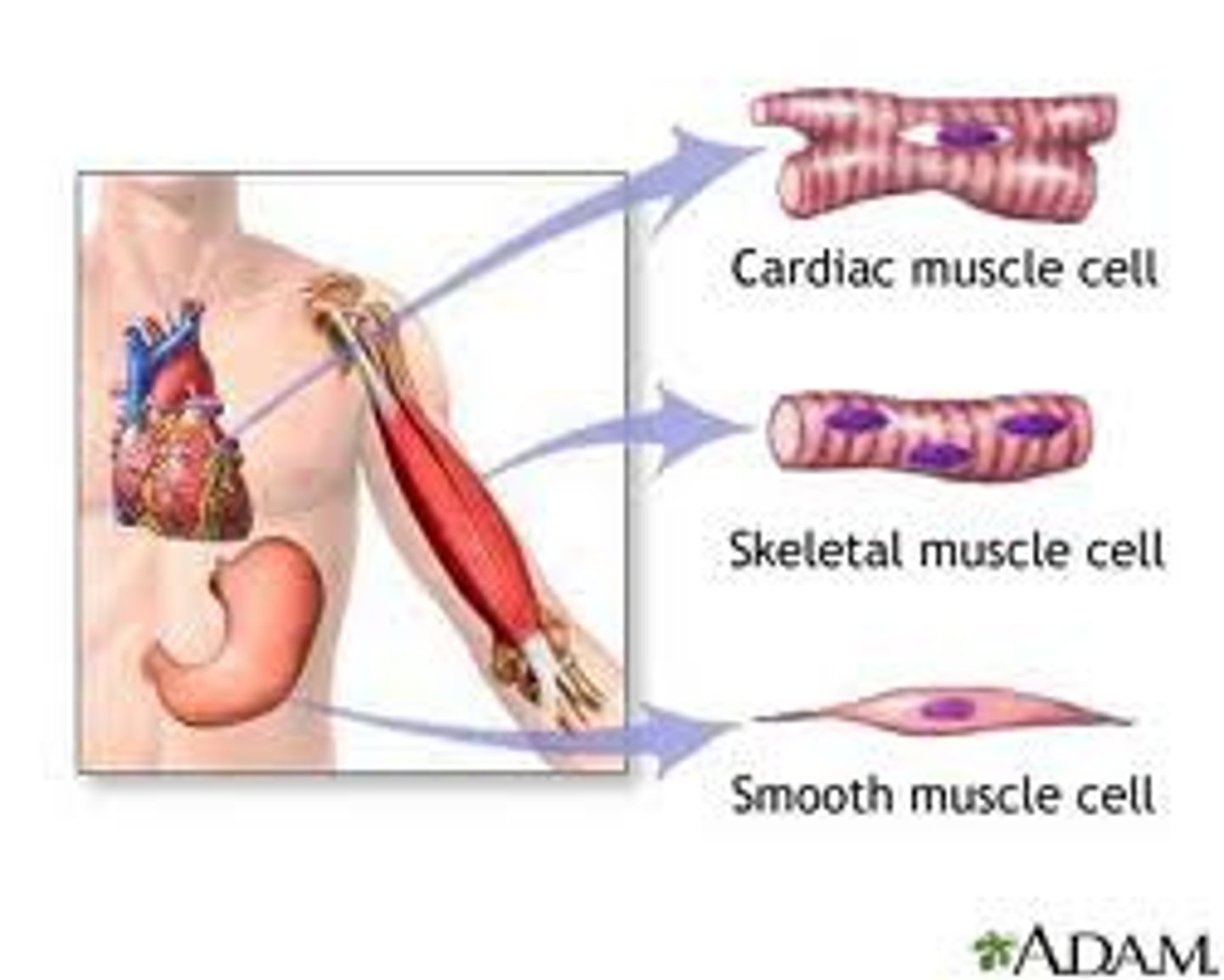
Three types of muscle
skeletal, cardiac, smooth
Skeletal muscle
striated and voluntary
Smooth muscle
under automatic nervous system and hormone from blood
- GI
-Blood vessels
-bladder
-airway
-uterus
-eyes
Cardiac muscles
Heart (autonomous activity but also influenced by automatic nervous system)
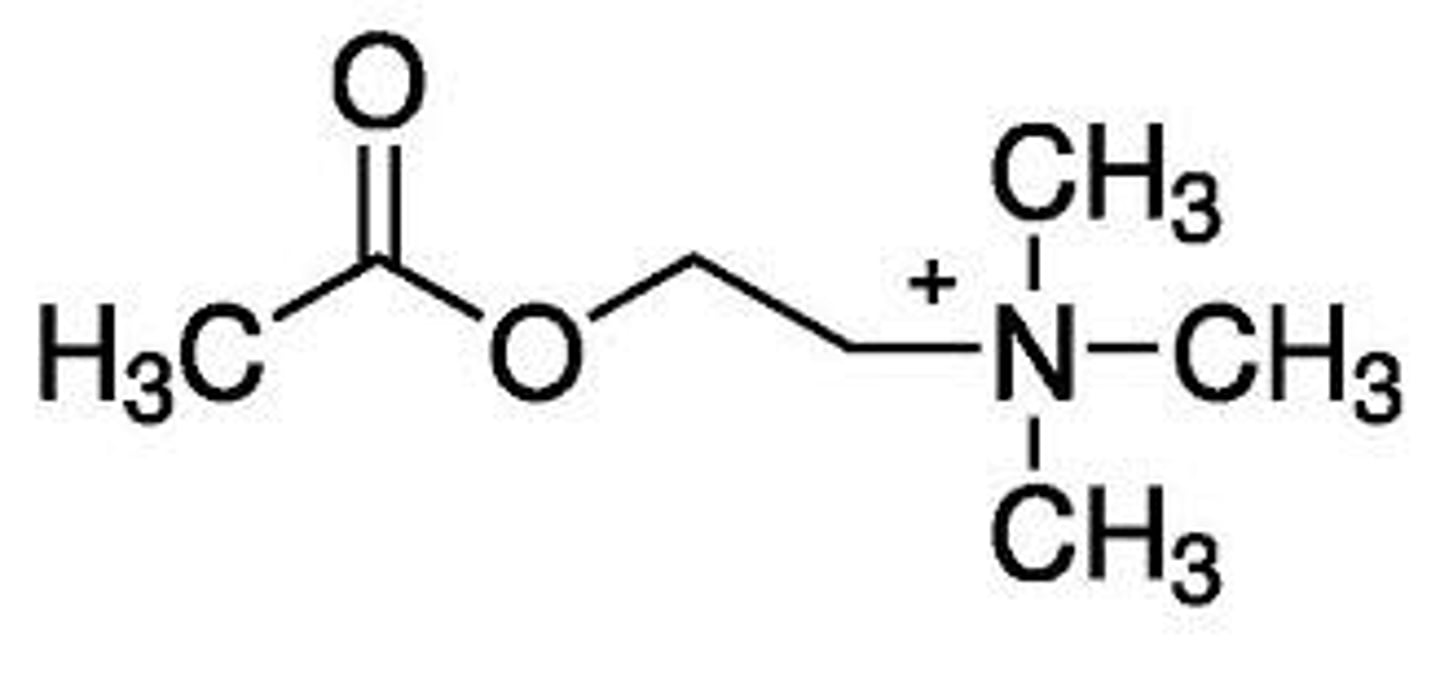
Acetylcholine
Cholinergic agonist
Paralyzing curares
Menispermaceae
Loganiaceae
Fabaceae
Menispermaceae
Chondrodendron tomentosum
Tubocurarine
Naturally occurring nicotinic receptor antagonist from Chondrodendron tomentosum
tubocurarine mechanism of action
inhibits the action of acetylcholine and blocks neural transmission without depolarizing the post-synaptic membrane
Loganiaceae
strychnos spp.
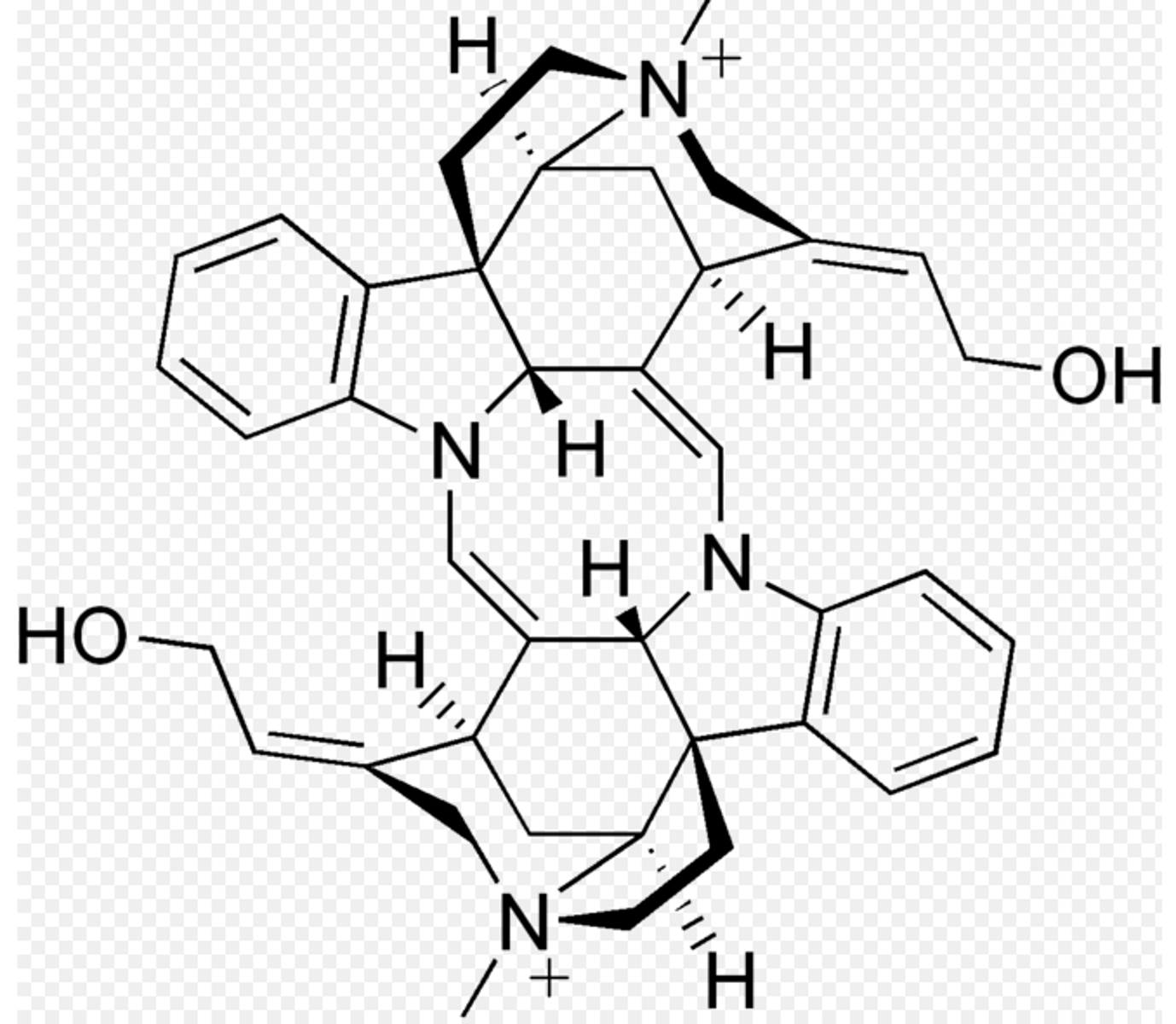
paralyzing curare: Toxiferine
Toxiferine
paralyzing curare
Strychnine
glycine antagonist
spasm and convulsions
Glycine receptor antagonist
Strychnine, glycine agonizes chloride channel- hyperpolarization
Erythrina spp.
Fabaceae
orally effective
antagonist of nicotinic acetylcholine
Erythrina herbacea
Coral Bean (Fabaceae)
used in rat poison
Piperidine alkaloids
Solanaceae
Apiaceae
Piperidine alkaloids- Solanaceae
Nicotiana spp.
Nicotine effects on body
In muscle
Tremor and Pains
Conium maculatum
poison hemlock
Apiaceae
Coiine (Conium)
Piperidine alkaloid
most toxic alkaloid
Coiine mechanism
Antagonist of nicotinic acetylcholine receptors --> nAChR involved in muscle stimulation
Mushroom toxins that cause cell destruction, liver and kidney damage, death
Cyclopeptides
MMH
Orallenine
Mushroom toxins that cause cell destruction, liver and kidney damage, death symptoms
occur after ingestion over 6 hours can take weeks
Cyclopeptides
Amanita, Galerina, Lepiota, (6-10 hr)
MMH (gyromitrin)
Gyromitra
Helvella
Sarcospheara (6-10 hr)
Orallenine
Cortinarius orellanus (as long as several weeks)
Mushrooms that affect AUTOMATIC Nervous system
Corprine
Muscarine
Mushrooms that affect AUTOMATIC Nervous system symptoms
occur within 20 mins to 2 hrs
Corpine
antabase-like
Corpinus (inky cap)
Muscarine
Clitocybe
Inocybe
Mushrooms that affect CENTRAL nervous system symptoms
occur within 20 mins to 2 hrs
Mushrooms that affect CENTRAL nervous system
Ibotenic acid- muscimol
Psilocybin, Psilocin
Ibotenic acid and muscimol
Amanita muscaria
psilocybin and psilocin
psilocybin and paneolous
Mushrooms that cause GI irritation
Agaricus, Amanita, Boletus, Chlorophyllum
Mushrooms that cause GI irritation symptoms
30 mins to 3hrs
Different types of Mushrooms and structure identification
Spore prints
Features of Giltrama
Type of Hymenium
Features of cystidia etc.
Cap
Pileus
Scale
remnants of the universal veil
Gills
lamellae (on surface bearing basidia / hymenium)
Ring
annulus
Volva
cup
Gils structure
Dense or Sparse
Corpinus atramentarius
Corpine
Inky caps
Inhibits aldehyde dehydrogenase
Corpinus atramentarius reaction
facial flushing, headache, nausea, vomiting, tachycardia
Clitocybe
contains muscarine (parasympathetic agent)
Inocybe
mushrooms that can cause muscarinic cholinergic toxicity
PSL syndrome
Caused by Muscarine toxins
perspiration, salivation and lachrymation. Latent period of 30 minutes up to six hours before symptoms appear.
ibotenic acid
Amanita
Panaeolous
Conocybe
Gymnopilus
Amanita muscaria
known as agarin or pantherine
psychoactive constituents
acts as a GABA agonist
Amanita muscaria symptoms
Sedative, Hallucinations, delirium
psilocybin and psilocin overview
psilocybin is quickly converted by the body to psilocin
-Mind-altering effects such as LSD, mescaline, and DMT
-changes in perception, euphoria, hallucinations
Amanitins
Amanitins (cyclopeptides)
Amanita bisporigera
Amanita bisporigera
produces amanitin that inhibits transcription
puffball mushrooms are confused with the button stages of Amanita
Gyromitrin
Monomethyl hydrazine acts on the central nervous system
match to MMH
depletes CNS pyridoxine (vitamin B6)
reduces GABA synthesis
Orellanine poisoning
symptoms may not show up for 8 days
nausea, vomiting, stomach pains, headaches, and muscle aches
Psychedelics
Substances causing altered states of consciousness; are shown to reopen critical periods of brain development.
Psychedelic Characteristics
changes in perception, mood, and cognitive processes
Critical periods
-windows in which the brain can respond to the response of the nervous system to environmental stimulation.
- allows new skills and behaviors to be learned
-once closed cannot reopen
Psychedelics as treatment
-act as a master key, can reopen critical periods
-induces a state of neural plasticity --> re-learning of social behaviors
- used in stroke, autism, and PTSD
Sumerian clay tablet (5000 year old)
12 recipes: 250 various plants --> like alkaloid plants (poppy), kenbane, mandrake
Oldest documentation
Pen T'sao (2500 BC)
365 drugs ( dried )- camphor, Rhei rhisoma, Thea folium, jimson weed, cinnamon bark, etc
Homer's Iliad and the Odyssey (abt 800 BC)
63 plants from Minoan, Mycenaean, and Egyptian pharmacotherapy
Mythological folklore naming
Indian book Vedas
treatment with plants native to India: nutmeg, pepper, clove
now used as spices
Ebers Papyrus (1500 BC)
800 proscriptions of 700 plants used for therapy: pomegranate castor oil, aloe, garlic, onion, etc.
De succedanus- Galen (131 AD-200)
First list of parallel drugs
introduced new drugs in therapy
Parallel drugs
drugs that similar or identical actions
Conium maculatum
poison hemlock
Conium maculatum prominent toxins
Coniine and y-coniceine --> Piperidine alkaloids
Coniine and y-coniceine
overt toxicity in humans and animals and shown to cause birth defect
- shown to cause cleft palate in goats
Coniine and y-coniceine chemical aspect
Most symptoms appear at the neuromuscular junction
Action at the automatic ganglia --> toxins produce biphasic nicotinic
Antagonist of nicotinic acetylcholine receptor
Symptoms of coniine (piperidine alkaloids)
salvation, mydriasis (pupil dilation), tachycardia (fast heart rate), then bradycardia (slow heart rate)
seen in a boy who ate a wild carrot top
Cure of coniine poisoning
no antidote but supportive treatment can be used
- Resp. support and GI decontamination (pumped stomach)
-Anti-convulsants
-Forced diuresis (forced pee) can prevent renal failure
Is ingestion of poison hemlock common?
NO
-"mousy" odor
-bitter taste
-burning of mouth and throat