Anatomy Unit 2: Cell transport and tissues
 Call Kai
 Learn
Learn Practice Test
 Spaced Repetition
 Match
Match Flashcards
 Knowt Play
1/23

There's no tags or description
Looks like no tags are added yet.
Name | Mastery | Learn | Test | Matching | Spaced | Call with Kai | Chat |
|---|
No analytics yet
Send a link to your students to track their progress
24 Terms
Functions of the cell/plasma membrane
physical barrier that separates it from extracellular fluid (ECF)
regulates exchange of materials with ECF
sensitive to changes in ECF and the first to respond
structural support to enable cells to form tissues
exchange of materials
selective permeability: membrane allows some materials to pass in/out while excluding others
depends on size, shape, charge, lipid solubility
membrane transport
movement of substances in and out of the cell by two methods
passive transport: no energy required (high to low)
active transport: energy required (low to high)
passive transport types
diffusion
osmosis
facilitated diffusion
filtration
diffusion
particles distribute evenly within solution
down a concentration gradient/from high to low
ex: CO2 removal from cells
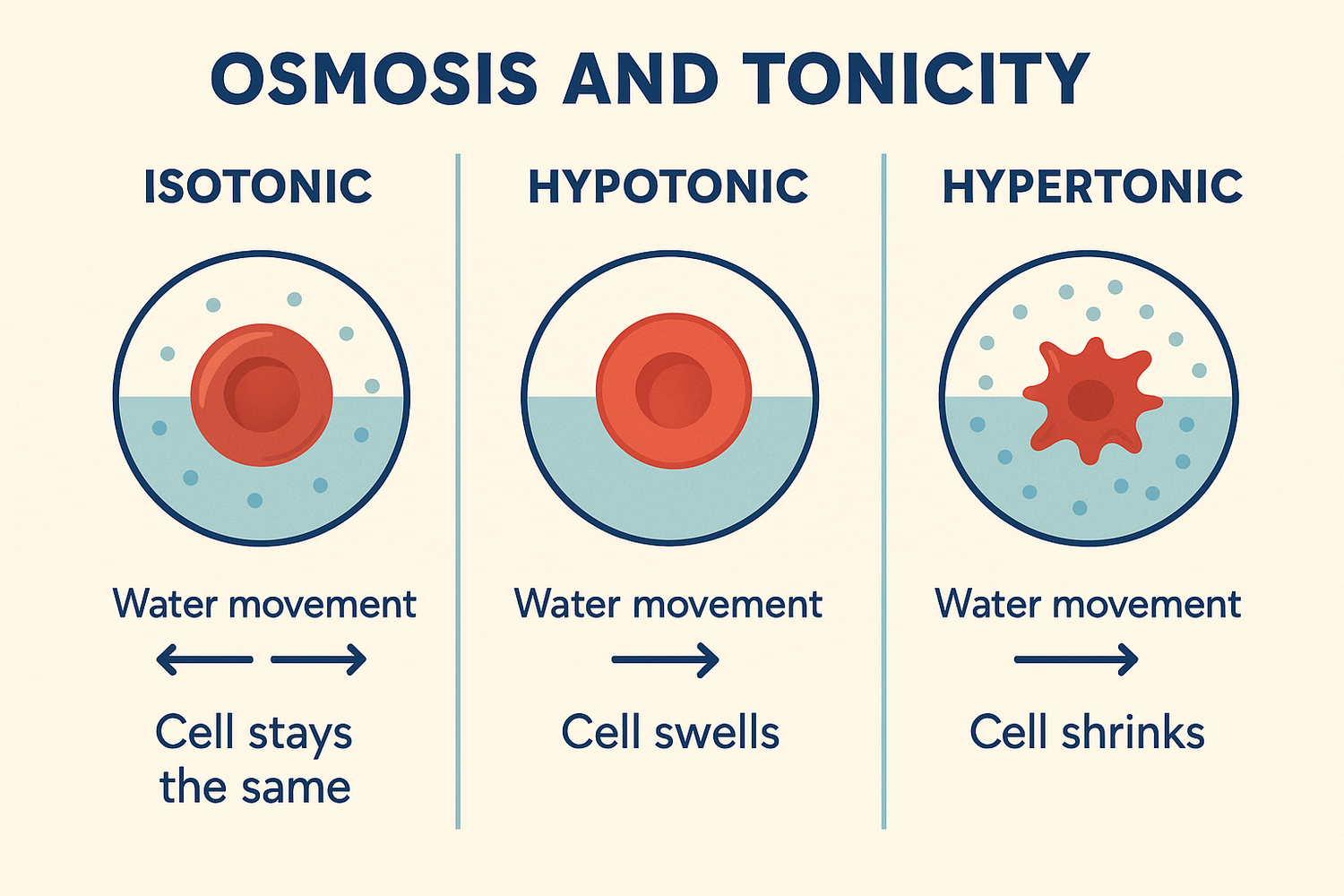
osmosis and types of solutions
simple diffusion of WATER
easily crosses the plasma membrane
hypertonic: water leaves the cell, cell shrinks
isotonic: water is at equilibrium
hypotonic: water enters the cell, cell swells
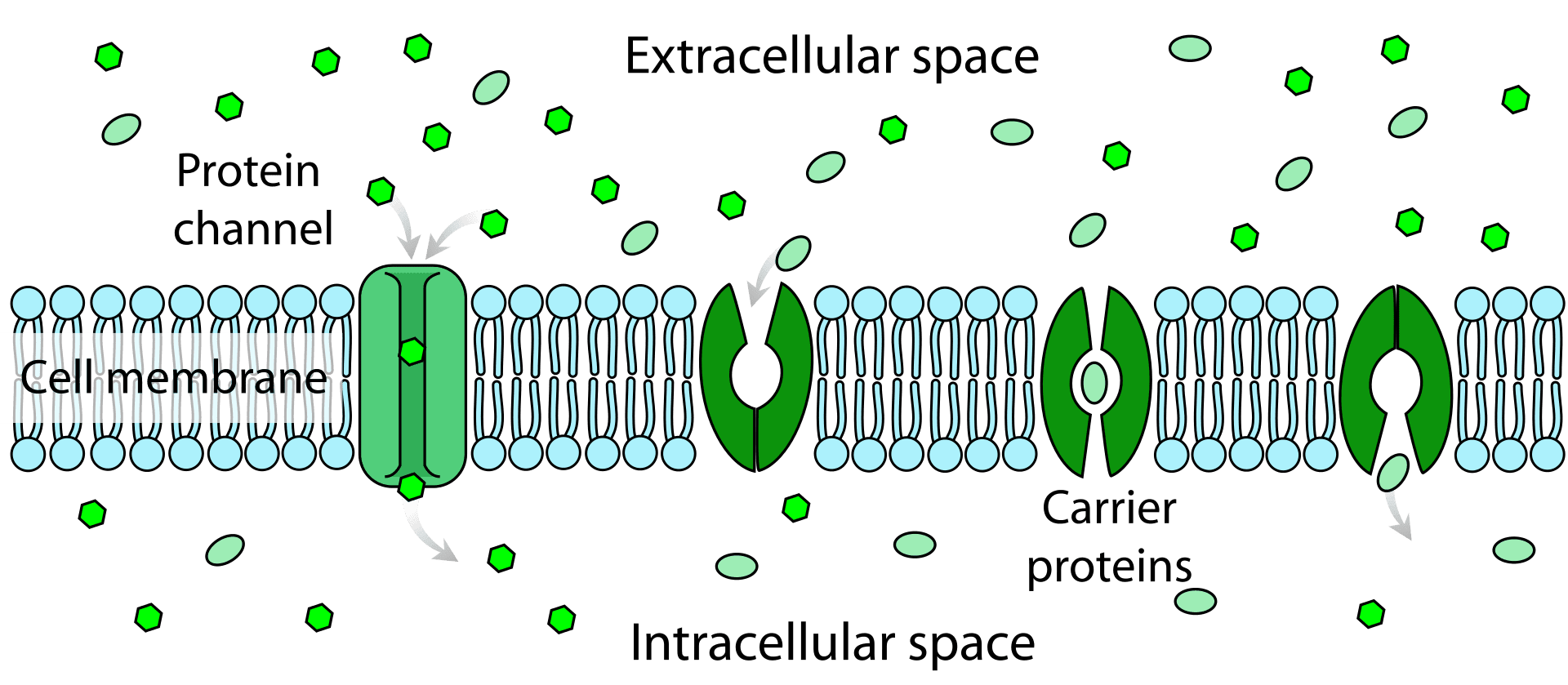
facilitated diffusion
substances require a protein carrier for passive transport
molecules are too large or lipid insoluble
proteins are VERY selective
filtration
solute: containing fluid is pushed from high → low pressure
water and small solutes are forced through a membrane by fluid or hydrostatic pressure
actove transport
substances too large for diffusion may have to move against concentration gradient
requires: ATP, carrier molecules, specific enzymes
exchange pump
maintains appropriate ion concentration on both sides of a membrane

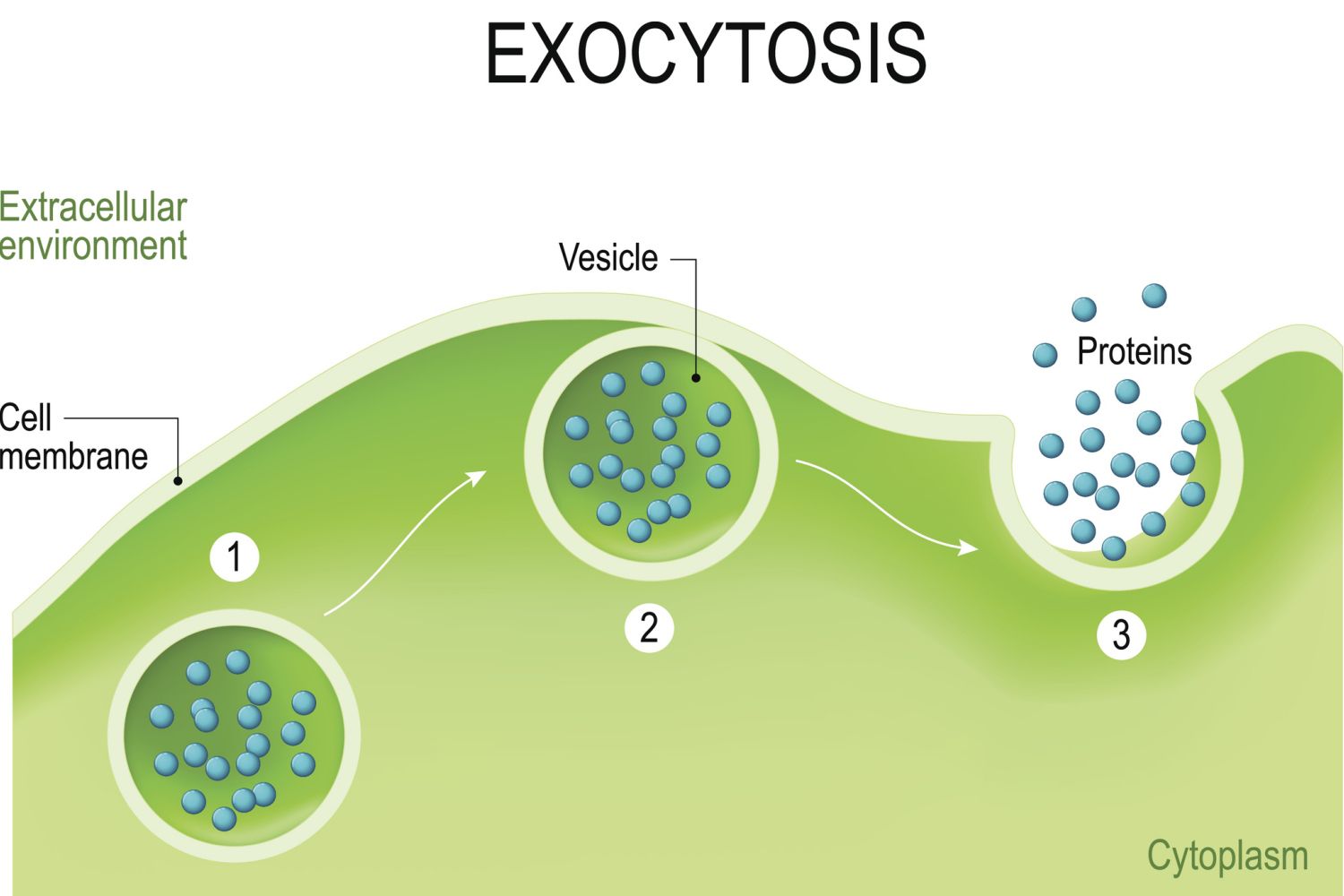
exocytosis
moves materials out of cell
materials carried in a vessel out to plasma membrane and released out of cell
hormones, mucus
endocytosis and types
materials imported into cell
can be very selective, vessel will not form without recognition by receptors on surface
phagocytosis: cell eating (ex immune system)
pinocytosis: cell drinking (ex intestines taking in solutes)

tissues definition
groups of specialized cells working together to perform a function
cells of the same tissue have similar structure
types of tissues
epithelium
connective
muscle
nervous
what is epithelial tissue? and forms
tissue that covers all internal and external body surfaces, lines body cavities, makes up glands
forms boundaries in the body
covering and lining epithelium (ex skin, stomach)
glandular epithelium (ex salivary glands)
structure and surfaces
cells packed together forming sheets
cells regenerate easily
avascular: lack blood supply
apical surface: not attached to surrounding tissue
basement membrane: attached to underlying connective tissue