Elasticity Notes Pt. 1
 Studied by 0 people
 Call Kai
 Learn
Learn Practice Test
 Spaced Repetition
 Match
Match Flashcards
 Knowt Play
1/9

Earn XP
Description and Tags
This set of flashcards covers key concepts and definitions related to elasticity, as discussed in the lecture.
Name | Mastery | Learn | Test | Matching | Spaced | Call with Kai |
|---|
No analytics yet
Send a link to your students to track their progress
10 Terms
Elasticity
Measures how much quantity demanded and supplied respond to changing market conditions.
Price Elasticity of Demand
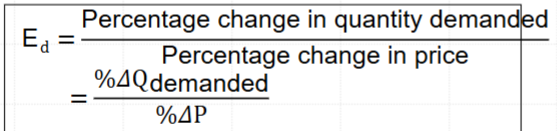
A measure of how responsive buyers are to price changes, calculated as the percentage change in quantity demanded divided by the percentage change in price.
Inelastic Demand
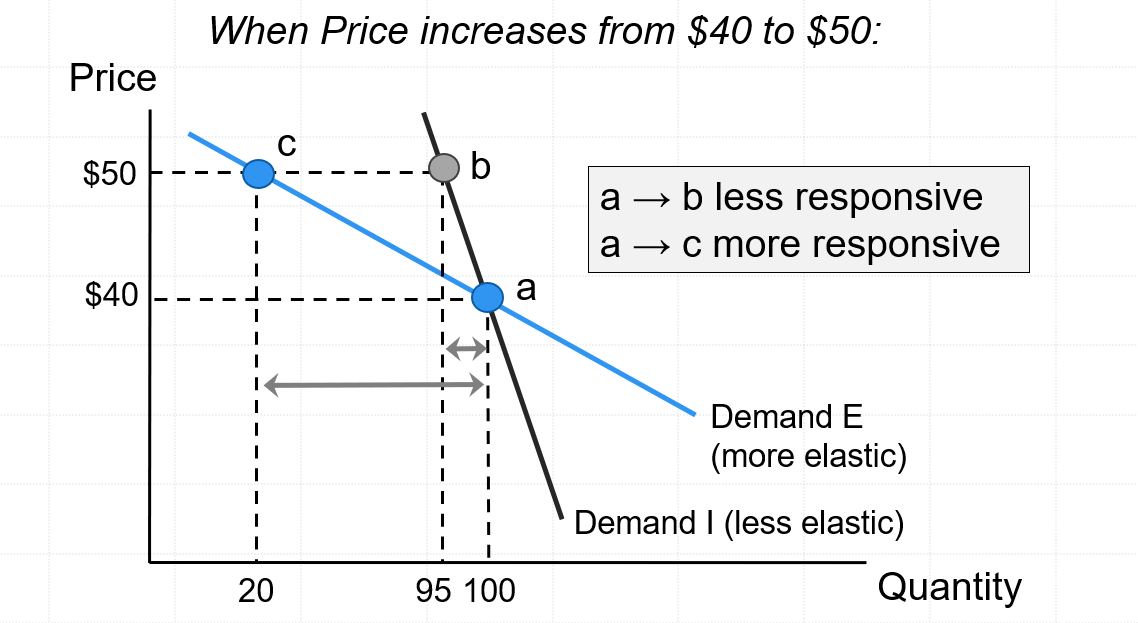
When buyers are not very responsive to changes in price, resulting in little impact on the quantity demanded.
Elastic Demand
When buyers are very responsive to changes in price, leading to significant changes in quantity demanded.
Unit Elastic Demand
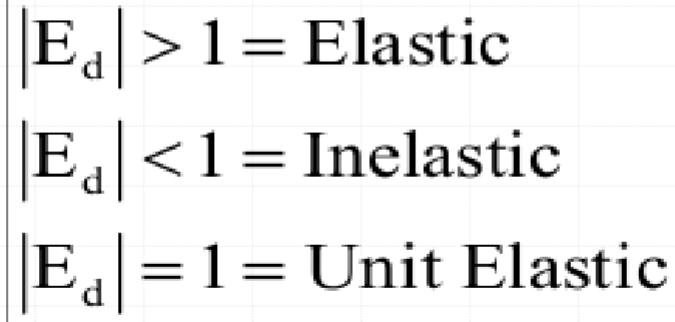
When the absolute value of the price elasticity of demand is exactly equal to one, indicating a proportional change in quantity demanded to price changes.
Absolute Value in Elasticity
Ignoring the negative sign in elasticity calculations to focus on magnitude.
Determinants of Elasticity
Factors that influence demand elasticity including the number of substitutes, necessity vs luxury, definition scope of the product, time, and share of income spent.

Total Revenue
Revenue calculated as price per unit times the quantity sold. Affected by elasticity of demand.
Perfectly Elastic Demand
A situation where quantity demanded changes infinitely in response to any change in price, resulting in a horizontal demand curve.
Perfectly Inelastic Demand
A situation where quantity demanded shows no sensitivity to price changes, leading to a vertical demand curve.
 Note
Note  Flashcards (46)