U5 - Sliding Filament Theory
 Call Kai
 Learn
Learn Practice Test
 Spaced Repetition
 Match
Match Flashcards
 Knowt Play
1/15

There's no tags or description
Looks like no tags are added yet.
Name | Mastery | Learn | Test | Matching | Spaced | Call with Kai | Chat |
|---|
No analytics yet
Send a link to your students to track their progress
16 Terms
contractions
for these to happen, the muscles need to be TOLD to do these (re: these things create movements)
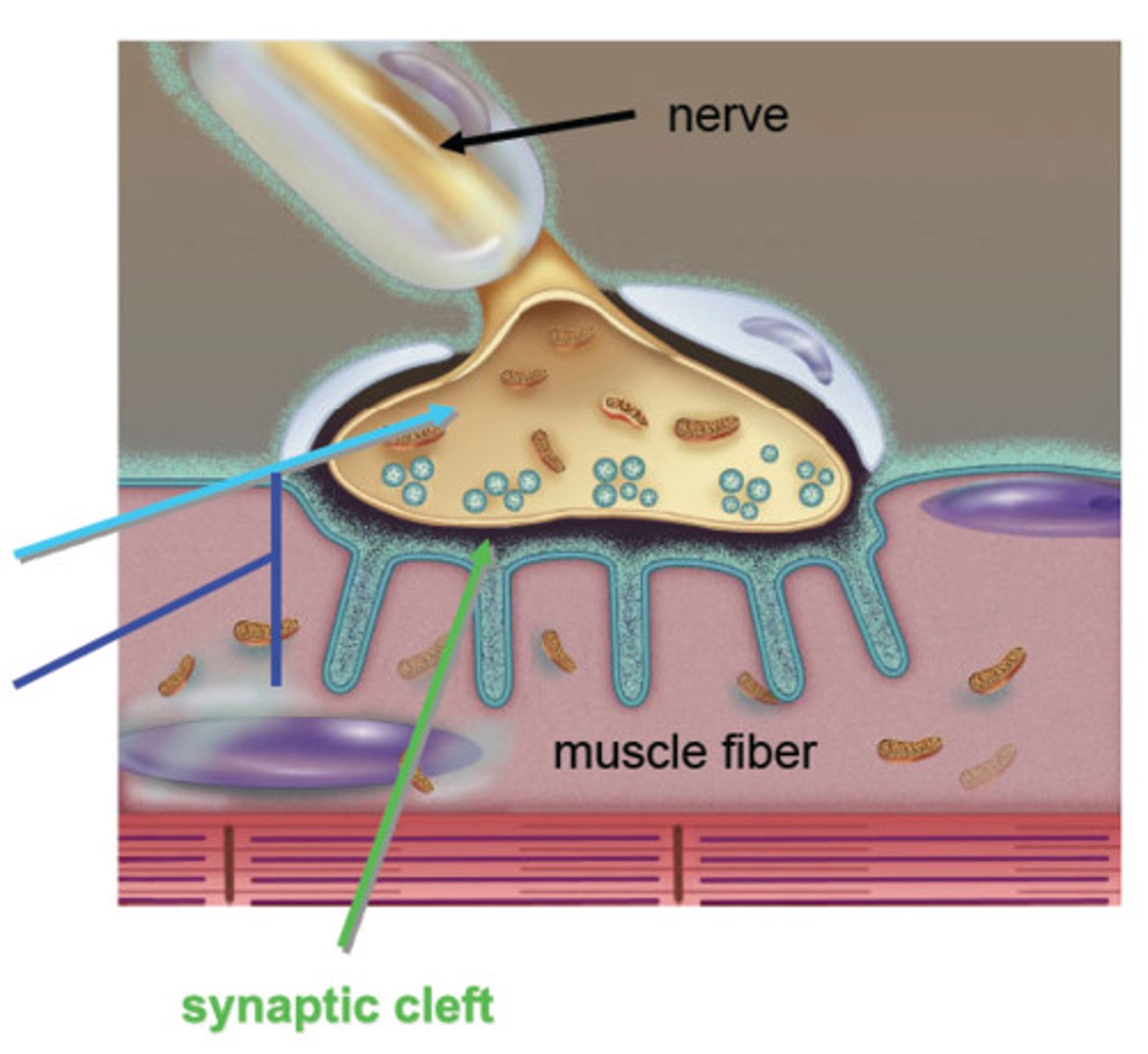
neuromuscular junction
where the nerve cells and muscle fibers meet
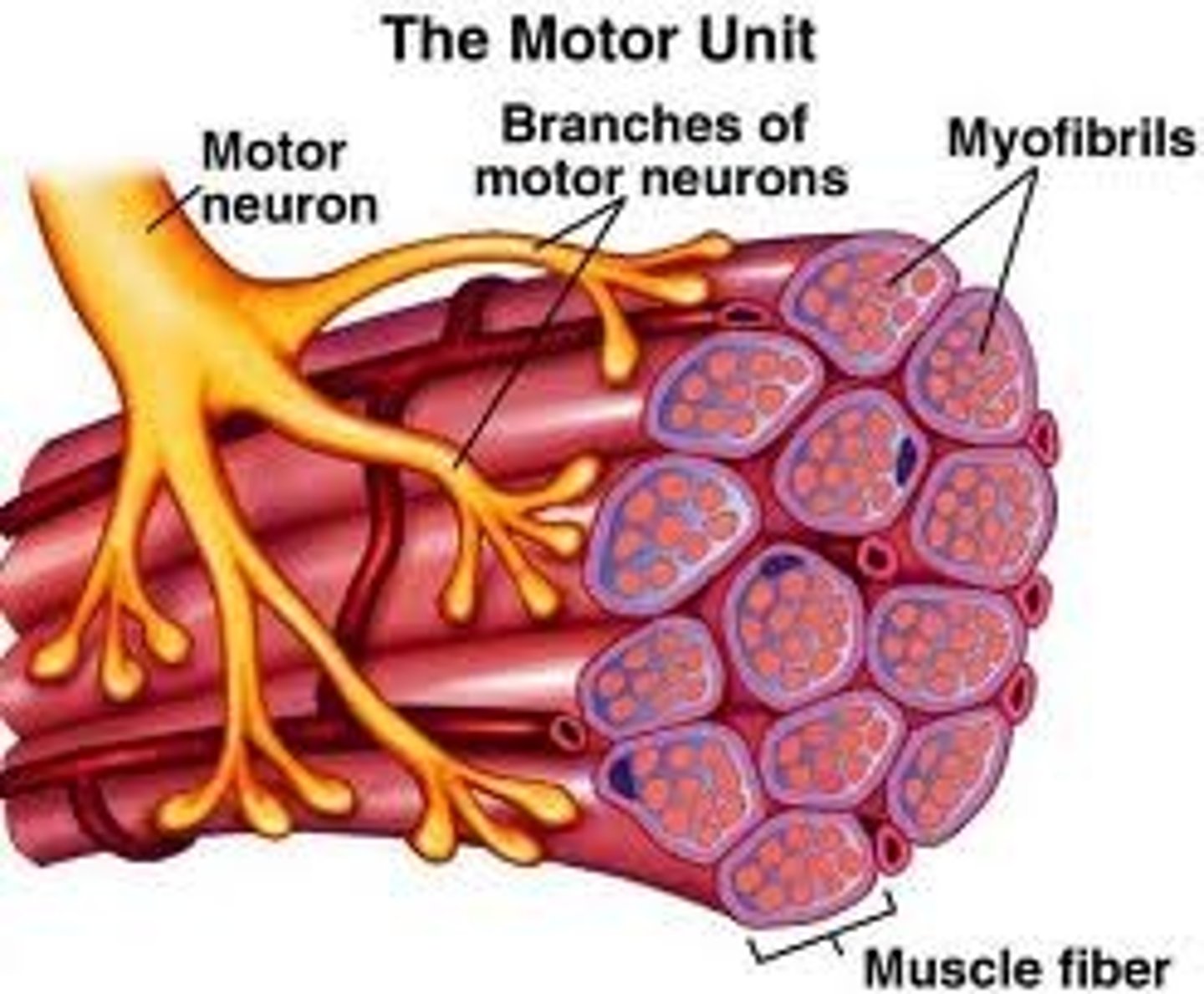
motor unit
a name that groups the muscle fiber and the motor neuron that work together to cause contractions
-> really a group of muscle fibers controlled by a single motor neuron
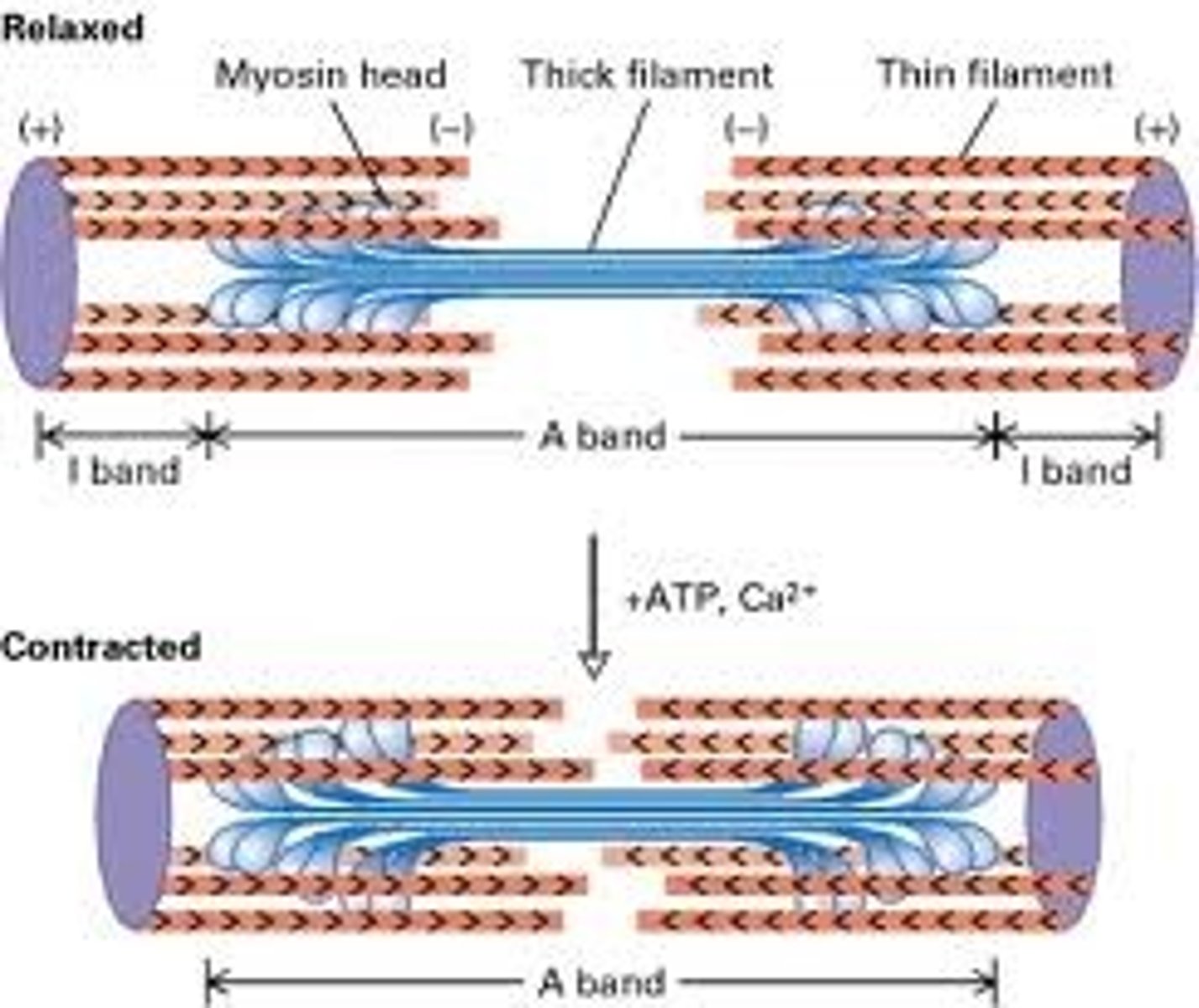
sliding filament theory (model)
the theory that describes contractions of muscle as when the thin filaments slide past the thick filaments to shorten the H-zone/sarcomere length
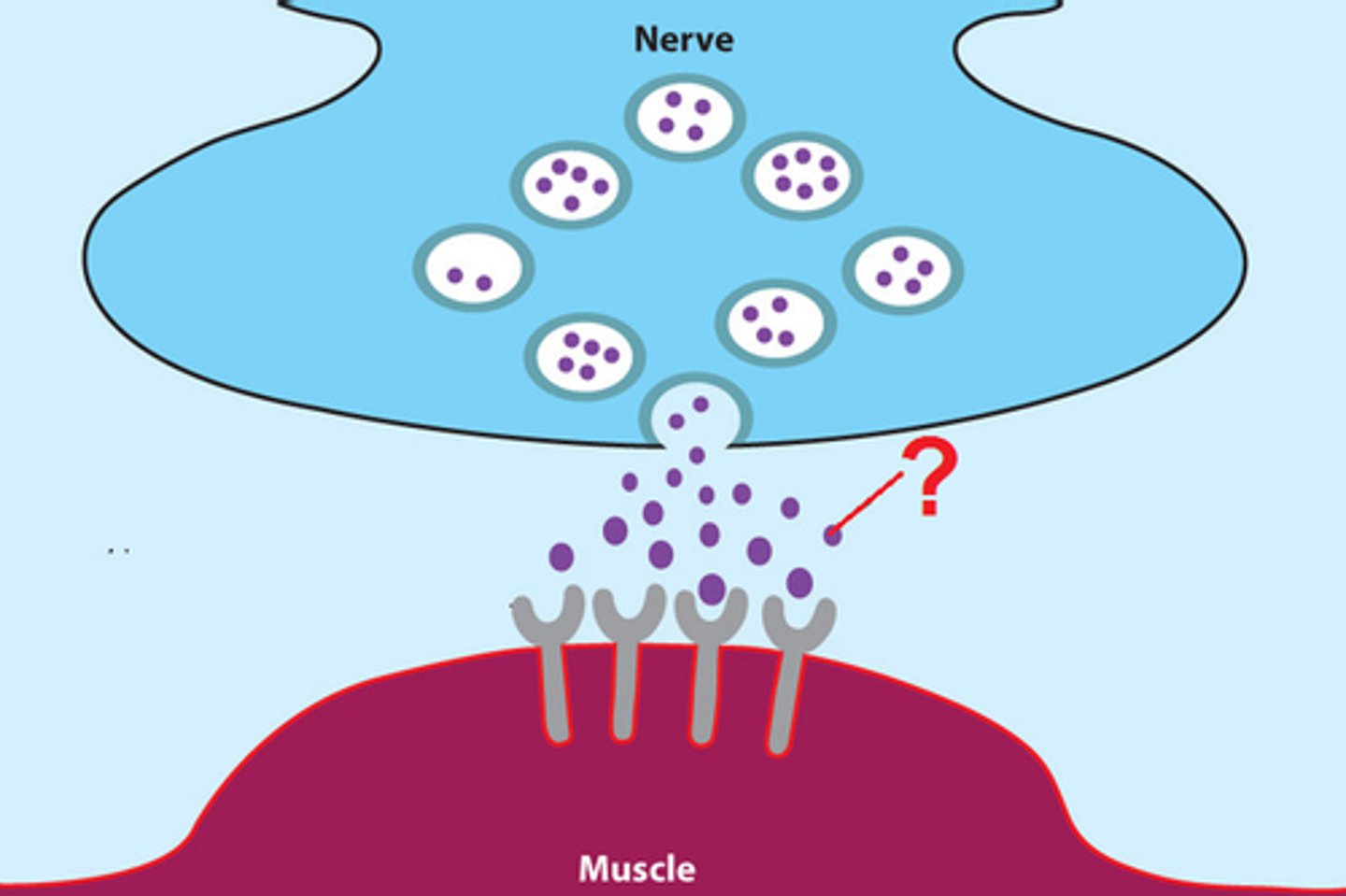
acetylcholine (ACh)
a neurotransmitter that the axon terminal of motor neurons releases to trigger a muscle action potential (nerve impulse) that travels across the sarcolemma/its T-tubules -- Na+ channels create this; binds to receptors in the sarcolemma of a muscle fiber
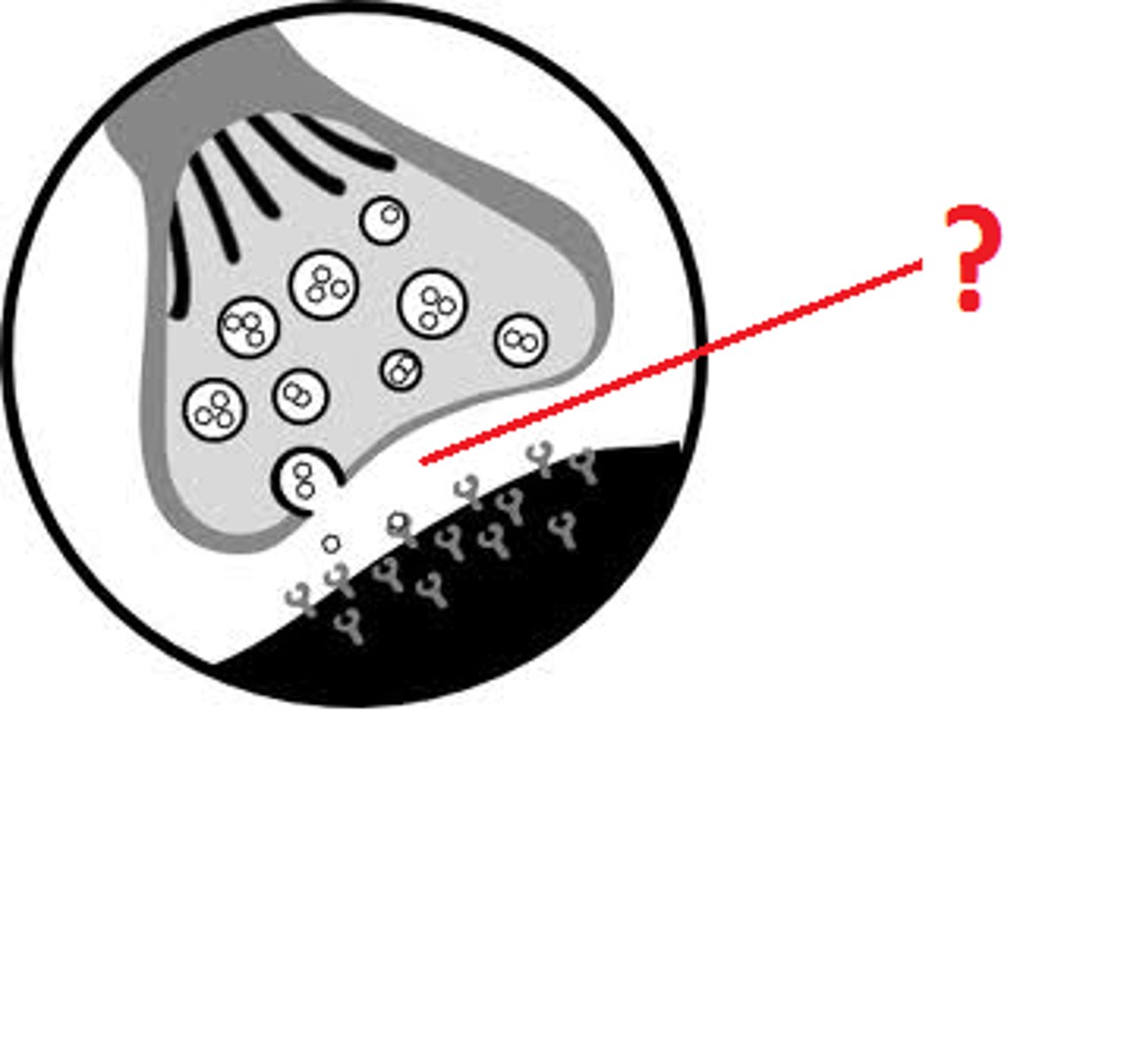
synaptic cleft
aka the synapse
acetylcholine diffuses across this space to bind to receptors in the sarcolemma
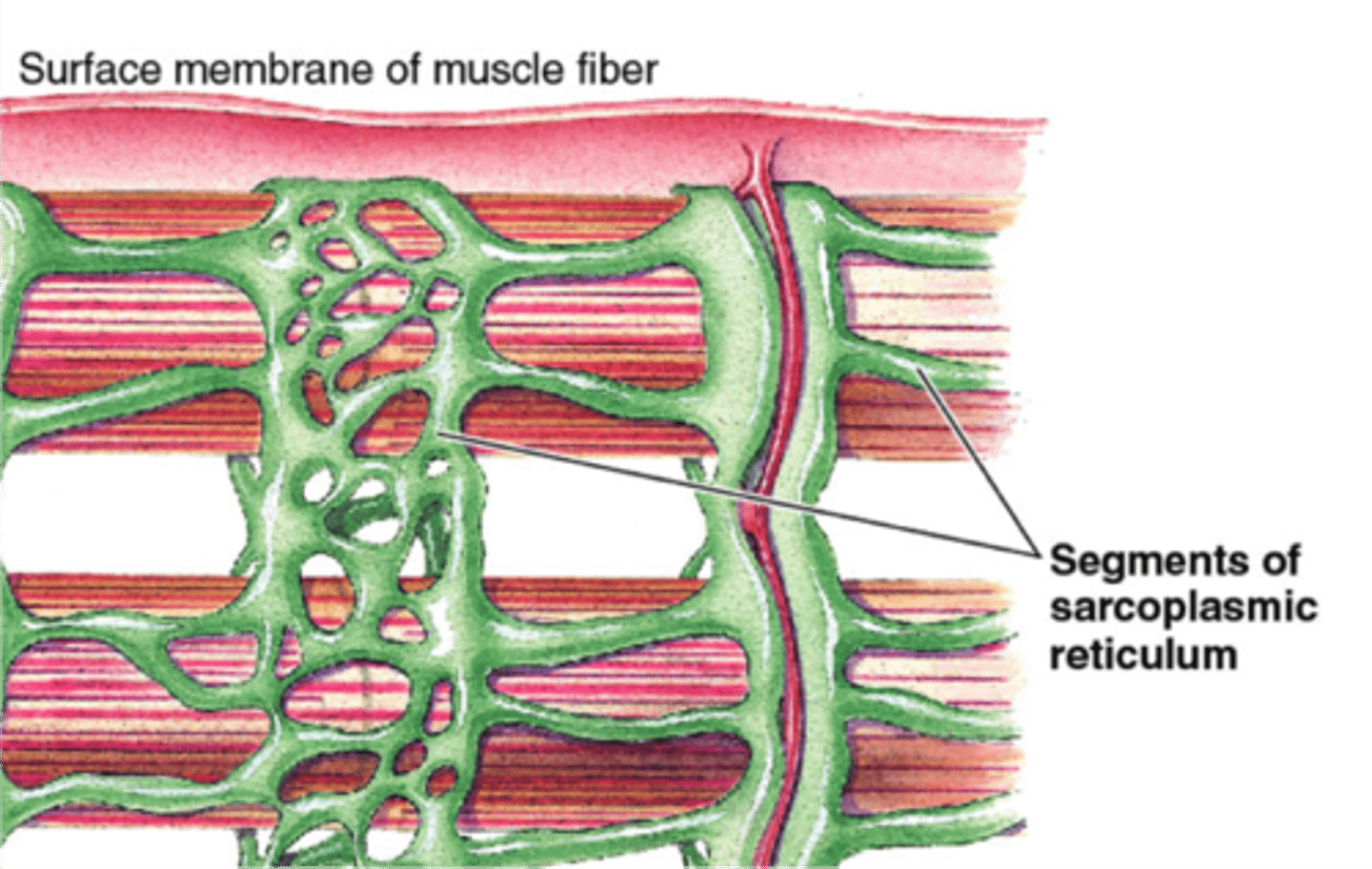
sarcoplasmic reticulum
for the purposes of the sliding filament theory, this organelle stores calcium ions that it releases through release channels when the action potential reaches the T-tubules
this action floods the sarcoplasm with calcium ion
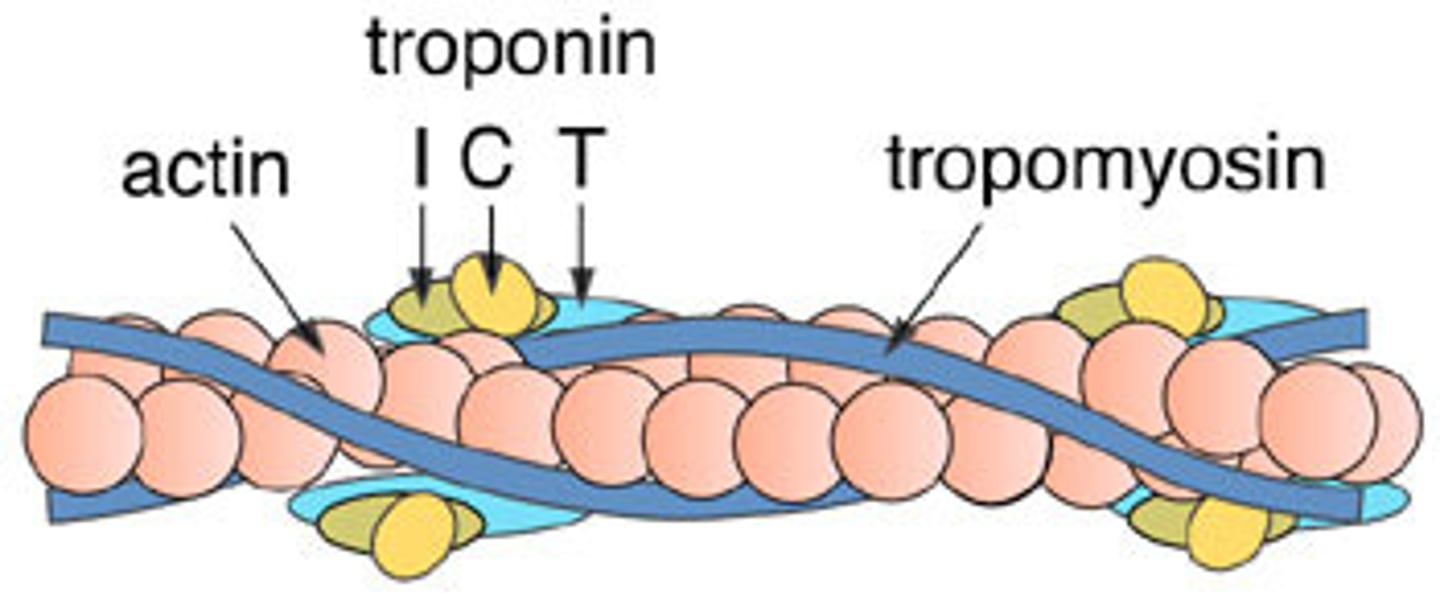
thin filament structure
these are made of troponin, tropomyosin, and actin
troponin binds to tropomyosin, both work to block the binding sites on actin where myosin heads bind (troponin sort of 'eggs' tropomyosin on to block it)
thick filament structure
made of intertwined myosin proteins that lead to the formation of myosin heads; these want to bind with actin molecules
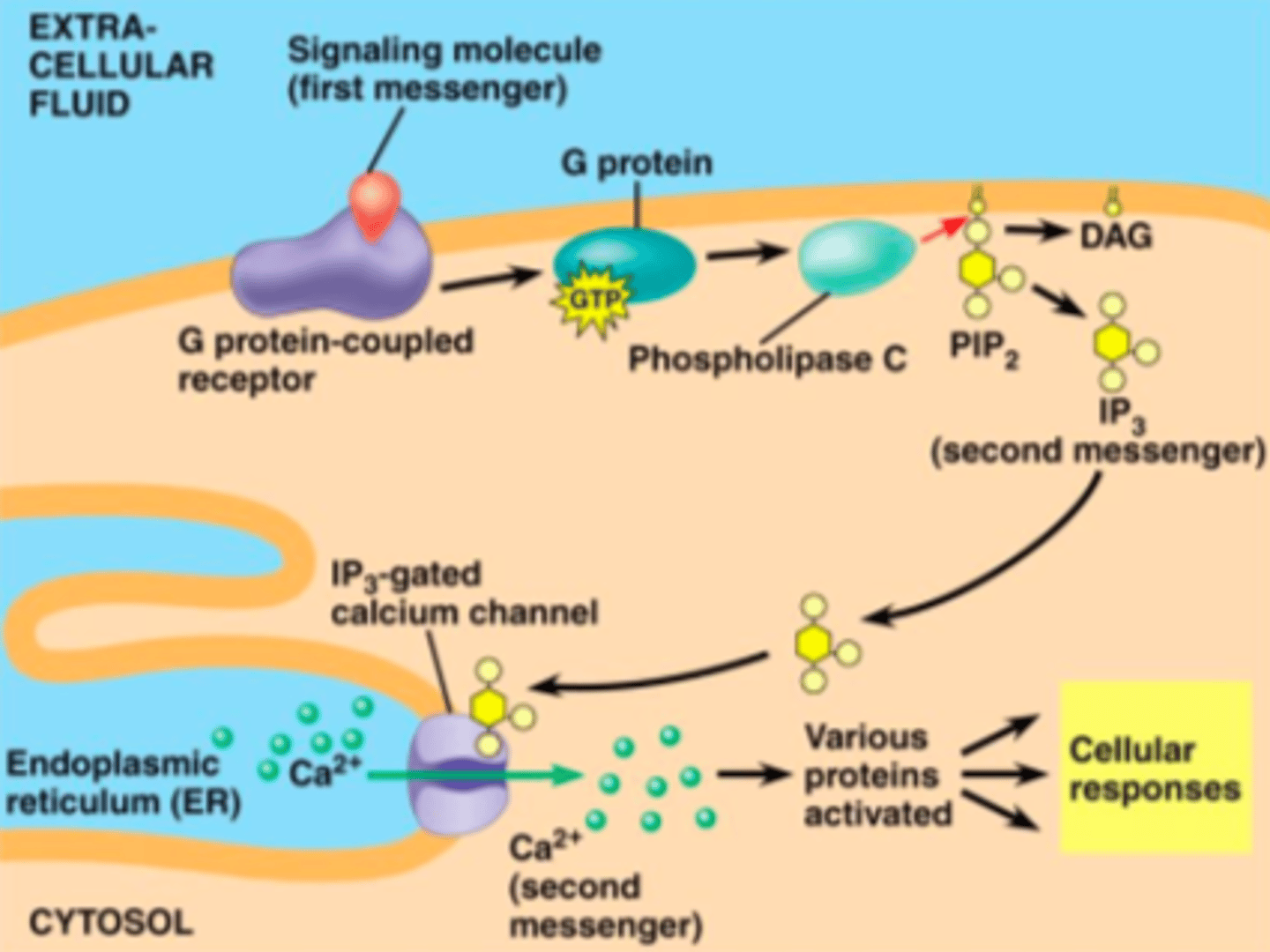
calcium ions
released by the sarcoplasmic reticulum, these will attach to troponin to release from tropomyosin when in high concentration, which then releases from actin as well
will lead to myosin and actin binding together
cross-bridges
the names for the connections between the heads of myosin filaments and receptor sites on the actin filaments
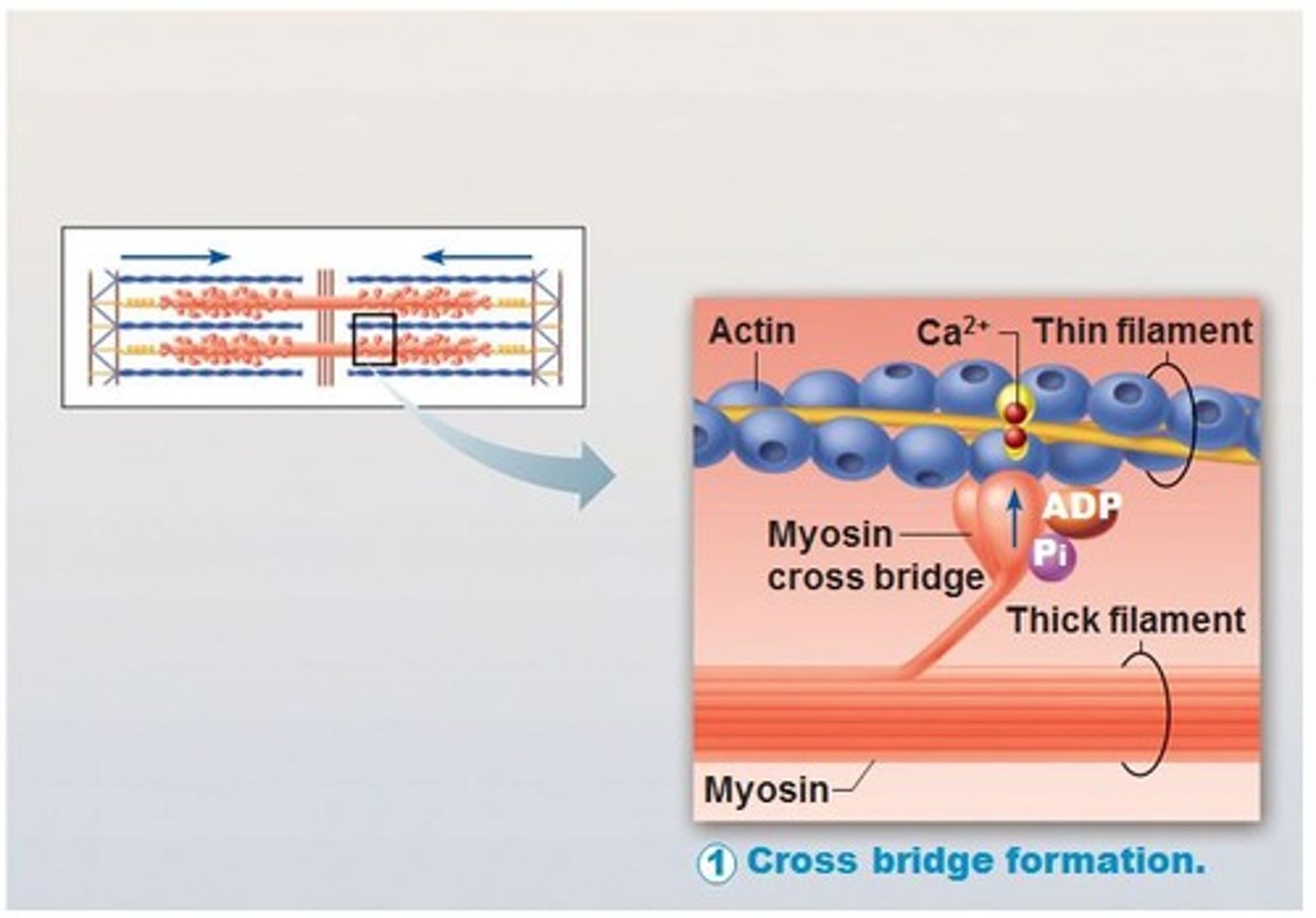
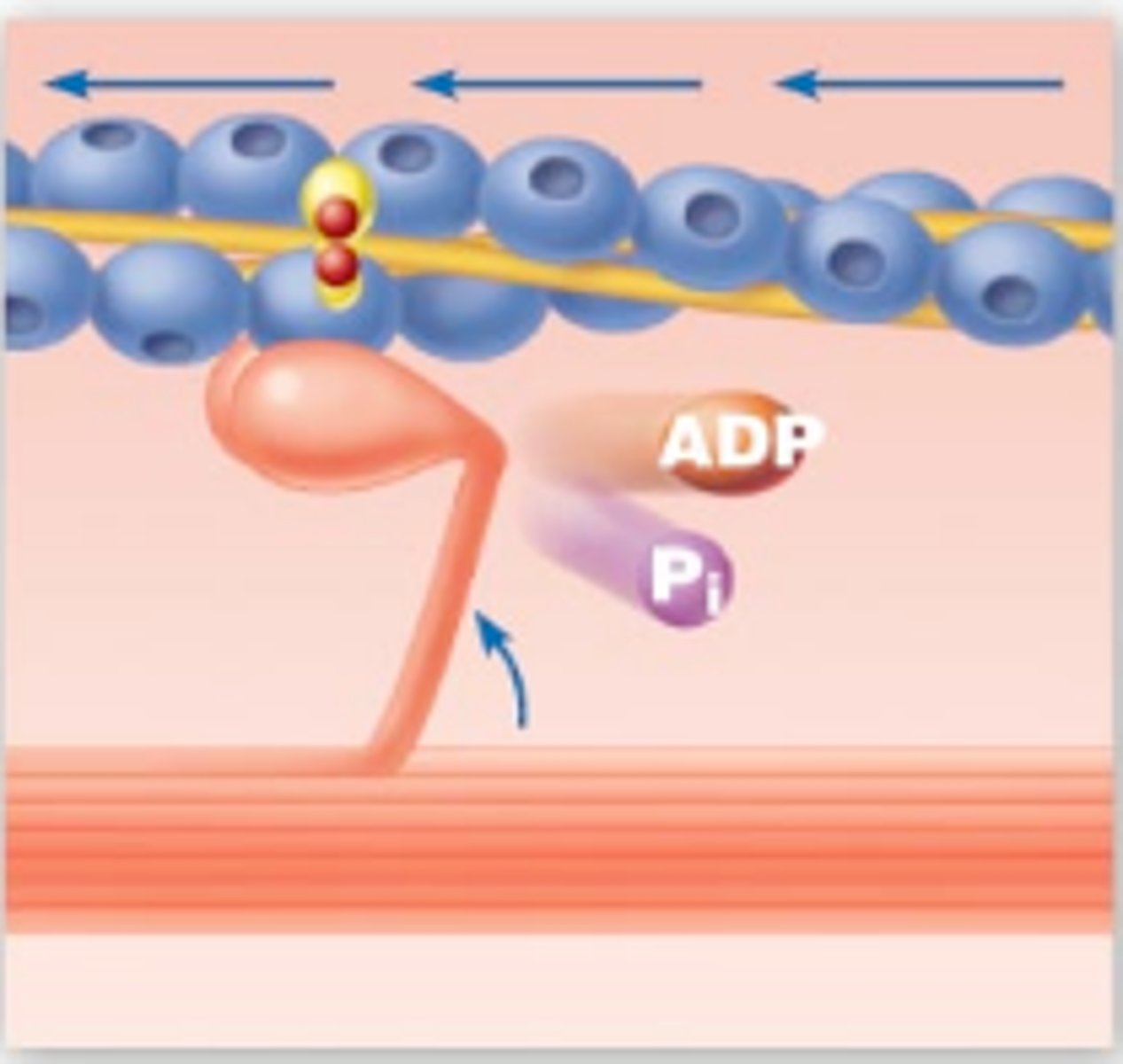
power stroke
action of myosin pulling actin inward (toward the M line); this occurs when cross-bridges form; the molecular action behind muscle contractions
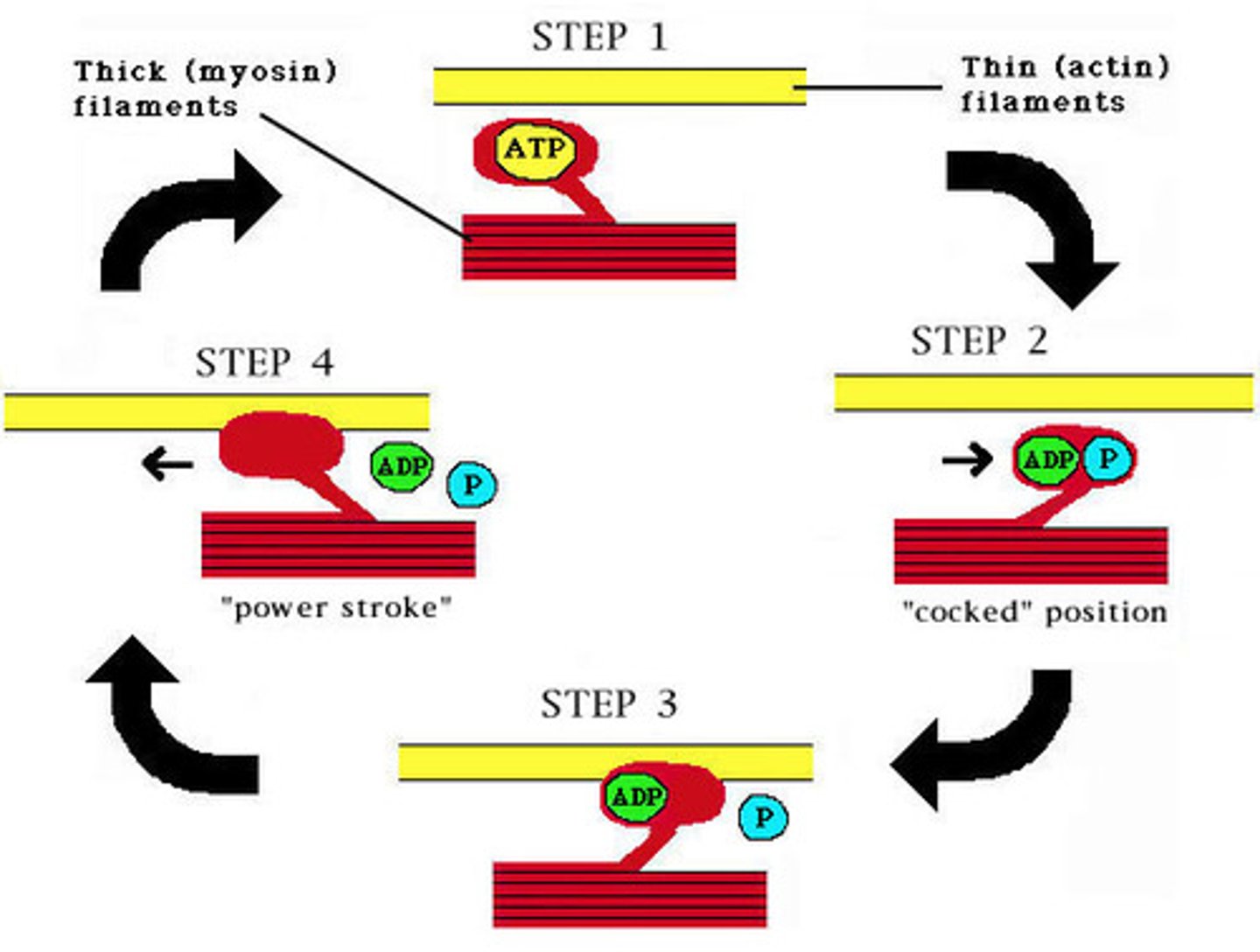
ATP
from cellular respiration in the mitochondria; creatine phosphate increases its regeneration
Three Functions in the Sliding Filament Theory:
1. when it binds to the myosin head and is hydrolyzed, it provides energy for the power stroke
2. when a new one of this molecule binds to the myosin head, it will release the myosin head from actin
3. its hydrolysis also actively transports calcium ions in and out of the sarcoplasmic reticulum
muscle relaxation
Occurs when calcium is pumped back into the sarcoplasmic reticulum by ATP and the release channels close, leading to troponin and tropomyosin sliding back onto the actin molecule
acetylcholinesterase
the enzyme that breaks down acetylcholine in the synaptic cleft so another muscle action potential does not arise without more ACh
rigor mortis
the condition in which muscles become rigid after death
due to the lack of ATP that leads to the inability of cells to actively pump calcium back into the sarcoplasmic reticulum
-> myosin heads cannot detach from the actin molecule