health module: throat
 Call Kai
 Learn
Learn Practice Test
 Spaced Repetition
 Match
Match Flashcards
 Knowt Play
1/39

There's no tags or description
Looks like no tags are added yet.
Name | Mastery | Learn | Test | Matching | Spaced | Call with Kai | Chat |
|---|
No analytics yet
Send a link to your students to track their progress
40 Terms
Which part of the throat is specifically responsible for preventing food and liquids from entering the trachea?
epiglottis
In the patient's electronic health record, the tonsils are graded as 4+. The tonsils would be:
Touching each other
Your assessment of a patient reveals that they have been experiencing dysphagia. Your subsequent assessments should address the risk of which complication?
Aspiration
the mouth and throat are the first part of the _______ system
digestive
why does the nurse assess the throat?
to assess the muscular passage, which serves as a channel for food and air
before the assessment, ask the patient about
difficulty swallowing
sores or lesions of the tongue
current and past tobacco and alcohol consumption
the tongue manipulates solids and liquids in
mastication and deglutition
the tongue is involved in speech production and
taste
larynx
located within the laryngopharynx
consists of the:
epiglottis
esophagus
trachea
voice box → houses vocal folds
tonsils
collection of lymphoid tissues
located posterior to the uvula
small, pink, symmetrical
may be large in size w/o being infected (children)
uvula is responsible for the
gag reflex
epiglottis
flap-like structure
rests at the superior of the trachea
prevent liquid or food from entering the trachea during swallowing
esophagus
fibromuscular tube
connects the cavity of the mouth to the lower esophageal sphincter of the stomach
transports food & liquid from mouth → stomach
located posterior to the trachea
trachea
ribbed tube
connects the pharynx & larynx to the lungs
epiglottis sits atop the trachea
closes off the trachea to prevent food or liquid from entering
located: anterior to the esophagus
tongue
muscle tissue that covers the floor of the mouth
what is the necessary equipment to assess the throat?
tongue depressor / tongue blade
penlight
gloves
if tonsils are present, they should be graded to size on a
scale
1+
visible
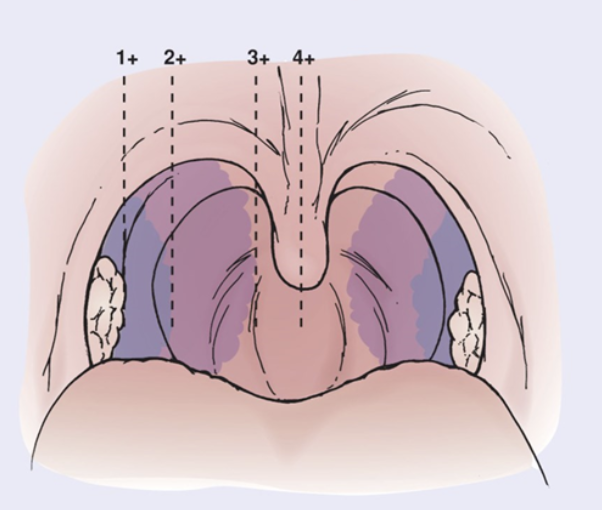
2+
between tonsillar pillars and uvula

3+
touching uvula

4+
touching each other

dysphagia/odynophagia
difficulty to swallow
dysphagia/odynophagia can result from:
tumors: pharynx, esophagus, surrounding structures
narrowing of esophagus
inflammation secondary to GERD
anxiety
poorly fitting dentures or poor dental health in general
neuromuscular diseases (stroke, parkinson’s disease, dementia)
cancer
head injury
growth/lesions in respiratory tract / enlargement of surrounding glands / tissues
dysphagia increases risk of:
reduction of nutritional intake
aspiration: incomplete closure of vocal cords / impeded movement of epiglottis
sore throat and irritation can be related to:
viral infections
flu
colds
measles
chicken pox
whooping cough
croup
infectious mononucleosis
bacterial infections
strep throat
fever
pharyngeal exudates
anterior lymphadenopathy
no cough
allergies
pollen
molds
cat/dog dander
house dust
irritation
dry heat
chronic stuffy nose
pollutants
voice straining
gerd
tumors of throat, tongue, larynx
hiv infection
cancer
hoarseness
altered quality of the voice
hoarseness can result from:
overuse of voice
acute infections
smoking
inflammation from allergen or irritant exposure
voice abuse
hypothyroidism
chronic infections (tuberculosis)
tumors
upper respiratory infections
cancer of larynx
gerd
lesions of the throat
pharyngitis
chronic hypertrophy of tonsils or adenoids
recurrent strep infection
throat appears bright red & exudes white or yellow fluid
sleep apnea
increased risk for
hypertension
stroke
heart attack
motor vehicle accidents
squeezed appearance of the general population of the throat
strep throat
red and white patches in throat
difficulty swallowing
tender or swollen neck lymph glands
red and enlarged tonsils
hypertrophy of tonsils or adenoids
airway obstruction or sleep apnea, recurrent infections
cough
sinus drainage
allergen irritant exposure
chronic sinusitis
lung pathology
asthma
gerd
mucosal inflammation
infection or allergy
recurrent infections
leave scars or crypts in tonsils
collect food and oral debris
appear as white crud like material
neoplasm
asymmetric tonsillar enlargement
peritonsillar abscess or “quinsy”
collection of fluid in anterior tonsillar pillar
increasing unilateral pain
deviated uvula
hot potato voice (sounds like person is speaking w/ mouthful of hot potatoes; found: epiglottis)
dysphagia
trismus: difficulty opening the mouth
aspiration
incomplete closure of vocal cords or impeded movement of epiglottis
oral cancer (late signs)
difficulty chewing
swallowing
moving tongue or jaws
malocclusion
can cause difficulty chewing or swallowing
A client presents to the health care clinic with reports of two-day history of sore throat pain, ear pressure, fever, and stiff neck. The client states they have taken Tylenol and lozenges without relief. Which nursing diagnosis can be confirmed by this data?
Acute pain related to sore throat
Rationale: The client describes pain of two-day duration, which is within the definition for acute pain. The client did not describe or display any major defining characteristics of anxiety such as restlessness, concern about lifestyle changes, or sleep disturbances. The stiff neck was not confirmed by objective data collected by the nurse. No evidence exists for the client to have risk for fluid volume deficit.