Biology 1
 Call Kai
 Learn
Learn Practice Test
 Spaced Repetition
 Match
Match Flashcards
 Knowt Play
1/64

There's no tags or description
Looks like no tags are added yet.
Name | Mastery | Learn | Test | Matching | Spaced | Call with Kai | Chat |
|---|
No analytics yet
Send a link to your students to track their progress
65 Terms
Large, Complex molecules with a structure based on a carbon atom backbone
Organic molecules
Small, simple molecules with a lack (one or a few) carbon molecules
Inorganic molecules
Name 4 types of bonds in biological molecules
Ionic, Covalent, Hydrogen, Van der Waals interactions
What bond involves transfer of electrons?
Ionic
In an ionic bond, what causes attraction ?
Difference of charges
In water, oxygen is more… than hydrogen.
Electronegative
What bond forms between non polar molecules that are very close together?
Van der waals interactions
In water, there is a partial … charge on oxygen and partial … charge on hydrogen.
negative
positive
Hydrogen bond occurs between…?
molecules
Hydrogen in a hydrogen bond is attracted to electro… atoms like …?
negative
O or N
Why is water a polar molecule if it has no net charge?
Unevenly distributed charges
Attraction between H20 and polar substances is called … force
adhesive
Why does water have a high specific heat
Large amounts of heat energy is required to break H bonds between H20 molecules.
Surface tension produced by attraction between water molecules is called … force
adhesive
What is high heat of vaporization?
the quantity of heat that a liquid must absorb for 1 g of it to be converted from liquid to solid
How does water act as a solvent to dissolve ionic compounds and poler molecules?
water’s partial charges attracts ions
water forms hydrogen bonds around polar molecules
Acid is a substance that (…) H+ concentration in a solution
increases
Base is a substance that (…) the H+ concentration in a solution
reduces
What is a substance that minimizes the changes in pH?
Buffer
Explain how high heat of vaporization of water works
H20 molecules are held by hydrogen bonds
High energy is used to break H bonds so that they can escape as gas
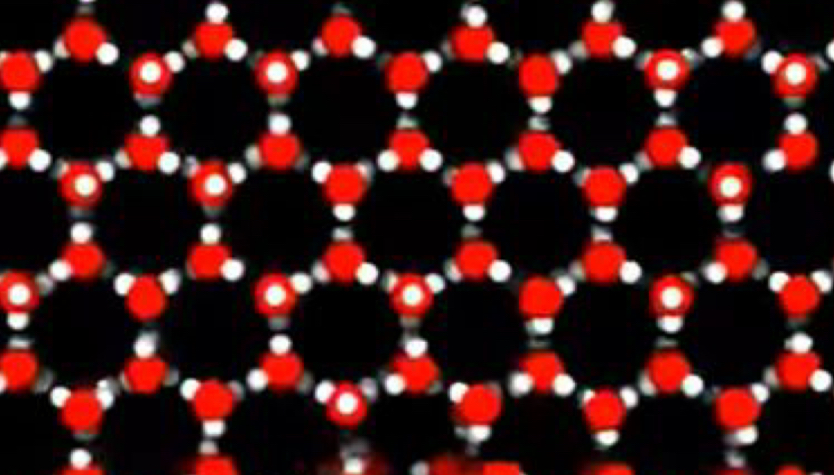
In a solid state, water forms …? (Hint: density, structure)
Crystalline lattice
Explain evaporative cooling
H bonds in the water break
Heat is taken with them
Temperature lowers
In water’s solid state, a crystalline lattice is formed because molecules can bond to a maximum of … neighbours
4
At 4 degrees Celcius, water has it’s … density
highest
How can organisms still live in oceans and lakes during winter?
Water at the surface freezes
Forms an ice sheet at the surface
Ice sheet insulates the water below
Prevents water from freezing solid
State the 6 properties of water
Cohesion, adhesion
High: SHC, Heat of vaporization
Density
Solvent
Viscosity
Water can dissolve … and … substances easily
Ionic
Polar
How does water have low viscosity? (Viscosity- property of being thick or sticky)
Small size
H bonds easily broken (and reformed)
(molecules can slide over each other)
A person cannot survive drastic change in pH of blood. What component in blood prevents this?
Buffer - Carbonic acid
What happens to carbonic acid when pH of blood increases?
H2CO3 → H+ + H Co3-
dissociate to for, H+ and bicarbonate ion
What happens when blood pH decreases?
(Hint: H and bicarbonate ion)
H+ and H CO3- combine to for, H2CO3 (carbonic acid)
What happens to a buffer when pH increases?
accepts H+
What happens to a buffer when pH decreases?
donates H+
What is the role of carbonic acid / buffer in blood ?
Maintains constant blood pH
reveives extra H+ or
What is the function of mineral salts?
Regulate body processes
( Ca and Phosphorous- bones
Ca - muscle contractions
Na and K- nerve impulse transmission
Carbon can form multiple bonds with … (strong bonds)
Hint: 3
C O N
Carbon can form … covalent bonds
4
Carbs / saccharides consist of … at a … ratio
C H O
1:2:1
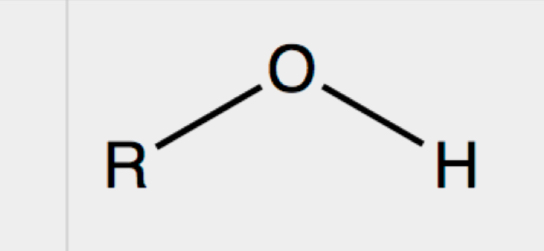
(CARB) What is the name and property of this functional group?
hydroxyl
polar
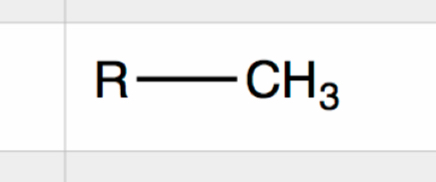
(CARB) What is the name and characteristic of this functional group?
methyl
nonpolar
(CARB) What is the name and characteristic of this functional group?
carbonyl
polar
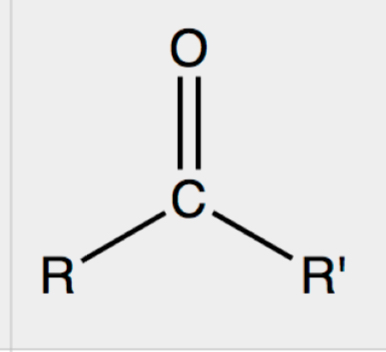
(CARB) What is the name and what are the characteristics of this functional group?
Carboxyl
Charged, acidic (can release H+ ions into solution)
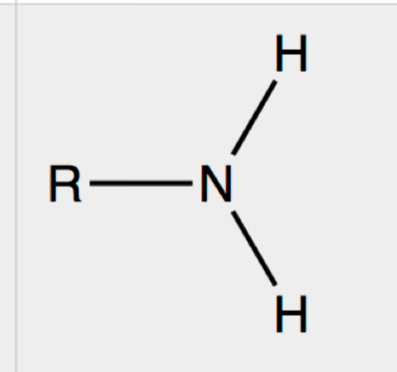
(CARB) What is the name and what are the characteristics of this functional group?
Amino
Charged, basic (can remove H+ from solution)
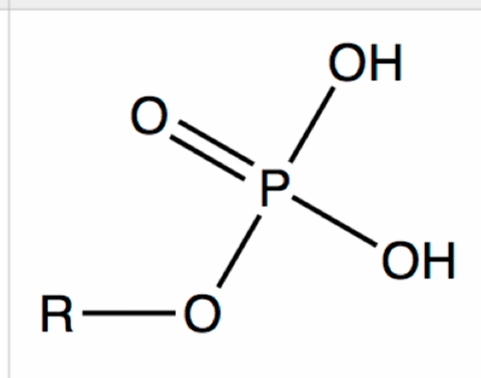
(CARB) What is the name and what are the characteristics of this functional group?
Phosphate
Charged, acidic (can release H+ into solution
What are the 3 types of isomers?
Structural, geometric, optical
What are polymers?
Long chain molecules
Made of many similar identical units (monomers)
joined by covalent bonds
How are polymers synthesised?
Condensation/dehydration of monomers
Enzymes remove -OH from one molecule and H from another, release water
How are poly,ers broken down?
Hydrolysis
What are the functions of carbohydrates
Energy
Structure component in cells
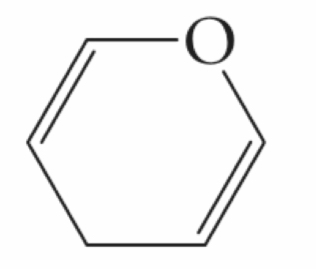
(monosaccharide)
… ring
Pyranose
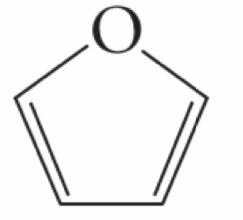
(monosaccharide)
… ring
furanose
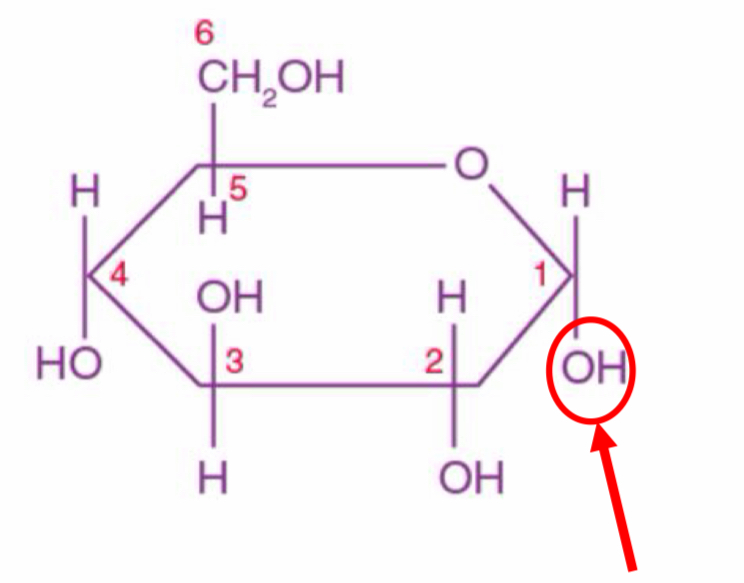
…-glucose
alpha
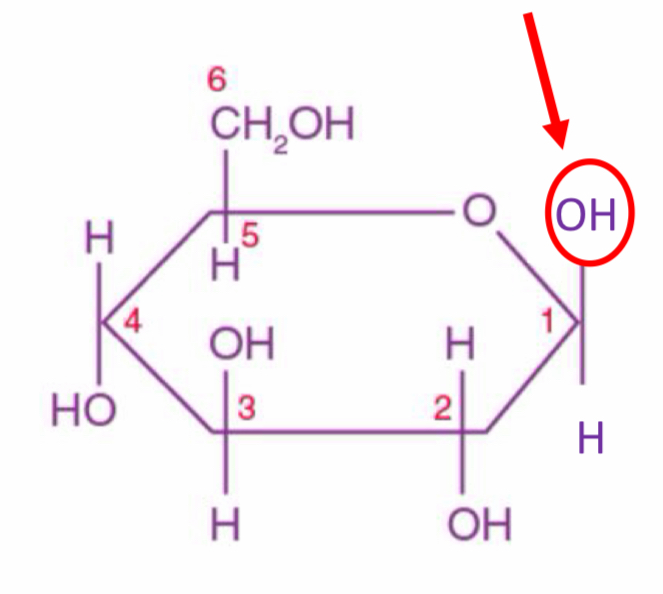
…-glucose
beta
(carbohydrates)
properties : sweet tasting, water soluble, can form crystals, reducing sugars
monosaccharide
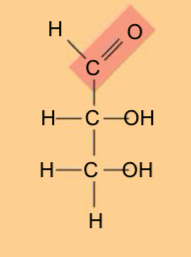
the carbonyl group at the end is a(n) … and the sugar is a(n)
aldehyde
aldose
this position of carbonyl group is a(n) … amd the sugar is a(n)
ketone
ketose
The ability of sugar to reduce copper valency in benedicts solution
reducing sugar
when the sugar forms a ring, the aldehyde/ketone becomes the … carbon that is … reactive than otjer carbons in the sugar
anomeric
(to open the double bond, a free -OH group is attatched)
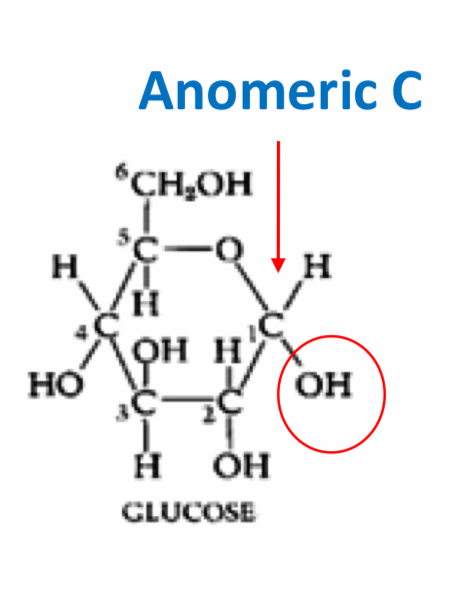
all monosaccharides are reducing sugars because of presence of free …
OH
Disaccharides are two monosaccharides joined to together by … bond
glycosidic bond
malt sugar (a reducing sugar)
milk sugar, reducing sugar
table sugar, found in plants, reducing sugar
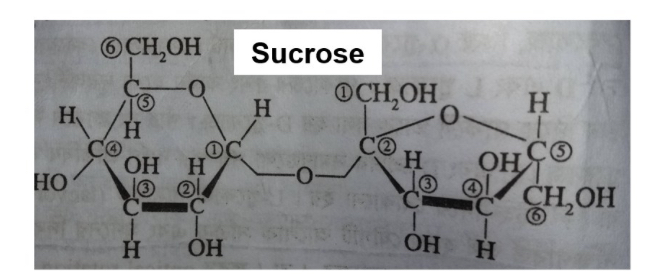
Is this a reducing sugar? Why?
No
Both anomeric carbons are involved in glycosidic bond
(No free OH)