Oral Microbiome in Disease
 Call Kai
 Learn
Learn Practice Test
 Spaced Repetition
 Match
Match Flashcards
 Knowt Play
1/19

Earn XP
Description and Tags
This set of vocabulary flashcards covers the microbiology of dental caries and periodontitis, including historical hypotheses, key pathogens, virulence factors, and modern molecular identification techniques.
Name | Mastery | Learn | Test | Matching | Spaced | Call with Kai | Chat |
|---|
No analytics yet
Send a link to your students to track their progress
20 Terms
Periodontitis
A chronic infection of the tooth supporting structures (the periodontium) characterized by progressive bone loss and soft tissue damage. Caused by immune response
Open-ended molecular techniques
16S rRNA sequencing, metagenome sequencing, metatranscriptome sequencing. “Omics technologies”
Non-specific plaque hypothesis
Collective community of mixed bacteria in saliva, added carbohydrates = tooth demineralization.
Specific plaque hypothesis
Specific bacterial species in dental biofilm are capable of causing caries.
Key players in dental caries
S. mutans, lactobacilli, actinomyces, non-mutans streptococci
Streptococcus mutans
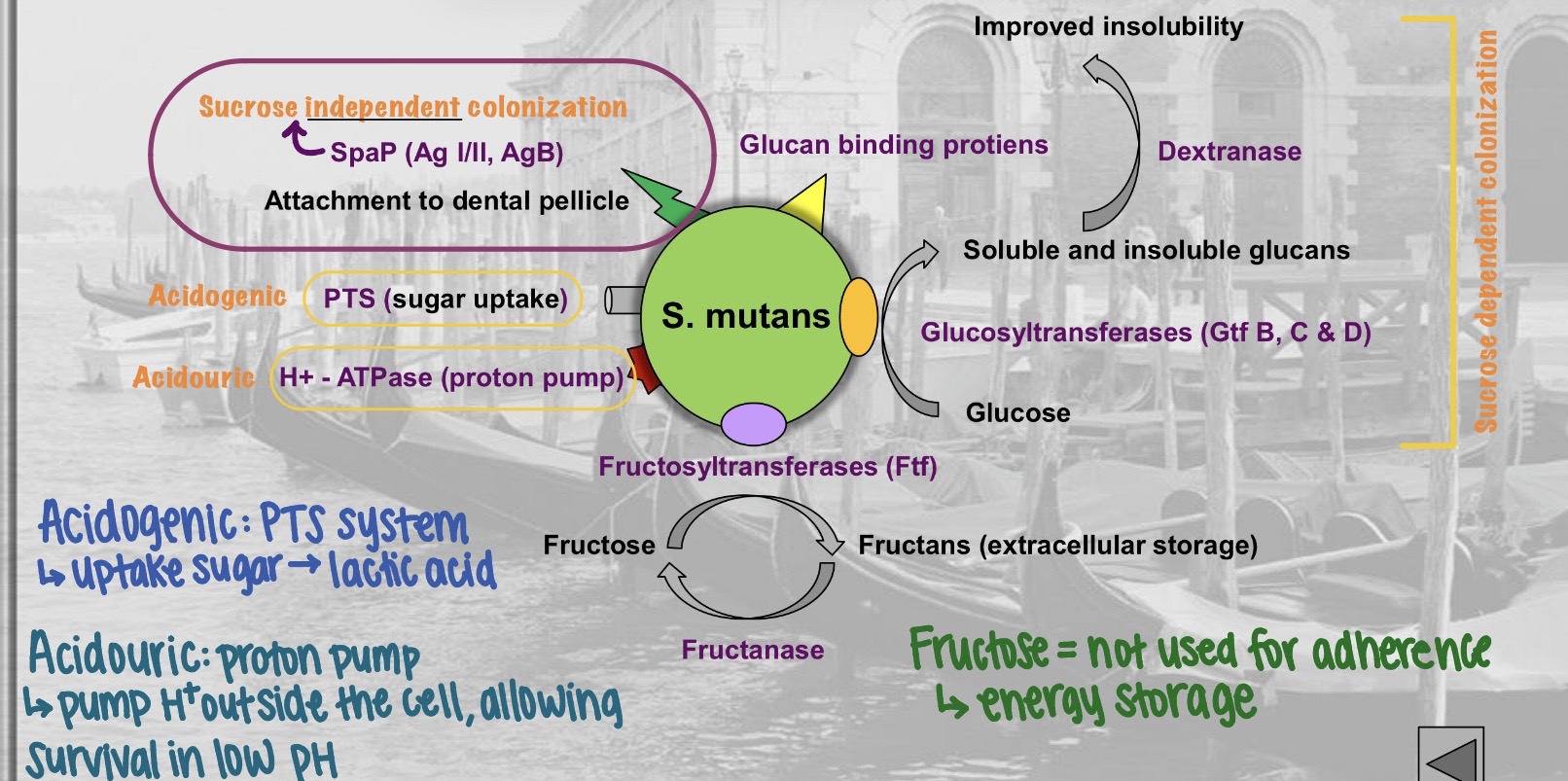
The most important etiological agent of dental caries, primarily responsible for the initiation of coronal carious lesions. 8 serotypes in humans. Acidogenic, acidouric, adheres to tooth surfaces
S. mutans virulence factors
Acidogenic (PTS system), Acidouric (proton pump), sucrose independent adherence (SpaP; Ag I/II, AgB; attachment to dental pellicle), sucrose independent adherence (glucose - glucosyltransferases - glucan binding proteins, dextranase). Fructose stored as energy.
Lactobacilli
Involved in the progression of caries into dentin rather than caries initiation. Highly acidogenic (produces lactic acid)
Is actinomyces linked to root caries
evidence does NOT support
non-mutans streptococci
s. mitis, s. intermedius, s. sanguinis
Ecological plaque hypothesis
The theory that dental plaque is a biofilm where the significance of pH determines the shift between health and caries.
Candida albicans
An emerging fungal cariogen that synergizes with Streptococcusmutans and is associated with early childhood caries (ECC). Coinfection = more severe caries
Do not produce acids
prevotella, selenomonas
Scardovia wiggsiae
An emerging acidogenic and aciduric cariogen frequently associated with early childhood caries (ECC), often co-existing with S.mutans. Failed to induce caries in experimental animals.
Deiminase
An enzyme system that converts arginine to citrulline, producing an ammonium byproduct that neutralizes acids to promote oral health.
Criteria for defining periodontal pathogens
Association, Elimination, Host response, possession of virulence factors, induce destruction, risk assessment (longitudinal studies)
Aggressive localized periodontitis
A. actinomycetemcomitans
Red complex
A group of three bacteria (P.gingivalis, T.forsythia, and T.denticola) that are strongly associated with chronic periodontitis.
Keystone pathogen hypothesis
The theory that certain species, such as p. gingivalis, trigger microbial dysbiosis by subverting the immune response even at low abundance.
16S rRNA sequencing
An open-ended molecular technique used for the targeted sequencing of the bacteriome to identify microbial composition.