Colonial Society in the 18th Century
 Call Kai
 Learn
Learn Practice Test
 Spaced Repetition
 Match
Match Flashcards
 Knowt Play
1/19

Earn XP
Description and Tags
Vocabulary flashcards covering key concepts, people, events, and artistic developments in 18th-century colonial society from Chapter 3.
Name | Mastery | Learn | Test | Matching | Spaced | Call with Kai | Chat |
|---|
No analytics yet
Send a link to your students to track their progress
20 Terms
German Immigrants
Settlers who farmlanded in Philadelphia, maintained their language and customs, obeyed colonial laws, and comprised 6% of the colonial population by 1775.
Scotch-Irish Immigrants
Settlers originating from northern Ireland who had little respect for the British government and comprised 7% of the colonial population by 1775.
Established Churches
Colonial churches financed directly through government taxes levied to support a specific Protestant denomination in the 17th century.
The Great Awakening
A dramatic religious movement characterized by fervent expressions of religious feeling that swept through the American colonies during the 1730s and 1740s.
Jonathan Edwards
A Reverend who expressed Great Awakening ideas through sermons such as 'Sinners in the Hands of an Angry God' (1741), emphasizing God's rightful anger at human sins.
George Whitefield
An English preacher who arrived in 1739 and spread the Great Awakening across the colonies through rousing sermons on God's omnipotence and salvation through belief in Jesus Christ.
Sectarian Colleges
Colonial institutions of higher learning created to promote the doctrines of specific religious groups, such as Harvard (Puritans), William and Mary (Anglicans), and Yale (Congregationalists).
Zenger Case
The 1735 trial of New York publisher John Peter Zenger, in which a jury acquitted him of libel for printing truth about the royal governor, establishing a precedent for freedom of the press.
The Enlightenment
An 18th-century European movement in literature and philosophy whose emphasis on natural rights, equality, and self-government strongly influenced American political thought.
John Locke
An Enlightenment philosopher whose 'Two Treatises of Government' argued that the state is bound to follow natural laws based on human rights, influencing the principles of the U.S. Constitution.
Town Meeting
The dominant form of local government in New England where local citizens gathered, often in churches, to vote directly on public issues.
John Singleton Copley
A prominent colonial painter who studied in Europe to develop his skills and painted a famous portrait of Paul Revere.

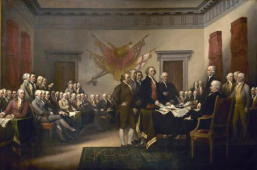
John Trumbull
An American artist who studied in Europe and painted key Revolutionary figures and historical events, including the signing of the Declaration of Independence.

Charles Willson Peale
An 18th-century American artist and former Sons of Liberty member who made his career in the United States and painted George Washington seven times.
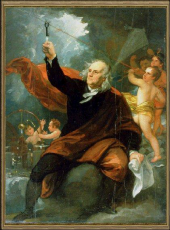
Benjamin West
A colonial painter who trained in England and created notable works including 'Franklin Drawing Lightning from the Sky'.
Phillis Wheatley
An educated enslaved African woman and poet who wrote 'On Being Brought from Africa to America' (1766) to assert spiritual equality and challenge racial superiority.
Mercantilism
British economic policy that regulated colonial trade, required colonies to supply raw materials and buy British goods, and restricted trade via the Navigation Acts.
Royal Colonies
Colonies (eight total by 1750) with governors appointed directly by the King of England.
Proprietary Colonies
Colonies (three total by 1750) with governors appointed by individual proprietors.
Social Mobility
The opportunity available to all free colonial people (excluding enslaved Africans) to improve their standard of living and social status through hard work.