Marketing 201 - Part 2
0.0(0)
Studied by 0 people Call Kai
 Learn
Learn Practice Test
 Spaced Repetition
 Match
Match Flashcards
 Knowt Play
Card Sorting
1/50

Earn XP
Description and Tags
Last updated 10:28 PM on 12/15/22
Name | Mastery | Learn | Test | Matching | Spaced | Call with Kai | Chat |
|---|
No analytics yet
Send a link to your students to track their progress
51 Terms
1
New cards
Love, swing, hate groups
\-Love: understands benefits
\-Swing: biggest opportunity
\-Hate: ignores
*Sell to the swing group through the eyes of the love group*
\-Swing: biggest opportunity
\-Hate: ignores
*Sell to the swing group through the eyes of the love group*
2
New cards
Ways to segment the market (most used to most usefu;)
\-Geographic
\-Demographic
\-Psychographic
\-Behavioral
\-Demographic
\-Psychographic
\-Behavioral
3
New cards
5 characteristics of segmentation
\-Measurable: individuals can be assigned a segment and be counted
\-Accessible: individuals can be reached through the promotion and distribution channels
\-Durable: segment membership and size are constant over time
\-Substantial: segment is large enough to make products profitable
\-Meet unique needs: needs sought by thee segment membership are homogenous within each segment and different across segments
\-Accessible: individuals can be reached through the promotion and distribution channels
\-Durable: segment membership and size are constant over time
\-Substantial: segment is large enough to make products profitable
\-Meet unique needs: needs sought by thee segment membership are homogenous within each segment and different across segments
4
New cards
Targeting
Selecting one or more of these groups to sell to
5
New cards
Ways to position (most used to most useful)
\-How you are ***as good*** as the competition
\-How you ***beat*** all the competition
\-How you are ***loved by popular people***
\-How you fit ***consumer’s lifestyles***
\-How you deliver what is ***most valued***
\-How you ***beat*** all the competition
\-How you are ***loved by popular people***
\-How you fit ***consumer’s lifestyles***
\-How you deliver what is ***most valued***
6
New cards
Positioning methods
\-Perceptual mapping: helps understand how consumers perceive brands
\-Gap analysis: compares brands on the importance and performance of their features and benefits
\-Hierarchical values analysis: elicit distinctions, pyramid down, ladder up
\-Gap analysis: compares brands on the importance and performance of their features and benefits
\-Hierarchical values analysis: elicit distinctions, pyramid down, ladder up
7
New cards
Unique selling proposition (3 parts)
\-Each ad must make a proposition to the customer
\-The proposition must be the one that the competition either cannot or does not offer
\-Proposition must be so strong that it can move the masses and pull new consumers to the product
\-The proposition must be the one that the competition either cannot or does not offer
\-Proposition must be so strong that it can move the masses and pull new consumers to the product
8
New cards
4 types of shoppers
\-Brand loyal shoppers: high brand sensitivity, low price sensitivity
\-Deal shoppeers: high brand sensitivity, high price sensitivity
\-Price shoppers: low brand sensitivity, high price sensitivity
\-Convenience shoppers: low brand sensitivity, low price sensitivity
\-Deal shoppeers: high brand sensitivity, high price sensitivity
\-Price shoppers: low brand sensitivity, high price sensitivity
\-Convenience shoppers: low brand sensitivity, low price sensitivity
9
New cards
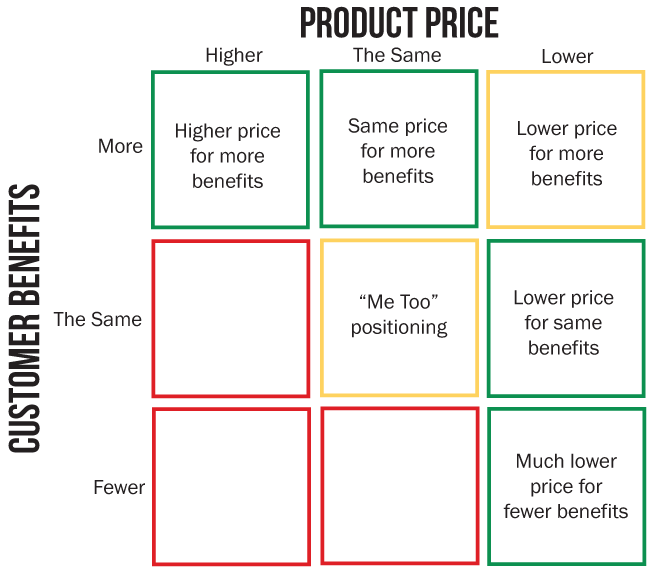
Product price / Consumer benefit Matrix
10
New cards
Competitive angle
\-Unique or different
\-Makes a personal connection
\-Lifts consumer over a hurdle
\-Makes a personal connection
\-Lifts consumer over a hurdle
11
New cards
5 questions to sharpen the competitive angle
\-Need to believe: what pain point does this address?
\-Reason to believe: how effective is the demonstration of this in capturing the imagination of the target audience?
\-Dominate situations: in which usage or buying situations does the product dominate in a way that delivers superior value?
\-Quantifiable support: what are the relevant facts and figures?
\-Unique product claim: how is this product better or different than its closest competitor?
\-Reason to believe: how effective is the demonstration of this in capturing the imagination of the target audience?
\-Dominate situations: in which usage or buying situations does the product dominate in a way that delivers superior value?
\-Quantifiable support: what are the relevant facts and figures?
\-Unique product claim: how is this product better or different than its closest competitor?
12
New cards
Product life cycle
\-Introduction stage
\-Growth stage
\-Maturity stage
\-Decline stage
\-Growth stage
\-Maturity stage
\-Decline stage
13
New cards
Types of brands
\-Functional: superior performance or economy
\-Image: desirable image
\-Experienital: unique, engaging experience
\-Image: desirable image
\-Experienital: unique, engaging experience
14
New cards
Types of business products
\-Materials and parts
\-Capital items
\-Supplies and services
\-Capital items
\-Supplies and services
15
New cards
Types of consumer products
\-Convenience products: candy bars, cereal
\-Shopping products: smartphones, TV, phone plan
\-Specialty products: designer clothes, fine dining
\-Unsought products: cemetery plots, life insurance
\-Shopping products: smartphones, TV, phone plan
\-Specialty products: designer clothes, fine dining
\-Unsought products: cemetery plots, life insurance
16
New cards
Product Item
Specific version of a product, such as a Honda Civic
17
New cards
Product line
Closely related items competing in the same general product category, such as the Honda CR-V or Accord
18
New cards
Product mix
All products offered by the company, such as Honda lawnmowers or scooters
19
New cards
Levels of a product
\-Core product: personal benefit that makes the product valuable
\-Actual product: the tangible part of the product that defines it and sets it apart from the competitors
\-Augmented product: the services that complement the actual product and core product
\-Actual product: the tangible part of the product that defines it and sets it apart from the competitors
\-Augmented product: the services that complement the actual product and core product
20
New cards
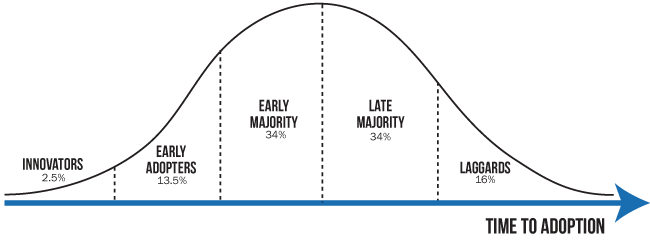
Product adoption process
\-Innovators: first to try new ideas, have more money and education
\-Early adopters: first to follow innovators’ lead, wait for a green light from innovators
\-Early majority: product must be proven to be successful, and must complement their way of life
\-Late majority: skeptical of innovations and buy new products when they are the only reasonable alternative
\-Laggards: buy new products only when the alternatives are no longer available
\-Early adopters: first to follow innovators’ lead, wait for a green light from innovators
\-Early majority: product must be proven to be successful, and must complement their way of life
\-Late majority: skeptical of innovations and buy new products when they are the only reasonable alternative
\-Laggards: buy new products only when the alternatives are no longer available
21
New cards
New product development process
\-Idea generation
\-Idea screening
\-Concept testing: most critical stage
\-Marketing strategy
\-Business analysis
\-Product development
\-Test marketing
\-Commercialization
\-Idea screening
\-Concept testing: most critical stage
\-Marketing strategy
\-Business analysis
\-Product development
\-Test marketing
\-Commercialization
22
New cards
Types of brand names
\-Invented brand names: good because there are no preconceived ideas or conflicts with trademarks
\-Compound brand names: may not have a strong emotional connection, but they are clear on the functional benefits of the brand
\-Ambiguous brand names: challenging because name on its own has no meaning, but they can still be good with marketing and money
\-Brand names that fizzle: evoke negative thoughts and result in failed products
\-Compound brand names: may not have a strong emotional connection, but they are clear on the functional benefits of the brand
\-Ambiguous brand names: challenging because name on its own has no meaning, but they can still be good with marketing and money
\-Brand names that fizzle: evoke negative thoughts and result in failed products
23
New cards
Three goals of a brand
\-Resonate with customers
\-Differentiate from competitors
\-Motivate employees
\-Differentiate from competitors
\-Motivate employees
24
New cards
Building brand equity
\-Brand awareness: consumers know about the brand
\-Brand image: consumers have a definite impression of the brand
\-Brand loyalty: consumers only purchase their favored brand
\-Brand equity: brand loyalty is transferred to new products
\-Brand image: consumers have a definite impression of the brand
\-Brand loyalty: consumers only purchase their favored brand
\-Brand equity: brand loyalty is transferred to new products
25
New cards
4 characteristics of services
\-Intangibility: experiences are intangible and subjective
\-Inseparability: provider and service are inseparable
\-Variability: services can be inconsistent
\-Perishability: services cannot be “saved” like products
\-Inseparability: provider and service are inseparable
\-Variability: services can be inconsistent
\-Perishability: services cannot be “saved” like products
26
New cards
7 P’s of Service Marketin
\-Product, price, place, promotion
\-People: service providers
\-Process: how the service is provided and delivered to each customer
\-Physical environment: can provide evidence of quality
\-People: service providers
\-Process: how the service is provided and delivered to each customer
\-Physical environment: can provide evidence of quality
27
New cards
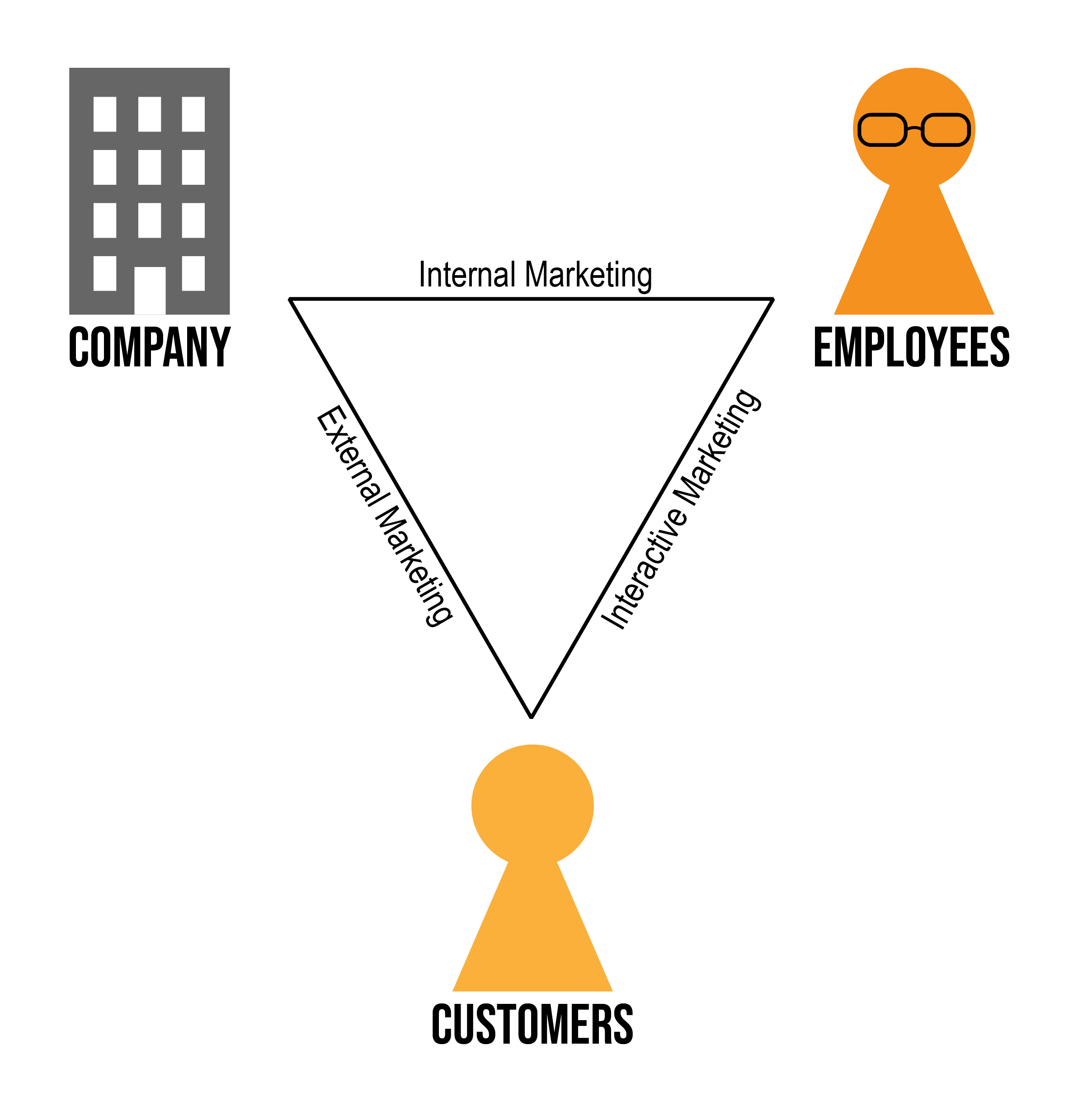
Service marketing triangle
28
New cards
5 determinants of service quality
\-Reliability
\-Responsiveness
\-Assurance
\-Empathy
\-Tangibles
\-Responsiveness
\-Assurance
\-Empathy
\-Tangibles
29
New cards
How customers determine value
\-Reference prices
\-Competitors
\-Substitutes
\-Marketing efforts
\-Competitors
\-Substitutes
\-Marketing efforts
30
New cards
Unit contribution
Unit price - unit variable cost
31
New cards
Total contribution
unit contribution x total number of units sold
32
New cards
Total costs
Fixed costs + variable costs
33
New cards
Total revenue
Price x Quantity
34
New cards
Total cost
Fixed cost + (unit variable cost x quantity)
35
New cards
Profit
Total revenue - total cost
36
New cards
Break even volume
Fixed cost / (price-unit vc)
37
New cards
Percent margin
Price - unit vc / price
38
New cards
Elastic vs inelastic
\-Elasticity is the percentage change in quantity demanded relative to a percentage change in price
\-If something is elastic, that means a small change in price results in a large change in quantity demanded
\-If something is elastic, that means a small change in price results in a large change in quantity demanded
39
New cards
Price skimming
Selling at a high price to begin with and make costs
40
New cards
Price penetration
Selling at a low price to gain market share
41
New cards
Four pricing approaches matrix
\-Cost plus pricing: company accounts total cost and then adds on margin needed to make the return; ignores customers and competitors
\-Competitive pricing: similar to cost-plus but better because it takes into account what competitors are charging
\-Value pricing: charge a price high enough to capture customer value, but not so high as to encourage competition
\-Golden goose pricing: charges the highest price a buyer is willing to pay
\-Competitive pricing: similar to cost-plus but better because it takes into account what competitors are charging
\-Value pricing: charge a price high enough to capture customer value, but not so high as to encourage competition
\-Golden goose pricing: charges the highest price a buyer is willing to pay
42
New cards
Push strategy
Pushing the product out to the consumer by making products readily available through various channels of distribution
43
New cards
Pull strategy
Pulling the customers to your product
44
New cards
Promotional mix
\-Advertising
\-Sales promotion
\-Personal selling
\-Public relations
\-Direct marketing
\-Sales promotion
\-Personal selling
\-Public relations
\-Direct marketing
45
New cards
Personal selling
\-Two-way communication between a buyer and a seller designed to influence a purchase decision
\-Main components are persuasion, customer assistance, and mutual benefits
\-Main components are persuasion, customer assistance, and mutual benefits
46
New cards
Advertising objectives
\-Cognitive: build awareness
\-Affective: gain interest and liking
\-Behavioral: stimulate action
\-Affective: gain interest and liking
\-Behavioral: stimulate action
47
New cards
Measuring effectiveness of an ad
\-What percentage of people remember the ad and product?
\-What percentage of people remembering the product can also remember the brand?
\-What percentage of people remembering the product and brand can also remember the key benefit?
\-What percentage of people remembering the product can also remember the brand?
\-What percentage of people remembering the product and brand can also remember the key benefit?
48
New cards
Traditional media marketing vs social media marketing
\-Traditional media is one-way communication
\-Social media is used to reach “active receivers” who will become influential by sharing the brand with friends
\-Social media is used to reach “active receivers” who will become influential by sharing the brand with friends
49
New cards
3 objectives of social media marketing
\-Reach: build awareness
\-Engage: customer retention
\-Convert: drive sales by winning new customers
\-Engage: customer retention
\-Convert: drive sales by winning new customers
50
New cards
Buyer persona
\-A sketch or composite picture of the ideal customer who buys or may buy a firm’s products
\-Created by talking to and following everyday people who use, purchase, or may buy your product or services
\-Created by talking to and following everyday people who use, purchase, or may buy your product or services
51
New cards
Why use social media?
\-Greater flexibility
\-Credible
\-Can build awareness and interest at a lower cost
\-Credible
\-Can build awareness and interest at a lower cost