CFB 5 - Nutrition: Dietary Carbohydrates
 Call Kai
 Learn
Learn Practice Test
 Spaced Repetition
 Match
Match Flashcards
 Knowt Play
1/59

There's no tags or description
Looks like no tags are added yet.
Name | Mastery | Learn | Test | Matching | Spaced | Call with Kai | Chat |
|---|
No analytics yet
Send a link to your students to track their progress
60 Terms
1. Main source of energy for brain
2. Main source of energy for tissues and muscles
3. Red blood cells (Erythrocytes) require glucose
4. Spare proteins (carbs are used first so proteins can be preserved for muscle)
5. Allow for proper oxidation of fats
6. Structural elements in the body
7. Bulk to food
What are the 7 functions of carbohydrates (CHO)?
Simple, Complex, Nondigestable
3 different kinds of carbohydrates
monosaccharides, disaccharides
10% of CHO calories
Source of simple carbs and recommended intake?
Polysaccharides (glycogen, amylose, amylopectin)
Source of complex carbs and recommended intake?
55-65% of total calories
What is the recommended dietary intake of carbohydrates?
Cellulose, hemicellulose, lignin, pectin, gums, mucilage
14g of fiber/1000 Kcals of food
Source of non-digestible carbs and recommended intake?
True
T/F: Fiber provides insignificant Kcal contribution
Glucose, fructose, galactose
Different sources of carbohydrates: Monosaccharides (3)
Simple sugars, honey
Example of glucose
Fruits/veggies
Examples of fructose
milk sugar
Examples of galactose
monosaccharides, disaccharides, polysaccharides, fibers
4 sources of different carbohydrates
Lactose: milk
Maltose: malt sugar/barley, ale
Sucrose: molasses. Cane sugar, beet sugar, honey
Common sources of carbohydrates: Disaccharides
Only milk products
Beer
Fruits and veggies
Uncommon sources of disaccharides
Common: Unpeeled fruits, whole grains, beans
Uncommon: Whole fruit, apple sauce
Common and uncommon sources of carbohydrates: fibers
Common: Bread, cereal, pasta, rice, legumes, beans
Uncommon: Plantain, peas, lentils
Common and uncommon sources of polysaccharides
False
T/F Eating carbohydrates on a daily basis is bad for our health?
Carbohydrates (polysaccharides)
- Ingested
- Digestion in the mouth
-->
Disaccharides and Polysaccharides
- Further digestion in intestine and stomach
- Absorption in intestine
-->
Glucose
- Metabolism
- Energy and excess stored
How do we go from carbohydrates to energy?
Fat
Glycogen
How are carbohydrates stored?
True
Fructose, Disaccharides, galactose, polysaccharides --> glucose
T/F Everything becomes glucose in the body
- Metabolic state in which body's energy supply comes from ketones
- When the liver is metabolizing fatty acids in the absence of glucose
- The liver lacks the metabolic machinery required to utilize ketone bodies
- Ketone bodies are released into the blood for use by the rest of the body
- Bad breath*
Define ketosis
1. glucose levels fall
2. Release stored triglycerides
3. Fatty acids travel to liver & gets metabolizes
4. Liver makes ketones
5. ENERGY
What occurs in ketosis?
- bad breath
- strains kidneys (removing ketones)
- impairs cognitive function
- Affects fetus adversely
Cons of ketosis
true
T/F: Liver lacks metabolic machinery required to utilize ketone bodies
10
Added sugars should be no more than ____% of total calories
50
To prevent ketosis = at least ______ grams/day of carbohydrates
(Total calorie intake per day * 0.55) / 4
How to calculate carbohydrate intake:
15 grams
1/2 cup or 1 slice of starches provide how many grams/serving of carbohydrates:
12 grams
8 fl oz of milk provide how many grams/serving of carbohydrates:
0-10 grams
4 oz of fruits or vegetables provide how many grams/serving of carbohydrates:
Short chain fatty acids (SCFA)
Gases (CO2, hydrogen, methane)
What does bacterial digestion produce?
- Used for energy by colonic cells
- Acetate increase satiety
- Propitiate decrease fat synthesis
- Butyrate heals damaged mucosa lining / increase apoptosis
What are short chain fatty acids (SCFA) used for?
Cannot be digested/absorbed -> to the colon digest by bacteria
What happens to Non-digestible carbohydrates...
Normalizes bowel movements
- Absorbs water - softens and increases weight and size of stool
- Decreases constipation
Maintain bowel health
- Reduces risk of hemorrhoids
- Reduces risk of diverticular disease (small pouches in your colon)
Lower cholesterol levels
- Soluble fiber found in beans, oats, flaxseed and oat bran lower LDL
- May reduce BP - new research increase fruits and veg. = decrease BP
Helps control blood sugar levels
- Slows absorption of sugars
- Insoluble fiber may reduce the risk of developing type 2 diabetes
Aids in achieving healthy weight
- High-fiber foods are more filling than low-fiber foods
- Have fewer calories for the same volume of food
What are the benefits of high fiber diet?
Insoluble fiber
What type of fiber does the following:
- Helps with stool consistency
- Increased intestinal transit speed
- - inversely related to constipation
- - Decrease risk of hemorrhoids & diverticular
- Helps remove toxins and carcinogens
Soluble fiber
- Increases stool weight (pectin, gums)
- Slows fat absorption
- Decreases cholesterol absorption (pectin, guar gum, lignin)
- - Binds water, bile salts, and cholesterol
- - Prevents absorption
- Fermentation: Produce short chain FA (Cellulose, some gums)
- May be cancer and gut protective
Divide total calories you eat by 1000 and multiply by 14
How to calculate grams of fiber?
Whole --> getting the bran, endosperm, and germ of grain
Are whole grains or multi grains better?
Bran: fiber-rich outer layer that protects the seed and contains B vitamins and trace minerals
What is removed when processing grains to white grains?
Nutrients in type of bread: Whole grain gets more nutrients
What does this chart show?
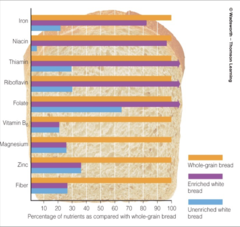
- GRADUALLY
- Drink extra fluids
- Fiber can decrease the absorption of some Vitamins and Minerals
How to add fiber into diet?
The microbiome --> possibly affecting nerve signaling from the gut
- Increasing the production of intestinal toxins - may affect the brain
- Regular use of over-counter laxatives was associated with higher risk of dementia
Regular use of a laxative may change what of the gut?
Consumption of dairy causes gas, bloating, diarrhea, discomfort
~ Note: ~20% of people who think they are lactose intolerant are NOT (confirm with hydrogen breath test, milk challenge test)
What is lactose intolerance?
1. Stop milk and wait until symptoms are gone
2. Overnight fast
3. Next morning: drink 8-16 oz of fat-free milk (depending on how much milk in diet)
4. Symptoms should appear within ~3 hours
What is the milk challenge for lactose intolerance?
Genetics (reduction in lactase synthesis)
Celiac disease
Starvation (reversible)
Gastroenteritis - rotavirus (reversible)
Cause of lactose intolerance
People with a milk allergy are allergic to the milk protein (casein)
How is lactose intolerance different than a milk allergy?
Avoidance of dairy
Dietary Substitution/Selection
Lactose is a water-soluble molecule
Low fat foods have higher lactose
Soymilk/ almond milk
Yoghurt has bacteria that "predigest" lactose
Hard Cheeses
Enzymatic treatment: otc enzyme preps take with meals (Lactaid)
Not consuming dairy?
Calcium requirements still need to be met
Equivalent to ~4 cups/day
Calcium supplementation - calcium citrate or calcium citrate malate
Fortified foods
Management of lactose intolerance by:
Genetically based autoimmune reaction to gluten, must follow GLUTEN FREE DIET (1% of the population have this)
What is celiac disease?
Rye, wheat, barley, and triticale
Sources of gluten
Brain, muscles, tissues
Carbohydrates are main source of energy for.....
Low in nutritional value and fiber and high in sugar, sodium, and calories
20% of gluten-free people believe it is healthy, however, gluten free diets can be ____________ in nutritional value and fiber and _________ in sugar, sodium, and calories
Beer
Brewer's yeast
Salad dressing
Sauces (including soy sauce)
Where are common places for gluten to hide?
- Usually genetic
- Avoid fructose
- Especially high fructose corn syrup
- Results in toxic effects on liver, kidney, & small intestine + hypoglycemia
What is fructose intolerance?

Diabetes mellitus refers to a group of diseases that affect how the body uses blood sugar (glucose).
Glucose is an important source of energy for the cells that make up the muscles and tissues. It's also the brain's main source of fuel. The main cause of diabetes varies by type.
What is diabetes?
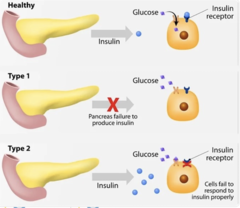
Genetics
Dietary habits
Obesity
Other chronic illness
Causes of diabetes?
Liver releases glucose into blood to achieve normal blood glucose levels
Low blood glucose goes into pancreas --> Glucagon released by alpha cells of pancreas resulting in...
Fat cells take in glucose from blood to achieve normal blood glucose levels
High blood glucose goes into pancreas --> Insulin released by beta cells of pancreas resulting in...
Measures the percentage of your red blood cells that have sugar-coated hemoglobin
What does the A1C test measure?
Diabetes
The following are symptoms for what disease?
- Feeling more thirsty than usual.
- Urinating often.
- Losing weight without trying.
- Presence of ketones in the urine. Ketones are a byproduct of the breakdown of muscle and fat that happens when there's not enough available insulin.
- Feeling tired and weak.
- Feeling irritable or having other mood changes.
- Having blurry vision.
- Having slow-healing sores.
- Getting a lot of infections, such as gum, skin and vaginal infections.
True
T/F Diabetes can cause complications during gestation?