Enlightenment + French Revolution 🇫🇷
 Call Kai
 Learn
Learn Practice Test
 Spaced Repetition
 Match
Match Flashcards
 Knowt Play
1/35

Earn XP
Description and Tags
Upper Arlington High School, Quarter 1, Mr. Staley
Name | Mastery | Learn | Test | Matching | Spaced | Call with Kai | Chat |
|---|
No analytics yet
Send a link to your students to track their progress
36 Terms

Black Plague (500-1500)
During 14th Century; 50-75 million people died of Black Plague around 35-40% of Europes entire population. France + Italy themselves lost over 50% + very slowly rebound.

Renaissance (1300-1600)
Renaissance born from Dark Ages, people began traditional authority- aka the Church. Growing interest in the Natural World, Skepticism of medieval explanations leads to scientific revolution.
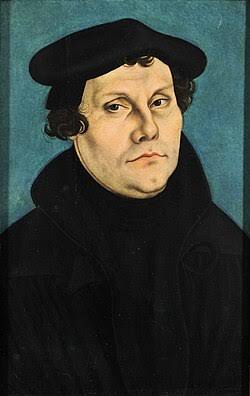
Martin Luther + Protestant Revolution
Martin Luther: German Monk who challenged Catholic Church.
Wrote his 95 theses called for reform in the church
believed salvation was achieved individually + couldn’t be purchased
Catholic Church split into different protestant branches

Copernicus (Match)
the heliocentric theory (sun in center of universe)

Galileo (Match)
major improvements on telescope design

Kepler (Match)
Planetary motion (elliptical orbits)

Bacon (Match)
Scientific Method + Experimentation

Sir Isaac Newton
Discovered laws of motion, gravity, and made modern day calculus.

Four “Main Ideas” of Enlightenment
1) Reason: human intellect can solve problems
2) Natural Rights: Life, Liberty, and property (Locke)
3) Progress: Society can improve through knowledge
4) Secularism: Focus shift from religion to worldly issues

Social Contract
government exists by the consent of the governed
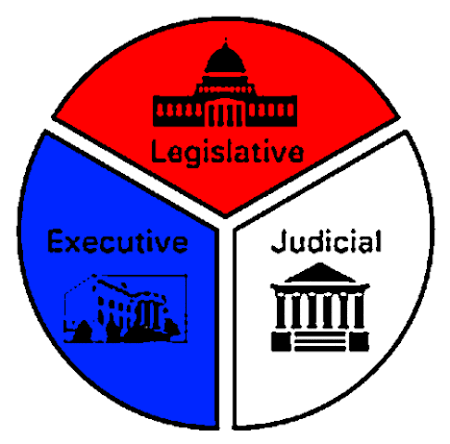
Separation of Powers
dividing power prevents tyranny (Montesquieu)

Economic Freedom
free markets + limited government interference

Religious Freedom
acceptance of different faiths as a key to peace + stability
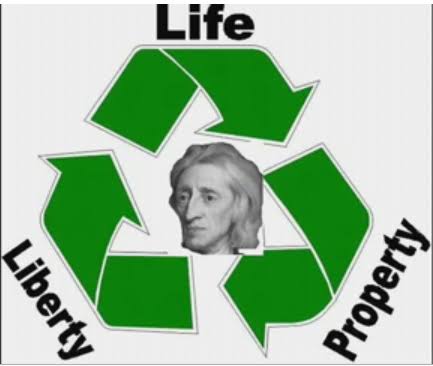
John Locke (Matching)
Natural Rights + government by consent

Voltaire (Matching)
Freedom of speech and religion

Montesquieu (Matching)
Separation of Powers

Wollstonecraft (Matching)
Argued women are not intellectual inferior, they sometimes appeared that way b/c lack of education.

Know the political impact/changes the Enlightenment brought
1) Challenges absolute, monarchy and divine right
2) Promotes democracy + constitutional government
3) Inspires Revolutions (American, French, Haitian, Latin America)
4) Early ideas of individual rights in the U.S Bill of Rights + French Declaration of Rights of Man

France Issues prior to the Revolution
Economic crisis + debt, social inequality about the estates-general, huge taxes + poor people starving, enlightenment influence, helped fund American revolution.

First Estate- Clergy
Catholic Church, less than 1% of pop, owned 10% of land, paid no taxes.

Second Estate- Nobility
Wealthy families, 2% of France population, owned 30% of land, paid no taxes.

Third Estate- Everyone Else
97% of pop, middle class, urban workers, but majority peasants, had no say in government, paid all taxes.

National Assembly
Third Estate formed it, would represent all of France not just one estate, this led to the third estate demanding fairer representation.

Bastille Prison
King Louis recognized the National Assembly, but also began gathering troops in Paris.
Afraid Louis would use force to put them down, French citizens stormed the Bastille Prison
Seized weapons + gunpowder

Women’s March
Thousands of Women stormed versailles: King Louis + Marie Antoinette were placed under house arrest in Paris. Eventually, Louis + wife placed on trial and executed, ending the French monarchy.

Reign of Terror
Led by Robespierre and Committee of Public Safety: Goal to remove threats to democracy, 16,000 people executed (Sep 1793 - Oct 1794). Robespierre eventually executed.
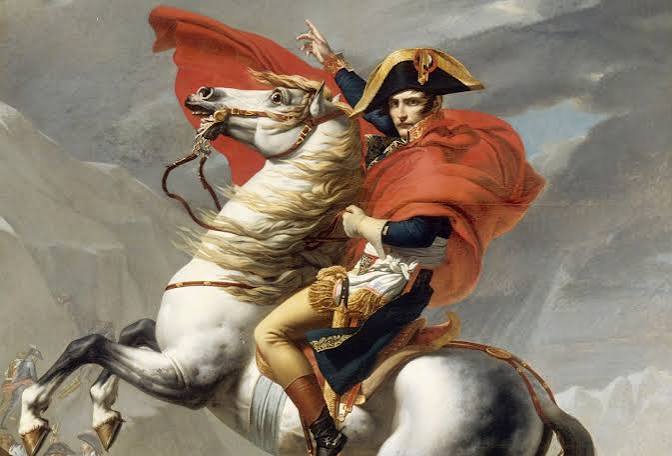
Rise of Napoleon
Young artillery officer during the Revolution; Royalists threatened new gov - Napoleon crushed them + became national hero. Given command of the Army of Italy and defeated the Austrians there. Eventually, invaded Empty before returning home + staging a military coup.

Continental System
Napoleon began a continental system of trade- designed to block Britain out

Invasion of Russia (include how the Russians respond)
Russia continues to trade with Britain, In June 1812, Napoleons army invades Russia. France wins battles but w/ huge losses.
In Oct 1812, Napoleon reaches Moscow- but it’s burned + abandoned, they have to retreat but have no supplies.
100,000 of 600,000 from Moscow made it back
Napoleon no linger seen as invincible

Fall of Napoleon
Napoleon defeated at Leipzig by Russia, Prussia, and Austria: In 1814, Paris is captured + Napoleon exiled to Elba. Returns + seizes control of France again- before finally being defeated at Waterloo. Eventually dies in exile in 1821 in Saint Helena.

Haitian Revolution (Basics)
Over 750,000 Slaves brought from Africa (out # by whites 10-1 ratio)
French colony since 1697, known as Saint- Domingue; richest colony in the world
Defeated the French and declared independence in 1803 - became 1st free black repbluic in Americas

Toussaint L’Ouverture
Former slave turned general + leader of the revolution: promised emancipation after King Louis was killed, but eventually betrayed by Napoleon + died in prison.

Mexican Revolution (know the basics)
Colony of Spain with huge wealth divisions b/w Spanish-born elites + indigenous people. Rebels use guerrilla fighting, + political changes in Spain led to weaker colonial rule. Mexico granted independence in 1821.
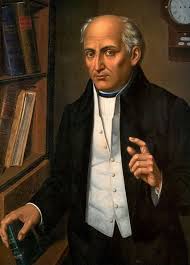
Father Miguel Hidalgo
called for independence; had early victories but troops were poorly organized, executed in 1811.

Simon Bolivar
led independence of Northern portion of South America (1819-1822): dreamed of a united South American “Gran Colombia”, but ultimately failed + died in exile.
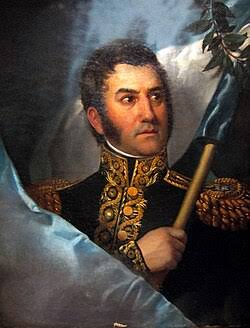
Jose de San Martin
Spent life as a solider in Spain before returning to lead independence in Argentina, Chile, + Peru (1817-1822). Returned to Europe, where he eventually died.