Week 2: Structures
 Call Kai
 Learn
Learn Practice Test
 Spaced Repetition
 Match
Match Flashcards
 Knowt Play
1/22

There's no tags or description
Looks like no tags are added yet.
Name | Mastery | Learn | Test | Matching | Spaced | Call with Kai | Chat |
|---|
No analytics yet
Send a link to your students to track their progress
23 Terms
what are the 4 main divisions of basic swallowing general anatomy?
oral cavity
pharynx
larynx
esophagus
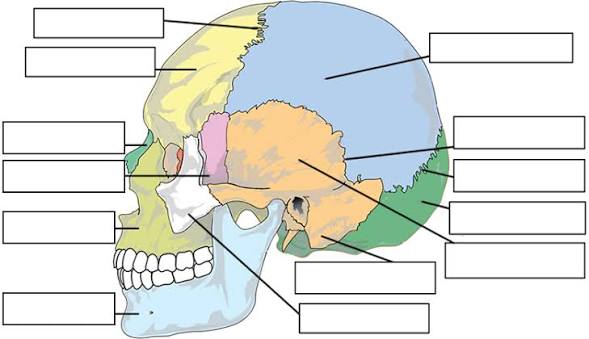
how many bones in the skull?
22

label
what are the key functions of the oral cavity?
teeth and tongue physically manipulate food
salivary enzymes chemically digest food

name the structures of the oral cavity
mandible
lips
teeth
oral tongue
cheeks
faucial pillars (anterior and posterior)
palatine tonsils
floor of mouth
gums
hard palate (maxilla)
salivary glands

what are sulci in the oral cavity? name them
the spaces between the teeth/gums and lips/cheeks. 2 sets: anterior sulcus (labial/lip) & lateral sulcus (buccal/cheek)

describe the tongue - functional divisions, functions, any skeletal structure?
the tongue is a mulcular hydrostat = muscular organ that lacks skeletal support → allows for fine, intricate movement for speech and swallowing
functional divisions: oral tongue and base of tongue (BOT)
functions: bolus containment, bolus prep/mastication, bolus propulsions through oral cavity, sensations
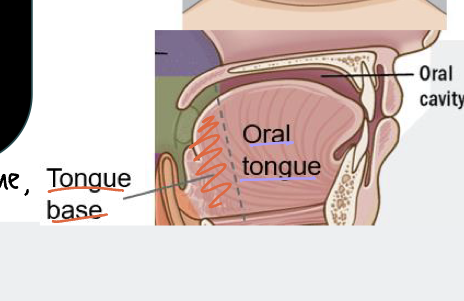
describe the oral tongue vs the BOT
oral tongue has voluntary control and includes the tip, blade, front, center, and back. it ends in the circumvallate papillae. active during speech and oral stages of swallow (voluntary control)
BOT is under involuntary control but can be placed under some degree of voluntary control. begins at circumvallate papillae and extends to the hyoid bone. active during the pharyngeal phase of swallow.

name the 3 sets of salivary glands, their function, and their location
3 sets: parotid, submandibular, sublingual
function: produce saliva, which begins digestive process, break food down, clear oral cavity
parotid gland: largest gland, in cheek area. anterior to ear, superficial to masseter
sublingual gland: under the tongue in the floor of the mouth
submandibular gland: medial to mandible, wraps around mylohyoid
name the structures of the pharyngeal cavity
BOT
hyoid bone
larynx
epiglottis
valleculae
pharyngeal walls
upper esophageal sphincter (pharyngoesophageal segment)\
velum
what are the 2 functions of the pharynx?
breathing and swallowing
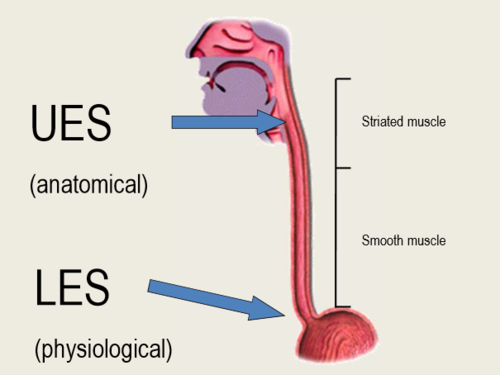
what is the upper esophageal spincter? at rest, is it open or closed? where is it in relation to the pyriform sinuses?
a muscular ring located at the lower end of the pharynx that guards the entrance to the esophagus
at rest, it is closed to prevent stomach contents from coming up
it is below the pyriform sinuses
what are the three regions of the pharynx?
nasooharynx, oropharynx, hypopharynx (laryngopharynx)
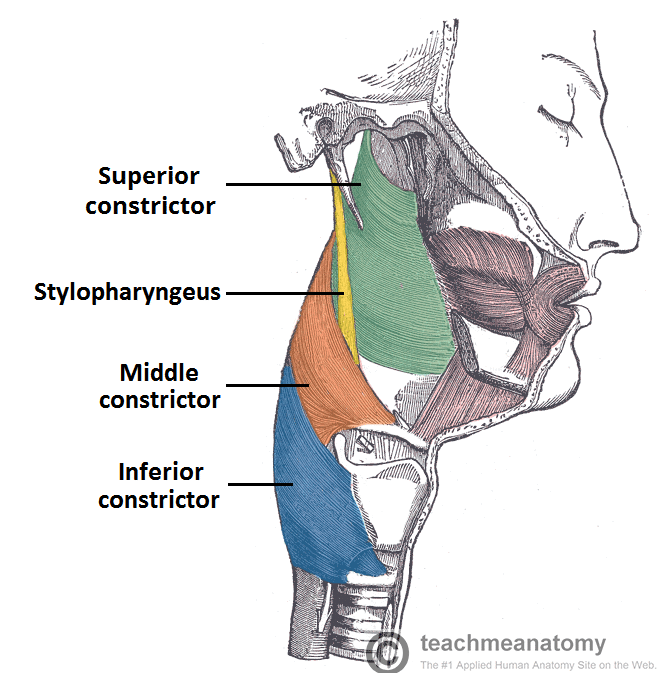
name the 6 main muscles of the pharynx
horizontal tube-shaped: superior constrictor, middle constrictor, inferior constrictor
vertical: salpingopharyngeus, stylopharyngeus, palatopharyngeus

what are the pyriform sinuses?
pear-shaped pouches or grooves located on each side of the larynx. located at the end of the pharynx, above the esophagus
pyriform = pear-shaped
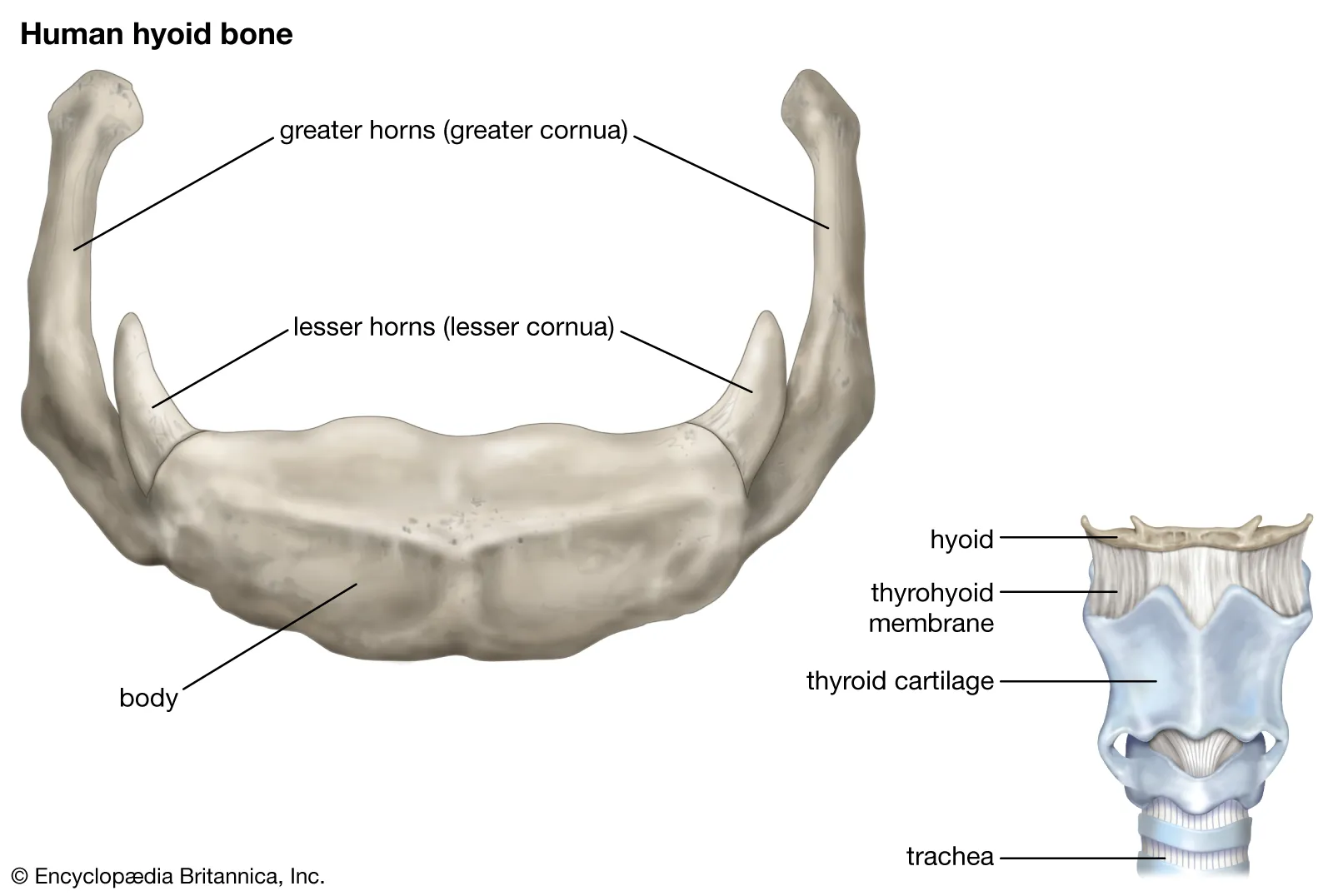
what is the hyoid bone? what are its functions?
u-shaped, floating bone, only bone in the body not attached to another bone. functions: anchor the tongue to floor of mouth, muscle attachment site

name the hyoid muscles, both suprahyoid and infrahyoid
suprahyoid: geniohyoid, mylohyoid, stylohyoid, and digastric
infrahyoid: thyrohyoid, sternohyoid, sternothyroid, omohyoid
what is the soft palate and what is its function?
A muscular continuation of the hard palate. makes up the posterior 1/3 of the palate.
functions: lowered at rest for breathing, elevates during swallowing to close off the nasopharynx
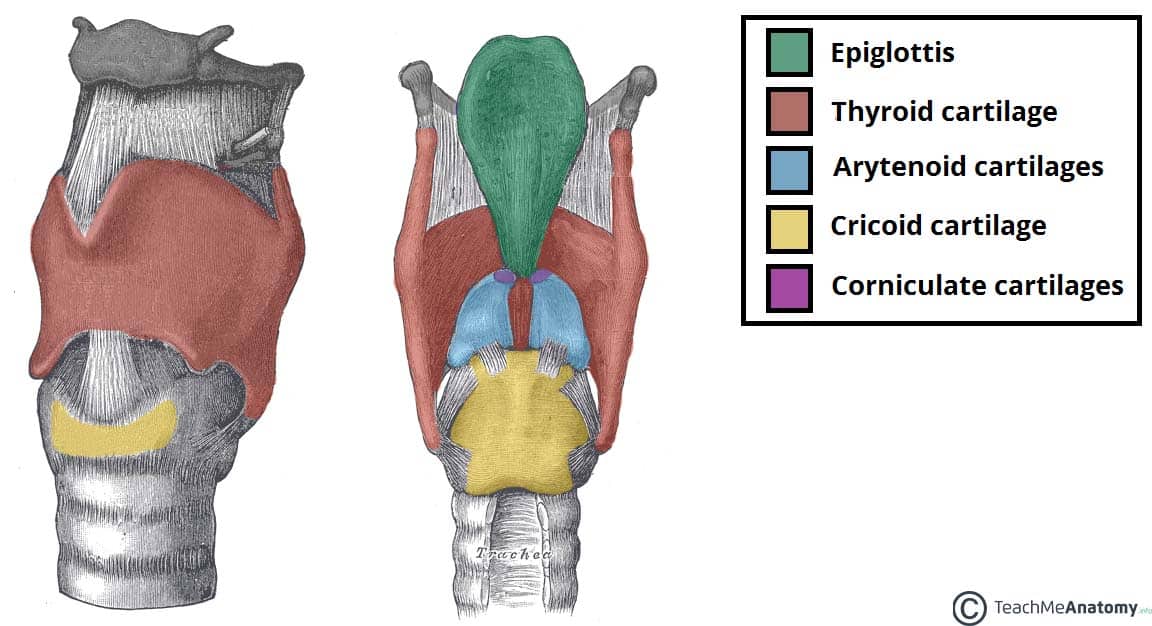
what are the laryngeal cartilages?
thyroid
cricoid
arytenoids
epiglottis
corniculates
cuneiforms

what are the divisions and functions of the larynx?
divisions: supraglottis, glottis, subglottis
functions: respiration, phonation, swallowing

what is the laryngeal vestibule?
the opening into the larynx

what is the laryngeal ventricle?
the space between the false and true vocal cords

what are the valleculae?
the space between the root of the tongue and the anterior surface of the epiglottis. paired, cup-shaped depressions at the back of the throat
vallecula in latin = valley shaped