Biology 160 Atoms, Molecules, and Chemical Bonds
 Call Kai
 Learn
Learn Practice Test
 Spaced Repetition
 Match
Match Flashcards
 Knowt Play
1/40

There's no tags or description
Looks like no tags are added yet.
Name | Mastery | Learn | Test | Matching | Spaced | Call with Kai | Chat |
|---|
No analytics yet
Send a link to your students to track their progress
41 Terms
atom
The basic unit of a chemical element.
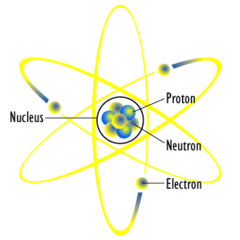
electron
A subatomic particle that has a negative charge, orbits the nucleus, and participates in chemical bonds.

proton
A subatomic particle that has a positive charge and that is found in the nucleus of an atom

Isotope
Atoms of the same element that have different numbers of neutrons

ion
An atom that has extra or missing electrons

Anion
A negatively charged ion; has extra electrons
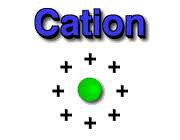
Cation
A positively charged ion; is missing electrons
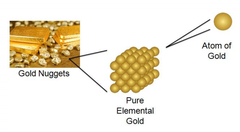
Element
A pure substance made of only one kind of atom
Substance
Matter that has a uniform and definite composition
Pure substance
A substance made of only one kind of matter and having definite properties.
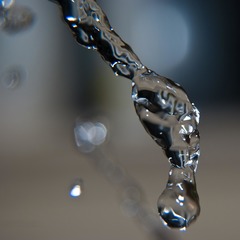
Mixture
A combination of two or more substances that are not chemically combined

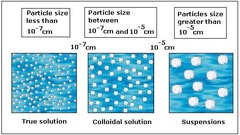
Solution
A homogeneous mixture of two or more substances

Heterogeneous mixture
A mixture that is not uniform in composition; components are not evenly distributed throughout the mixture

Homogeneous mixture
A mixture in which substances are evenly distributed throughout the mixture

Colloids
a mixture containing small, undissolved particles that do not settle out; cloudy
molecule
2 or more elements chemically combined.

Compound
2 or more different elements chemically combined

Suspension
A heterogeneous mixture that separates into layers over time

Solid
A form of matter that has a definite shape and volume

Liquid
A state of matter that has no definite shape but has a definite volume.

Gas
A state of matter with no definite shape or volume
Neutron
A subatomic particle that has no charge and that is found in the nucleus of an atom

covalent bond
a bond formed when atoms share one or more pairs of electrons

ionic bond
A chemical bond resulting from the attraction between oppositely charged ions.
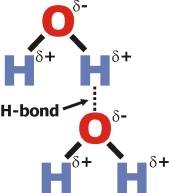
hydrogen bond
A type of weak chemical bond formed when the slightly positive hydrogen atom of a polar covalent bond in one molecule is attracted to the slightly negative atom of a polar covalent bond in another molecule.
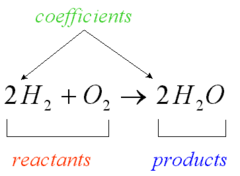
chemical reaction
the process by which one or more substances change to produce one or more different substances
Electronegativity
A measure of the ability of an atom in a chemical compound to attract electrons

radioactive isotope
an isotope that has an unstable nucleus and that emits radiation

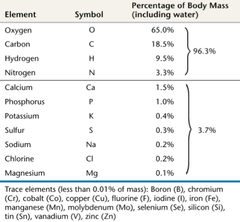
trace elements
elements required by an organism in only minute quantities
valence electrons
The electrons in the outermost shell (main energy level) of an atom; these are the electrons involved in forming bonds.

electron shells (energy levels)
electrons occupy orbits or generally fixed regions of space around the nucleus

Reactants
A starting material in a chemical reaction
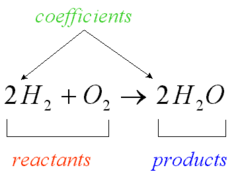
Products
Ending materials in a chemical reaction.
octet rule
States that atoms lose, gain or share electrons in order to acquire a full set of eight valence electrons

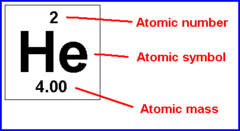
atomic number
the number of protons in an atom
polar covalent bond
A covalent bond in which electrons are not shared equally

nonpolar covalent bond
a covalent bond in which the electrons are shared equally by the two atoms

polar molecule
molecule with an unequal distribution of charge, resulting in the molecule having a positive end and a negative end

ionic compound
A compound that consists of positive and negative ions

atomic symbol
A one or two letter abbreviation for an element
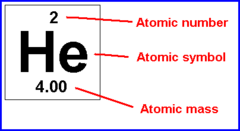
atomic mass
Number of protons and neutrons
