Ch.8 Making Use of Electricity`
0.0(0)
Studied by 1 person Call Kai
 Learn
Learn Practice Test
 Spaced Repetition
 Match
Match Flashcards
 Knowt Play
Card Sorting
1/21

Earn XP
Last updated 5:50 AM on 12/12/22
Name | Mastery | Learn | Test | Matching | Spaced | Call with Kai | Chat |
|---|
No analytics yet
Send a link to your students to track their progress
22 Terms
1
New cards
Conditions for electricity to flow through
* a source of electricity
* Closed circuit: a complete path for electricity to flow through from one end of the electric cell to the other
(An open circuit: there is a gap in the circuit)
\
* Closed circuit: a complete path for electricity to flow through from one end of the electric cell to the other
(An open circuit: there is a gap in the circuit)
\
2
New cards
Conversion of energy
When electricity flow through the circuit, the chemical energy stored in the electricity cell is changed into electrical energy. The light bulb then changes the electrical energy to light energy and thermal energy
3
New cards
Conductors and insulators
Sone materials allow electricity to flow through them. They are called electrical conductors. Metals such as copper, aluminium and iron are good electrical conductors. Besides metals, some other materials like graphite can also conduct electricity but not as well as metal can
Materials that do not allow electricity to flow through them are called electrical insulators. Plastic, glass and wood are examples of electrical insulators.
Materials that do not allow electricity to flow through them are called electrical insulators. Plastic, glass and wood are examples of electrical insulators.
4
New cards
Switches
A switch can be used to open or close a circuit. When a switch is closed, the path for electricity to flow in the circuit is complete. In other words, the circuit becomes a closed circuit and thus electricity can flow through it.
When the switch is open, there is a gap in the circuit and the circuit becomes incomplete. Thus, electricity cannot flow.
When the switch is open, there is a gap in the circuit and the circuit becomes incomplete. Thus, electricity cannot flow.
5
New cards
Circuit Diagrams
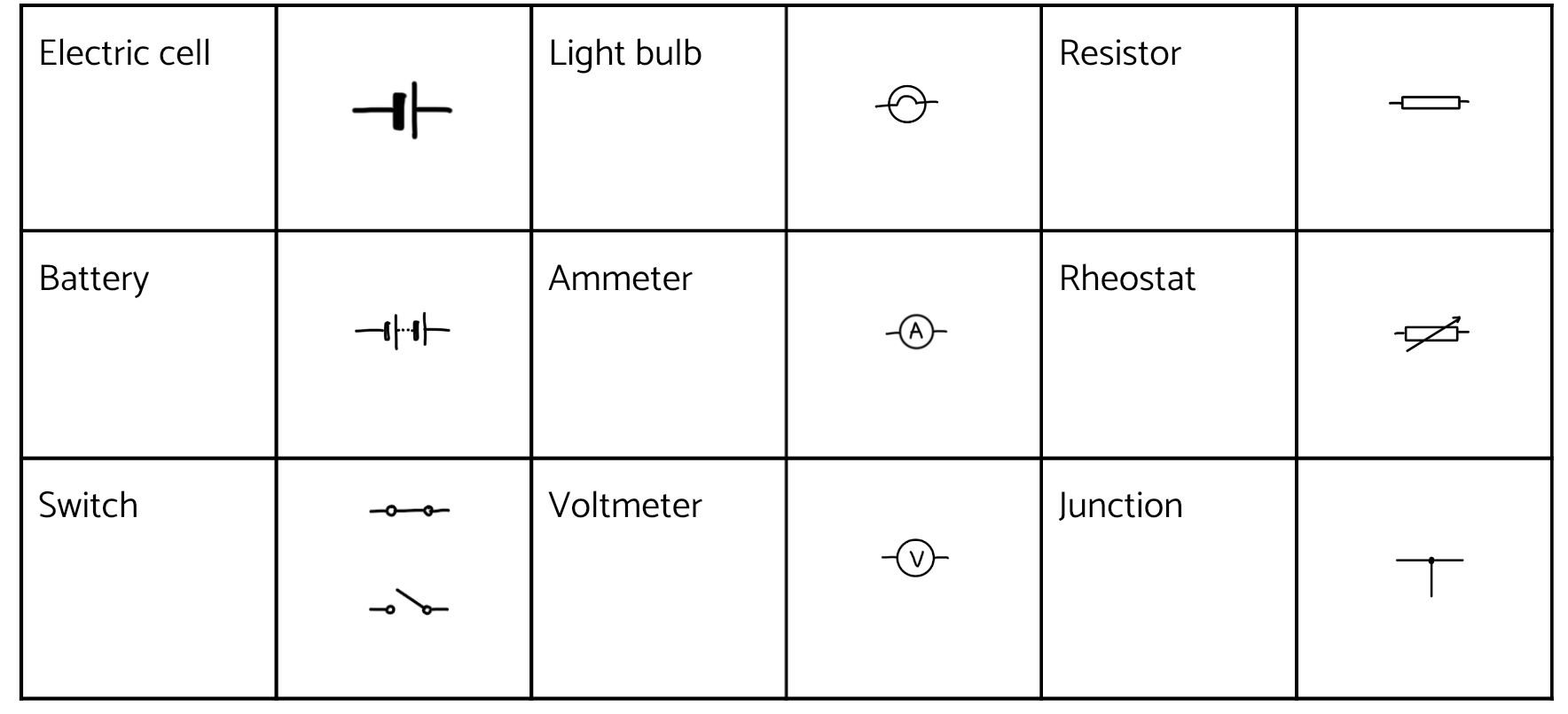
We can use symbols to represent circuit components. These symbols are called circuit symbols. With circuit symbols and straight lines, we can draw a circuit to represent a circuit. Circuit diagrams help us show a circuit clearly and communicated with one another clearly.
6
New cards
Electric current
Basic Ideas of an electric current
7
New cards
Basic Ideas of an electric current
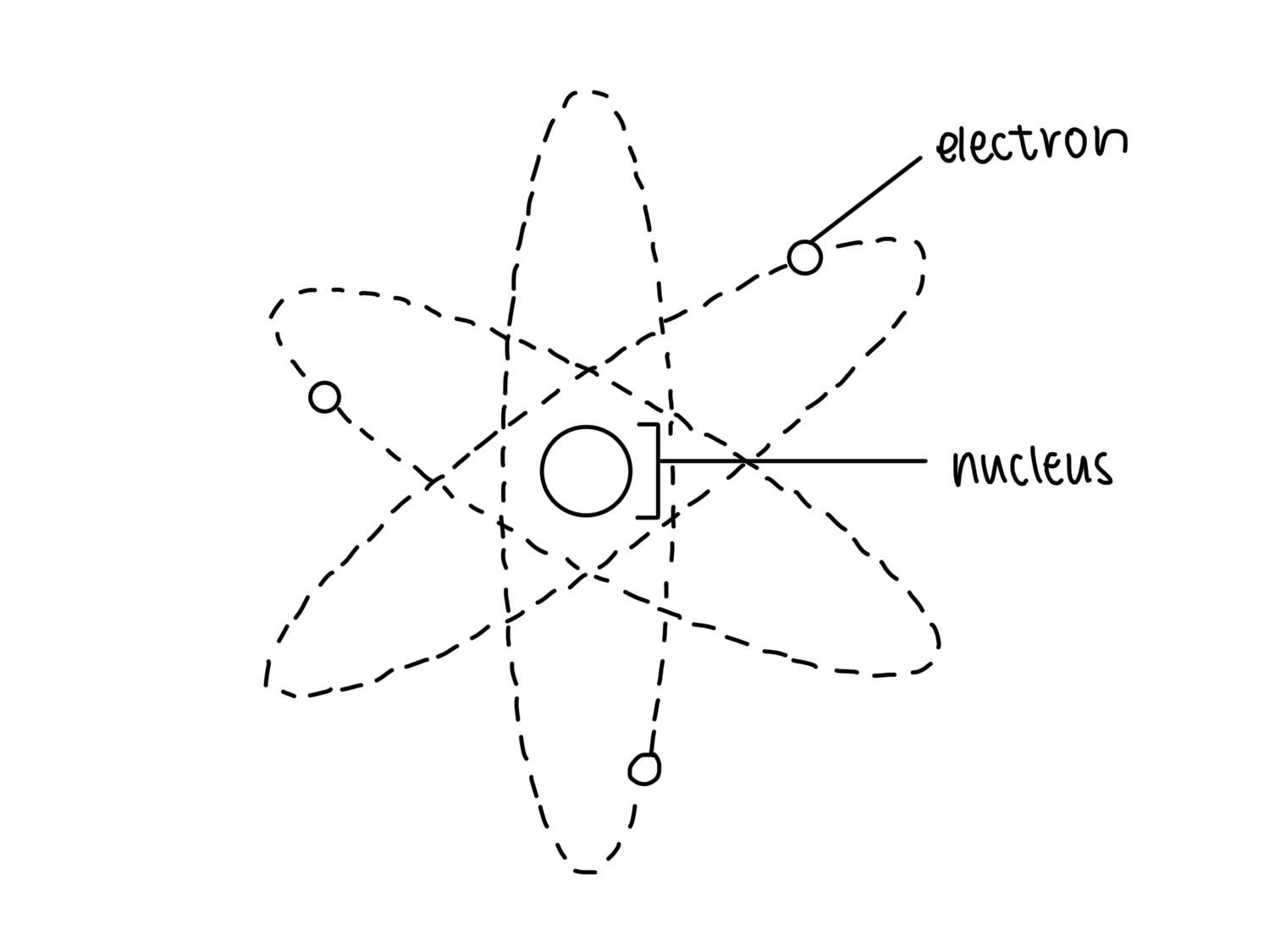
Matter is made up of atoms. Each atoms has a nucleus surrounded by tiny electrons. The nucleus carries a positive charge while electrons carry a negative charge.
* in an open circuit, the free electrons are moving in random directions so there is no net flow of free electrons and now electric current is formed.
* In a closed circuit, there is a net flow of free electrons and an electric current is formed
In metals, some of the electrons can escape from the atoms and move freely within the metal. These electrons are called electrons.
When a metal is connected to an electric cell to form a closed circuit, the green electrons are driven in a direction from the negative pole towards to positive pole of the electric cell. This flow of free electrons forms an electric current.
(An electric current if formed when there’s a flow of charges)
* in an open circuit, the free electrons are moving in random directions so there is no net flow of free electrons and now electric current is formed.
* In a closed circuit, there is a net flow of free electrons and an electric current is formed
In metals, some of the electrons can escape from the atoms and move freely within the metal. These electrons are called electrons.
When a metal is connected to an electric cell to form a closed circuit, the green electrons are driven in a direction from the negative pole towards to positive pole of the electric cell. This flow of free electrons forms an electric current.
(An electric current if formed when there’s a flow of charges)
8
New cards
Current
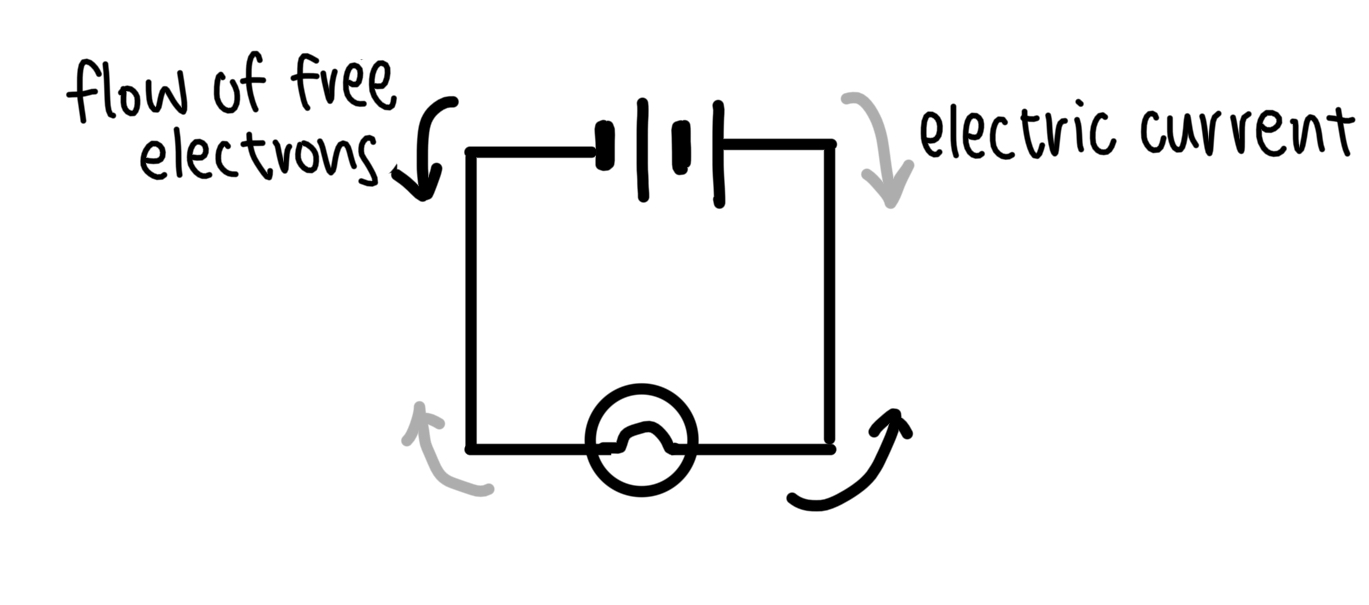
Before the discovery of electrons, scientists believed that an electric current was a flow of positive charges flowing from the positive pole of the electric cell to the negative pole. This is called the conventional current.
1. Conventional current: the movement of positively charged particles from the positive pole to the negative pole, through an external circuit
2. The flow of free electrons is from the negative pole to the positive pole through an external circuit.
1. Conventional current: the movement of positively charged particles from the positive pole to the negative pole, through an external circuit
2. The flow of free electrons is from the negative pole to the positive pole through an external circuit.
9
New cards
10
New cards
11
New cards
12
New cards
Measuring electric current
The size of an electric current is related to the number of free electrons that flows through a point in the circuit every second. The more free electrons flowing through it, the larger the electric current. We can use an ammeter to measure the size of an electric current.
Small electric current are measured in milliamperes (mA)
1mA = 0.001A
The ammeter should be connected so that the electric current flows into the ammeter at its positive terminal and leaves at its negative terminal.
Small electric current are measured in milliamperes (mA)
1mA = 0.001A
The ammeter should be connected so that the electric current flows into the ammeter at its positive terminal and leaves at its negative terminal.
13
New cards
Heating effect of electric current
When an electric current flows through the nichrome wire, some of the electrical energy changes to chemical energy. As a result, the wire heats up. This is called the heating effect of electric current. The heating effect is larger if the electric current is larger.
14
New cards
Magnetic effect of electric current
When an electric current flows through a wire or a coil, the needle on a compass nearby changes direction. This shows the magnetic effect of the electric current. The magnetic effect is larger if the electric current is larger.
When an electric current flows through a coil, the coil can attract iron paper clips like a magnet. This coil is called an electromagnet.
An electromagnet is useful because it acts like a magnet that can be switched on or off. It produces a magnetic effect only when electric current flows through it.
When an electric current flows through a coil, the coil can attract iron paper clips like a magnet. This coil is called an electromagnet.
An electromagnet is useful because it acts like a magnet that can be switched on or off. It produces a magnetic effect only when electric current flows through it.
15
New cards
Basic ideas of voltage
Voltage is a measure of the amount of energy supplied to the free electrons by a source of electricity such as electric cells. For example, an electric cell with a high voltage supplies more energy to the free electrons in the circuit.
Voltage is also related to the ‘electrical push’ that makes free electrons flow in the circuit. The higher the voltage, the greater the ‘electrical push’
Voltage is also related to the ‘electrical push’ that makes free electrons flow in the circuit. The higher the voltage, the greater the ‘electrical push’
16
New cards
Measuring voltage
We can use voltmeter to measure the voltage. The unit of voltage is volt (V)
17
New cards
18
New cards
19
New cards
20
New cards
21
New cards
22
New cards