1: Chromosomes, DNA, Nucleotides, DNA replication, Mitosis and Meiosis
 Call Kai
 Learn
Learn Practice Test
 Spaced Repetition
 Match
Match Flashcards
 Knowt Play
1/51

There's no tags or description
Looks like no tags are added yet.
Name | Mastery | Learn | Test | Matching | Spaced | Call with Kai | Chat |
|---|
No analytics yet
Send a link to your students to track their progress
52 Terms
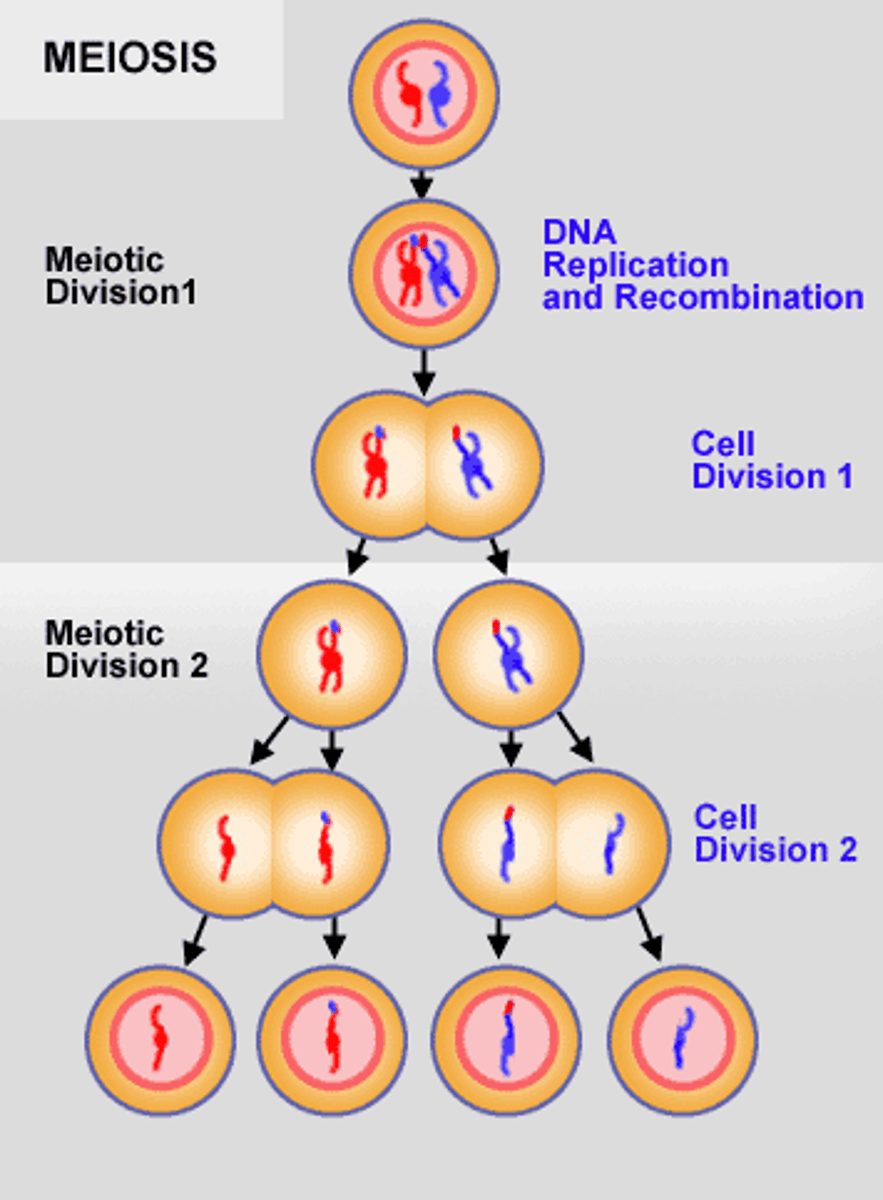
processes that generates genetic diversity in meiosis
independent assortment of chromosomes (meiosisI) and crossing over
meiosis 1 vs meiosis 2
meiosis 1 homologous chromosomes of each chromosome pair are divied. during meiosis 2 chromatids of each chromosomes are divided
what is the cell cycle
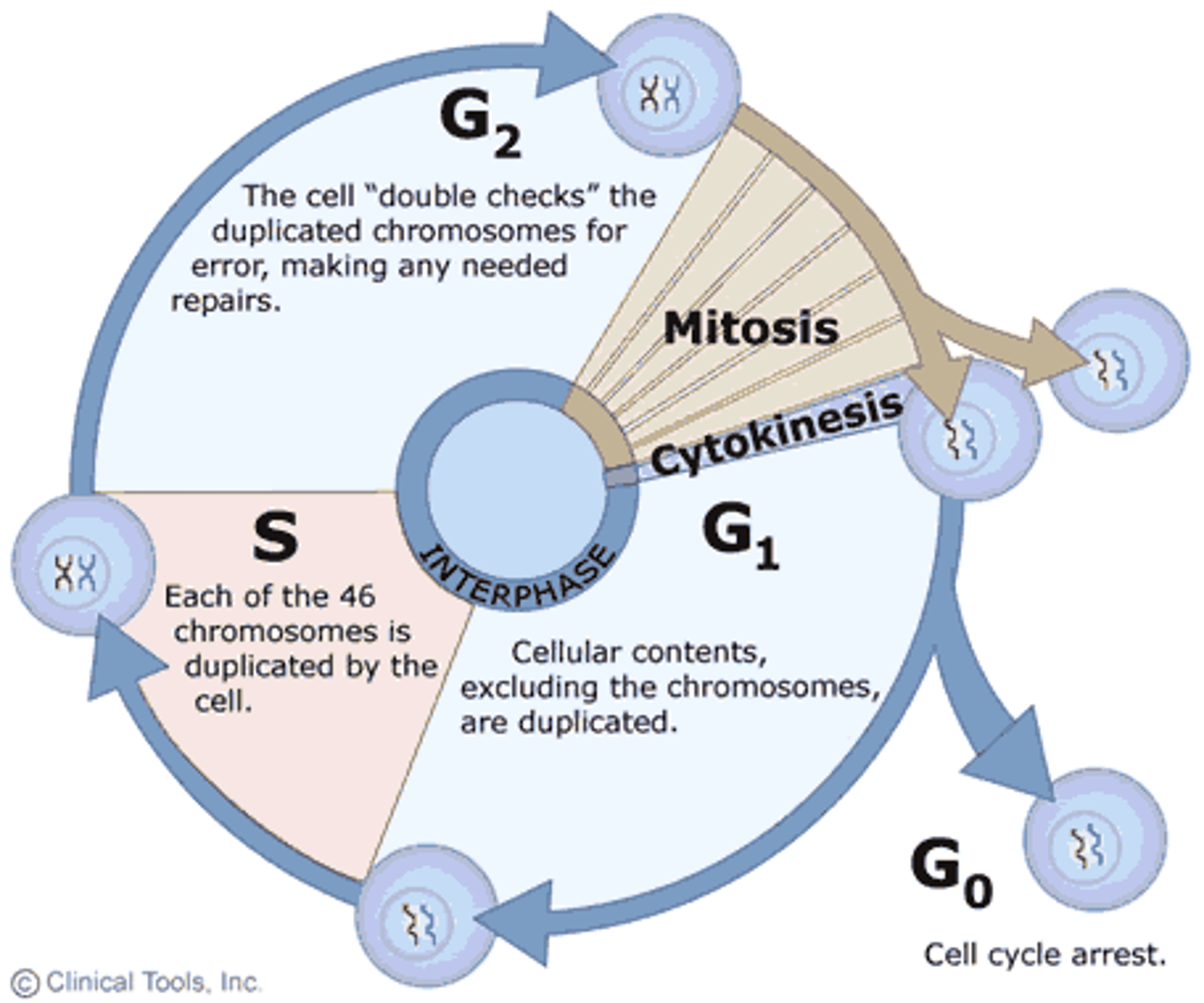
process by which cells replicate their DNA and divide into daughter cells. control of cell cycle ensures regulated proliferation (this regulation can be lost in some diseases eg cancer)
4 phases of cell cycle and describe what happens
G1: cell prepares for DNA replication
S: DNA replication
G2: cell prepares for division
M: mitosis or cell division
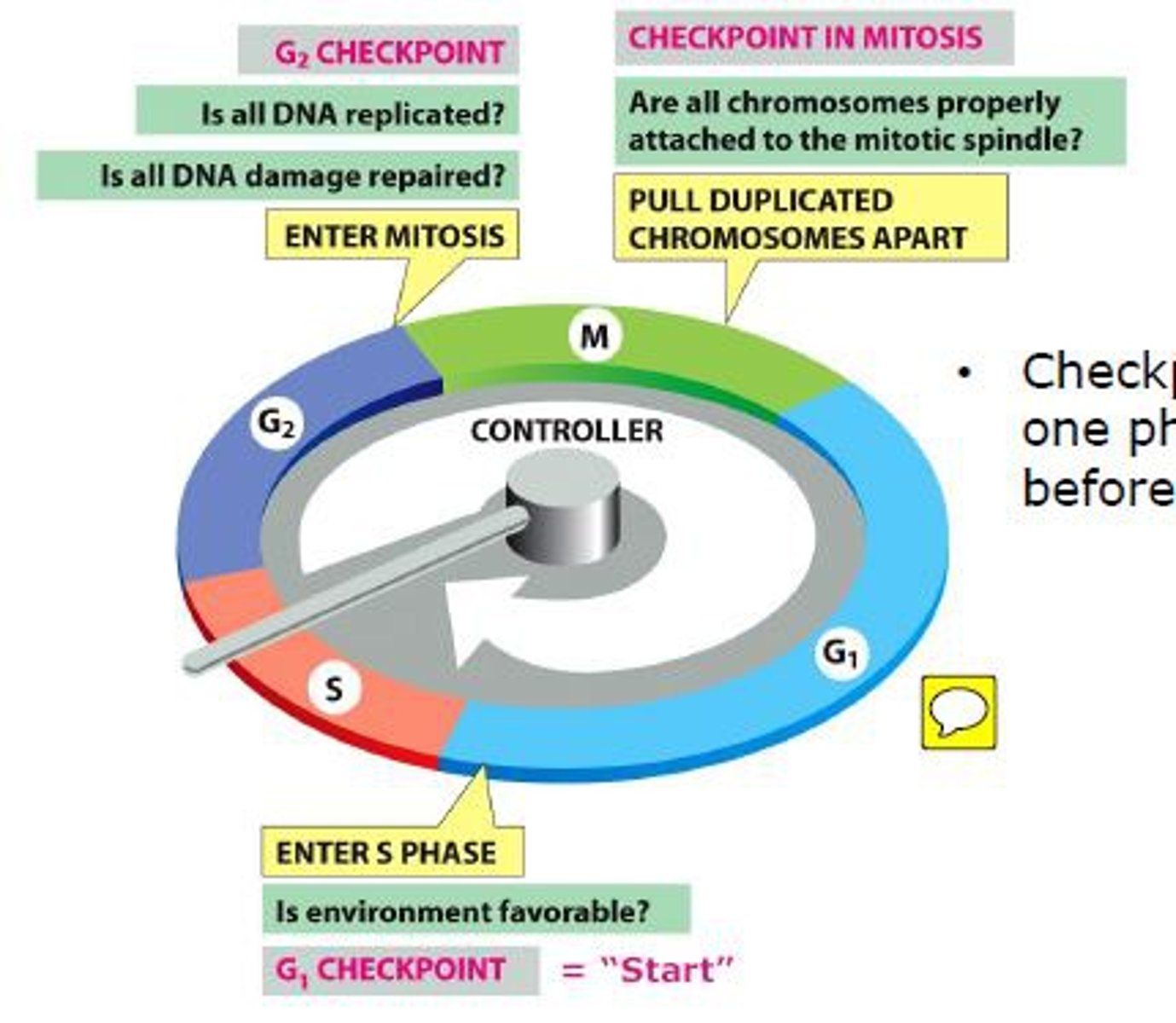
at which points in the cell cycle are the checkpoints which control progression of the cell through the division process
G2 to M; G1 to S
Compare and contrast the processes of mitosis and meiosis. List three similarities and three differences between the processes. Consider the number of phases and divisions, number of daughter cells, role of the process, location of the process.
similarities:both involve cell divisions, similar stages within each round, both begin with DNA replication
Differences: mitosis 1 division meiosis 2; mitosis 2daughter cell meiosis 4; meiosis for gamete production vs mitosis for grwoth/repair; mitosis somatic but meiosis gonads
male infertility and meiosis
meiotic abnormailities in chromosome pairing, meiotic progression, meiotic recombination. 1/2 no meiotic cells. with meiotic cells: progression of meiosis is altered with significantly more cells observed in early stages of prophase. suggests difficulties in pairing and synapsis of homologous chromosomes
chromosomes prone to non-disjunction
chromosomes 21, 22, X and Y. 2-3 fold ^ in aneuploidy levels for these chromosomes compared to other chromosomes
A couple presents to a fertility clinic as they were unable to achieve pregnancy after one year of unprotected intercourse. The male partner is 29 years old with negative medical history. Examination is unremarkable. Genetic analysis of the sperm show no obvious abnormalities but the man has a low sperm count
if meiotic arrest was occurring in this pt, what processes would be impaired?
anything that stimulates meiosis 1. spindle formation, formation of the tetrad and homologous recombination
low sperm count common cause
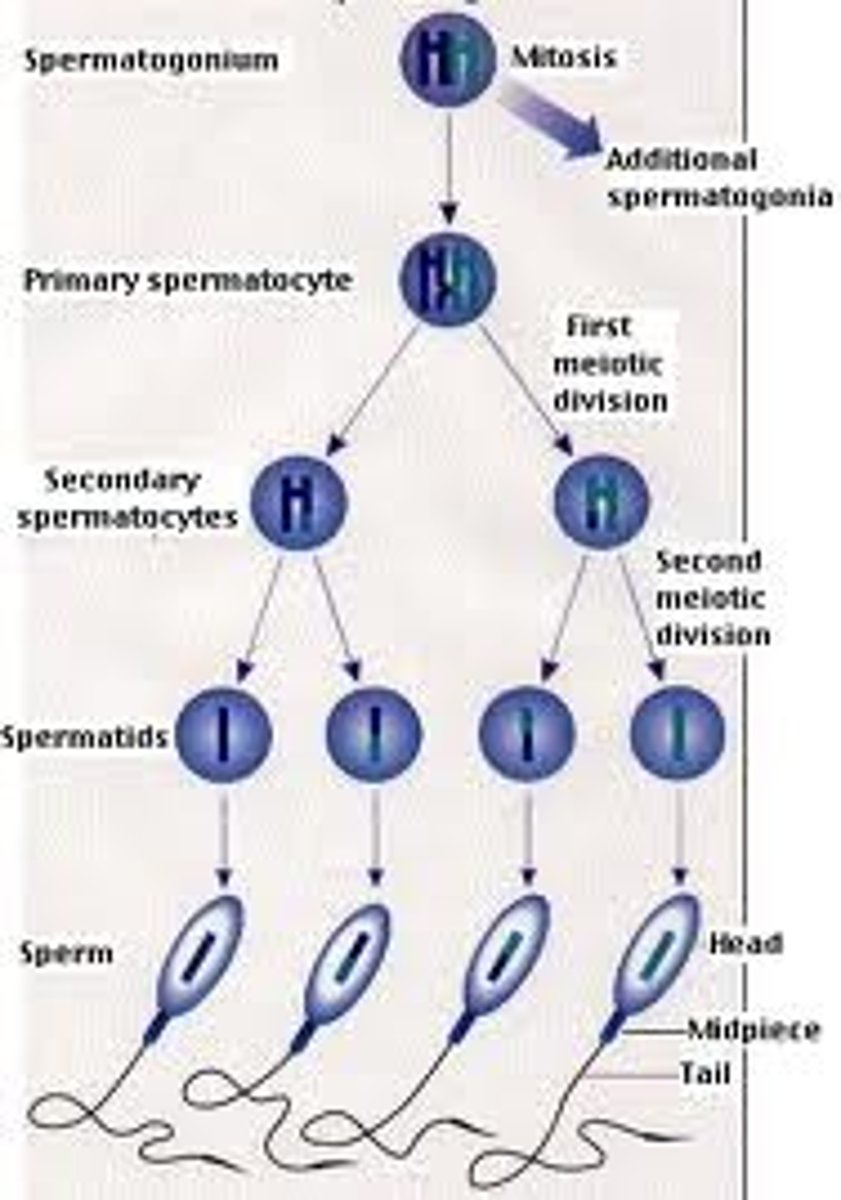
meiotic arrest ie no maturation beyond spermatocytes.
explain why meiotic arrest leads to infertility
no maturation past spermatocytes. 2n precursor of 4spermatids. without maturation therefore no sperm can be created. no sperm no fertilisation. male is infertile
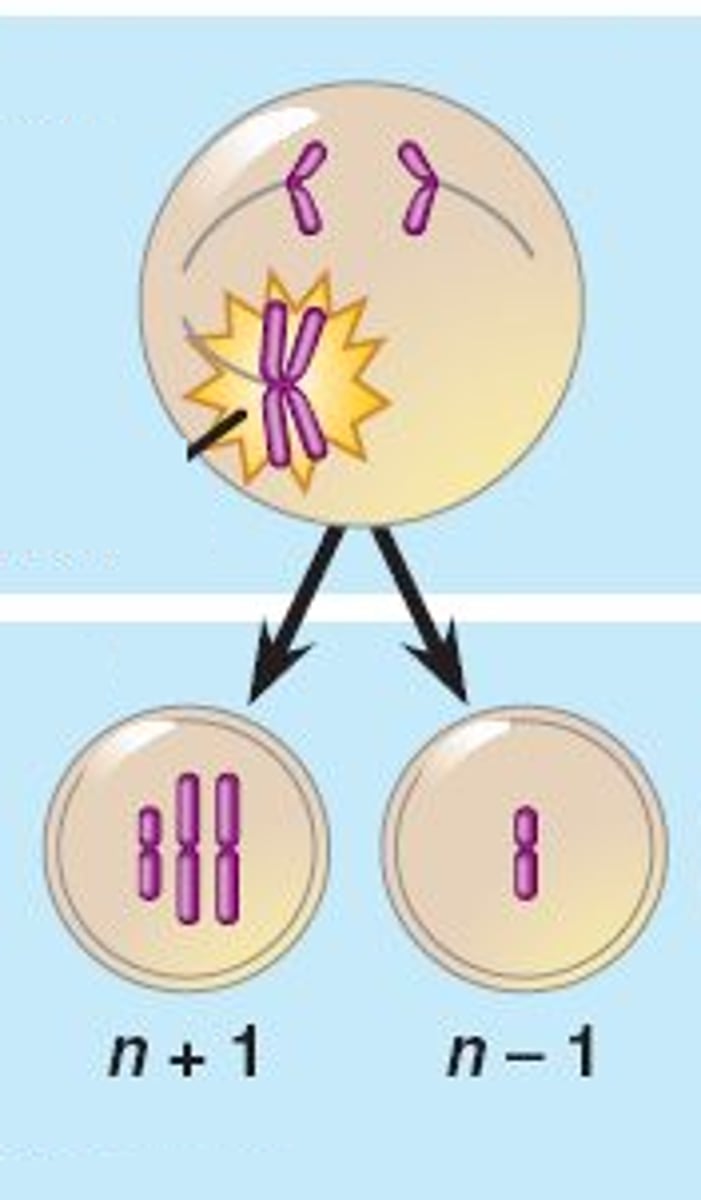
Non-disjunction
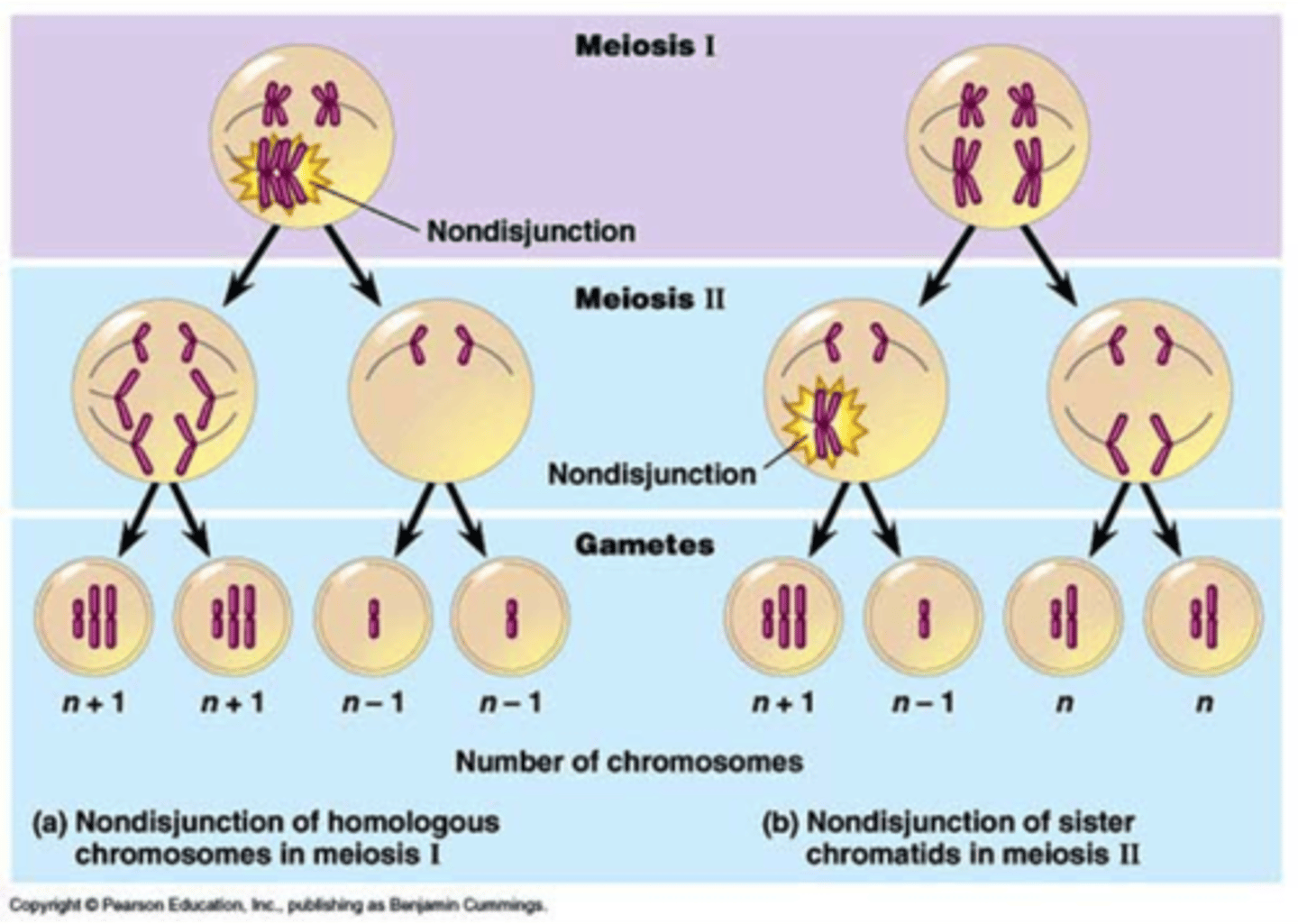
failure of homologous chromosomes or sister chromatids to separate properly in cell division
nondisjunction meiosis 1 result
daughter cell of meiosis 1 is affected. therefore both daughter cells produced in meiosis 2 upon cell division will be affected. one with extra chromosome the other missing a chromosome. therefore upon division, gamete daughter cell pairs will be n+1 and n-1
nondisjunction of meiosis 2
only daughter cell after meiosis 1 is affected. therefore when this daughter cell undergoes a second round of division, only one pair of gamete daughter cells are affected (ie n+1, n-1)
explain acelarated growth rate of cancers at the cellular level
cells divide by mitosis and in cancer the cell checkpoints have been removed so multiple uncontrolled rounds of mitosis can occur quickly giving rise to tumours.
what steps might be taken to preserve jack's fertility prior to chemotherapy
sperm banking
name a drug used to treat metastatic testicular cancer that interferes with elongation stage of DNA replication
BCNU, cisplatin
name a drug used to treat cancers that interferes with the termination stage of DNA replication
AraC, 6-MP
hypothesise why chemo may lead to infertility in men being treated for testicular cancer
kills germ cells which is why it is a strong treatment. sperm cells are generated by germ cells. therefore heavy reduction in sperm cells usually semen contains zero sperm during (azoospermia)
2 types of nitrogenous bases found in DNA and RNA
cytosine, adenine
nitrogenous bases in DNA and RNA
ATCG and AUGG
what do ATCGU stand for
Uracil, adenine, thymine, cytosine, guanine
components of a nucleotide
pentose sugar, phosphate group, nitrogenous base
nucleotide pairing
phosphate, deoxyrubose sugar, nitrogenous base.
Covalent bonding sugar base is backbone of strand.
Each sugar attaches repetitively to 2 phosphates 3 1(3 prime carbon) to 5 1 ( 5prime carbon)
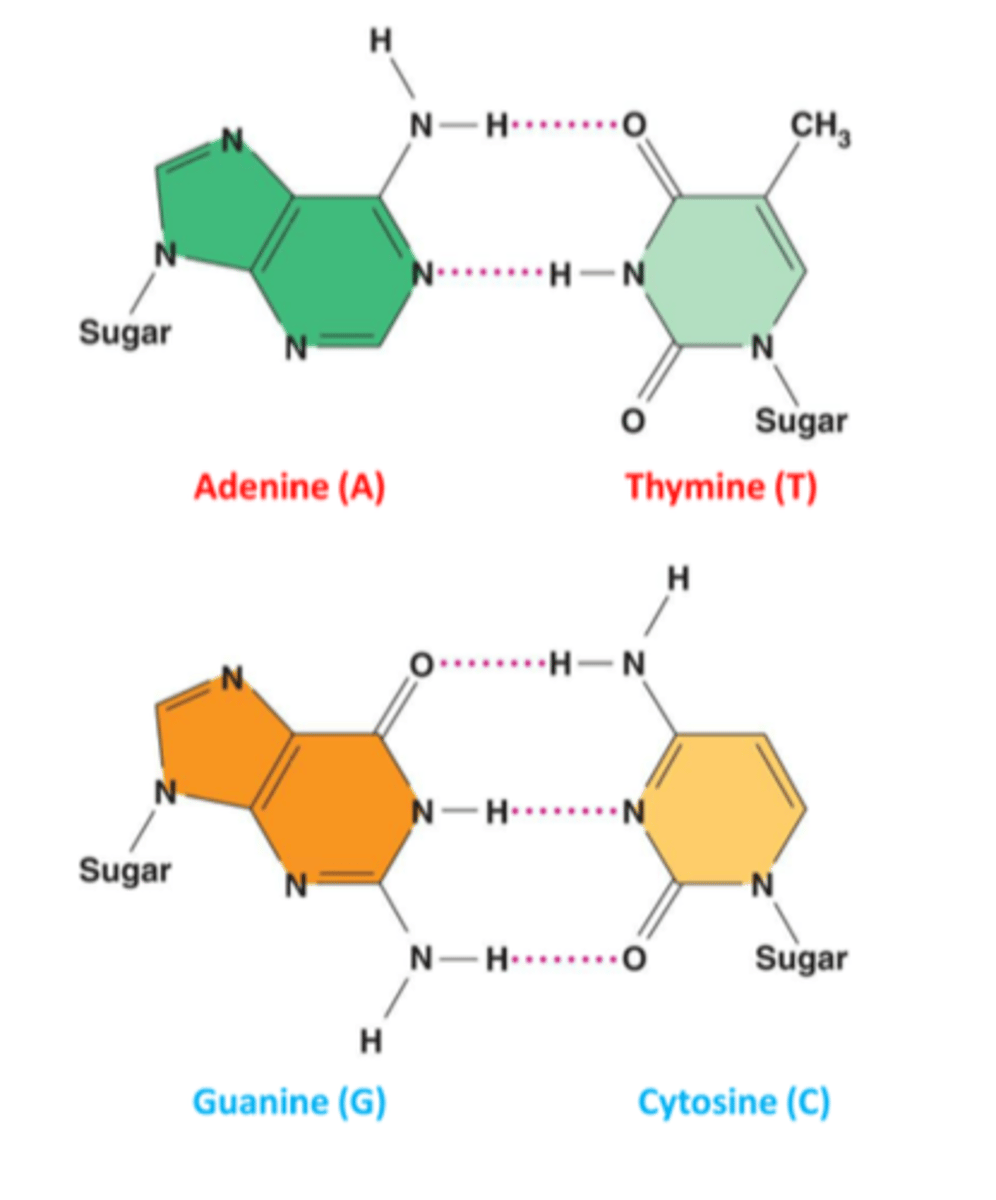
Adenine(A) pairs with Thymine(T) Guanine (G) pairs with Cytosine (C).
An antiparallel arrangement runs in opposite direction of other. 5 1 to 3 1 to 3 1 to 5 1.
This is significant to DNA and protein production.
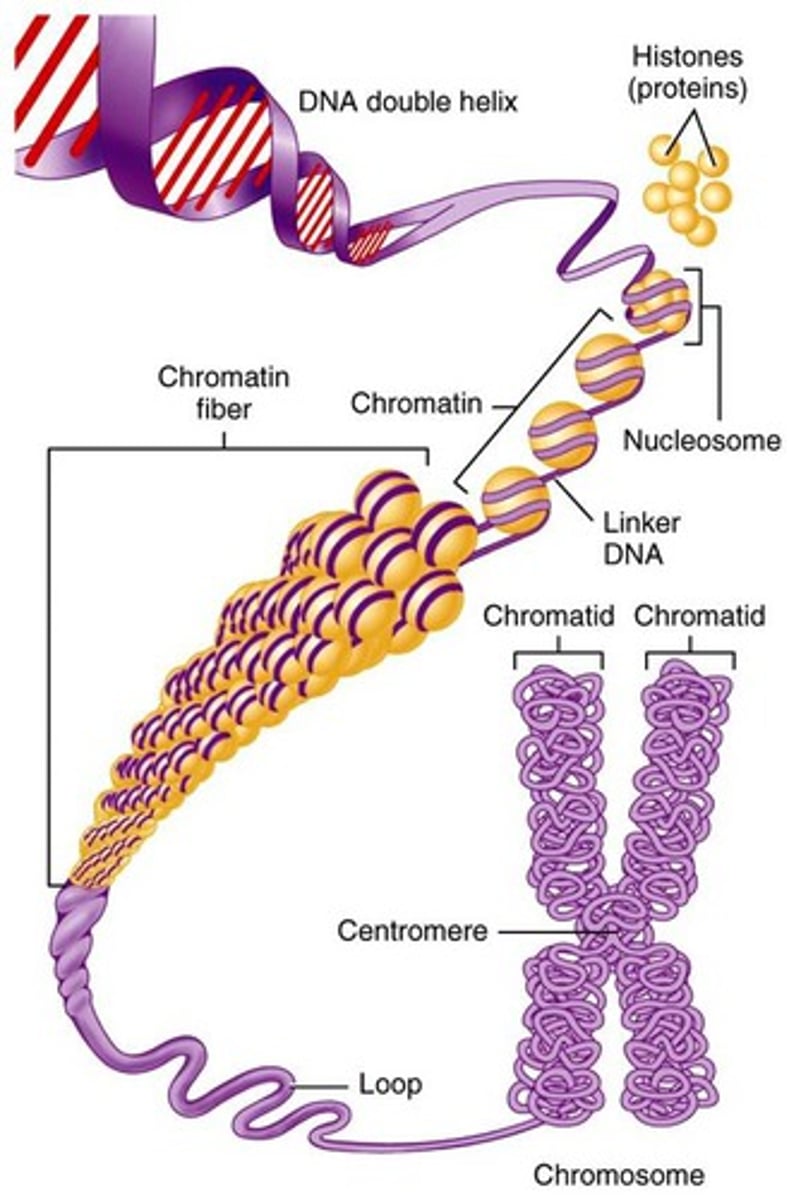
DNA packaging
DNA double helix tightly around histones to form nucleosomes, which form beads on a string DNA. nucleosomes tightly packed into solenoid structures forming 30nm fibres. these fibres compacted into several hierarchical loops to form highly condensed structures which are the chromosomes visible under light microscopes in the nucleus during cell division.
Purines
two ring structure Adenine and Guanine
Pyrimidines
one ring structure. C T U.
nucleotide NTP to polynucleotide with?
GTP, CTP, ATP
nucleotide dNTP to polynucleotide with?
dCTP, dGTP, dTTP
how many purines can be found in a stretch of 100bp double stranded DNA
100
complementary sequence for 5'GGGATTCC
5'GGAATCCC
In the DNA sequence TTGCCCA base G is connected with a covalent bond to...
base C and T on same strand
In the DNA sequence TTGCCCA base G is connected with a covalent bond to...
OH group
Many molecular laboratory techniques that are used to investigate DNA, such as Southern hybridisation and Polymerase Chain Reaction (PCR) use high temperature to split double-stranded DNA into single-stranded DNA. Which bonds within double-stranded DNA helix are broken under these conditions.
A-T h bonds and C-g h bonds
Chromatin
dna/protein complex forms a chromosome
In the DNA sequence TTGCCCA base G is connected with a covalent bond to...
deoxyribose
The single stranded DNA molecule with the sequence GCTGGATGAA is a polar molecule. The sequence is written according to the normal convention. What is at the 5' end of the sequence?
phosphate group
heterochromatin
solanoid fibres. genes not expressed
Eurochromatin
beads on a string. expressed
adenine in DNA and RNA
deoxyadenoSInemonophosphate (dAMP). purine. in RNA same but without deoxy
guanine in DNA and RNA
deoxyguanoSInemonophosphate (dGMP). purine. in RNA same but without the deoxy
cytosine in DNA and RNA
deoxycytoDInemonophosphate (dCMP). pyrimadine. same in RNA but without the deoxy
Thymine in DNA
deoxythymiDInemonophosphate (dTMP) pyrimadine
Uracil in RNA
uriDInemonophosphate (UMP)
cell cycle checkpoint that determines mieosis or mitosis
end of G2
initiation DNA replication
helicase unwinds the helix. single stranded binding proteins bind to the strand to stop the helix reforming. primase binds to the strand and adds polynucleotide to 3' end
DNA replication elongation
Primase removed and nucleotides added to the polynucleotides (that were added by primase) by DNA polymerase at 3' end forming a continuous strand of replication. Other side of alpha helix runs in opposite direction however DNA polymerase can only add in 5' to 3' direction therefore cannot have continuous production. Therefore, primase attaches on template strand at various points and adds small fragments of DNA (okazaki fragments) which are then bound together by ligase.
DNA replication termination
2 new strands are formed
cancer drug inhibits elongation of DNA
cisplatin and BCNU used to treat metastatic testicular cancer and leukaemia.
cancer drug inhibits termination of DNA
AraC and 6-MP used to treat acute leukaemia
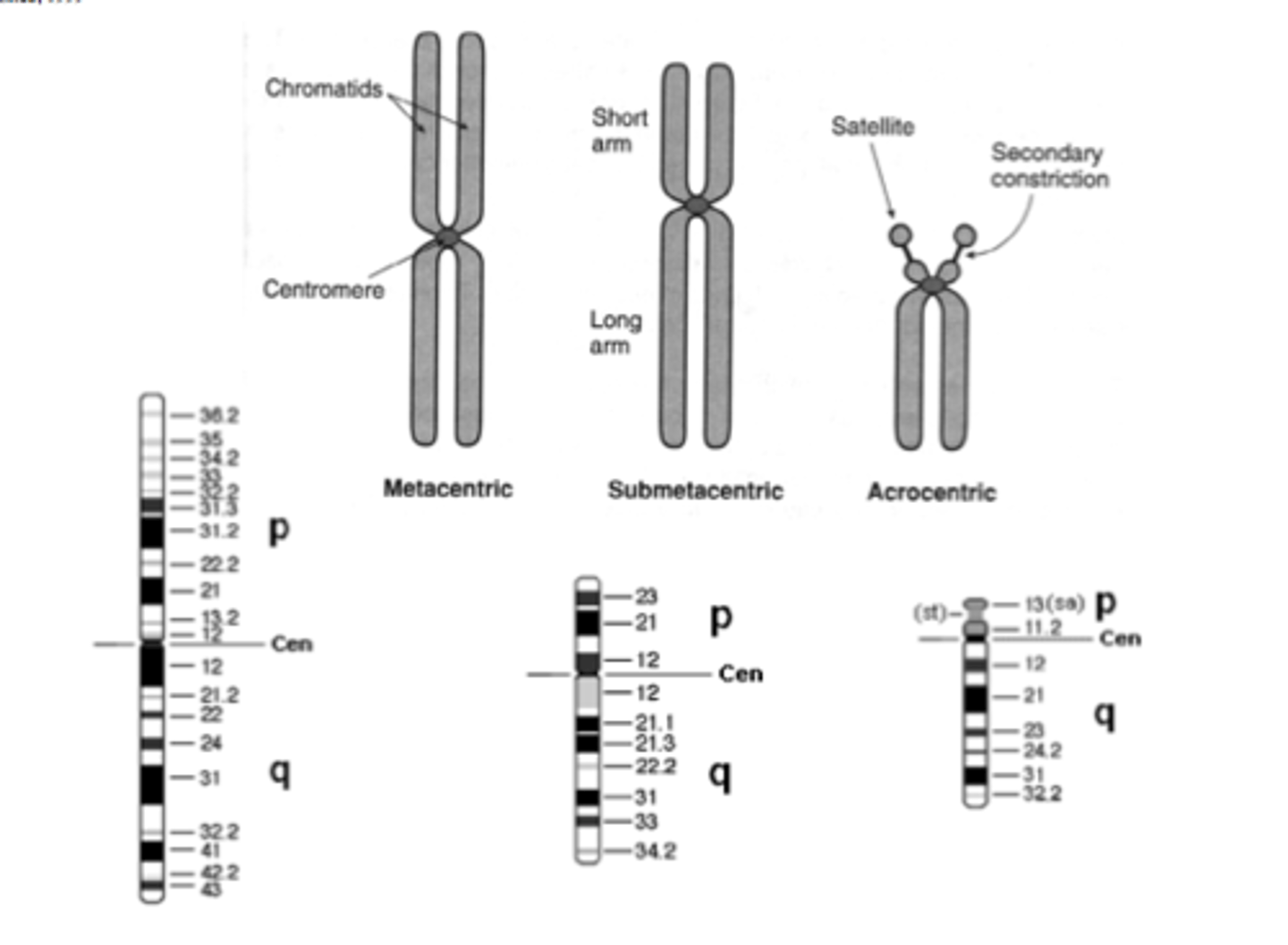
different forms of chromosome structure
metacentric, submetacentric, acrocentric, telocentric
importance of crossing over
increases genetic diversity and failures are associated with moving chromosomes to wrong location