ECONMIC Examinations
 Call Kai
 Learn
Learn Practice Test
 Spaced Repetition
 Match
Match Flashcards
 Knowt Play
1/43

There's no tags or description
Looks like no tags are added yet.
Name | Mastery | Learn | Test | Matching | Spaced | Call with Kai | Chat |
|---|
No analytics yet
Send a link to your students to track their progress
44 Terms
Law of Demand
As prices increase, quantity demanded decreases & vice versa (CETERIS PARIBUS)
Law of Supply
As prices increase, quantity supply increases & vice versa (CETERIS PARIBUS)
Equilibrium Theory (price)
The specific market price where the quantity of a product that consumers want to buy equals the quantity that producers want to sell.
Consumer Surplus
The difference between a consumer's maximum willingness to pay and the actual market price paid.
willing to pay MORE, pays LESS

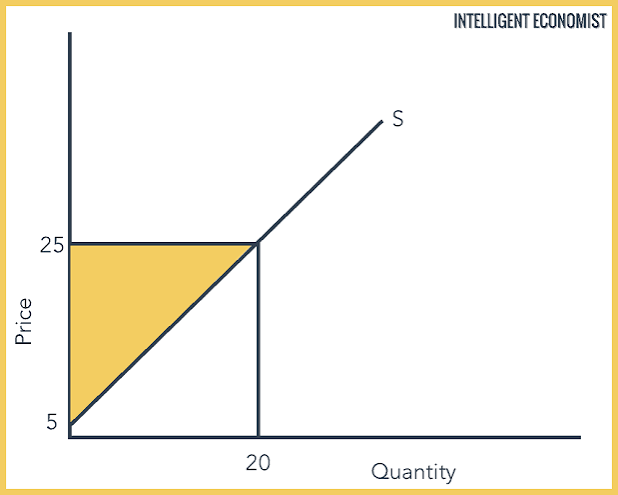
Producer Surplus
The difference between the price a producer is willing to accept for a good and the price that is actually received.
willing to accept (sell) LESS, receives MORE
A factor that can reduce consumer and producer surplus because taxes raise the cost of goods, reduce the quantity traded, and create a loss of surplus for both consumers and producers.
A factor that can increase consumer surplus because promotions lower the effective price paid by consumers, allowing them to gain more benefit from their purchases.
A factor that can increase producer surplus because government financial support lowers production costs, allowing producers to supply more at a lower cost.
A factor that can reduce consumer surplus because lower income decreases consumers’ purchasing power, limiting the quantity of goods and services they can afford.
Increase in Supply
A factor that increases consumer surplus because greater supply shifts the supply curve to the right, lowering the market price and increasing the quantity available, so consumers pay less and gain more surplus.
Increase in Demand
A factor that increases producer surplus because greater demand shifts the demand curve to the right, raising the market price and increasing the quantity sold, so producers receive more than the minimum price they are willing to accept.
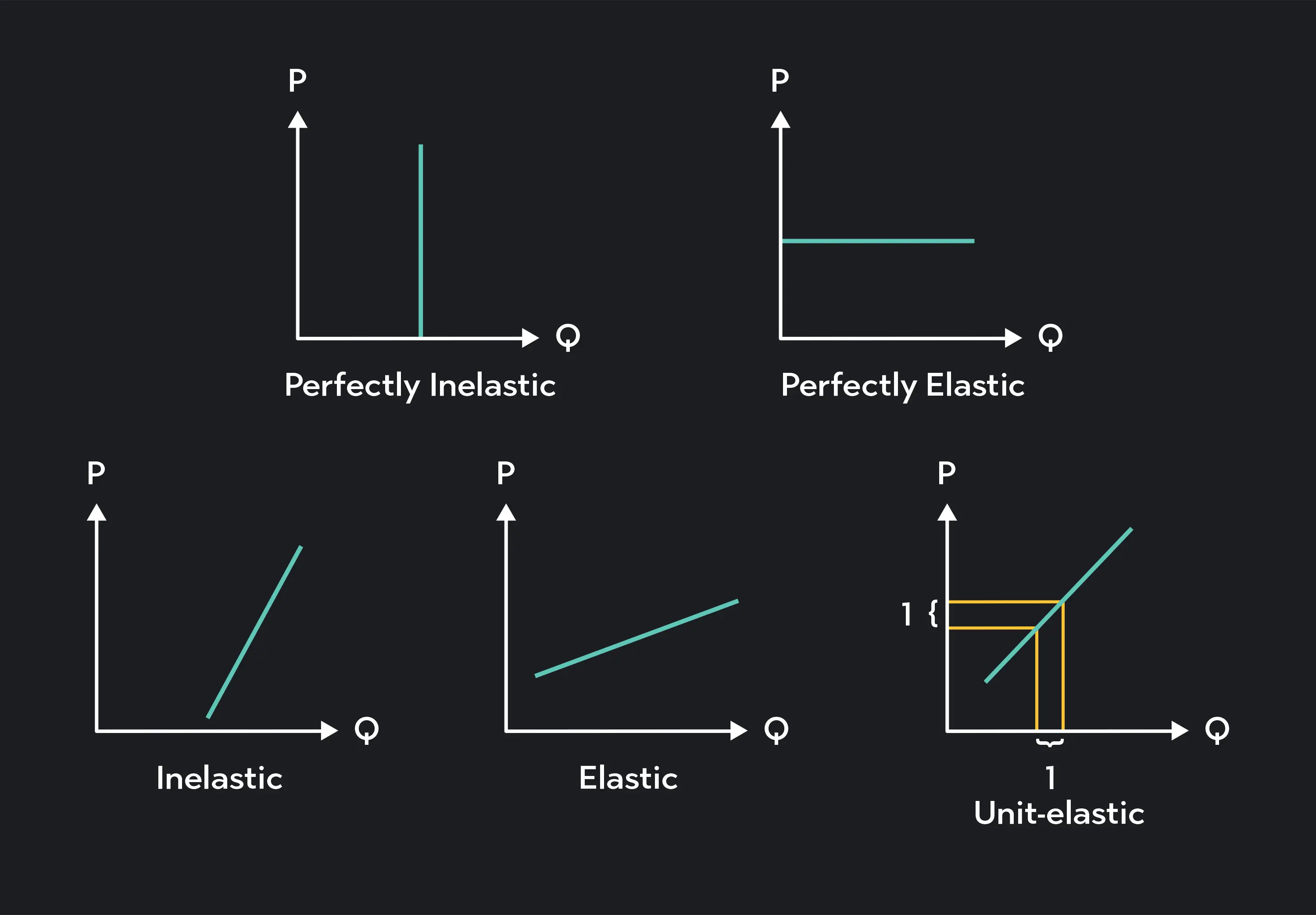
Elasticity
The responsiveness of an economic variable to changes in another variable
Elastic Change (relatively)
A change where quantity demanded or supplied changes by a greater percentage than the change in price. The quantity is highly responsive to price changes.
Small change in price → Big change in quantity demanded
Example: If the price of one brand of chips increases, consumers can easily switch to another brand.

Inelastic Change (relatively)
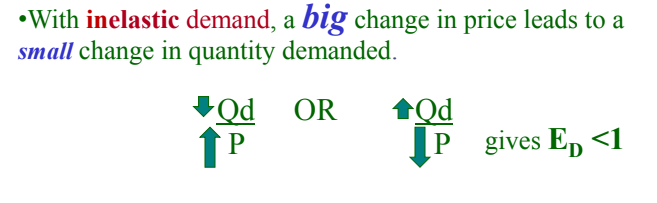
A change where quantity demanded or supplied changes by a smaller percentage than the change in price. The quantity is less responsive to price changes.
Big change in price → Small change in quantity demanded
Example: If the price of essential medicine increases, people may still buy it because they need it.
Price Elasticity of Demand
A measure of how much the quantity demanded for a product changes in response to changes in its price, or how consumers can alter their buying habits when prices change.
Unitary Elastic Demand
A type of demand where the percentage change in quantity demanded is equal to the percentage change in price.
Example: A price increase causes consumers to reduce their purchases by an amount that keeps total spending unchanged.
Perfectly Inelastic Demand
A type of demand where quantity demanded does not change at all regardless of changes in price.
Example: A person must buy a specific life-saving medicine even if its price increases.
Perfectly Elastic Demand
A type of demand where consumers will buy any quantity at a given price but none at a higher price.
Example: A seller of identical wheat cannot charge more than the market price because buyers can immediately buy from another seller.
Second Law of Demand
The economic principle stating that the demand for most products will be more elastic in the long run than in the short run.
Time and Price Elasticity of Demand
The relationship where consumers reduce their consumption of a product by a larger amount over time following a price increase, making long-run demand more elastic than short-run demand
Long Run (Elasticity Context)
An extended period during which consumers have enough time to adjust their habits and find substitutes, causing demand to become more elastic.
Short Run (Elasticity Context)
A brief period during which consumers have little time to adjust their behavior or find alternatives, making demand less elastic
Narrowly Defined Good
A specific category or brand of a product (e.g., hamburgers) that has many available substitutes, making its demand more elastic
Broadly Defined Good
A general category of products (e.g., food) with few or no substitutes, making its demand less elastic (inelastic)
Time and Availability of Substitutes
The economic principle stating that price elasticity of demand grows over time because consumers have more opportunity to find or develop substitutes (i.e gasoline → electric)
Availability of Substitutes and Elasticity
The relationship stating that a good with a more elastic demand curve has a greater number of available substitutes
Utility
It is the satisfaction or pleasure consumers derive from the consumption of products (ex. goods and services).
Total Utility
The total utility a consumer derives from the consumption of all of the units of a good or a combination of goods over a given consumption period, ceteris paribus.
Total Utility = Sum of Marginal Utilities
Marginal Utility
The utility a consumer derives from the last unit of a consumer good she or he consumes (during a given consumption period), ceteris paribus.
Law of Diminishing Marginal Utility
The extra satisfaction you get from using or consuming each additional unit of a product goes down as you use more of it
Utility Maximization
The process by which a consumer allocates their income to purchase a combination of goods and services that provides the highest possible level of total satisfaction.

Budget Constraint
A limit representing all possible combinations of goods and services a consumer can afford given their total income and the prices of those goods.

Opportunity Cost
The value of the next best alternative given up when making a choice, which is considered a good trade-off when the chosen option provides greater value or satisfaction than what was sacrificed.
Central Economic Problem
The fundamental challenge in economics where society faces scarce, limited resources alongside unlimited human wants and needs.
Income Effect
The change in optimal consumption of a good resulting from a change in a consumer's purchasing power due to a price change.