ceutics 4 powders and granules
 Call Kai
 Learn
Learn Practice Test
 Spaced Repetition
 Match
Match Flashcards
 Knowt Play
1/54

There's no tags or description
Looks like no tags are added yet.
Name | Mastery | Learn | Test | Matching | Spaced | Call with Kai | Chat |
|---|
No analytics yet
Send a link to your students to track their progress
55 Terms
a mixture of finely divided drugs and/or chemicals in a dry form
powder
powder is a special sub-class of ______
granules
powder has a greater tendency to form ___ than granules
form clumps
when are powders usually used
usually used to make other dosage forms; not in therapy
bulk medicated powders are commonly used for ______ application
topical
how does a smaller powder particle size influence the pharmaceutical properties of a drug
increases drug's dissolution rate
most common method used to determine particle size of powders
sieving
describe trituration
process of reducing particle size by grinding in a mortar and pestle
key difference between the fusion method and wet method in preparing effervescent granulation salts
fusion method involves heating the mixture, while wet method does not
describe levigation
reducing particle size by using a pad with a small amount of liquid
coarse particles are obtained after sifting powder through a mesh size of
20-40
when should one blend materials containing eutectic mixtures
when pharmacological action of the blend increases
what is the start to forming any formulation
powder
can powders be taken internally, externally, or both?
both
internal: suspensions, lung inhalation, vaccine
external: powder, cream, ointment
what are some advantages of medicated powders?
1. faster dissolution rate and absorption = rapid onset of action (compared to solid forms)
2. improved stability in dry state (compared to liquids)
3. suitable for swallowing
What steps do powders allow to be skipped for bioavailability purposes?
skips disintegration phase since it is already broken down to small unit
what are some disadvantages to powders
1. bad taste
2. hard to protect materials that are easy to melt or aromatic
3. more expensive to make sachets/ divide dose
4. more SA= more moisture absorption= unstable
what are bulk powders
Refers to powders intended to be administered in quantities which are safe for the patient to measure.
why are bulk powders non potent
higher chance of inaccurate dosing/variation, giving a large dose might be harmful
divided powders
Powders containing substances that should be administered in controlled dosage are supplied in divided dosage units
Individual doses are separately wrapped
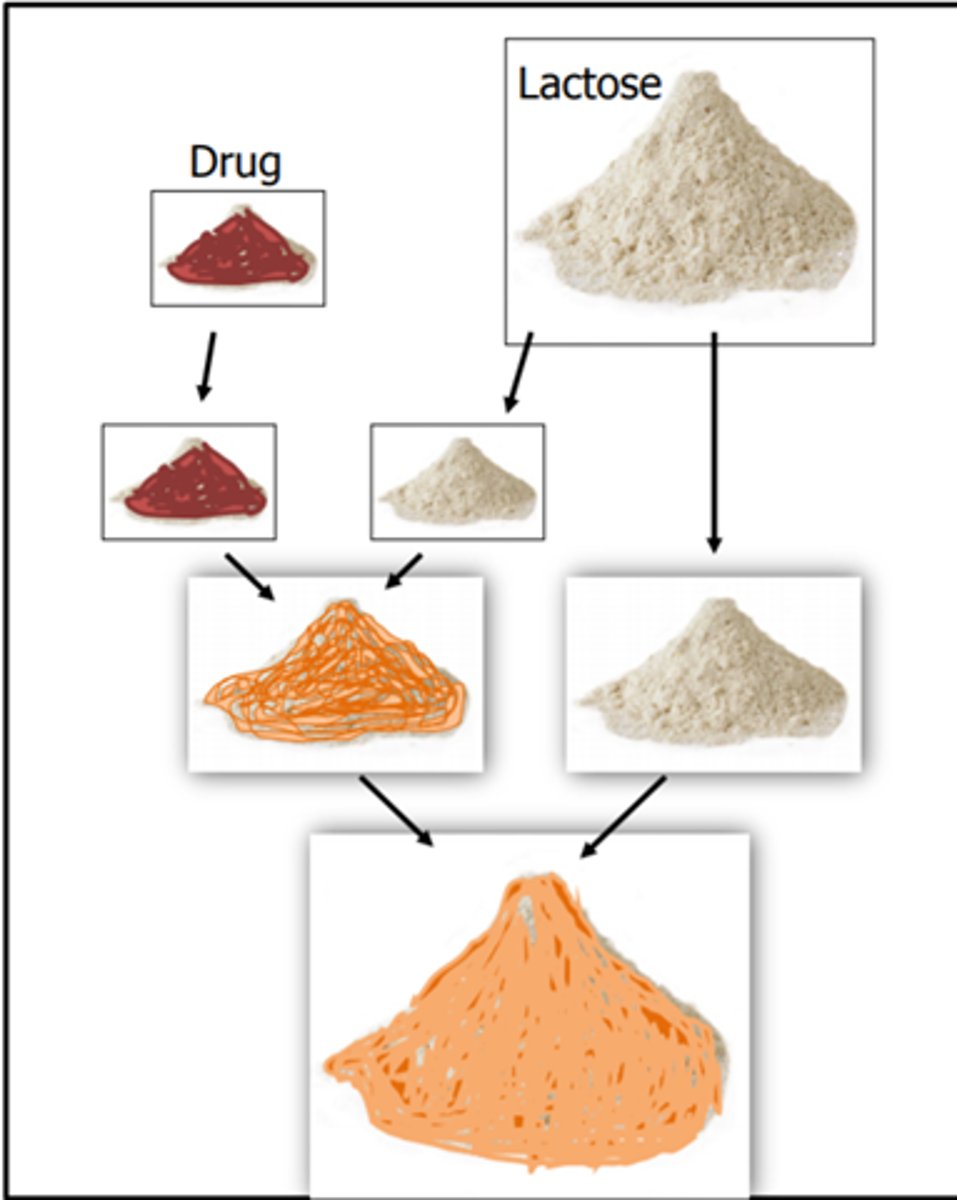
geometric dilution
a technique for mixing two powders of unequal quantity
=ensures equal distribution of drug throughout compound
advantages and disadvantages of divided powders
1. Allows physicians to prescribe a precise amount of the drug.
2. More stable than the liquid form of many drugs.
3. Dissolve more rapidly than compressed solid dosage forms.
4. Rapid dissolution leads to faster blood levels and possibly less GI irritation.
=BUT time consuming and costly
granules
agglomerates of small particles of powder; may be used in medicine or to make other forms like tablets
advantages of granules
1. flow better than powders (this is why granules used for tableting)
2. increase compressibility
3. smaller SA than powder= more stable/ less moisture pick up
4. less likely to cake/harden
5. more uniform
6. more easily wetted than powders= used for solutions
5 things particle size can influence
DPUGS
1. Dissolution rate
2. Suspendability (ex: suspensions/colloids)
3. Uniform distribution (powders, tablets)
4. penetrability (ex: inhalers)
5. Gritiness (ointments, creams, opthalmic)
particle size grading system is based on the ________ method
sieving
sieving method
method of particle size gradation that is related to the proportion of powder that is capable of passing through the opening of standardized sieves of varying dimensions in a specified time period under shaking
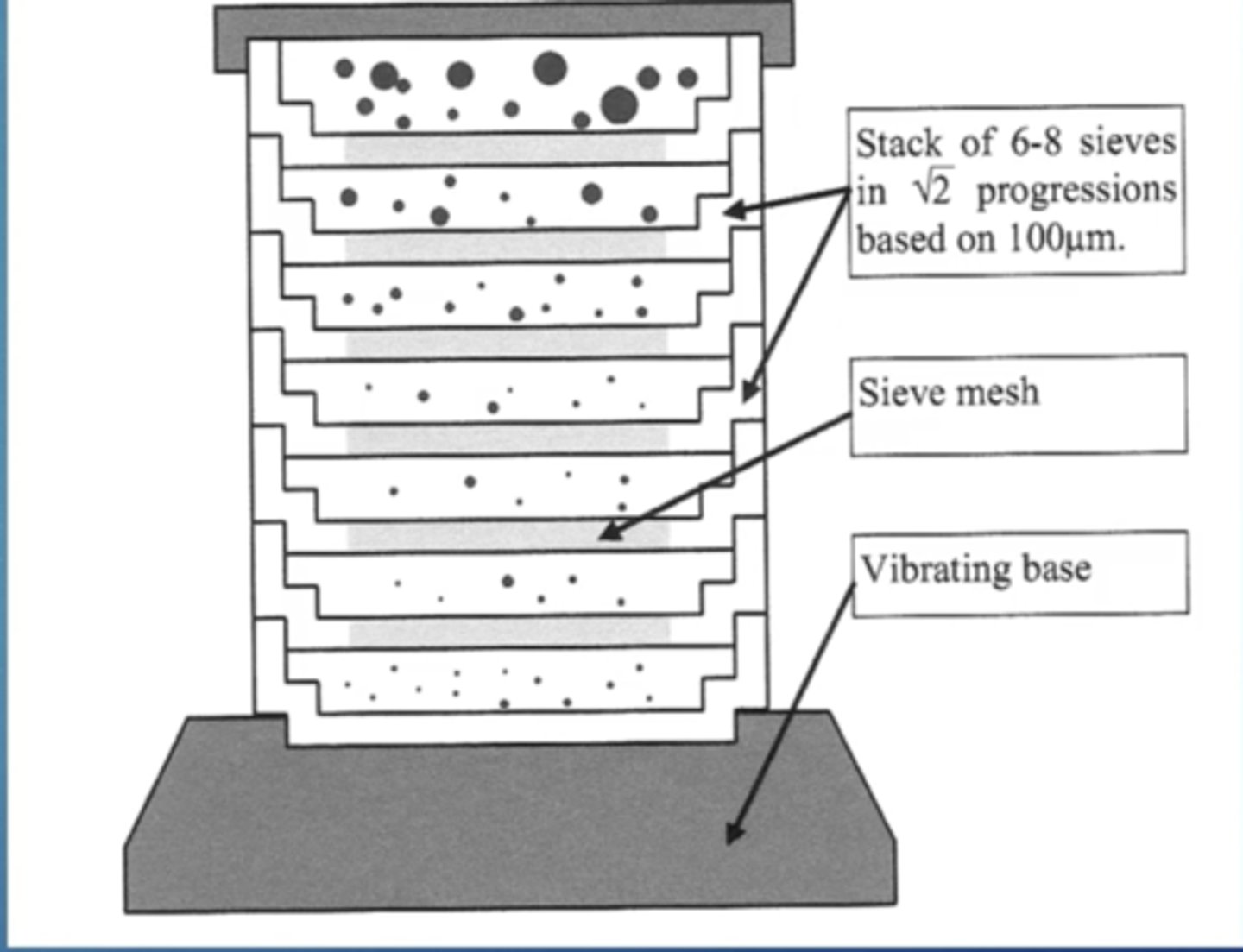
what is mesh size
The number of holes in one square inch of the net
ex: 4 mesh screen has 4 openings= large particles pass through
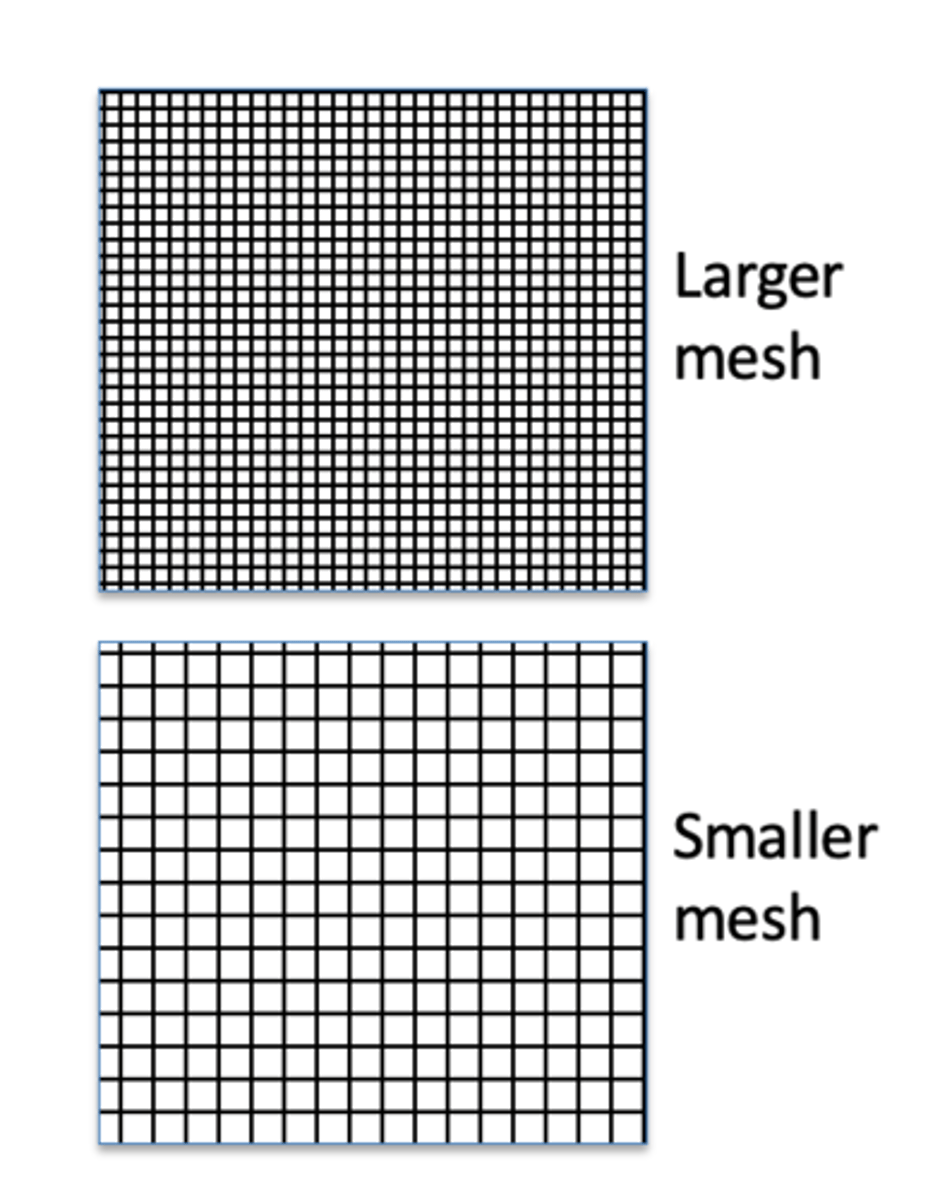
as the number describing the mesh size increases, the particle size ________
decreases
what are the 5 particle size classifications based on USP and what mesh size number do they correlate to
1. Very coarse 2-10
2. Coarse 20-40
3. Moderately Coarse 40-80
4. Fine 80-120
5. Very Fine 120-200
3 methods for particle size determination
1. sieving method
2. microscopy
3. angle of repose
formula for calculating average diameter of particles in sieving method
diameter=
[ sum of (%retained*avg size) ] / 100
microscopic method
use of calibrated grid background to count particles
-labor intensive
angle of repose
-estimates the flow ability of a powder
- allow powder to flow through a funnel and fall freely, it will create a hill like shape. measure the angle
- a LOW angle of repose means FREE FLOW
-a HIGH angle of repose means POOR FLOW (more clumping)
what 2 factors can affect powder flow rate
1. shape= spheres flow better than needles
2. size= larger particles flow better than smaller ones
drug comminution
process of reducing particle size
why is drug communition important
comminution means reducing particle size
1. crude drug extraction
2. increase dissolution rate
3. aid in formulation of other dosage forms
4. enhance drug absorption
manual vs mechanical methods of drug comminution
manual=
1. trituration
2. levigation
3. spatulation
mechanical=
blade grinders
summarize the following
1. trituration
2. levigation
3. spatulation
1. trituration= grinding powders with mortar and pestle to reduce particle size (geometric dilution)
2. levigation= triturating a powder drug with a solvent in which it is insoluble to reduce its particle size (ointments)
3. spatulation= performed on an ointment slab with a spatula instead of with a mortar and pestle (eutectic)
spatulation
similar to levigation, performed on an ointment slab with a spatula instead of with a mortar and pestle
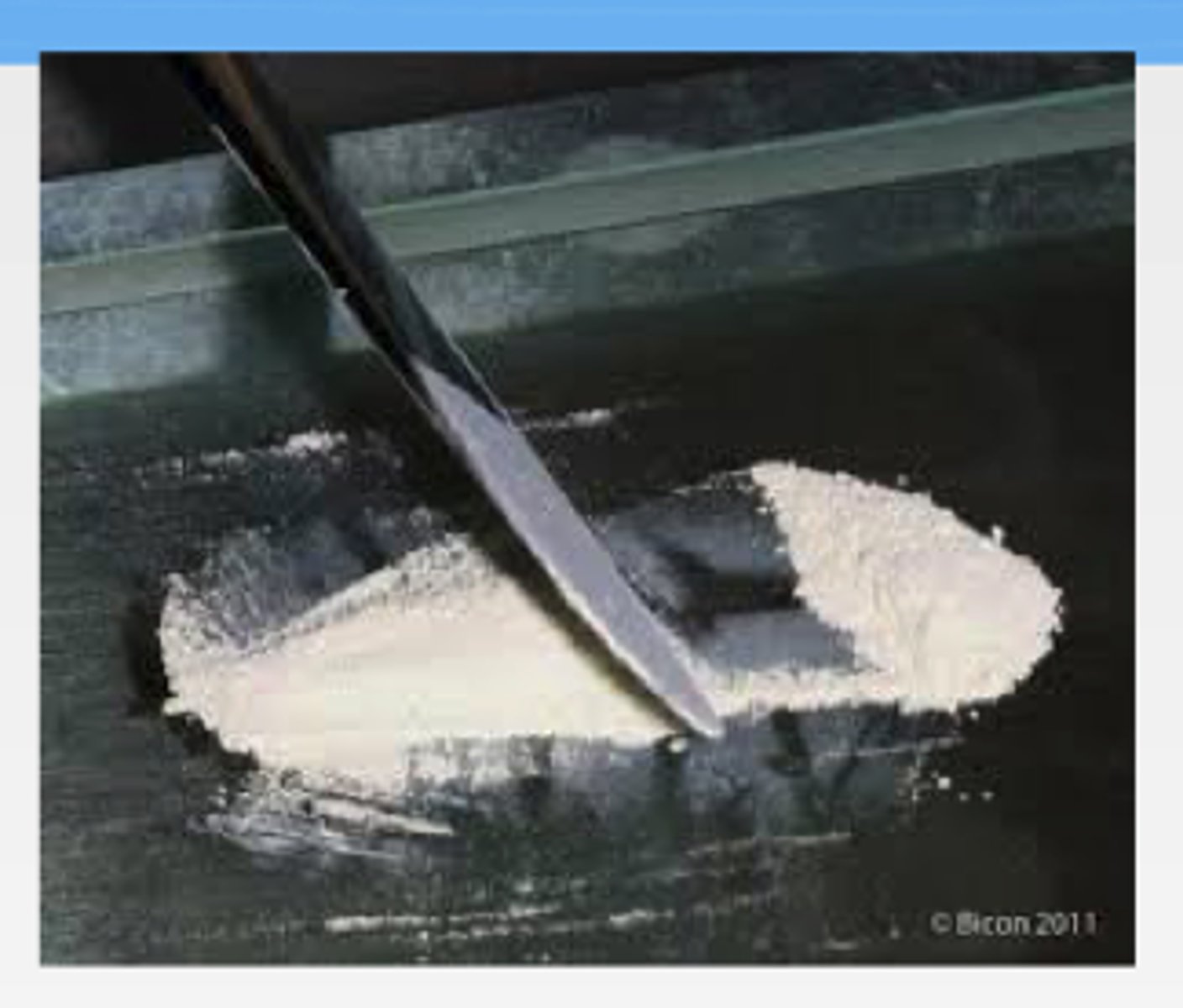
what is spatulation most suitable for
mixing small quantities of powders that form eutectic mixtures when in close contact
eutectic mixture
Mixture of two substances which result in a lower melting point than that of each individual constituent.
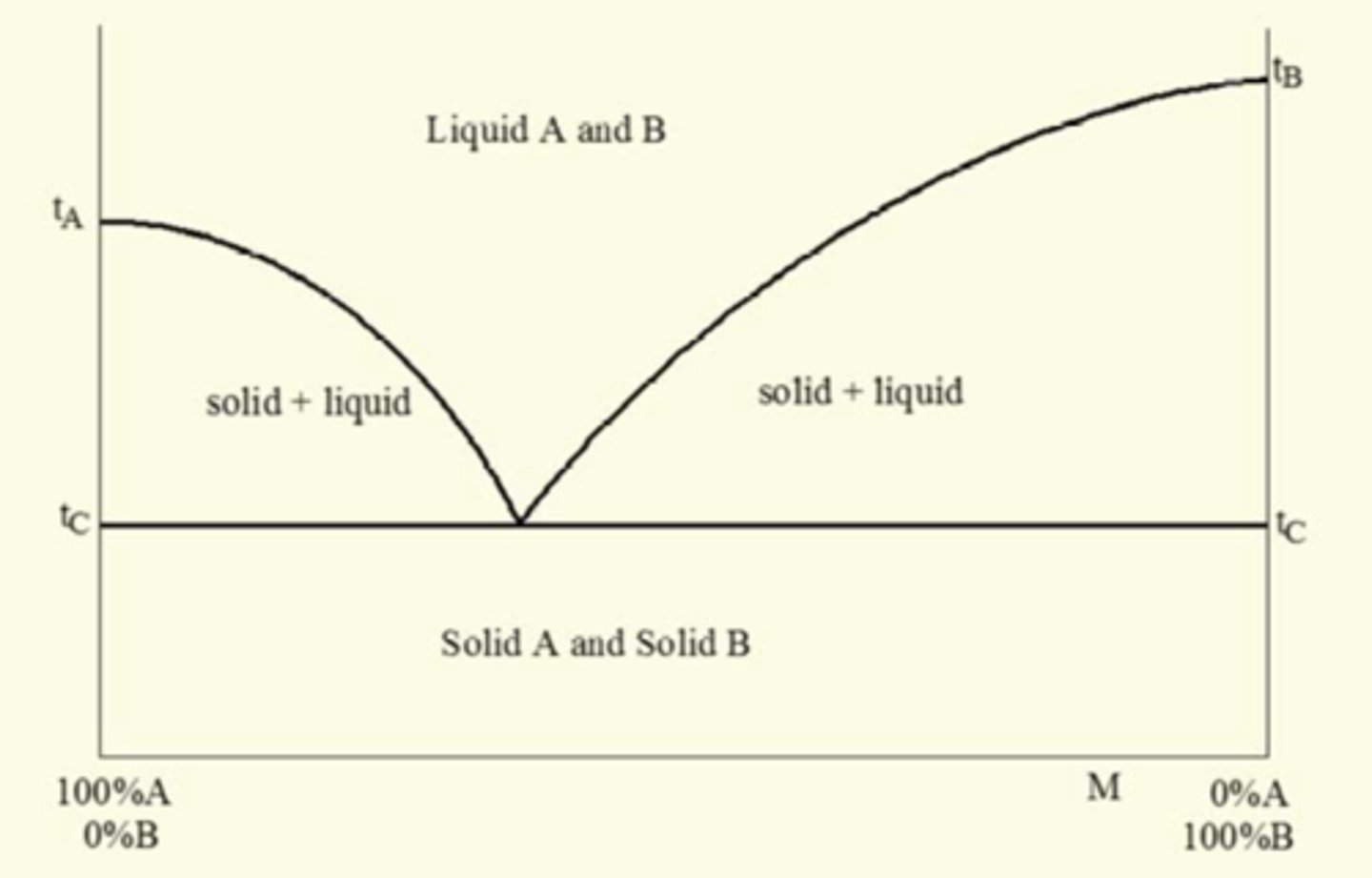
give an example of eutectic mixture
lidocaine/prilocaine
=individually, they are 2 solid substances. when combined, it becomes a liquidy oil
substances that form eutectic mixtures when combined include:
chloral hydrate, phenol, camphor, menthol, thymol
how can you avoid forming a eutectic mixture
add inert diluent such as magnesium oxide or magnesium carbonate
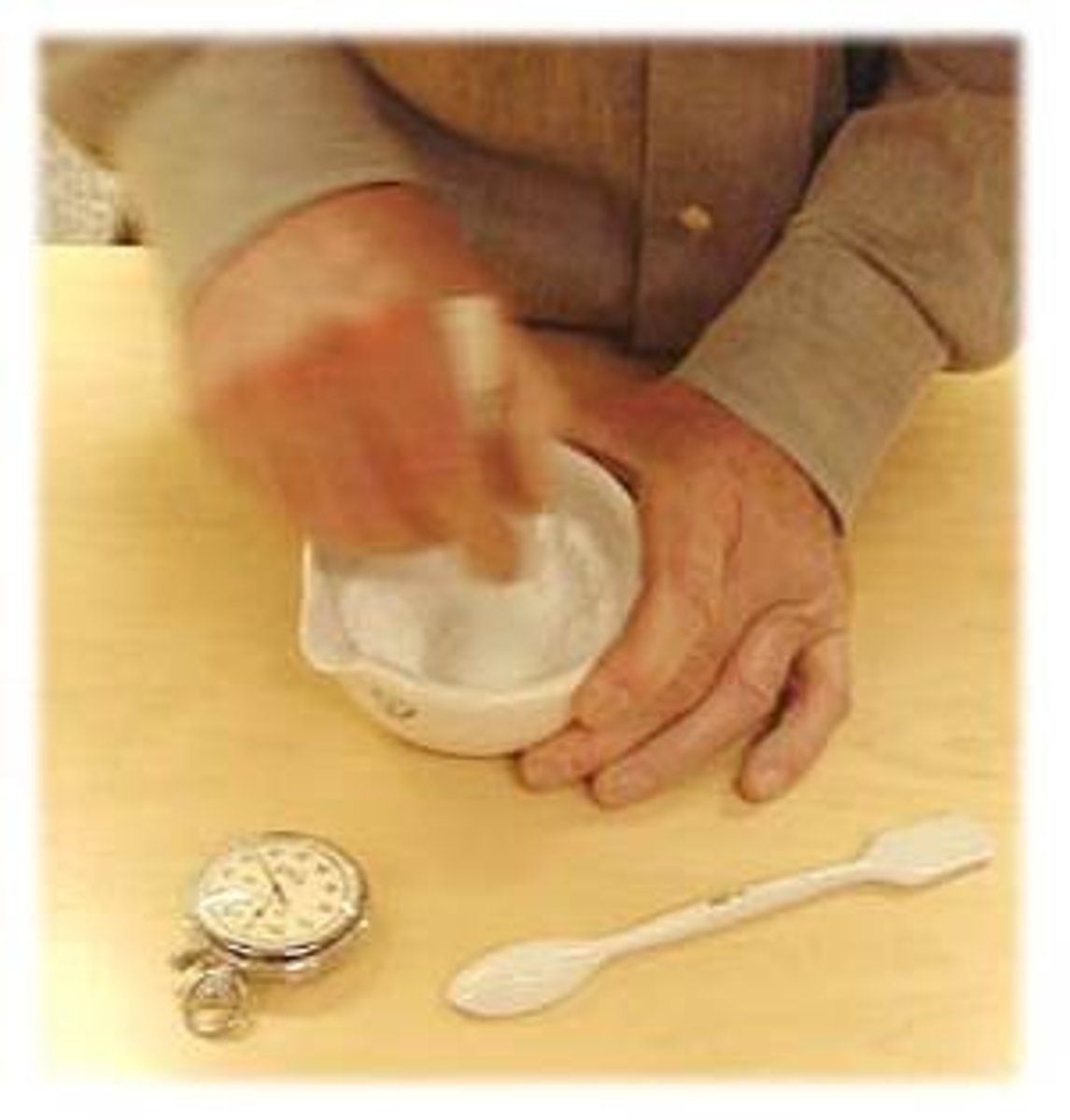
trituration
The process of grinding powders with mortar and pestle to reduce particle size
(ex: geometric dilution)
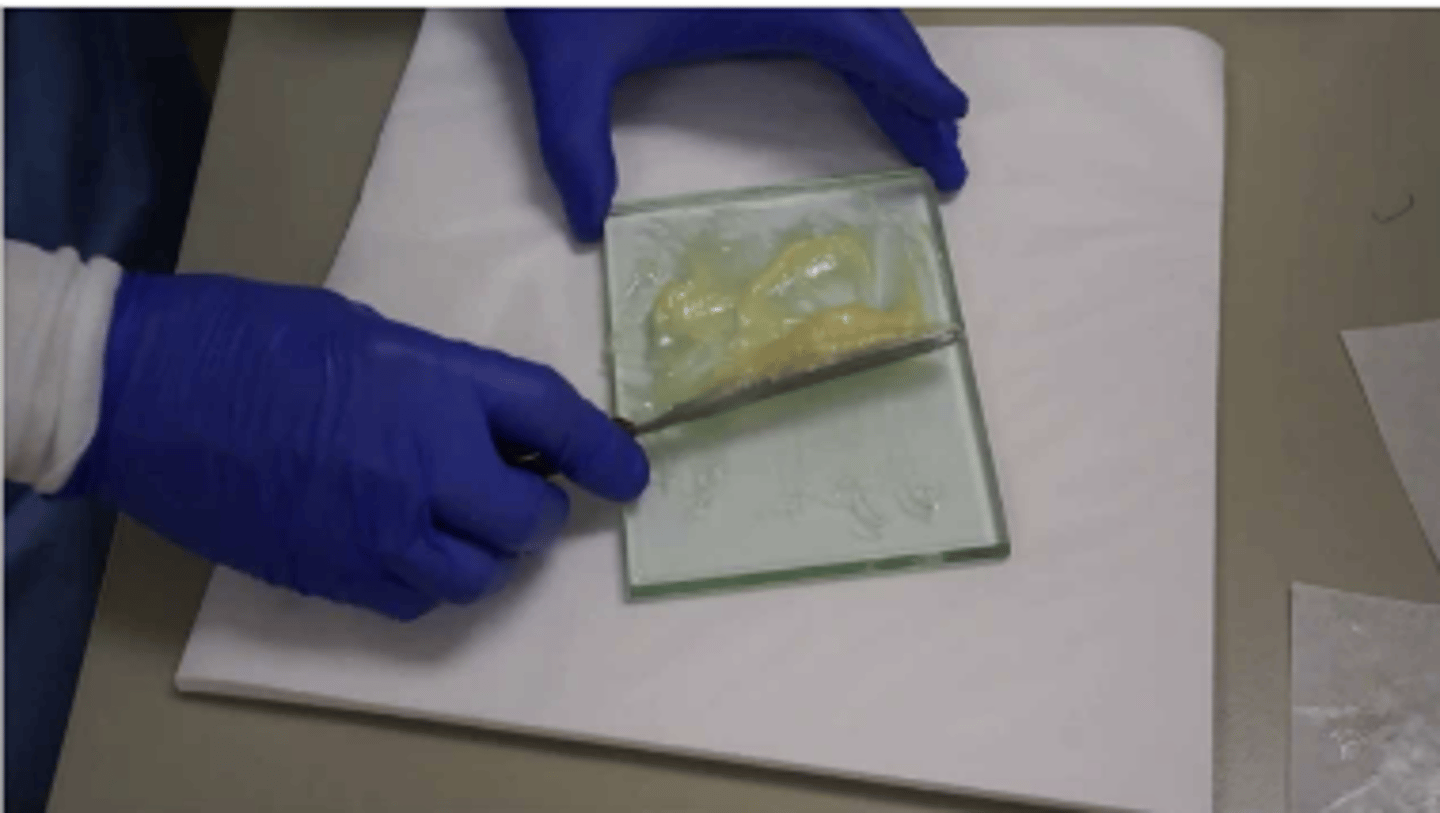
levigation
triturating a powder drug with a solvent in which it is insoluble to reduce its particle size
* used ot make ointments
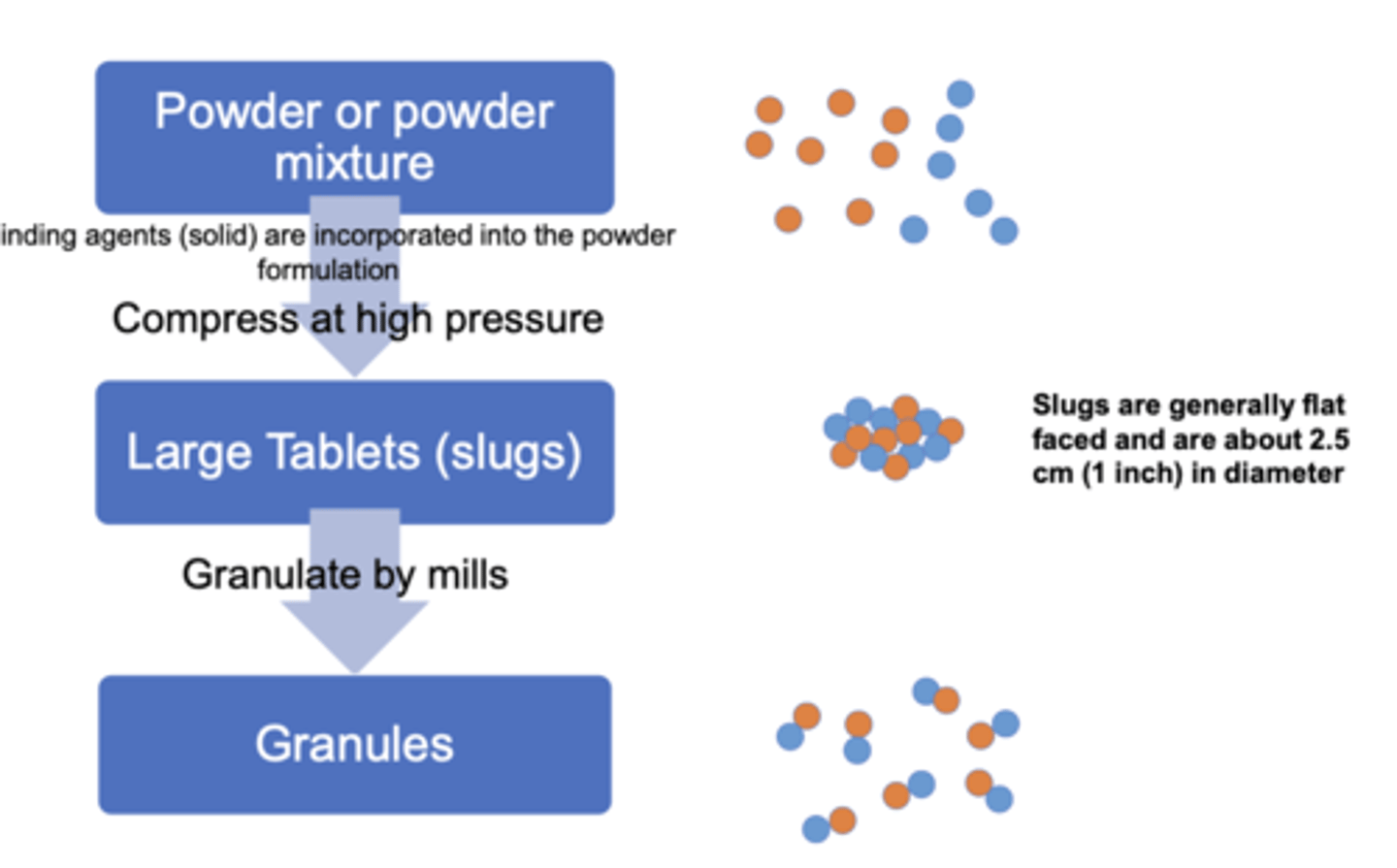
dry granulation
forms granules without liquid (if drug is sensitive to moisture)
- roller compaction and slugging
what are the 2 dry methods for granule preparation
1. roller compaction- compacted into dry sheets then passes through granulator
2. slugging-make large tablets/slugs then granulate slugs
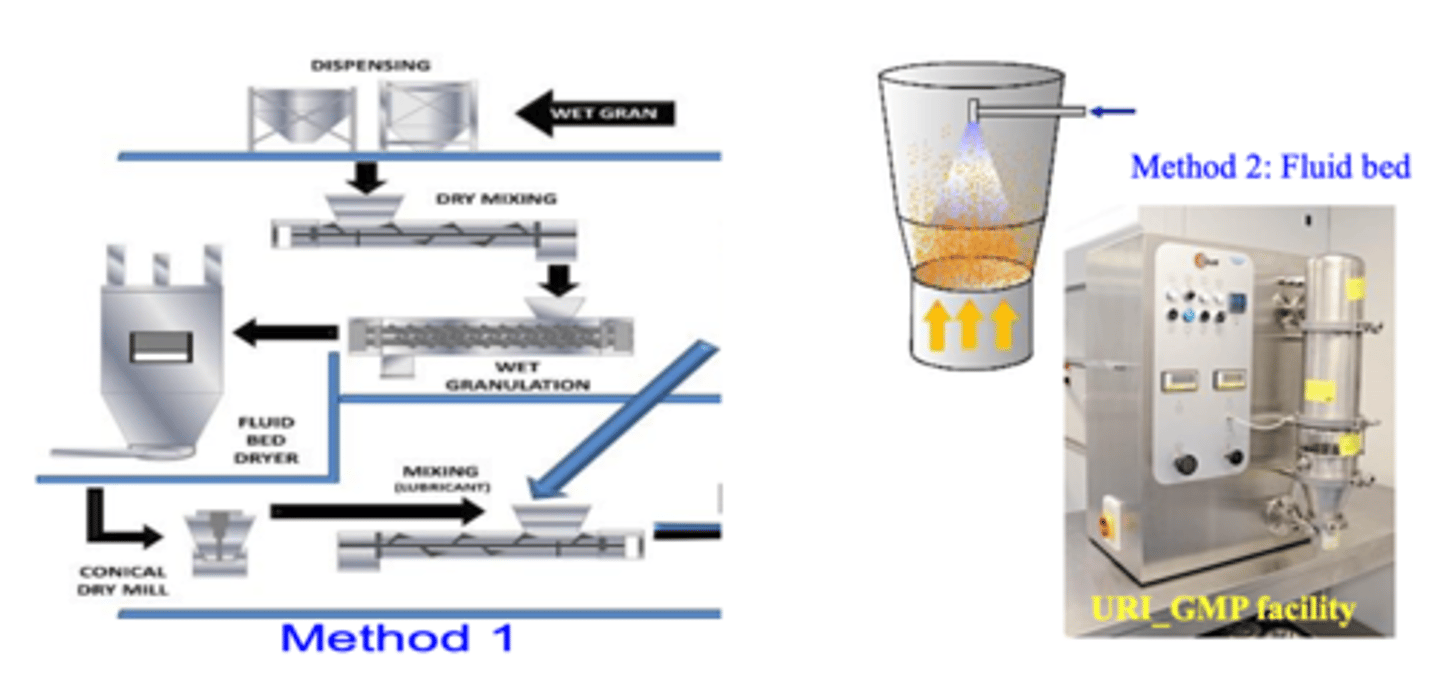
2 wet methods for granule formation
1. moisten powder, paste is passed through mesh, collect granules and dry
2. fluid bed processing= suspend powder in air and spray with liquid, then dry
effervescent granulated salts
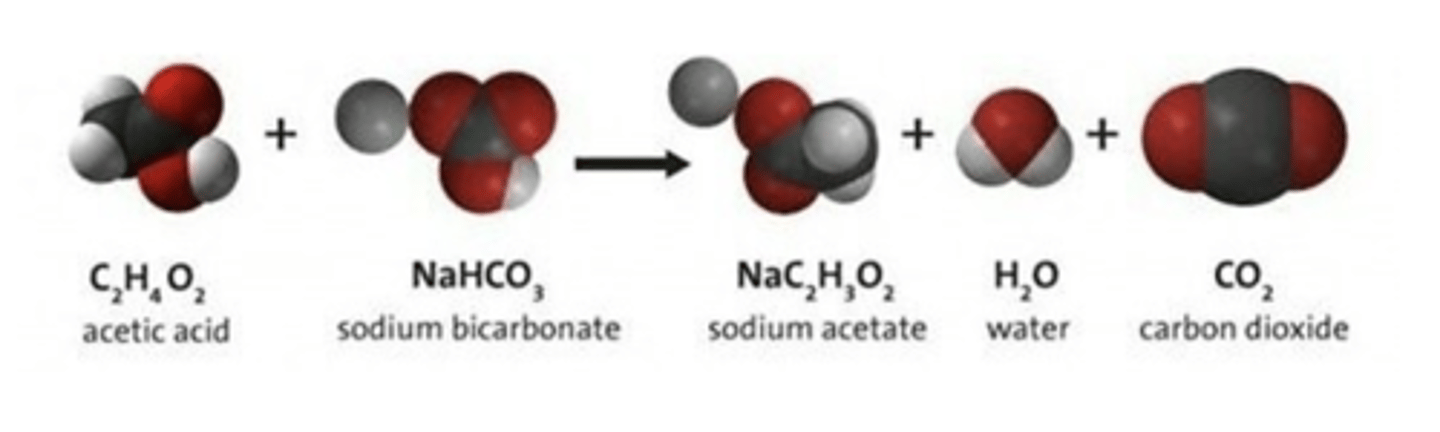
granule or coarse powders containing API in a dry mixture =usually composed of sodium bicarbonate, citric acid, and tartaric acid
are effervescent granules coarse or fine
coarse to very coarse
purpose of effervescent granules
acids and bases react to make CO2 which in water masks bad taste and helps with disintegration
what is the preferred combination of products and methods used to make effervescent granules
combo of citric acid (sticky) and tartaric acid (crumbly)
=fusion method or wet method
fusion method vs wet method for effervescent tablets
fusion:
mix powders, heat, sieve and heat again
wet:
solution used as binding agent, make powders anhydrous, sieved moist granules are dried